What to Pack and Wear in Tenerife
Tenerife punishes bad packing quietly: a January day can hold 21.7 C at the coast and 7.5 C on the observatory ridge, so the island demands two wardrobes in one bag.
Short answer
Pack for warm coastal weather year round, add a serious layer for Teide, and bring closed mountain footwear if any booked trail is on your list. AEMET's normals put the January mean daily maximum at 21.7 C at Tenerife South Airport against 7.5 C at Izana, 2,369 m up beside the volcano.
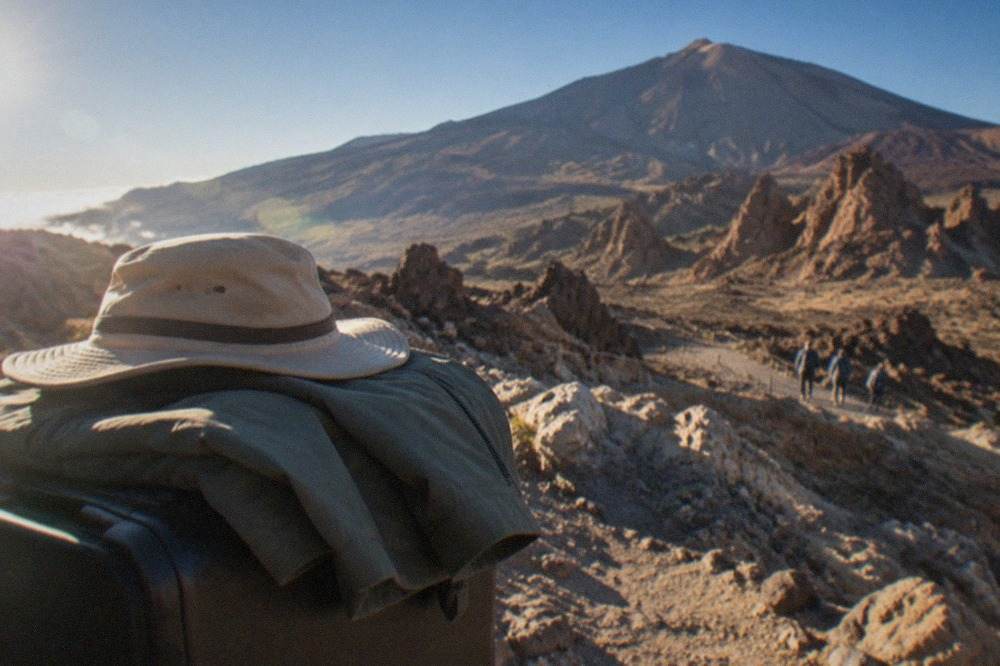
Tenerife is one island with two wardrobes. AEMET's climate normals put the January mean daily maximum at 21.7 C at Tenerife South Airport, 64 m above the sea, while the same month averages a mean daily maximum of just 7.5 C at Izana, the observatory ridge at 2,369 m beside Mount Teide. The cable car lifts passengers from 2,356 m to 3,555 m in about ten minutes of ascent, so a suitcase built for the beach can leave a traveller badly dressed by lunchtime. This guide works through what to wear in Tenerife and what to pack for Tenerife using the station figures, the operator rules and the official trail fees, not folklore.
What to Wear in Tenerife
On the coast, wear summer clothing for most of the year and pack one warm layer for winter evenings: AEMET's normals for Tenerife South Airport show mean daily maximums of 21.7 C in January, 27.7 C in July and 28.4 C in August, with mean daily minimums that never fall below 15 C in any month. Lightweight fabrics, a sun hat and swimwear are the daily uniform, and the sea stays warm enough for swimming all year.
The south coast is the warm, dry half of the island by the numbers. AEMET records 132 mm of rain a year at Tenerife South Airport, spread over 15.2 days with at least 1 mm, against 520 mm on 64 days at Tenerife North Airport at Los Rodeos, 632 m up. A visitor staying in Costa Adeje or Los Cristianos can plan around sunshine; a visitor basing themselves in Puerto de la Cruz or La Laguna should pack for the chance of a wet afternoon, especially between November and February, when the northern station records 80 mm or more per month.
Evenings are the moment the layer earns its place. The July mean daily minimum at Tenerife South Airport is 20.2 C, which is balmy, but January nights average 15.2 C and a breeze off the Atlantic can make a restaurant terrace feel cooler than the figure suggests. A light jacket or a fleece belongs in the bag in every season, and not only for the mountains.
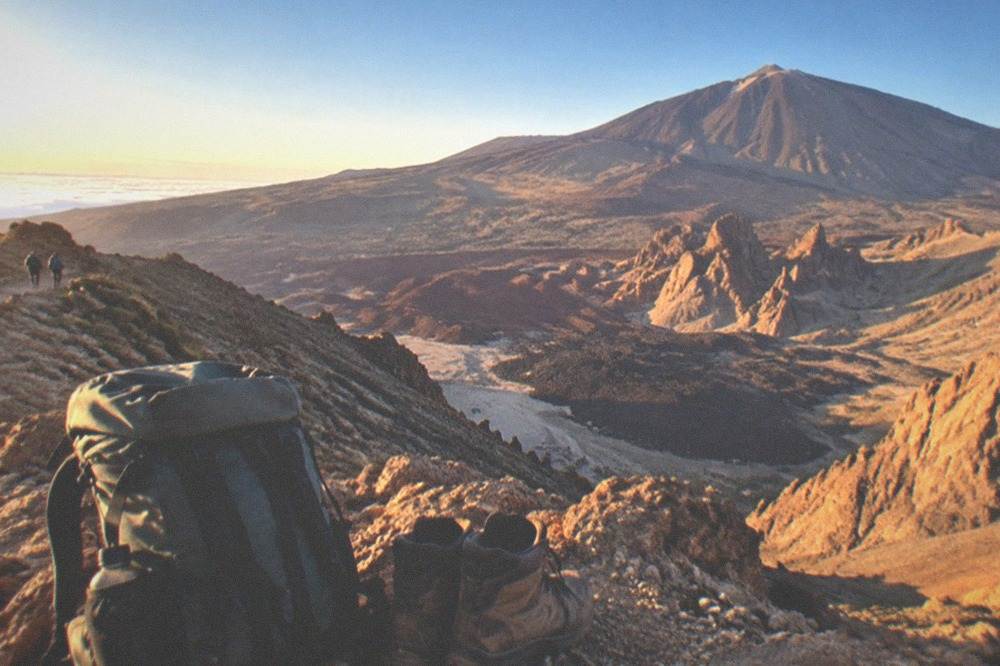
Footwear deserves more thought than most packing lists give it. Cobbled old towns, volcanic sand and harbour walls are hard on flimsy sandals. If a booked trail is anywhere on the itinerary, the choice is made for you: the Masca operator states that closed mountain footwear is a condition of entry, and hikers are refused without it even when holding a booking.
What to Pack for Tenerife
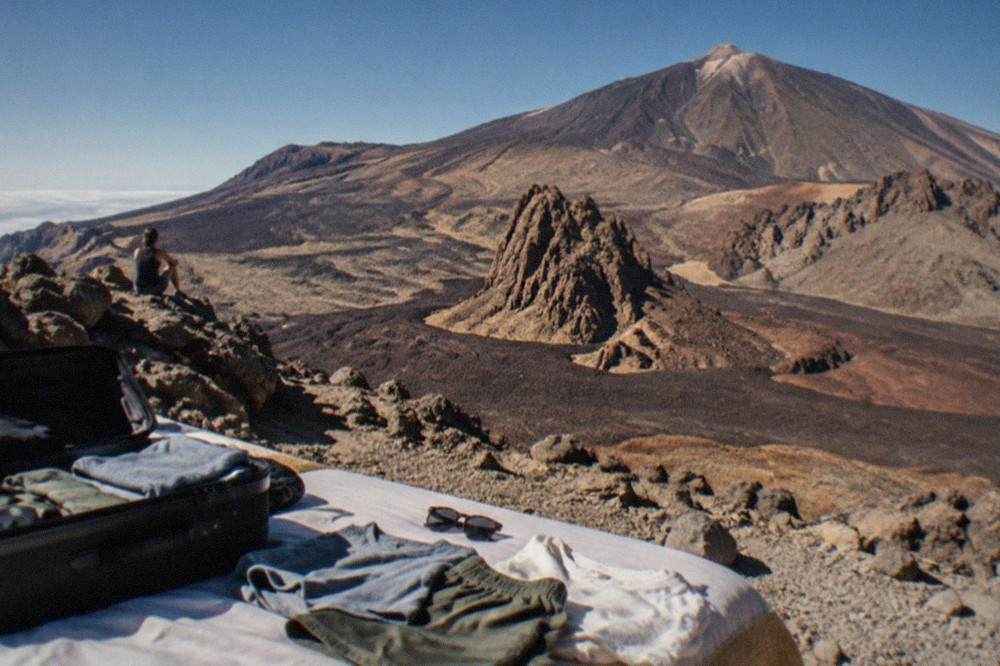
Pack swimwear and sun protection as the baseline, a fleece or insulated jacket for Teide, closed mountain footwear for any booked trail, and a waterproof only if the north or the winter months are on your plan. The sea surface temperature off the south coast ranges from 19.1 C in March to 23.7 C in September and October, so swimming is a year-round activity, while Izana's mean daily maximum never exceeds 23 C in any month.
Build the suitcase in layers, because the island itself is layered. The beach kit is obvious. The mountain kit is what people forget: at La Rambleta, 3,555 m, the cable car operator refuses passengers with cardiovascular conditions, pregnant women and children under 3, and tells anyone with a health problem to ask a doctor before travelling. Even for a healthy visitor, the operator's own access rules treat the upper station as a high-altitude environment, and the packing should match: warm jacket, long trousers, sun protection, because UV is stronger at altitude.
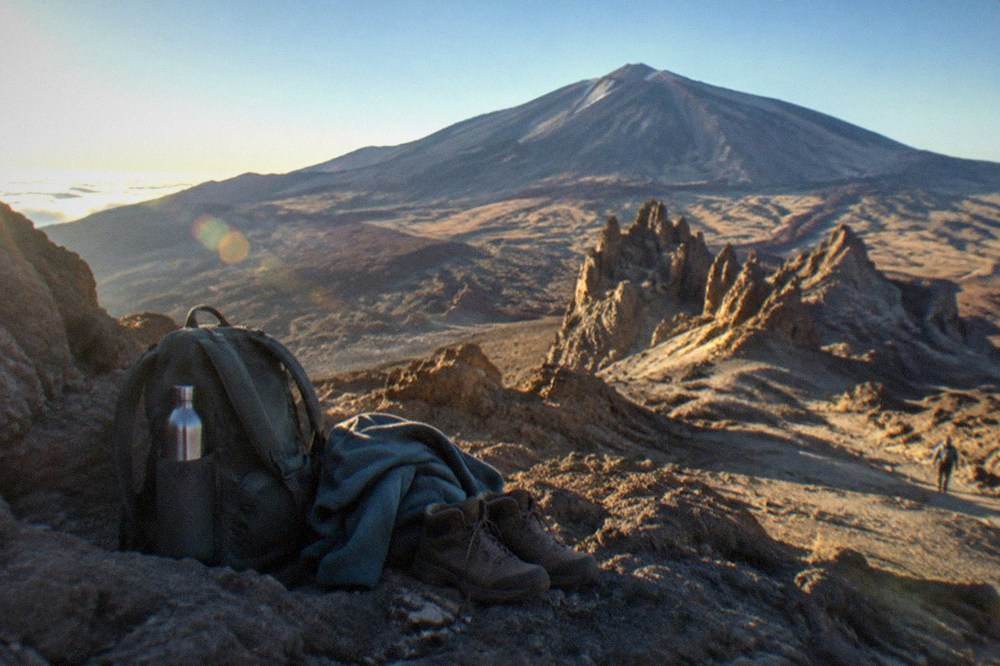
The rest of the list is ordinary holiday kit with two island-specific additions. First, a reusable water bottle: hiking days at altitude are dehydrating and the national park has no shop at La Rambleta. Second, a small dry bag or a towel that packs flat, because boat trips and natural pools appear on most itineraries, and the whale-watching boats of Los Cristianos run to a schedule that does not pause for damp clothing.
If a boat day is already on your plan, the cruise supplies most of the specialist equipment and the packing question shrinks to swimwear and a windproof layer. These are the three bookable days out that reward the least luggage:
Packing for Teide and the High Country
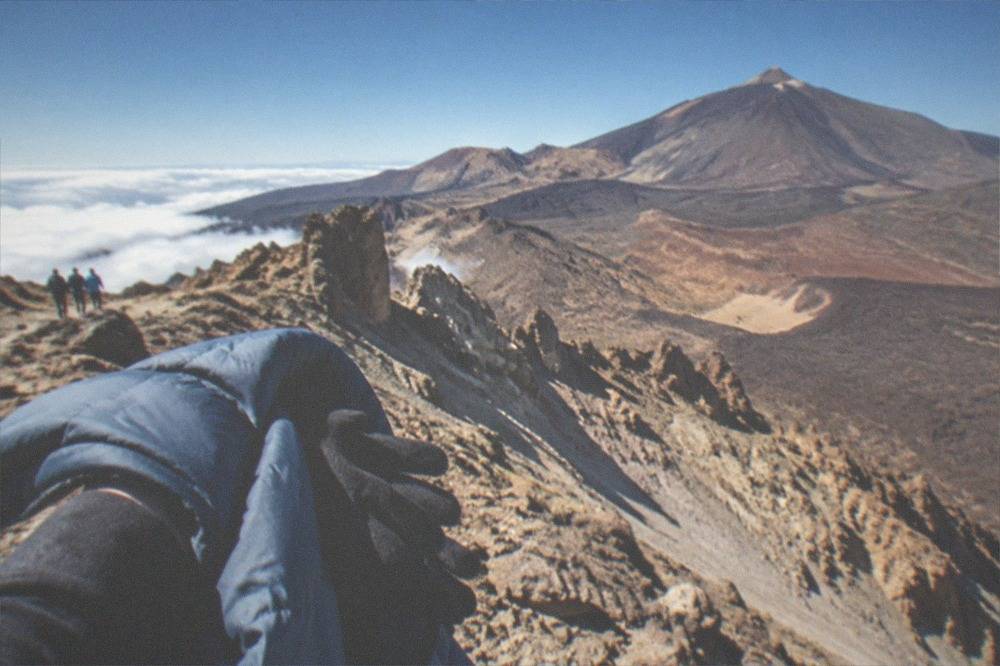
Pack for winter even in August: Izana's mean daily maximum peaks at 23 C in July, its mean daily minimum drops to 1.1 C in January, and ice or snow on the stratovolcano trails triggers a mandatory crampons-and-ice-axe rule on Tenerife ON's equipment list. The cable car lifts you from 2,356 m to 3,555 m, where the operator's access rules exclude anyone with cardiovascular conditions, pregnant women and children under 3.
The mountain is the reason this island breaks packing calculators. A visitor can swim in 22.2 C sea water in the morning, on the NOAA 1991 to 2020 figures, and stand in single-digit air by mid-afternoon. The AEMET normals for Izana, the station at 2,369 m, show what the ridge itself feels like month by month, and the drop from the coast is not gradual, it is a cliff edge you ride up in a cable car.
| Month | Mean daily max C | Mean daily min C | Rain, mm | Rain days of 1 mm or more |
|---|---|---|---|---|
| Jan | 7.5 | 1.1 | 47 | 4.5 |
| Feb | 8 | 1.3 | 67 | 4 |
| Mar | 10.2 | 2.7 | 58 | 4.1 |
| Apr | 11.8 | 3.5 | 18 | 2.7 |
| May | 14.5 | 5.8 | 7 | 1.1 |
| Jun | 18.9 | 9.9 | 0 | 0.2 |
| Jul | 23 | 14 | 0 | 0.1 |
| Aug | 22.6 | 13.8 | 5 | 0.5 |
| Sep | 18.6 | 10.4 | 13 | 1.6 |
| Oct | 14.3 | 6.9 | 37 | 3.7 |
| Nov | 11.1 | 4.5 | 54 | 4.4 |
| Dec | 8.8 | 2.4 | 60 | 5.6 |
Those are AEMET's 1981 to 2010 normals, mean daily maximums and minimums, not the day you will get. They say one thing clearly: the fleece that is optional at the beach is compulsory at La Rambleta, and a hat and gloves are reasonable from October to April.
The rules shape the packing as much as the weather. Smoking is banned in every open-air space of the national park, trails, viewpoints and car parks included, under the Cabildo's wildfire measure. Tenerife ON warns that bookings can be suspended for fire risk or weather alerts, so the packing list should include a plan B for the day, not just the kit. In winter conditions, crampons and an ice axe join the mandatory equipment list on the stratovolcano trails, together with a signed declaration, which is a strong signal that trainers are not a mountain shoe.
Money and paperwork belong in the mountain pocket, not the hotel safe. Since Monday 19 January 2026, the 09:00 to 17:00 slots on the summit trail PNT 10 cost EUR 15 for visitors and EUR 6 for residents of the other Canary Islands, free only for Tenerife residents and children, and the fee is set by the place of residence shown on the ID card or passport, which must be carried to the checkpoint. The Montana Blanca trail PNT 07 costs visitors EUR 6 on working days and EUR 10 at weekends and on public holidays. Bookings are non-refundable, with no change of date, slot or name, and a no-show can bar the user from new applications for three months. The permit itself is booked on Tenerife ON, and the full process is covered in the Teide summit permit guide.
| Charge | Visitors | Other Canary residents | Tenerife residents |
|---|---|---|---|
| PNT 10 summit trail, 09:00 to 17:00 slots | EUR 15 | EUR 6 | Free |
| PNT 07 Montana Blanca, working days | EUR 6 | EUR 3 | Free |
| PNT 07 Montana Blanca, weekends and public holidays | EUR 10 | EUR 5 | Free |
| Cable car return, adult | EUR 42.00 | resident rate applies | EUR 10.50 |
| Cable car return, child 3 to 13 | EUR 21.00 | resident rate applies | EUR 5.25 |
The cable car prices are the operator's own 2026 list, shown as "price from". One thing the cable car does not do is reach the summit: it stops at La Rambleta, 3,555 m, and the crater trail is a separate permit-only route. A traveller packing for the top of Spain's highest peak, 3,715 m on Spain's own MITECO figure, is packing for a hike, not a lift.
Packing for the Beach and the Boat
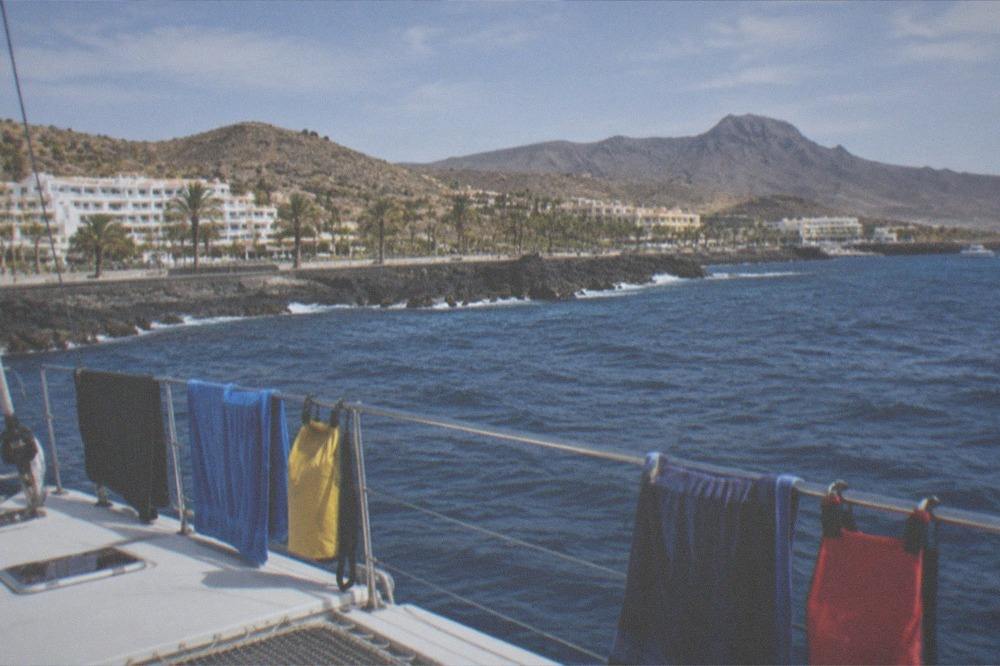
Pack swimwear for every month of the year: the sea surface off the south coast averages 19.1 C at its coldest in March and 23.7 C at its warmest in September and October, on the NOAA 1991 to 2020 dataset. Bring reef-safe sun protection and a windproof layer for boat decks, and remember that the whale-watching rules forbid swimming within 500 m of the animals, so the swim stop happens away from them.
The sea, not the air, decides the swimwear question, and the sea is generous. The south coast's surface temperature never drops below 19 C on the 1991 to 2020 normals, which is warmer than many European seas manage in August. The air figures and the sea figures come from two different datasets and periods, AEMET's 1981 to 2010 air normals against NOAA's 1991 to 2020 sea normals, so treat them as neighbours, not twins.
| Month | Sea surface C |
|---|---|
| Jan | 19.9 |
| Feb | 19.2 |
| Mar | 19.1 |
| Apr | 19.5 |
| May | 20.2 |
| Jun | 21.4 |
| Jul | 22.2 |
| Aug | 23.1 |
| Sep | 23.7 |
| Oct | 23.7 |
| Nov | 22.5 |
| Dec | 21.1 |
For the beach bag itself, the sand matters more than most guides admit. The tourist board describes El Duque as a grey sandy beach and El Médano as fine grey sand under Montaña Roja, while golden sand is what it says of Las Teresitas and Las Vistas; a towel that shakes clean and a mat for the darker sands are worth the space. The full range, from the golden south to the black sand of El Bollullo at the foot of a cliff, is covered in the best beaches guide.
Boat days have their own small rules. Decreto 178/2000 governs every whale-watching trip out of the island: no approach within 60 m, no more than three boats within 500 m, a maximum of 4 knots within 500 m, and no swimming or diving within 500 m of the animals. Authorised boats fly the Barco Azul flag. None of that changes what you wear, but it tells you the deck is a wildlife viewing platform, so pack binoculars, a windproof layer and a camera you can hold one-handed.
What to Wear in Tenerife in Winter
Wear summer clothing on the coast and pack a proper jacket for anything above the tree line: AEMET's January normals give Tenerife South Airport a mean daily maximum of 21.7 C while Izana, at 2,369 m, averages 7.5 C by day and 1.1 C at night, with 47 mm of rain in the month. December on the ridge averages 8.8 C by day, 2.4 C at night and 60 mm of rain.
Winter is the season that proves the two-wardrobe rule. A December visitor in Costa Adeje experiences a mean daily maximum of 22.8 C at the airport station, among the warmest winter figures in Europe, while the same day averages below freezing at dawn on the Teide ridge. The rain falls on the north first: Tenerife North Airport records 80 mm in January and 82 mm in December, against 17 mm and 30 mm at the southern airport, so a waterproof is a northern-base essential and a southern-base maybe.
| Month | South airport, mean daily max C | North airport, mean daily max C | South rain, mm | North rain, mm |
|---|---|---|---|---|
| Jan | 21.7 | 16 | 17 | 80 |
| Feb | 22 | 16.7 | 20 | 70 |
| Mar | 23.1 | 18.2 | 15 | 61 |
| Oct | 26.8 | 22.5 | 12 | 47 |
| Nov | 24.8 | 19.6 | 26 | 81 |
| Dec | 22.8 | 17.1 | 30 | 82 |
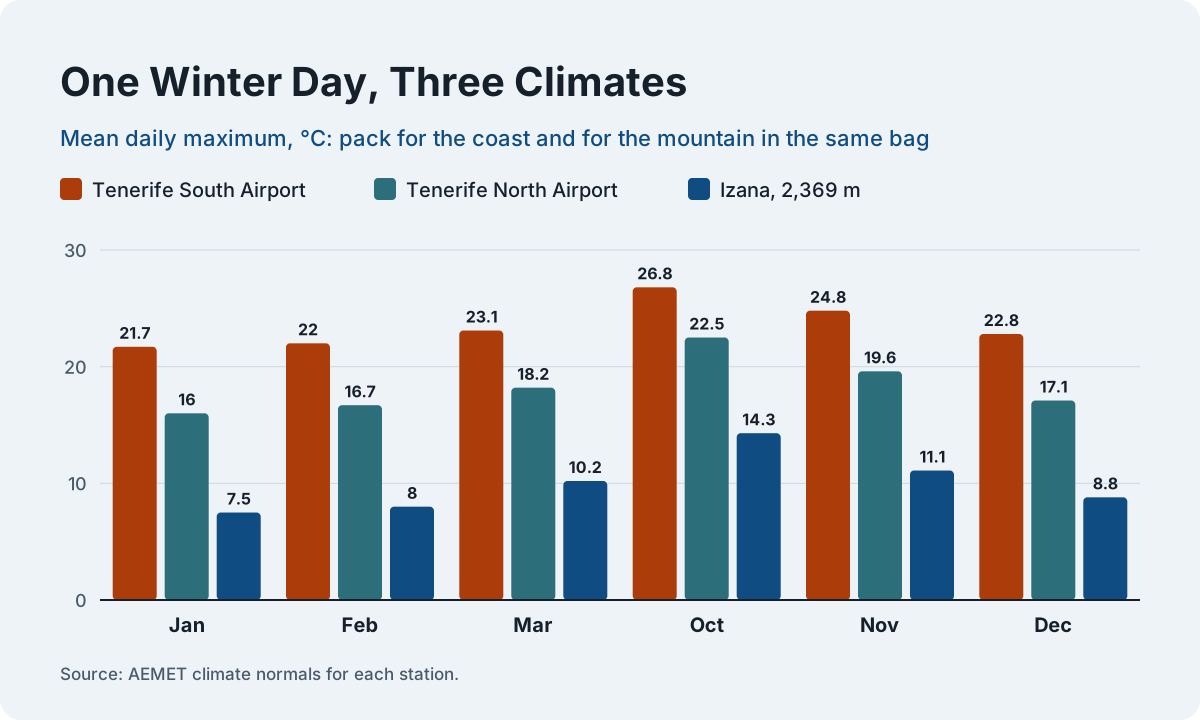
The table gives the station figures and lets them speak: two airports, two climates, one island. A packing list built from the southern numbers alone will fail a day trip to La Laguna or the Anaga hills. The month-by-month detail, including the shoulder seasons, is in the Tenerife weather by month guide, and the December festivities carry their own packing questions, covered in Tenerife in December.
Day Trips, Trails and Evening Plans
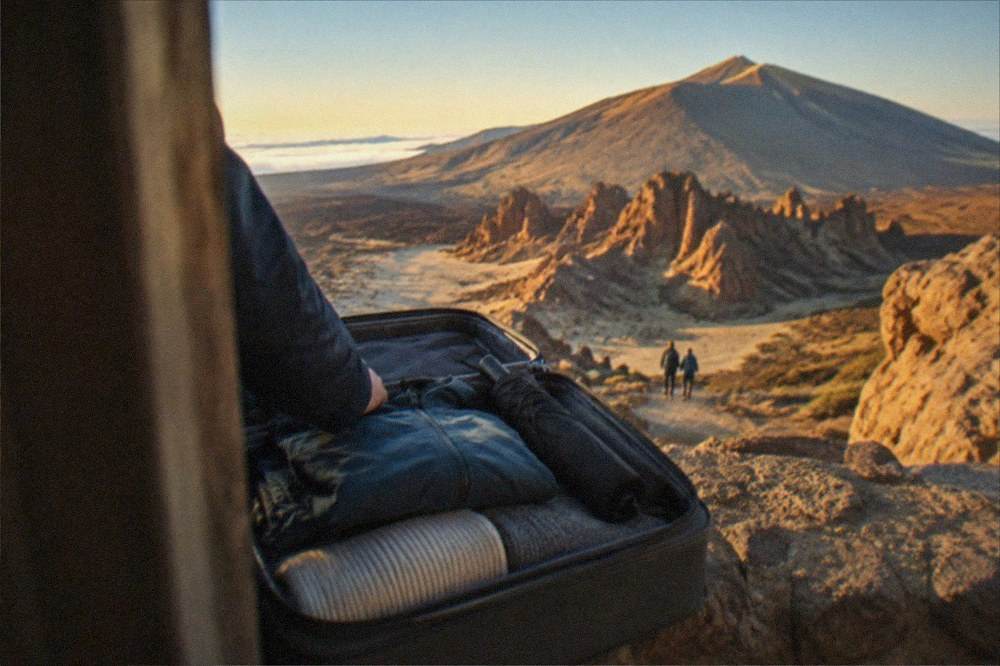
Pack one smart-casual outfit for evenings and town visits, sturdy shoes for cobbled streets, and a day rucksack that carries a layer, water and documents: the Masca descent requires closed mountain footwear and a pre-booked boat exit, the Barranco del Infierno trail costs EUR 15 for a non-resident adult with compulsory advance booking, and Anaga's El Pijaral reserve forbids company-run tours entirely.
The booked trails concentrate the footwear question. Masca is open as a descent-only pilot scheme with a boat exit from the bay, the general ticket is EUR 40.66 with the boat separate, and hikers must arrive on TITSA line 355 from Santiago del Teide, because private vehicles are refused. The operator calls the gorge the place with the most rescues in the Canaries in recent years and warns that the pier can close suddenly when the sea turns, voiding that day's ticket, so the packing list should include a flexible attitude alongside the boots.
Barranco del Infierno, in the south near Adeje, is gentler but still controlled: 20 people every 30 minutes in the mornings, advance online booking compulsory, EUR 15 for a non-resident adult, EUR 5 for Canary residents, no children under 5 and a child ticket from 5 to 12. El Pijaral in Anaga, the laurel forest everyone photographs, needs a Tenerife ON reservation released on Mondays at 07:00 Canary time, at most 14 days ahead, and organised tours by companies are not permitted there, so it is a self-guided packing problem: proper boots, water, and no expectation of a guide.
Evenings are simpler. Santa Cruz and the southern resorts run warm, with the capital's August mean daily minimum at 21.9 C, so the smart-casual outfit is light. The free GuruWalk walking tours of the historic centre of Santa Cruz, of Puerto de la Cruz and of La Orotava cost nothing to join and work on tips, which makes them the lowest-luggage evening activity on the island: comfortable shoes and a bottle of water are the whole requirement.
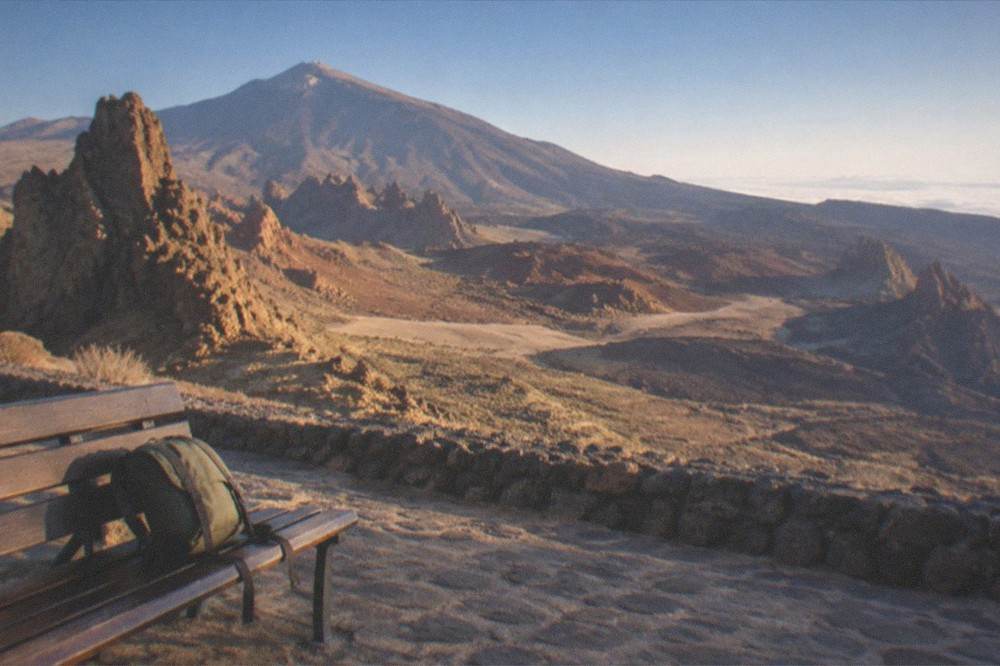
Luggage, Documents and Connectivity
Pack your passport and, since 10 April 2026, expect the EU Entry/Exit System to record your facial image and fingerprints instead of a stamp; ETIAS is not in operation and no start date has been announced, and there is no tourist tax on Tenerife, though trail fees, the Masca ticket and the Barranco del Infierno charge do exist. The Canary sales tax is IGIC, not VAT.
The paperwork list is short but specific. The European Commission states that the Entry/Exit System became fully operational on 10 April 2026 and registers non-EU nationals, including UK and US visitors, with a facial image and fingerprints on short stays. ETIAS is a different animal: the EU says it "is currently not in operation and no applications for travel authorisations are collected at this point", and the fee has been set at EUR 20. No start date has been announced, so nothing about it belongs in a packing decision yet, and the entry detail is covered in entry requirements for Tenerife.
Money needs a card and a little cash. The Canaries apply IGIC rather than VAT, and the regional tax agency's table shows 7% on everyday goods, with 0%, 3% and 15% bands for other categories. There is no per-night lodging tax in force or approved on any official page this desk has read; the charges that do exist are the per-booking trail fees on PNT 10 and PNT 07, the Masca ticket and the Barranco del Infierno entry. For getting around without a hire car, TITSA sells visitors the EUR 10 day travelcard and the EUR 50 seven-day travelcard, both available at airport ticket machines, and the free public transport subsidy applies only to resident passes, as the Tenerife buses guide explains.
| Product | Price | Who it is for |
|---|---|---|
| TITSA day travelcard | EUR 10 | Visitors, one day of bus travel |
| TITSA 7 day travelcard | EUR 50 | Visitors, a week of bus travel |
| Ten+ card | EUR 2 | The rechargeable card itself |
| Tram single, transit pass | EUR 1.35 | Santa Cruz to La Laguna tram |
| Tram single, mobile | EUR 1.10 | Same ticket bought on a phone |
Connectivity is the one modern essential worth settling before departure. A Spain eSIM covers the island's networks without a shop visit on arrival, and can be arranged in minutes: check a Spain eSIM for your trip. For everything else, the getting around Tenerife guide maps the transport decisions, and this Tenerife Travel Guide desk keeps the packing, permits and prices in one place.
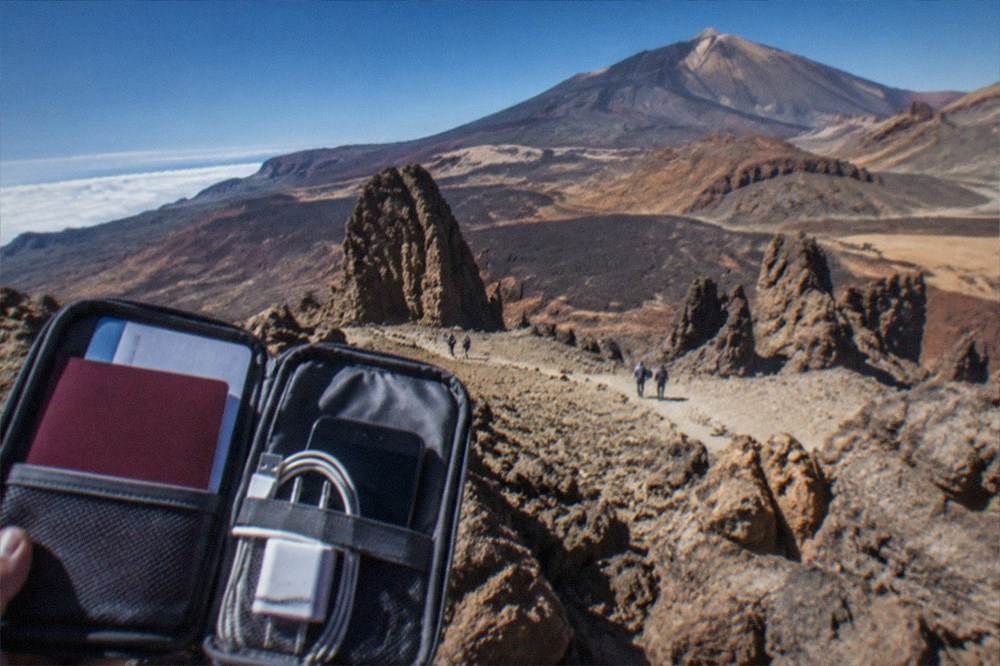
The Short Version of the List
Pack swimwear, sun protection and light clothing for the coast; a fleece or insulated jacket, hat and gloves for Teide; closed mountain footwear for any booked trail; a waterproof if the north or winter is in the plan; and your passport, with the EES now replacing stamps for UK and US visitors. The sea stays between 19.1 C and 23.7 C all year, while the ridge at Izana averages 7.5 C by day in January, so the layer is not optional.
Every figure above comes from a station record or an operator page, which is the only honest way to pack for an island that spans 3,700 vertical metres of wardrobe. The coastal half of the list is easy and the mountain half is the half that gets people cold. Get the footwear right for the trail you have actually booked, carry the ID that matches the fee band you paid, and the island does the rest.
If a booked day out is on your list, these three take the least luggage and return the most day:
Common Questions About Packing for Tenerife
what to wear in tenerife
Wear light summer clothing on the coast year round, with a fleece or jacket for evenings and for any trip above the tree line. AEMET's normals give Tenerife South Airport a mean daily maximum of 21.7 C in January and 28.4 C in August, while Izana beside Teide averages 7.5 C by day in January, so the mountain needs a warm layer in every month.
what to pack for tenerife
Pack swimwear and sun protection as the baseline, an insulated layer for Teide, closed mountain footwear if a booked trail is on your plan, and a waterproof for the north between November and February. Bring your passport: the EU Entry/Exit System, fully operational since 10 April 2026, records facial images and fingerprints instead of stamps.
Do I need warm clothes for Mount Teide in summer?
Yes. Izana's July mean daily maximum is 23 C and its mean daily minimum is 14 C, and the cable car deposits you at La Rambleta, 3,555 m, where the operator treats the environment as high altitude. A fleece or jacket belongs in the day rucksack even in August, and in winter conditions Tenerife ON makes crampons and an ice axe mandatory on the stratovolcano trails.
What shoes should I pack for hiking in Tenerife?
Closed mountain footwear, and for Masca it is a hard rule rather than advice: the operator refuses entry without it even to hikers holding a booking. The same shoes serve Barranco del Infierno, the Anaga trails and the Teide routes, and they need to be worn in before the flight, not on it.
Can I swim in the sea in Tenerife in winter?
Yes. The sea surface off the south coast averages 19.9 C in January and 19.1 C in March on the NOAA 1991 to 2020 dataset, the coldest window of the year and still swimmable for most people. By September and October the average reaches 23.7 C, the warmest of the year.
Is there a tourist tax I should budget for when packing documents?
No per-night lodging tax appears on any official page in force or approved on Tenerife. The charges that do exist are per-booking fees on the Teide trails PNT 10 and PNT 07 since 19 January 2026, the EUR 40.66 Masca ticket with the boat separate, and the EUR 15 Barranco del Infierno entry, so carry the card you booked with and the ID that matches your fee band.