Teide Observatory
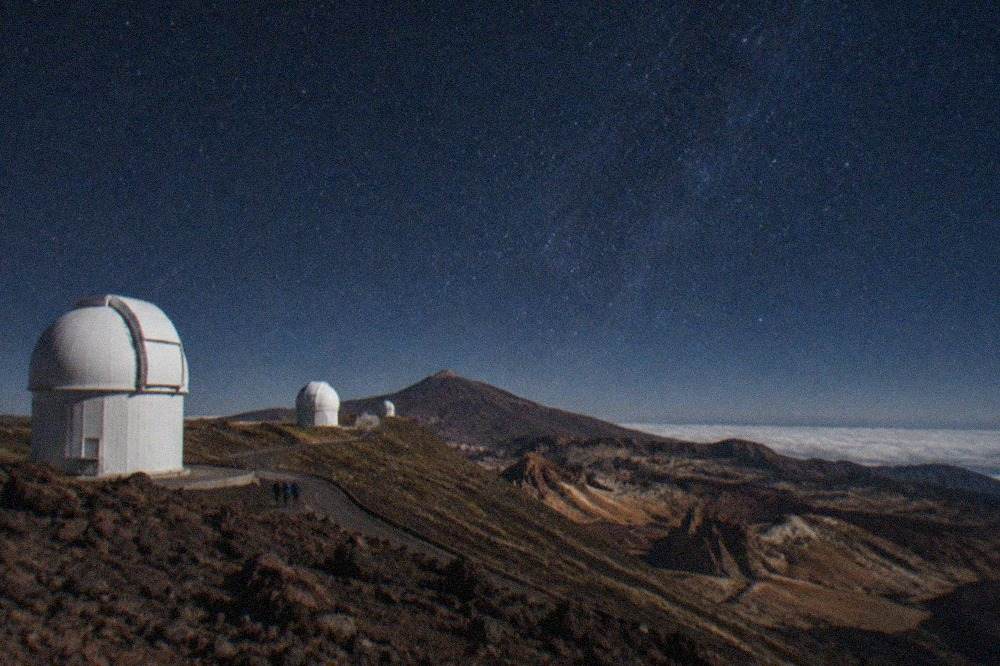
The Teide Observatory sits at about 2,400 metres on the Izaña ridge, one of the best places for professional astronomy in the northern hemisphere, and it opens to visitors on guided tours booked in advance.
Short answer
Yes, you can visit the Teide Observatory, but only on a guided visit booked in advance through the Instituto de Astrofísica de Canarias. The observatory is a working scientific facility at Izaña, about 2,400 metres up, not a walk-in attraction, and its visits page has carried a fully booked notice, so reserve early.
Perched on the Izaña ridge at about 2,400 metres, the Teide Observatory is one of the professional homes of astronomy in the northern hemisphere. The Instituto de Astrofísica de Canarias runs it as a working scientific facility, and the first telescope here began work in 1964, according to the tourist board's own astronomy page. It shares the mountain with Teide National Park, a UNESCO World Heritage site since 2 July 2007, and with a summit, Teide, that Spain's own environment ministry measures at 3,715 metres.
That combination is the reason this page exists. The observatory is not a theme park and not a viewpoint: it is where solar science and night-sky research happen on a ridge that the Fundación Starlight has listed as part of a Starlight Reserve since October 2013. This guide sets out what the observatory is, how a visitor actually gets inside, what the rules are, and how the visit fits alongside the cable car and the summit permit. Everything below comes from the official pages of the Instituto de Astrofísica de Canarias, the cable car operator, Tenerife ON and Spain's national parks body.
What Is the Teide Observatory?
The Teide Observatory is a professional astronomical research facility run by the Instituto de Astrofísica de Canarias at Izaña, about 2,400 metres above sea level on Tenerife, where the first telescope began working in 1964. It is a working observatory rather than a visitor attraction, and it opens to the public only through guided visits booked in advance.
The Instituto de Astrofísica de Canarias, the Canary research body that operates the site, describes the observatory as one of its two observatory complexes in the islands. The location is the point. Izaña sits high on the island's spine, above the layer of coastal cloud that often blankets the coast in summer, and the Fundación Starlight lists "Cumbres de Tenerife" as a Starlight Reserve and "El Teide" as a Starlight Tourist Destination, both dated October 2013 on the foundation's own listings.
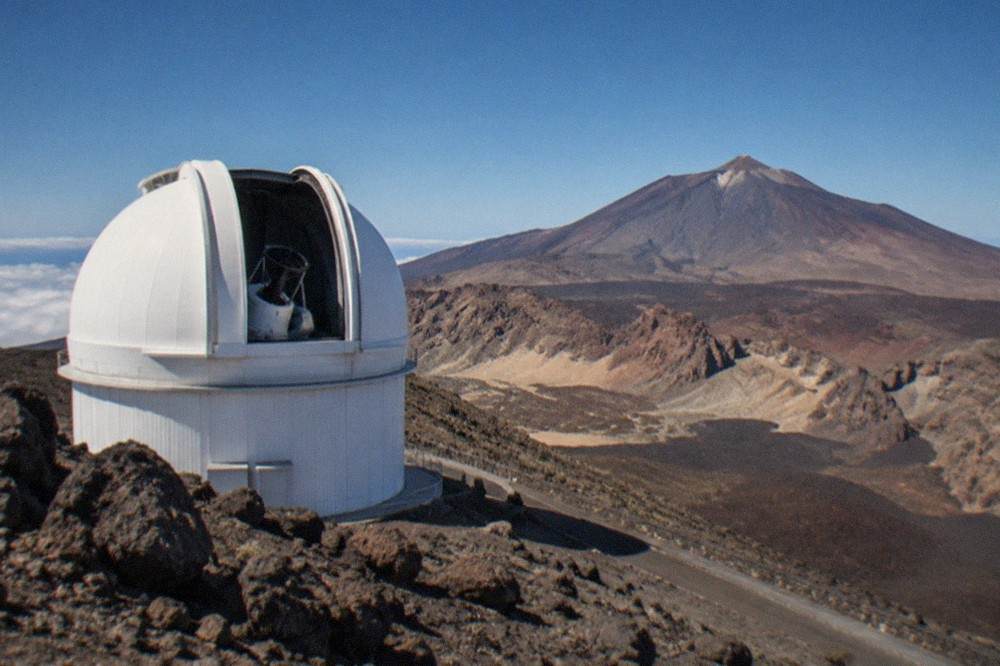
The ridge also carries a weather station. AEMET, Spain's met office, runs a station at Izaña at 2,369 metres, and its climate normals give a sense of what the air is like up there: a July mean of 18.5 degrees Celsius against 25 degrees in Santa Cruz, and winter nights that average just above freezing. The section on weather further down carries the full figures.
One thing the observatory is not: it is not the summit. Teide itself, 3,715 metres in the measurement Spain's environment ministry uses, sits inside the national park, and the crater trail is a separate, permitted hike covered by the Teide summit permit. UNESCO's inscription for the park notes that rising 7,500 metres above the ocean floor, Teide is "regarded as the world's third-tallest volcanic structure", a claim that belongs to UNESCO and to that exact wording. The national park was declared by decree on 22 January 1954 and spans 18,990 hectares, with a peripheral protection zone of 7,374.32 hectares, which makes it the largest and oldest national park in the Canaries in the environment ministry's own words.
Can You Visit Teide Observatory?
Yes, but only on a guided visit reserved in advance through the Instituto de Astrofísica de Canarias. The observatory's own visits page states that guided visits are by prior reservation only, that under-16s visit free, that residents receive a discount and that Spanish school visits are free. The page has carried a fully booked notice, so a visit needs booking well before you travel.
That fully booked notice is the practical headline. The Instituto de Astrofísica de Canarias runs a limited programme of daytime guided visits, and demand in a year when the national park recorded 5,242,653 visits, the most of any park in Spain's network, means the observatory's small visit capacity fills up. There is no walk-up option and no gate queue that resolves itself.
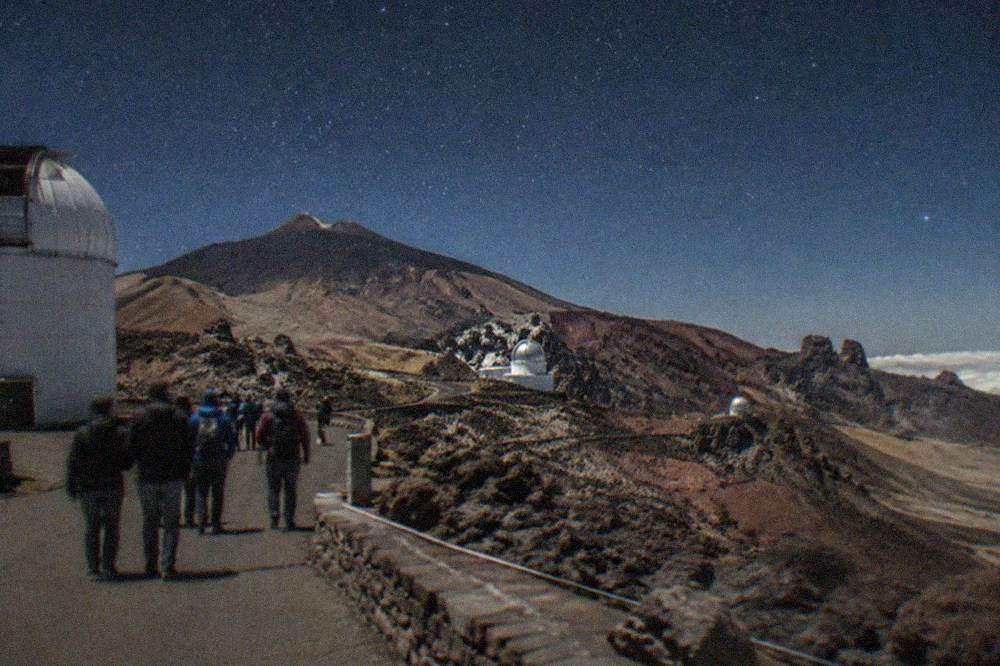
The alternative, if direct booking is full or the dates do not line up, is a commercial guided tour that includes the observatory. The listing for the Teide Observatory guided tour pairs the observatory with a coach transfer, which matters because the observatory sits on the TF-24 road out of La Laguna, a drive most holidaymakers staying in the south will not want to attempt twice in one day.
For anyone planning the wider day, the same ridge road continues into the national park, and the Teide tours category on this site covers the sunset and stargazing options that use the same dark skies after the observatory's daytime visits end.
How Do You Book a Visit and What Are the Rules?
Book through the Instituto de Astrofísica de Canarias' own visits page, which states that guided visits are by prior reservation only. Children under 16 are admitted free, residents get a discount, and Spanish school visits are free. Because the page has carried a fully booked notice, check availability before building a day around the visit.
The booking itself is straightforward: the observatory's page is the only official route, and a commercial tour that includes the observatory is the alternative when the direct programme is full. What trips people up is the rest of the mountain's rules. The observatory sits inside the wider Teide area, where several things now need reservations and, since Monday 19 January 2026, some carry public fees.
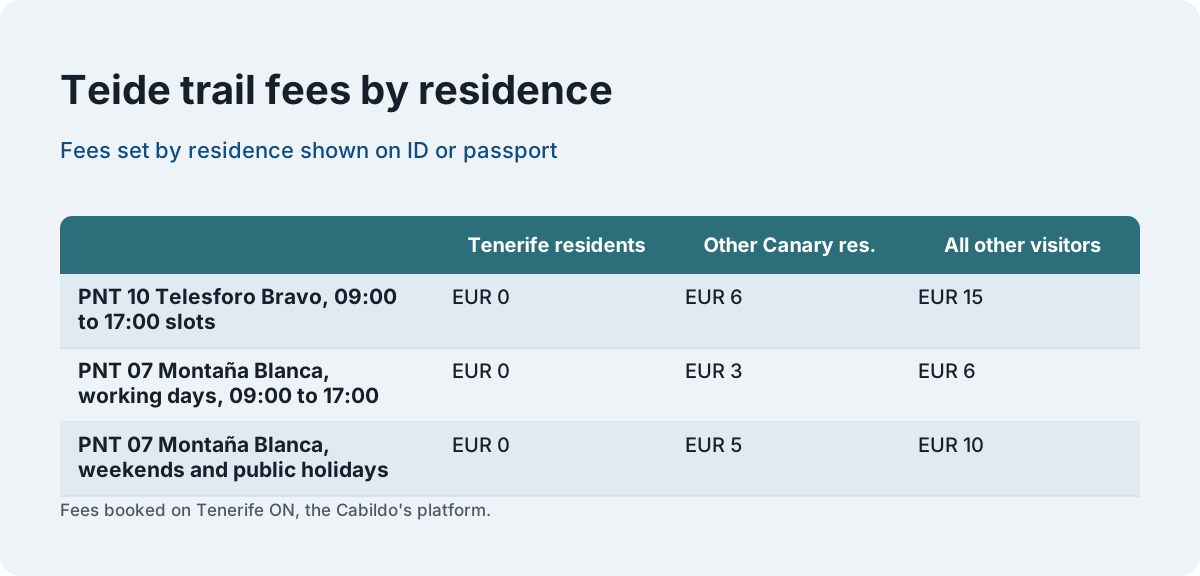
The two trails with fees are the summit trail, PNT 10 Telesforo Bravo, and PNT 07 Montaña Blanca. Both are booked on Tenerife ON, the Cabildo's platform, and the fees are set by the residence shown on your ID or passport. Children are exempt from the PNT 10 fee, and the booking page shows the age band that applies.
| Trail and slot | Tenerife residents | Other Canary residents | All other visitors |
|---|---|---|---|
| PNT 10 Telesforo Bravo, 09:00 to 17:00 slots | EUR 0 | EUR 6 | EUR 15 |
| PNT 07 Montaña Blanca, working days, 09:00 to 17:00 | EUR 0 | EUR 3 | EUR 6 |
| PNT 07 Montaña Blanca, weekends and public holidays | EUR 0 | EUR 5 | EUR 10 |
Two cautions from the official pages. First, the cable car does not reach the summit: it stops at La Rambleta, 3,555 metres, and the crater is the separate PNT 10 permit trail. Second, the out-of-hours slots on PNT 10, 06:00 to 09:00 and 18:00 to 22:00, carry no fee mark but are still reservations, and walking without one can be penalised. Permits are released every Monday at 07:00 Canary time, keeping 56 days bookable, and no official page gives a sell-out speed, so ignore any fixed lead time you read elsewhere.
The refund terms are strict, and worth knowing before you pay. Tenerife ON states the trail bookings are non-refundable, with no changes of date, slot or names, and money is returned only if the trail is closed or the cable car is not operating. Failing to use a booking can also bar you from new applications for three months. The summit trail itself carries its own access rules: no children under 3, under-16s only with an adult, and the official page warns it is not suitable for people with heart, respiratory or mobility problems.
If the observatory visit is the anchor of your day, a tour that bundles the reservation, the transfer and the timing is the simplest way to make it happen.
What Can You See at the Teide Observatory?
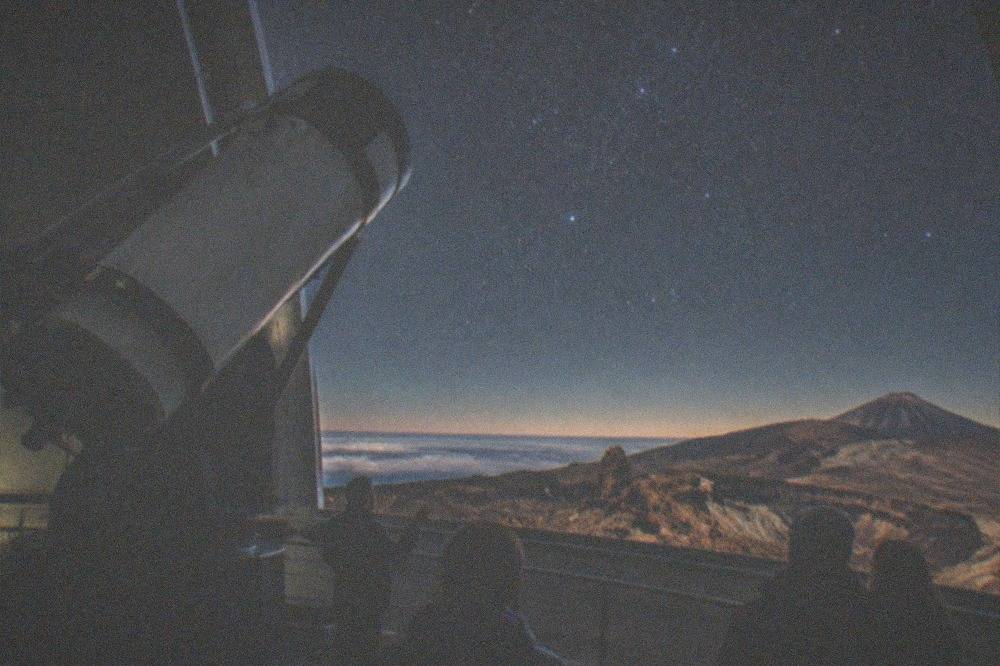
The guided visit shows a working scientific facility: the observatory's solar telescopes and its domes on the Izaña ridge, explained by the Instituto de Astrofísica de Canarias' guides. The site is a research observatory where the first telescope began work in 1964, so the visit is about instruments and science rather than rides or shows.
The tourist board's astronomy page describes the observatory as the home of solar research on the islands, and the guided visit reflects that: the daytime programme exists because the observatory's specialty is the sun, which is the one object in the sky that can be shown in daylight. The Instituto de Astrofísica de Canarias' visits page is the authority on what a given visit includes, and it is worth reading before booking so expectations match. The rest of the planning pages sit on Tenerife Travel Guide.
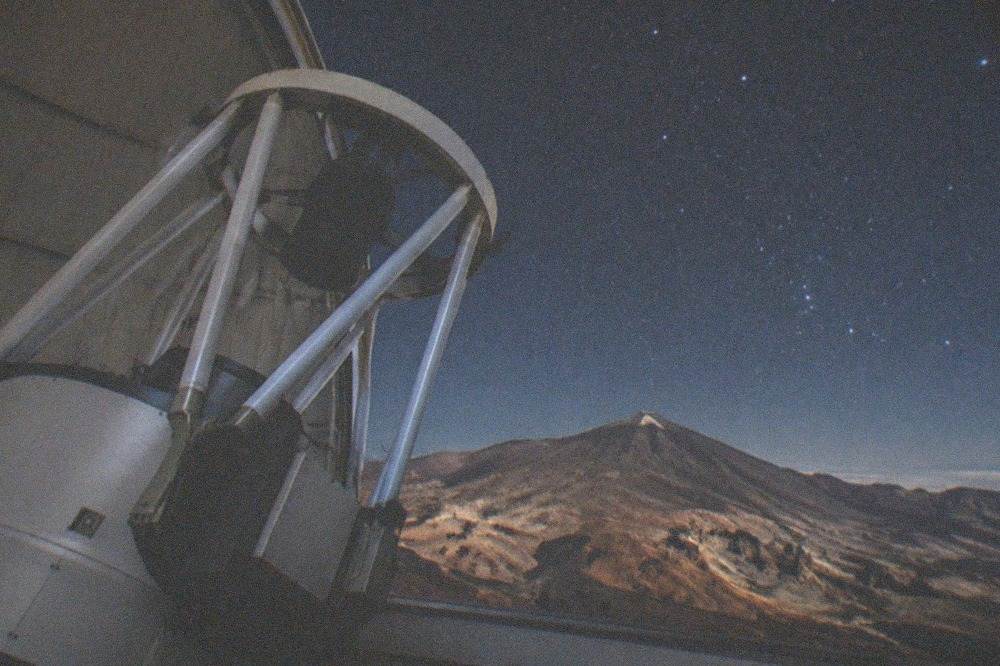
For the night sky, the observatory is not the venue. The professional telescopes are for scientists, and the visitor experience after dark belongs to the stargazing tours that run inside the national park, covered in the Teide stargazing tours guide. Those tours use portable telescopes and the same Starlight Reserve skies, and they need no observatory reservation.
For visitors who want the deepest version of the same skies, a small-group session with a large telescope is the other end of the scale.
Both are evening activities, which pairs neatly with a daytime observatory visit: the observatory explains the science by day, and the stargazing session shows the result by night.
Is Teide Observatory Worth Visiting?
For anyone with a real interest in astronomy or science, yes: the Teide Observatory is a working research facility at 2,400 metres, and a guided visit inside its domes is an experience the rest of Tenerife cannot replicate. For visitors whose interest is casual, the national park's viewpoints, the cable car and a stargazing evening deliver more of the island for less planning.
The honest split is that simple. The observatory visit is a science outing: it needs a booking made in advance, it happens in daytime, and it rewards curiosity about instruments and research. The rest of the mountain is free to drive through, and no official page lists an entry fee for the national park itself; the charges that exist are the per-booking trail fees on PNT 10 and PNT 07 since 19 January 2026.
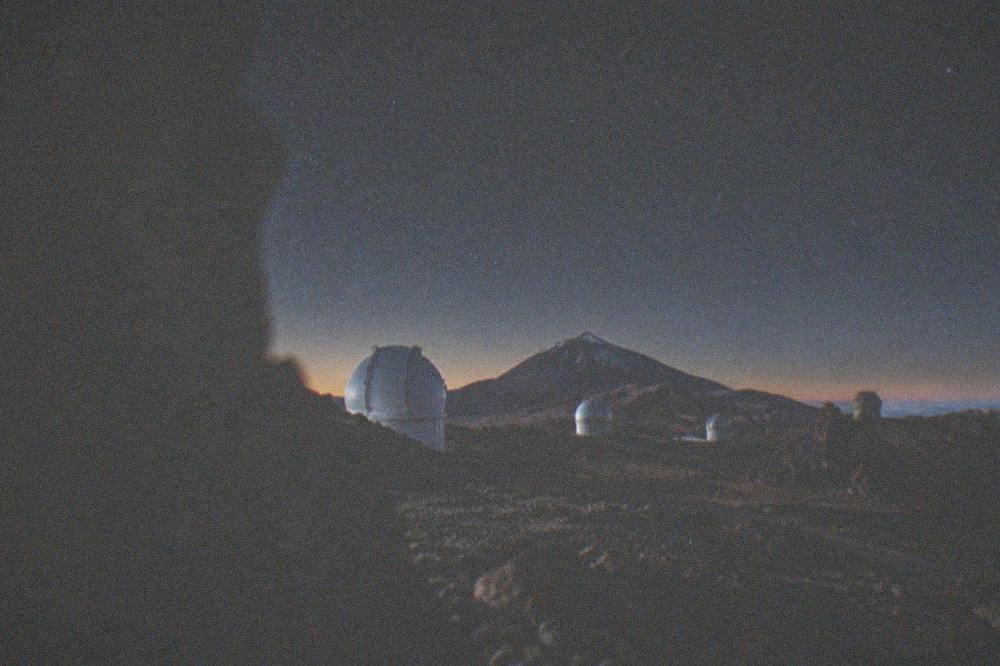
A family with children should also note the age rules across the mountain. The observatory admits under-16s free on its guided visits. The cable car, by contrast, does not allow children under 3, pregnant women or people with cardiovascular conditions, because of the altitude, and its child fare runs from age 3 to 13. The PNT 10 summit trail bars under-3s and allows under-16s only with an adult. Anyone with a health condition should treat the whole ridge the way the cable car operator treats its own ride: the operator tells anyone with health problems to ask a doctor first, and no page on file gives medical advice beyond that.
What Is the Weather Like at Izaña?
Izaña is cold by Tenerife standards. AEMET's climate normals for the station at 2,369 metres give a January mean of 4.3 degrees Celsius and a July mean of 18.5, with overnight lows averaging 1.1 degrees in January and 14 degrees in July, so the observatory ridge needs warm clothing even when the coast is in shorts.
The numbers come from AEMET's published normals for station C430E, covering 1981 to 2010. The contrast with the coast is the useful part: Santa Cruz averages 18.2 degrees in January and 25 in July, and the south airport station averages 18.4 and 24. Izaña sits between them and the summit, and its rain pattern peaks in February with 67 millimetres.
| Month | Mean daily max C | Mean daily min C | Mean C | Rain mm | Sunshine hours |
|---|---|---|---|---|---|
| Jan | 7.5 | 1.1 | 4.3 | 47 | 226 |
| Feb | 8 | 1.3 | 4.7 | 67 | 223 |
| Mar | 10.2 | 2.7 | 6.4 | 58 | 260 |
| Apr | 11.8 | 3.5 | 7.6 | 18 | 294 |
| May | 14.5 | 5.8 | 10.1 | 7 | 356 |
| Jun | 18.9 | 9.9 | 14.4 | 0 | 382 |
| Jul | 23 | 14 | 18.5 | 0 | 382 |
| Aug | 22.6 | 13.8 | 18.2 | 5 | 358 |
| Sep | 18.6 | 10.4 | 14.5 | 13 | 295 |
| Oct | 14.3 | 6.9 | 10.6 | 37 | 259 |
| Nov | 11.1 | 4.5 | 7.8 | 54 | 220 |
| Dec | 8.8 | 2.4 | 5.6 | 60 | 218 |
Two readings of that table matter for a visit. Sunshine is generous, with 382 hours in June and July, which is why the ridge works for solar astronomy. And winter is genuinely wintry: ice and snow on the stratovolcano trails trigger a mandatory crampons-and-ice-axe rule plus a signed declaration on the booked trails, so a December or January visit to the observatory should be dressed for a cold, bright mountain, not a beach day.
The chart shows the gap the mountain creates: the same island, on the same day, can hold a 29-degree August afternoon in Santa Cruz and an overnight low of 13.8 degrees at Izaña. Plan the observatory day as a mountain day with a coast day either side of it.
How Does the Observatory Fit Into a Day in Teide National Park?
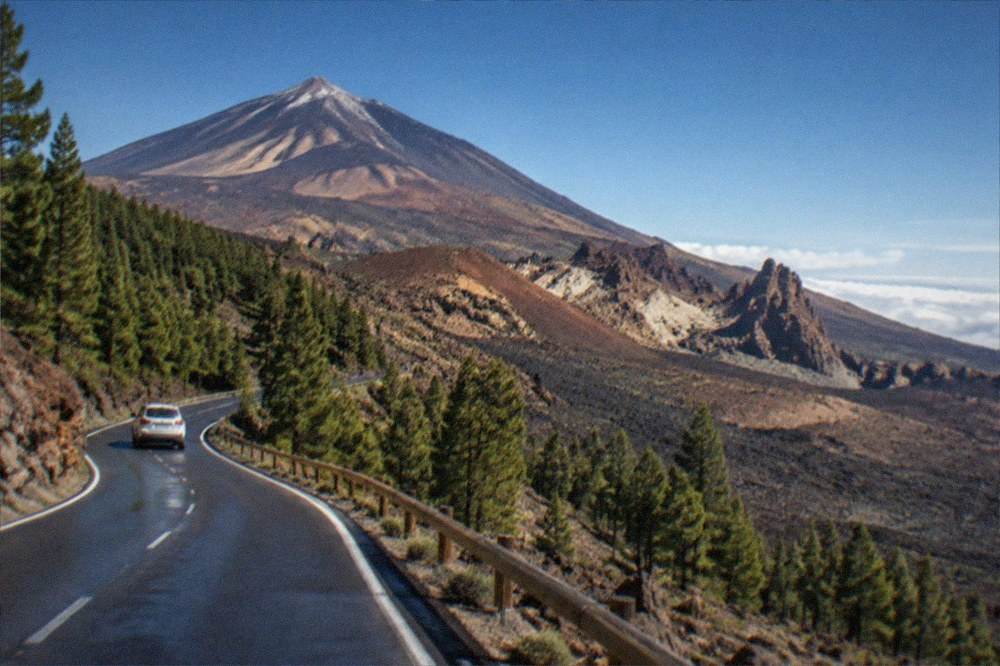
The observatory sits on the TF-24 ridge road between La Laguna and the national park, so the natural pairing is a morning guided visit followed by the park's viewpoints, Roques de García or a cable car ride to La Rambleta, with the whole day reachable from both the north and the south of the island. The cable car's 2026 hours run 09:00 to 17:00 in the standard season and to 18:40 in the extended summer and Easter periods.
The geography does the planning for you. From the north, La Laguna and its UNESCO-listed colonial centre sit below the ridge road. From the south, the Teide from the south day trip covers the route most holidaymakers take, and a coach tour that includes the observatory removes the driving entirely.
If you drive yourself, the cable car's prices and hours are the other numbers worth carrying. The operator's 2026 list shows a non-resident adult return at EUR 42.00 and a child return at EUR 21, described as "price from", with resident rates far lower.
| Cable car ticket | Non-resident adult | Non-resident child (3 to 13) | Resident adult | Resident child |
|---|---|---|---|---|
| Return | EUR 42.00 | EUR 21 | EUR 10.50 | EUR 5.25 |
| One way | EUR 23.50 | EUR 11.75 | EUR 5.88 | EUR 2.94 |
| Return with Teide Legend audio guide | EUR 45.50 | EUR 24.50 | EUR 14 | EUR 8.75 |
The last ascent is one hour before closing and the last descent ten minutes before, which on a 17:00 day means 16:00 and 16:50. The base station sits at 2,356 metres and La Rambleta at 3,555 metres, and the cable car is a ride to a high station, not to the summit. The base station car park runs 08:00 to 18:00 in the standard season and to 19:40 in the extended periods, so a late afternoon on the mountain still leaves time to get the car down.
One rule applies everywhere above the tree line: the Cabildo bans smoking in all open-air spaces of the national park, trails, viewpoints, car parks and recreation areas included, as a wildfire measure, and bookings can be suspended for fire risk or weather alerts, so check the Tenerife ON alerts page before setting out. For anyone wondering whether the volcano beneath all this is a live concern, is Mount Teide active is the page that answers it properly.
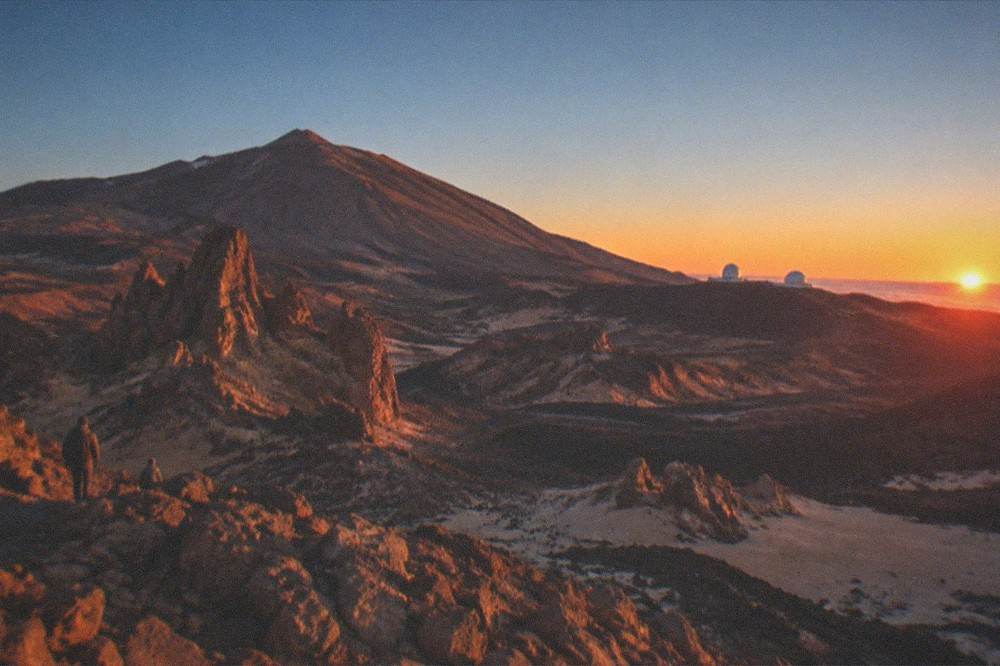
For the evening, the same skies that make the observatory a research site make the park a stargazing destination, and the choice of sunset and telescope tours is wide enough to suit most budgets and group sizes.
Common Questions About the Teide Observatory
Can you visit Teide Observatory?
Yes, on a guided visit reserved in advance through the Instituto de Astrofísica de Canarias. The observatory's visits page states that guided visits are by prior reservation only, with under-16s free, a resident discount and free Spanish school visits. The page has carried a fully booked notice, so book before you travel.
Is Teide Observatory worth visiting?
For anyone genuinely interested in astronomy, yes: it is a working research facility at about 2,400 metres, and the guided visit inside its domes is unlike anything else on the island. Casual visitors may prefer the national park viewpoints, the cable car and an evening stargazing tour, which need less planning.
Is the Teide Observatory the same place as the cable car?
No. The observatory sits at Izaña, about 2,400 metres, on the ridge road from La Laguna. The cable car runs from a base station at 2,356 metres inside the national park to La Rambleta at 3,555 metres, and it does not reach the summit.
Can children visit the Teide Observatory?
Yes. The Instituto de Astrofísica de Canarias states that under-16s visit free on the guided visits. Elsewhere on the mountain the rules differ: the cable car does not allow children under 3, and the PNT 10 summit trail allows under-16s only with an adult.
Do you need a permit for the observatory?
No permit is needed, but a reservation is. The observatory visit is booked through the Instituto de Astrofísica de Canarias. The Tenerife ON permits and fees apply to the national park's trails, PNT 10 and PNT 07, not to the observatory visit.