Tenerife Airports: TFS or TFN, Which One Should You Fly Into?
Tenerife is served by two airports, and flying into the wrong one can add hours to your transfer. Here is what AENA, TITSA and the climate records actually say about each.
Short answer
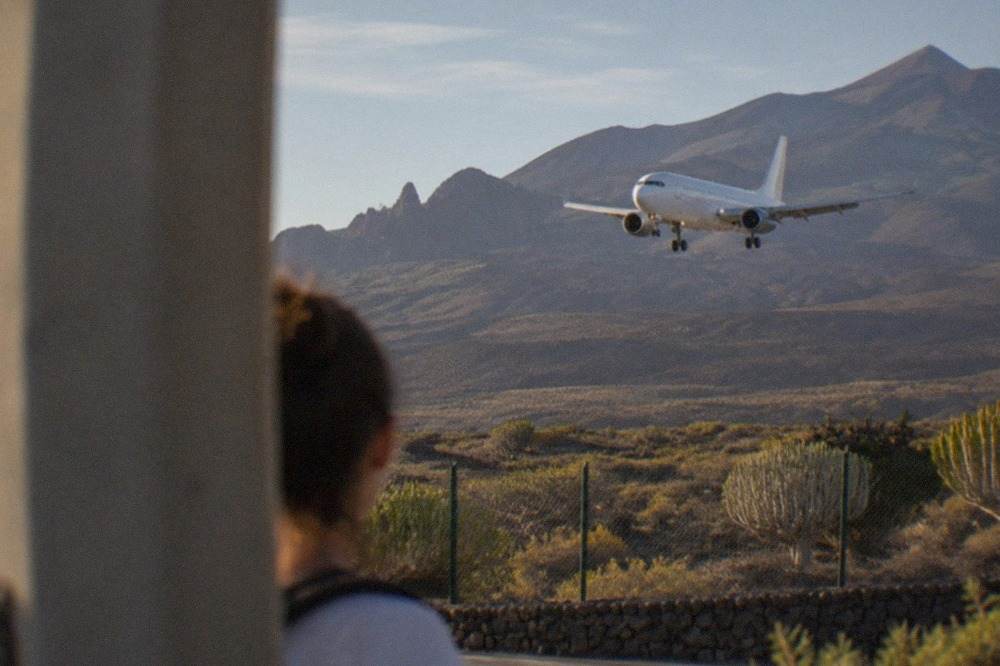
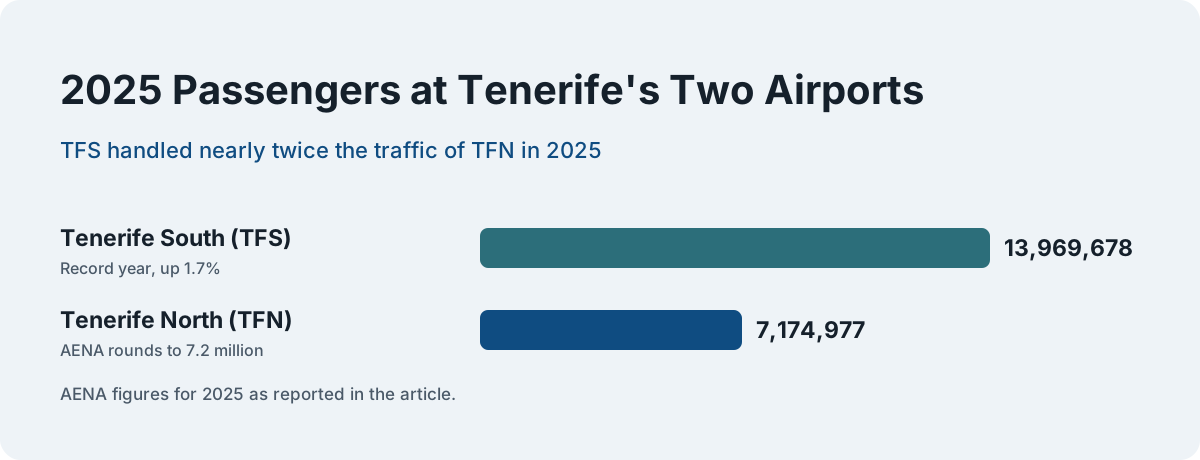
Tenerife has two airports: Tenerife South (TFS), also known as Reina Sofia, and Tenerife North (TFN), also known as Los Rodeos. TFS handled 13,969,678 passengers in 2025 and serves most international holiday flights; TFN handled 7,174,977 and is stronger for domestic and inter-island connections.
Tenerife is one island with two airports, and the choice between them is the single biggest transfer decision in a Tenerife holiday. AENA, the Spanish airport operator, gives them the formal names Tenerife Sur and Tenerife Norte-Ciudad de La Laguna; the codes TFS and TFN are what appear on tickets. In 2025 the southern airport handled 13,969,678 passengers, an all-time record, while the northern one handled 7,174,977. Those two numbers alone tell you most of the story: the south is the holiday gateway, the north is the domestic and inter-island workhorse. This page sets out what the official sources say about each, from bus lines to climate, so the choice rests on facts rather than habit. For the wider picture of the island itself, the editorial desk behind this site covers everything from getting around Tenerife to where to stay in Tenerife.
How Many Airports Are There in Tenerife?
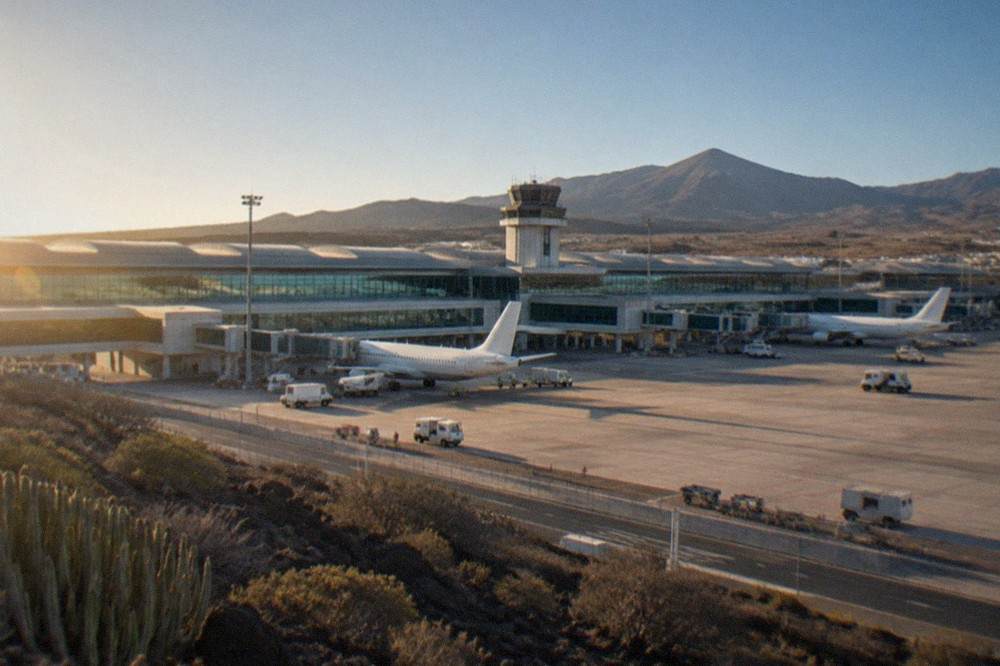
Tenerife has exactly two commercial airports. AENA, Spain's airport operator, names them Tenerife Sur (TFS), also known as Reina Sofia, and Tenerife Norte-Ciudad de La Laguna (TFN), also known as Los Rodeos. In 2025 Tenerife South handled 13,969,678 passengers, an all-time record, and Tenerife North handled 7,174,977, which AENA rounds to 7.2 million on its airport page.
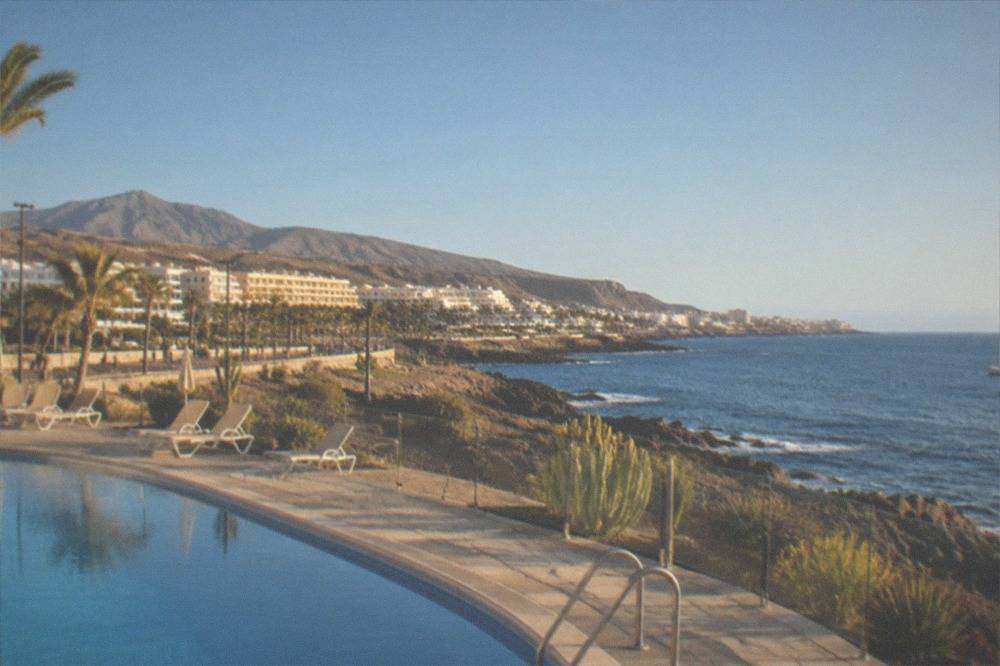
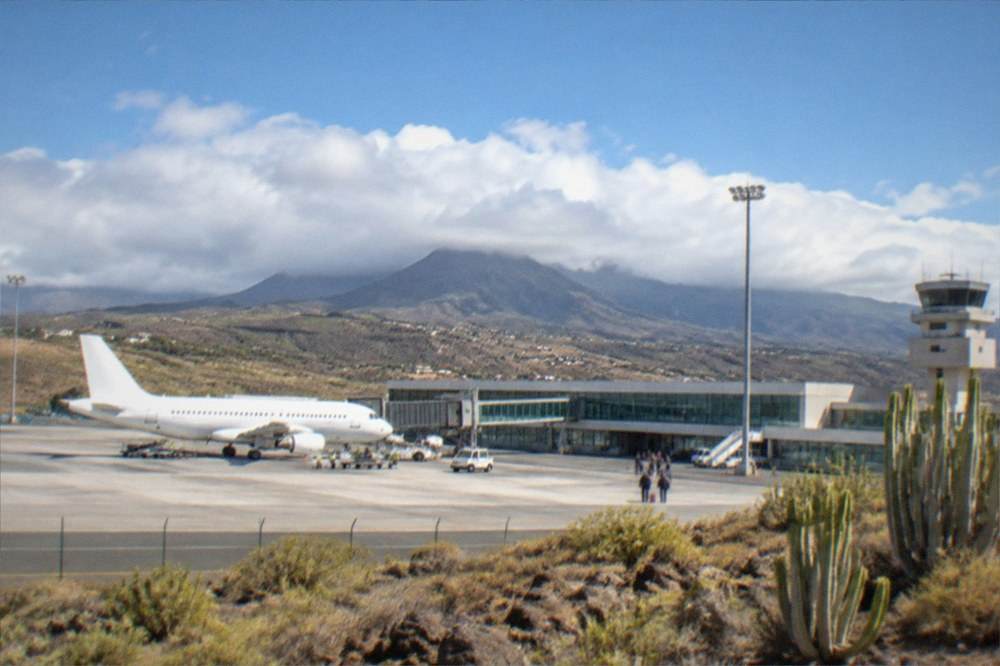
Two airports, two very different jobs. The southern airport sits close to the resort belt of Costa Adeje, Los Cristianos and Playa de las Americas, and it carries the bulk of the international leisure traffic: the tourist board's 2025 balance reports air connectivity from 34 markets and 159 airports. The northern airport, at Los Rodeos near San Cristóbal de La Laguna, carries a heavier share of domestic Spanish flights and the inter-island hops that keep the Canaries connected.
The passenger split matters for planning. Nearly twice as many travellers passed through TFS as TFN in 2025, which means longer queues at southern passport control in peak weeks but also more flight options, more car hire desks and more transfer services. The north is smaller, quieter and closer to Puerto de la Cruz, La Laguna and the green north of the island.
Here is the head-to-head as the official figures state it:
| Tenerife South (TFS) | Tenerife North (TFN) | |
|---|---|---|
| AENA's formal name | Tenerife Sur | Tenerife Norte-Ciudad de La Laguna |
| Familiar name | Reina Sofia | Los Rodeos |
| Passengers 2025 | 13,969,678 (record year, up 1.7%) | 7,174,977 (AENA rounds to 7.2M) |
| AENA station altitude | 64 m | 632 m |
| Closest big resort areas | Costa Adeje, Los Cristianos, Playa de las Americas | La Laguna, Puerto de la Cruz, Santa Cruz |
| Character | International holiday gateway | Domestic and inter-island hub |
The altitude row is not trivia. Tenerife North sits at 632 m above sea level, ten times the elevation of the southern field, and that height is the reason for its clouds. More on that in the weather section below.
Why Does Tenerife Have Two Airports?
Tenerife has two airports because its geography and its traffic demanded them: the north needed a field near the capital Santa Cruz de Tenerife and La Laguna, while the holiday resorts grew up in the dry south, far from the original site. AENA's current names, Tenerife Sur and Tenerife Norte-Ciudad de La Laguna, reflect two separate gateways serving two separate halves of a mountainous island where a single field could not serve both well.
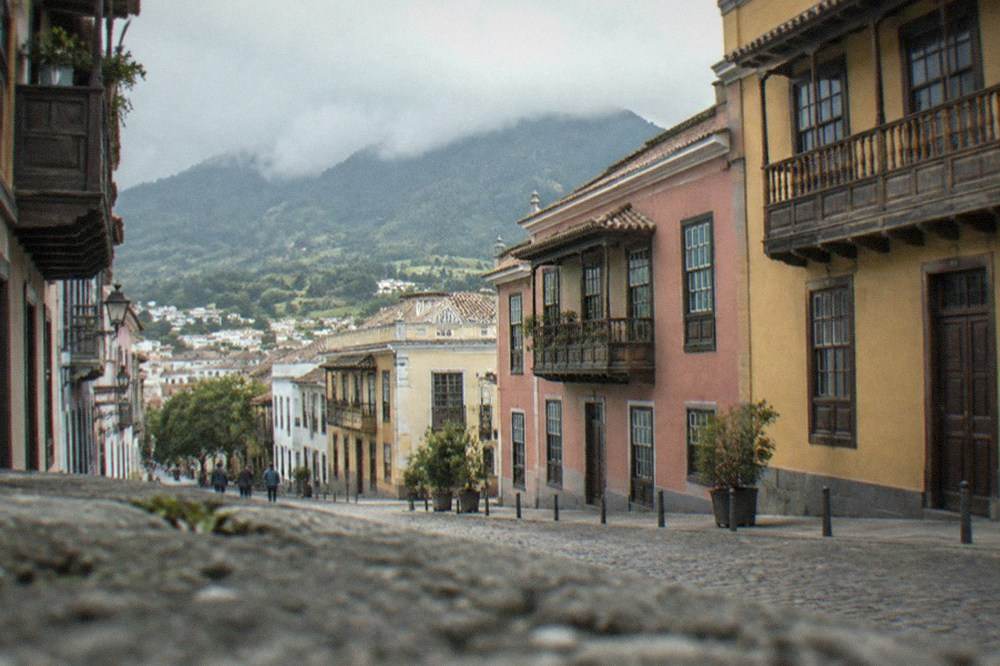
The island's own shape forces the split. A central mountain massif, crowned by Teide at 3,715 m in the wording of Spain's MITECO environment ministry, divides Tenerife into a green, cloudy north and an arid, sunny south. A traveller landing in the north and staying in Costa Adeje faces a long cross-island transfer, and vice versa, so each half of the island ended up with its own airport.
The traffic followed the resorts. The south holds the biggest hotel zones, and the tourist board's 2025 figures show 5,451,268 tourists lodged in hotels and apartments across the island, with the UK alone accounting for 2,057,896 of them, 37.8% of the lodged total. That demand is what pushed TFS past its northern sibling to a record 13,969,678 passengers in 2025.
If your holiday is based in the south, the resort decision matters more than the airport one, and the desk's comparison of Tenerife North vs South works through it in detail.
Which Airport Is Better to Fly Into in Tenerife?
The better airport is the one nearest your base: fly into Tenerife South (TFS) for Costa Adeje, Los Cristianos, Playa de las Americas and El Medano, and into Tenerife North (TFN) for Puerto de la Cruz, La Laguna, Santa Cruz and the Anaga region. Where your flight departs from also matters, because the two airports serve largely different route networks, with the south carrying most international holiday flights and the north most Spanish domestic ones.
Distance beats everything else in this decision. A cheap flight into the wrong airport is no bargain once the cross-island transfer is counted. The desk's dedicated pages on Tenerife South Airport and Tenerife North Airport break down each field in full, and the guide to airport transfers covers the onward options.
For a first visit built around the classic southern holiday, TFS is the practical answer. The resort belt is close, the bus network is denser, and the record passenger figures mean the infrastructure around the airport is built for holiday traffic. For a stay in Puerto de la Cruz, a walking holiday in Anaga, or a trip timed around the north's colonial towns, TFN saves the island crossing.
If you are still choosing where on the island to base yourself, the comparison of Los Cristianos vs Costa Adeje and the wider guide to which Canary island is best are the natural next reads. And once the flight is booked, the days out need booking too: the island's most popular experiences, from whale watching off the south coast to the cable car at Teide, fill their best slots well before the peak weeks.
Which Airports Fly Direct to Tenerife?
Direct flights reach both airports, but the balance is uneven: Tenerife South carries most of the international holiday traffic, with the tourist board recording air connectivity from 34 markets and 159 airports in 2025, while Tenerife North is stronger for domestic Spanish routes and inter-island flights within the Canaries. The exact routes from your home airport change with the season, so the live flight search is the only reliable answer for a specific date.
The connectivity figure is the official one worth holding onto: 34 markets, 159 airports, published in the tourist board's 2025 balance. It covers the island as a whole rather than one field, and it is the number that explains why Tenerife has become one of Europe's most connected islands.
Season shapes the schedule. Winter is the high season for British and Irish visitors, and the monthly arrival figures show it: 649,614 tourists arrived by air in January 2026, against 518,359 in May of the same year. Those winter months carry the densest programme of direct services, and the desk's month guides, from Tenerife in January through Tenerife in December, set out what each part of the year is like.
To check live routes and fares for your dates, search flights to Tenerife South and compare the results with the northern field before committing.
What Buses Run from Each Tenerife Airport?
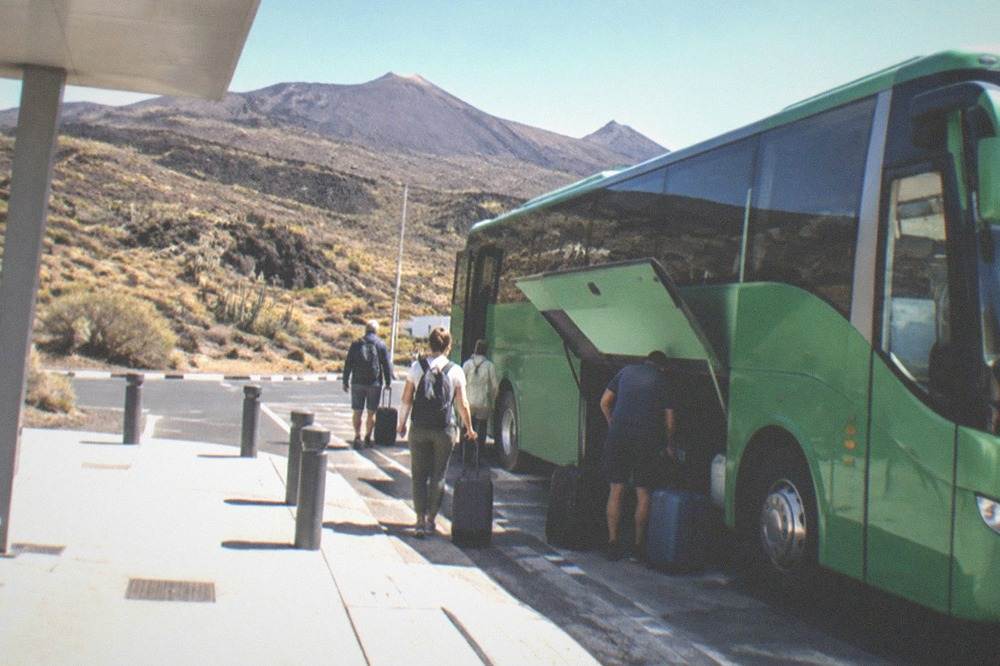
TITSA's own airport pages list five lines at Tenerife South: line 10 to Santa Cruz, line 40 to Costa Adeje bus station via Los Cristianos, line 711 night bus to Santa Cruz, Los Cristianos and Costa Adeje, line 343 express from Puerto de la Cruz to Los Cristianos via both airports, and line 415 to El Fraile and San Isidro. At Tenerife North the same operator lists line 20 to Santa Cruz via La Laguna, line 30 to Puerto de la Cruz, and line 343 express to the south.
That is the complete official list, and it is worth more than any forum thread. Line 343 is the one that links the two airports to each other, running express between Puerto de la Cruz and Los Cristianos and calling at both fields on the way, which makes it the cross-island option for a traveller whose flight arrives at the wrong end. The wider set of guides lives on Tenerife Travel Guide.
| Airport | TITSA line | Serves |
|---|---|---|
| Tenerife South (TFS) | 10 | Santa Cruz |
| Tenerife South (TFS) | 40 | Costa Adeje bus station via Los Cristianos |
| Tenerife South (TFS) | 711 | Night bus: Santa Cruz, airport, Los Cristianos, Costa Adeje |
| Tenerife South (TFS) | 343 | Express: Puerto de la Cruz to Los Cristianos via both airports |
| Tenerife South (TFS) | 415 | El Fraile, San Isidro |
| Tenerife North (TFN) | 20 | Santa Cruz via La Laguna |
| Tenerife North (TFN) | 30 | Puerto de la Cruz |
| Tenerife North (TFN) | 343 | Express to the south |
Fares are simple. TITSA sells single tickets priced by route, payable by card or cash, with a 10% same-day return discount on trips of 20 km or more. For visitors the two useful products are the day travelcard at EUR 10 and the seven-day travelcard at EUR 50, both sold at airport ticket machines, loaded onto a Ten+ card that costs EUR 2.
One warning the desk must repeat: public transport is not free for visitors. The 2026 100% subsidy announced by the Canary government applies to resident passes only, on a personalised Ten+ card held by Canary residents. Visitors pay the fares above. The full detail is in the guide to Tenerife buses and TITSA.
Taxis are white and all metered from the start of the trip, with a fixed price negotiable in advance for excursions. No regulated airport tariff is published in the sources on file, so the desk states none. For a private transfer instead, you can arrange a Tenerife South airport transfer or arrange a Tenerife North airport transfer in advance, and the guide to taxis and Uber covers the island's taxi rules.
Should You Hire a Car at the Airport?
Hiring a car at either airport makes sense if your base is outside the main resort belt or you plan to explore the national park, the Anaga mountains or the west coast, because the bus network thins out in exactly those places. Tenerife South has the larger hire operation given its record passenger volume, but both fields are served, and the desk's advice is to book before you fly in the winter high season rather than walk up to a desk.
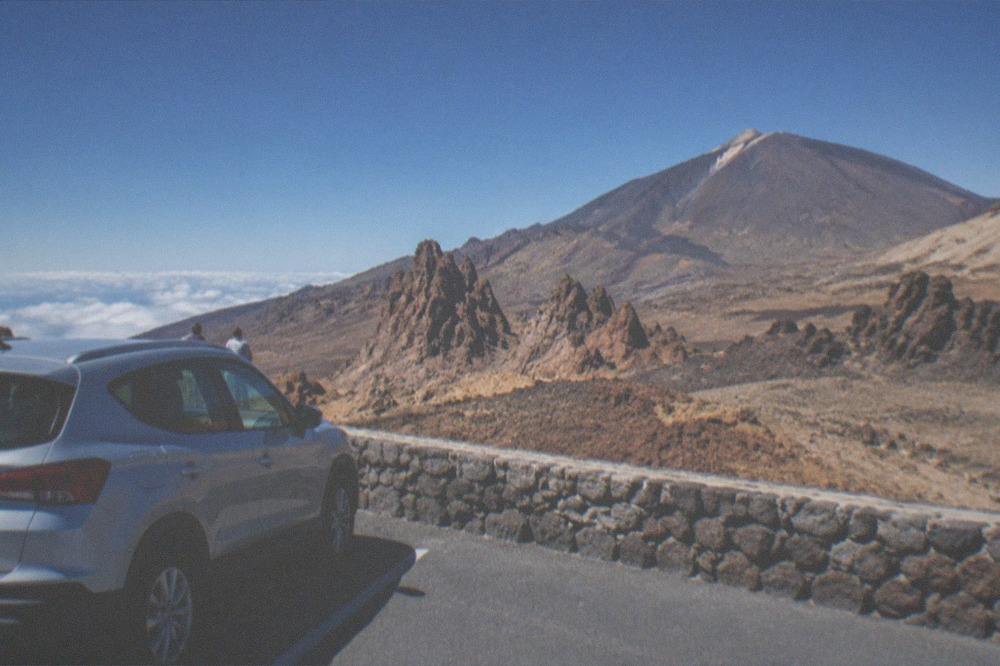
The island rewards a car in ways the resorts do not show. Teide National Park, the Masca gorge approach from Santiago del Teide, the Anaga rural park and the west-coast viewpoints around Los Gigantes are all easier with your own wheels, and the guides to car hire in Tenerife and driving in Tenerife cover the practicalities, from motorway tolls, of which there are none to worry about on file, to mountain road etiquette.
If you do drive, one rule matters above the rest: the Cabildo bans smoking in every open-air space of Teide National Park, car parks included, as a wildfire measure. That ban catches plenty of visitors who assume a viewpoint counts as somewhere different from the trails.
To compare vehicles and reserve ahead, check car hire at Tenerife South Airport, which is the field most holiday travellers fly into.
How Different Is the Weather at Each Airport?
The weather differs sharply because of altitude: AEMET's climate normals put Tenerife South Airport at 64 m with July mean daily maxima of 27.7 C and zero rain days in June and July, while Tenerife North Airport at Los Rodeos sits at 632 m with July maxima of 24.7 C and 64 days of measurable rain across the year, against 15.2 days at the southern field. The north is greener and cooler, the south is drier and sunnier.
The contrast is the island in miniature. AEMET's 1981-2010 normals for the two stations show the southern coast living up to its holiday reputation and the northern plateau carrying the clouds that water its laurel forests.
| Month | TFS mean daily max C | TFS rain days | TFN mean daily max C | TFN rain days |
|---|---|---|---|---|
| Jan | 21.7 | 1.8 | 16.0 | 7.7 |
| Feb | 22.0 | 2.2 | 16.7 | 7.4 |
| Mar | 23.1 | 1.9 | 18.2 | 6.8 |
| Apr | 23.1 | 1.1 | 18.5 | 6.2 |
| May | 23.9 | 0.3 | 20.1 | 3.8 |
| Jun | 25.4 | 0.0 | 22.2 | 2.4 |
| Jul | 27.7 | 0.0 | 24.7 | 1.7 |
| Aug | 28.4 | 0.2 | 25.7 | 1.1 |
| Sep | 27.9 | 0.6 | 24.9 | 2.8 |
| Oct | 26.8 | 1.6 | 22.5 | 6.5 |
| Nov | 24.8 | 1.9 | 19.6 | 8.3 |
| Dec | 22.8 | 3.5 | 17.1 | 8.8 |
Rain days are days with 1 mm of rain or more, as AEMET publishes them. The annual totals as AEMET states them: 132 mm of rain on 15.2 days at the southern station, 520 mm on 64 days at the northern one. Nearly four times the rain, at ten times the altitude.
The sea tells a gentler story. NOAA's 1991-2020 sea surface figures for the south coast range from 19.1 C in March to 23.7 C in September and October, which means the water is swimmable all year, whatever the air is doing at the airport. The month-by-month detail, including the sea temperatures, is in the guide to Tenerife weather by month.
Which Airport Suits a Cruise Passenger or an Island Hopper?
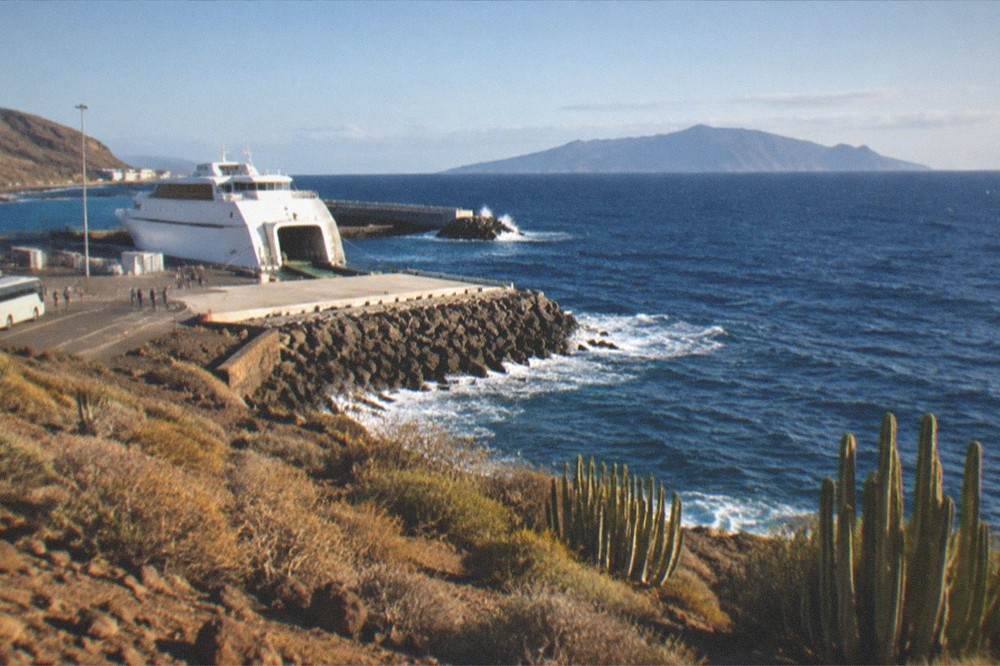
A cruise passenger arriving through Santa Cruz does not need either airport for the port itself, but Tenerife North (TFN) is the field for inter-island hops and the ferry terminal at Los Cristianos serves La Gomera in 50 minutes, La Palma in 150 and El Hierro in 140 on Fred. Olsen Express sailings. For a fly-cruise or an island-hopping itinerary, TFN's domestic and inter-island network usually beats TFS.
The ferry port at Los Cristianos is the south's island-hopping gateway, and the crossing times are the operator's own published figures. The desk's guide to island hopping and ferries covers the routes in full, and the one-day plan for the cruise port answers the shore-day question directly.
For a week that mixes Tenerife with its neighbours, the 7 days in Tenerife itinerary shows where the airports, the ferries and the mountain roads fit together, and the comparison of Tenerife vs Gran Canaria helps decide whether the second island is worth the crossing at all.
What About Entry Rules When You Land?
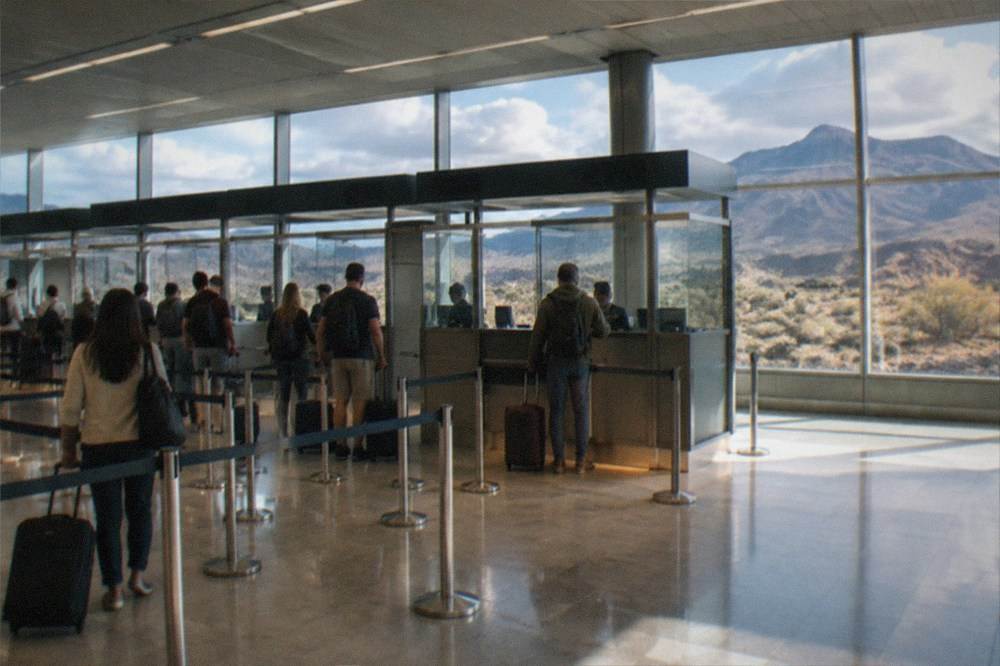
Non-EU arrivals, including UK and US visitors, are now registered under the EU's Entry/Exit System, which began on 12 October 2025 and has been fully operational since 10 April 2026, replacing passport stamps with a facial image and fingerprints at the border. ETIAS, the travel authorisation scheme, is not in operation yet: the EU states that no applications are collected at this point and that the start date will be announced several months ahead, with the fee set at EUR 20.
That is the whole official picture, and it is worth repeating because outdated advice circulates widely. No ETIAS start date exists, so any page naming one is guessing. The desk's guide to entry requirements for Tenerife carries the full detail, and the answer page on tourist tax and local rules settles the related question: no per-night lodging tax is in force or approved on Tenerife, and the charges that do exist are per-booking fees on specific trails, the Masca ticket and the Barranco del Infierno ticket.
The border process is the same at both airports, so entry rules do not tip the TFS-versus-TFN choice either way.
Planning Your Days Once You Have Landed
Whichever airport you fly into, the two headline experiences, Teide and the whale waters off the south coast, both reward early booking: the cable car runs 09:00 to 17:00 in the low season with the last ascent an hour before closing, and the summit trail reservation is released weekly, keeping 56 days bookable. Since Monday 19 January 2026 the daytime summit slots cost EUR 15 for visitors and EUR 6 for residents of the other Canary Islands, free only for Tenerife residents and children.
The cable car stops at La Rambleta; the crater trail above it is a separate reservation on Tenerife ON, and the desk's guide to the Teide summit permit walks through the booking process step by step.
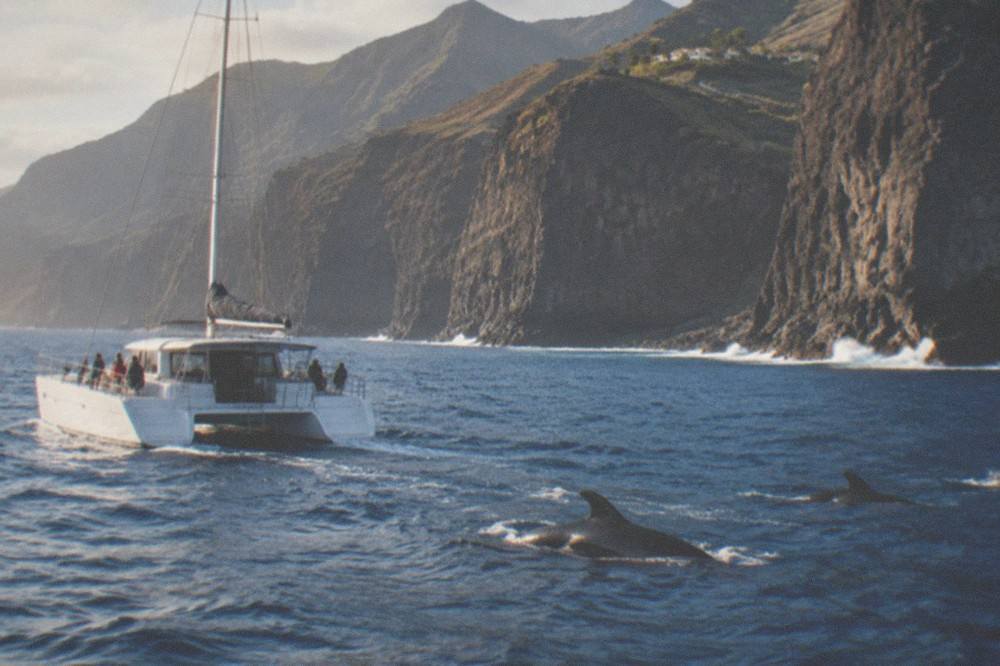
Out at sea, the waters between Tenerife and La Gomera hold a resident population of pilot whales that the World Cetacean Alliance, which designated the area a Whale Heritage Area in January 2021, describes as unique. Authorised boats fly the Barco Azul flag under Decreto 178/2000, which forbids any approach within 60 m and any swimming within 500 m of the animals. Choosing an operator that respects those distances is the single most meaningful decision a visitor makes on this subject.
For a day that combines the island's headline sights in one loop, the classic Masca, Garachico and Icod route is the desk's recommended structure, and the question of whether the volcano itself might interrupt your plans is answered soberly in is Mount Teide active.
Common Questions About Tenerife Airports
Which airports fly direct to Tenerife?
Both fields receive direct flights: Tenerife South carries most international holiday services, with the tourist board recording connectivity from 34 markets and 159 airports in 2025, while Tenerife North is stronger for Spanish domestic routes and inter-island hops. The routes from any specific city change with the season, so a live flight search for your dates is the only reliable check.
Are there two airports in Tenerife?
Yes. AENA operates Tenerife Sur (TFS), also known as Reina Sofia, and Tenerife Norte-Ciudad de La Laguna (TFN), also known as Los Rodeos. In 2025 the south handled 13,969,678 passengers and the north 7,174,977.
Why are there two airports in Tenerife?
The island's central mountain massif divides it into a cloudy green north and a dry sunny south, and the holiday resorts grew up far from the original northern field near La Laguna. Each half of the island ended up with its own gateway, and AENA's formal names reflect that: Tenerife Norte-Ciudad de La Laguna and Tenerife Sur.
Which airport do you fly to for Tenerife?
Fly to Tenerife South (TFS) if you are staying in Costa Adeje, Los Cristianos, Playa de las Americas or El Medano, and to Tenerife North (TFN) for Puerto de la Cruz, La Laguna, Santa Cruz and Anaga. Matching the airport to your base saves the cross-island transfer.
What airport do you fly into for Tenerife from the UK?
Most UK holiday flights use Tenerife South, which is the field closest to the main resort belt. UK visitors were the island's largest lodged market in 2025 at 2,057,896 tourists, 37.8% of the hotel and apartment total, and the winter months carry the densest direct schedules.
How many airports on Tenerife can you catch a bus from?
Both. TITSA lists lines 10, 40, 711, 343 and 415 at Tenerife South, and lines 20, 30 and 343 at Tenerife North. Line 343 runs express between the two airports, calling at both, which is the cross-island link if your flight lands at the wrong end.