Taxis, Uber and Bolt in Tenerife
Tenerife's official transport pages describe a regulated, metered taxi fleet and a public bus network, and say nothing about ride-hailing apps. This guide reports what the sources actually state, so you can plan getting around without relying on out-of-date forum threads.
Short answer
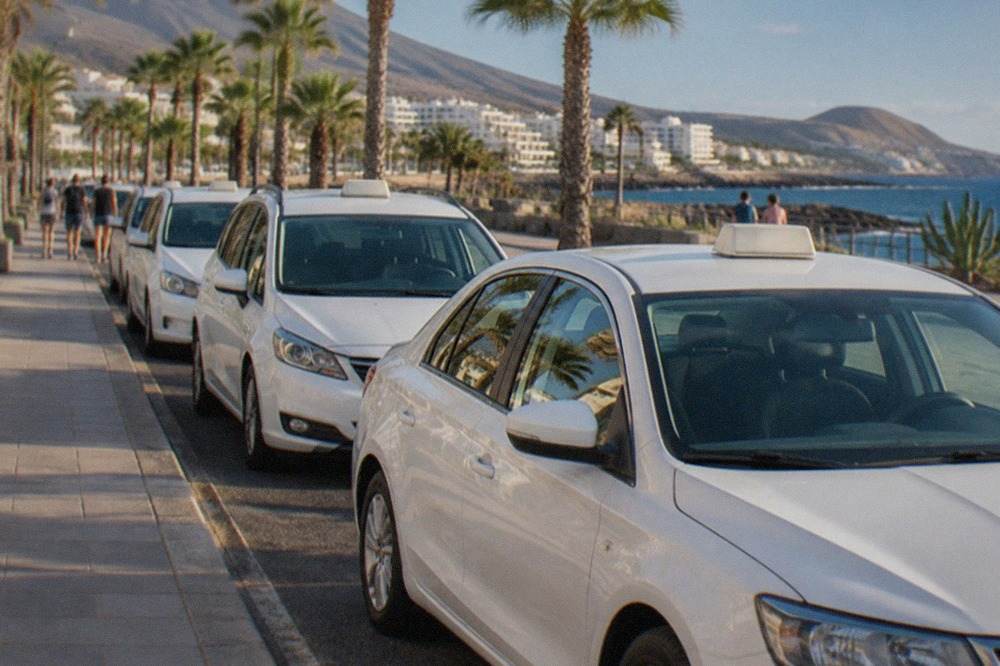
Tenerife has a regulated taxi fleet: white cars, metered from the start of every trip, with fixed prices negotiable in advance for excursions. The tourist board's own taxi page does not mention Uber or Bolt, so the licensed taxi and the TITSA bus network are the services every official source confirms.
Tenerife's taxi system is one of the most regulated parts of the island's transport, and also one of the most misunderstood by arriving visitors. The tourist board's own page on taxis is short and specific: the cars are white, every trip is metered from the start, a fixed price can be agreed in advance for excursions, and adapted "eurotaxis" exist for passengers with mobility needs. That is the whole official picture, and it is the spine of this guide. Questions about Uber and Bolt arrive in enormous numbers, and the honest answer is that the official sources this desk researches say nothing about either app, which tells you something practical about how to plan.
Does Tenerife Have Uber?
No official source this desk has read confirms Uber operating in Tenerife. The tourist board's taxi page describes only the licensed white fleet, metered from the start of every trip, and AENA's airport pages direct arriving passengers to taxis and TITSA buses. Treat the regulated taxi and the bus network as the confirmed services, and check any app's own coverage listing before relying on it.
That answer is deliberately narrower than the confident yes-or-no claims you will find on travel forums. The problem with forum answers is that ride-hailing coverage changes, and a page written from one visitor's experience can be years stale by the time you read it. The official pages, by contrast, are either silent on the apps or point exclusively at the taxi and bus systems, and silence in an official source is a fact worth reporting rather than a gap to fill with a guess.
What the official record does establish is the framework any car-for-hire must fit into. Taxis are licensed, white and metered. Excursion pricing can be fixed in advance, which is a consumer protection, not a loophole. If an app-based service were operating on the island, it would be operating alongside that regulated system, and the tourist board's page makes no reference to one.
For planning purposes, the practical conclusion is straightforward. Build your itinerary around the services every source confirms: the taxi ranks, the TITSA bus network and, if you want full independence, car hire in Tenerife. Anything an app may or may not offer is a bonus, never a dependency.
Is Uber or Taxi Cheaper in Tenerife?
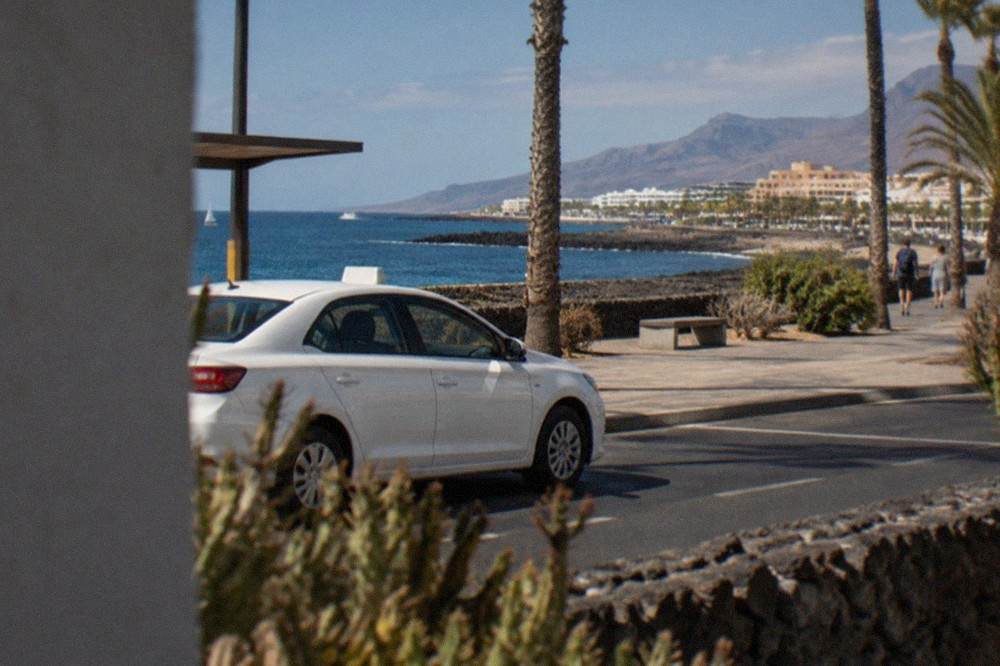
No official price comparison exists, because the tourist board publishes no tariff table and no page states what any ride-hailing app charges on the island. What the sources do establish: taxis are metered from the start of the trip, so the fare follows the regulated meter rather than app surge pricing, and a fixed price can be agreed in advance for excursions. On cost, the honest answer is that neither figure is published.
This is the question people ask most, and it is the one where invented answers do the most damage. Sites that print a "typical taxi fare" from the airport to a resort are printing a number no official source states, and this desk will not do that. What can be reported is the structure of the pricing, which is more useful anyway.
Because the meter runs from the start of the trip, a taxi fare in Tenerife is not negotiable on a point-to-point journey. The driver cannot set the price, and neither can you. Where the fixed-price rule matters is excursions: for a half-day island tour or an evening out with several stops, the tourist board's page says a price can be agreed in advance, which protects you from watching the meter climb through mountain switchbacks on the road to Masca or Teide.
If your real question is how to spend less on transport overall, the answer rarely lies in choosing between two car services. It lies in mixing the taxi with the bus network, which is the comparison the official fares page actually supports.
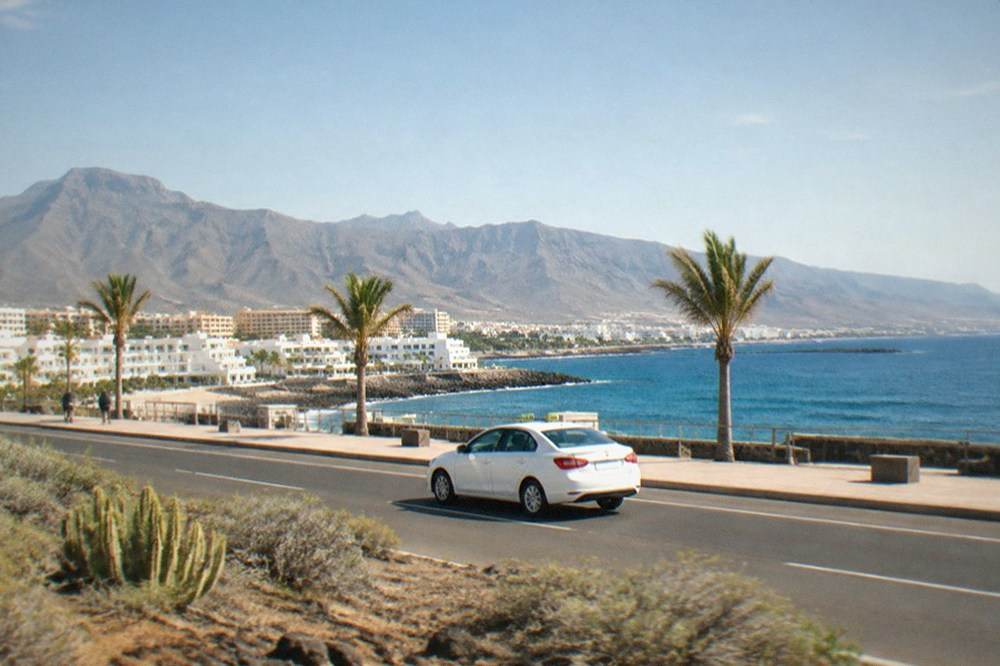
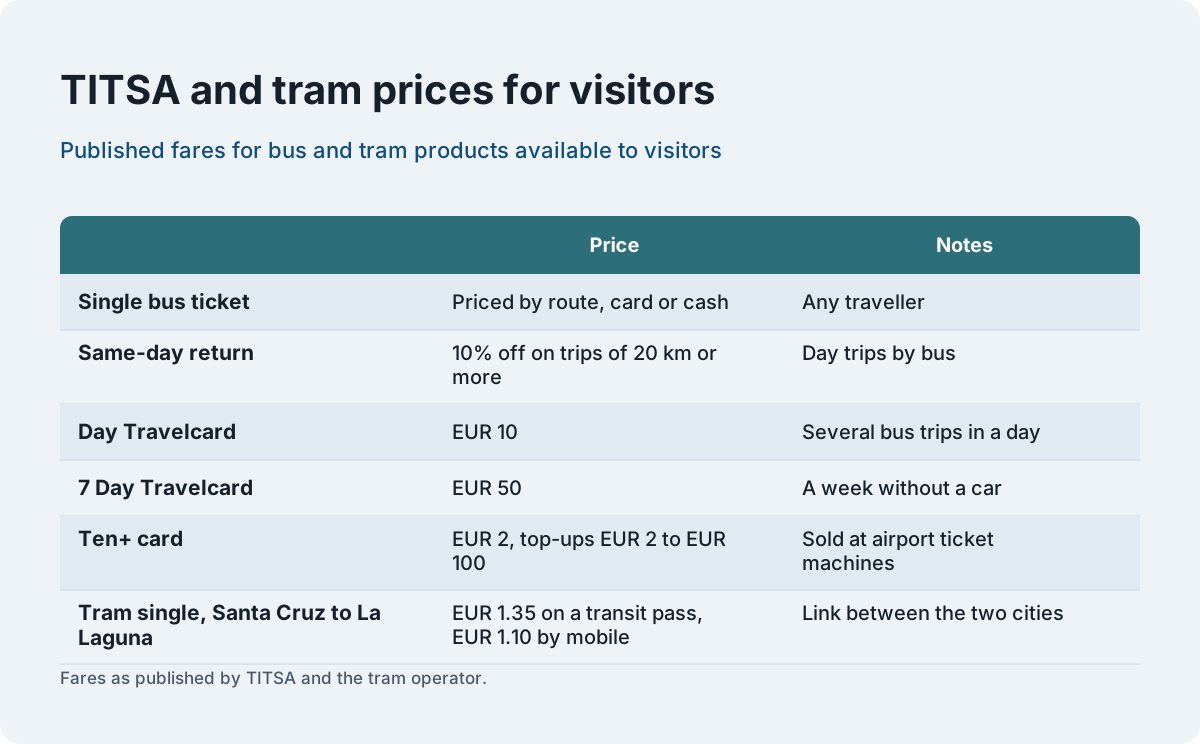
The visitor products on TITSA, the island bus operator, are published and stable, and they are the cheapest confirmed way to move around:
| TITSA or tram product | Price | Who it is for |
|---|---|---|
| Single bus ticket | Priced by route, card or cash | Any traveller |
| Same-day return | 10% off on trips of 20 km or more | Day trips by bus |
| Day Travelcard | EUR 10 | Visitors making several bus trips in a day |
| 7 Day Travelcard | EUR 50 | Visitors staying a week without a car |
| Ten+ card | EUR 2, top-ups EUR 2 to EUR 100 | Reusable travelcard, sold at airport ticket machines |
| Tram single (Santa Cruz to La Laguna) | EUR 1.35 on a transit pass, EUR 1.10 by mobile | The tram line between the two cities |
A family that takes the bus for the long legs and a taxi only for the evening return will usually spend less than one that treats the taxi as the default. That is a structural conclusion from the published fares, not an estimate of any particular journey.
How Do Tenerife Taxis Work in Practice?
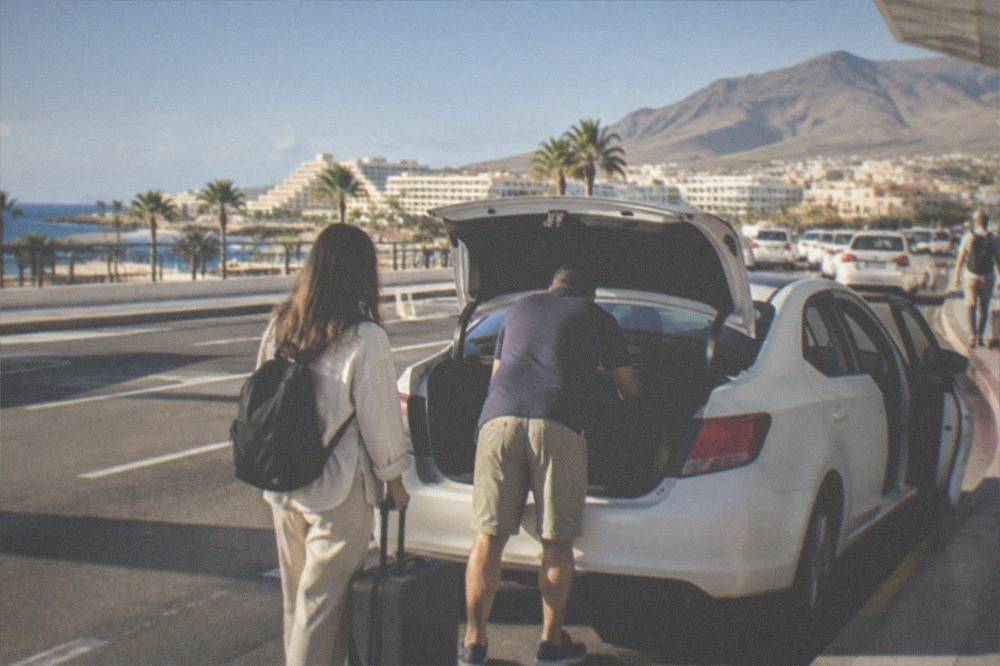
Every taxi in Tenerife is white and metered from the start of the trip, with a fixed price available if agreed in advance for excursions. Adapted eurotaxis exist for passengers with mobility needs, and ranks operate at the airports and across the resort towns. The tourist board's page states these rules, and no tariff table is published for visitors to check fares against.
The colour rule sounds trivial until you have stood, or rather until you read the rule, because it is the one visual check that protects you from unlicensed operators. A white car with a taxi roof sign is a licensed vehicle; anything else is not the regulated service. The meter rule is the second protection: on a normal journey the driver starts the meter when the trip starts, and the fare is what the meter says.
The third rule is the one most visitors never use. For excursions, meaning journeys that are not a simple A-to-B trip, a fixed price can be agreed before you set off. This is where a taxi becomes a different product: a private half-day tour with the price settled in advance. The getting around Tenerife guide covers how the modes combine, but the excursion rule is the taxi's most underused feature.
| Taxi rule in Tenerife | What the tourist board's page states |
|---|---|
| Vehicle colour | White |
| Metering | Metered from the start of the trip |
| Excursion pricing | A fixed price can be agreed in advance |
| Accessibility | Adapted "eurotaxis" exist |
One caution belongs here, and it comes from the sources rather than from a bad experience nobody on this desk has had. No official page publishes the tariff table, so no article can honestly tell you what a given journey costs. If a driver quotes a fixed price for a point-to-point trip rather than using the meter, that is outside the structure the tourist board describes, and the metered rank taxi is the service you are entitled to.
If an excursion-style day is what you actually want, a pre-booked tour with hotel pickup covers the same ground without any negotiation at a rank, and the operator's live listing carries the real price. Check availability for a catamaran trip that includes the transfer, or read more in the whale and dolphin watching roundup.
What Is the Cheapest Taxi in Tenerife?
There is no official ranking of taxi operators by price, because all licensed taxis charge on the same metered basis, so no company can undercut another on a point-to-point fare. The cheapest confirmed transport for visitors is not a taxi at all: it is the TITSA bus network, with the EUR 10 day travelcard and the EUR 50 seven-day travelcard as the published visitor products.
The question assumes a market that does not exist. Because every licensed vehicle meters the same way, "the cheapest taxi in Tenerife" is a category with one member: the regulated fleet. Where differences do appear is in how you use it. A single long taxi ride costs more than the same journey by bus, and the published travelcard prices make that comparison without any estimates.
The seven-day travelcard deserves particular attention for a visitor staying in one resort. EUR 50 covers a week of bus travel, the airport ticket machines sell the cards, and the TITSA network reaches the towns most visitors want: Los Cristianos, Costa Adeje, Puerto de la Cruz and Santa Cruz de Tenerife. The Tenerife buses guide covers the network in detail.
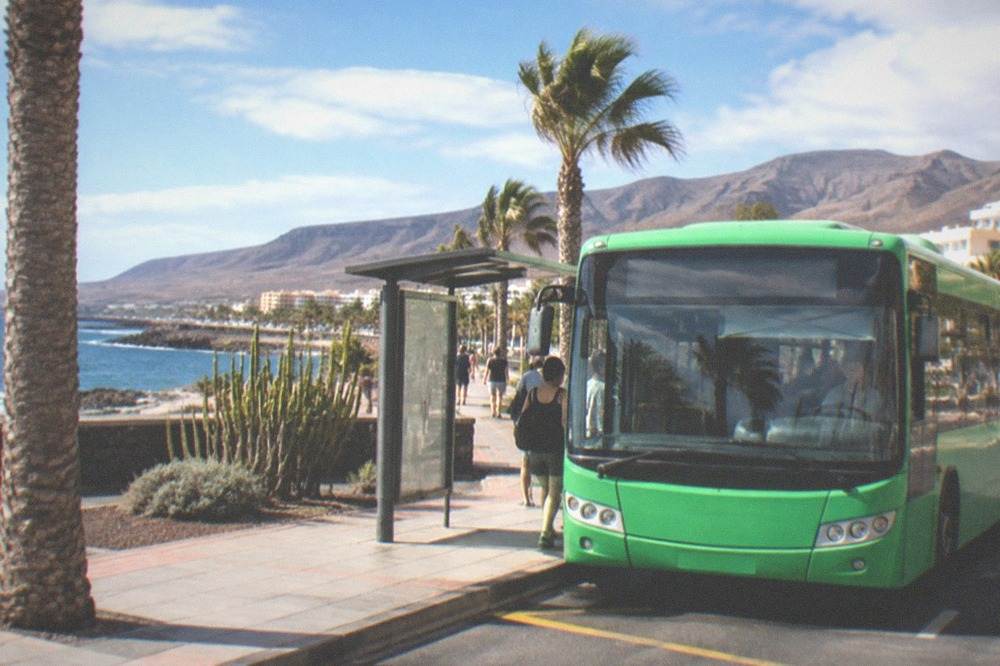
There is one line of caution to add about "free transport" claims, because they circulate widely and they are aimed at the wrong audience. A 100% subsidy on passes and multi-trip tickets does run for all of 2026, in force since 1 January 2026 under Real Decreto-ley 17/2025. But every subsidised pass requires residency in the Canary Islands: the monthly pass, the under-30 youth pass and the under-10 child card all carry a residency condition, and visitors do not qualify. On 15 June 2026 the Canary government announced the State's commitment to the overdue payments and to continuing the measure, which confirms the scheme is running, and confirms equally that it is not for you if you are on holiday.
What Do Spanish People Use Instead of Uber?
Local residents use the subsidised pass system, not a ride-hailing app: the 2026 scheme covers the monthly pass for Canary Islands residents, a youth pass for residents under 30 and a child card for Tenerife residents under 10, all on a personalised Ten+ card. Visitors use single tickets, the EUR 10 day travelcard or the EUR 50 seven-day travelcard instead.
The distinction matters because it explains the transport culture. The resident subsidy, the metered taxi fleet and the TITSA network between them cover most local journeys, and the free 2026 pass made the bus the obvious default for residents. A visitor reading about "free buses in Tenerife" online needs to know that the word free in that context means resident-subsidised, and that the visitor products are the travelcards listed above. The rest of the planning pages sit on Tenerife Travel Guide.
| Pass or product | Residency required | Available to visitors |
|---|---|---|
| Monthly pass, 100% subsidised in 2026 | Yes, resident in the Canary Islands | No |
| Youth pass, under 30 | Yes, resident | No |
| Child card, under 10 | Yes, resident in Tenerife | No |
| Personalised Ten+ card | Yes | No |
| Day Travelcard, EUR 10 | No | Yes |
| 7 Day Travelcard, EUR 50 | No | Yes |
| Single bus ticket | No | Yes |
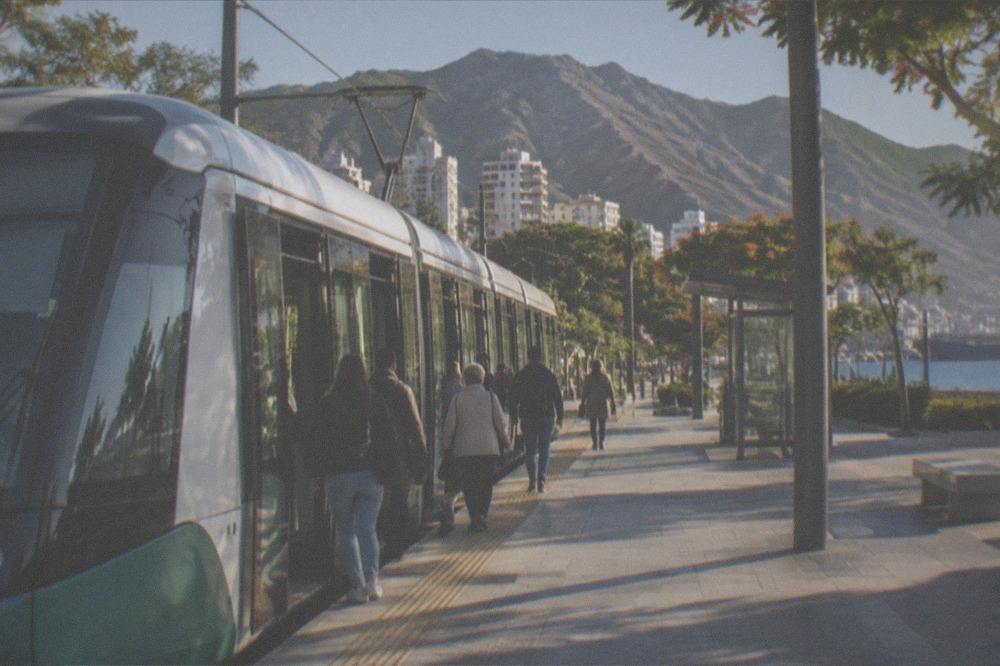
Two further details from the official fares pages are worth carrying. The Teide and Teno bus lines are excluded from the resident passes, so even residents pay separately for those mountain routes. And the tram between Santa Cruz and La Laguna charges EUR 1.35 for a single on a transit pass, EUR 1.10 by mobile, which makes it the cheapest confirmed link between the island's two largest cities.
How Do You Get from Tenerife's Airports Without a Car?
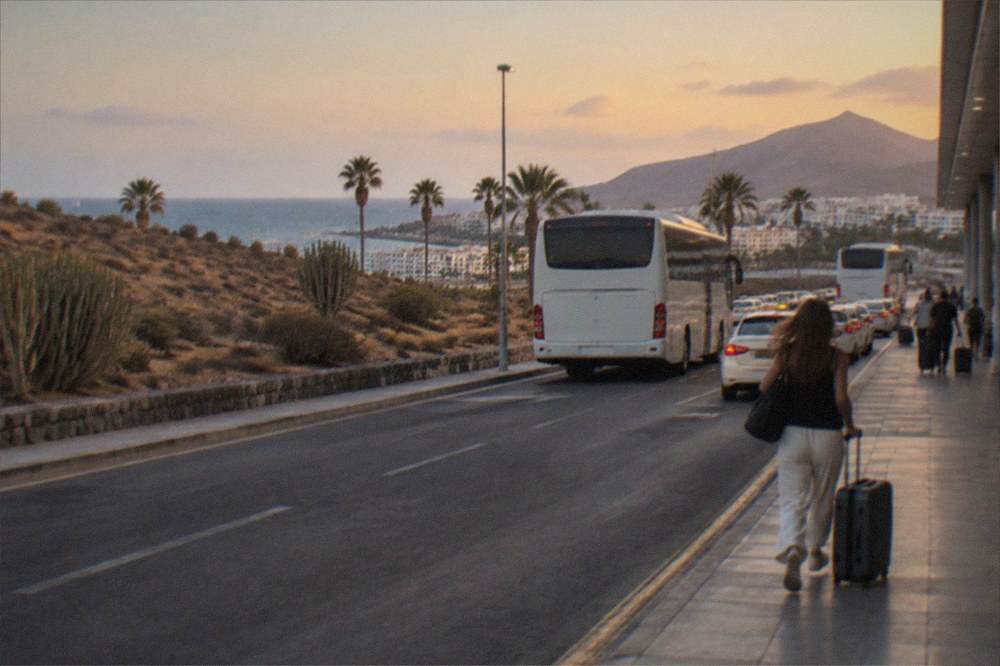
TITSA lists five bus lines at Tenerife South, 10, 40, 711, 343 and 415, and three at Tenerife North, 20, 30 and 343, alongside taxi ranks at both terminals. The tram serves neither airport, so the confirmed options are the bus, the taxi and a pre-booked transfer, and the airport ticket machines sell the visitor travelcards.
The bus lines are worth knowing by number, because they are the cheapest confirmed way out of either terminal. Line 343 is the useful one for visitors staying on the opposite coast from where they land: it runs express between Puerto de la Cruz and Los Cristianos via both airports. The full lists from TITSA's own airport pages:
| Airport | TITSA lines | Destinations per TITSA |
|---|---|---|
| Tenerife South (TFS) | 10 | Santa Cruz |
| Tenerife South (TFS) | 40 | Costa Adeje bus station via Los Cristianos |
| Tenerife South (TFS) | 711 | Night bus: Santa Cruz, airport, Los Cristianos, Costa Adeje |
| Tenerife South (TFS) | 343 | Express Puerto de la Cruz to Los Cristianos via both airports |
| Tenerife South (TFS) | 415 | El Fraile, San Isidro |
| Tenerife North (TFN) | 20 | Santa Cruz via La Laguna |
| Tenerife North (TFN) | 30 | Puerto de la Cruz |
| Tenerife North (TFN) | 343 | Express to the south, via Tenerife South Airport |
The official airport names, per AENA, are Tenerife Sur and Tenerife Norte-Ciudad de La Laguna. "Reina Sofia" and "Los Rodeos" are the familiar names, and you will still hear them, but the airlines and AENA use the current titles. In 2025 Tenerife South handled 13,969,678 passengers, an all-time record, and Tenerife North handled 7,174,977, so both terminals are busy year-round and the taxi ranks and bus stops are permanent fixtures rather than seasonal extras. The Tenerife South Airport and Tenerife North Airport guides cover each terminal in depth, and the airport transfers page compares the options.
For a late arrival or a family with luggage, a pre-booked transfer removes the queue question entirely, and comparing transfer options against the metered taxi before you land is the one piece of homework that pays for itself. The solo pick below is a tour that builds the transfer into the day.
When Is a Taxi the Right Choice in Tenerife?
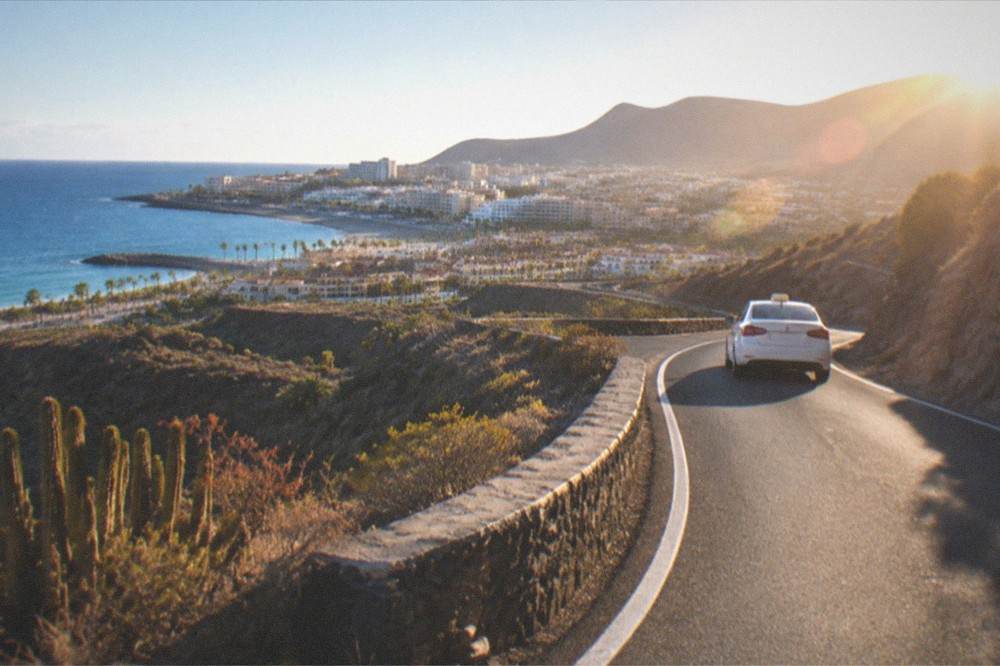
A taxi is the right choice for the journeys the bus network serves badly or not at all: late-night returns, the mountain roads to places like Masca and Vilaflor, a group travelling together where one metered fare splits several ways, and excursion days where a fixed price agreed in advance turns the car into a private tour. For everything along the main coastal corridors, the bus is cheaper and confirmed.
The geography drives this. Tenerife's resorts sit along a coastal spine that the TITSA network covers well, but the island's best sights are up: the Teide National Park at over 2,000 metres, the Anaga mountains in the north-east, the Teno massif in the north-west. Bus lines reach some of these, but the timetables thin out, and an evening return from a remote viewpoint is exactly the journey the regulated taxi exists for.
The excursion rule is the taxi's strongest card here. Agree the price before you set off, and the meter stops mattering. For a route like the classic west-coast loop through Masca, Garachico and Icod de los Vinos, described in the Masca, Garachico and Icod route guide, a fixed-price taxi day is a genuine alternative to a coach tour, and the driver sets the pace with you rather than with a group.
For the days you would rather not organise the driving at all, a small-group tour with hotel pickup covers the same mountain country, and the operator's live listing carries the current price and availability. The Teide National Park volcanic and forest tour is the clearest example, and the selection band further down this page includes it.
Should You Just Hire a Car Instead?
Car hire suits a stay built around the mountains, the north and the remote beaches, because no taxi or bus combination matches a car for the Teno and Anaga massifs, and the excursion taxi is priced per day rather than per journey. For a stay based on one resort with occasional trips, the bus and taxi combination usually costs less and needs no parking plan.
This is the decision the taxi question is usually hiding. The north vs south split shapes it: a southern resort base with beach days and one Teide excursion is well served by bus and taxi, while a trip that wants Anaga, Teide, Garachico and El Medano in one week is a car-hire itinerary. Comparing island-wide car hire against the fixed-price excursion taxi before you decide is worthwhile, since both are priced per day rather than per ride.
One rule of the road that catches visitors: the general legal blood-alcohol limit the DGT page refers to is 0.5 g/l, which is lower than many visitors assume after a long restaurant dinner. On an evening built around wine, the metered taxi home is not just convenient, it is the compliant choice.
What Are the Rules That Catch Visitors Out?
The rules that matter: taxis are white and metered from the start, the resident travel subsidies do not apply to visitors, the tram serves neither airport, and the Teide and Teno bus lines are excluded from the resident passes. None of these is a tourist tax: no official page read shows a per-night lodging tax in force or approved on Tenerife, and the charges that do exist are per-booking fees on specific trails.
The tourist tax point is worth settling because it travels with the transport questions. The charges that genuinely exist on the island are per-booking public fees: the Teide trail fees on PNT 10 and PNT 07 since 19 January 2026, the Masca gorge ticket and the Barranco del Infierno ticket. Since Monday 19 January 2026 the Teide 09:00 to 17:00 slots cost EUR 15 for visitors and EUR 6 for residents of the other Canary Islands, free only for Tenerife residents and children. None of that touches a taxi journey.
The entry system has also changed in ways that affect the arrival day. The EU's Entry/Exit System started on 12 October 2025 and has been fully operational since 10 April 2026, replacing passport stamping for non-EU nationals on short stays: UK and US visitors are registered with a facial image and fingerprints instead. ETIAS, the separate travel authorisation, is a different thing: the EU states it "is currently not in operation and no applications for travel authorisations are collected at this point", and the fee will be EUR 20 when it launches. No start date is published, so ignore any page that gives you one.

Where a Taxi Meets a Tour
A tour with hotel pickup replaces the taxi entirely on the days it runs: the operator's listing states the transfer in the product name, the coach or minibus collects at the door, and no metered fare ever enters the planning. For a family in Costa Adeje booking one big day on the water, or a group heading to Loro Parque from the southern resorts, the included transfer is usually the simplest logistics of the week.
The whale-watching catamaran with transfer and buffet is the clearest example, and the Costa Adeje area it sails from is the island's densest pickup zone. The same logic applies to the park days: Loro Parque sits in Puerto de la Cruz, a long way from the southern resorts, and a ticketed day trip with transport beats a two-bus journey each way. The second selection of options below covers both.
For the evening shows and the stargazing nights, the calculus changes again: a sunset stargazing session at Teide ends late, in the dark, at altitude, and the return journey is exactly what the fixed-price excursion taxi or a tour with hotel return is for. A small-group sunset and stargazing option with a self-drive alternative suits travellers who would rather keep the car for the daylight hours and hand the night driving to someone else.
Common Questions About Taxis and Uber in Tenerife
Is it cheaper to get a taxi or Uber in Tenerife?
No official source publishes a comparison, because no page states what any ride-hailing app charges on the island and no tariff table for taxis is published. The taxi is metered from the start of the trip, so its fare follows the regulated meter. The cheapest confirmed transport for visitors is the TITSA bus, with the EUR 10 day travelcard and the EUR 50 seven-day travelcard as the published products.
is uber cheaper than a taxi in tenerife?
There is no published figure for Uber pricing in Tenerife to compare against, and no official page confirms the app's operation there. The taxi fare is metered from the start of the journey, with a fixed price available in advance for excursions. Any page claiming one is cheaper is printing a number no official source states.
is there uber in tenerife
No official source this desk has read confirms Uber operating in Tenerife. The tourist board's taxi page describes only the licensed white fleet, metered from the start of every trip, and the airport pages direct passengers to taxis and TITSA buses. Plan around the confirmed services and check any app's own coverage listing before relying on it.
does tenerife have uber
The official transport pages for Tenerife make no reference to Uber. They describe a regulated taxi system, white cars metered from the start of the trip, and the TITSA bus network with visitor travelcards at EUR 10 for a day and EUR 50 for a week. Those are the services every source confirms.
What do Spanish people use instead of Uber?
Residents use the subsidised pass system: a 100% subsidy on passes and multi-trip tickets runs for all of 2026, in force since 1 January 2026, and every subsidised pass requires residency in the Canary Islands, on a personalised Ten+ card. Visitors do not qualify and use single tickets or the travelcards instead.
Does Tenerife use Bolt or Uber?
Neither app appears on any official transport page for Tenerife, from the tourist board, TITSA, Metrotenerife or AENA. The confirmed services are the metered white taxis, the TITSA bus network, the tram between Santa Cruz and La Laguna, and the ferry links from Los Cristianos. Anything beyond that is not on the official record.