A Family Week in Tenerife with Kids
Seven days, one volcano, two theme parks and a resident population of pilot whales: a planned family week in Tenerife that survives contact with real opening hours, real fees and real children.
Short answer
A family week in Tenerife works best split between one southern base for beaches, boats and Siam Park, and two or three day trips north for Loro Parque, Puerto de la Cruz and Mount Teide. Book the whale trip, the park tickets and the cable car ahead, use the TITSA travelcards for bus days, and keep one rainy-day plan in reserve.
Tenerife took 7,412,046 tourists by air in 2025, and a large share of them arrived with children in tow, because the island pairs a reliably warm winter with two of Europe's best-known parks and a coast where the sea stays swimmable almost all year. Planning a family week here is less about finding things to do and more about sequencing them so nobody melts on a volcano day or sleeps through a whale trip. This itinerary spreads the big-ticket days across seven mornings, keeps every afternoon soft, and attaches the official hours, fees and rules to each stop so the plan survives the booking stage.
Is Tenerife a Good Choice for a Family Week?
Yes, and for reasons that hold up on paper rather than in brochure language: the sea off the south coast averages 22.2 degrees Celsius in July and 19.9 in January, Siam Park opens 365 days a year, Loro Parque opens 09:30 to 17:30 every day, and a resident population of pilot whales lives along the southwest coast year-round, so the island's headline family activities do not close for a season. The island is also compact enough that no day trip needs an overnight, which matters when packing a week around children's tolerances. The catch is altitude: the cable car's upper station sits at 3,555 m, and the operator excludes under-3s entirely, so the Teide day has a hard age line that the beaches do not.
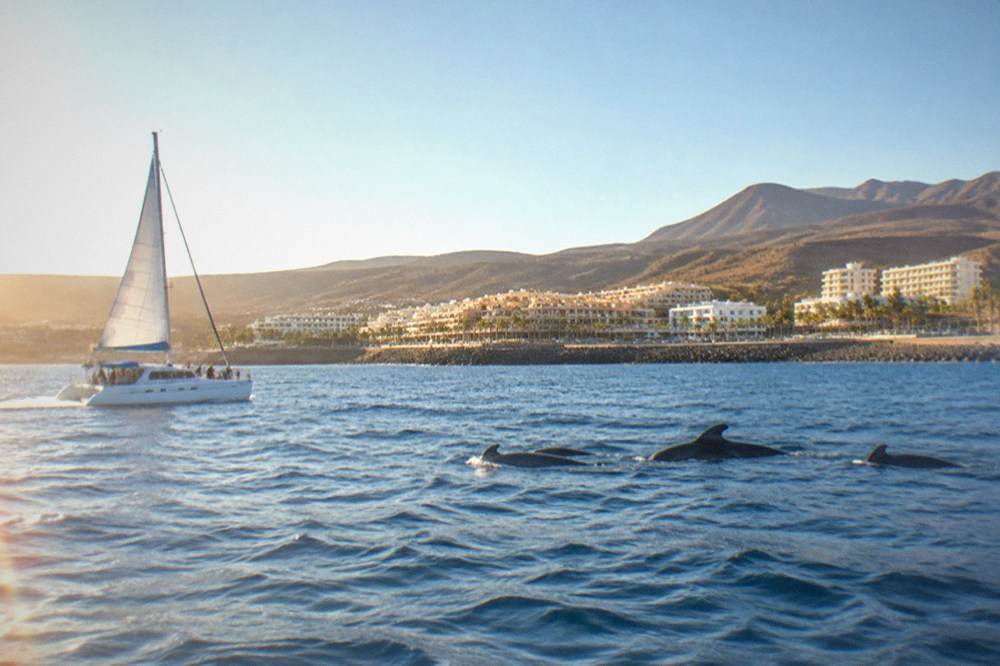
The whale watching is the quiet star of a family week. The World Cetacean Alliance designates the Tenerife-La Gomera marine area a Whale Heritage Area, describing a unique resident population of pilot whales plus bottlenose dolphins, and the crossing from Los Cristianos or Costa Adeje is short enough that even a two-hour trip fits a child's attention span. Boats are regulated under Decreto 178/2000, which is the reason the animals stay put: no boat may approach within 60 m, no more than three boats may sit within 500 m, and swimming with them is banned within 500 m. Authorised boats fly the Barco Azul flag, which is a useful thing to point at from the deck.
For background reading on the island's split personality, the north versus south comparison explains why families so often sleep south and day-trip north, and the general Tenerife with kids guide covers the year-round attractions this itinerary draws on.
Where Should a Family Base Itself for the Week?
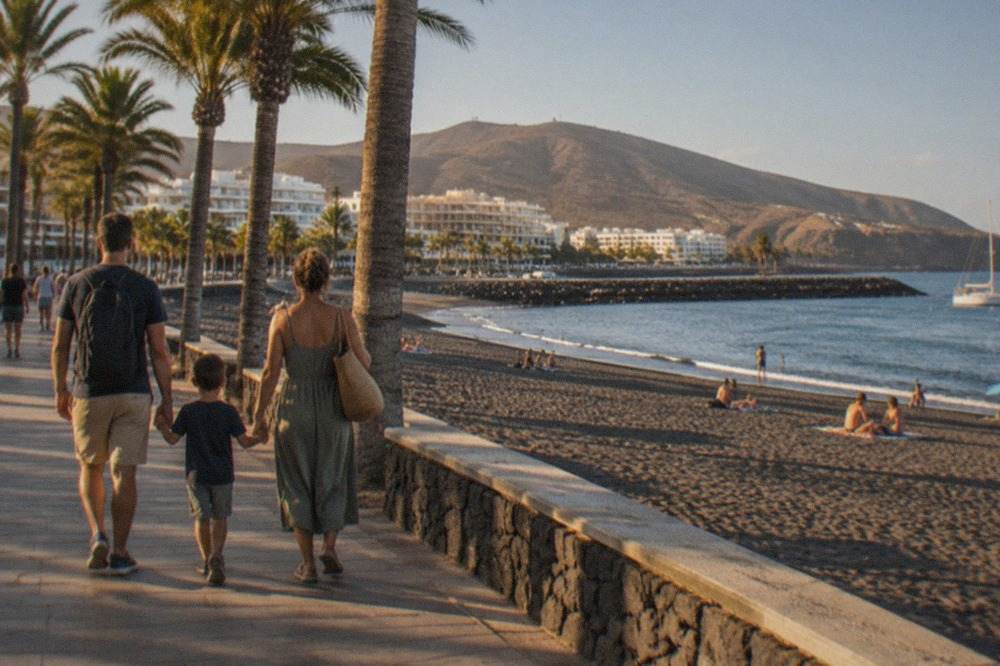
Most families should base in the south, around Costa Adeje, Los Cristianos or Arona, because the whale boats leave from there, Siam Park is in Costa Adeje, the south's beaches sit behind breakwaters, and the south airport bus lines run late into the night; a Puerto de la Cruz base suits families whose week revolves around Loro Parque and the north, at the cost of a longer transfer to the southern boats. The deciding facts are practical ones. TITSA lists lines 10, 40, 711, 343 and 415 at Tenerife South and lines 20, 30 and 343 at Tenerife North, so both airports are bus-served, but the south's resort belt is where the majority of the child-facing infrastructure sits. The best area for families guide works through the trade-offs in detail.
Beach choice is a sand-colour decision as much as a location one, and the tourist board's own descriptions settle the argument:
| Beach | Municipality | Sand, per the tourist board | Water character |
|---|---|---|---|
| Las Teresitas | Santa Cruz (San Andres) | Golden | Calm behind breakwaters |
| Las Vistas | Arona | Golden | Calm behind breakwaters |
| Playa del Duque | Adeje | Grey | Resort frontage |
| Playa Fanabe | Adeje | Pale sand | Resort frontage |
| El Medano | Granadilla de Abona | Fine grey sand | Under Montana Roja |
| El Bollullo | La Orotava | Black sand | At the foot of a cliff |
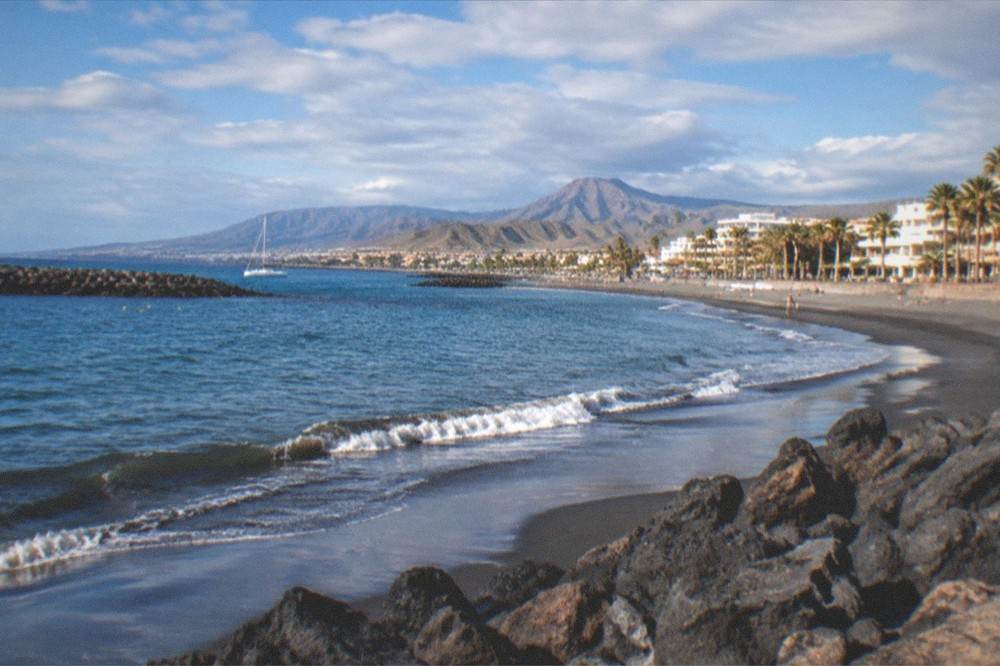
For a family with swimmers under eight, Las Teresitas and Las Vistas are the two the tourist board describes in exactly the terms a nervous parent wants: golden sand and water calmed by breakwaters. El Bollullo's black sand makes a good novelty afternoon, but it is a wilder beach and belongs in the week as a look-and-paddle stop rather than a swimming lesson.
What Does the Loro Parque Day Look Like?
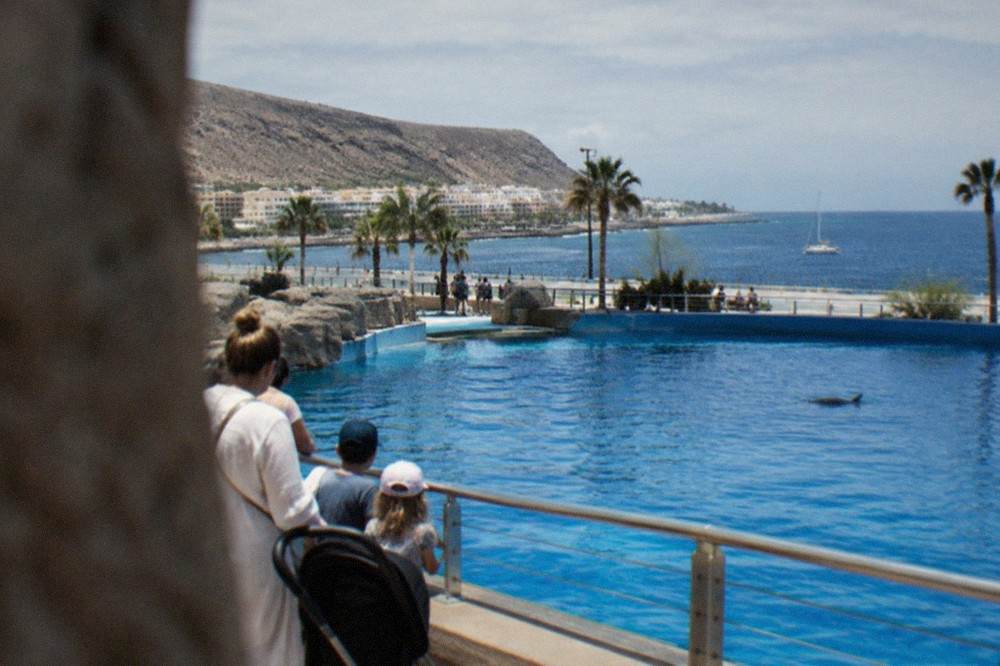
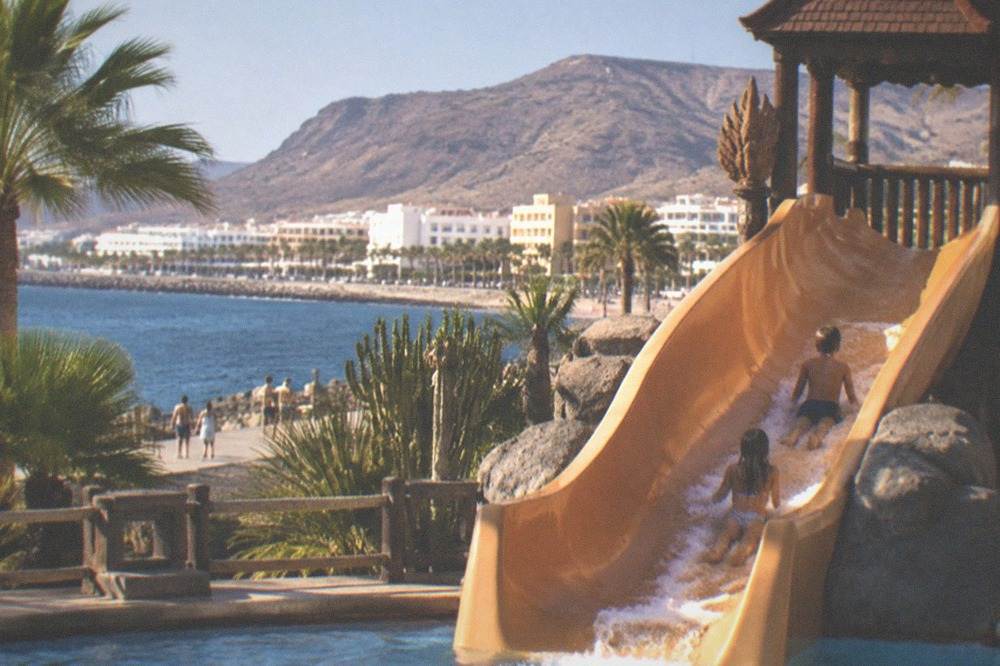
Loro Parque in Puerto de la Cruz opens 09:30 to 17:30 every day of the year, its own car park costs EUR 7 per day, and a family should treat it as a full day: arrive for the opening, book the first shows of the morning, and leave the last hour for the aquarium and the penguins, because the schedule fills fast and the park is the single biggest child-pleaser in the north. The park sits at the edge of Puerto de la Cruz, which means the day pairs naturally with an afternoon on Playa Jardin or an ice cream in the old town, and the town itself is compact enough to walk with tired children.
The pairing that saves money and sanity is the twin ticket: Loro Parque and Siam Park sell a combined admission, and a family doing both in one week is exactly the family it exists for. The product cards on this site carry the live prices for both, including the twin option, so compare there rather than at the gate. Check availability for the Loro Parque day before locking the rest of the week around it, because its slot determines which day the north gets.
Which Whale and Dolphin Trips Suit Children Best?
For children, the short eco trips from Los Cristianos and Costa Adeje fit best: the no-chase operators run 90-minute catamaran encounters with underwater viewing windows, eco yachts run swim-stop safaris of the same length, and all authorised boats follow Decreto 178/2000, which bans approaching within 60 m, caps boats at three within 500 m, limits speed to 4 knots inside 500 m and forbids swimming within 500 m of the animals. The rules are the trip. A boat that keeps its distance is a boat whose animals stay resident, and the resident pilot whale population is the reason these trips succeed at all. Look for the Barco Azul flag before boarding.
The choice between operators comes down to boat type and attention span, and the differences are real:
| Trip type | Typical length | Child-friendly feature |
|---|---|---|
| No-chase catamaran | 1 hour 30 minutes | Underwater windows, no chasing |
| Eco yacht safari | 1 hour 30 minutes | Small group, swim stop |
| Catamaran with buffet | 3 hours | Food on board, transfer included |
| Los Gigantes cruise | 2 to 3 hours | Cliffs up to 600 m, swim stop |
Under-fives do better on the 90-minute trips than the three-hour ones, and the Los Gigantes sailings, which run under cliffs the tourist board describes as towering up to 600 m, are the ones to save for a day when everyone is sleeping well. The whale watching tours page compares the full roster.
Can You Take Young Children Up Mount Teide?
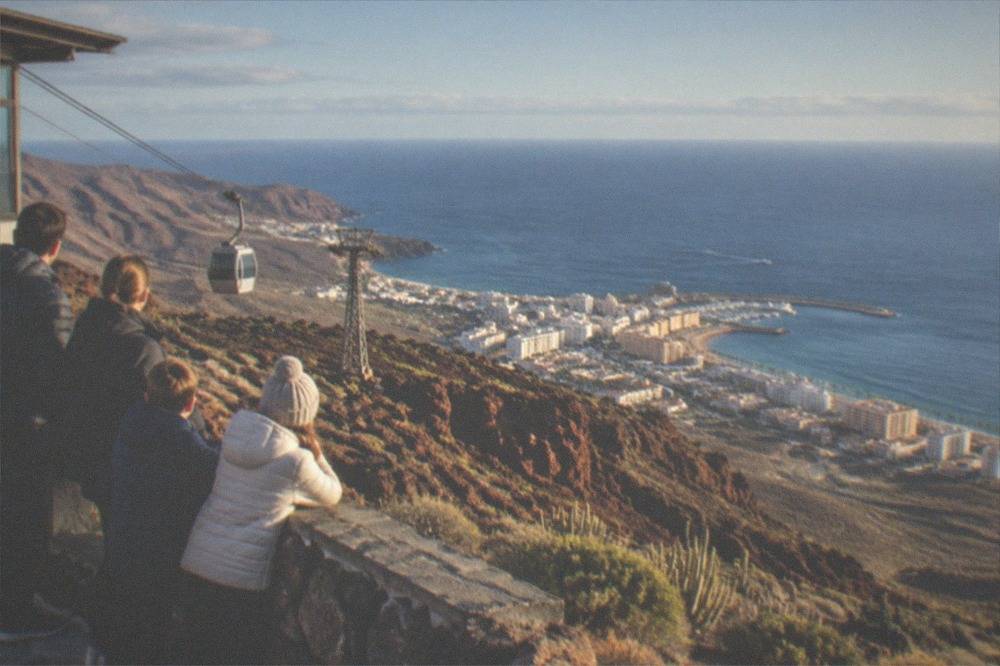
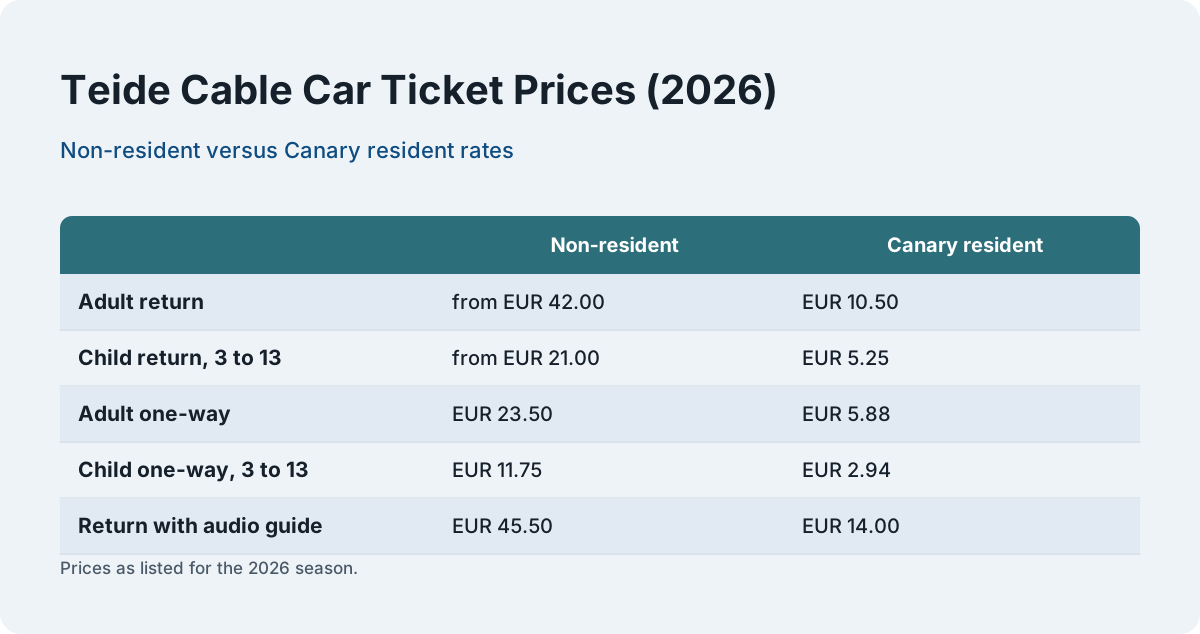
Children aged three and over can ride the cable car, which climbs from 2,356 m to La Rambleta at 3,555 m, with a non-resident return ticket shown from EUR 42.00 for adults and EUR 21.00 for children aged 3 to 13; children under 3, pregnant women and people with cardiovascular conditions may not ride at all, and the summit crater trail is a separate, permit-only matter that families with young children should simply skip. The cable car is the family version of Teide. The crater trail, PNT 10 Telesforo Bravo, needs a personal reservation through Tenerife ON, costs EUR 15 for visitors on the 09:00 to 17:00 slots since 19 January 2026, and carries its own access rules: no children under 3, and under-16s only with an adult. The Teide summit permit guide covers that process; this week uses the cable car and leaves the crater to another trip.
Two rules change the Teide day more than the prices do. Smoking is banned in every open-air space of the national park, car parks included, a wildfire measure the Cabildo enforces. And ice or snow on the stratovolcano trails triggers mandatory crampons and ice axe, which is a winter hiker's problem, not a cable car family's, but it is why bookings can be suspended for weather: check the Tenerife ON alerts before setting out. More of these guides are collected on Tenerife Travel Guide.
| Cable car ticket (2026) | Non-resident | Canary resident |
|---|---|---|
| Adult return | from EUR 42.00 | EUR 10.50 |
| Child return, 3 to 13 | from EUR 21.00 | EUR 5.25 |
| Adult one-way | EUR 23.50 | EUR 5.88 |
| Child one-way, 3 to 13 | EUR 11.75 | EUR 2.94 |
| Return with audio guide | EUR 45.50 | EUR 14.00 |
The standard 2026 hours are 09:00 to 17:00 for most of the year, extending to 18:40 in the Easter and summer peaks, with the last ascent one hour before closing and the last descent ten minutes before. The Teide cable car attraction page holds the full timetable, and a coach tour with the ticket bundled in removes the parking question entirely.
What Does the Rest of the Week Look Like, Day by Day?
A workable family week runs: day one, beach and jet lag; day two, whale trip; day three, Teide cable car; day four, Loro Parque and Puerto de la Cruz; day five, Siam Park; day six, a slow beach or Los Gigantes boat; day seven, Santa Cruz and Las Teresitas before the flight, with the two park days never back to back and the volcano day followed by a water day. The ordering is deliberate. Teide is a high-altitude morning that tires children in a different way from a theme park, and Siam Park's 10:00 to 18:00 summer hours make it the longest day on the island, so it earns a lazy day on either side.
| Day | Morning | Afternoon | Why this order |
|---|---|---|---|
| 1 | Arrive, settle in | Local beach | Recovers the flight |
| 2 | Whale and dolphin trip | Pool or promenade | Boats are morning calm |
| 3 | Teide cable car | Drive back via Vilaflor | Altitude before heat |
| 4 | Loro Parque, from opening | Puerto de la Cruz seafront | Shows fill earliest |
| 5 | Siam Park, from 10:00 | Rest | Longest day of the week |
| 6 | Los Gigantes cruise or beach | Free time | Buffer for weather |
| 7 | Santa Cruz, Las Teresitas | Airport | Golden-sand finish |
Day six is the buffer. If the forecast turns, the rainy day itinerary has the covered options, and a week built with one flexible slot absorbs a washed-out whale day by swapping it forward. Families stretching beyond seven days can bolt on the three-day or five-day cores, and the seven-day general itinerary is the adult-first version of this same week.
How Should a Family Get Around Without Overspending?
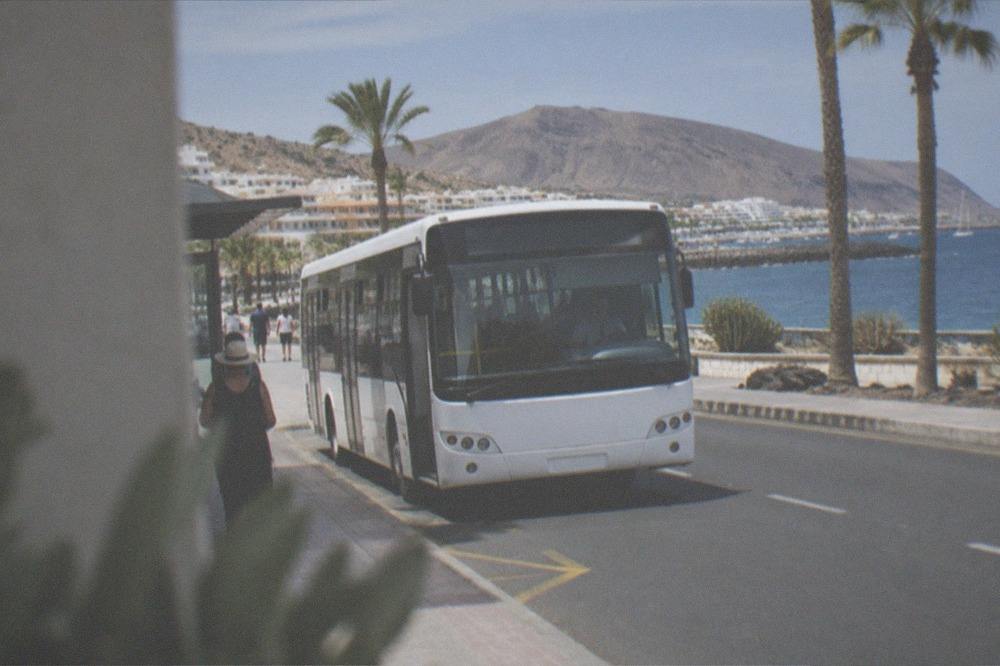
Visitors pay for Tenerife's buses: single tickets are priced by route, the day travelcard costs EUR 10 and the seven-day travelcard EUR 50, and the free 2026 public transport subsidy applies only to Canary Islands residents with personalised passes, so a family of four should decide between travelcards and a hire car before the week starts, not at the first bus stop. The resident subsidy is real and it is not for holidaymakers: every subsidised pass requires Canary residency. What visitors get instead are the travelcards, sold at the airport ticket machines, which cap a day of bus hopping at EUR 10 a person and a week at EUR 50.
A hire car wins for the Teide day, the Loro Parque day and any Masca-adjacent wandering; the buses win for the resort belt and the airport runs. For the volcano and north days, comparing island car hire prices before arrival is the one booking that moves the whole week, because the taxi alternative is metered from the start of every trip. Families going entirely car-free should read the Tenerife without a car itinerary, which proves the week is doable on TITSA alone.
| Ticket | Price | Notes |
|---|---|---|
| Single bus ticket | Priced by route | Card or cash |
| Same-day return | 10% off | Trips of 20 km or more |
| Day travelcard | EUR 10 | Sold at airport machines |
| 7-day travelcard | EUR 50 | Covers a full week |
| Tram single | EUR 1.35 | EUR 1.10 by mobile |
What Are the Rules That Catch Families Out?
Four rules bite families specifically: no children under 3 on the cable car, smoking banned across all open-air spaces of Teide National Park including car parks, sea conditions that can close the Masca pier and void that day's ticket, and an island-wide sales tax called IGIC at 7% on everyday goods rather than the mainland's VAT, which surprises anyone pricing a week's shopping. None of these is a fine-print trap; each sits on an official page and each changes a plan. The Masca gorge, for instance, is open as a descent-only pilot with a pre-booked boat exit and a EUR 40.66 general ticket, boat extra, and hikers must arrive on TITSA line 355 from Santiago del Teide, private vehicles refused. That is a teenagers-and-up day trip, not a young-family one, and the Masca attraction page explains why.
There is no tourist tax on Tenerife: no official page shows a per-night lodging tax in force or approved. The charges that do exist are per-booking ones, the Teide trail fees, the Masca ticket and the Barranco del Infierno ticket, and none of them touches a family week built on parks, boats and beaches. For UK and US visitors, the EU's Entry/Exit System has been fully operational since 10 April 2026 and registers a facial image and fingerprints instead of a passport stamp; ETIAS, by contrast, is not in operation and no applications are being collected, so a family needs no travel authorisation beyond passports today.
What If the Weather Turns on a Park Day?
Tenerife's south coast is one of the driest corners of the island, with Tenerife South Airport's climate station recording zero rain days in June and July on average and an annual 132 mm, but the north is a different climate: Tenerife North averages 520 mm a year on 64 rain days, and the Teide ridge at Izana sees snow-season minima of 1.1 degrees Celsius in January, so a family week should plan by microclimate, not by island average. This is the single most useful piece of planning knowledge on the island. A washed-out morning in Puerto de la Cruz can be a beach morning in Costa Adeje, and the reverse holds on cloud-inversion days when the south's resorts sit under grey and the volcano stands in sunshine above it.
The practical move is to keep the paid, weather-proof items flexible where the operator allows and to hold the beach days as movable blocks. Loro Parque is an all-weather day by design. The whale boats sail in conditions the skipper judges, not the forecast app, and the cable car suspends for weather alerts through Tenerife ON. The rainy day itinerary exists for the week when the Atlantic low settles in, and swapping it in costs nothing if the paid days were booked with the weather buffer of day six in mind.
| Month | Sea surface C, south coast | Mean daily max C, Santa Cruz | Rain days, Tenerife North |
|---|---|---|---|
| January | 19.9 | 21.0 | 7.7 |
| April | 19.5 | 22.7 | 6.2 |
| July | 22.2 | 28.7 | 1.7 |
| October | 23.7 | 26.3 | 6.5 |
Which Bookings Should a Family Make Before Flying?
Make four bookings ahead: the Loro Parque or twin-park ticket, the whale trip, the cable car or its coach tour, and the airport transfer or hire car, in that order of sell-out risk, because the parks and the boats have daily capacity and the rest of the week, the beaches, the viewpoints and the old towns, costs nothing and books nothing. The island's paid layer is thin. Driving through Teide National Park carries no entry charge on any page read, the viewpoints are free, and the promenades of Los Cristianos and Costa Adeje are the week's default afternoon. What a family pays for is the equipment-and-expertise layer: the boats, the cable car, the parks and the instructors.
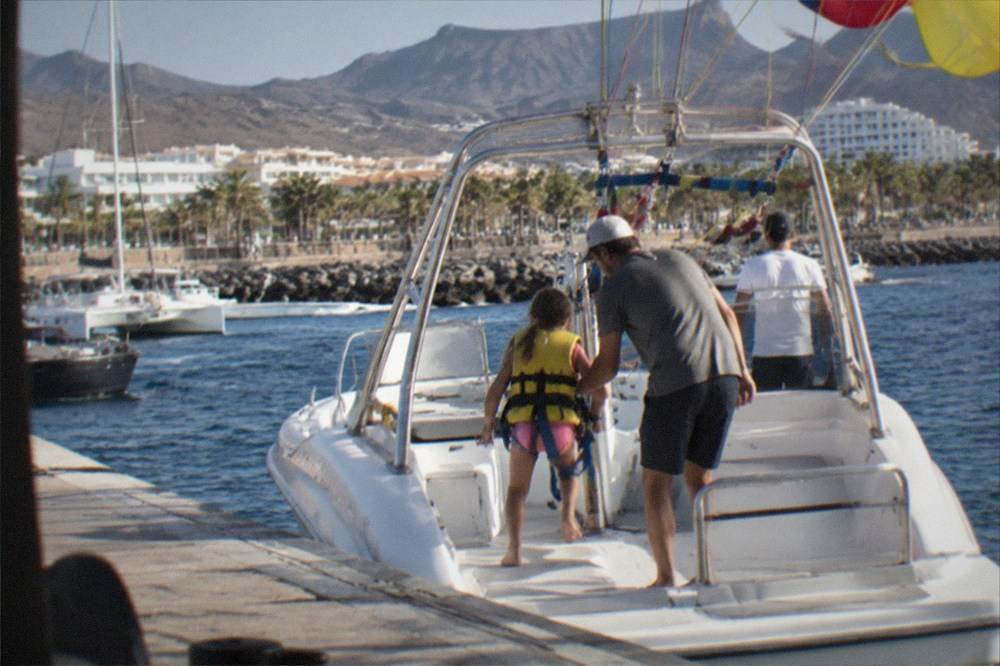
For the water-sports afternoon, a 10-minute parasailing flight over Costa Adeje is the one that suits mixed ages best, since the flight itself is short and the boat ride is part of the fun, and surf lessons at Playa de las Americas start from age-tolerant beginner groups with photos included. The cards below carry the live prices and the full roster of family-suitable options for the final decisions of the week.
Should You Eat Out with Children or Self-Cater?
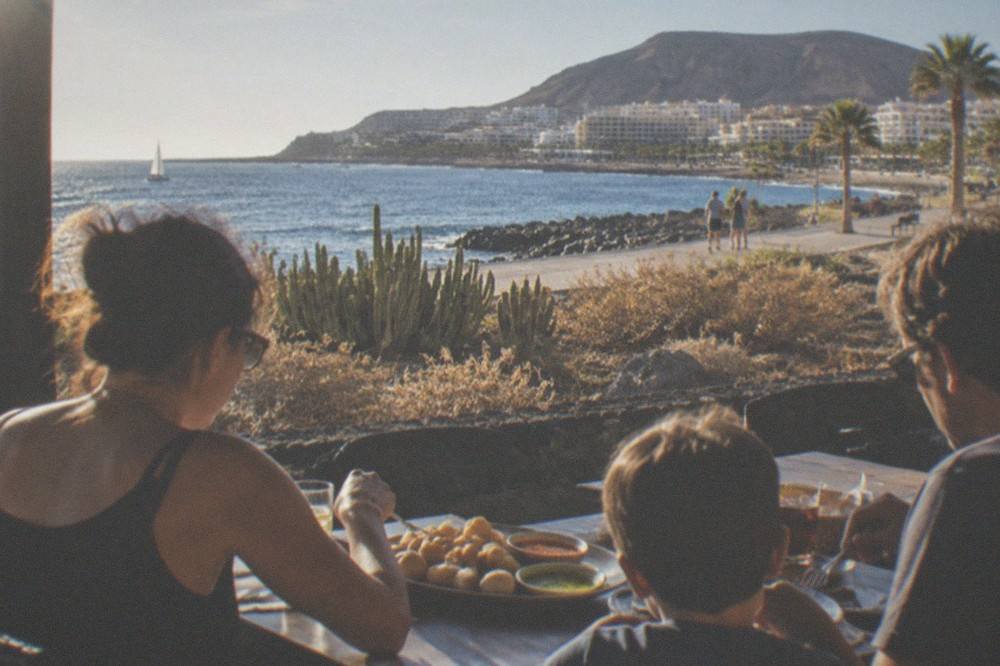
Self-catering families should shop at the island's markets and supermarkets knowing the sales tax is IGIC at 7% on everyday goods rather than mainland VAT, and eating out works best at midday: the Canaries serve the menú del día at lunch, and the island's guachinches, simple family-run eating houses in the north, pour their own wine at prices set by the house rather than by a resort promenade. The guachinches guide explains the tradition and where the genuine ones cluster, and the Tenerife markets guide lists the fruit and vegetable markets that make a self-catering week taste better than a supermarket one.
Children are welcome almost everywhere at the Canarian table, and the local dishes are child-friendly by nature: papas arrugadas with mojo are boiled potatoes and sauce, and gofio turns up in everything from breakfast porridge to ice cream. The resort south runs on international menus anyway, so the week can split its eating between promenade convenience and one or two proper Canarian lunches on the north days, when Loro Parque or the cable car has already done the day's heavy lifting.
Common Questions About a Family Week in Tenerife
Is Tiam Park or Loro Parque better for children?
They serve different ages and moods: Siam Park is a water park open 365 days a year, 10:00 to 18:00 from 1 May to 29 October and 10:00 to 17:00 the rest of the year, while Loro Parque is an animal park open 09:30 to 17:30 every day. Families with confident swimmers lean to Siam Park; families with under-sevens or a mixed-age group usually get more from Loro Parque, and the combined twin ticket covers a week that includes both.
Can babies and toddlers ride the Mount Teide cable car?
No. The operator does not allow children under 3, pregnant women, or people with cardiovascular conditions, because of the altitude. The child fare applies from age 3 to 13, and the upper station at La Rambleta sits at 3,555 m, so even riding-age children should take the first hour of the day and go gently.
Do children pay to walk the Teide summit trail?
Children are exempt from the PNT 10 fee, and the booking page shows the age band that applies. The reservation itself is still required for every walker, the 09:00 to 17:00 slots cost EUR 15 for adult visitors, and the trail's access rules bar children under 3 and allow under-16s only with an adult.
Is public transport free for families visiting Tenerife?
No. The 100% subsidy running through 2026 applies to resident passes only, and every subsidised pass requires Canary Islands residency. Visitors pay single fares, the EUR 10 day travelcard or the EUR 50 seven-day travelcard, all sold including at the airport ticket machines.
Which Tenerife beach is best for small children?
The tourist board describes both Las Teresitas, at San Andres near Santa Cruz, and Las Vistas in Arona as golden-sand beaches with water calmed by breakwaters, which is the combination small children need. Playa del Duque in Costa Adeje is a grey-sand beach by the same official description, pleasant but not the golden postcard.
How many days does a family need in Tenerife?
Seven is the comfortable answer: it fits the two parks, the whale trip and the volcano without stacking big days. Five works if the whale day and one park day are the priorities, and the three-day core covers a single park plus a boat, but any version shorter than a week means choosing between Teide and the second park.