Tenerife Without a Car: A Bus-Only Itinerary
Tenerife is one of the few Canary Islands you can genuinely enjoy without hiring a car, because TITSA buses reach both airports, the national park trailheads and the boat ports. This page sets out the tickets, the lines and a seven-day plan built entirely around them.
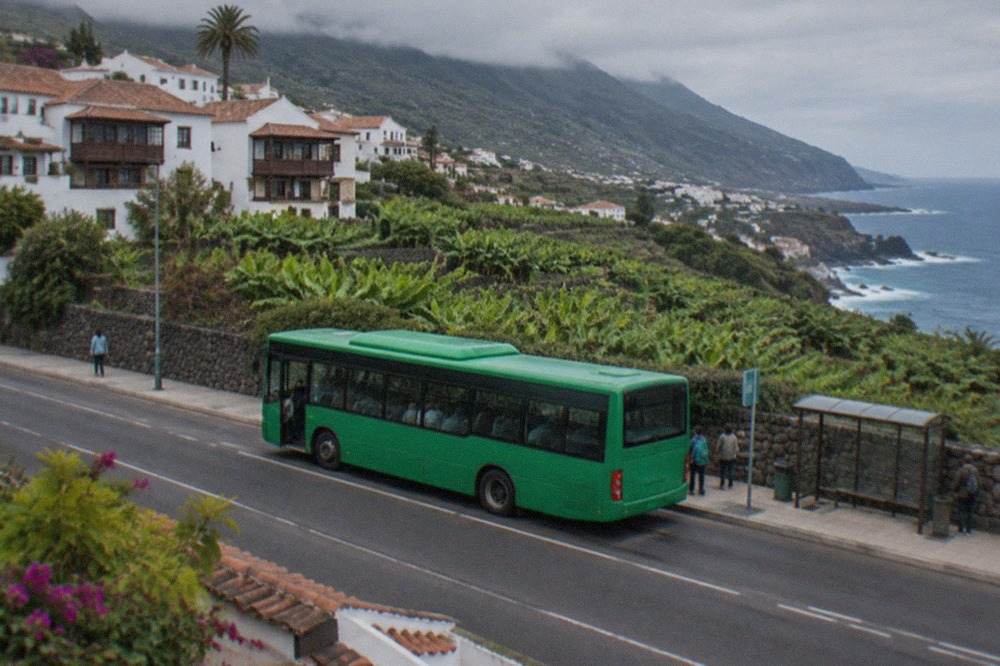
Short answer
Yes, Tenerife works without a car. TITSA buses serve both airports, the coast and the main trailheads, visitors buy a EUR 10 day travelcard or a EUR 50 seven-day travelcard, and the two things that need care are the Teide summit permit and the Masca descent, both of which are booked online in advance.
Tenerife recorded 13,969,678 passengers at Tenerife South airport in 2025, an all-time high according to AENA, and a large share of those arrivals never sit behind a steering wheel during their stay. The island's bus operator TITSA runs lines to both airports, along both coasts and up to the trailheads of the national park, which makes a car-free week a realistic plan rather than a compromise. The things that need booking in advance are few and specific: the Teide summit reservation, the Masca descent and, if you want them, the boat trips and tours that depart from bus-served ports.
Is Tenerife Doable Without a Car?
Yes, and for most visitors the bus network covers everything a one-week trip asks of it. TITSA serves both airports with dedicated lines, links the southern resorts to Santa Cruz and Puerto de la Cruz, and reaches the trailheads that matter, including the Masca shuttle. The two genuine constraints are early start times on mountain routes and the fact that permits for Teide's summit trail and the Masca gorge must be booked online before you travel, not bought on the day.
The bus network is organised around two corridors: the southern resort belt from Costa Adeje through Los Cristianos to the airport, and the northern spine through Santa Cruz, La Laguna and Puerto de la Cruz. The express line 343 stitches the two together, running from Puerto de la Cruz to Los Cristianos via both airports, so a base in either half of the island does not lock you out of the other. Anyone weighing the choice more broadly can read the full comparison of north and south Tenerife.
What the buses do not do is run to your clock. Mountain services, above all the Masca shuttle on line 355, have a small number of departures a day, so a car-free plan is built around a few fixed timetabled anchors rather than spontaneous detours. That is a fair trade for avoiding parking, petrol and the island's winding western roads. The question of whether a car is needed at all is answered in more depth on our page on needing a car in Tenerife.
What Are the Best Ways to Get Around Tenerife Without a Car?
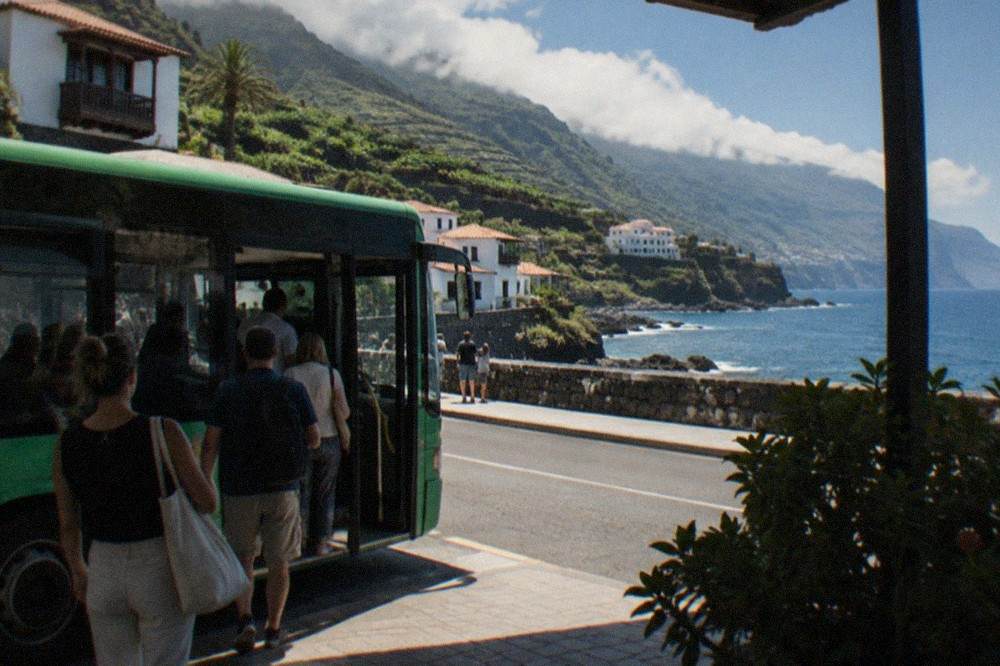
The best ways are the TITSA buses, backed by the tram between Santa Cruz and La Laguna, taxis for short hops, and organised tours with hotel pickup for the awkward high-altitude destinations. Visitors pay per single ticket or buy a EUR 10 day travelcard or a EUR 50 seven-day travelcard; the 2026 free-transport subsidy applies only to Canary residents holding personalised passes, so no visitor qualifies for free buses.
TITSA is the backbone. Its airport pages list the lines that matter on arrival: at Tenerife South, lines 10 to Santa Cruz, 40 to the Costa Adeje bus station via Los Cristianos, 711 as the night service, the 343 express and 415 to El Fraile and San Isidro. At Tenerife North, lines 20 to Santa Cruz via La Laguna, 30 to Puerto de la Cruz and the same 343 express south. Tickets can be bought on board with card or cash, and the same-day return gives 10% off on trips of 20 km or more. For advance purchase, bus tickets can be bought through the official ticketing channel.
The tram, run by Metrotenerife, is a separate system with a single fare of EUR 1.35 on a transit pass or EUR 1.10 by mobile. It is useful for the Santa Cruz to La Laguna leg, which is also a UNESCO-listed colonial town and one of the easiest car-free days on the island. Taxis are white, all metered from the start of the trip, and a fixed price can be agreed in advance for excursions, which helps for an early-morning start the buses do not cover.
One warning that matters: pages claiming public transport in Tenerife is free for tourists are wrong. The Canary government's 100% subsidy for 2026 covers resident passes only, every one of which requires proof of Canary residency and a personalised Ten+ card. Visitors pay the published fares like everyone else, and the Teide and Teno lines are excluded even from the resident passes.
Which Bus Ticket Should a Visitor Buy?
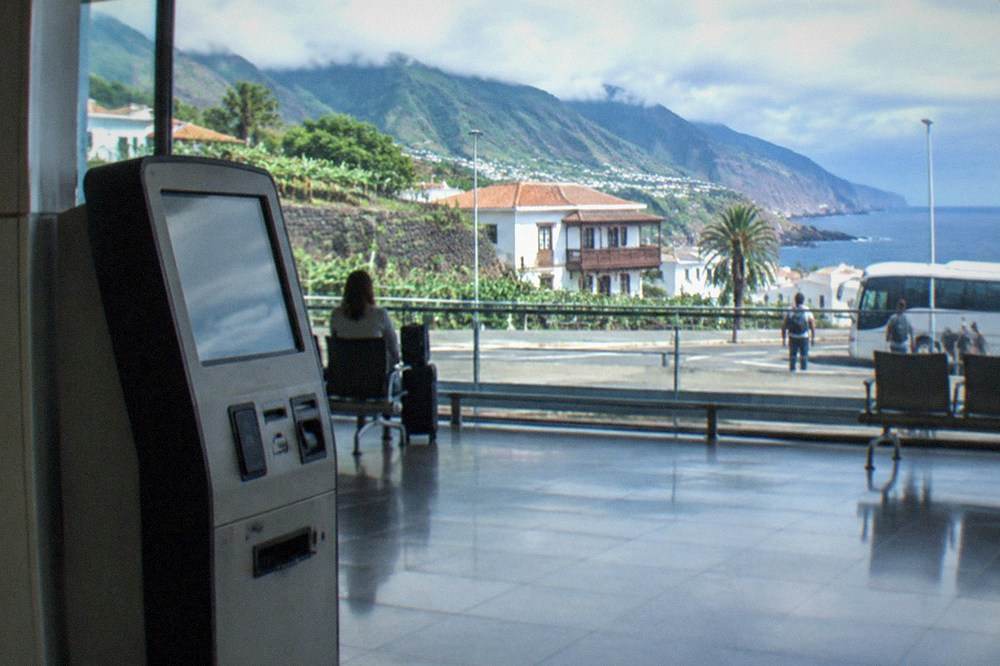
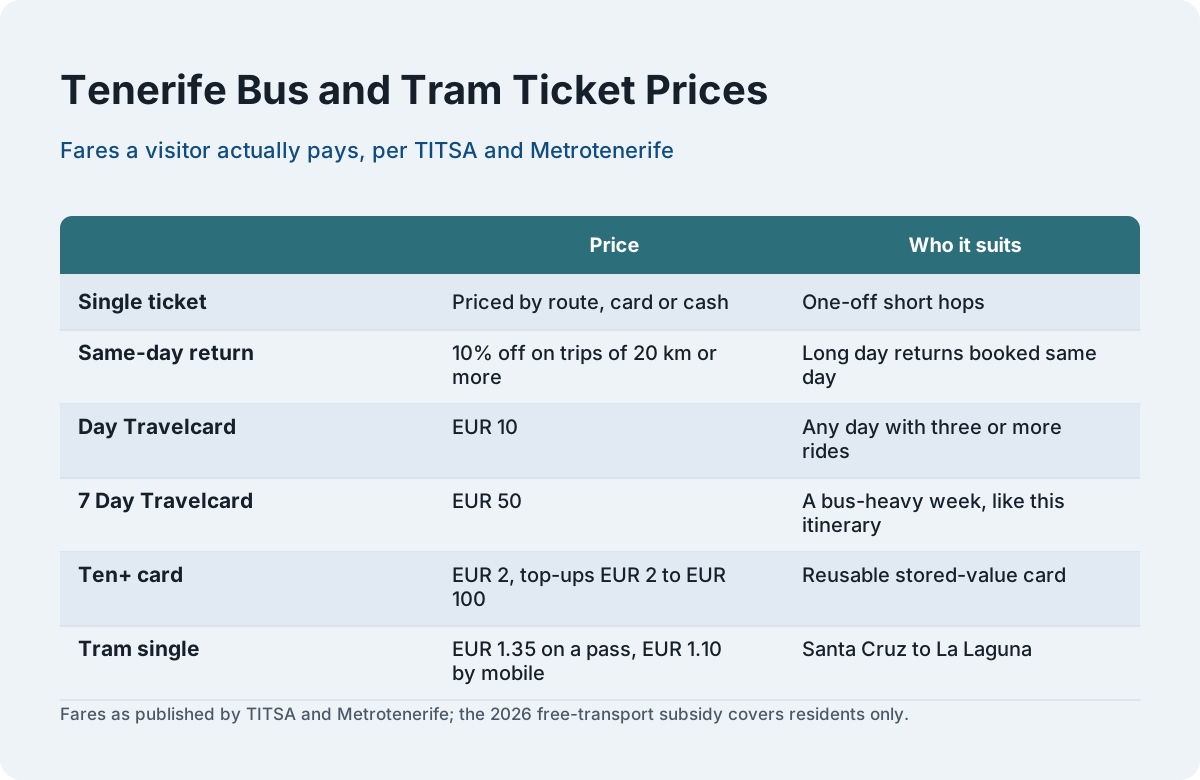
Buy the EUR 10 day travelcard on any day with three or more bus rides, and the EUR 50 seven-day travelcard if the week is bus-heavy, because both beat stacking single tickets. The Ten+ card itself costs EUR 2 and wallet top-ups run from EUR 2 to EUR 100, and the travelcards are sold at airport ticket machines, so the purchase can be made before the first ride into resort.
The arithmetic is simple: a day combining an airport transfer, a coastal hop and a return somewhere is already three rides, and the day travelcard caps the spend at EUR 10 regardless of distance. On a quiet day with a single round trip, singles priced by route are the cheaper option. The seven-day card suits this itinerary well, because most days below involve at least one long return journey.
| Ticket | Price | Who it suits |
|---|---|---|
| Single ticket | Priced by route, card or cash | One-off short hops |
| Same-day return | 10% off on trips of 20 km or more | Long day returns booked same day |
| Day Travelcard | EUR 10 | Any day with three or more rides |
| 7 Day Travelcard | EUR 50 | A bus-heavy week, like this itinerary |
| Ten+ card | EUR 2, top-ups EUR 2 to EUR 100 | Reusable stored-value card |
| Tram single | EUR 1.35 on a pass, EUR 1.10 by mobile | Santa Cruz to La Laguna |
Note what is absent from that table: a free option. The resident subsidy does not apply to visitors, and no visitor product is free. If a page tells you otherwise, it is describing the residents' scheme.
A Seven-Day Bus-Only Itinerary for Tenerife
This itinerary alternates the south coast, the volcano, the north and one boat day, using TITSA lines and two pre-booked items. The anchors to book before flying are the Teide summit permit or cable car, the Masca descent if you want it, and a whale-watching departure from a bus-served port. Everything else can be decided the evening before.
The shape of the week is deliberate: the big altitude day sits early, before the walking days tire you out, and the two long northbound days are separated by an easy beach day. It assumes a base in the southern resort belt, where the bus frequency is highest, but a Puerto de la Cruz base works with the same plan reversed.
| Day | Plan | Getting there without a car |
|---|---|---|
| 1 | Arrive, settle in, beach or promenade | Airport line 40 or 10 from Tenerife South |
| 2 | Teide National Park by coach tour or bus | Tour with hotel pickup, or bus toward the base station |
| 3 | Whale watching from a southern port | Coastal line to the port, or a tour with transfer |
| 4 | Masca descent with boat exit | TITSA line 355 from Santiago del Teide, mandatory |
| 5 | Santa Cruz and La Laguna | Express line along the east coast, tram between the two |
| 6 | Puerto de the Cruz and the north coast | Line 343 express or line 30 from the north airport |
| 7 | Beach morning, Siam Park or departure | Local coastal lines |
Day two is the one day where a tour genuinely beats the bus. The cable car base station sits at 2,356 m and the public bus connections up the mountain are thin, so a coach tour with the cable car ticket included is the standard car-free solution. The cable car itself stops at La Rambleta at 3,555 m; it does not reach the summit, and the crater trail is a separate permit-only route. Full cable car details are on our Teide cable car page, and the wider park is covered in the Teide National Park guide.
Day five pairs the island's capital with La Laguna, and the tram links them cleanly. Day six is the long one: the 343 express runs from Puerto de la Cruz to Los Cristianos via both airports, so the north coast is a single-seat ride from the south. Families running a shorter version of this plan can lift days straight out of the Tenerife with kids itinerary, and anyone with only a weekend can compress it using the three-day itinerary.
How Do You Reach Mount Teide by Bus?
You reach the national park either on a coach tour with hotel pickup or by bus toward the cable car base station, and the cable car ticket is bought from the operator: a 2026 non-resident return costs EUR 42 for an adult and EUR 21 for a child aged 3 to 13. The crater trail, PNT 10 Telesforo Bravo, is a separate reservation on Tenerife ON, and since 19 January 2026 its 09:00 to 17:00 slots cost visitors EUR 15.
The distinction between three separate things cannot be overstated, because most confusion about Teide comes from blurring them. Driving or riding through the park costs nothing and needs no booking. The cable car is an operator ticket from 2,356 m to La Rambleta at 3,555 m. The summit trail is a personal reservation on Tenerife ON, which lists accredited guides as required and organisations as not allowed; walking it without a reservation may be penalised. The rest of the planning pages sit on Tenerife Travel Guide.
| Teide item | Non-resident price | Notes |
|---|---|---|
| Cable car return, adult | EUR 42.00 | Shown as price from |
| Cable car return, child 3 to 13 | EUR 21.00 | Under-3s may not ride |
| Cable car one-way, adult | EUR 23.50 | |
| PNT 10 summit trail, 09:00 to 17:00 | EUR 15 | Visitors; children exempt from the fee |
| PNT 10 summit trail, other Canary residents | EUR 6 | Proof of residence at the checkpoint |
| PNT 07 Montana Blanca, working day | EUR 6 | Visitors, 09:00 to 17:00 slots |
| PNT 07 Montana Blanca, weekend | EUR 10 | Visitors, Saturdays, Sundays, holidays |
Permits are released every Monday at 07:00 Canary time, with 56 days always bookable, and no official page states how fast they sell out, so ignore any fixed "book three months ahead" advice. Refunds do not exist: bookings are non-refundable and date, slot and name changes are not allowed, refunded only if the trail closes or the cable car is not operating. Children are exempt from the trail fee, and the official page gives two different age cut-offs, so the booking page is the place to check which band applies. The full rules are on our Teide summit permit page.
The health rules are the operator's, not a writer's: people with cardiovascular conditions, pregnant women and children under 3 may not ride the cable car, and the trail page warns it is not suitable for people with heart, respiratory or mobility problems. Smoking is banned in every open-air space of the national park, car parks included.
For a car-free evening instead of a daytime ascent, the stargazing options run from the resorts with transport included, and the Teide stargazing tours page compares them. A small-group sunset and stargazing departure is the natural fit for a bus-only week.
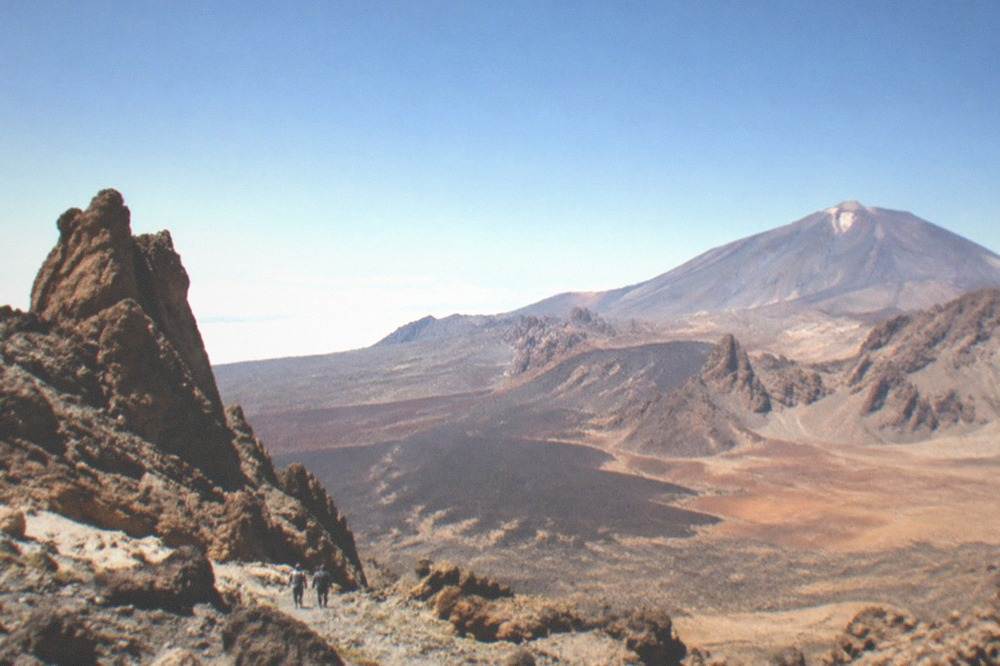
Can You Do the Masca Hike Without a Car?
Yes, and in the current pilot scheme arriving by bus is not just possible but compulsory: hikers must reach the start on TITSA line 355 from Santiago del Teide and show the bus ticket, and arriving by private vehicle means refusal. The descent-only ticket costs EUR 40.66 with the boat extra, booked at caminobarrancodemasca.com, and the exit boat must be booked for no later than four hours after the descent slot.
Masca is the one hike on Tenerife that is genuinely easier without a car, because the rules already force everyone onto the shuttle. The gorge is open as a descent only, leaving by boat from Masca bay, and the return from Los Gigantes to Santiago del Teide is not included: TITSA lines 462 or 325 cover that leg. Entry sessions run 08:30 to 13:00 with 25 places every 30 minutes and 50 at the 09:00 session, and closed mountain footwear is a condition of entry, with refusal even for holders of a booking who turn up in sandals.
Two risks are worth planning around. The operator calls Masca the place with the most rescues in the Canaries in recent years, and the pier can close suddenly when the sea turns, which voids the day's ticket. Book an early slot, watch the forecast, and keep a flexible backup such as the rainy day itinerary. The village and viewpoint are covered on our Masca page.
Tenerife residents and federation members from the Canaries enter free, paying up front and being refunded after the control check, and special rates exist for Canary residents and under-18s, though the reduced figures are not published on the page read here.
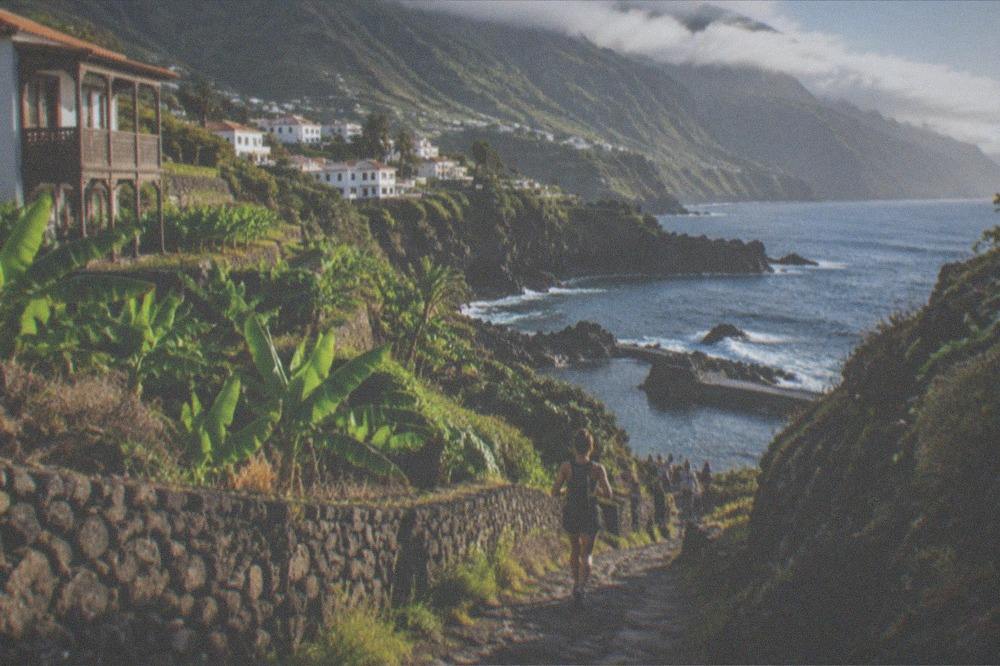
Whale Watching from a Bus-Served Port
The whale boats leave from ports the buses already reach, principally Los Cristianos, Costa Adeje and Los Gigantes, and the activity is tightly regulated by Decreto 178/2000: no boat may approach within 60 m of a cetacean, at most three boats may sit within 500 m, and swimming within 500 m is banned. Authorised boats fly the Barco Azul flag, which is the quickest way to check a booking.
The south-west coast between Tenerife and La Gomera holds what the World Cetacean Alliance calls a unique resident population of pilot whales, plus bottlenose dolphins and a migration stop for 21 other cetacean species, inside a Special Area of Conservation. The WCA designated the Tenerife-La Gomera marine area a Whale Heritage Area in January 2021. No official count of the pilot whales exists, so treat any number a page quotes with suspicion.
For a car-free day, a departure with hotel transfer removes even the short bus leg, and a catamaran with buffet and transfer included is the most complete version of that.
The Los Gigantes departures add the cliffs, which the tourist board describes as towering up to 600 m, with a seabed about 30 m deep at their foot inside Teno Rural Park. Los Gigantes is reachable on TITSA's western lines, and the same lines serve the return leg after a Masca boat exit.
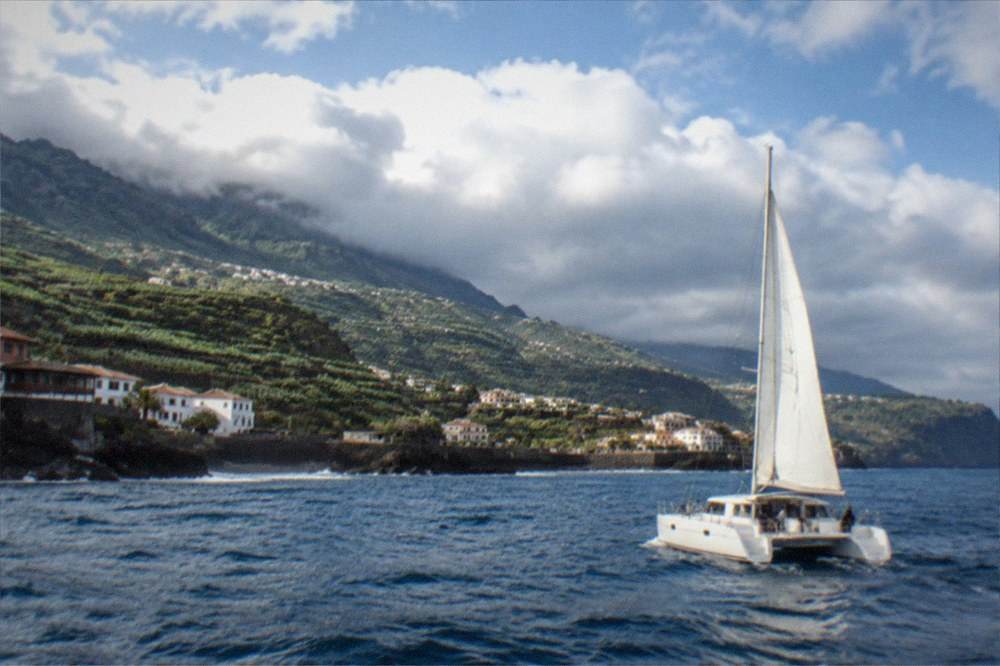
What the Weather Does to a Bus-Only Plan
A bus-only plan is more weather-sensitive than a car-based one, because the mountain days depend on fixed departures and the Masca pier closes when the sea turns. AEMET's normals show why the split matters: Santa Cruz averages 21 to 29 C across the year while the Izana station on the Teide ridge at 2,369 m averages daily maxima from 7.5 C in January to 23 C in July, so the same day can need a coat and a swimsuit.
The practical rule is to keep the mountain and boat days movable. AEMET's Santa Cruz series records July and August with zero days of rain of 1 mm or more, against 4 to 5 such days in January and November, so summer weeks can plan Teide and Masca on any day, while winter weeks should hold a spare day for each. The sea surface off the south coast runs from 19.1 C in March to 23.7 C in September and October, which is the window for the swim stops.
| Month | Santa Cruz mean daily max C | Izana (2,369 m) mean daily max C | Rain days of 1 mm+, Santa Cruz | Sea surface C |
|---|---|---|---|---|
| Jan | 21 | 7.5 | 4.2 | 19.9 |
| Mar | 22.1 | 10.2 | 3.8 | 19.1 |
| Jun | 26.2 | 18.9 | 0.2 | 21.4 |
| Aug | 29 | 22.6 | 0.3 | 23.1 |
| Oct | 26.3 | 14.3 | 3.1 | 23.7 |
| Dec | 22.1 | 8.8 | 5.4 | 21.1 |
Ice and snow on the stratovolcano trails trigger a mandatory equipment rule: crampons and an ice axe join the kit list, plus a signed declaration. In winter, check the Tenerife ON alerts before committing to a summit day, since bookings can be suspended for fire risk or weather alerts.
When a Tour Beats the Bus, and When a Car Still Wins
A tour with pickup beats the bus for the Teide cable car day and for any stargazing evening, because those departures run at hours and to places the scheduled network serves thinly or not at all. A car wins only for the remote west and the Anaga back roads, and even there a full-day guided island tour covers the same ground with none of the driving.
The honest accounting is that this itinerary's first six days need no car at all. The two places where private transport adds something are the quiet western roads around Teno and the deep laurel forest of Anaga Rural Park, where bus frequency drops and the walks start from small villages. Note that El Pijaral, the Enchanted Forest, needs a Tenerife ON reservation released Mondays at 07:00 for at most 14 days ahead, and company-run tours are not permitted there, so that trail is a self-guided bus-and-boot affair or nothing.
For the rest, a full-day guided island tour is the car-free substitute for a hire car: one booking, the whole loop, and a driver who knows the roads. Anyone who still concludes a car is needed for their week can weigh it up on the car hire in Tenerife guide, and compare island prices through the island's hire comparison. Longer versions of this plan exist in the five-day itinerary and the seven-day itinerary, and the fullest version is the ten-day itinerary.
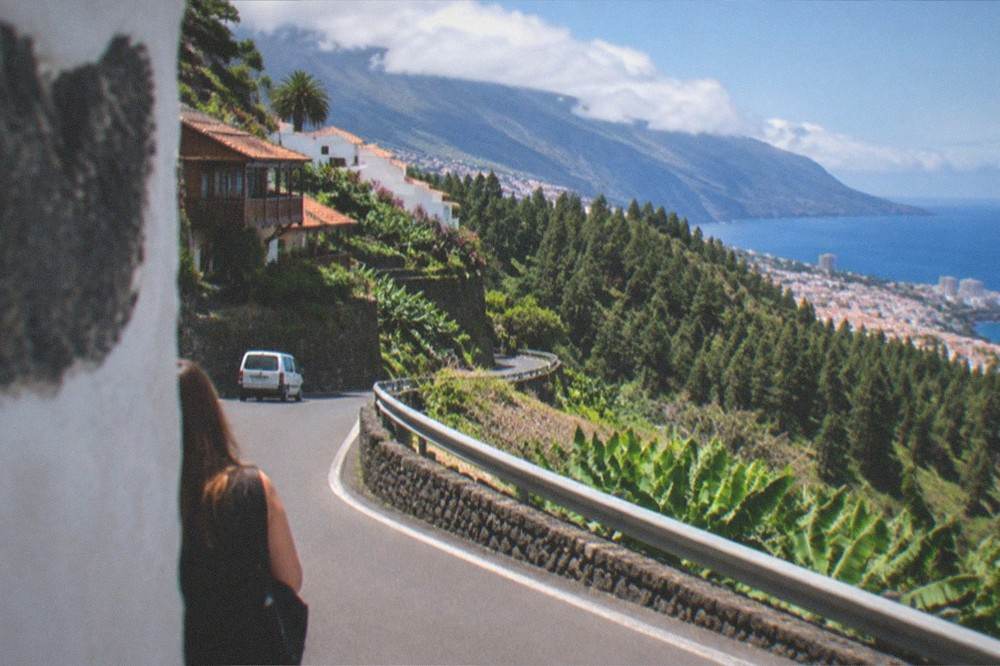
Common Questions About Travelling Tenerife Without a Car
What are the best ways to get around Tenerife without a car?
TITSA buses are the backbone, with dedicated lines at both airports and express services linking the north and south coasts. The tram connects Santa Cruz and La Laguna for EUR 1.35 on a transit pass. Visitors buy single tickets, a EUR 10 day travelcard or a EUR 50 seven-day travelcard; the free-transport subsidy for 2026 is for Canary residents only. For Teide and evening stargazing, tours with hotel pickup beat the scheduled buses.
Is public transport free for tourists in Tenerife?
No. The 100% subsidy running through 2026 applies to resident passes only, each of which requires Canary residency and a personalised Ten+ card. Visitors pay the published fares: single tickets priced by route, the EUR 10 day travelcard or the EUR 50 seven-day travelcard. The Teide and Teno lines are excluded even from the resident passes.
Which bus lines run from Tenerife South Airport?
TITSA's own airport page lists line 10 to Santa Cruz, line 40 to the Costa Adeje bus station via Los Cristianos, the 711 night service, the 343 express to Puerto de la Cruz via both airports, and line 415 to El Fraile and San Isidro. At Tenerife North, lines 20, 30 and 343 serve the airport.
Can you visit Mount Teide without a car?
Yes. A coach tour with the cable car ticket included is the standard car-free option, since it includes hotel pickup. The cable car costs EUR 42 for a non-resident adult return and stops at La Rambleta at 3,555 m; the summit crater trail is a separate reservation on Tenerife ON, costing visitors EUR 15 on the 09:00 to 17:00 slots since 19 January 2026.
Do you need a car for the Masca hike?
The opposite: private vehicles are refused. Hikers must arrive on TITSA line 355 from Santiago del Teide and show the bus ticket. The descent-only ticket costs EUR 40.66 with the exit boat booked separately, and the return from Los Gigantes runs on TITSA lines 462 or 325.
Is there a tourist tax to budget for on top of bus fares?
No per-night lodging tax is in force or approved on Tenerife, and no official page read shows one. The charges that do exist are per-booking fees on specific trails: the Teide PNT 10 and PNT 07 fees, the Masca ticket at EUR 40.66 and the Barranco del Infierno ticket at EUR 15 for non-resident adults.