Tenerife Food: What to Eat and Where
Tenerife's food is Canarian cooking with its own island accents: wrinkled potatoes with mojo sauces, fresh fish, gofio, bananas grown on the island and wines poured from volcanic soil. This guide sets out what to eat, where to find it and what is worth booking.
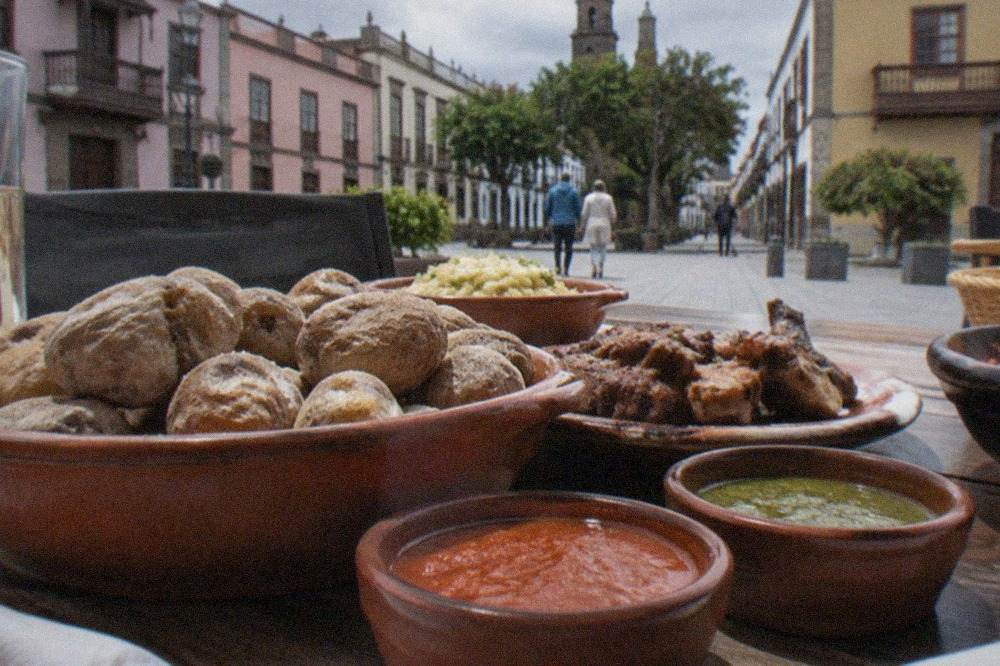
Short answer
Tenerife food means Canarian dishes such as papas arrugadas with mojo rojo and mojo verde, fresh local fish, goat cheese, gofio and island bananas, alongside wines from Tacoronte and other island vineyards. Eat them at guachinches, local markets and fish restaurants rather than only at resort buffets, and confirm opening details with each venue.
Tenerife feeds more people than almost any other island in Europe: the tourist board's 2025 balance records 5,451,268 tourists lodged in hotels and apartments, and every one of them eats three times a day. Yet the island's own cooking, Canarian food with Tenerife's particular accents, sits a short distance from most resort buffets, in guachinches, market halls and fish restaurants that locals keep to themselves. This guide reports what the island's food actually is, where the desk's research says you find it, and which of the bookable food and wine experiences earn their place on an itinerary.
What Food Is Tenerife Famous For?
Tenerife is famous for Canarian dishes rather than Spanish ones: papas arrugadas served with mojo rojo and mojo verde, fresh fish landed at island ports, locally made goat cheese, gofio used in everything from breakfast porridge to desserts, and bananas grown on plantations across the island, all typically accompanied by wines grown in Tenerife's volcanic soil. None of this is mainland tapas culture, and menus that treat it as such miss the point of eating here.
The island's position explains the cooking. Tenerife sits in the Atlantic off the African coast, closer to the trade routes that once carried goods between Europe, Africa and the Americas, and its food absorbed all three. Mojo sauces, the red one built on pepper and the green one on coriander or parsley, dress almost everything. Gofio, a toasted grain flour that predates Spanish arrival on the island, still turns up at every meal of the day. The island's own Tenerife Travel Guide pages on papas arrugadas and mojo are not on this page's approved link list, so this desk points readers to the island's cooking as a whole rather than to a single dish page.
What the island grows shapes what the island eats. Bananas are the crop visitors notice first, and the roster of bookable experiences includes working plantation visits in Arona and an owner-led eco farm walk in La Orotava, both of which report guided explanations of how the fruit is grown and harvested. Vineyards climb the slopes of Tacoronte and the Orotava Valley, and the island's wineries pour their own lists of local wines, which the winery pages describe in detail. Fresh fish and shellfish arrive daily at ports around the coast, from Los Cristianos in the south to Garachico in the north.
What Are the Must-Try Foods in Tenerife?
The must-try foods in Tenerife are papas arrugadas with both mojo sauces, fresh grilled fish such as cherne and sama, goat cheese made on the island, carne fiesta and carne de cabra stews, gofio in its sweet and savoury forms, and bananas and other fruit grown on Tenerife plantations, with local white and red wines alongside. A visitor who works through that list has eaten the island's core cooking, and everything else on a menu is a variation on it.
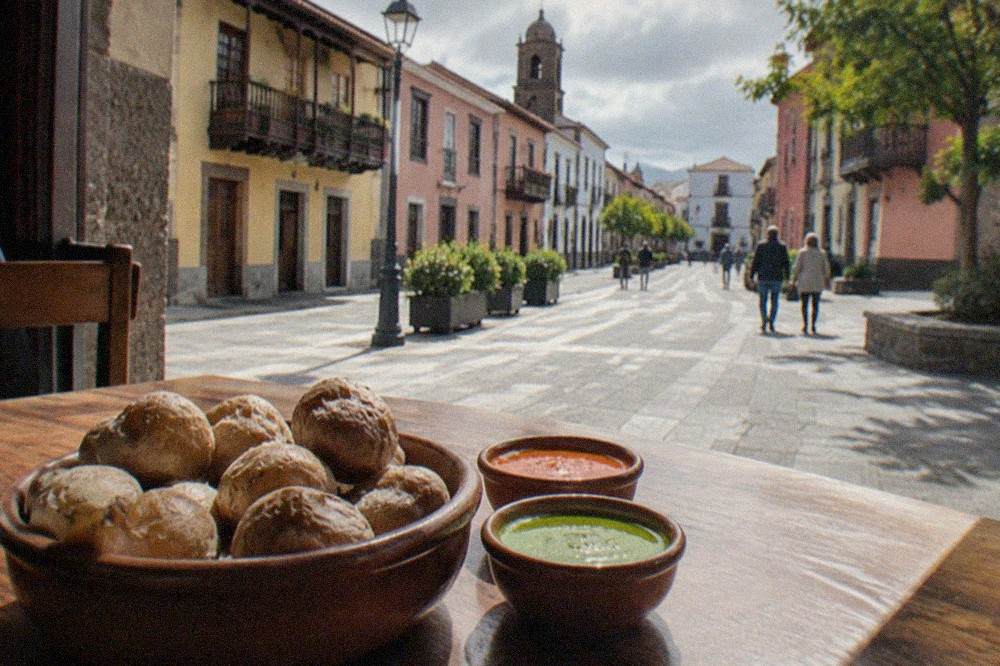
Papas arrugadas come first because they come everywhere. The potatoes are boiled in heavily salted water until the skin wrinkles and the salt crusts, and they arrive with two bowls: mojo rojo, the red pepper sauce with garlic and oil, and mojo verde, built on coriander or parsley. The dish is a Canarian signature, and asking for it is the fastest way to tell whether a kitchen is cooking for locals or for passing trade.
Fish is the second pillar. Grilled whole fish, salt-crusted fish and fish stews appear on menus all around the coast, and the catch changes with the season and the port. This desk's verified facts hold no landing figures or species list for Tenerife's ports, so the honest advice is simpler: order the fish the menu says is local, and ask what came in that morning.
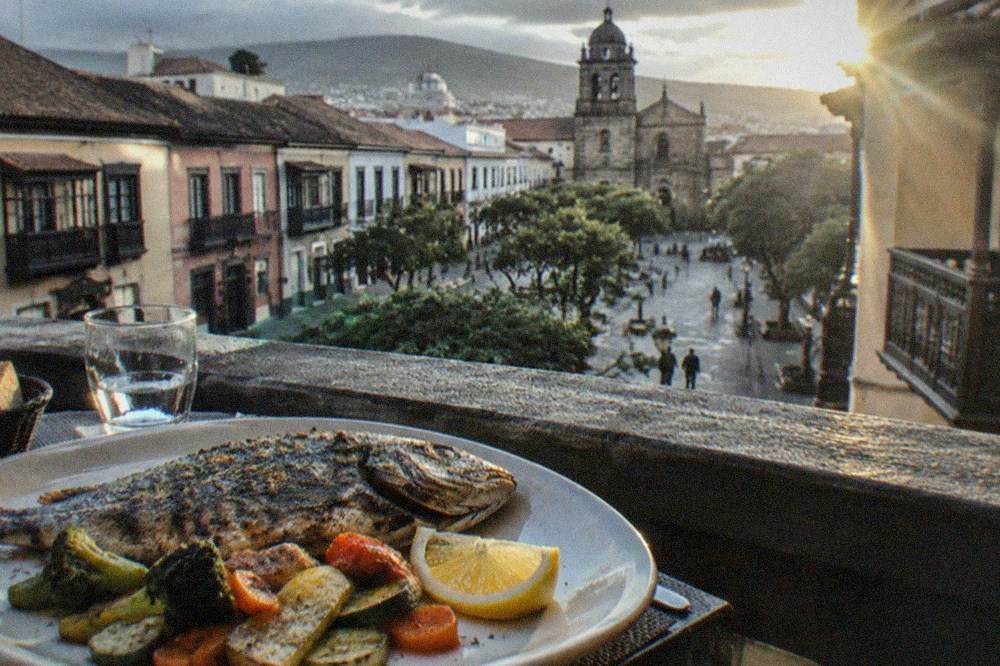
Cheese and meat fill the middle of the menu. Goat cheese, some of it smoked, is made across the island, and stews of goat meat and of pork in fiesta seasoning are the dishes that locals order when they want something substantial. Gofio, the toasted grain flour, appears as a dough, a dessert with honey, or a thickener in stews, and it is the island's oldest food of all, older than every other item on this list.
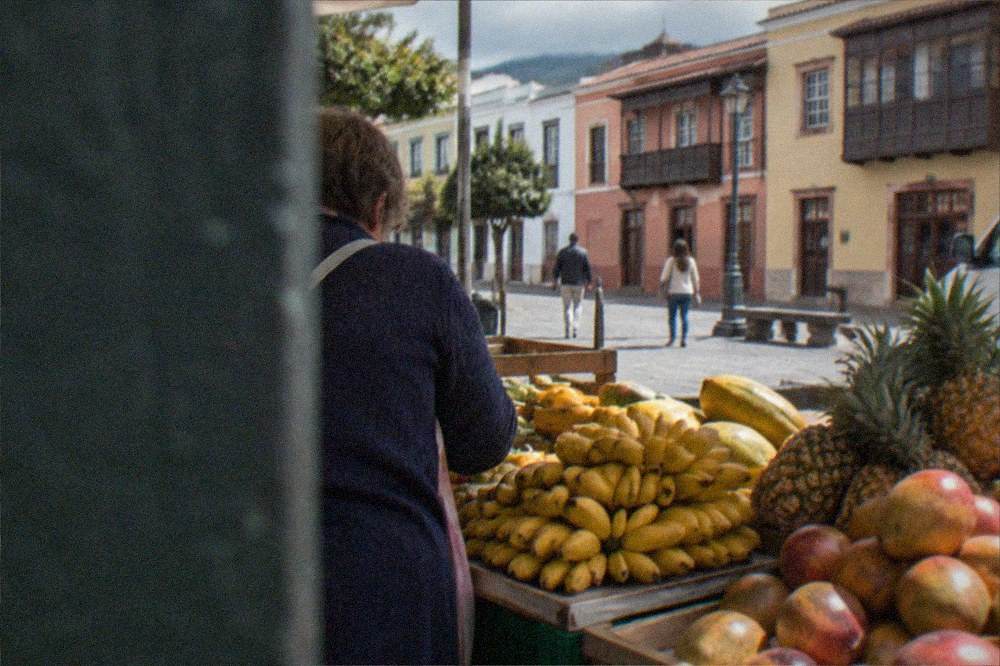
Dessert on Tenerife is often fruit, and the fruit is often the island's own. Bananas grown on Tenerife plantations are smaller and firmer than the ones shipped to northern supermarkets, and the plantation experiences in the roster, one in Arona and one in La Orotava, both walk visitors through how they are grown. Confirm current visiting arrangements directly with each venue, since this desk holds no verified opening hours for either.
Where Should You Eat in Tenerife?
The best places to eat Tenerife food are guachinches, the island's informal family-run eateries, local markets such as the Nuestra Senora de Africa market in Santa Cruz, fish restaurants near the working ports, and the wineries of Tacoronte and the north, with resort restaurants best treated as a convenience rather than the island's real cooking. Each of these serves a different version of the same food.
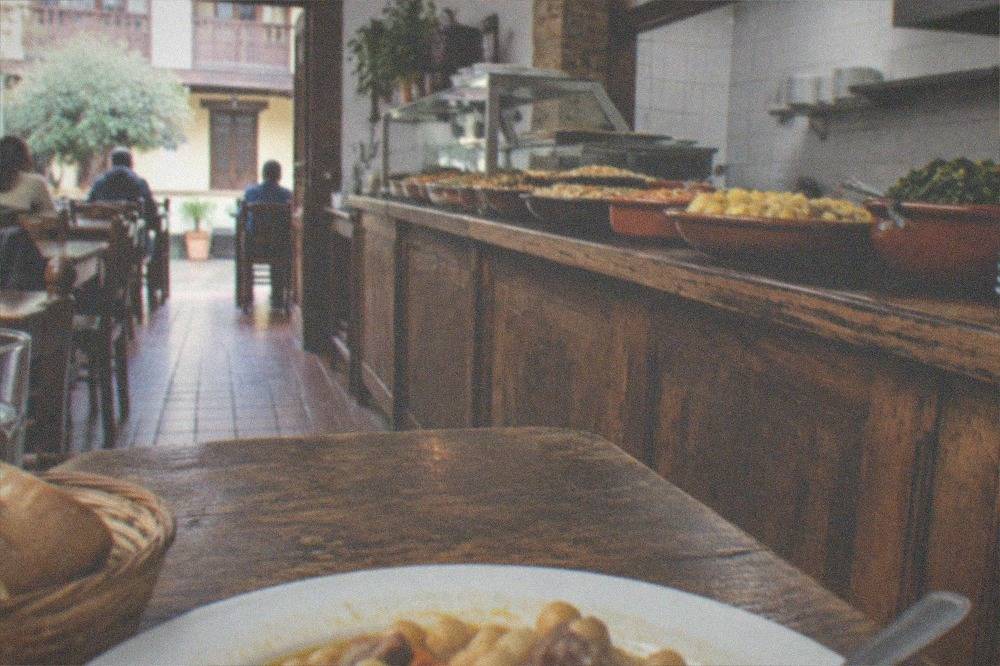
Guachinches are the institution visitors most often miss. They are small, family-run eating houses, historically attached to a wine grower's own supply, serving a short menu of home-cooked dishes alongside the family's wine. The site's dedicated guachinches guide covers how they work and where to find them, and the desk's honest warning is this: hours are informal, menus are short and seasonal, and no verified opening times exist in this desk's research, so treat each visit as an adventure and confirm before travelling any distance.
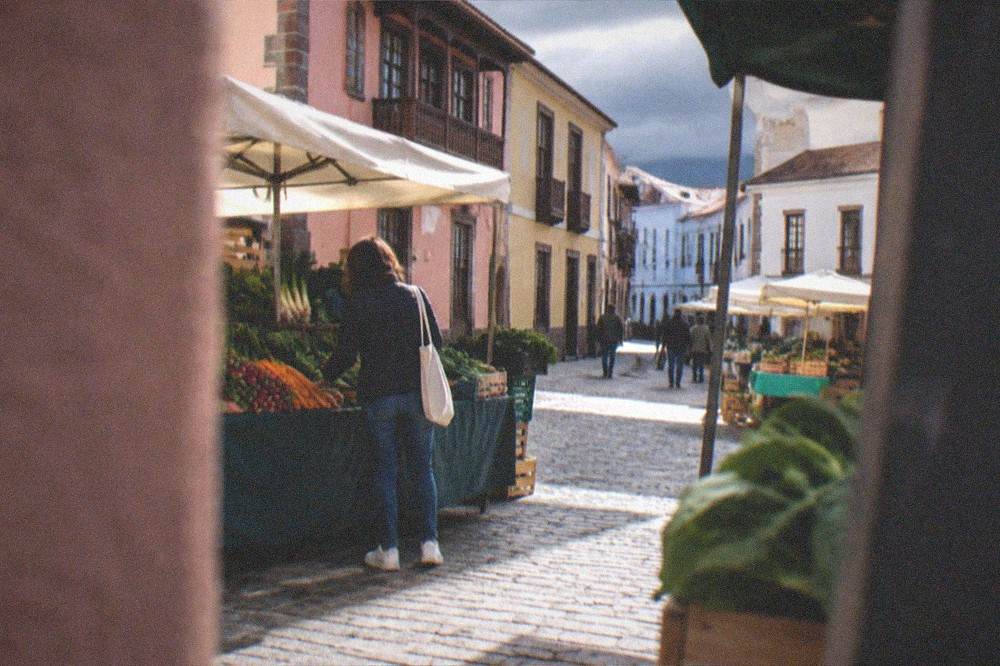
Markets are the second stop. The Mercado Nuestra Senora de Africa in Santa Cruz is the island's best-known food market, and town markets across the north sell the same produce the restaurants cook. For a sit-down version of the same idea, the island's best restaurants guide lists kitchens that serve local cooking rather than international menus.
The north-south split matters for eating. The north, around Puerto de la Cruz, La Laguna and the wine villages, holds more of the traditional food culture; the south holds most of the visitors, since the tourist board's 2025 figures put UK visitors alone at 2,057,896 of the island's lodged tourists. The desk's comparison of Tenerife north vs south sets out the trade-offs, and the short version for eating is that the north rewards a hire car or a bus timetable and the south rewards walking distance from your hotel.
Which Food and Wine Experiences Are Worth Booking in Tenerife?
The food and wine experiences worth booking in Tenerife are the full-day gastronomy and wine tour with lunch included, a guided winery visit with tastings in Tacoronte, a banana plantation experience in Arona or La Orotava, and a food-focused city tour, while the island's markets, guachinches and ports cost nothing to wander and eat through on their own. Book the guided ones for the explanations; do the rest yourself.
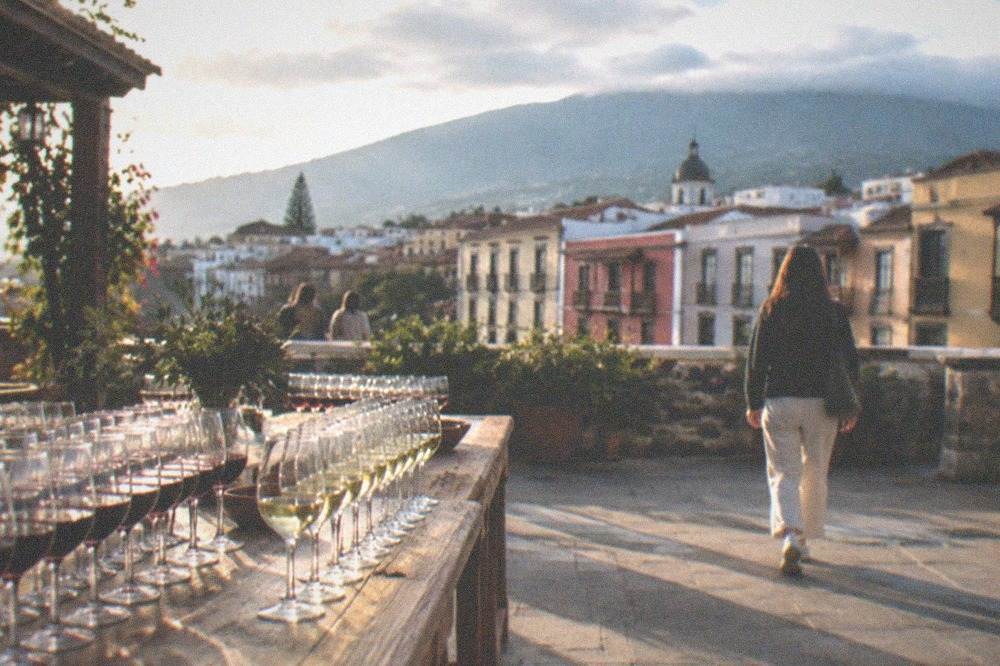
The winery visit is the easiest good decision on the list. The roster's Tacoronte winery tour runs about two hours and includes tastings of four wines paired with four cheeses, in El Sauzal, a short drive from the island's north coast wine country. The winery's own page describes the current tasting list, and the desk advises confirming the day's opening before travelling.
For a whole day built around food, the full-day gastronomy and wine tour pairs island dishes with the landscapes they come from, with lunch included, picking up from South Tenerife. It suits visitors who want the context a guide provides and would rather not drive. Check availability on the operator's live listing, and read the site's food tours roundup for the wider choice.
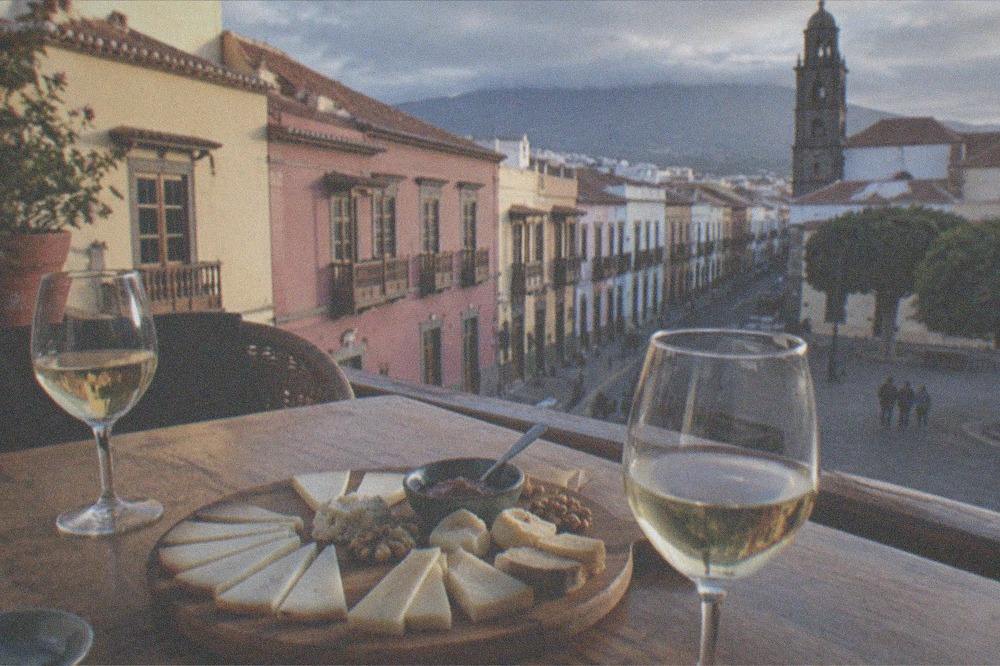
City food culture is the third option. A bike or e-bike tour of Santa Cruz runs about two and a half hours from the cruise terminal area and covers the city's highlights, including its market quarter, at a pace that leaves room for a long lunch. In the island's towns, free walking tours exist too: GuruWalk lists a free, pay-what-you-want walking tour of Puerto de la Cruz, another of La Orotava and another of Santa Cruz's historic centre, and a free walk is a low-risk way to learn where a town's kitchens cluster before eating in one.
What Is the Most Popular Food in Tenerife?
The most popular food in Tenerife, by presence on menus and in local kitchens, is papas arrugadas with mojo, ordered as a starter or a side almost everywhere on the island, followed by fresh fish and by grilled meat dishes, while the island's bananas are the everyday food most visitors take home a taste of. Popularity here means ubiquity, not a ranking, and no official body counts dish orders on Tenerife.
That ubiquity is useful to a visitor. A restaurant that serves wrinkled potatoes and two mojos, a grilled fish of the day and a local wine by the glass is cooking the island's food, whatever else the menu says. A restaurant whose closest dish to any of those is a paella is cooking for someone else. The desk's rule of thumb, offered as reporting rather than experience: read the potato line before you read anything else.
Drinks deserve the same test. Tenerife's wines, grown at altitude in volcanic soil, appear on local lists by the bottle and sometimes by the glass, and the island's beer culture is mostly Spanish lager. The rum-based Barraquito coffee, layered with condensed milk and lemon, is the after-lunch order the Canary Islands claim as their own. None of these carries a verified price in this desk's research, and prices vary by venue, so check the menu rather than any figure a guide quotes.
How Do Prices and Taxes Work on Tenerife Food?
Tenerife applies IGIC, the Canary Islands' own sales tax, not mainland Spain's VAT: the regional tax agency's table shows 7% on everyday goods, with 0%, 3% and 15% bands for other categories, and there is no tourist tax on food or lodging on any official page this desk has read. The charges that do exist for visitors are unrelated to eating: trail fees on two Teide routes, the Masca ticket and the Barranco del Infierno entry.
| IGIC band | What the tax agency's table shows |
|---|---|
| 0% | Applies to a small set of zero-rated supplies |
| 3% | Reduced-rate supplies |
| 7% | Everyday goods, the rate most food shopping meets |
| 15% | Higher-rate supplies |
The practical effect for a food visitor is small but worth knowing. Menu prices already include the tax, and non-resident travellers can claim IGIC back on qualifying purchases through the regional government's form 403, the DER process, which matters most for wine bought by the case to take home. The site's page on the island's buses and travelcards is the practical companion here: visitors pay for public transport, with the EUR 10 day travelcard and the EUR 50 seven-day travelcard as the visitor products, since the 100% subsidy the Canary government announced for 2026 applies to resident passes only.
Tipping follows Spanish custom rather than American. Rounding up a bill or leaving a small amount for good service is normal; a percentage expectation is not part of the culture, and no official source states a required rate. The honest summary of every money question on this page is that the desk holds no verified meal prices for Tenerife, because no official body publishes them, so treat any figure quoted elsewhere with suspicion and read the menu outside the door.
When Should Food-Lovers Visit Tenerife?
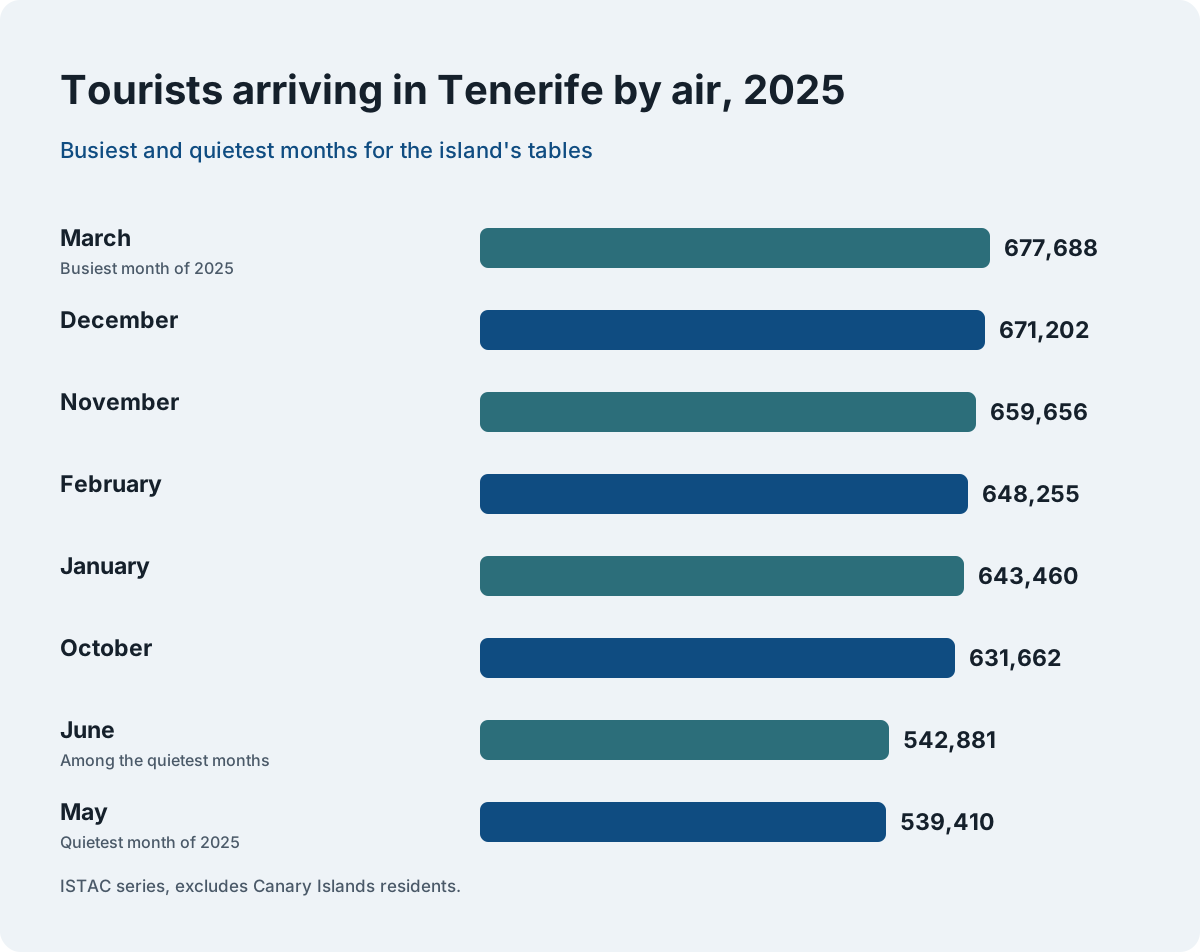
Food-lovers should visit Tenerife outside the peak arrival months if they want restaurant tables without booking wars, since ISTAC's series shows January, February, November and December as the busiest months for tourists arriving by air, while the island's food culture runs year-round and the sea is warmest for a fish lunch on the coast in September and October. There is no closed season for eating here.
| Month | Tourists arriving by air, 2025 |
|---|---|
| January | 643,460 |
| February | 648,255 |
| March | 677,688 |
| April | 604,370 |
| May | 539,410 |
| June | 542,881 |
| July | 611,623 |
| August | 618,578 |
| September | 563,261 |
| October | 631,662 |
| November | 659,656 |
| December | 671,202 |
That series, from ISTAC, counts tourists arriving by air and excludes Canary Islands residents, so it measures the pressure on the island's tables rather than its population. March 2025 was the year's busiest month by that measure; May and June its quietest. The sea temperature figures tell the other half of the story, and the table below pairs the two.
| Month | Sea surface temperature off the south coast |
|---|---|
| January | 19.9 C |
| February | 19.2 C |
| March | 19.1 C |
| April | 19.5 C |
| May | 20.2 C |
| June | 21.4 C |
| July | 22.2 C |
| August | 23.1 C |
| September | 23.7 C |
| October | 23.7 C |
| November | 22.5 C |
| December | 21.1 C |
The sea figures come from NOAA's 1991 to 2020 dataset for the south coast, a different series from the air normals, and they matter to a food trip more than they first appear: a coastal lunch tastes different at a table by warm water in September than at the same table in a March wind. The difference between 19.1 and 23.7 Celsius is the difference between a quick plate and an afternoon.
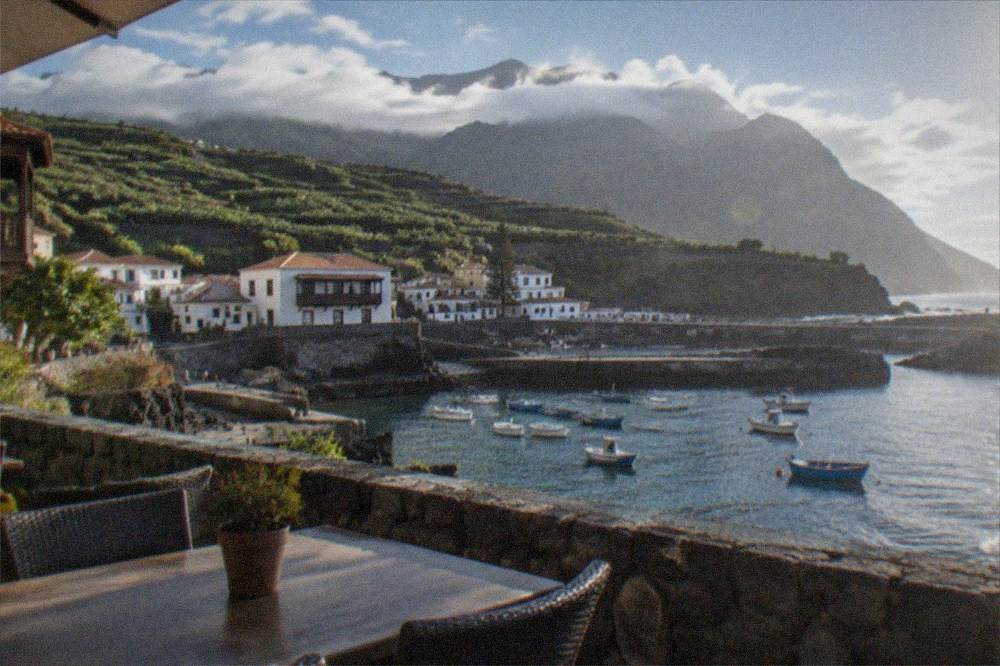
Seasonal eating follows the calendar rather than the tourist flow. The island's October guide and November guide cover the chestnut and harvest period, when the north's food festivals cluster, and the winter months bring their own dishes. None of these events carries a verified date in this desk's research, so confirm each one with the organising town before planning a trip around it.

Common Questions About Tenerife Food
What local food should I try in Tenerife?
Try papas arrugadas with both mojo sauces, a whole grilled local fish, island goat cheese, a gofio-based dish, and bananas from a Tenerife plantation, with a glass of island wine beside them. That list is the island's core cooking, and a restaurant serving all of it is cooking for locals.
What is the national dish of Tenerife?
Tenerife has no officially designated national dish. The closest thing to one is papas arrugadas with mojo rojo and mojo verde, the wrinkled salted potatoes and two sauces that appear on menus across the island and across the Canary Islands generally.
What food is famous in Tenerife?
Tenerife is famous for papas arrugadas with mojo sauces, fresh fish, gofio, goat cheese, island bananas and volcanic-soil wines from areas such as Tacoronte. The guachinche, the family-run eating house attached to a wine grower's supply, is the institution most closely tied to the island's food fame.
What to eat in Tenerife?
Order the potatoes and mojos, the fish of the day, a goat meat or pork stew, local cheese and a banana-based dessert, and drink island wine or a Barraquito coffee afterwards. Eat at least one meal at a guachinche and one at a market or fish restaurant rather than only at your hotel.
What is the typical food in Tenerife?
Typical Tenerife food is Canarian home cooking: salted wrinkled potatoes with pepper and coriander sauces, grilled or stewed fresh fish, goat cheese, gofio in savoury and sweet forms, meat stews and island-grown fruit, all served in generous portions at family-run kitchens rather than fine-dining portions at resort restaurants.