Buenavista Del Norte and Teno
The far northwest of Tenerife is the island's quietest corner: a rural town, some of the steepest walking country in the Canaries and the rules that govern it.
Short answer
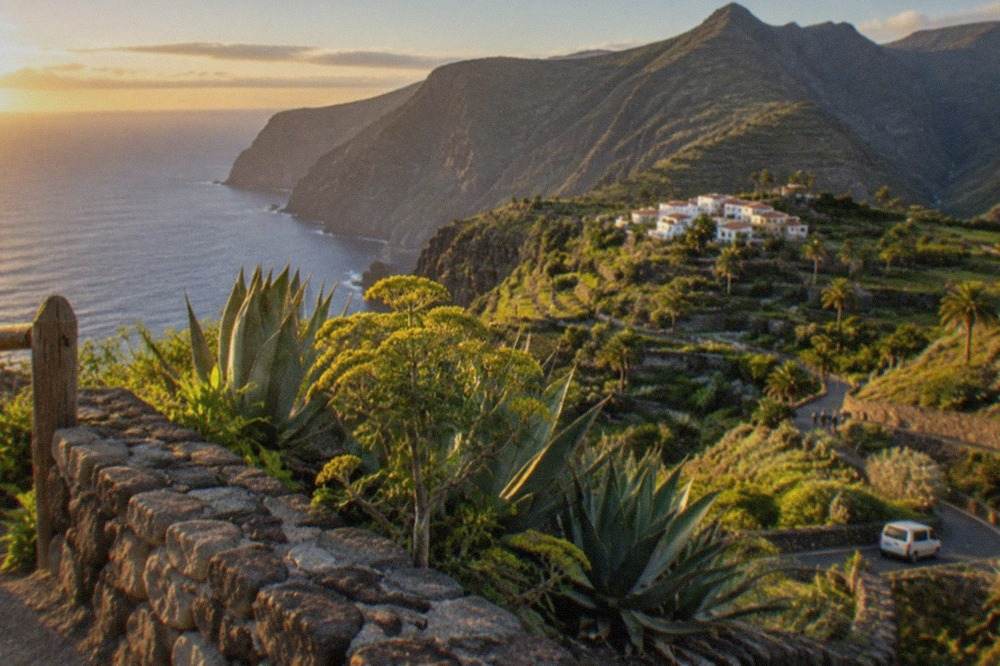
Buenavista del Norte sits on Tenerife's northwest tip below the Teno massif. The area's headline walk, the Masca gorge, is open as a descent-only pilot with a pre-booked boat exit, reached by a compulsory TITSA shuttle, and the other big draws, Punta de Teno and the Los Gigantes cliffs, cost nothing to look at.
Buenavista del Norte is the town at the end of the road. It sits under the Teno massif, the oldest and greenest of Tenerife's three volcanic blocks, and the municipality that carries its name also contains Masca, the gorge that has become the single most regulated walk on the island. That combination, a quiet agricultural town on one side and a tightly booked pilot scheme on the other, is what this page explains. The rules around Masca changed the way many older guides describe it, and the Teno coast holds two of the island's most photographed free viewpoints.
This corner of the island rewards planning more than any other. The gorge needs a ticket, a shuttle bus and a boat slot. The viewpoints need a car or patience with the bus timetable. And the weather is not the south-coast weather most visitors book their holiday around: the Teno uplands catch the trade cloud in a way the AEMET station figures make very plain.
Where Is Buenavista Del Norte and What Is Teno?
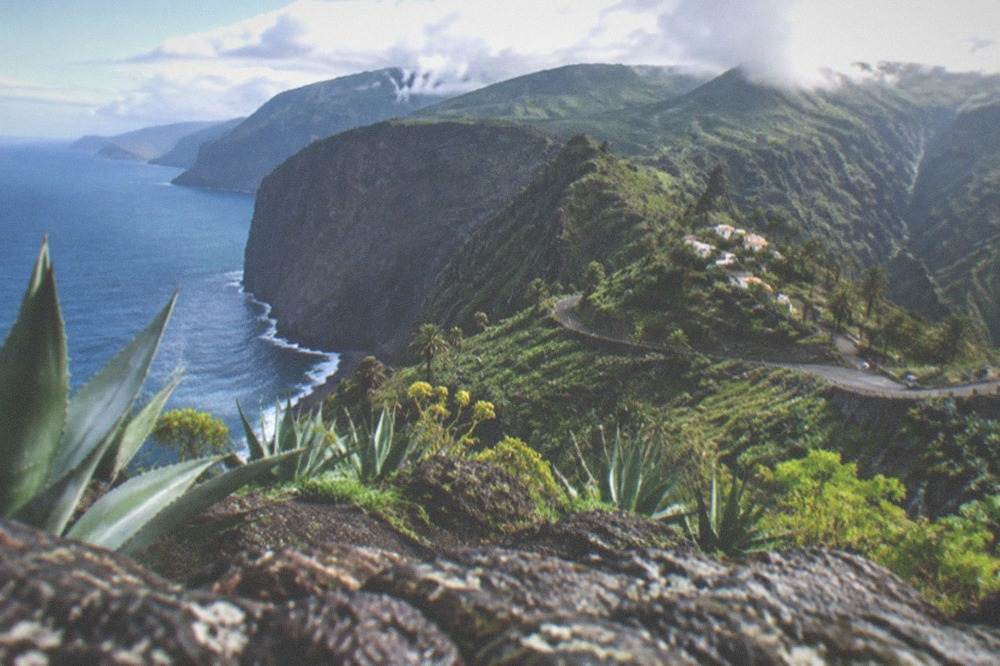
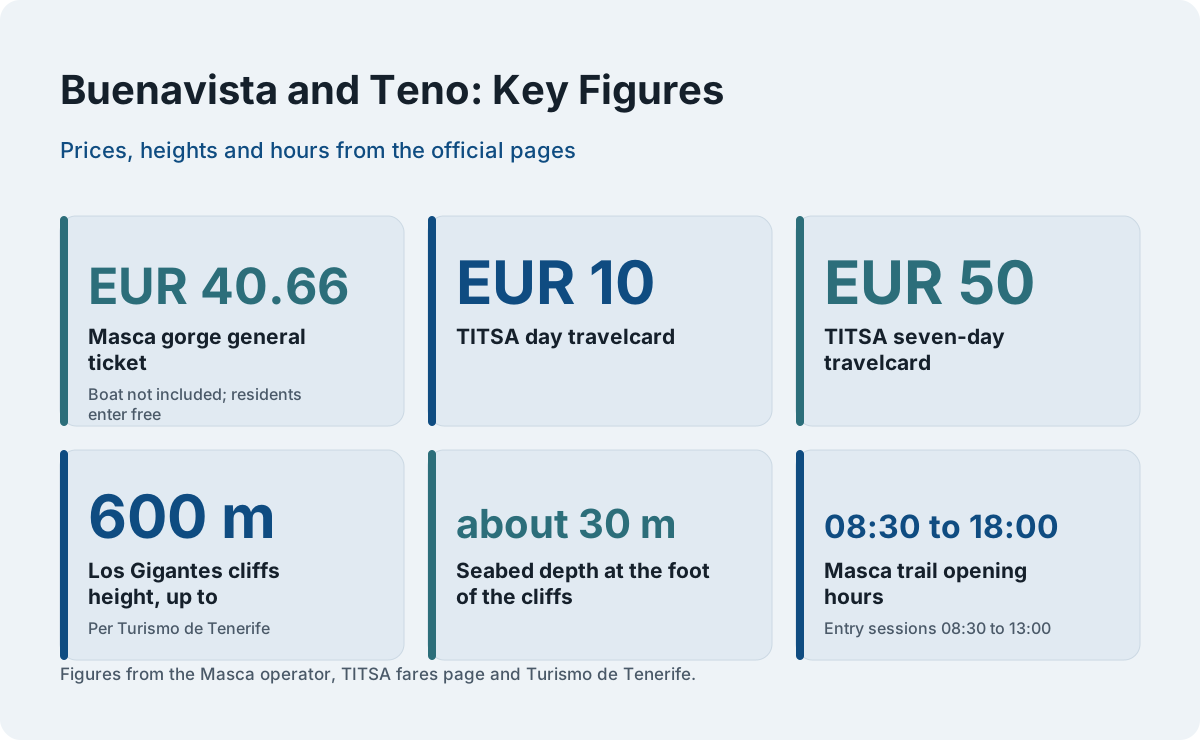
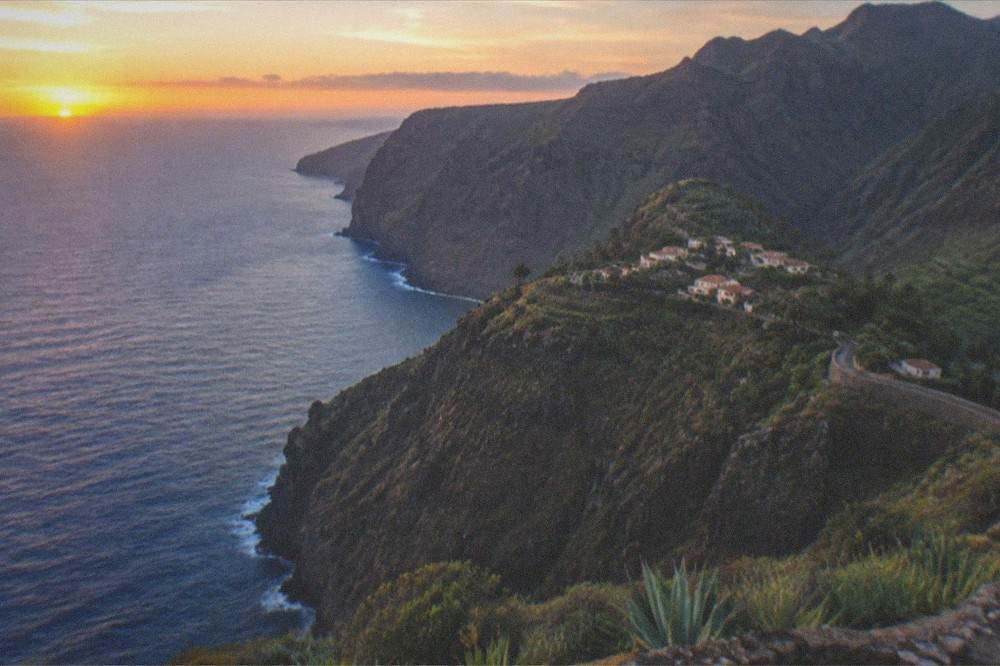
Buenavista del Norte is a town and municipality on Tenerife's northwest coast, at the foot of the Teno massif, the rugged oldest part of the island, and the municipality also contains the hamlet of Masca and the Teno Rural Park that shelters the Los Gigantes cliffs, which Turismo de Tenerife says tower up to 600 m high.
Teno is one of the three old volcanic blocks that make up Tenerife, and it is the one the island's road network never quite tamed. The massif drops into the sea as the Los Gigantes cliffs, inside Teno Rural Park, with a seabed about 30 m deep at their foot according to the tourist board's own page. The cliffs belong administratively to Santiago del Teide on their landward side, while Buenavista del Norte holds the northern half of the massif and the coastal plain where most of the municipality actually lives.
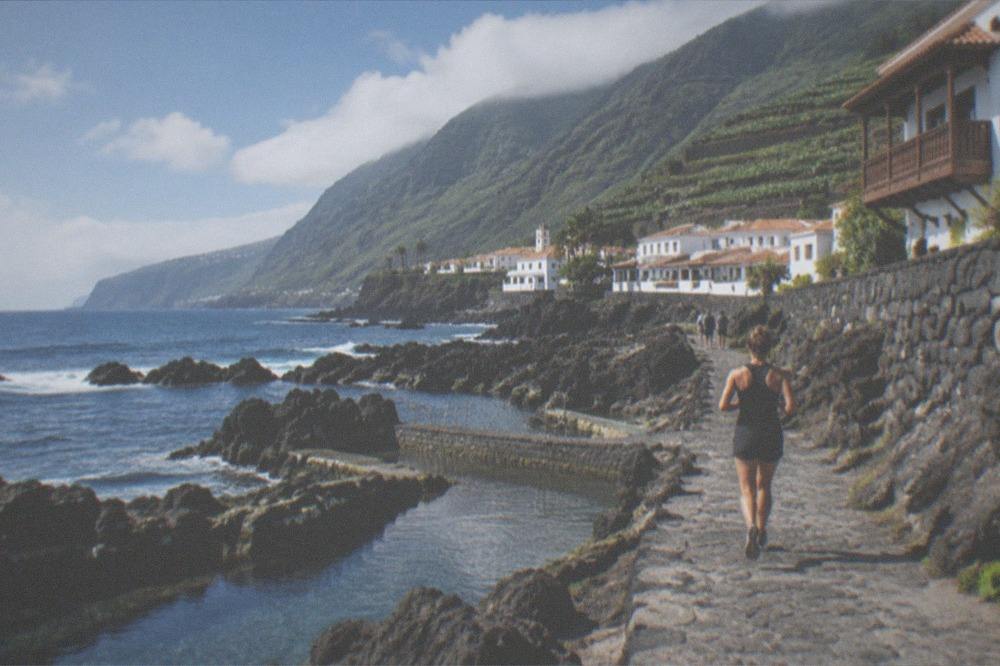
The town itself is small and working. INE's municipal register counted 12,582 people in Santiago del Teide's neighbour list of bigger municipalities, but Buenavista's own population is not in the verified figures, so it is not stated here. What the numbers do show is scale: this is one of the least populated corners of a municipality map dominated by Santa Cruz de Tenerife, La Laguna and Arona. Farming, bananas and fishing are the visible economy, and the town's seafront promenade looks out at nothing but ocean and, on clear days, La Gomera is not in this page's link list, so look instead toward the silhouette of the neighbouring island on the horizon.
Most visitors arrive for one of three reasons: the Masca gorge, Punta de Teno at the very tip of the headland, or the drive itself, which is one of the island's most scenic and is covered in the north Tenerife road trip itinerary. A day combining Buenavista, Masca, Garachico and Icod de los Vinos is the classic loop of the northwest, and it is a route this site describes separately because it deserves a full day, not a detour.
How Do You Get to Buenavista Del Norte Without a Car?
You reach the area on TITSA buses: line 355 and line 365 serve Masca from Santiago del Teide, and the Masca gorge rules make line 355 compulsory for gorge hikers, because anyone arriving by private vehicle is refused entry, while the return leg from Los Gigantes runs on lines 462 or 325. Visitors pay normal fares, since the 2026 free-travel subsidy covers resident passes only.
The shuttle rule is the single most important transport fact in Teno. The Masca operator's booking page states that the transfer from Santiago del Teide on TITSA line 355 is compulsory, that private vehicles are refused, and that you must show the transport ticket at the control. Tenerife ON's page for the Masca gorge trail lists lines 355 and 365 at Masca stop code 4553. This is not a suggestion or a peak-season rule: it is a condition of the ticket.
| TITSA line | Route as the official pages state it | What it matters for |
|---|---|---|
| 355 | Santiago del Teide to Masca | Compulsory shuttle for gorge hikers; ticket shown at the control |
| 365 | Serves Masca, stop code 4553 per Tenerife ON | Second Masca service listed by Tenerife ON |
| 462 | Los Gigantes to Santiago del Teide | The listed return leg after the boat exit |
| 325 | Los Gigantes to Santiago del Teide | Alternative return leg named by the Masca operator |
Fares are the ordinary visitor fares. TITSA's fares page lists single tickets priced by route, a 10% same-day return discount on trips of 20 km or more, a EUR 10 day travelcard and a EUR 50 seven-day travelcard, all sold including at airport ticket machines. The 100% subsidy the Canary government announced for 2026 applies to resident passes held on a personalised Ten+ card by people resident in the Canary Islands; visitors do not qualify, and Metrotenerife's fares page notes that the Teide and Teno lines are excluded from the resident passes anyway. Anyone selling you a "free bus pass" for your holiday is describing a scheme you cannot join.
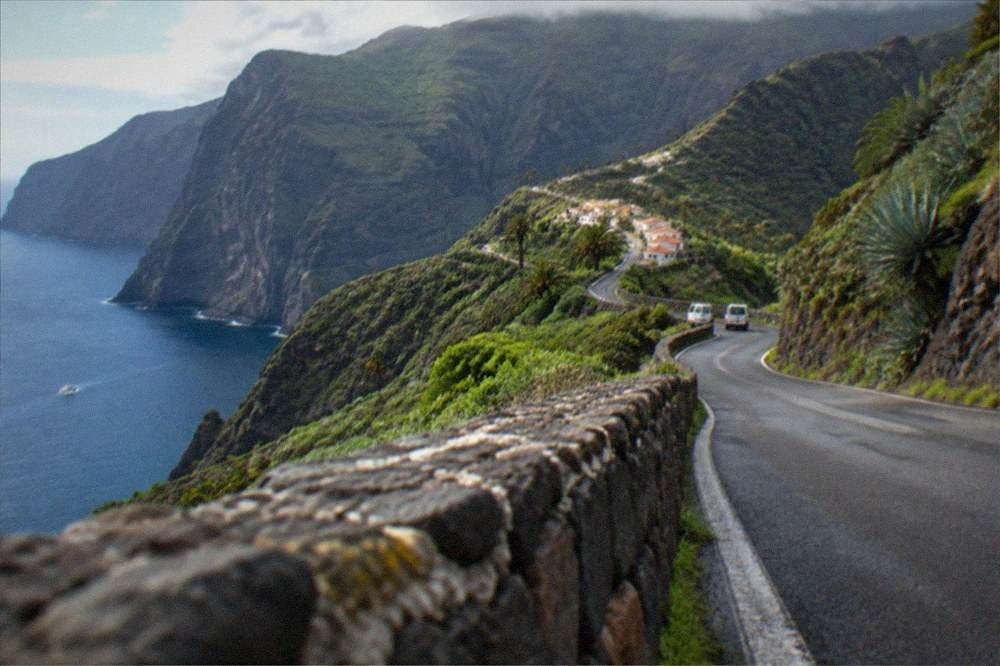
If you are driving instead, the roads are part of the attraction, but they are slow, winding and busy with coaches on the classic loop days. The driving in Tenerife habits that matter most here are the obvious ones: the general drink-drive limit the DGT page refers to is 0.5 g/l in blood, and the mountain roads punish anything but full attention. Parking at Punta de Teno is limited and the access road is narrow; the viewpoint is the destination, not a through route.
For visitors who would rather not drive the Teno roads at all, a guided day that bundles Masca, the Los Gigantes coast and a swim in natural pools is the alternative the cards above describe. The bus rules above still apply to the gorge walk itself, but a tour removes the driving, the parking and the return-leg planning from your day.
Is the Masca Gorge Walk from the Teno Side Open?
The Masca gorge is open under a continuing pilot scheme: the only walk sold is the one-way descent, leaving Masca bay by a boat you must book in advance, and the general ticket costs EUR 40.66 with the boat extra, while Tenerife residents enter free. Hikers must arrive on TITSA line 355 from Santiago del Teide and show closed mountain footwear, and sea conditions can close the pier and void the day's ticket.
That is a lot of conditions, and every one of them comes from the operator's own booking page. The pilot scheme replaced the old free-for-all era, and the booking site is caminobarrancodemasca.com, which Tenerife ON links out to: Masca did not move to Tenerife ON, and it is not booked there. Anyone who turns up expecting to walk down and back up again will be turned away, because only the descent with a boat exit is sold in the current phase.
| Masca rule | What the official page states |
|---|---|
| Direction | Descent only, in the current pilot phase |
| General ticket | EUR 40.66, boat not included |
| Free entry | Tenerife residents, and mountaineering or caving federation members from the Canaries (paid up front, refunded after the check at the control) |
| Reduced rates | Special rates exist for Canary residents, under-18s and federated members; no figures are published on the page read |
| Arrival | Compulsory TITSA line 355 from Santiago del Teide; private vehicles refused |
| Boat exit | Separate ticket, booked beforehand, for no later than 4 hours after the descent slot |
| Hours and quota | Trail open 08:30 to 18:00; entry sessions 08:30 to 13:00; 25 places every 30 minutes, 50 at the 09:00 session |
| Footwear | Closed mountain footwear is a condition of entry; refused without it even with a booking |
| Getting back | Return from Los Gigantes to Santiago del Teide not included; TITSA lines 462 or 325 |
The risk statement on the operator's page deserves repeating in plain words: the operator itself calls Masca the place with the most rescues in the Canaries in recent years, and warns that the pier can close suddenly when the sea changes. A pier closure voids the ticket for that day. That is not a reason to avoid the walk, but it is a reason to build slack into your plans and to check conditions rather than assume them.
The hamlet of Masca itself, up top, is a different proposition and needs no booking at all: a cluster of old houses in a fold of the ridge, a viewpoint over the gorge, and the road in from Santiago del Teide that is an attraction in its own right. The gorge is the booked thing. The village is open country.
A guided tour does not replace the gorge booking, but for the wider Teno day, the Masca, Los Gigantes and natural pools excursion above covers the coast, the cliffs and a swim stop with the logistics handled, which suits visitors who would rather not stitch together three buses and a boat.
What Are Punta de Teno and the Teno Coast Like?
Punta de Teno is the lighthouse headland at the far northwest tip of Tenerife, inside Teno Rural Park, and it is free to visit, with views south along the Los Gigantes cliffs, which the tourist board says tower up to 600 m, and across the channel toward La Gomera; the seabed at the foot of the cliffs is about 30 m deep.
The headland is the westernmost drivable point of the island, and its lighthouse sits on a flat shelf of old lava between two cliff walls. The tourist board's figures for the cliffs are the ones to quote: up to 600 m high, inside Teno Rural Park, with the deep water at their foot. Older guides often print a bigger number; 600 m is what the official page says. The cliffs are covered in full on the Los Gigantes page, and the town of that name is the boat base for the seaward view of them.
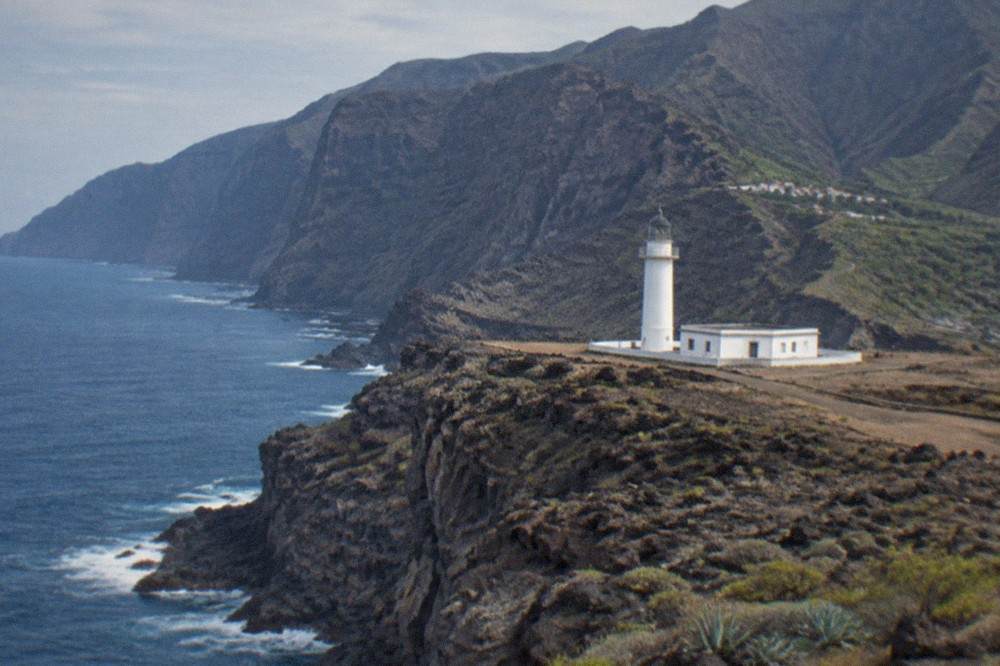
Access is the practical issue. The access road is narrow and parking is limited, and on busy days the last stretch can be restricted, so the official guidance is worth checking on the Tenerife ON alerts page before you set out, the same alerts feed that carries trail closures and fire-risk suspensions. There is no verified figure on this site for the road's capacity or any shuttle scheme, so none is invented here.
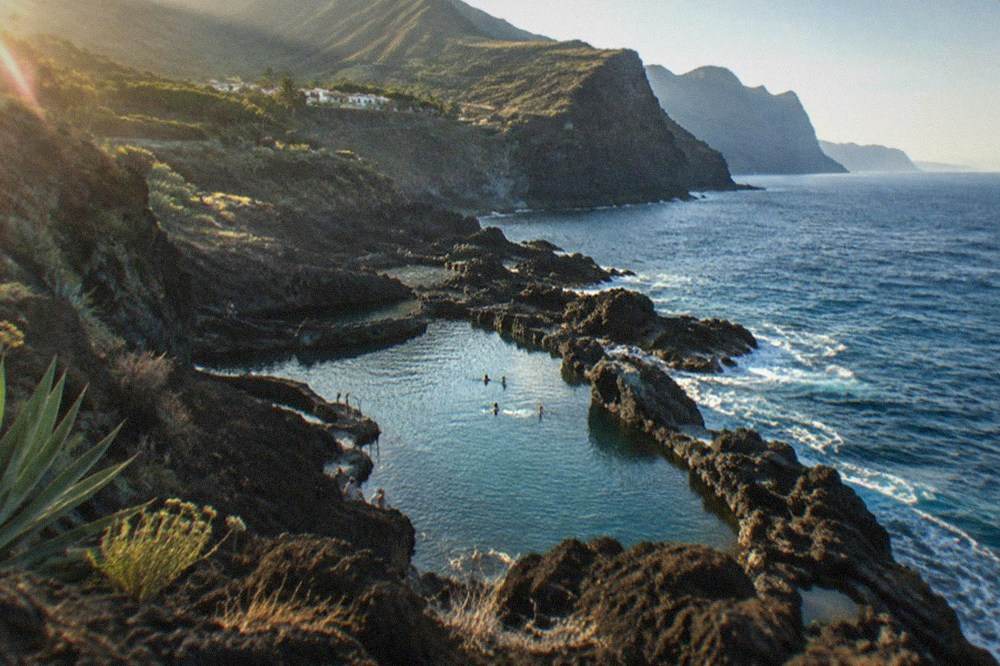
The coast between Buenavista and the headland is a string of small coves and natural pools, part of the same volcanic shelf. The island's best-known booked gorge walk outside Masca, Barranco del Infierno, is actually on the other side of the island near Adeje, but it shares the same model: advance online booking compulsory, EUR 15 for non-resident adults, EUR 5 for Canary residents, children under 5 not allowed, and a quota of 20 people every 30 minutes in the mornings. If you cannot get a Masca slot, it is the wrong side of the island but the right kind of alternative.
What Does It Cost to Visit Teno's Booked Trails and Sights?
The Teno area's only paid walk is the Masca gorge at EUR 40.66 general, boat extra; there is no per-night tourist tax on Tenerife, no entry fee for the national park's viewpoints or the Teno headland, and the other public charges on the island are the Teide trail fees of EUR 15 and EUR 6 on the summit trail and EUR 6 to EUR 10 on Montana Blanca, plus Barranco del Infierno at EUR 15.
That list is the complete set of visitor charges the official pages actually show. Tenerife ON's fee notice for the Teide trails applies from Monday 19 January 2026, and the same notice is the source for the statement that no per-night lodging tax exists on any official page read. The free things are genuinely free: driving through Teide National Park, the viewpoints, the Teno coast, the beaches and the hamlet of Masca all carry no charge on any page this site has read. The full index of guides sits on Tenerife Travel Guide.
| Charge | Visitor price | Who pays less or nothing |
|---|---|---|
| Masca gorge ticket | EUR 40.66, boat not included | Tenerife residents free; reduced rates for Canary residents, under-18s, federated members |
| Teide summit trail PNT 10, 09:00 to 17:00 slots | EUR 15 | EUR 6 for other Canary Islands residents; free for Tenerife residents and children |
| Montana Blanca trail PNT 07, working days | EUR 6 | EUR 3 for other Canary residents; free for Tenerife residents |
| Montana Blanca trail PNT 07, weekends and public holidays | EUR 10 | EUR 5 for other Canary residents; free for Tenerife residents |
| Barranco del Infierno | EUR 15 | EUR 5 for Canary residents |
| Punta de Teno, Teno coast, Masca village, Teide viewpoints | No charge on any page read | Applies to everyone |
Two footnotes matter. First, the Teide trail fees are per booking on two trails only, not a park entry fee: no official page lists an entrance charge for the national park itself. Second, the summit permit is booked on Tenerife ON, not on the old national parks booking site, which still loads but now only points to Tenerife ON; slots for 1 September 2025 onward moved across. The full rules, including the weekly Monday 07:00 release that keeps 56 days bookable, are on the Teide summit permit page.
If your Tenerife trip pairs the northwest with a summit attempt, the guided hike below includes hotel pickup and covers the planning that the permit system puts on individual walkers. The permit rules apply either way; a guide does not exempt you from the booking.
When Is the Best Weather on the Teno Coast and Uplands?
The northwest has a wetter, cloudier climate than the south: AEMET's normals for Tenerife North airport, the nearest published station, show July means of 20.2 C against 24 C at Tenerife South airport, and 6 mm of rain in July against none in the south, while the sea off the south coast peaks at 23.7 C in September and October.
The station caveat is honest and worth stating: AEMET publishes normals for four Tenerife stations, and none of them is in Buenavista del Norte itself. The Tenerife North airport station at 632 m is the nearest proxy for the island's wetter northwest, and the comparison with the south airport station is the cleanest way to show what the trade winds do to this coast. The Teno uplands sit in the cloud belt more often than the tourist south, which is precisely why they are green.
| Month | Tenerife North airport: mean daily max / min C, rain mm | Tenerife South airport: mean daily max / min C, rain mm | Sea surface C off the south coast |
|---|---|---|---|
| Jan | 16 / 10.2, 80 | 21.7 / 15.2, 17 | 19.9 |
| Mar | 18.2 / 10.7, 61 | 23.1 / 15.6, 15 | 19.1 |
| May | 20.1 / 12, 19 | 23.9 / 17, 1 | 20.2 |
| Jul | 24.7 / 15.7, 6 | 27.7 / 20.2, 0 | 22.2 |
| Sep | 24.9 / 16.5, 16 | 27.9 / 21.1, 4 | 23.7 |
| Nov | 19.6 / 13.3, 81 | 24.8 / 18.2, 26 | 22.5 |
Two periods in that table drive the planning advice. Winter in the northwest is genuinely wet: November, December, January and February all average more rain at the north station than the south station sees in its entire wettest month. And the sea is at its warmest at the end of summer, 23.7 C in both September and October, which matters for the Masca boat exit and for swimming in the Teno pools. The air normals are AEMET's 1981 to 2010 series and the sea figures are NOAA's 1991 to 2020 series: two datasets, two periods, never mixed into one claim.
The other seasonal factor is fire and ice, odd companions but both real. In the uplands, ice and snow on the stratovolcano trails trigger a mandatory crampons and ice axe rule plus a signed declaration, though that applies to Teide rather than Teno. The wildfire rule that touches Teno walkers is the smoking ban: the Cabildo bans smoking in all open-air spaces of Teide National Park, car parks included, and bookings across the island's trail network can be suspended for fire risk or weather alerts, which is why the Tenerife ON alerts page is worth a look the evening before any booked walk.
What Day Trips and Tours Work from the Buenavista Area?
The classic day from Buenavista is the northwest loop through Masca, Garachico and Icod de los Vinos, and the tours that fit the area are the Masca and island tours, guided hikes and town walks: a coach tour covers the loop in about nine hours, a jeep safari reaches Teide and Masca in six to seven, and free pay-what-you-want walking tours run in La Orotava, Puerto de la Cruz and Santa Cruz de Tenerife through GuruWalk.
The loop deserves its reputation. Garachico's story is the one fact every guide should get right: the Trevejo volcano erupted in 1706, destroyed almost the entire town and buried the old port, after Garachico had been the island's trade hub through the 16th and 17th centuries. The town's seafront today is built around the rock pools that eruption left, and the Garachico page covers them. Icod de los Vinos holds the Drago Milenario, whose age the Icod council puts at about 1,000 years attributed, while the tourist board says over 800: this site writes "800 to 1,000 years" and calls it an estimate, and the Icod de los Vinos page has the details.
For the underground alternative on the same route, Cueva del Viento in Icod is the island's best-known lava tube. The full day-by-day version of this loop, with timings and the order that avoids the coach convoys, is on the Masca, Garachico and Icod route page.
If your base is the south rather than the northwest, the same territory is served by coach and jeep tours from Costa Adeje and Playa de las Américas, which is worth knowing because staying in Buenavista itself is a niche choice: the accommodation stock is small and rural. For a stay in the area, check accommodation options around Buenavista del Norte before committing to the far northwest, especially outside summer.
The free walking tours are a different kind of option and they are not in Teno at all: GuruWalk lists a free, pay-what-you-want tour of the historic centre of Santa Cruz de Tenerife, one of La Orotava and one of Puerto de la Cruz, each about an hour and a half to two hours, tip-based and bookable in advance. GuruWalk must be named here because the walks are free and tip-based, and the model only makes sense when the platform is named. They suit a day when the cloud is sitting on Teno and the city is clear.
For a city day with wheels instead, the bike and e-bike tour of Santa Cruz's highlights starts near the cruise terminal and runs about two and a half hours; it is the roster's cycling option and pairs well with the free GuruWalk walk above on a rest day between mountain outings.
Where Does Buenavista Fit in a Wider Tenerife Trip?
Buenavista del Norte and Teno work best as a one-day or two-day excursion from a base elsewhere, usually the south or Puerto de la Cruz, because the area's accommodation is limited, its buses are thin outside the Masca shuttle, and its headline walk is a booked descent that finishes in Los Gigantes rather than where it starts.
That asymmetry defines the planning. The gorge walk ends at sea level in Masca bay, and the return is a boat to Los Gigantes and then a bus back to Santiago del Teide on lines 462 or 325. It is not a circular day. Visitors who stay in the far northwest avoid the long drive out, but they still ride the shuttle, and they trade the resort infrastructure of the south for silence, which for many is exactly the point.
The wider island context is on the things to do in Tenerife with a car roundup, which is where the full menu of areas and attractions sits. For a first visit, the honest advice from this desk is simple: book the Masca slot early in your planning, because the quota is small and the sessions are fixed, and treat everything else in Teno as the flexible part of the day that can absorb a cancelled boat or a cloudy ridge.
Common Questions About Buenavista Del Norte and Teno
Can you walk the Masca gorge both ways?
No. In the current pilot phase only the descent with a pre-booked boat exit is sold. The return is by boat to Los Gigantes, then TITSA lines 462 or 325 back to Santiago del Teide.
Do you need a booking for Punta de Teno?
No booking or fee appears on any official page for the headland. Check the Tenerife ON alerts page before setting out, since access and trail bookings across the island can be suspended for fire risk or weather.
Is there a tourist tax on Tenerife?
No official page read shows a per-night lodging tax in force or approved on Tenerife. The charges that do exist are per-booking fees on the Teide trails, the Masca ticket and the Barranco del Infierno ticket.
Can you drive to Masca village for the gorge walk?
No. Hikers must arrive on TITSA line 355 from Santiago del Teide and show the bus ticket at the control; arriving by private vehicle means refusal. The village viewpoint itself, without the gorge descent, is reachable by road.
What should you wear for the Masca descent?
Closed mountain footwear is a condition of entry, and you will be refused without it even with a valid booking. The operator calls Masca the place with the most rescues in the Canaries in recent years, so treat the gear list seriously.
Is public transport free for visitors in Tenerife?
No. The 2026 100% subsidy applies to resident passes held on a personalised Ten+ card by Canary Islands residents. Visitors pay single fares, the EUR 10 day travelcard or the EUR 50 seven-day travelcard, and the Teide and Teno lines are excluded from the resident passes anyway.