Cueva Del Viento Lava Tubes
Cueva del Viento sits under Icod de los Vinos in the north of Tenerife, one of the island's few underground attractions and a rare example of a lava tube you can walk through with a guide. This page sets out what the visit involves, how booking works, and how to build a full day around it, using only what official sources confirm and flagging everything else for the venue to answer.
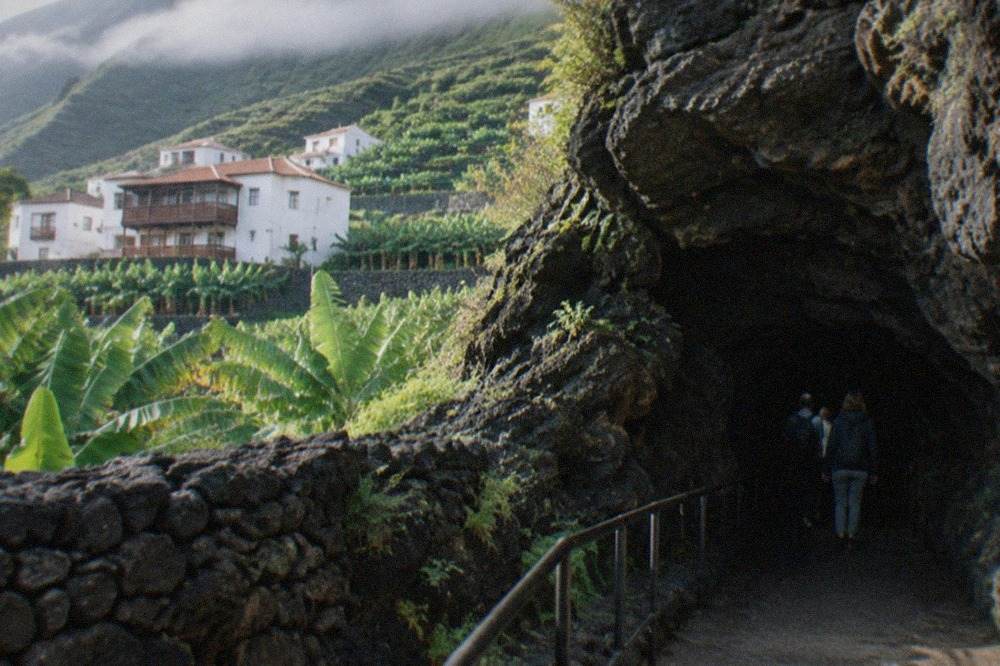
Short answer
Cueva del Viento is a guided lava tube visit in Icod de los Vinos, northern Tenerife. Book through the venue's own page, confirm times, prices and age rules there, and pair it with the Drago Milenario, Garachico and the Teide National Park for a full north-coast day.
Cueva del Viento, the wind cave, is a lava tube system beneath the town of Icod de los Vinos on Tenerife's north coast, and it belongs to a short list of island attractions you experience underground rather than in the sun. Lava tubes form when a river of molten rock drains away and leaves its channel hollow behind it, and Tenerife's volcanic history has produced one of the notable examples in Europe. Visits are guided, numbers are limited, and the venue's own booking page holds the current times, prices and access rules, which is where every practical detail in this article tells you to check.
This page, from the editorial desk behind Tenerife Travel Guide, is written differently from most pages about the cave. Where a figure is verified on an official source, it is stated plainly. Where it is not, and for the cave itself almost nothing is, the honest answer is to send you to the venue. That applies to opening hours, ticket prices, visit length, age limits and the route you walk underground. What can be reported with confidence is the geology in general terms, the booking principle, the surrounding area, and the other booked places on an island that increasingly runs its natural spaces on reservations.
What Is Cueva Del Viento and How Did It Form?
Cueva del Viento is a lava tube system under Icod de los Vinos in northern Tenerife, created when lava flows from the island's volcanic past drained downhill and left hollow tunnels in the rock. It is visited with a guide, in small groups, and the venue's own page is the only source for current times, prices and access rules, because no verified fact sheet for the site itself exists to quote.
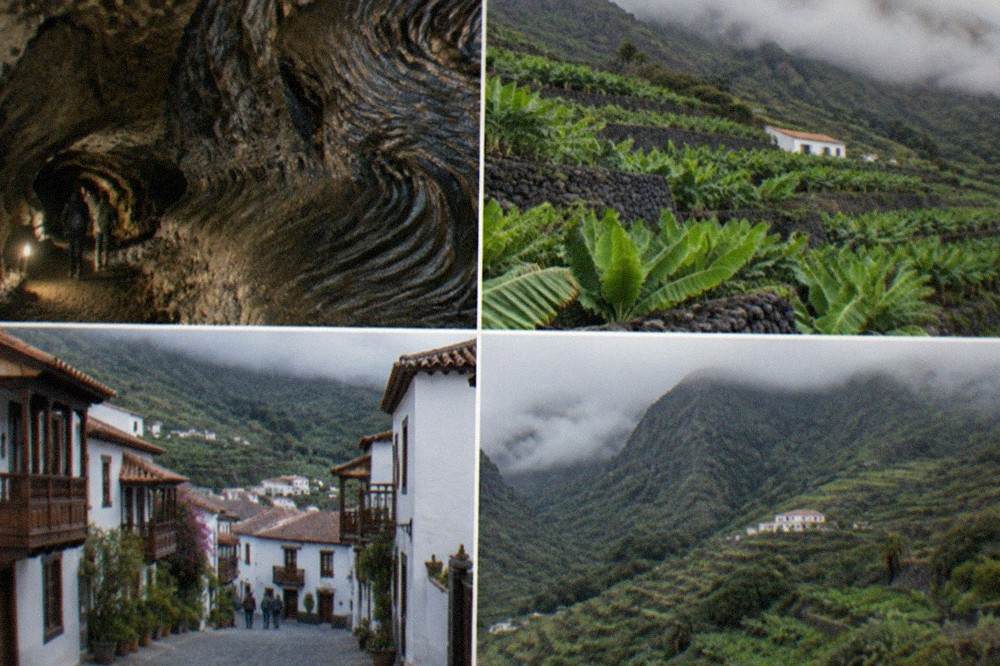
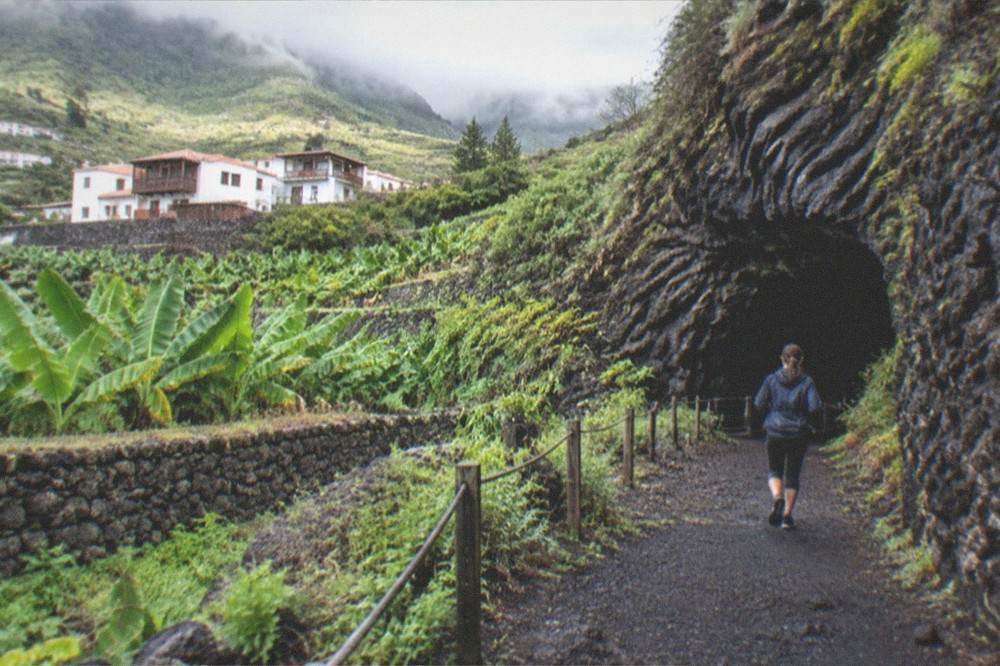
Lava tubes are a straightforward piece of geology. While lava is flowing, the exposed surface cools and crusts over, the insulated interior keeps moving, and when the eruption ends the liquid drains out and the crust becomes the roof of an empty pipe. The walls and floor freeze in the shapes the flow left behind, which is why guides point out ledges marking old flow levels, and why the temperature underground stays steady while the surface above bakes or rains depending on the season.
Tenerife's whole northern slope is built from overlapping eruptions of this kind, which is also why the north is greener than the south. The trade winds push clouds up against the slopes, they drop their moisture on the way, and the lava soils hold it. Icod de los Vinos sits in that green band, between the coast and the flanks of the Teide massif, so a day here looks nothing like a day in the dry south around Costa Adeje or Playa de las Américas. The cave is the one stop on a northern itinerary where the weather outside stops mattering entirely.
The name, wind cave, refers to the draughts that move through lava tube systems as air is pushed and pulled through connected passages by pressure differences. That is a general property of lava tubes rather than a verified measurement of this one, and guides explain the specifics on the day. What the visit offers is a walk through rock that was once a working part of the island's plumbing, with formations that only exist underground and darkness that makes the national park's crowds feel very far away.
How Do You Book Cueva Del Viento Tickets?
Book through the venue's own official page, in advance, and treat the visit as reservation-only until it tells you otherwise. This desk has no verified price, opening hour or group size for the cave, so every one of those details must be confirmed at the source before you travel, and the booking page is also where age limits, footwear rules and weather cancellations are published.
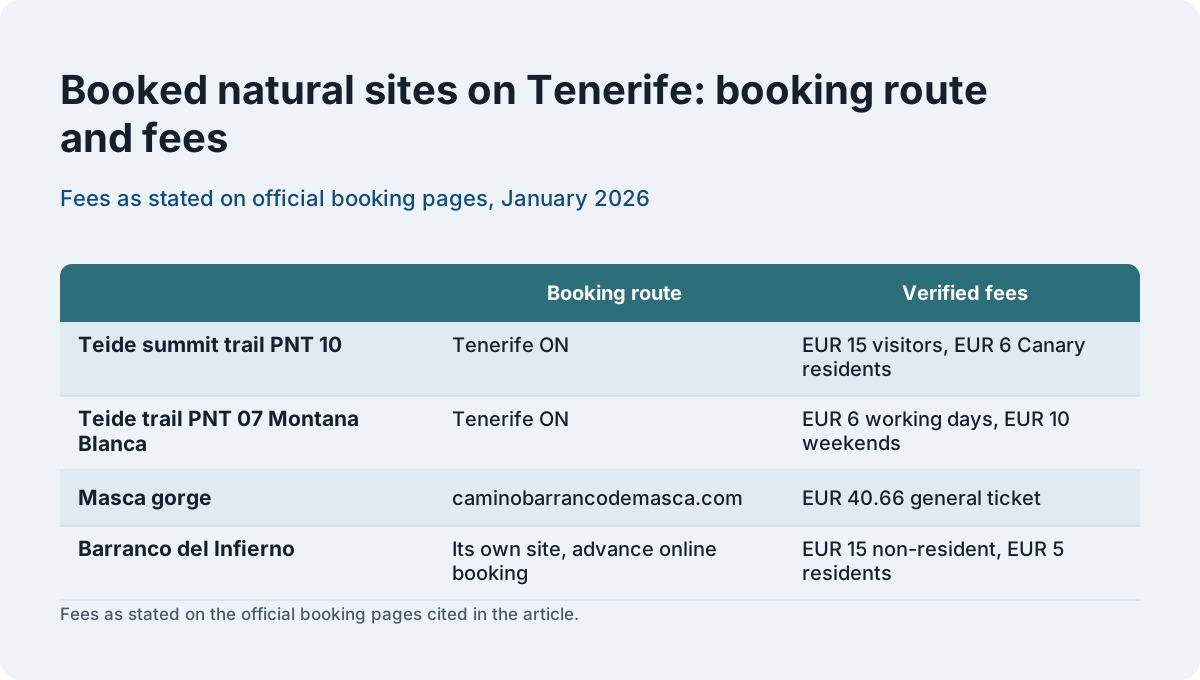
The booking principle matters more here than the specifics, because Tenerife has spent the last few years moving its natural spaces onto reservation systems run by official bodies. The Teide summit trail PNT 10 Telesforo Bravo is booked on Tenerife ON, the Cabildo's platform, and since Monday 19 January 2026 the 09:00 to 17:00 slots cost EUR 15 for visitors, EUR 6 for residents of the other Canary Islands and nothing for Tenerife residents and children. Slots are released every Monday at 07:00 Canary time, keeping 56 days bookable. The Masca gorge is booked on its own site, caminobarrancodemasca.com, at EUR 40.66 for the general ticket with the boat extra. Barranco del Infierno in Adeje costs EUR 15 for a non-resident adult and requires advance online booking. Cueva del Viento sits in the same family of limited-capacity, pre-booked sites, and the venue's page is the authority on its own terms.
| Booked natural site on Tenerife | Booking route | Verified fee position |
|---|---|---|
| Teide summit trail PNT 10 | Tenerife ON | EUR 15 visitors, EUR 6 other Canary residents, free for Tenerife residents and children, 09:00 to 17:00 slots since 19 January 2026 |
| Teide trail PNT 07 Montana Blanca | Tenerife ON | EUR 6 visitors on working days, EUR 10 at weekends and public holidays, 09:00 to 17:00 slots |
| Masca gorge | caminobarrancodemasca.com | EUR 40.66 general ticket, boat not included |
| Barranco del Infierno | Its own site, advance online booking | EUR 15 non-resident adult, EUR 5 Canary residents |
| El Pijaral, Anaga (PRA 72) | Tenerife ON, at most 14 days ahead | Reservation mandatory, fee position on the booking page |
| Cueva del Viento | The venue's own page | Confirm price and hours with the venue |
Two practical notes follow from that table. First, the fee landscape on this island changed in January 2026, and older articles still describe a free-permit era for Teide that no longer matches the official pages, so if you read conflicting advice elsewhere, trust the booking platform's own current terms. Second, no-shows have consequences on the official systems: failing to use a Tenerife ON booking can bar you from new applications for three months, and walking the Teide summit trail without a reservation may be penalised. A cave booking deserves the same respect for the guide's time and the group's place.
If your Tenerife plan is built around guided experiences rather than independent hikes, the cards above cover three of the island's biggest draws: the summit of Teide with a guide who handles the permit, the Masca and Los Gigantes coastline with a picnic stop, and a whale and dolphin catamaran with a buffet. The live listings carry current prices and availability, which is exactly why this desk never prints a figure for them.
What Is the Visit Actually Like Underground?
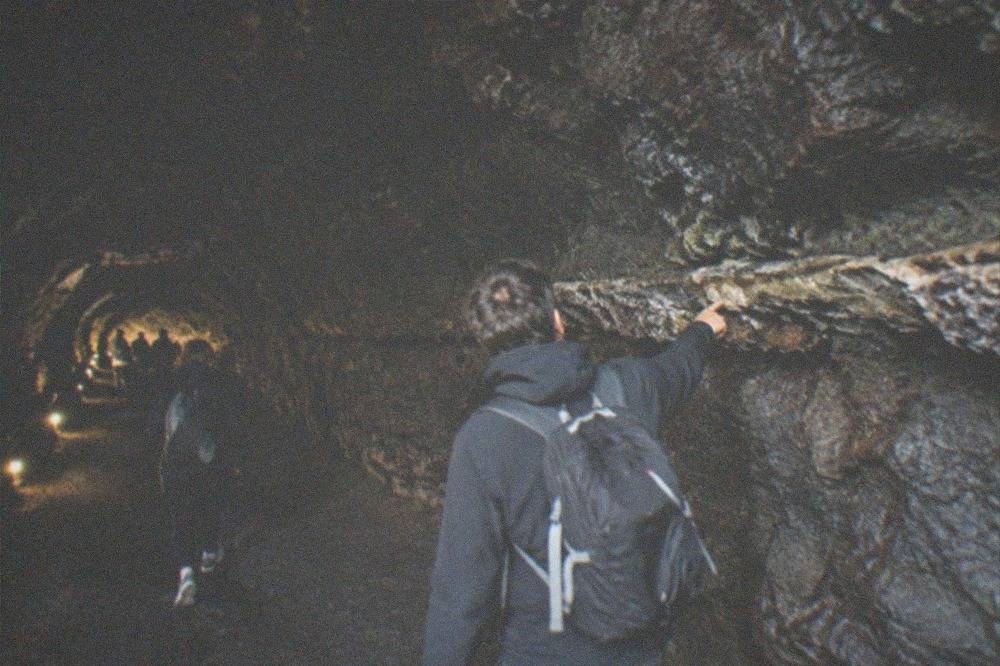
A Cueva del Viento visit is a guided walk through lava tube passages with lighting provided by the tour, on uneven volcanic rock, in stable cool temperatures and near-total darkness between lit sections. The exact route, duration and group size are set by the venue, so confirm them on the booking page, but every lava tube visit shares those features, and the guide's commentary covers how the tunnel formed.
Guided underground visits follow a rhythm: a safety briefing at the surface, equipment if the site provides it, a single route in and out, and stops where the guide explains what the rock shows. Lava tube interiors are not polished show caves with concrete paths and grand chambers. The floor is the frozen surface of the last flow, lumpy and uneven in places, ceilings can drop low enough to stoop, and the formations are lava sculptures rather than the dripping limestone decorations of a water-carved cave. That is the appeal. Nothing down there was arranged for a visitor.
What you cannot predict from a desk is the personal part: how long the route feels, whether a particular group moves quickly, how your knees handle volcanic rock. Those depend on the day and on you. What can be said is that underground visits reward a little preparation, sturdy closed footwear, a layer for the cool interior, and no expectation of photographing much, because handheld lights and dark rock defeat most phone cameras. If any of that raises a question about your own circumstances, the booking page's contact details exist precisely for that conversation.
Is Cueva Del Viento Suitable for Children and Visitors with Limited Mobility?
That depends on rules the venue sets, and this desk cannot state an age limit, a mobility policy or a fitness requirement for the cave, because none of those is on file from an official source. The booking page publishes the current access conditions, and contacting the venue before booking is the correct move for any family or accessibility question, rather than relying on second-hand accounts.
The comparison worth making is with the sites whose rules are verified. On the Teide summit trail, Tenerife ON's page states no access for children under 3 and that under-16s walk only with an adult, and the cable car operator refuses children under 3, pregnant women and people with cardiovascular conditions because of the altitude. Those are altitude rules, not cave rules, but they show how specific and how firm official access conditions are on this island, and why a general "it's fine for everyone" from an unofficial page is worthless. Underground sites typically have their own list covering minimum ages, footwear and enclosed spaces.
For families planning a wider trip, the island's headline parks are the reliable all-ages option: Siam Park opens 365 days a year, 10:00 to 18:00 from 1 May to 29 October and 10:00 to 17:00 from 30 October to 30 April, and Loro Parque runs 09:30 to 17:30 every day with its own car park at EUR 7 per day. A cave visit suits children old enough to walk uneven ground in the dark and listen to a guide; the parks suit everyone. The honest answer for where your family falls is the venue's, not a guidebook's.
How Do You Get to Cueva Del Viento?
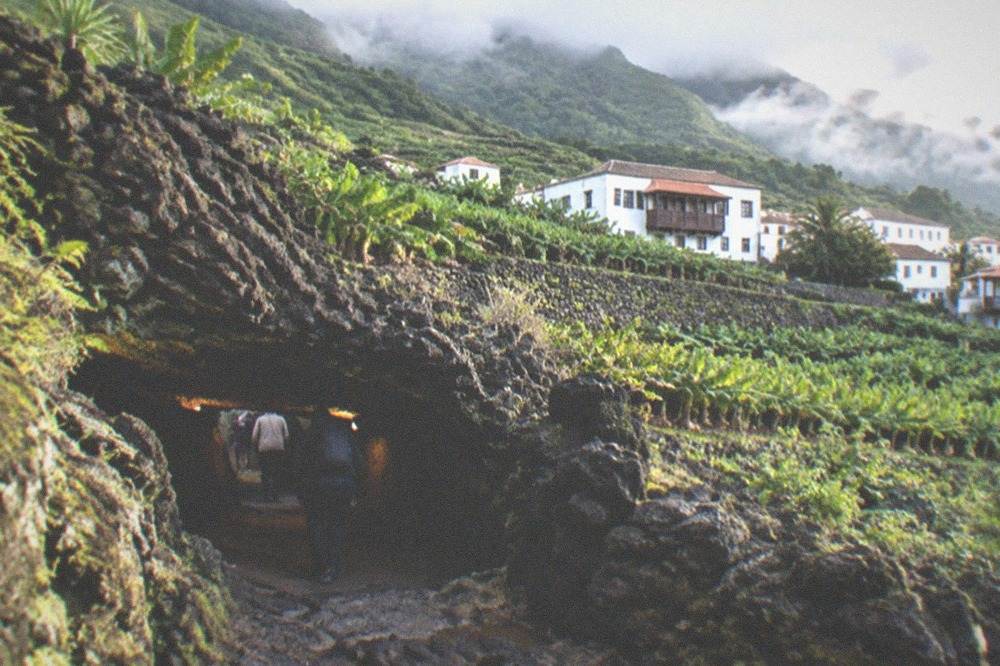
Cueva del Viento is reached through Icod de los Vinos on Tenerife's north coast, roughly the island's northwest quadrant, and the practical routes are hire car or TITSA bus, with Tenerife North Airport the closer of the island's two airports. Confirm the exact meeting point with the venue when you book, because lava tube entrances sit on the slopes above the town rather than at a single obvious address.
Driving is the flexible option. The north coast road strings Icod de los Vinos together with Garachico and Buenavista del Norte, and the TF-1 motorway connects the south to the north via La Laguna or along the east coast, so a base in the south means a genuine drive. If you are weighing up car hire against buses for the whole trip, the getting around Tenerife question is worth settling first, because the north's scattered sights reward wheels more than the south's do.
By public transport, TITSA buses serve the north from Tenerife North Airport, whose own pages list lines 20 to Santa Cruz via La Laguna, 30 to Puerto de la Cruz and the 343 express towards the south. Visitors pay normal fares: single tickets priced by route, the EUR 10 day travelcard or the EUR 50 seven-day travelcard. The 100% fare subsidy in force for 2026 applies to resident passes only, so no visitor should plan around free buses, and the Teide and Teno lines are excluded from the subsidised passes anyway.
| TITSA lines at Tenerife North Airport | Destination |
|---|---|
| Line 20 | Santa Cruz via La Laguna |
| Line 30 | Puerto de la Cruz |
| Line 343 | Express towards the south |
| TITSA ticket | Price | Notes |
|---|---|---|
| Single ticket | Priced by route | Card or cash |
| Day Travelcard | EUR 10 | Visitor product |
| 7 Day Travelcard | EUR 50 | Visitor product |
| Same-day return | 10% off | On trips of 20 km or more |
If you fly into Tenerife South instead, AENA's 2025 figures record 13,969,678 passengers there against 7,174,977 at Tenerife North, so most visitors do start from the south and the drive north is part of the day. Whichever airport you use, the cave's meeting point, parking and any shuttle the venue operates are questions for its booking page, and asking them before you set out saves a wrong turn on a slope road.
What Can You Combine with Cueva Del Viento in a North Tenerife Day?
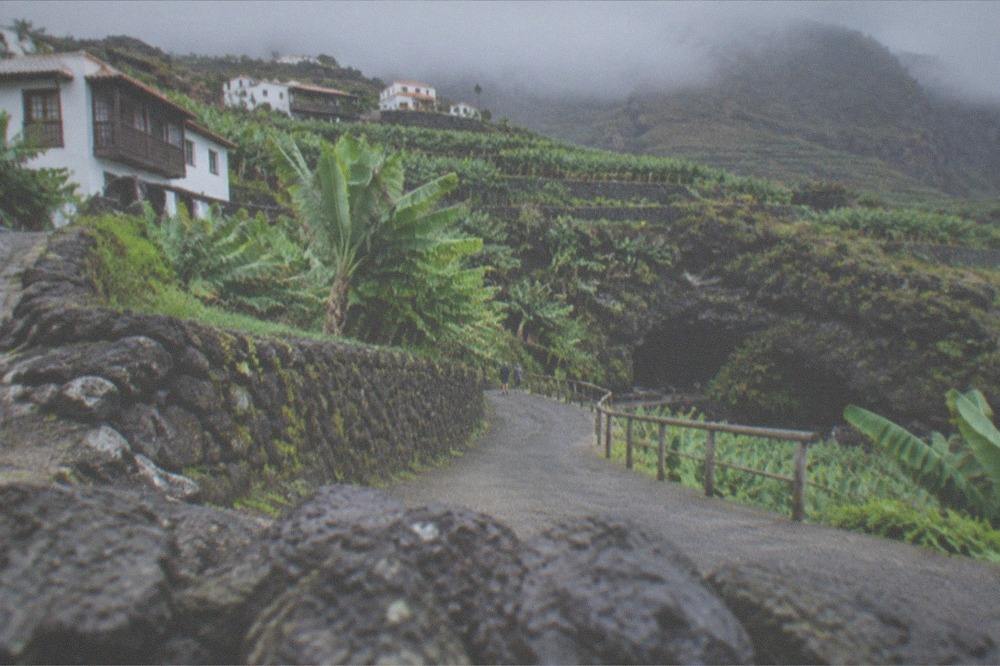
Icod de los Vinos makes a natural base for a north-coast circuit: the Drago Milenario stands in the town itself, Garachico's natural pools and old quarter sit minutes down the hill, and the Teide National Park's northwest side is reachable on the same tank of petrol. A cave visit slots neatly into the middle of that loop, between a morning above ground and an afternoon on the coast.
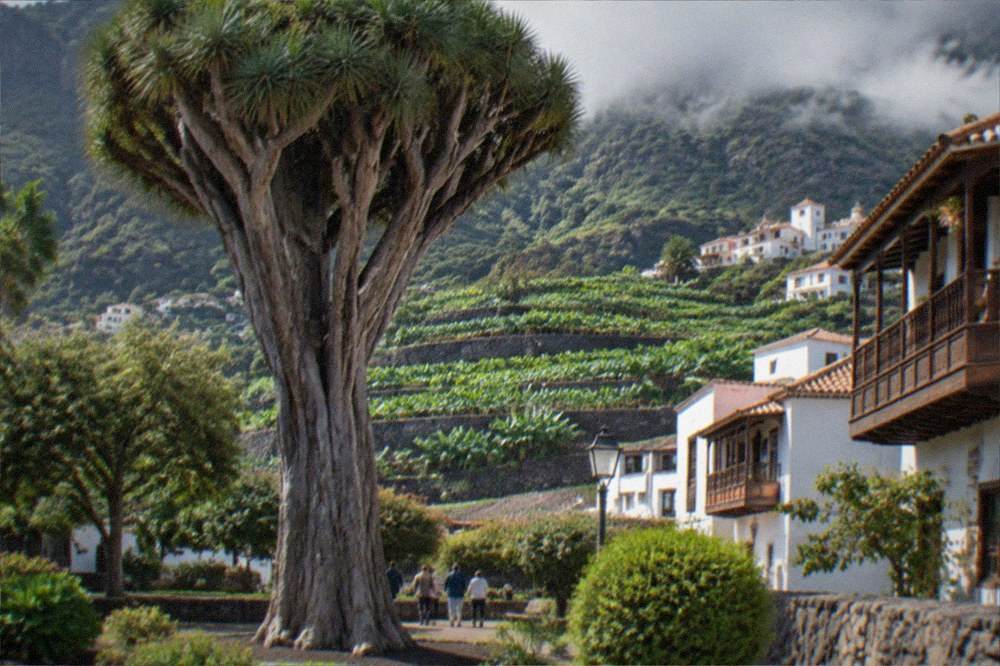
The Drago Milenario is Icod's other headline sight, and its facts are on file. Icod council describes a National Monument declared in 1917, about 21 m tall with a trunk base about 17 m round, and says an age of approximately 1,000 years is attributed to it, while the tourist board's estimate runs to over 800 years; the honest sentence is "800 to 1,000 years, by estimate", and the council's page is the source. The tree stands in a dedicated park in the town centre, close enough to the cave's slopes that pairing the two is the standard Icod morning. More on the town's famous tree is on our page about the Icod dragon tree.
Down the hill, Garachico carries the island's most dramatic piece of recorded history: the Trevejo volcano erupted in 1706, destroyed almost the entire town and buried its old port, ending its run as the island's trade hub of the 16th and 17th centuries. Today the town is a low, whitewashed coast village whose rock pools fill at high tide, and the drive between Icod and Garachico is one of the shortest scenic hops on the island. Further west, the road ends in the Teno massif around Teno Alto and Buenavista, some of the quietest landscape Tenerife has.
| North Tenerife stop | Verified detail |
|---|---|
| Drago Milenario, Icod de los Vinos | National Monument 1917, about 21 m tall, age estimated at 800 to 1,000 years |
| Garachico | Trevejo volcano eruption of 1706 destroyed the town and buried the old port |
| Pyramids of Guimar | Open daily 10:00 to 18:00 except 1 January and 25 December, full ticket with audioguide EUR 26.00 |
| Barranco del Infierno, Adeje | EUR 15 non-resident adult, advance online booking compulsory, quota of 20 people every 30 minutes |
| Teide National Park | No entry fee to drive through, per-booking fees on trails PNT 10 and PNT 07 only |
On the other side of the island's waist, the Pyramids of Guimar run a verified schedule of daily opening, 10:00 to 18:00 except 1 January and 25 December, with a full ticket including audioguide at EUR 26.00 and a suggested visit of about two and a half hours. And looming over all of it, the Teide National Park needs no booking at all to drive through: no official page lists a park entry fee, the viewpoints carry no charge, and only the two booked trails and the cable car cost money. A cave morning and a crater afternoon is a full, varied day.
For travellers who would rather have the northwest coast organised for them, the Masca, Los Gigantes and natural pools tour above covers the same corner with a picnic included and no route-planning, and the live listing shows current dates and prices.
How Does Cueva Del Viento Fit Among Tenerife's Other Underground and Volcanic Sights?
Cueva del Viento is the island's walkable lava tube, but Tenerife's volcanic story also runs through the Teide National Park above it, the observatory on the Izana ridge, and the lava landscapes of the south, and several of those need bookings the cave does not replace. The cable car, the summit permit and the cave are three separate tickets, and mixing them up is the most common planning error on the island.
The three-things rule for Teide is worth repeating on any page that might send a reader uphill. Driving through the national park needs no booking on any page read. The Teide cable car is an operator ticket, running from a base station at 2,356 m up to La Rambleta at 3,555 m, and it does not reach the summit: the crater trail is the separate PNT 10 permit booked on Tenerife ON. The operator's 2026 return fares are EUR 42 for a non-resident adult and EUR 21 for a child aged 3 to 13, with resident fares of EUR 10.50 and EUR 5.25, all shown as "price from". The operator refuses children under 3, pregnant women and people with cardiovascular conditions.
| Cable car ticket, 2026 | Non-resident adult | Non-resident child 3 to 13 | Resident adult | Resident child |
|---|---|---|---|---|
| Return | EUR 42.00 | EUR 21.00 | EUR 10.50 | EUR 5.25 |
| One way | EUR 23.50 | EUR 11.75 | EUR 5.88 | EUR 2.94 |
| Return with audio guide | EUR 45.50 | EUR 24.50 | EUR 14.00 | EUR 8.75 |
Above the park, the Teide Observatory at Izana, about 2,400 m, runs guided visits by prior reservation only, with under-16s free and a resident discount, and its page has carried full-booked notices, so the lesson from the observatory applies to the cave too: book the reservation-led sights before you book anything else. The observatory's ridge is also where the weather turns alpine, AEMET's normals for the Izana station put January mean daily maxima at 7.5 C against 21 C in Santa Cruz, a gap that catches out visitors who pack only for the coast. The cave, by contrast, holds the same temperature whatever the month.
Should You Choose the Cave, a Hike, or a Boat?
Choose the cave for geology, weather-proofing and a short commitment; choose a guided hike for landscape and effort; choose a boat for wildlife and the sea breeze, because Tenerife's southwest waters hold a resident population of pilot whales and bottlenose dolphins under strict protection. The three experiences do not compete, and a week on the island can hold all of them.
The wildlife side is well documented. The World Cetacean Alliance designated the Tenerife-La Gomera marine area a Whale Heritage Area in January 2021, describing a unique resident population of pilot whales, bottlenose dolphins and a migration stop for 21 other cetacean species inside a Special Area of Conservation. Boats operate under Decreto 178/2000: no approach within 60 m, at most three boats within 500 m, a 4-knot limit within 500 m, no swimming or diving within 500 m, and authorised boats must fly the Barco Azul flag. A catamaran with a buffet, like the one below, is the easy way to be on the right kind of boat, with the operator's live listing carrying current prices and times.
For hikers, the island's trails now divide cleanly: PNT 10, PNT 07, PNT 09, PNT 23 and PNT 28 in the national park need Tenerife ON reservations, El Pijaral in Anaga needs one too and company-run tours are not permitted there, while all other trails on the platform need no authorisation under a temporary measure running to 31 December 2026. The Cabildo's own named permit-free Anaga alternatives are the Bosque de los Enigmas trail and the Pista de Las Hiedras. A cave visit sits outside all of that paperwork, which is part of its appeal on an island where the best walks increasingly need a Monday-morning booking habit.
Common Questions About Cueva Del Viento
Where exactly is Cueva del Viento?
In Icod de los Vinos, on Tenerife's north coast, in the island's northwest quadrant. The town sits between the coast and the slopes of the Teide massif, and the cave entrances are on the slopes above the town. The venue's booking page gives the exact meeting point for visits.
Can you visit Cueva del Viento without booking?
Plan on the basis that you cannot. The visit is guided with limited numbers, like the island's other reservation-led natural sites, and the venue's own page is where current capacity rules, times and prices are published. Turn up without a booking and you risk a wasted journey.
How long does a Cueva del Viento visit last?
This desk has no verified duration for the cave visit, and will not guess one. The booking page states the current visit length, along with the route and group size. Build a half-day around Icod de los Vinos to be safe, since the Drago Milenario and the town centre sit close by.
What should you wear for a lava tube visit?
Sturdy closed footwear with grip, a warm layer, and clothes that can brush against rock. Lava tube floors are uneven frozen lava rather than paved paths, and the interior stays cool and occasionally drips. If the venue publishes its own footwear or equipment rules, those override this general advice.
Is Cueva del Viento claustrophobic?
Lava tubes contain low sections and passages of varying width, and the interior is dark between lit stops, so anyone who struggles with enclosed spaces should ask the venue directly about the tightest points on the route before booking. That conversation is what the booking contact exists for.
Is the cave a good rainy-day option in Tenerife?
Yes, in principle, because an underground visit does not depend on the weather, and the green north is the island's wetter half. AEMET's normals put November rainfall at 81 mm at the Tenerife North Airport station against 26 mm at Tenerife South, so northern days can be damp while the south stays dry. The one caveat is that the venue's own cancellation terms govern any weather disruption, so check them when booking.