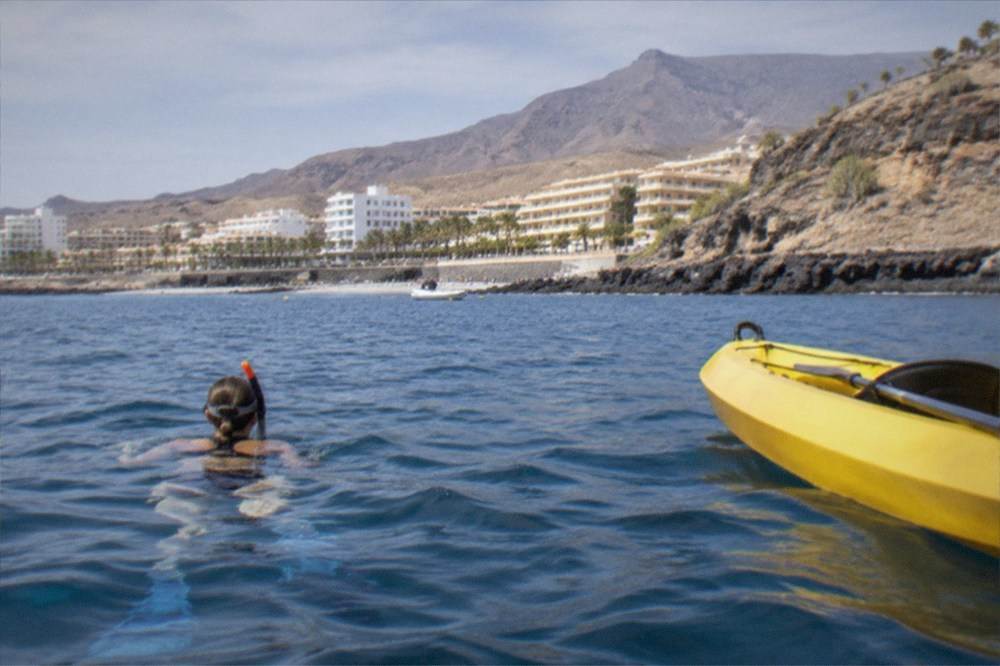
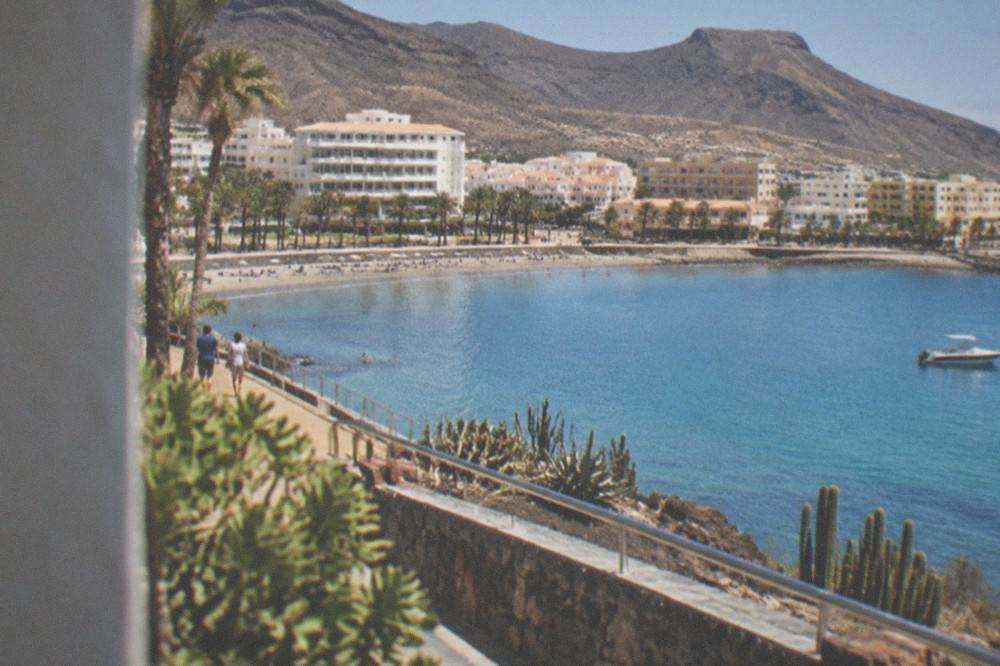
Kayaking and Snorkelling with Turtles
Tenerife's south coast is one of the few places in Europe where sea turtles, resident pilot whales and bottlenose dolphins share the same stretch of protected water, and a kayak is the quietest way to meet the first of them.
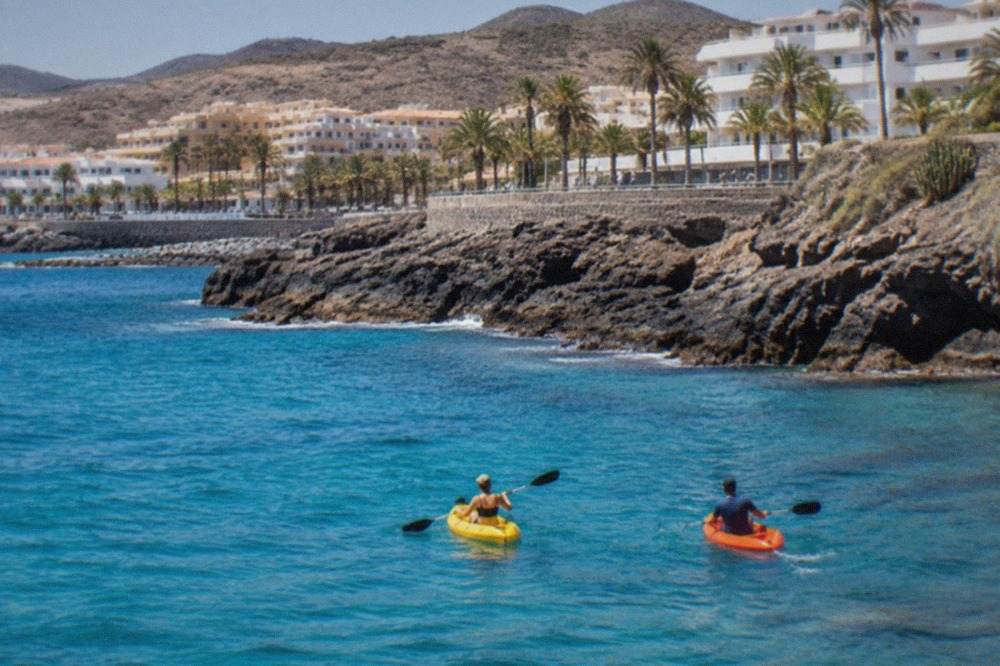
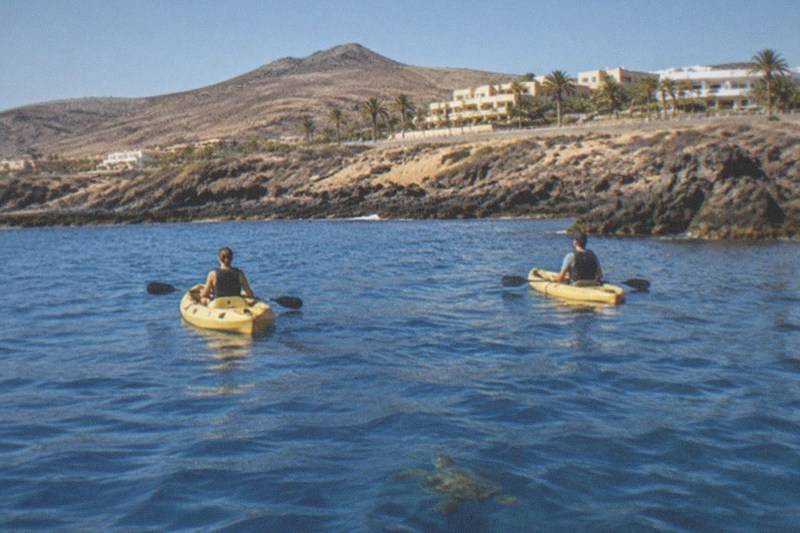
Small-Group Kayak, Free Video
Kayak & Snorkel in a Rich Marine Ecosystem with Free Videos
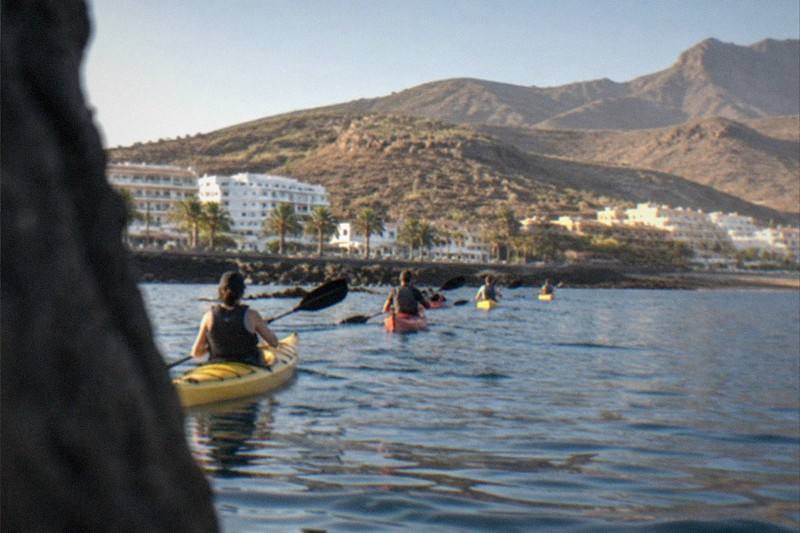
Paddle out from Los Cristianos in a small group with a guide who knows where the turtles feed. Snorkel over seagrass beds, watch for rays, and take home a video of the session. No kayaking experience needed, and all gear is provided on the beach.
from $29.24 Per person, in USD. A promotional rate, so the regular price is higher.
Check Price & Availability →Opens the live booking page with up-to-date dates and prices. All booking and payment happen there; this guide takes none of it.
- Area
- Los Cristianos
- Length
- 3 hours
- Kind
- On and Under the Water
Kayak Tour, Wetsuit Included
Tenerife: Turtle and Dolphin Kayak Tour with Snorkel and Wetsuit
from $40.98 Per person, in USD. The total depends on the date and option you pick.
Check Price & Availability →- Area
- Los Cristianos
- Length
- 3 hours
- Kind
- On and Under the Water
Short answer
Turtle kayak and snorkel tours in Tenerife launch mainly from Los Cristianos and Costa Adeje on the island's south coast, where calm, clear water behind the headlands makes sightings reliable year round.
Tenerife's southern water is quieter than almost any other busy holiday coast in Europe, and the reason is legal rather than lucky. Decreto 178/2000, the Canary Islands' whale and dolphin watching law, restricts how close any vessel may approach marine mammals and bans swimming or diving within 500 m of them, which leaves the bays and seagrass meadows between Los Cristianos and Costa Adeje unusually undisturbed for a holiday coastline. That is the water turtle tours paddle into. The World Cetacean Alliance records that the Tenerife-La Gomera Marine Area, a Special Area of Conservation, holds a unique resident population of pilot whales, bottlenose dolphins and a migration stop for 21 other cetacean species, and sea turtles feed in the same shallows the kayaks cross on the way out.
Where Can You Kayak and Snorkel with Turtles in Tenerife?
The turtle kayak and snorkel tours on this island launch almost entirely from Los Cristianos and the Costa Adeje coast, both on the sheltered south-west shore, where the water is calmest and the seagrass beds where turtles graze sit within easy paddling distance of the beach. A smaller number of trips run from other south-coast bases, but Los Cristianos is the established hub.
Los Cristianos sits in the municipality of Arona, and its bay is the departure point for the best-reviewed kayak trips on the roster. The listings describe small-group paddles out along the rocky headlands to the spots where turtles surface to breathe, with snorkel stops in the same session. The attraction of the format is simple: a kayak makes almost no engine noise, drifts at whatever speed the group paddles, and can reach shallow seagrass water that larger boats avoid. For an animal that grazes on seagrass and surfaces regularly to breathe, a slow, quiet hull is the least alarming thing on the water. The town itself is covered in detail on the Los Cristianos area guide.
Costa Adeje, next door in the municipality of Adeje, is the second launch area. Several of the island's whale watching catamarans leave from Puerto Colón there, and the kayak and snorkel products cluster around the same stretch of calm water. If your hotel is in Costa Adeje or Playa de las Américas rather than Los Cristianos, the difference between the two bases is a short transfer, and the tours themselves cover comparable coastline. The Costa Adeje area guide maps the beaches and launch points, and the wider picture of what the island offers is laid out in things to do around Tenerife.
What the tours share is the marine environment itself. The south-west coast faces the channel between Tenerife and La Gomera, the same stretch the World Cetacean Alliance designated a Whale Heritage Area in January 2021, and the same protection that keeps whale boats at regulated distances keeps the inshore shallows a place turtles can feed without being chased. If you are weighing the kayak against the bigger boats, the whale and dolphin watching trips cover the offshore water; the kayak covers the turtles inshore.
What Turtles and Marine Life Will You Actually See?
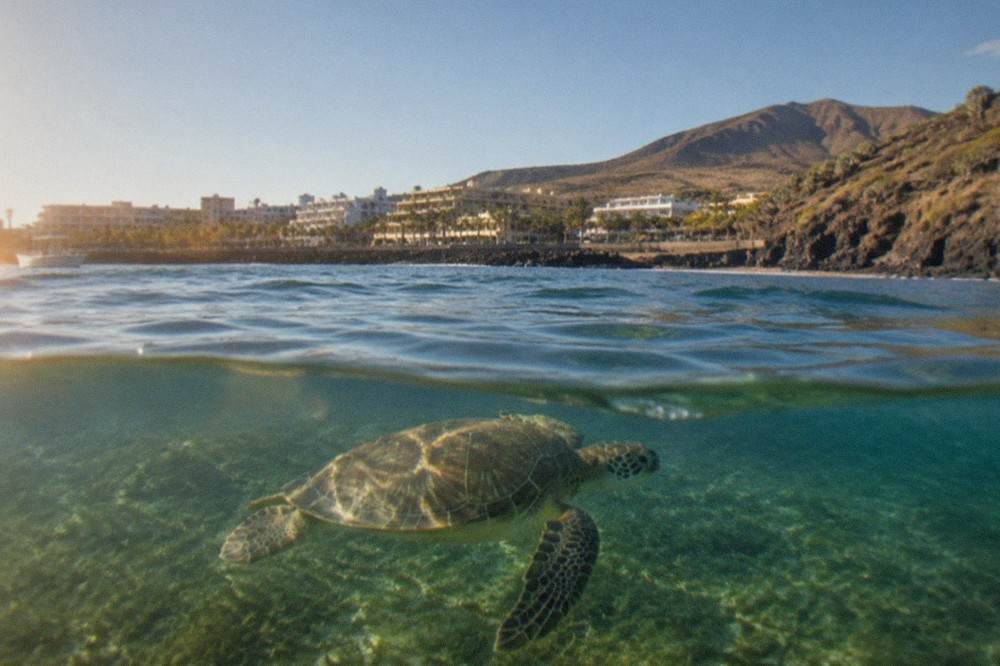
Green sea turtles feeding over seagrass are the headline, and the listings describe sightings of them alongside the fish life of the rocky reefs, but the honest framing is that a kayak tour sells a habitat rather than a guaranteed animal. Pilot whales and bottlenose dolphins live further offshore in the same protected marine area, and kayakers sometimes see them at a distance.
The turtle species the tours refer to is the green sea turtle, a grazer rather than a hunter, which is why the seagrass meadows matter. The listing for the Los Cristianos kayak trip describes a "rich marine ecosystem" and includes free video footage of the session, which tells you the operators expect the marine life to show up often enough to film. No official count of turtles in these bays exists in the verified facts, so this page states none: what can be said is that the tours run daily year round from the same beaches, which is itself a report on how dependable the habitat is.
The fish life is part of the same picture. Rocky reefs along the south coast hold the usual Canary reef fish, and the snorkel stops are timed for the shallow water where visibility is best. The listing for the turtle and dolphin kayak tour includes a wetsuit, which extends the season: sea temperatures off the south coast never drop below 19.1 degrees Celsius even in March, according to the NOAA series for 1991 to 2020, so the water is swimmable in every month of the year.
The offshore animals are a bonus rather than the product. Pilot whales and bottlenose dolphins are resident in the Special Area of Conservation, and the decree's rules apply to them wherever they appear: kayaks, like every other vessel, may not approach within 60 m, and swimming with them is prohibited within 500 m. A responsible operator treats a dolphin sighting from a kayak as something you watch from where you are, not something you paddle towards. That restraint is exactly what the "no-chase" language on several of the island's boat listings means, and it is worth holding kayak operators to the same standard.
Do You Need Experience or Equipment to Join a Turtle Kayak Tour?
No prior kayaking or snorkelling experience is needed: the listings describe these as beginner-friendly small-group trips with all equipment included, and the typical session runs about three hours from Los Cristianos with a guide leading the route. You need to be able to swim and comfortable in open water, and children's age limits are set by each operator on the listing.
The format is consistent across the products. Double kayaks, paddles, life vests, snorkels and masks are provided, and the guide sets the pace and chooses the snorkel stop. The Los Cristianos trip is listed at three hours with a small group and free videos of the session; the turtle and dolphin kayak tour is also three hours and includes a wetsuit as well as snorkel gear. Three hours is long enough for a paddle out, a snorkel stop over the reef or seagrass, and a return leg, without being an endurance test.
What you bring is minimal: swimwear, a towel, sun protection and water. The sun on the south coast is the real planning variable, not fitness. AEMET's 1981 to 2010 normals for the Tenerife South Airport station record mean daily maxima of 27.7 degrees Celsius in July and 28.4 in August with zero rain days, so a morning session is the sensible choice in high summer. In winter the same station averages 21.7 degrees in January, which is still shorts weather, and the sea at 19.9 degrees is warmer than many northern European beaches in August. For the month-by-month picture, the guide to the best time to visit Tenerife is the place to start.
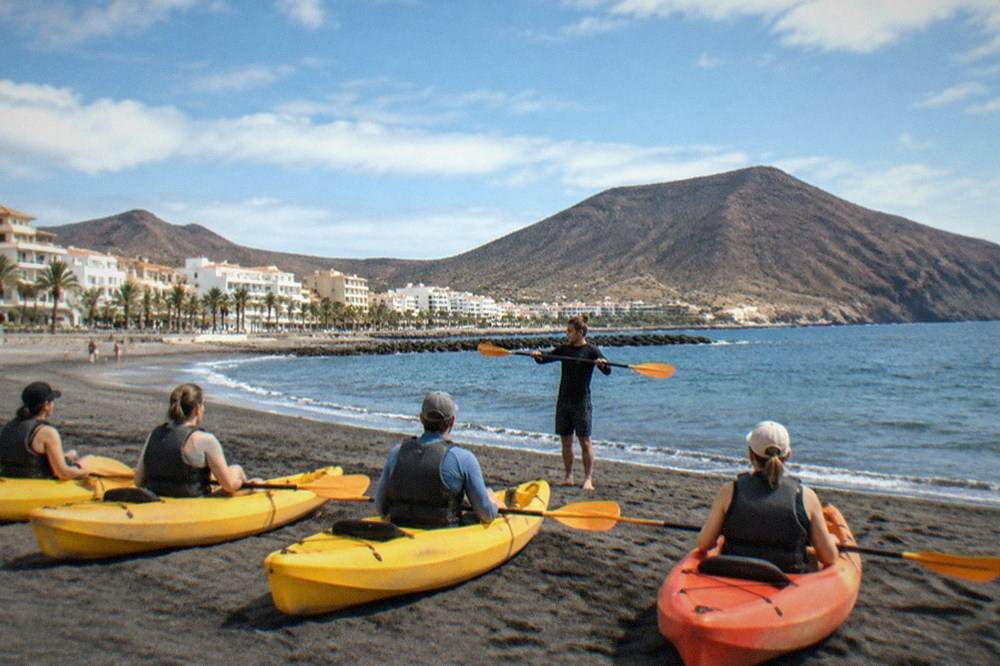
The one skill worth practising is getting into and out of the water from a kayak, which the guide will demonstrate. The snorkel stops are done either from the kayak or in shallow water beside it, and a mask that fits properly matters more than any technique: a leaking mask is the single thing most likely to cut a snorkel session short. If you would rather breathe underwater than on the surface, the scuba diving trips include beginner try-dives in the same turtle habitat, and the related product below is the one to look at first.
What Are the Rules Protecting Tenerife's Marine Life?
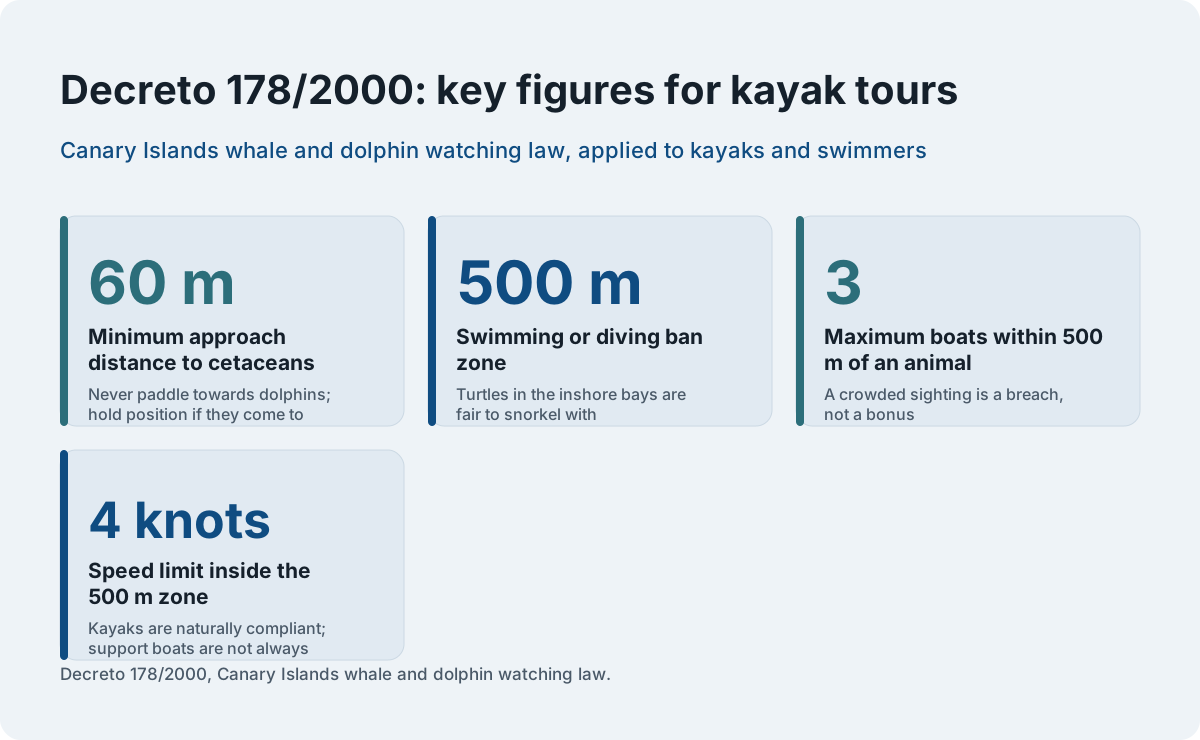
Decreto 178/2000 of the Canary Islands governs all marine wildlife watching: no vessel may approach within 60 m of whales or dolphins, no more than three boats may be within 500 m of them, speed is limited to 4 knots inside that zone, and swimming or diving within 500 m is banned. Authorised boats must fly the Barco Azul flag. The rules apply to kayaks and swimmers as much as to catamarans.
The decree is short, specific and worth knowing before you book anything on the water. It bans feeding, chasing and circling as well as setting the distances, which is why the better listings on this island advertise themselves with words like "no-chase" and "respectful": they are describing compliance with a law, not a marketing mood. The table below sets out what the decree says and what it means for a paddler.
| Rule in Decreto 178/2000 | The figure | What it means for a kayak tour |
|---|---|---|
| Minimum approach distance to whales or dolphins | 60 m | If dolphins come to you, hold position; never paddle towards them |
| Maximum boats within 500 m of an animal | 3 | A crowded sighting is a breach, not a bonus |
| Speed limit within 500 m | 4 knots | Kayaks are naturally compliant; support boats are not always |
| Swimming or diving within 500 m | Prohibited | Turtles in the bays are fair to snorkel with; dolphins offshore are not |
| Feeding, chasing, circling | Prohibited | Any operator doing this is breaking the law, whatever the photos suggest |
| Authorised whale watching boats | Must fly the Barco Azul flag | The flag is issued by the Canary tourism department with the permit |
Turtles sit slightly outside the whale and dolphin rules, but the same logic protects them. The seagrass meadows where they feed are inshore, in the bays the kayaks use, and snorkelling there is what the tours sell. What the decree does for a turtle tour is protect the wider ecosystem the turtles belong to: the resident pilot whale population, the bottlenose dolphins and the 21 other cetacean species the World Cetacean Alliance records passing through the area all depend on the same Special Area of Conservation.
The designation itself is worth getting right. The World Cetacean Alliance, not UNESCO, designated the Tenerife-La Gomera Marine Area a Whale Heritage Area in January 2021, and the programme is now called Whale Heritage Areas. No official count of the pilot whale population exists in the verified facts, so no number appears on this page. If a tour operator quotes one, treat it as their estimate rather than a fact.
When Is the Best Time of Year for Snorkelling in Tenerife?
Snorkelling in Tenerife is a year-round activity because sea surface temperatures off the south coast never fall below 19.1 degrees Celsius, but the warmest and clearest water runs from July to October, when the sea averages 22.2 to 23.7 degrees. Spring and autumn balance warmth with fewer crowds; winter is perfectly swimmable with a wetsuit.
The sea temperature series below is NOAA's 1991 to 2020 average for the water off Tenerife's south coast. Note the periods carefully: the sea figures are a 1991 to 2020 dataset, while the air normals elsewhere on this page are AEMET's 1981 to 2010 series, and the two are never mixed into one claim.
| Month | Mean sea surface temperature (C) | What it means for a snorkeller |
|---|---|---|
| Jan | 19.9 | Cool but swimmable; wetsuit recommended |
| Feb | 19.2 | The annual minimum; still above 19 degrees |
| Mar | 19.1 | The coldest month on the series; calm bays help |
| Apr | 19.5 | Warming steadily; spring clarity often good |
| May | 20.2 | Comfortable without a wetsuit for most people |
| Jun | 21.4 | Peak season begins |
| Jul | 22.2 | Warm, clear, busy on the beaches |
| Aug | 23.1 | Warmest quarter of the year begins |
| Sep | 23.7 | Joint warmest; sea at its best |
| Oct | 23.7 | Joint warmest, and the beaches quieten |
| Nov | 22.5 | Still warm; first Atlantic fronts possible |
| Dec | 21.1 | Mild water, short days |
The air side of the equation is on your side too. AEMET's normals for the south airport station record 295 sunshine hours in July and 277 in August, against 193 in January, and rain days of 1 mm or more never exceed 3.5 a month in the south. The north of the island is a different climate: the Tenerife North Airport station records 520 mm of rain across 64 rain days a year, against 132 mm on 15.2 days in the south, which is one reason the turtle tours cluster along the south-west coast. More on that split in the guide to Tenerife North versus South.
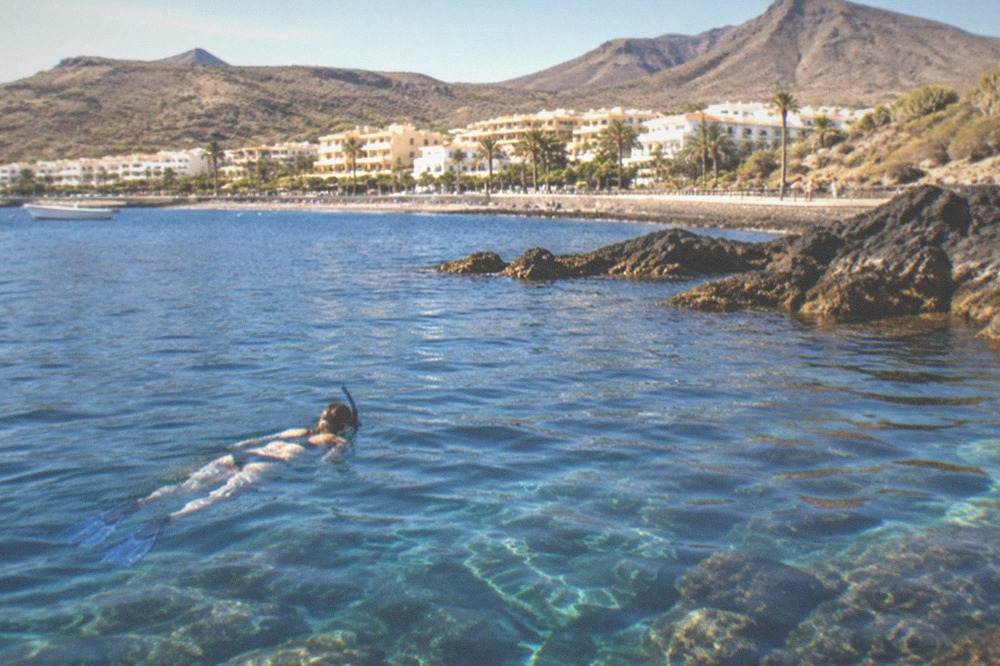
Wind matters more than temperature for a kayak, and the trade winds blow most consistently in summer, which is why many operators favour morning departures. Sea state is the other variable the operator watches: the listings note that conditions can change sessions, and a kayak tour in swell is a different experience from one in a flat calm. Book the first days of your holiday rather than the last, so a postponed session can be re-run.
What Does a Kayak and Snorkel Tour Actually Involve?
A typical session runs about three hours: a short safety and paddle briefing on the beach, a guided paddle of roughly an hour along the coast to the reef and seagrass areas, a snorkel stop with the guide in the water, and a return paddle. Groups are small by design, and the listings include all gear, with free video footage of the trip on the Los Cristianos product.
The briefing is shorter than most people expect. Double kayaks are stable, the route stays close to shore, and the guide leads from the front. Once the group reaches the snorkel spot, the kayaks raft up or anchor, and the water section begins: masks on, fins optional, and the guide points out the turtles and reef fish. Green turtles surface regularly to breathe when they are feeding, so the technique is to float still and let them come up near you rather than to swim after them.
The return leg is the part people underestimate. Three hours includes both paddling directions, and a headwind on the way back turns a gentle outing into a workout. This is where the small-group format earns its keep: the guide sets a pace the slowest paddler can hold, and the distance is chosen for beginners. The listing for the Los Cristianos trip bills itself as suitable for people with no kayaking experience, and the daily year-round schedule backs that up.
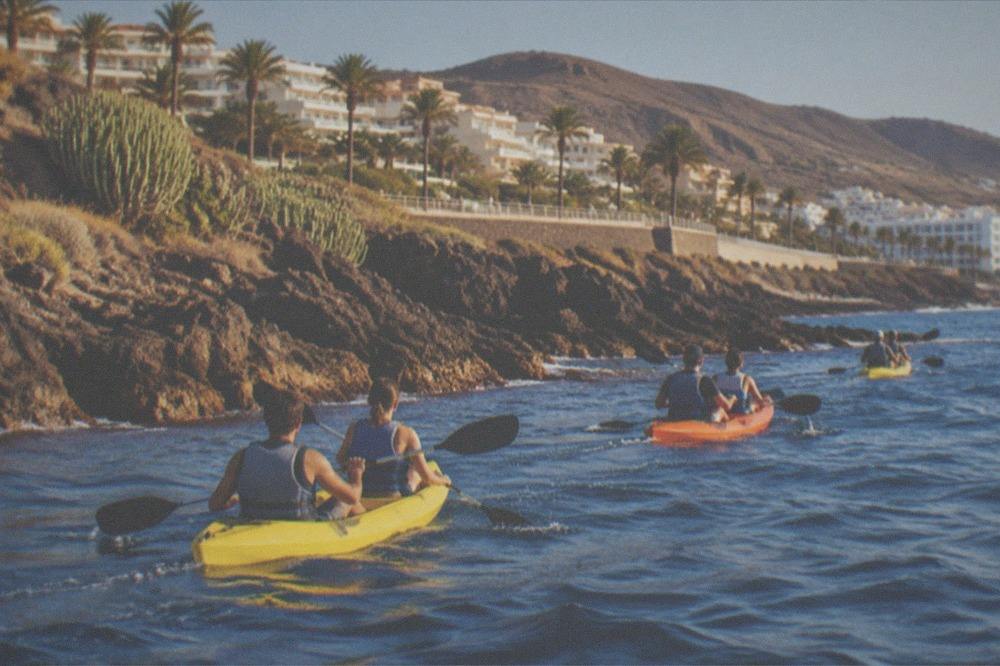
What you see under the water depends on the stop. Rocky reef holds wrasse, damselfish, parrotfish and the occasional octopus; seagrass holds the turtles. Visibility in the sheltered bays is usually good because the headlands blunt the Atlantic swell, and the same geography is why the bigger boat trips and catamarans moor nearby. If you want to see the marine life without getting your hair wet at all, the submarine safaris are the dry alternative.
How Do You Choose Between Kayaking, Boat Trips and Diving?
Choose the kayak for turtles and closeness to the water at a quiet pace, a whale watching boat for the offshore pilot whales and dolphins the decree keeps kayaks away from, and a beginner scuba try-dive for the reef at depth. The three formats are complementary rather than competing, and many visitors do two of the three across a week.
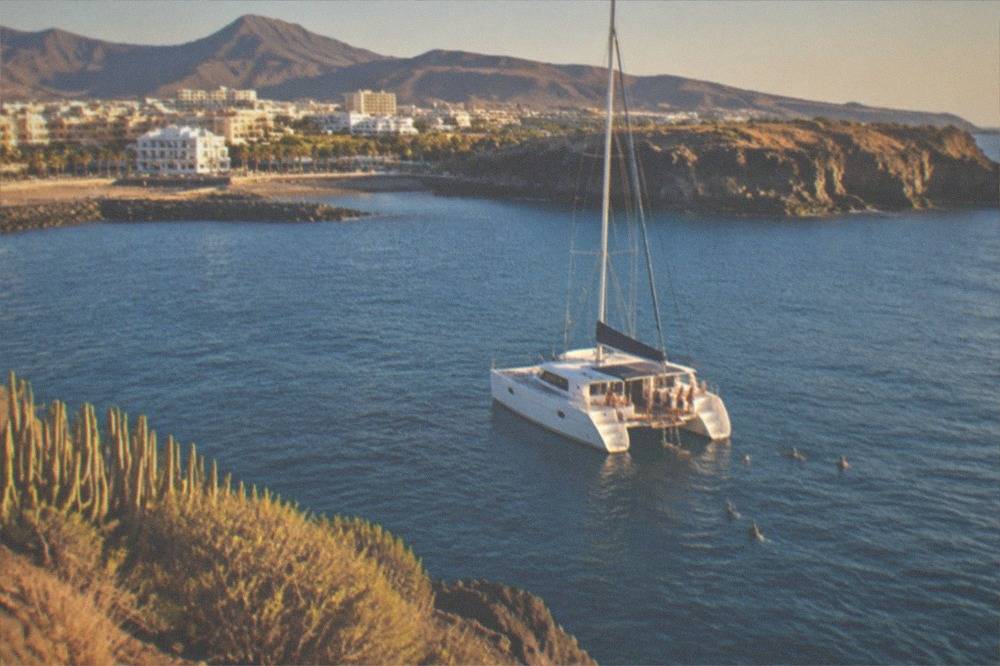
The dividing line is legal as much as practical. Whales and dolphins live in the channel and along the drop-offs, and the 60 m approach limit and 500 m swimming ban mean a kayak tour is not the vehicle for a close encounter with them. The catamarans and eco-yachts are licensed and flagged for that job, and the no-chase products on the roster describe exactly the restraint the decree demands. Turtles, by contrast, feed in the same inshore bays the kayaks use, so the kayak is the right tool for the animal you can legally share water with.
Diving is the third option, and the beginner products are genuine try-dives rather than certification courses. The listing for the two-in-one scuba and snorkelling trip from Costa Adeje runs three hours, takes ages 8 and up, and pairs a supervised dive with a snorkel session, which makes it the closest cousin to the kayak tour for families with older children. The kayak keeps you on the surface with a mask; the try-dive puts you on the reef with a tank; the boat puts you offshore with a crowd. All three sell the same protected marine area from a different angle.
| Format | Best for | Typical duration | Where it goes |
|---|---|---|---|
| Kayak and snorkel tour | Turtles, quiet pace, small groups | 3 hours | Los Cristianos bays and reefs |
| Beginner scuba try-dive | The reef at depth, ages 8 and up | 3 hours | Costa Adeje turtle habitat |
| Whale watching catamaran | Pilot whales and dolphins offshore | 2 to 3 hours | The Tenerife-La Gomera channel |
| Eco no-chase boat | Responsible wildlife watching | 1 hour 30 minutes | Los Cristianos coastal water |
| Submarine safari | Dry underwater viewing | Listed on the product page | Costa Adeje |
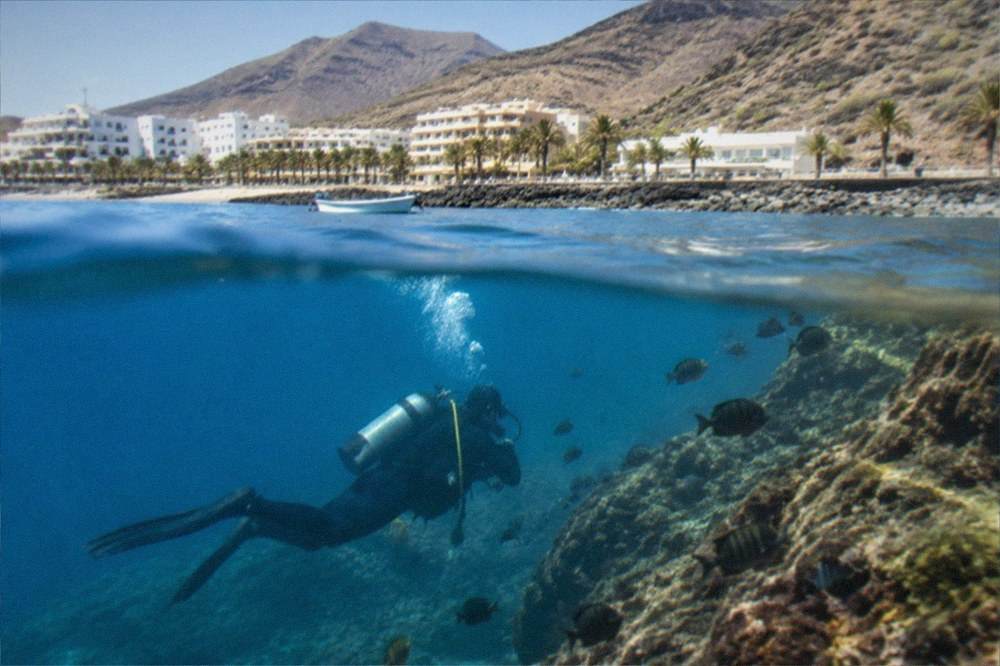
For families, the age limits are the deciding detail, and each listing states its own; the Tenerife with kids guide collects the child-friendly options in one place. For active travellers, the surf lessons and the jet ski and watersports options cover the adrenaline end of the same coastline. And for the evening after a morning on the water, the free walking tours of Santa Cruz, Puerto de la Cruz and La Orotava, run on the GuruWalk platform and free to join with a tip at the end, cost nothing to add to the week.
Common Questions About Kayaking and Snorkelling with Turtles in Tenerife
Can you swim with turtles in Tenerife?
Yes, in the inshore bays where they feed. The kayak tours include a snorkel stop in exactly that water, and the beginner scuba products dive in the same habitat. Swimming with whales and dolphins is different: Decreto 178/2000 prohibits swimming or diving within 500 m of them, so no lawful tour offers it.
Where do the turtle kayak tours leave from?
Los Cristianos is the main departure point, with Costa Adeje and the Playa de las Américas coast close behind. Los Cristianos sits in the municipality of Arona, and its sheltered bay is why the operators cluster there.
Do I need to be able to kayak or snorkel already?
No. The listings describe small-group trips designed for beginners, with all equipment provided and a guide leading the route. You do need to be able to swim and be reasonably comfortable in open water.
What should I bring on a turtle kayak tour?
Swimwear worn under clothes, a towel, sun protection, water and footwear you do not mind getting wet. The operator provides the kayak, paddles, life vests, masks and snorkels, and one product on the roster includes a wetsuit as well.
Are children allowed on the kayak tours?
Each listing states its own age limits, so check the operator's live listing for the product you are considering. Double kayaks mean an adult shares a boat with a child, and calm morning conditions suit younger paddlers best.
What happens if we do not see a turtle?
The listings sell a habitat and a guided session rather than a guaranteed sighting, and no honest operator promises an animal. The Los Cristianos product includes free video footage of the trip, which reflects how regularly the marine life appears, but sea conditions and wildlife behaviour vary, and a postponed session can usually be re-run if you book early in your stay.
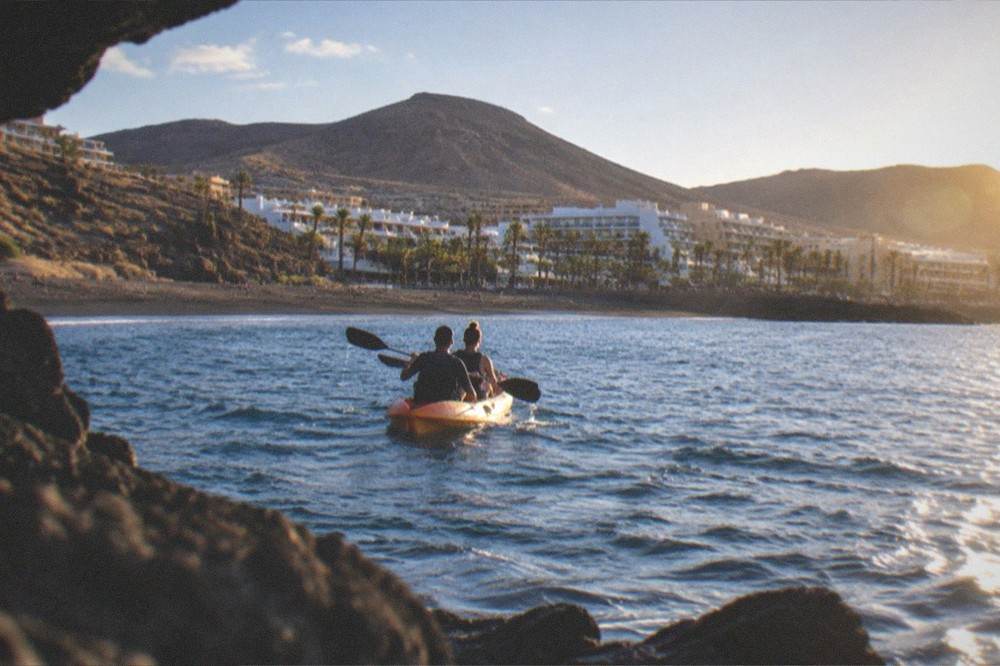
The turtle coast works as a day plan as easily as it works as a week's theme. A morning kayak from Los Cristianos, lunch on the seafront, an afternoon on the golden sand at Las Vistas, whose calm shallows sit just along the same Arona shoreline, and the evening back in the same town: the whole circuit happens without a car, which matters if you have not hired one. The water stays warm enough to snorkel in every month of the year, the law keeps the offshore traffic respectful, and the animal at the centre of it all grazes the same meadows it grazed before any of the tours existed. For more on planning the whole island, start with Tenerife Travel Guide.