Submarine Safaris Tenerife
A submarine safari takes you below the surface of the Atlantic without a wetsuit, a mask or a single swimming lesson. This page explains what the format involves, what lives in the water off Tenerife, and how a trip under the sea fits alongside the island's boat tours and watersports.
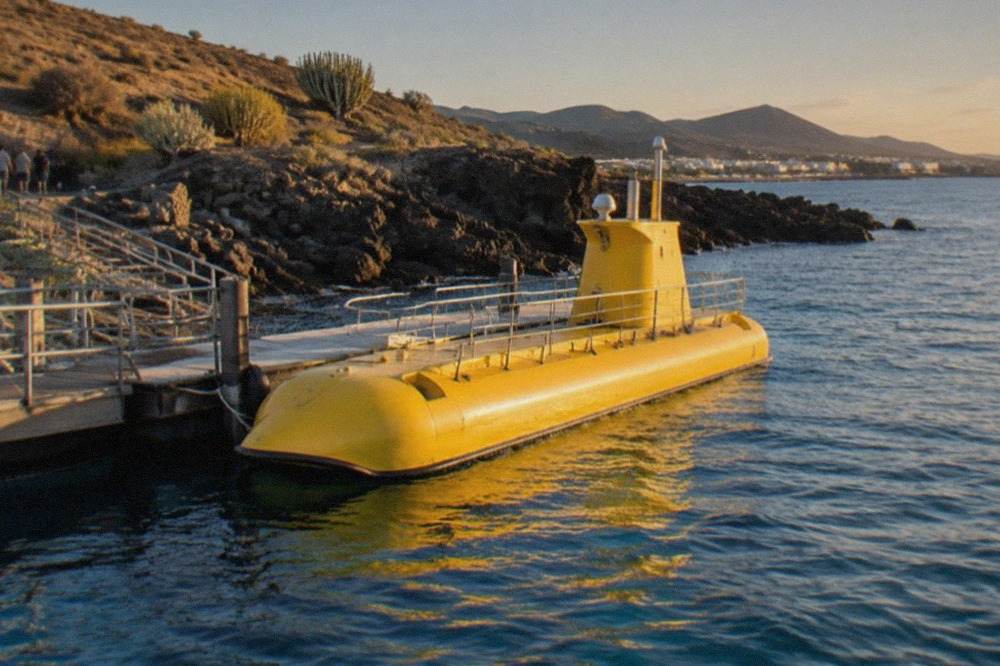
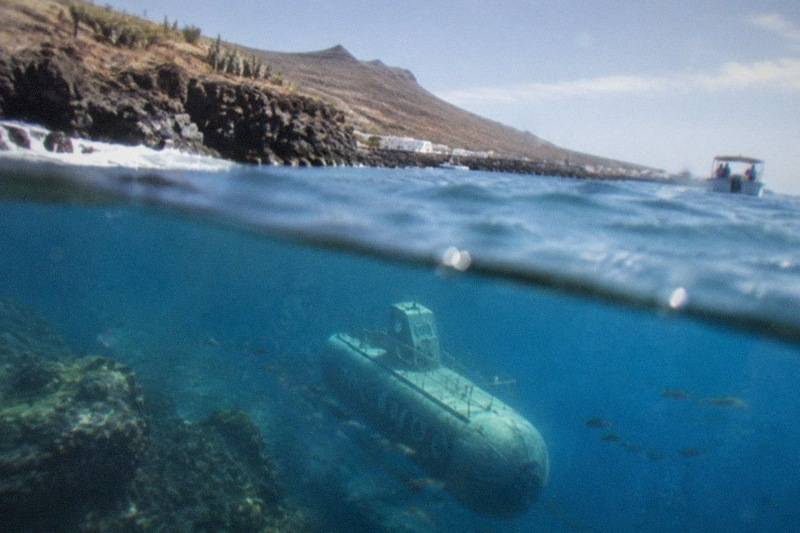
Submarine Plus Beach Stop, 7 Hours
Puerto de la Cruz: Submarine Trip and Beach Stop in Tenerife
A seven-hour day out that pairs a submarine dive off the coast with time on a beach. Sit in the observation cabin, watch the underwater world drift past the windows, then dry off with a swim and a slow afternoon ashore.
from $84.94 Per person, in USD. The total depends on the date and option you pick.
Check Price & Availability →Opens the live booking page with up-to-date dates and prices. All booking and payment happen there; this guide takes none of it.
- Area
- Puerto de la Cruz
- Length
- 7 hours
- Kind
- On and Under the Water
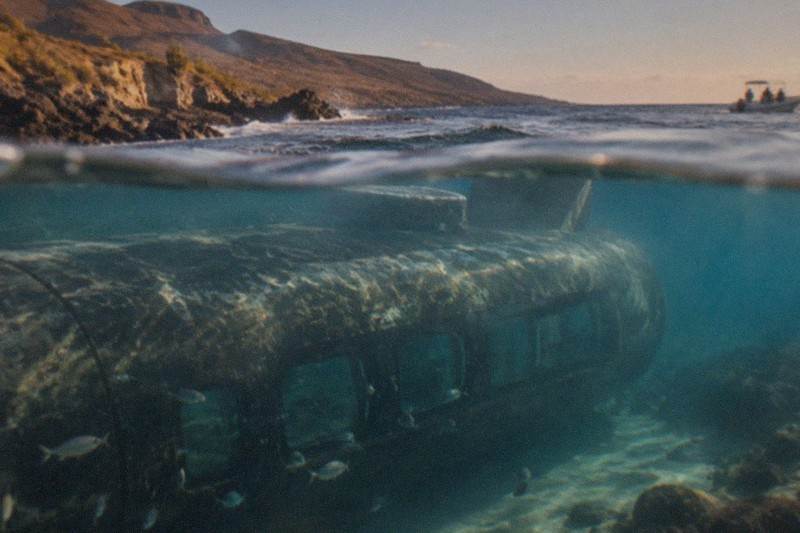
Submarine, Hotel Pickup, Audioguide
Submarine Tour with Hotel Pickup Tenerife South
from $71.42 Per person, in USD. The total depends on the date and option you pick.
Check Price & Availability →- Area
- South Tenerife
- Length
- 2 to 4 hours
- Kind
- On and Under the Water
Short answer
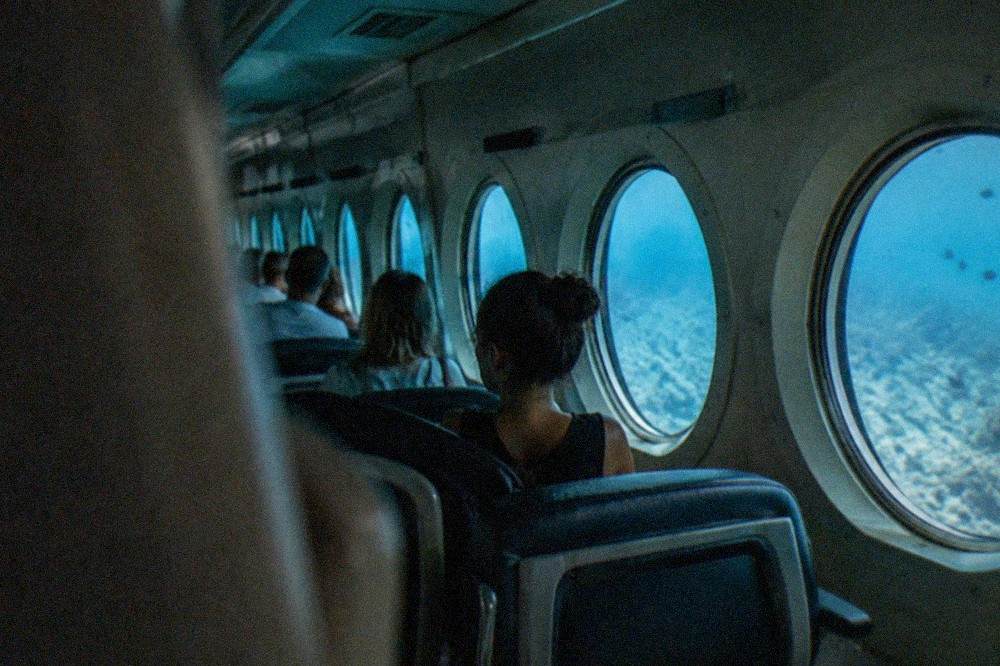
A submarine safari in Tenerife is a seated, dry, underwater boat tour: you board a vessel with viewing windows, descend below the surface and watch the island's coastal waters pass by from inside. It suits non-swimmers, children and anyone who wants the underwater view without getting wet, and the live price sits on the operator's card rather than on any printed page.
A submarine safari is the one way to see under the Atlantic that asks nothing of your body: no swimming, no diving certificate, no tolerance for cold water. You sit in a pressurised cabin, the windows sit in the hull, and the island's underwater slopes, fish shoals and volcanic rock drift past the glass. Tenerife's southwest corner is where most of the island's sea tourism concentrates, and the submarine format sits alongside the whale and dolphin watching fleet, the catamarans and the watersports as a way of meeting the same water from a different angle.
The island's marine setting explains why the format works here at all. The World Cetacean Alliance records that the Tenerife-La Gomera Marine Area became a designated Whale Heritage Area in January 2021, describing a unique resident population of pilot whales, bottlenose dolphins and a migration stop for 21 other cetacean species, inside a Special Area of Conservation. The same steep island shelf that keeps those animals close to shore drops away quickly from the coast, which is what gives a submarine something to look at within a short ride of its berth. The Los Gigantes cliffs, which the tourist board describes as tower up to 600 m high, continue below the waterline, and the seabed at their foot lies about 30 m down according to the same page.
What Is a Submarine Safari in Tenerife?
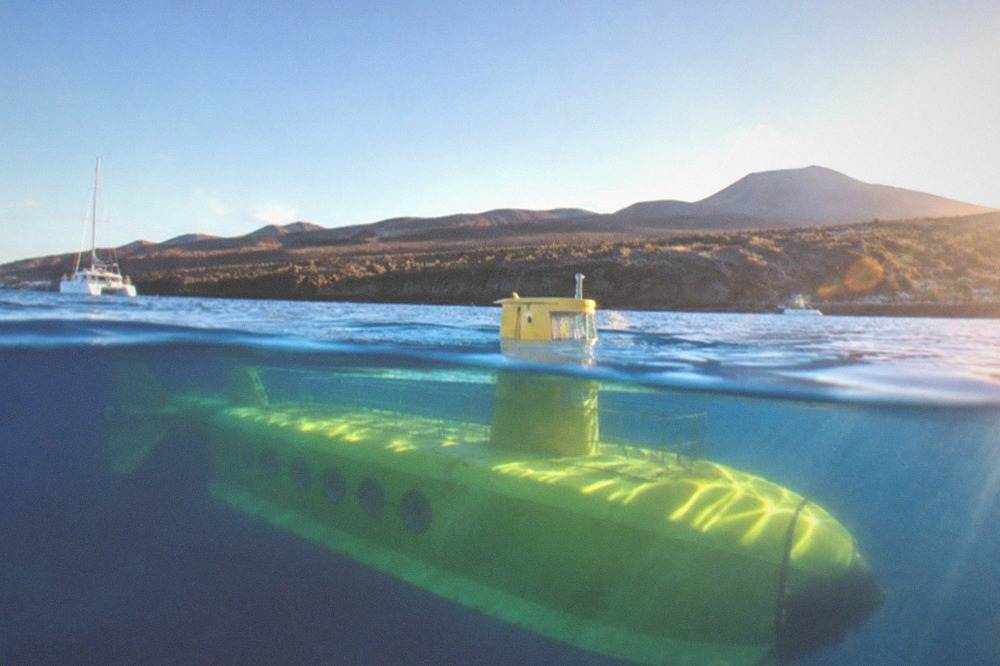
A submarine safari in Tenerife is a short pleasure voyage on a passenger submarine or semi-submersible vessel: you board at a coastal berth, the boat submerges or sits low in the water, and you watch fish, rock formations and the light through the surface from behind glass in a seated cabin. Nothing about the trip requires you to swim, and the whole experience is closer to a scenic drive than to a dive.
The format exists for a simple reason. Most of the island's sea activities reward confidence in the water: snorkelling, scuba, surfing, even swimming from a boat. A submarine removes that barrier entirely, which makes it one of the few sea trips that works identically for a confident swimmer, a nervous one and somebody who never intended to get wet at all. Families with small children, older travellers and visitors who simply want to say they went under the Atlantic in a submarine all end up in the same cabin, which is why it appears on so many Tenerife with kids shortlists.
What you should not expect is a deep-sea expedition. These are coastal passenger vessels working sheltered water, not research submarines, and the experience is built around windows, commentary and the coastal ecosystem rather than depth for its own sake. Think of it as the underwater sibling of the boat trips and catamarans that work the same coastline, with the same volcanic scenery viewed from the other side of the waterline.
The practical details, including departure points, durations and the live price, belong to the operator's own listing, and this site never prints a product price in prose. The listing is also where you check the one thing that matters most on the day: whether sea conditions allow the trip to run at all.
What Can You Actually See Under the Water Off Tenerife?
The honest answer is coastal sea life at its own scale: shoals of fish, individual rays and barracuda where the operator's routes pass them, volcanic rock formations, and the changing light as the hull descends, rather than whales, which are watched from the surface under rules that keep boats at least 60 m away. A submarine window shows you the underwater island; it does not show you the cetaceans, because the law keeps vessels far from them.
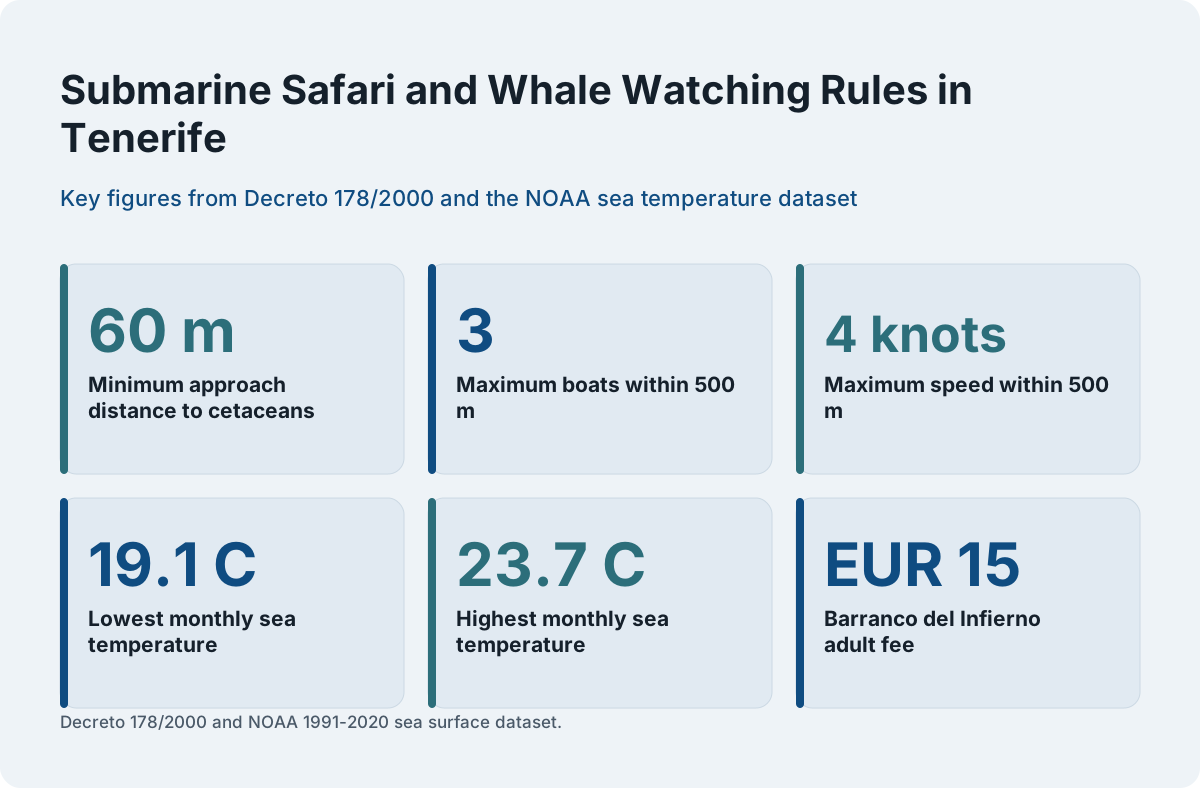
That last point surprises people, and it is worth being clear about. Whale watching in the Canary Islands is regulated by Decreto 178/2000, which forbids any approach within 60 m of the animals, allows at most three boats within 500 m, caps speed at 4 knots within that radius, and bans swimming, diving, feeding, chasing and circling. A submarine is not a whale-watching platform, and any trip that sells itself to you as one is misdescribing itself. The pilot whales and bottlenose dolphins the World Cetacean Alliance records as resident between Tenerife and La Gomera are watched from the surface, from authorised boats flying the Barco Azul flag, on trips of the kind listed on our whale and dolphin watching page.
What the window does show is the part of the island almost nobody sees. The seabed off the southwest is volcanic rock, sand shelves and drop-offs, and the fish life around them is the ordinary, everyday abundance of a sheltered subtropical coast. The operator's own listing is the place to check what its route passes: artificial reefs, wrecks or fish-feeding stops vary by operator, and none of those specifics belongs on a page that has not read each one.
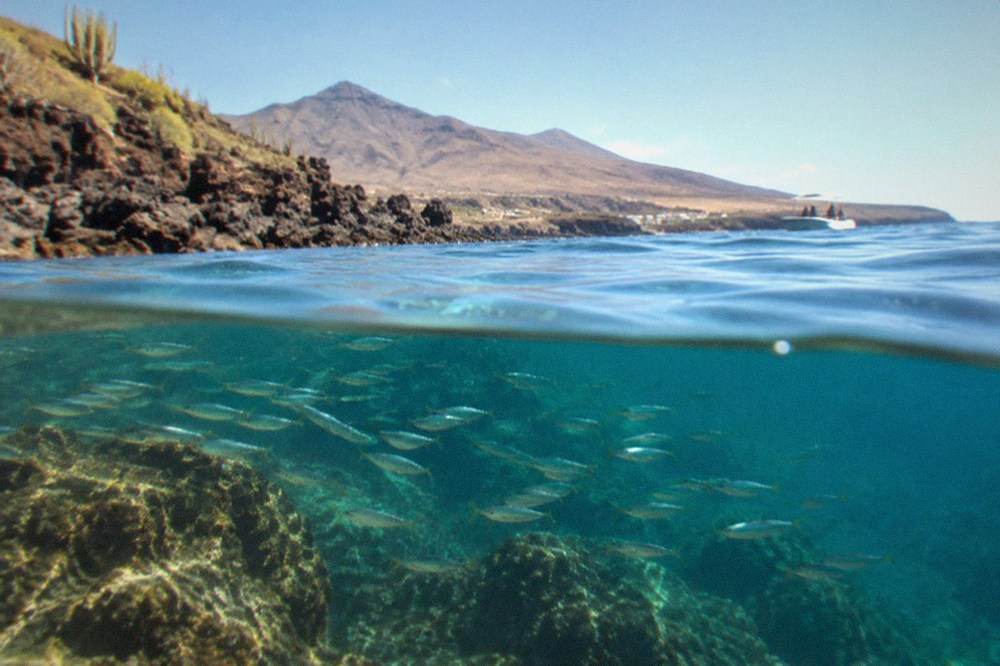
For context, the sea itself is warmer than most visitors expect. The south coast's surface temperature, on the National Oceanic and Atmospheric Administration's 1991-2020 dataset, never falls below 19 Celsius:
| Month | Sea surface temperature off the south coast |
|---|---|
| January | 19.9 C |
| February | 19.1 C |
| March | 19.1 C |
| April | 19.5 C |
| May | 20.2 C |
| June | 21.4 C |
| July | 22.2 C |
| August | 23.1 C |
| September | 23.7 C |
| October | 23.7 C |
| November | 22.5 C |
| December | 21.1 C |
Those figures matter for what the water looks like through the window. Warm, stable water means light penetrates well, fish stay active through the winter, and the visibility on a calm day is the reason the submarine format works year-round rather than seasonally.
How Does a Submarine Safari Compare with Tenerife's Boat Trips?
A submarine safari trades the surface experience, sun, sky, whale sightings and the feeling of a boat under you, for a dry, seated, underwater view; a boat trip gives you the animals and the coastline, a submarine gives you the water itself, and the two are complements rather than rivals. If your holiday has room for one morning on the water, the choice is between looking down at the sea and looking into it.
The comparison is easiest to see as a table:
| Submarine safari | Surface boat trip | |
|---|---|---|
| What you watch | Fish, rock formations, light under the surface | Pilot whales, dolphins, the coastline, the cliffs |
| Getting wet | No | No, though spray and swim stops exist on some trips |
| Swimmers and non-swimmers | Identical experience | Identical for watching; swim stops differ |
| Weather sensitivity | High, sea state governs descent | Moderate, whales are watched in most conditions |
| Regulation | Vessel and safety rules | Decreto 178/2000 governs approach distances |
| Best paired with | A surface whale trip the same week | A submarine or snorkel trip |
The rule set behind the surface side is strict, and it is worth knowing whichever trip you take. The Canary government's decree sets the distances, and the Barco Azul flag, issued by the tourism department with each permit and at each annual renewal, is the visible proof a boat is authorised:
| Rule under Decreto 178/2000 | Figure |
|---|---|
| Minimum approach distance to cetaceans | 60 m |
| Maximum boats within 500 m | 3 |
| Maximum speed within 500 m | 4 knots |
| Swimming or diving within 500 m | Banned |
| Feeding, chasing or circling | Banned |
| Flag authorised boats must fly | Barco Azul |
A submarine trip sits outside that whale-watching framework because it does not approach the animals. That is precisely why some visitors book both: the submarine for the underwater hour, and a Barco Azul catamaran for the pilot whales. If you want the animals first, the no-chase catamaran below is one of the surface options that leans on the respectful end of the market.
If the comparison lands the other way, and the surface is where you would rather spend your morning, the jet ski safari is the fast, salty, wind-in-the-face counterpart to the submarine's quiet cabin. Both work the south coast, and neither requires you to have done anything like it before.
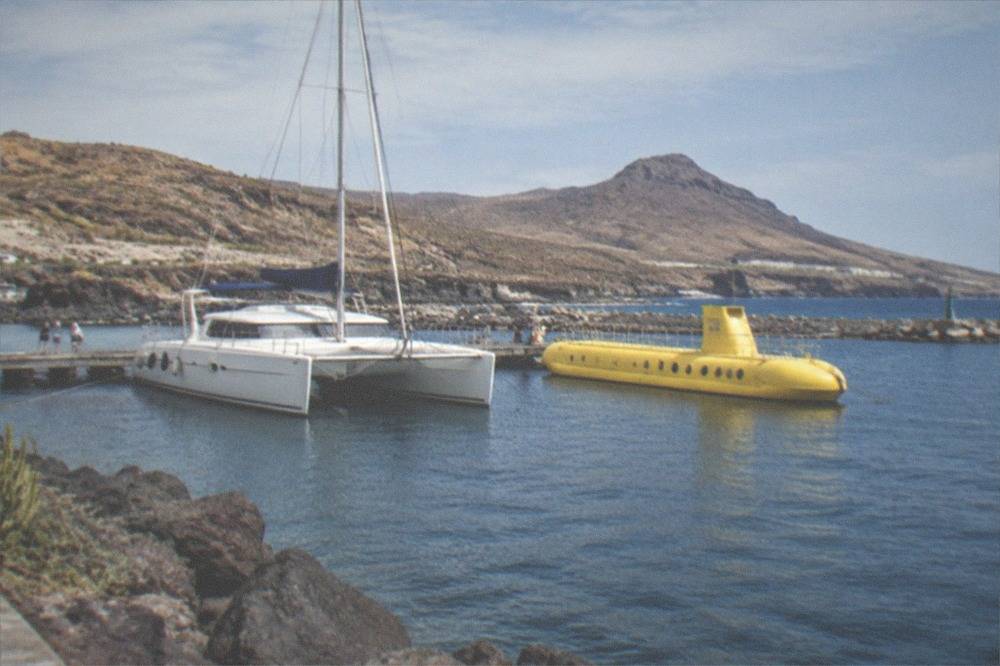
Is a Submarine Safari in Tenerife Right for Children and Non-Swimmers?
For non-swimmers it is one of the best sea trips on the island, because the whole experience happens inside a sealed cabin and swimming ability is irrelevant; for children it depends on the operator's own age and height rules, which are stated on the listing and are the only rules that count, so read them before booking rather than assuming. What you may say generally is that the format was practically invented for passengers who cannot or will not get in the water.
The contrast with the island's other sea activities is the point. Snorkelling and scuba need you in the water, with the scuba diving try-dives setting their own age floors, and surf lessons ask for at least a willingness to fall off. A submarine asks for a seat. Motion sickness is the one honest caveat: a submerged hull moves with the swell, and passengers who suffer on boats can suffer below the surface too, so take the same precautions you would on any small vessel.
The other practical question is capacity and claustrophobia. Cabins are compact by design, windows are the point, and nobody who is uncomfortable in an enclosed space will enjoy an hour of it. The operator's listing states cabin layout and duration, and both are worth reading before you commit rather than after. More of these guides are collected on Tenerife Travel Guide.
Where Does a Submarine Safari Fit in a Tenerife Holiday?
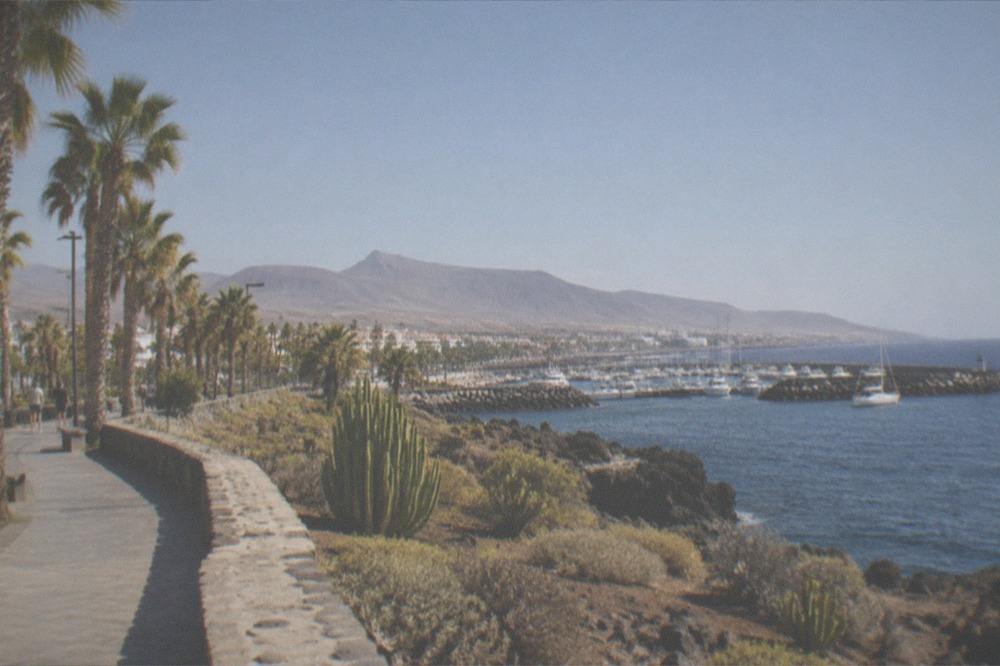
It fits best as a half-day activity inside a south-coast holiday: the submarine trip itself is short, the departure points sit in the tourist zone between Costa Adeje and Los Cristianos, and the natural pairing is a morning under the water and an afternoon on a beach, a water park or a whale boat. It is a supplement to a holiday, not a day trip in itself.
The south coast is where the island's sea tourism stacks up. Costa Adeje and El Duque sit in the municipality of Adeje, Las Vistas sits in Arona, and the beaches between them are the ones the tourist board describes: Las Teresitas and Las Vistas get its golden-sand description, while El Duque is described by the same pages as a grey sandy beach. A family that books a submarine morning, a beach afternoon and a Siam Park day has used the south coast the way it is built to be used, and the things to do in Tenerife round-up covers the rest of the island for the days in between.
For visitors staying in Puerto de la Cruz or Santa Cruz, the trip becomes a bigger commitment, because the submarine berths are in the south and the island's roads do not shrink for the sake of one underwater hour. The TITSA bus network does connect the two, and visitors pay for it: single tickets, the EUR 10 day travelcard or the EUR 50 seven-day travelcard are the visitor products, while the free passes the Canary government subsidises are for residents only, a distinction our Tenerife buses guide explains in full. The north-based alternative is not a submarine but the island's other sea formats, and the jet ski and watersports page lists what works from where.
When Is the Best Time of Year for an Underwater Trip?
The sea off southern Tenerife is warm and calm enough for underwater viewing in every month, with surface temperatures between 19.1 and 23.7 Celsius on the NOAA dataset and the calmest sea typically in the summer half of the year, so the deciding factor is your own holiday dates rather than any closed season. There is no month when the format does not run in principle, and no month when it is guaranteed to run in practice.
The practical constraint is sea state, not temperature. The operator's own cancellation terms govern the day, and swell that makes a descent uncomfortable or unsafe will cancel trips at short notice, which is the same reality the Masca gorge faces when the pier closes suddenly on sea conditions. Booking with a spare morning in your week is the sensible pattern: if the first attempt cancels, the second can run.
Crowd pressure follows the flight schedules. The island's air-arrival figures, published by the Canary statistics institute, show the winter months carrying more tourists than the summer ones in recent years, with December and January arrivals by air running above the June figures. What that means for a submarine is that berths and seats are scarcer in the winter high season, and booking ahead matters more in February than in May. Our month-by-month weather guide carries the full breakdown if you are still choosing dates.
What Other Underwater Experiences Does Tenerife Offer?
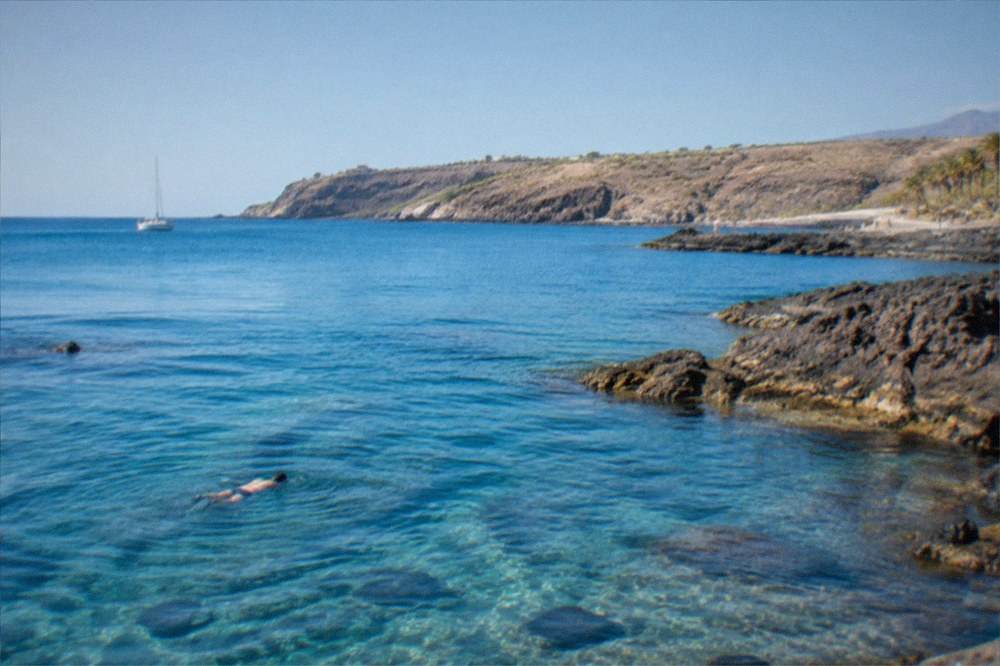
If the submarine is the dry route, the wet routes are snorkelling with turtles, first-time scuba try-dives and kayak tours with snorkel stops, all of which work the same sheltered south-coast water and all of which put you in it rather than behind glass on top of it. The choice between them is a choice about how much of yourself you are willing to get wet.
The try-dive is the closest spiritual cousin of the submarine: it exists for people who have never breathed underwater, it is short, and it is built around the first experience rather than a qualification. Tenerife's south coast is a natural turtle habitat, which is why so many of these trips sell the same sight the submarine shows through its window, a turtle moving past you, except here you are moving too.
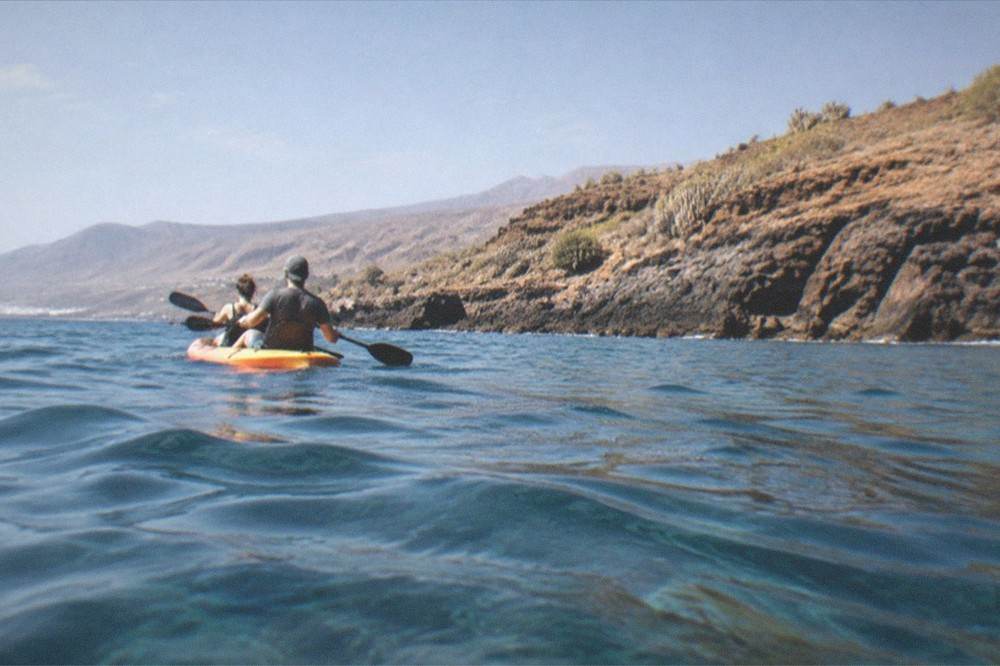
The kayak-and-snorkel combination is the middle option, half surface, half under it, and it suits families with older children who want both the paddle and the fish. It is also the cheapest way to discover whether the underwater view through a mask is enough, before you spend a morning inside a hull deciding the same thing from the other side.
How Do You Book a Submarine Safari in Tenerife?
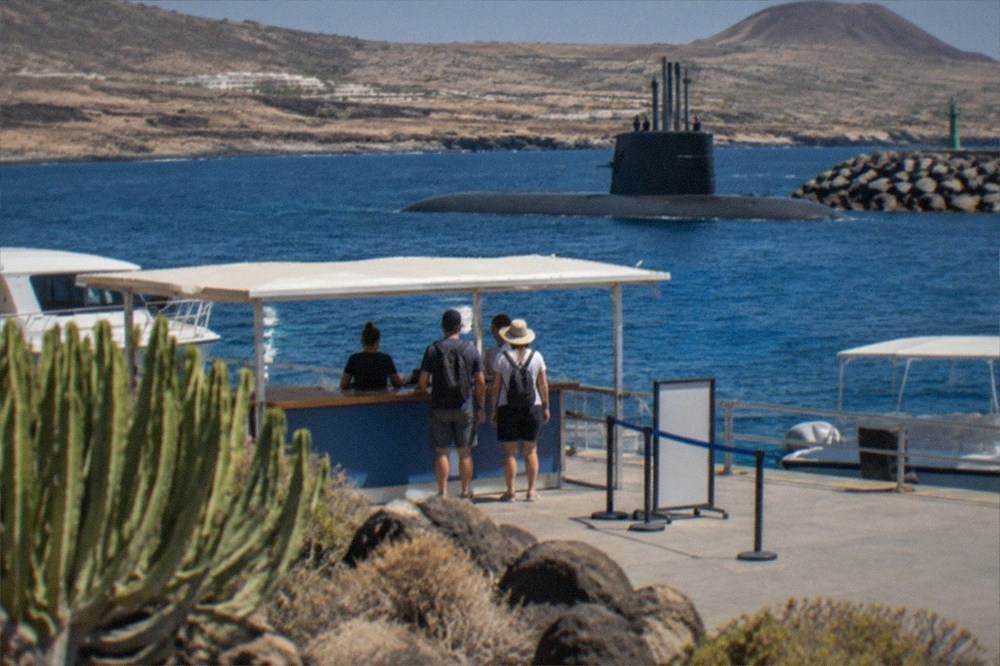
You book it the way you book anything on this site: through the operator's live listing, where the current price, the departure details and the cancellation terms sit together, and you check the sea-state clause before you pay, because sea conditions, not the calendar, decide whether the trip sails. There is no permit, no official reservation system and no island authority involved; this is an ordinary commercial ticket.
That last point distinguishes the submarine from the parts of Tenerife that do need official bookings. The Teide summit trail needs a Tenerife ON reservation, the Masca gorge needs a ticket from its own booking site, and Barranco del Infierno takes EUR 15 from a non-resident adult with advance online booking compulsory. A submarine safari is none of these: it is a tourist product with a listing, and the listing is the whole of the paperwork.
Reading the listing properly means reading three things: the age and height rules, if you are travelling with children; the meeting point and the check-in time, which are the parts people get wrong; and the weather clause, which tells you what happens to your money if the sea cancels the day. Do all three before you book rather than after, and the morning itself becomes the easy part.
Common Questions About Submarine Safaris in Tenerife
Do you see whales on a submarine safari in Tenerife?
No. Canary law, under Decreto 178/2000, forbids boats approaching within 60 m of whales and dolphins, and submarines do not attempt it. Whales and dolphins are watched from the surface, from authorised boats flying the Barco Azul flag.
Can non-swimmers and children go on a submarine safari?
Non-swimmers sit in exactly the same seats as everyone else, in a dry sealed cabin, and swimming ability is irrelevant to the trip. Children are usually welcome, but age and height rules belong to each operator and are stated on the listing, which is the only place to check them.
Is a submarine safari better than a boat trip?
They are different products. A boat trip gives you the pilot whales, dolphins, the cliffs and the sun; a submarine gives you fish, volcanic rock and the light under the surface. Many visitors book one of each in the same week.
What happens if the sea is too rough?
The operator's own weather and cancellation terms govern the day, and trips can be cancelled at short notice on sea conditions. Book with a spare morning in your week so a cancelled first attempt has a second chance.
When is the sea warmest for an underwater trip?
The south coast's surface temperature peaks at 23.7 Celsius in September and October on NOAA's 1991-2020 dataset, and never falls below 19.1 Celsius, so warmth is never the reason to pick one month over another.
The underwater half of Tenerife is the half most visitors never see, and a submarine safari is the lowest-effort door into it: no training, no swimming, no wetsuit, just a window and an hour of the island that usually stays hidden. Pair it with a Barco Azul whale boat for the animals, keep a spare morning for the weather, and the sea has shown you both of its faces before your holiday is out.