El Puertito De Adeje
El Puertito is a small cove on Adeje's coast, away from the high-rise strip but close to everything the south of Tenerife does well: turtles in the water, whale watching under strict rules, and easy bus links.
Short answer
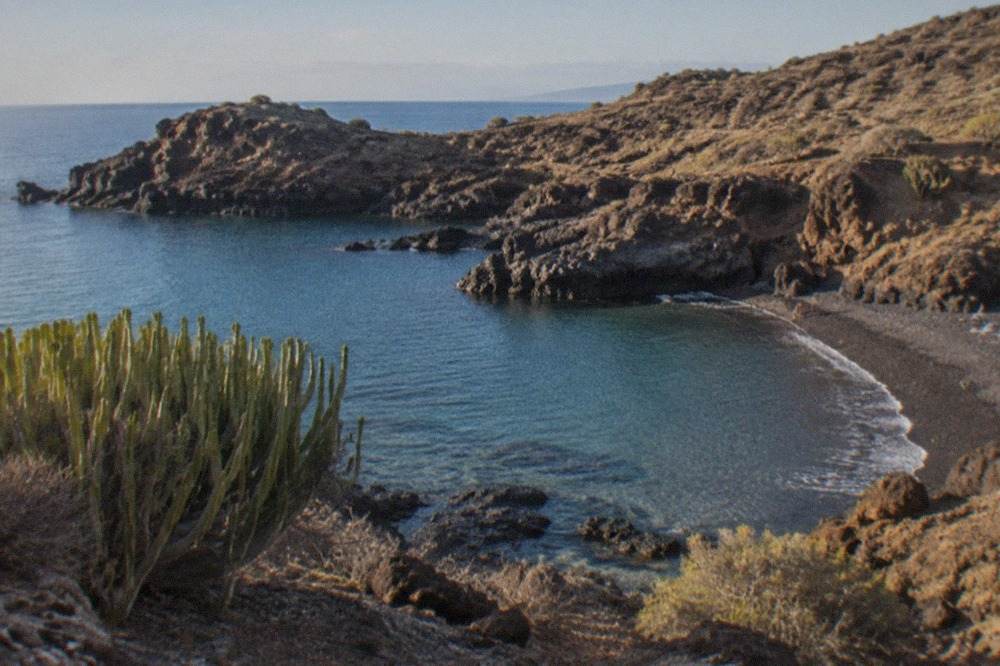
El Puertito is a small cove in the municipality of Adeje, on Tenerife's south-west coast. It sits between the purpose-built resort beaches and the wilder laja coast, and it is best known for the marine life in its calm, shallow water. Adeje counted 50,021 residents on the INE register in 2025, and the cove is one of its quietest coastal spots.
El Puertito is a small cove in the municipality of Adeje, on the coast that runs between the built-up resort belt of Costa Adeje and the older fishing settlements further west. Adeje is one of Tenerife's smaller municipalities by population, 50,021 residents on the INE register for 2025, yet it holds some of the island's best-known beaches, including El Duque, which the tourist board describes as a grey sandy beach. El Puertito is the opposite end of that scale: a modest bay whose appeal is the water rather than the promenade. This guide sets out what the official record says about the cove and its surroundings, what you can book from here, and how to reach it without a car.
Where Is El Puertito and What Kind of Place Is It?
El Puertito is a small cove on Adeje's coast in south-west Tenerife, sitting outside the high-rise resort cores but inside the same municipality as Costa Adeje and El Duque. Adeje registered 50,021 residents in 2025, and the cove belongs to its quieter, older shoreline, where the laja rock meets shallow, sheltered water. It is a place for swimming and snorkelling rather than sunloungers, and it costs nothing to visit.
The municipality of Adeje stretches from the barranco interiors up at Adeje Old Town down to the tourist coastline, and the tourist board's own beach pages divide that coast by character. El Duque is grey sand; Fanabe is pale sand; the purpose of each is spelled out on the official page. El Puertito is not on that list of managed resort beaches, and that is precisely its character: a small bay that has kept a low profile while the coast on either side of it was built into one of Europe's busiest holiday strips.
For orientation, Costa Adeje lies immediately east along the shore, and Playa de las Americas continues beyond it into Arona. The whole stretch is one continuous resort coast, but El Puertito reads as a pause in it. The tourist board's figures for 2025 put 5,451,268 tourists in Tenerife's hotels and apartments island-wide, and the UK alone accounted for 2,057,896 of those lodged guests, which explains why the southern shore is where most visitors base themselves.
What Can You Do at El Puertito and Nearby?
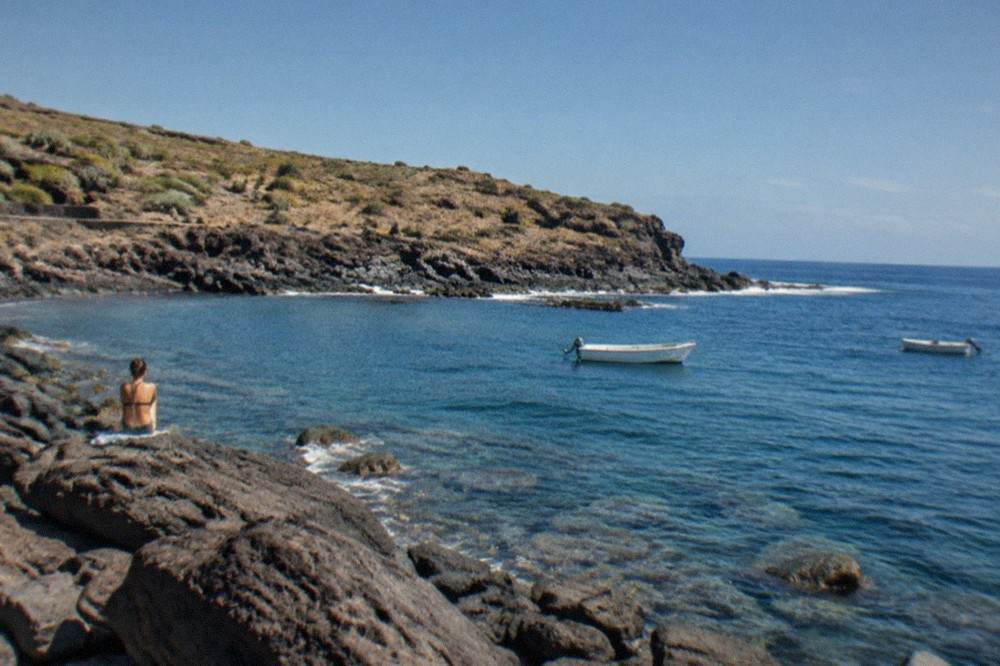
The cove itself is free and needs no booking: swimming, snorkelling and shore time are the whole point. Around it, the Adeje coast supplies the island's densest concentration of paid activities: whale watching trips, scuba try-dives, jet skis, parasailing and two of Tenerife's biggest parks, Siam Park and Aqualand. A day here can cost nothing at all or be filled with bookings, and both are legitimate plans.
A useful way to think about the area is to separate the water from the shore. In the water, the south coast's marine life is protected by law and celebrated by designation: the World Cetacean Alliance states that the Tenerife-La Gomera Marine Area became a designated Whale Heritage Area in January 2021, with a unique resident population of pilot whales, bottlenose dolphins and a migration stop for 21 other cetacean species. On the shore, the offer is more conventional, from the water slides of Aqualand Costa Adeje to the promenades and beaches of the resort belt.
For a first visit, the practical split is this: mornings at the cove while the water is calm, then a booked afternoon elsewhere. The trio below covers the three products most often paired with a stay near El Puertito: the combined ticket for the two big parks, a sailboat whale cruise, and a beginner scuba dive with turtles.
The twin ticket deserves a word of explanation. Loro Parque sits in Puerto de la Cruz in the north and Siam Park sits in Costa Adeje in the south, so the combination only makes sense with a plan: Siam Park is a short hop from El Puertito, while Loro Parque is a cross-island trip. Siam Park's own page states it opens 365 days a year, 10:00 to 18:00 from 1 May to 29 October and 10:00 to 17:00 from 30 October to 30 April, so the water-park half of the ticket can slot into any week.
Is Snorkelling and Diving at El Puertito Worth It?
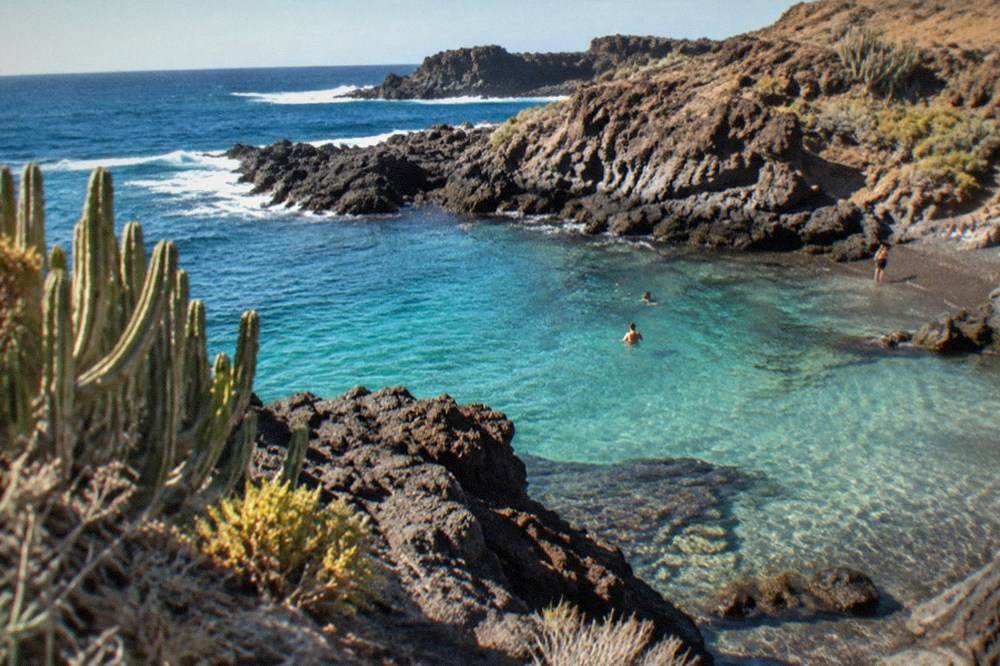
Yes, for the water itself: the cove's sheltered, shallow bay is one of the south coast's accessible spots for snorkelling, and the local dive operators run beginner try-dives in the same stretch of Costa Adeje coastline. The scuba product carded on this site is rated 4.7 from 1,968 reviews and runs three hours, combining a first dive with a snorkel session, for ages 8 and up.
What makes this coast work for beginners is the combination of shelter and marine life. The resident turtles that draw divers and snorkellers to the Adeje coast are the same population that the kayak and dive operators advertise, and the cove's shallow water means a try-dive here does not demand a boat journey or deep descent. The listing for the two-in-one scuba and snorkelling experience states it is built for first-timers from age 8, with all equipment handled by the operator.
If diving is not your level, a kayak and snorkel trip is the lighter option. The kayak product in this site's roster is rated 4.7 from 12,101 reviews and runs three hours from Los Cristianos, with free videos of the trip included, which is a short bus or taxi hop east along the coast. The rules that govern all of this are strict, and they are worth knowing before you get in the water anywhere on this coast: Canary law bans approaching whales within 60 metres, and swimming or diving within 500 metres of them is prohibited outright.
Should you book the water activities before you leave home? For a first-timer's try-dive in peak weeks, yes, the listing is the safest way to secure a place.
What Are the Whale Watching Rules on the Adeje Coast?
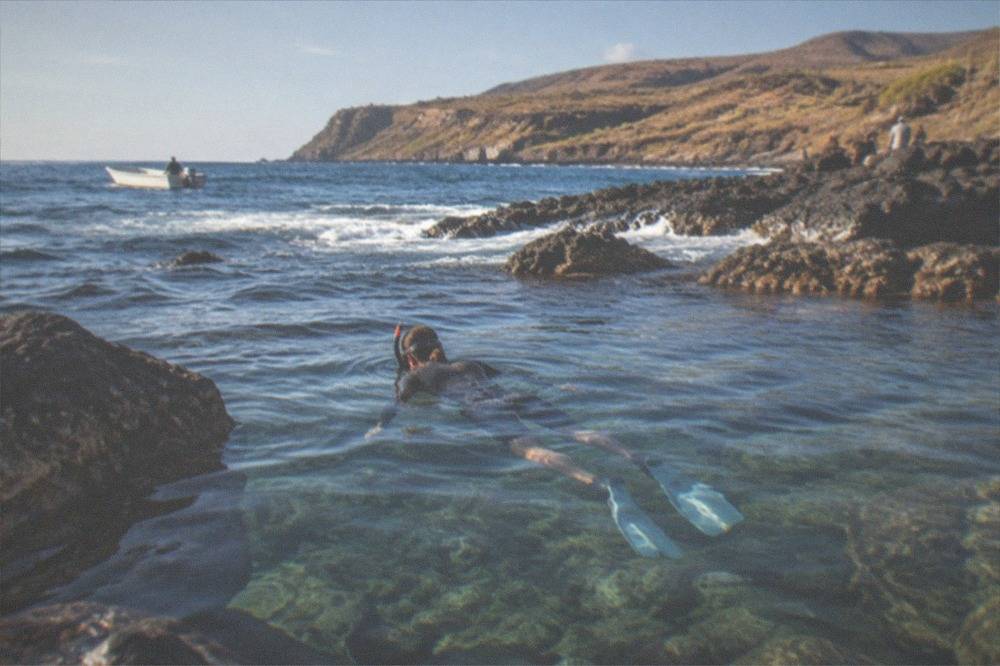
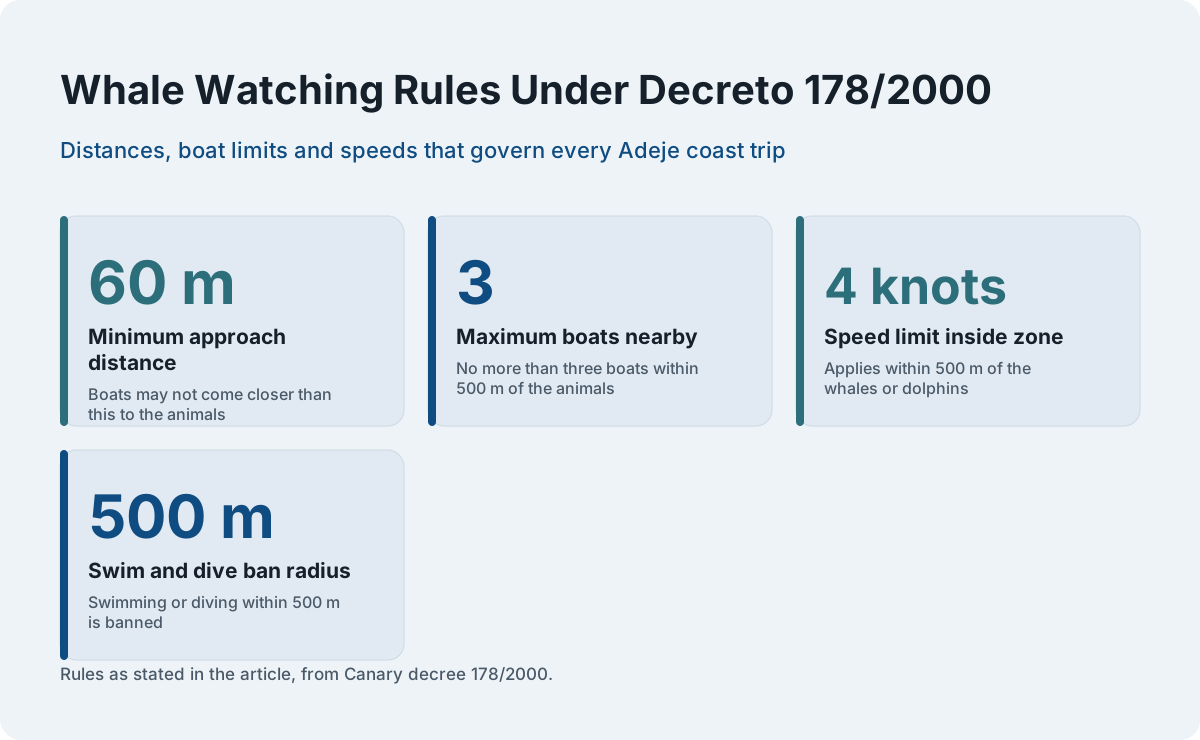
Canary decree 178/2000 governs every whale and dolphin trip here: boats may not approach within 60 metres of the animals, no more than three boats may be within 500 metres, speed is limited to 4 knots inside that zone, and swimming or diving within 500 metres is banned. Authorised boats must fly the Barco Azul flag, issued with the permit and renewed annually, so the flag is the visible proof a boat is legal.
These rules matter to a visitor for one simple reason: the south-west coast between Costa Adeje and Los Gigantes is where the resident pilot whales live, and the trips run daily. The World Cetacean Alliance's designation of the Tenerife-La Gomera Marine Area as a Whale Heritage Area in January 2021 rests on that resident population, and the decree is the mechanism that keeps the encounters orderly. A boat without the blue flag is a boat without a permit.
| Rule under Decreto 178/2000 | Figure |
|---|---|
| Minimum approach distance to whales or dolphins | 60 m |
| Maximum boats within 500 m of the animals | 3 |
| Maximum speed within 500 m | 4 knots |
| Swimming or diving near the animals | Banned within 500 m |
| Feeding, chasing or circling | Banned |
| Proof of authorisation | Barco Azul flag, renewed annually |
The sailboat cruise carded on this site is rated 4.9 from 2,264 reviews and runs three hours from Los Gigantes, which pairs the whale watching with the cliffs the tourist board says tower up to 600 m high. The Los Gigantes cliffs are inside Teno Rural Park, and the seabed at their foot is about 30 m deep, which is why the boat trips there feel different from the ones along the low Adeje shore.
Closer to the cove, the catamaran and eco-cruise products depart from Costa Adeje and Los Cristianos piers, and the eco operators advertise no-chase encounters built around the decree's distances. Whichever trip you choose, the operator's live listing carries the current departure points and times, and the Barco Azul flag check is yours to make on the dock.
How Do You Get to El Puertito Without a Car?
TITSA buses serve the whole Adeje coast, and visitors pay for them: single tickets priced by route, a EUR 10 day travelcard or a EUR 50 seven-day travelcard, all sold at airport ticket machines. The 2026 free-transport subsidy applies to resident passes only, so no visitor qualifies. Taxis on Tenerife are white and metered from the start of the trip, and a fixed price can be agreed in advance for excursions.
The bus network is the honest answer to car-free travel here, and the Tenerife Travel Guide bus pages cover it in depth. TITSA's own airport pages list lines 10, 40, 711, 343 and 415 at Tenerife South Airport, so the coast is reachable from arrival without a hire car, and line 343 runs express between Puerto de la Cruz and Los Cristianos via both airports. Once on the Adeje coast, local lines thread the resort belt, and the cove is a short walk from the nearest stops.
| TITSA product for visitors | Price |
|---|---|
| Single ticket | Priced by route, card or cash |
| Same-day return, trips of 20 km or more | 10% off |
| Day Travelcard | EUR 10 |
| 7 Day Travelcard | EUR 50 |
| Ten+ card | EUR 2 |
| Wallet top-up | EUR 2 to EUR 100 |
One warning worth repeating, because many pages get it wrong: the 100% fare subsidy the Canary government announced for 2026, in force since 1 January under Real Decreto-ley 17/2025, requires residency in the Canary Islands and a personalised pass. Visitors do not qualify, whatever a forum or an out-of-date article says. The resident passes also exclude the Teide and Teno lines, which affects hikers heading for the mountains rather than the coast.
For stays in the area, accommodation within walking reach of the cove is the practical choice, since the bay has no resort infrastructure of its own: compare places to stay around Adeje before committing to a base further from the water.
Where Does El Puertito Sit Within Adeje and Its Neighbours?
El Puertito belongs to the municipality of Adeje, which registered 50,021 residents in 2025, making it one of Tenerife's mid-sized municipalities by population but one of its smallest by area of resort coast. Its neighbours along the shore are Arona to the east, which includes Las Vistas beach, and Santiago del Teide to the west, which holds Los Gigantes. The island as a whole counted about 960,000 residents across 31 municipalities.
The municipal map explains the coast's character better than any guidebook paragraph. Adeje holds El Duque, Fanabe and the coves; Arona holds Las Vistas, which the tourist board describes as golden sand behind breakwaters, and the Playa de las Americas strip; Santiago del Teide holds the cliffs at Los Gigantes and the village of Masca inland. Each municipality runs its own beach services, which is why the standard of facilities changes as you walk the shore.
| Municipality | Residents, 2025 register |
|---|---|
| Santa Cruz de Tenerife | 211,957 |
| La Laguna | 161,108 |
| Arona | 87,793 |
| Granadilla de Abona | 58,752 |
| Adeje | 50,021 |
| Puerto de la Cruz | 31,137 |
| Santiago del Teide | 12,582 |
For beach comparison within easy reach of the cove, the tourist board's own descriptions give you the honest differences: El Duque is grey sand, Fanabe is pale sand, Las Vistas is golden sand with calm behind breakwaters. None of these is a fifteen-minute drive from El Puertito in the sense a car advert would claim, but all sit on the same continuous coast served by the same bus corridor, so a beach-hopping day is realistic with a day travelcard.
What Is the Weather and Sea Temperature at El Puertito?
AEMET's normals for Tenerife South Airport, the closest long-record station to the Adeje coast, show mean daily maxima of 21.7 C in January rising to 28.4 C in August, with July and August recording zero rain days. The sea off the south coast, on NOAA's 1991 to 2020 series, runs from 19.1 C in March to 23.7 C in September and October, so the water is swimmable all year.
Two datasets, two periods: the air normals are 1981 to 2010, the sea figures are 1991 to 2020, and neither should be quoted with the other's dates. In practice the numbers say the same thing a swimmer feels: the south coast is warm, dry and sunny in every month, with the rain concentrated in November through February and even then averaging under two days of meaningful rain a month at the airport station.
| Month | Mean daily max C (air) | Sea surface C |
|---|---|---|
| Jan | 21.7 | 19.9 |
| Feb | 22 | 19.2 |
| Mar | 23.1 | 19.1 |
| Apr | 23.1 | 19.5 |
| May | 23.9 | 20.2 |
| Jun | 25.4 | 21.4 |
| Jul | 27.7 | 22.2 |
| Aug | 28.4 | 23.1 |
| Sep | 27.9 | 23.7 |
| Oct | 26.8 | 23.7 |
| Nov | 24.8 | 22.5 |
| Dec | 22.8 | 21.1 |
The one caveat the desk will state plainly: AEMET's station at the airport sits at 64 m by the shore, and conditions on any given day are a matter for the forecast, not the normals. The sea figures are the more useful planning tool for a cove whose whole appeal is getting in the water.
Are There Free Walking Tours Near El Puertito?
The resort south, including Los Cristianos, Costa Adeje, Adeje, Arona and Playa de las Americas, has no free walking tour listed on GuruWalk, the platform whose pay-what-you-want walks this site cards. The three English-guided free walks listed are all in the north: La Orotava, Puerto de la Cruz and the historic centre of Santa Cruz de Tenerife. Each is free to join and tip-based.
That is a listing fact, not a claim that no free walk exists anywhere in the south, and the distinction matters. What GuruWalk's listings show is that the island's free-walk offer clusters where the historic architecture is, in the colonial old towns of the north rather than the modern resort belt. A visitor based near El Puertito who wants a guided walk has two honest options: a paid bike or e-bike tour of Santa Cruz, or a trip north for one of the free walks.
The Santa Cruz walk is carded at 4.81 from 233 English-language reviews and runs two hours. La Orotava's free tour runs an hour and a half, as does Puerto de la Cruz's, and all three are booked through the card on this page. Never print a price for a free walk: the model is a tip at the end, at whatever level the walker chooses.
Is El Puertito Worth the Detour on a Tenerife Holiday?
For swimmers, snorkellers and anyone tired of the sunbed rows, yes: the cove is free, the water is the attraction, and the location puts the whole southern activity offer within a bus ride. For visitors whose holiday is built around promenades, water parks and nightlife, the resort beaches east of it will serve better. The honest answer is that El Puertito is a half-day or a morning, not a base.
The cove's value is as a counterweight. Tenerife's 2025 tourist figures, 7,561,659 tourists in total on the FRONTUR count, mean the southern coast is busy in every season, and a small bay with no infrastructure is one of the few places on that coast where the crowd thins. Pair it with a booked afternoon: a whale cruise, a dive, or the twin-ticket parks, and the day balances out.
Planning the wider week is easier with the right reading: the Los Cristianos vs Costa Adeje comparison settles the biggest base decision on this coast, and the island-wide things to do in Tenerife page collects the full offer. For a windier, quieter alternative coast, El Medano sits east of the airport under Montana Roja with fine grey sand, and Puerto de Santiago to the west sits closest to the Los Gigantes cliff walks.
Common Questions About El Puertito
Is El Puertito free to visit?
Yes. The cove is an open stretch of Adeje's coast with no entry charge, no ticket and no booking. The costs start only with the activities you choose to book: boat trips, dives, or the parks further along the coast.
Can you swim with turtles at El Puertito?
The Adeje coast is where the island's turtle snorkelling and dive products operate, and the beginner scuba product carded on this page runs in Costa Adeje for ages 8 and up. The strict legal limits apply everywhere: swimming or diving is banned within 500 metres of whales or dolphins under Decreto 178/2000.
Which beach is better, El Puertito or Costa Adeje?
They serve different plans. The tourist board describes El Duque in Costa Adeje as a grey sandy beach with full resort services, and Fanabe as pale sand. El Puertito is a small natural cove with calm, shallow water and no resort infrastructure, better for swimming and snorkelling than for a sunbed day.
How do I get to El Puertito from Tenerife South Airport?
TITSA lines 10, 40, 711, 343 and 415 serve Tenerife South Airport on the operator's own airport page, and the coast corridor through Costa Adeje carries the local lines. A visitor day travelcard costs EUR 10 and a seven-day card EUR 50; the 2026 free-fare subsidy is for Canary resident passes only.
Is there a tourist tax for staying in Adeje?
No official page read shows a per-night lodging tax in force or approved on Tenerife. The charges that do exist are per-booking fees on specific trails and sites, such as the Teide summit trail and the Masca gorge, none of which applies to a stay in Adeje.