Playa Paraiso
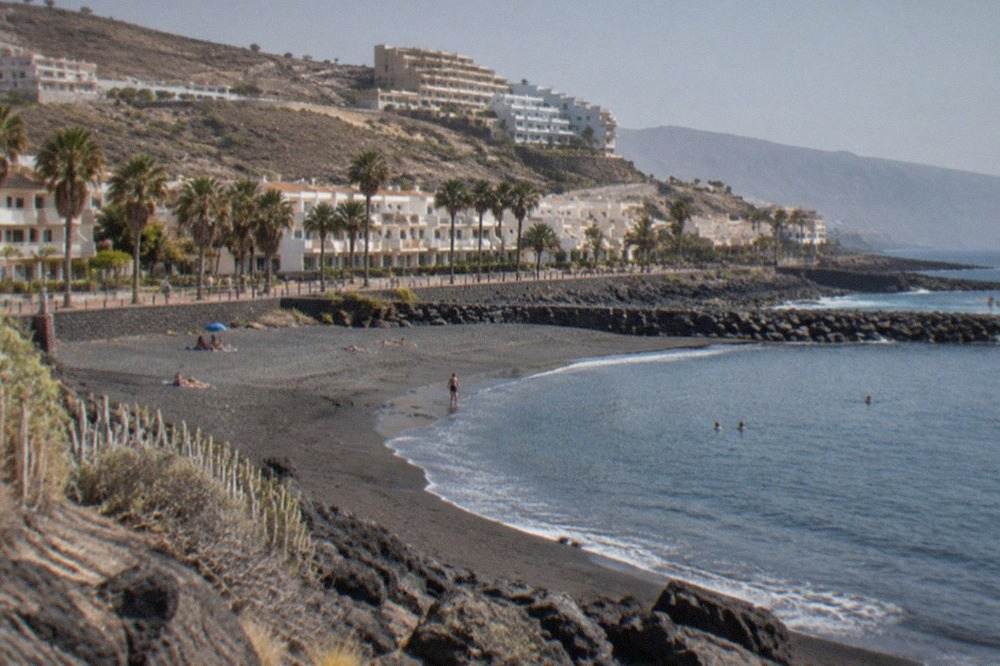
Playa Paraiso is the quiet end of Adeje's coast, a small resort built around a sheltered cove rather than a long strip of sand. This guide sets out what the official sources say about its weather, its neighbours, its transport links and the trips that suit it best.
Short answer
Playa Paraiso is a small, calm resort in the municipality of Adeje on Tenerife's south-west coast, best suited to travellers who want a quieter base within reach of Costa Adeje and Los Cristianos, with a sheltered swimming bay, seafront hotels and easy access to whale watching and jet ski trips.
Playa Paraiso sits at the quiet end of the Adeje coast, a compact resort wrapped around a sheltered swimming bay rather than stretched along a strip of sand. The municipality of Adeje is its home: the tourist board's own beach pages place both Costa Adeje and El Duque in that municipality, and Playa Paraiso belongs to the same stretch of south-west shoreline, west of the big hotel zones and looking out towards the sea between Tenerife and La Gomera. For a first overview of the island, Tenerife Travel Guide collects the whole picture, but this page stays on one small resort and what the official sources say about it.
That position matters more than size. The resort is small enough that its own beach, its seafront promenade and a handful of hotels and restaurants describe the whole of it, and everything else is a bus or a short drive away. The nearest well-documented climate station to this coast is the one AEMET, Spain's met office, keeps at Tenerife South Airport, and its figures describe the weather a visitor to this shore actually gets: warm, dry and sunny for most of the year, with a winter that stays mild by any northern European standard.
Where Is Playa Paraiso and What Kind of Resort Is It?
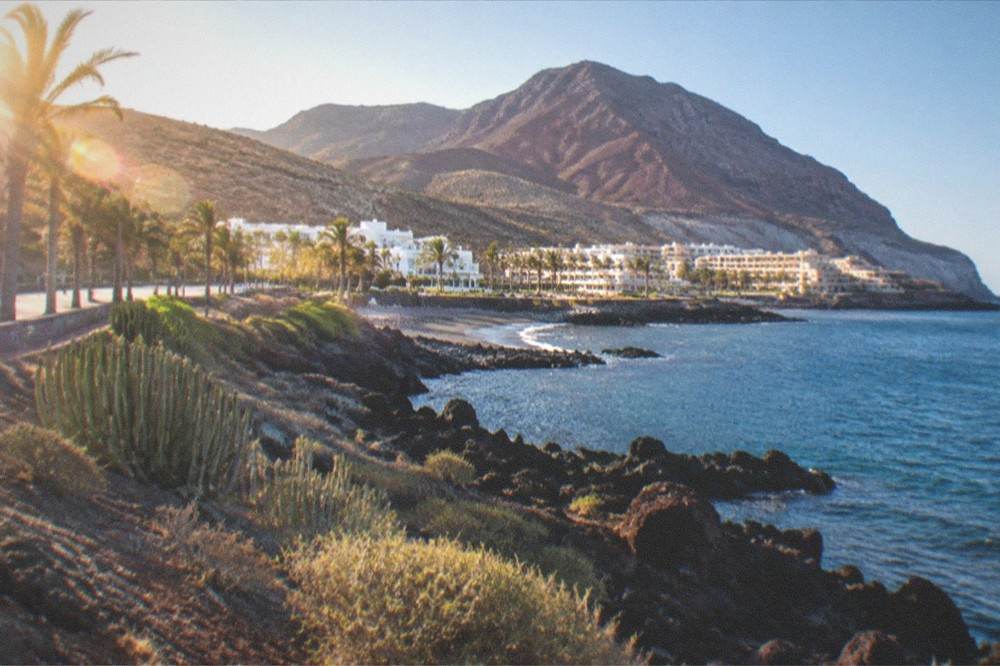
Playa Paraiso is a small resort in the municipality of Adeje on Tenerife's south-west coast, west of the main Costa Adeje hotel zones and roughly between Callao Salvaje and the larger resorts of the south. It is built around a sheltered bay with sea walls rather than along one continuous strip of sand, and its character is calm: seafront hotels, a compact choice of restaurants and bars, and a swimming cove that gives the resort its name.
The name translates as "paradise beach", and the resort earned it the way most small Canarian resorts did, by being a modest, calm place rather than a spectacular one. It suits travellers who want a quiet base with a swimmable bay and a short list of things within walking distance, and who are happy to travel for everything else. The livelier centres, Costa Adeje and Los Cristianos, are the obvious day and evening destinations, and the comparison between the two is worth reading before choosing between them.
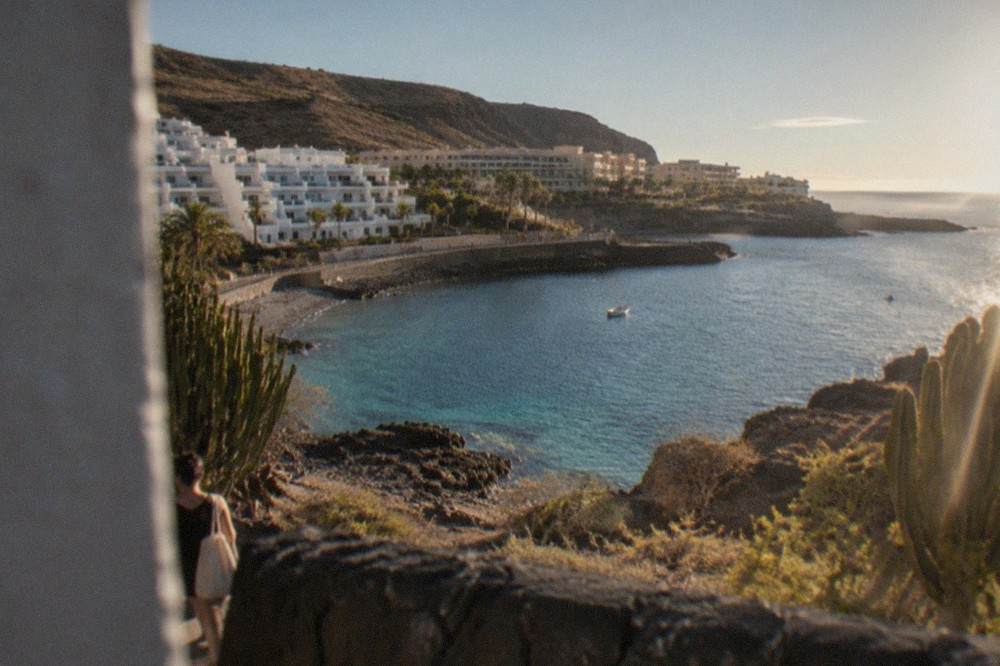
Its scale is the honest selling point. Where Playa de las Americas runs for kilometres along a continuous promenade, Playa Paraiso is a place you can cross in a quarter of an hour of walking, and the contrast is deliberate for the people who choose it. Families with young children, couples on a quiet week and long-stay winter visitors are the audiences the resort serves best, and the sheltered bay is the reason: sea walls calm the water in the way the tourist board describes at other protected bays on this coast, such as Las Vistas, where it notes golden sand and calm behind a row of breakwaters.
One thing the resort is not is a walking-tour town. The three English-guided free, pay-what-you-want walking tours listed on GuruWalk all sit in the north of the island, at La Orotava, Puerto de la Cruz and Santa Cruz de Tenerife, and the resort south, including Adeje, has no free walking tour listed on GuruWalk. That is what is listed, not proof that none exists, and a visitor who wants a guided walk can plan one around a day trip north.
What Is the Weather Like in Playa Paraiso?
The south-west coast of Tenerife is one of the driest and sunniest corners of the island: AEMET's climate normals for Tenerife South Airport, the nearest station to this shore, show mean daily maxima of 21.7 Celsius in January rising to 28.4 in August, with July recording no measurable rain at all and only 132 mm across a typical whole year. Sunshine runs from 193 hours in January to 295 in July. The figures are 1981 to 2010 normals, published by AEMET, and they describe a coast where a wet day is the exception in every month.
The table below is that station's full monthly picture. It is the honest way to answer "what will the weather be like", because a monthly average tells a visitor more than any single anecdote could.
| Month | Mean daily max (C) | Mean daily min (C) | Rain (mm) | Rain days (1 mm or more) | Sunshine (hours) |
|---|---|---|---|---|---|
| Jan | 21.7 | 15.2 | 17 | 1.8 | 193 |
| Feb | 22.0 | 15.0 | 20 | 2.2 | 195 |
| Mar | 23.1 | 15.6 | 15 | 1.9 | 226 |
| Apr | 23.1 | 16.0 | 7 | 1.1 | 219 |
| May | 23.9 | 17.0 | 1 | 0.3 | 246 |
| Jun | 25.4 | 18.8 | 0 | 0.0 | 259 |
| Jul | 27.7 | 20.2 | 0 | 0.0 | 295 |
| Aug | 28.4 | 21.1 | 1 | 0.2 | 277 |
| Sep | 27.9 | 21.1 | 4 | 0.6 | 213 |
| Oct | 26.8 | 20.0 | 12 | 1.6 | 214 |
| Nov | 24.8 | 18.2 | 26 | 1.9 | 193 |
| Dec | 22.8 | 16.5 | 30 | 3.5 | 195 |
The sea matters as much as the air on a coast built around a swimming bay. NOAA's 1991 to 2020 sea surface normals for the water off Tenerife's south coast show the sea at its coolest in March at 19.1 Celsius and at its warmest in September and October at 23.7, which is a different period from the air figures and is stated as such.
| Month | Sea surface (C) | Month | Sea surface (C) |
|---|---|---|---|
| Jan | 19.9 | Jul | 22.2 |
| Feb | 19.2 | Aug | 23.1 |
| Mar | 19.1 | Sep | 23.7 |
| Apr | 19.5 | Oct | 23.7 |
| May | 20.2 | Nov | 22.5 |
| Jun | 21.4 | Dec | 21.1 |
What those two tables mean in practice is simple. Winter is a swimming season here, not an off season: the sea in January is warmer than the sea off the British coast in August, and the air rarely leaves the low twenties by day. Summer is hot but not extreme, and the sea is at its warmest just as the crowds thin in September and October. Rain, when it comes, is a winter phenomenon measured in a handful of days a month, and the resort's bay, sheltered by its sea walls, stays swimmable through most of it.
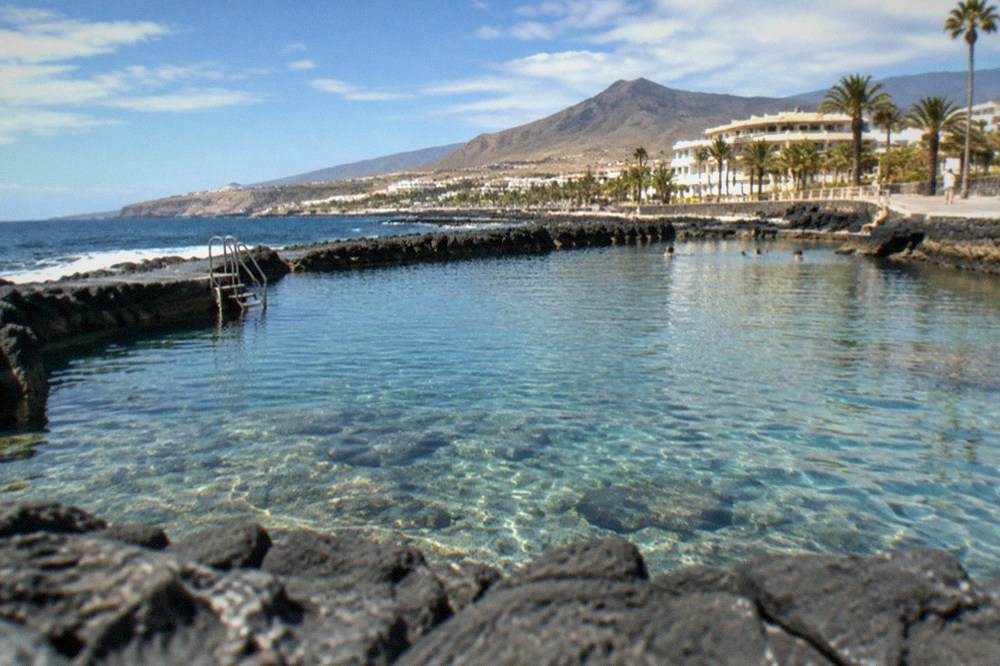
The crowd picture is on the record too. ISTAC's FRONTUR-Canarias series counts tourists arriving in Tenerife by air, excluding Canary Islands residents, and it shows the island's busiest arrival months are December, January, February and March, each above the 643,460 recorded in January 2025, while May and June are the quietest, at 539,410 and 542,881 respectively. Those are island-wide by-air figures, and every one of them carries the words "by air", but they explain why a small resort like this feels full in winter and calm in late spring.
| Month | Tourists arriving by air, 2025 |
|---|---|
| Jan | 643,460 |
| Feb | 648,255 |
| Mar | 677,688 |
| Apr | 604,370 |
| May | 539,410 |
| Jun | 542,881 |
| Jul | 611,623 |
| Aug | 618,578 |
| Sep | 563,261 |
| Oct | 631,662 |
| Nov | 659,656 |
| Dec | 671,202 |
What Can You Do in and Around Playa Paraiso?
The two things the south-west coast does best are on the water and under the sun: jet ski safaris run from the Arona and Costa Adeje stretch of this shore, and whale and dolphin watching boats leave from the nearby ports, all of it regulated by a Canary decree that sets exact approach distances. On land, the resort's own offer is a swimming bay, a seafront promenade and a short list of restaurants, with the bigger parks, shows and towns a bus or a drive away.
The jet ski option is the closest fit to a stay here. The guided safari on this site's roster runs 40 minutes or a full hour from the Arona stretch of the south coast, rated 4.5 from 3,122 reviews, and it is the kind of trip that suits a calm resort: a single concentrated burst of activity, back in time for a late lunch. The live listing carries the current price and the departure point.
Whale watching is the signature trip of this whole coast, and it is worth understanding why before booking. The World Cetacean Alliance records that the Tenerife-La Gomera marine area became a designated Whale Heritage Area in January 2021, describing a unique resident population of pilot whales, bottlenose dolphins and a migration stop for 21 other cetacean species. The designation is the World Cetacean Alliance's, and the rules that govern every boat are the Canary government's, in Decreto 178/2000.
| Rule from Decreto 178/2000 | Figure |
|---|---|
| Minimum approach distance to whales or dolphins | 60 m |
| Maximum boats within 500 m of the same animals | 3 |
| Maximum speed within 500 m | 4 knots |
| Swimming or diving within 500 m | Prohibited |
| Feeding, chasing or circling | Prohibited |
| Authorised boats | Must fly the Barco Azul flag |
A no-chase trip is the style that fits those rules most visibly. The eco no-chase encounter on the roster runs 90 minutes from Los Cristianos, rated 4.6 from 2,274 reviews, and the listing describes respectful encounters rather than pursuits. For a family day further afield, Loro Parque's entry ticket, rated 4.8 from 14,633 reviews, sits in Puerto de la Cruz in the north, and pairs naturally with a northern day trip.
Which Beaches Are Within Reach of Playa Paraiso?
The resort's own bay is a small, sheltered swimming cove, and the beaches worth travelling to nearby are Playa del Duque and the Costa Adeje beaches to the east and Playa San Juan and the Callao Salvaje coast to the west, with the tourist board describing El Duque as a grey sandy beach and Fanabe as pale sand. None of these is far, and the honest differences between them are recorded in the tourist board's own beach pages: colour, protection and setting, not invented rankings.
The board's wording is worth quoting exactly, because beach sand colour is one of the most garbled facts in Canarian travel writing. El Duque is grey sand, not golden, and the golden-sand beaches the board names on this island are Las Teresitas and Las Vistas.
| Beach | Tourist board description | Municipality |
|---|---|---|
| El Duque | Grey sandy beach | Adeje |
| Fanabe | Pale sand | Adeje coast |
| Las Vistas | Golden sand, calm behind breakwaters | Arona |
| Las Teresitas | Golden sand, palms, breakwaters | Santa Cruz (San Andres) |
| El Medano | Fine grey sand, under Montana Roja | Granadilla de Abona |
| El Bollullo | Black sand at the foot of a cliff | La Orotava |
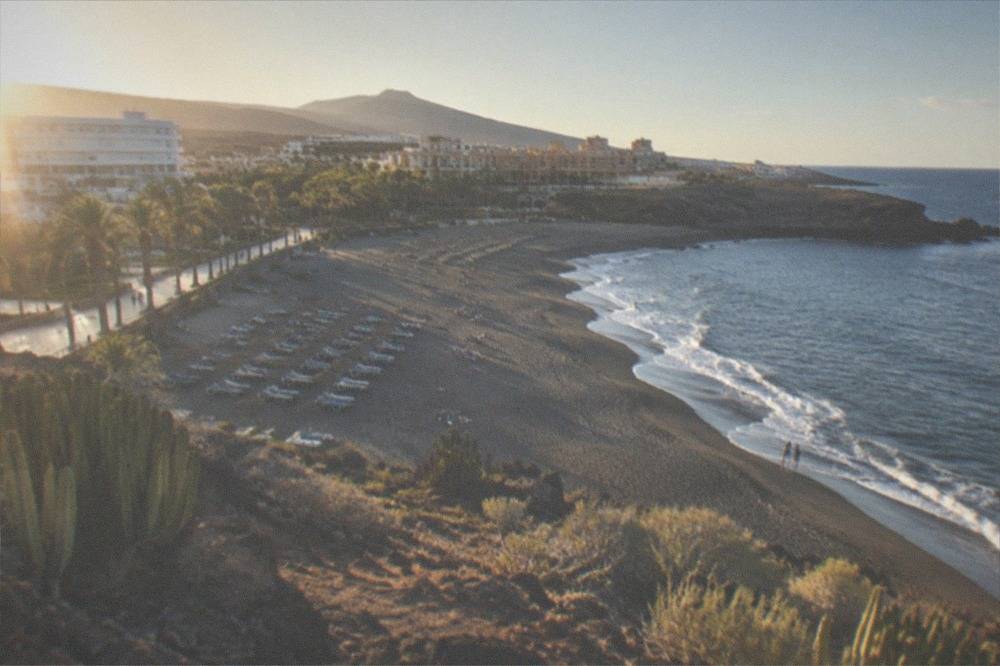
For a day of variety, the black sand coves of the north coast, such as El Bollullo near La Orotava, are the strongest contrast with the sheltered bay outside your door, and the dramatic surf beach at Playa de Benijo in Anaga is the island's wildest shoreline. Closer to home, Playa del Duque is the polished option for a lounging day, and the golden, breakwater-protected Las Vistas between Los Cristianos and Costa Adeje is the easiest family swim on this stretch of coast.
How Do You Get to Playa Paraiso and Get Around?
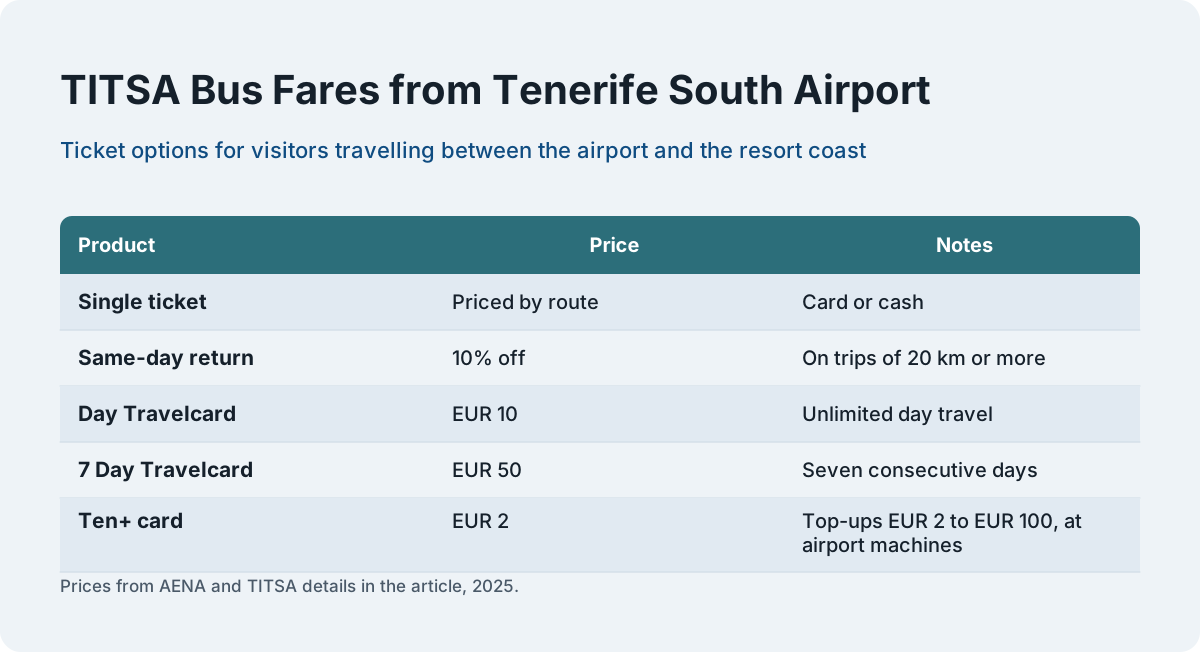
Tenerife South Airport is the airport that serves this coast, and AENA's 2025 statistics record 13,969,678 passengers through it, an all-time record, while TITSA buses connect the airport to the resort coast and visitors pay for their tickets: single fares, the EUR 10 day travelcard or the EUR 50 seven-day travelcard. Public transport on the island is not free for visitors; the 2026 100% subsidy the Canary government announced applies to resident passes only, held on a personalised Ten+ card by residents of the Canary Islands.
The visitor products TITSA lists on its own fares page are straightforward, and they are the ones a holidaymaker actually buys.
| TITSA product | Price | Notes |
|---|---|---|
| Single ticket | Priced by route | Card or cash |
| Same-day return | 10% off | On trips of 20 km or more |
| Day Travelcard | EUR 10 | Unlimited day travel |
| 7 Day Travelcard | EUR 50 | Seven consecutive days |
| Ten+ card | EUR 2 | Top-ups EUR 2 to EUR 100, at airport machines |
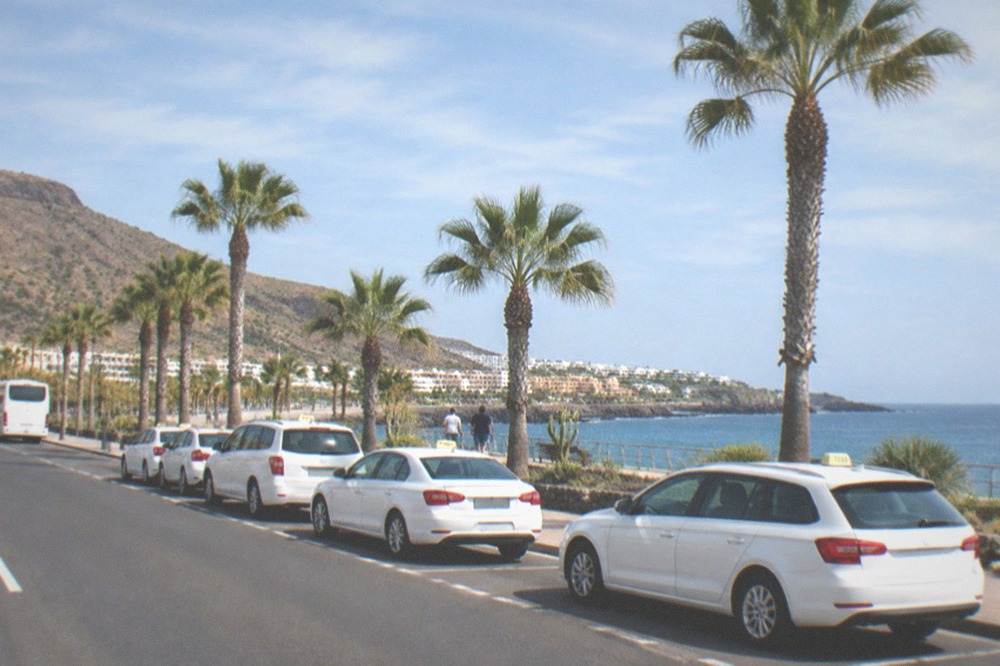
Taxis are white and metered from the start of every trip, with a fixed price agreeable in advance for excursions, as the tourist board's taxi page states. Car hire is the other obvious option for a resort of this size, and the island's driving rules and airport transfer choices are covered in the site's dedicated guides. For anyone weighing the resort against its neighbours, the Los Cristianos vs Costa Adeje comparison sets out the trade-offs, and the quieter western villages, Puerto de Santiago and Playa San Juan and Alcala, continue the calm character of this coast.
One transport fact is worth stating plainly because so many pages get it wrong: there is no tram to either airport. Metrotenerife's tram runs in the north, between Santa Cruz and La Laguna, and its own fares page says nothing about airports. TITSA's airport pages list the bus lines that serve each terminal, and those are the only ones to plan on.
Where Should You Stay in Playa Paraiso?
Playa Paraiso's accommodation is concentrated in seafront and hillside hotels and apartment complexes around the bay, and the resort suits travellers who want a quieter, smaller base in Adeje with a swimmable cove at the door, in contrast to the large hotel zones of Costa Adeje and the apartment stock of Callao Salvaje and Puerto de Santiago. The choice is really between staying here for the calm and staying east for the variety, and the honest advice is that anyone who wants nightlife, a choice of three beaches in walking distance or a big water park next door should look at Playa de las Americas instead.
For stays of any length, the island's short-term rental rules changed with Ley 6/2025 of 10 December, published in the Canary Islands' official bulletin on 12 December 2025, which governs the sustainable ordering of tourist-use housing, and booking platforms now reflect it. There is no per-night tourist tax in force or approved on Tenerife: no official page read shows one, and the charges that do exist are per-booking public fees on specific trails, the Masca ticket and the Barranco del Infierno ticket. If accommodation hunting is on your list, browse island stays here.
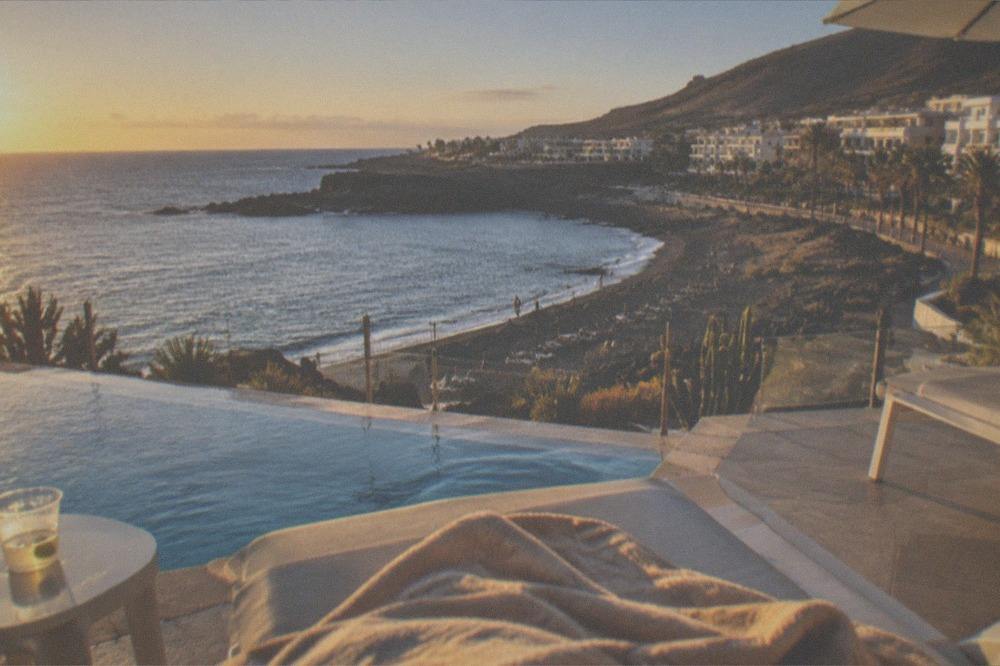
The winter visitor is the audience this resort serves especially well, and the numbers back that up. ISTAC's by-air arrival series shows January and February 2026 arrivals of 649,614 and 657,396, higher than the same months a year before, and the long-stay winter trade is exactly what a calm bay resort with a sea pool is built for. AENA's record 2025 passenger figures for Tenerife South underline the same trend: the south coast is where the island's growth is concentrated.
What Day Trips Work Best from Playa Paraiso?
The trips that suit this base are the sea and the west coast: whale watching from Los Cristianos or Costa Adeje, the Los Gigantes cliffs that the tourist board says tower up to 600 m, and the classic Teide, Masca, Icod and Garachico loop through the island's volcanic interior. The resort's position at the quieter western end of the south puts the Teno coast, the island's most dramatic cliffs and the whale-watching ports all within an easy half-day or full-day radius.
The classic loop is the one most visitors take. It runs through Teide National Park, which Spain's national parks body records as 18,990 hectares and the most visited park in the national network, with 5,242,653 visitors in 2024, then down through the Masca gorge country, the dragon tree at Icod de los Vinos and the lava-buried old port of Garachico, where the tourist board records the Trevejo volcano erupting in 1706 and destroying almost the entire town. A guided version, the Teide, Masca, Icod and Garachico coach tour on this site's roster, runs nine hours and is rated 4.6 from 2,951 reviews.
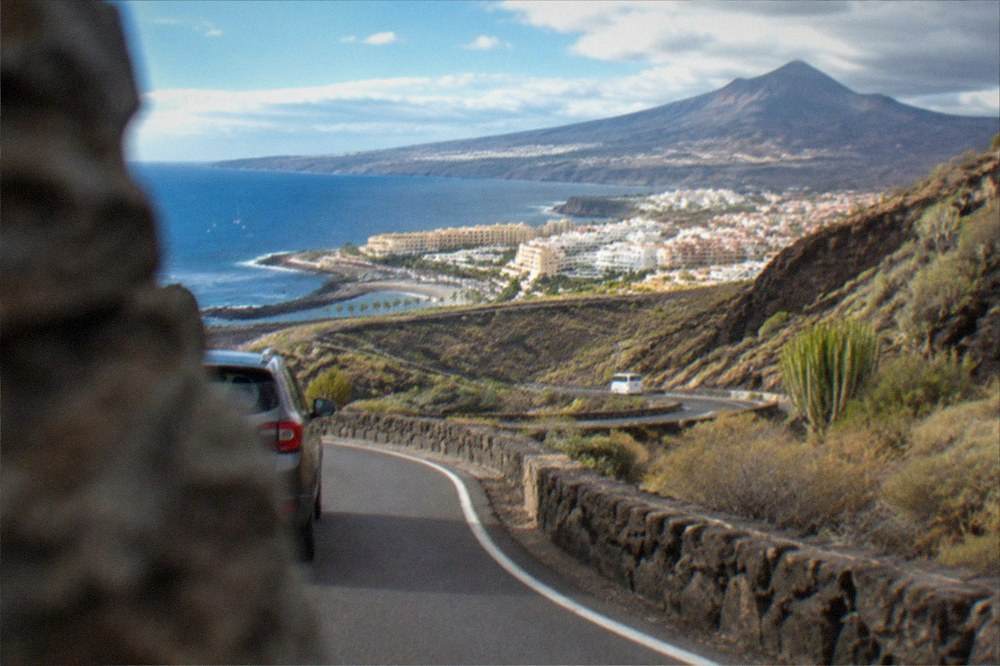
Teide itself deserves its own decision rather than a drive-by. The national park, inscribed by UNESCO as a World Heritage site in 2007, holds a cable car that runs from 2,356 m to La Rambleta at 3,555 m, and the crater trail beyond it, PNT 10 Telesforo Bravo, needs a personal reservation booked on Tenerife ON. Since Monday 19 January 2026 the 09:00 to 17:00 slots on that trail cost EUR 15 for visitors and EUR 6 for residents of the other Canary Islands, free only for Tenerife residents and children, and a new week of slots is released every Monday at 07:00 Canary time so that 56 days are always bookable. The cable car does not reach the summit; it stops at La Rambleta, and the crater is a separate permit-only trail. Smoking is banned in every open-air space of the national park, car parks included, as a wildfire measure.
For a slower day, the whale watching ports and the Los Gigantes coast are the near option, and the sailboat cruise from Los Gigantes on the roster, rated 4.9 from 2,264 reviews, runs three hours under the cliffs the tourist board describes as towering up to 600 m, with a seabed about 30 m deep at their foot. Further afield, La Gomera is a 50-minute ferry from Los Cristianos on Fred. Olsen Express, and the island-hopping options are covered in the site's ferry guide.
Common Questions About Playa Paraiso
Is Playa Paraiso good for a quiet holiday?
Yes, that is precisely what it is built for. The resort is small, organised around one sheltered bay, with a compact selection of hotels and restaurants and none of the nightlife strips of Playa de las Americas. Travellers wanting evening variety travel east to Costa Adeje or Los Cristianos.
Can you swim at Playa Paraiso?
The resort's bay is a sheltered, sea-walled cove designed for swimming, and AEMET's sea surface normals for the south coast record the water at 19.1 Celsius at its coolest in March and 23.7 at its warmest in September and October, so swimming is comfortable all year.
How far is Playa Paraiso from the airport?
Tenerife South Airport serves this coast, and AENA recorded 13,969,678 passengers there in 2025. TITSA buses and white metered taxis connect the airport with the resort coast; no tram runs to either airport, and Metrotenerife's network is in the north of the island.
Is Playa Paraiso in Costa Adeje?
No, but they share a municipality. Playa Paraiso sits in Adeje, on the coast west of the Costa Adeje hotel zones, and the tourist board's own pages place El Duque and the Costa Adeje beaches in the same municipality of Adeje.
Are the buses free for tourists in Playa Paraiso?
No. The 2026 100% fare subsidy applies to resident passes only, held by residents of the Canary Islands on a personalised Ten+ card. Visitors pay for single tickets, the EUR 10 day travelcard or the EUR 50 seven-day travelcard.
Can you see whales from Playa Paraiso?
Not reliably from the shore, but the whale watching ports of Los Cristianos and Costa Adeje are close by, and the Tenerife-La Gomera marine area is a designated Whale Heritage Area with a resident population of pilot whales. Every authorised boat flies the Barco Azul flag and follows Decreto 178/2000, which forbids any approach within 60 m of the animals.