Bajamar and Punta Del Hidalgo
Bajamar and Punta del Hidalgo sit on Tenerife's north-east coast, where the Atlantic meets a rugged shoreline of natural pools and black rock. This guide covers what the area offers, when to go, and how to plan the practical side.
Short answer
Bajamar and Punta del Hidalgo are two neighbouring coastal villages in the north-east of Tenerife, known for seawater pools set into the volcanic shore, a quiet, local atmosphere away from the southern resorts, and easy access to the Anaga mountains. The whale watching that makes Tenerife famous is regulated the same way here as everywhere else on the island.
Bajamar and Punta del Hidalgo occupy a stretch of Tenerife's north-east coast that most holiday itineraries skip entirely. The southern resorts pull the bulk of the island's visitors, and the tourist board's 2025 figures show where they go: 5,451,268 tourists stayed in hotels and apartments that year, and the biggest concentrations sit along the Costa Adeje and Los Cristianos shoreline. The north-east, by contrast, is where the island keeps its swimming pools carved from rock, its weekend crowd of local families, and a coastline that faces the open Atlantic rather than the sheltered southwest.
This page gathers what an editorial desk can verify about the area: what the villages are, what the seawater pools are, what the rules are for the whale watching trips that leave from nearby harbours, what the weather does month by month, and how the buses work for visitors. Where a figure is not on file, this guide says so rather than guessing. For the wider picture of the island's north, the Tenerife North vs South comparison covers the trade-offs in detail, and the full list of Things to Do in Tenerife puts the area in context.
Where Are Bajamar and Punta del Hidalgo?
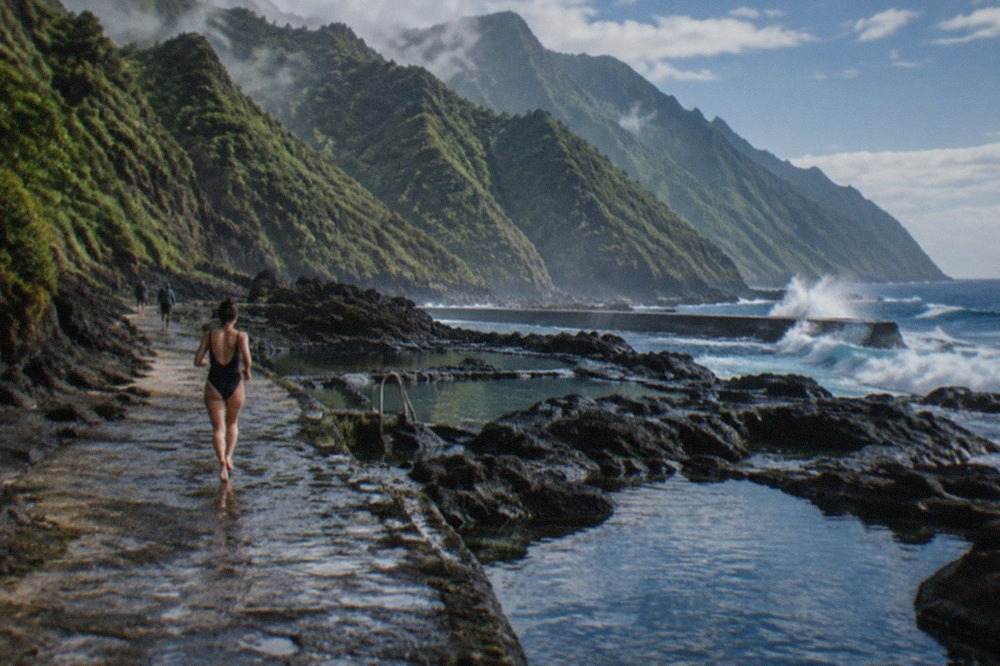
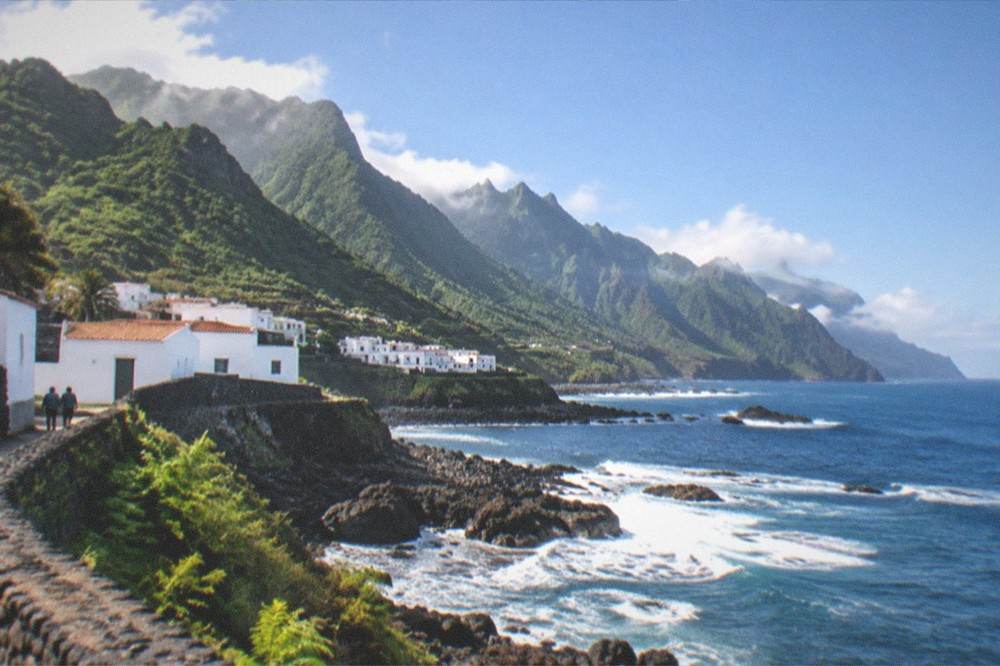
Bajamar and Punta del Hidalgo are two neighbouring coastal villages on Tenerife's north-east coast, at the seaward end of the Anaga massif, roughly between the island's capital Santa Cruz de Tenerife and the old university town of La Laguna inland. Punta del Hidalgo sits on the point itself, a low volcanic tongue of rock that juts into the Atlantic, while Bajamar lies just west along the same shoreline.
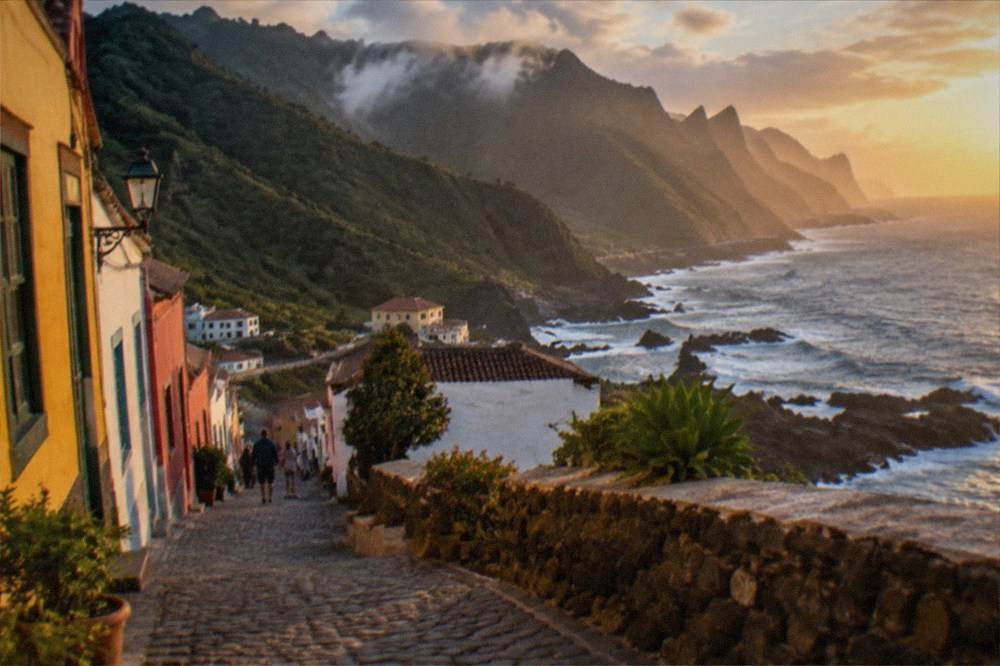
Both villages belong to the island's north-east corner, where the Anaga mountains drop to the sea. The road out to Punta del Hidalgo runs along the coast with the water in view for much of the way, and the area has the feel of a working Canarian village rather than a purpose-built resort. That character is the main reason travellers make the trip: the north-east is where locals swim at weekends, where the seafood restaurants are unfussy, and where the visitor numbers thin out.
The nearest big places are La Laguna, whose UNESCO-listed old town sits a short drive inland, and Santa Cruz de Tenerife to the south. Anaga Rural Park rises directly behind the villages, which makes the area a convenient base for walkers who want coast and forest in the same day. The park's laurel woods are the island's most atmospheric landscape, and its trail rules are strict, which the section on walking below covers in full.
What Are the Bajamar Seawater Pools?
The Bajamar seawater pools are natural rock pools on the volcanic shoreline that have been adapted for swimming, filled and refreshed by the Atlantic rather than by treated water, and they are the main reason day-trippers head to the village. They sit at the foot of the seafront, and swimming in them is free, with no ticket, no booking and no operator.
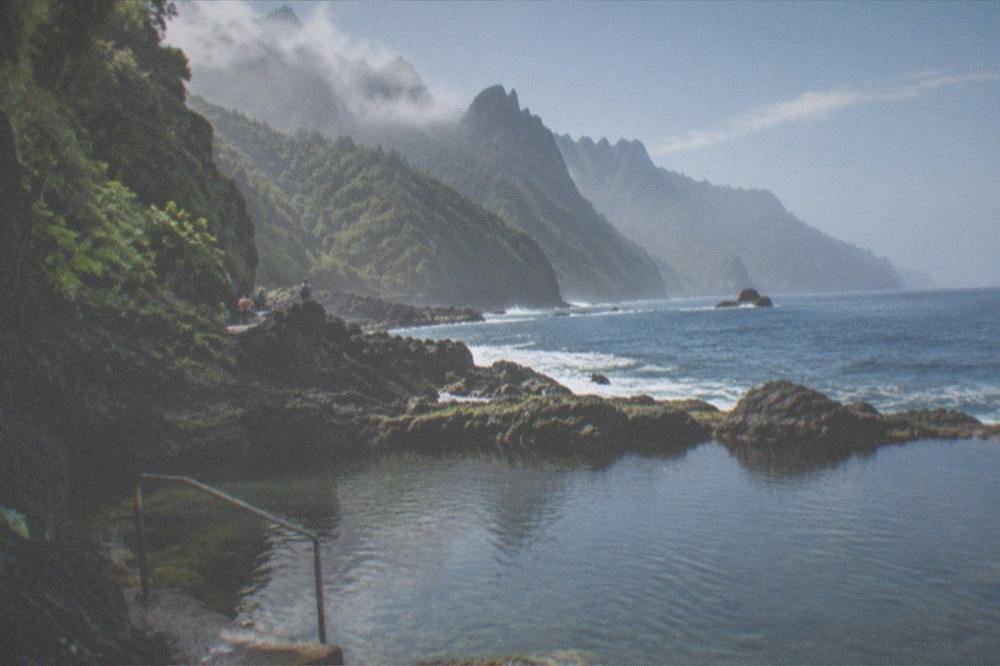
The pools are the north coast's answer to the beaches of the south. Where Costa Adeje's Playa del Duque is described by the tourist board as a grey sandy beach with calm water, and Puerto de la Cruz built its seafront around the seawater lagoon of Lago Martianez, Bajamar keeps things raw: rock, Atlantic swell, and pools that the sea scours clean. No official page read for this guide lists opening hours, lifeguard times or a capacity figure for the pools, so none is stated here. Treat them as what they look like on any map: an unstaffed natural feature where you swim at your own judgement and watch the sea.
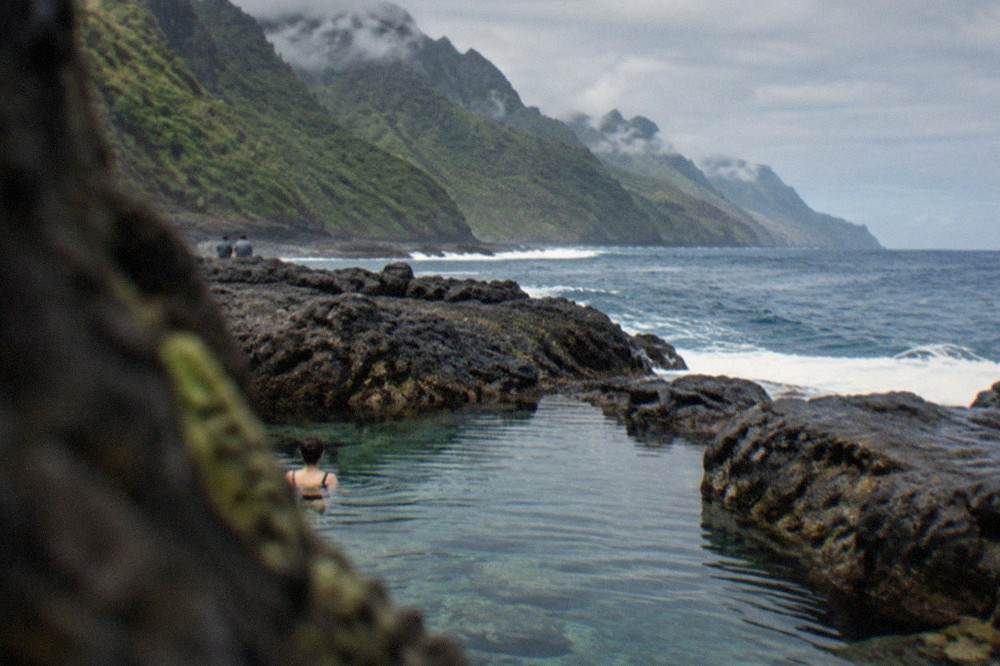
Swimming anywhere on this coast means respecting the Atlantic. The north of Tenerife takes the full force of the trade winds and the swell they drive, and the sea here is a different thing from the mirror-flat bays behind the breakwaters of the south. The general question of whether the sea is safe to swim in around the island is covered in the swimming in Tenerife answer page, and the same advice applies: check the water before you get in, never turn your back on it, and let the conditions decide the day.
For travellers who prefer their swimming organised, the whale and dolphin watching fleet gives the coast a second dimension. The boats that leave from harbours along this shore operate under the same island-wide rules as every other trip, which are worth knowing before you book anything.
What Are the Whale Watching Rules on This Coast?
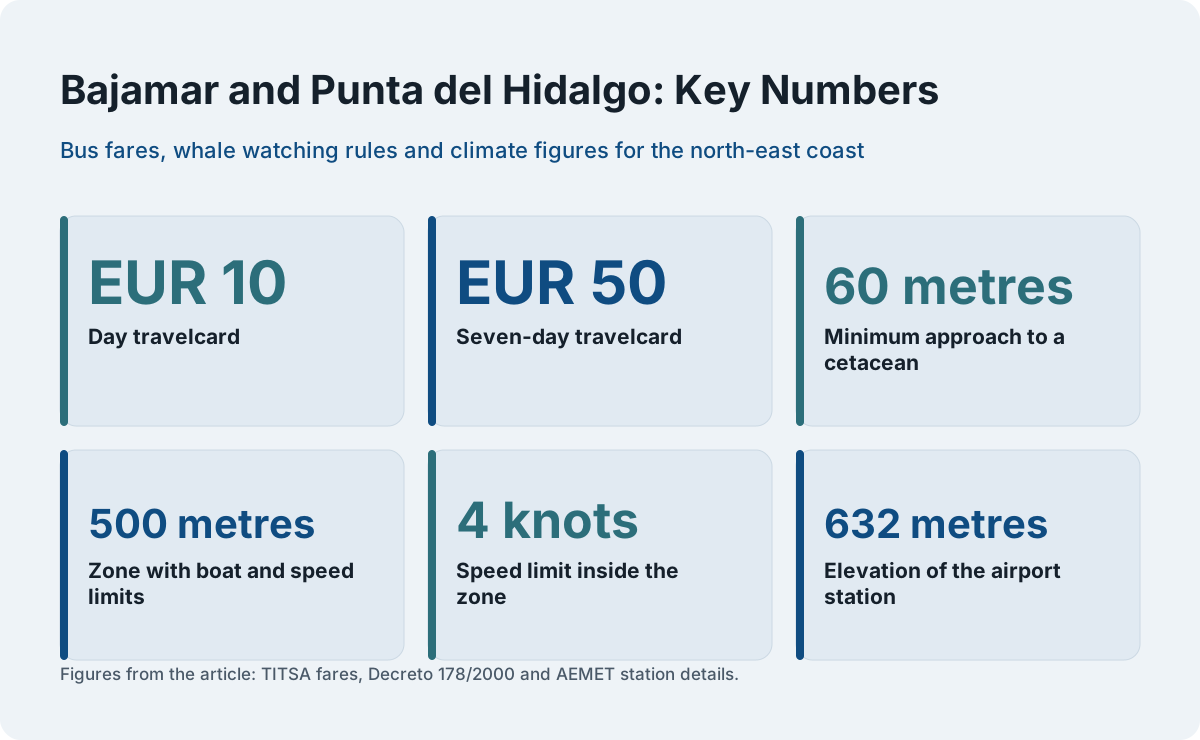
Whale watching in Tenerife is regulated by Decreto 178/2000, a Canary Islands decree that bans boats from approaching within 60 metres of a cetacean, caps the number of vessels at three within 500 metres, limits speed to 4 knots within that zone, and forbids swimming, diving, feeding, chasing or circling the animals. Authorised boats must fly the Barco Azul flag.
Those rules matter here because the waters off Tenerife's south-west are a designated Whale Heritage Area, a status the World Cetacean Alliance granted to the Tenerife-La Gomera marine area in January 2021, and the same legal framework applies island-wide. The designation recognises a unique resident population of pilot whales, bottlenose dolphins and a migration route for 21 other cetacean species. No official whale population count exists, so no number is printed here.
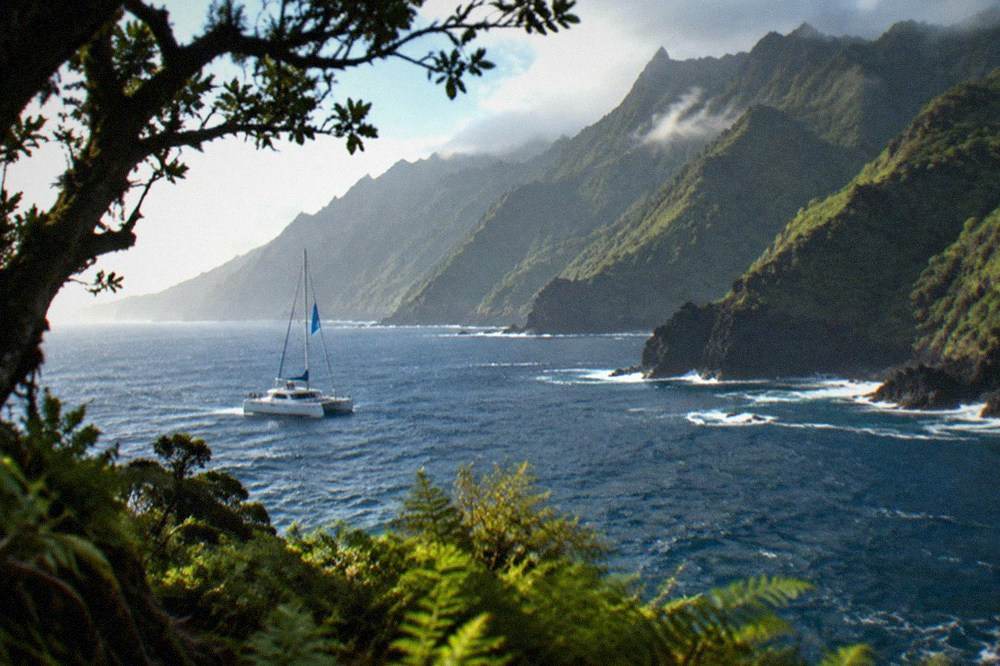
What the decree means in practice is that a legal trip is a patient one. Boats hold their distance, they move slowly inside the 500-metre zone, and they never put swimmers in the water near the animals. Trips sold as "no-chase" or "eco" experiences are the ones built around that framework, and the card below is one of them. The listing for the no-chase catamaran describes an encounter designed around the decree's limits rather than around getting close.
| Rule from Decreto 178/2000 | What It Means on the Water |
|---|---|
| No approach within 60 m | Boats stop short of the animals and let them decide the distance |
| Maximum three boats within 500 m | Crowding a pod is illegal, not just impolite |
| 4 knots maximum within 500 m | Slow zone around any sighting |
| No swimming or diving within 500 m | You never share the water with whales or dolphins |
| No feeding, chasing or circling | The animals' behaviour is not manipulated for photos |
| Barco Azul flag required | Authorised boats fly it, renewed with the permit each year |
If a boat trip is the plan, check that the operator's live listing says the boat is authorised, and look for the flag in the photos. The rules are the consumer protection: a boat breaking them is breaking the law.
What Can You Do in Bajamar and Punta del Hidalgo in a Day?
A realistic day here pairs a morning swim in the seawater pools with a long coastal lunch, then either a walk along the shore toward the Punta del Hidalgo lighthouse or a drive up into Anaga Rural Park, and the whole day needs no ticket beyond the food. Nothing in the villages themselves charges an entry fee, and the one bookable thing most visitors add is a boat trip from a nearby harbour.
The shape of the day is simple. The pools are the anchor: swim early, before the wind picks up, then eat. The north-east's restaurants are the kind that serve whatever the boats brought in, and the island's potato-and-mojo tradition, papas arrugadas with mojo sauce, is on every menu. Afternoon belongs to the coast path or to Anaga.
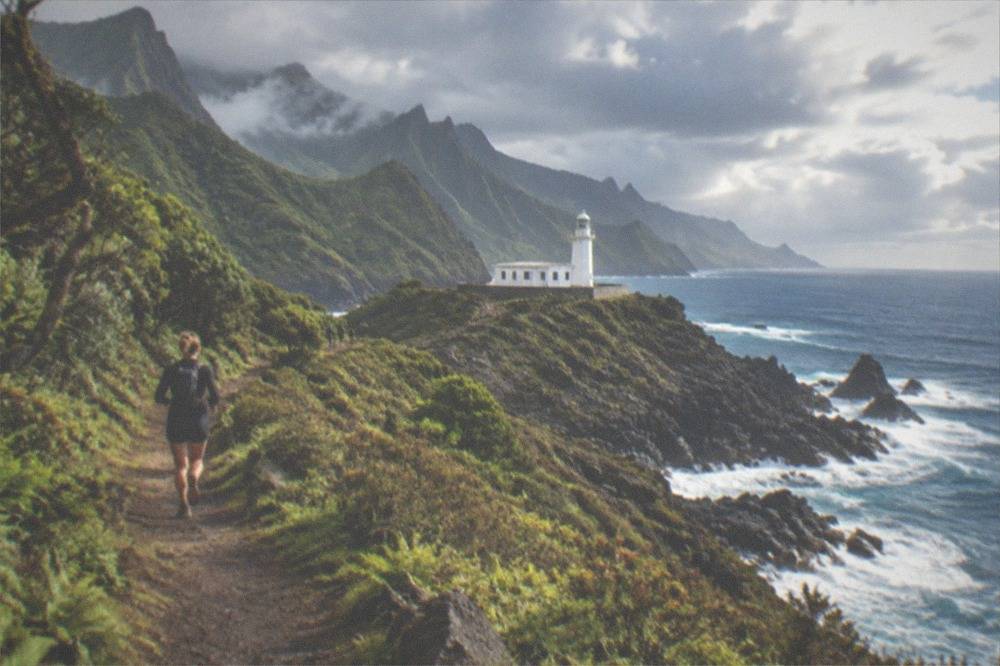
The walking deserves a warning about rules. Anaga's most famous route, the El Pijaral loop known as the Enchanted Forest, needs a reservation on Tenerife ON before you set foot on it: slots are released every Monday at 07:00 Canary time, at most 14 days ahead, and organised tours by companies are not permitted there at all. The Cabildo names two permit-free alternatives in the same massif, the Bosque de los Enigmas trail and the Pista de Las Hiedras, and those need nothing but boots. Other reservation-only trails in the wider area include La Asomada to Cruz de Afur in Anaga and Rambla de Castro on the north coast.
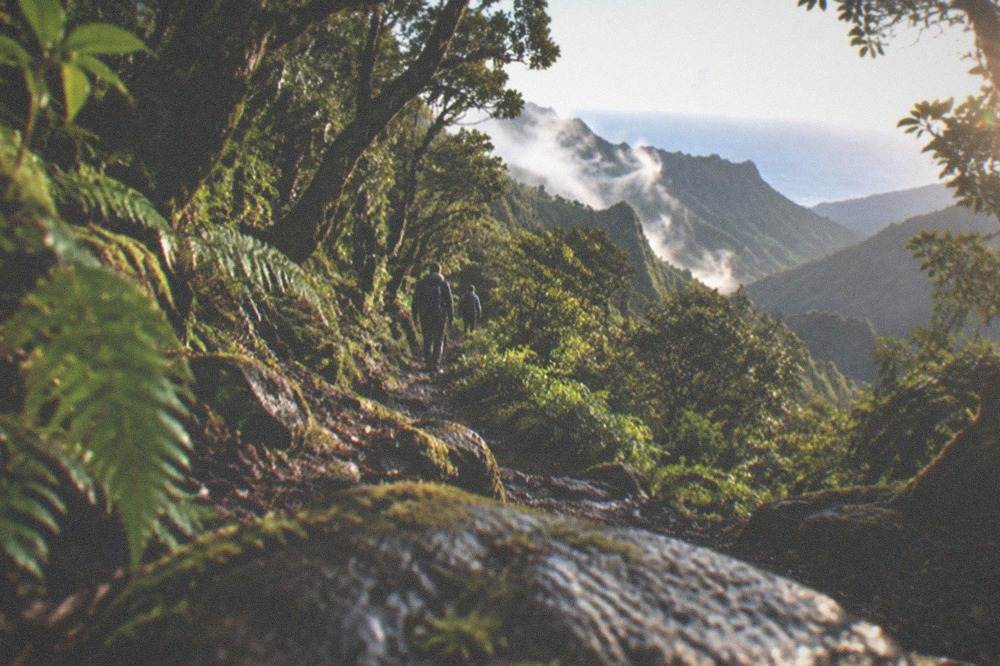
For a gentler afternoon, the coast road itself is the attraction. Punta del Hidalgo's lighthouse stands on the point, and the shoreline walk between the two villages gives the Atlantic a proper audience. Photographers chasing the island's best frames will find the north-east light harsher and more dramatic than the south's, and the photography spots guide places this coast in the island-wide set.
Seeing the Coast from the Water
The boat trips that fit a day here are the short ones. A catamaran or small-boat eco trip out of a nearby harbour gives the coast its scale back, and the scuba option below is a first-dive product aimed at beginners, ages 8 and up, with turtles the headline rather than whales.
When Is the Best Time to Visit Bajamar?
The best months for swimming on this coast are June through September, when AEMET's climate normals for Tenerife North Airport, the nearest long-record station at 632 metres, show daily means of 18 to 21 Celsius and monthly rainfall of 5 to 16 mm, and the sea off the south of the island, the only sea-temperature series on file, runs 21 to 24 Celsius. October stays warm, and winter is mild but wetter.
The airport station sits inland and higher than the shore, so the coast itself runs warmer than those air figures on most days. The pattern is what matters. Winter on the north-east coast brings rain on roughly six to nine days a month, November and December being the wettest at 81 and 82 mm, while summer is close to bone dry: July records 6 mm on average. Sunshine peaks in July and August at 262 and 269 hours a month. The wider set of guides lives on Tenerife Travel Guide.
| Month | Mean Daily Max (C) | Mean Daily Min (C) | Rain (mm) | Rain Days (1 mm or More) | Sunshine (Hours) |
|---|---|---|---|---|---|
| Jan | 16.0 | 10.2 | 80 | 7.7 | 150 |
| Feb | 16.7 | 10.0 | 70 | 7.4 | 168 |
| Mar | 18.2 | 10.7 | 61 | 6.8 | 188 |
| Apr | 18.5 | 10.9 | 39 | 6.2 | 202 |
| May | 20.1 | 12.0 | 19 | 3.8 | 234 |
| Jun | 22.2 | 14.0 | 11 | 2.4 | 237 |
| Jul | 24.7 | 15.7 | 6 | 1.7 | 262 |
| Aug | 25.7 | 16.6 | 5 | 1.1 | 269 |
| Sep | 24.9 | 16.5 | 16 | 2.8 | 213 |
| Oct | 22.5 | 15.2 | 47 | 6.5 | 194 |
| Nov | 19.6 | 13.3 | 81 | 8.3 | 155 |
| Dec | 17.1 | 11.5 | 82 | 8.8 | 137 |
AEMET normals, 1981 to 2010, Tenerife North Airport station. The sea-surface figures below are a different dataset on a different period, 1991 to 2020, and the two are never blended into one claim.
| Month | Sea Surface Temp (C) | Month | Sea Surface Temp (C) |
|---|---|---|---|
| Jan | 19.9 | Jul | 22.2 |
| Feb | 19.2 | Aug | 23.1 |
| Mar | 19.1 | Sep | 23.7 |
| Apr | 19.5 | Oct | 23.7 |
| May | 20.2 | Nov | 22.5 |
| Jun | 21.4 | Dec | 21.1 |
Sea surface temperature off Tenerife's south coast, NOAA 1991 to 2020 normals. The sea is warmest in September and October, which is why the locals' swimming season outlasts the tourists'.
How Do You Get to Bajamar Without a Car?
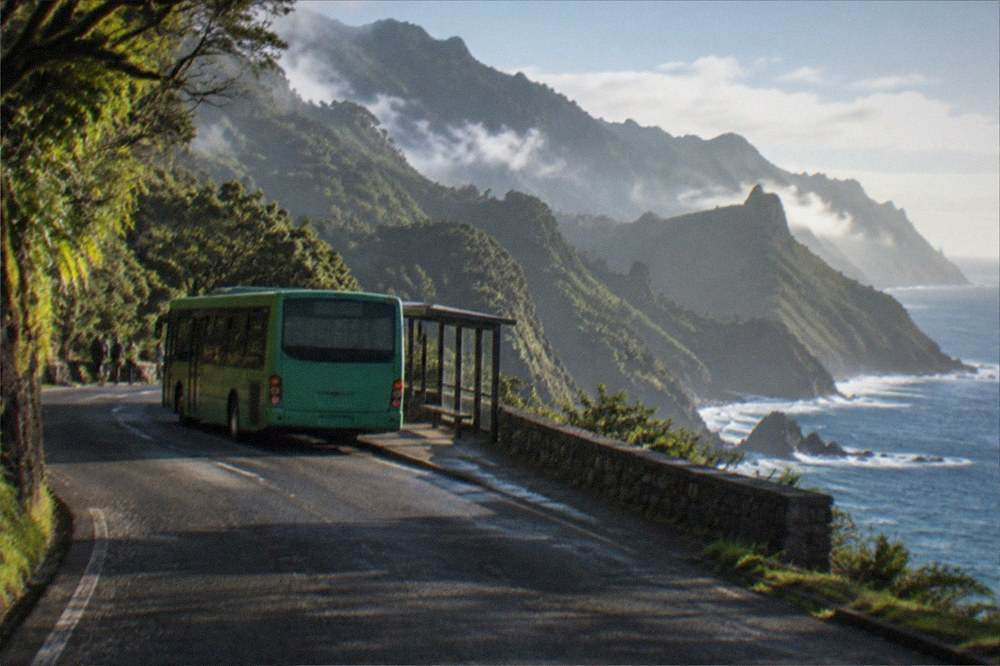
Visitors reach the north-east by TITSA bus, paying either a single ticket priced by route or a visitor travelcard: the day travelcard costs EUR 10 and the seven-day travelcard EUR 50, both sold at airport ticket machines. Public transport is not free for visitors, whatever some pages claim: the 100% fare subsidy introduced for 2026 applies only to resident passes held by people resident in the Canary Islands on a personalised Ten+ card.
That last point is worth labouring, because it is the single most repeated falsehood about Tenerife transport. The Canary government's subsidy is real, but every subsidised pass requires residency: a monthly pass for residents, a youth pass for under-30s who are resident, a child card for under-10s resident in Tenerife. A visitor buys singles or a travelcard, and the Ten+ card itself costs EUR 2 with wallet top-ups from EUR 2 to EUR 100 if you decide to use one.
| Ticket | Price | Who It Suits |
|---|---|---|
| Single ticket | Priced by route, card or cash | One-off journeys |
| Same-day return | 10% off on trips of 20 km or more | Round trips in a day |
| Day travelcard | EUR 10 | A day of hopping between villages |
| Seven-day travelcard | EUR 50 | A week without a car |
| Ten+ card | EUR 2, top-ups EUR 2 to EUR 100 | Reusable stored value |
TITSA fares as published by the operator. The tram does not serve this coast, and Metrotenerife's fares page makes no claim that it does; the tram's own single fare is EUR 1.35 on a transit pass, EUR 1.10 by mobile, for the Santa Cruz to La Laguna corridor only.
The wider question of whether a car is worth hiring for a holiday that includes this coast is answered on the do you need a car in Tenerife page. For a single day-trip from Santa Cruz or La Laguna, the bus is the simpler tool.
Where to Stay Near Bajamar and Punta del Hidalgo?
The area offers a small stock of village accommodation and holiday apartments rather than resort hotels, and the nearest concentration of full-service hotels sits back toward La Laguna or along the Puerto de la Cruz seafront to the west. Most visitors who sleep here are after quiet, a kitchen, and the pools within walking distance, and the trade-off is fewer services and fewer restaurants than the south.
No nightly rate is quoted on this page, because none can be re-checked at build time and rates move daily. What drives the price of a stay here is the same as anywhere on the island: season, with the February Carnival in Santa Cruz and the summer school holidays the tightest windows; exact location, with sea-view apartments commanding a premium; and how far ahead you book. Travellers comparing the north-east against the resort zones can weigh it against Costa Adeje or Playa de las Américas, and the where to stay in Tenerife guide breaks the whole island down. To compare current options for a stay in this corner of the island, search island accommodation and filter for the La Laguna coast.
One planning note for winter stays: the north-east is the island's wetter corner, and the Tenerife weather by month guide shows how different the two coasts are. A wet day here is a museum day in La Laguna or a drive west, and the rainy day in Tenerife itinerary exists precisely for this problem.
What Else Is Worth Visiting Near Bajamar?
The best nearby additions are the UNESCO old town of La Laguna inland, the city of Santa Cruz de Tenerife to the south, and the walking country of Anaga above the villages, with the far north-west's Punta de Teno and the Garachico pools reachable as a full-day loop for drivers. Everything within an hour's drive is either coast, laurel forest or colonial old town, so the choice is about pace rather than distance.
La Laguna is the easiest add-on: its historic centre is the first non-fortified Spanish colonial town, and UNESCO credits its layout as the model for many colonial towns in the Americas. Santa Cruz adds the Auditorio de Tenerife, the market at Mercado Nuestra Señora de África, and, in February, the Carnival that follows the official programme's dates rather than the church calendar.
For walkers, Anaga's reservation-only trails are listed in the walking section above, and the permit-free Bosque de los Enigmas trail is the one to pick without paperwork. Drivers with a full day can loop the north coast: the Anaga peninsula west of the villages, then the Punta de Teno viewpoint road, then Garachico's natural pools. The north Tenerife road trip itinerary lays that loop out day by day.
Two more options round the area out. The Barranco del Infierno gorge in Adeje is the island's reservation-only canyon walk, EUR 15 for a non-resident adult with compulsory advance booking, and a 20-person quota every 30 minutes, a completely different walking experience from Anaga's forests. And for a second beach day, El Médano on the south-east coast offers fine grey sand under Montaña Roja and the island's strongest windsurfing breeze, a fair swap when the pools feel too calm.
Common Questions About Bajamar and Punta del Hidalgo
Are the Bajamar pools free to swim in?
The seawater pools are a natural feature of the shoreline with no ticket, no booking system and no operator. No official page read for this guide lists opening hours or lifeguard cover, so swim with your own judgement about the sea and the conditions on the day.
Is Bajamar good for swimming in winter?
The sea off Tenerife stays between 19.1 and 19.9 Celsius from December to March on the NOAA 1991 to 2020 normals, so the water itself is swimmable year-round. The limiting factor is the weather: AEMET's normals for the nearby Tenerife North Airport station show 70 to 82 mm of rain a month in November, December and February, on roughly seven to nine rain days.
Can you walk from Bajamar to Punta del Hidalgo?
The two villages sit on the same stretch of north-east coast with the shoreline road connecting them, and the coast around the point is the area's natural walking territory. No official walking time or distance for the route is on file, so none is stated: plan it as a walk you can abandon at any point rather than a committed hike.
Do you need a permit to walk in Anaga from here?
Some trails, yes. El Pijaral, the Enchanted Forest, needs a Tenerife ON reservation released every Monday at 07:00 Canary time, at most 14 days ahead, and company-run tours are not permitted on it. La Asomada to Cruz de Afur also needs a reservation. The Cabildo names the Bosque de los Enigmas trail and the Pista de Las Hiedras as permit-free alternatives.
Is the bus to Bajamar free for tourists?
No. The 100% fare subsidy in force for 2026 applies only to resident passes held by people resident in the Canary Islands on a personalised Ten+ card. Visitors pay for single tickets, the EUR 10 day travelcard or the EUR 50 seven-day travelcard, all sold at airport ticket machines.
Can you see whales from the coast at Punta del Hidalgo?
Whales and dolphins are watched from boats, not from this shoreline, and no official source claims sightings from the point. The regulated watching happens on authorised trips that fly the Barco Azul flag and follow Decreto 178/2000: no approach within 60 metres, at most three boats within 500 metres, and no swimming with the animals.