Solo Travel in Tenerife
Tenerife is one of the easiest places in Europe to travel alone: frequent buses, a well-documented permit system for the big hikes, and a season that never really closes.
Short answer
Tenerife works well for solo travellers because the island has year-round flights, a bus network that reaches every major town, and a clear official booking system for the walks and parks. Visitors pay for public transport, the Teide trail fees are published in euros, and no tourist tax applies.
Tenerife recorded 7,412,046 tourists arriving by air in 2025, and a good share of them travelled alone. The island earns that traffic for reasons a solo planner cares about: two airports with year-round schedules, a bus operator that publishes its airport lines and fares, and a single official platform, Tenerife ON, that holds the rules for the walks that need booking. Nothing about the place depends on a companion. This guide sets out what a solo visitor needs to know before booking, from safety and bases to the official fees that exist and the ones that do not. It is written as desk research from official sources, not as a travel diary.
Why Does Tenerife Work So Well for Solo Holidays?
Tenerife suits solo holidays because the logistics are unusually legible: two airports serve the island, TITSA buses reach the main towns and both airports on published lines, and the walks that need booking are all reserved through one official platform, Tenerife ON, with the fees printed in euros. The weather does not close the season, and the sea stays swimmable through winter.
The practical case starts with arrival. Tenerife South handled 13,969,678 passengers in 2025, an all-time record, and Tenerife North handled 7,174,977, so flight schedules are dense in both directions all year. A solo traveller booking late is not booking into a thin market. From either airport the bus lines are published: TITSA lists lines 10, 40, 711, 343 and 415 at Tenerife South, and lines 20, 30 and 343 at Tenerife North.
The second reason is that the island's bureaucracy is documented. The Teide summit trail, the Montana Blanca trail, El Pijaral in Anaga and the Masca gorge each have an official page stating the price, the release rule and the conditions. A traveller alone cannot split the planning with a companion, so clear rules are worth more than they look.
Third, the season never shuts. AEMET's normals for Santa Cruz put the mean daily maximum at 21 Celsius in January, and the sea surface off the south coast averages 19.9 Celsius that month. A solo trip in the shoulder months is not a gamble against the weather in the way it is further north.
Is Tenerife Safe for Someone Travelling Alone?
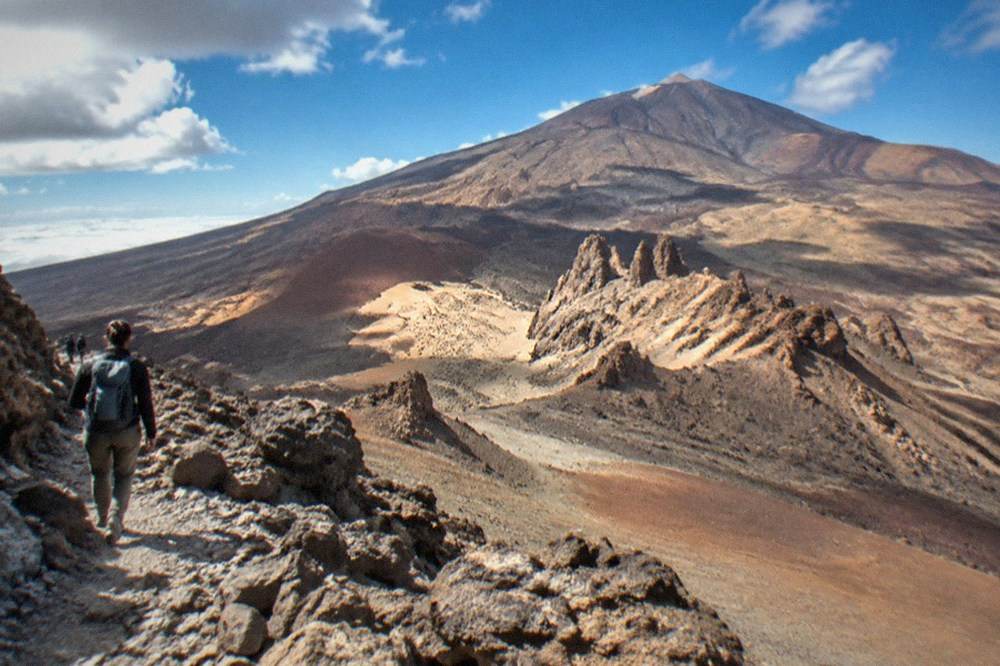
Tenerife is a mainstream, heavily policed European holiday island with no official travel warning against it, and the risks a solo planner should actually read about are environmental: altitude on Teide, sea conditions at Masca, and wildfire rules in the national park. The UK foreign travel advice and the Spanish authorities publish the relevant guidance, and neither singles the island out.
The honest answer is that the dangers worth planning for are the natural ones. The cable car operator itself refuses the ride to people with cardiovascular conditions, pregnant women and children under 3, and tells anyone with a health problem to consult a doctor first. The Masca operator states plainly that the gorge is the place with the most rescues in the Canaries in recent years, that closed mountain footwear is a condition of entry, and that the pier can close suddenly when the sea turns, voiding that day's ticket. Those are the sentences a solo walker should read twice, because alone there is no companion to fetch help.
The administrative risks are manageable if you follow the published rules. Walking the Teide summit trail without a reservation may be penalised, and failing to use a booking can bar you from new applications for three months. The Cabildo bans smoking in every open-air space of Teide National Park, car parks included, as a wildfire measure. Check Tenerife ON's alerts before any walk, because bookings can be suspended for fire risk or weather.
Where Should a Solo Traveller Base Themselves in Tenerife?
The south, meaning Los Cristianos, Costa Adeje or Playa de las Americas, is the easiest solo base: the whale-watching boats, the water parks and the widest choice of day trips leave from there, and the bus spine along the coast is frequent. Puerto de la Cruz suits a quieter solo trip in the north, and Santa Cruz de Tenerife suits a city stay with Carnival and the ferry to La Gomera.
The choice is really between convenience and character, and the trade-offs are documented across this site's area guides. The south concentrates the island's biggest single attraction cluster: the boat trips leave from Los Cristianos and Puerto Colon, Siam Park sits in Costa Adeje, and the Teide sunset tours run hotel pickups across the southern resorts. For a first solo trip, that density matters, because a bad day can be replaced with a same-day alternative booked from the same resort.
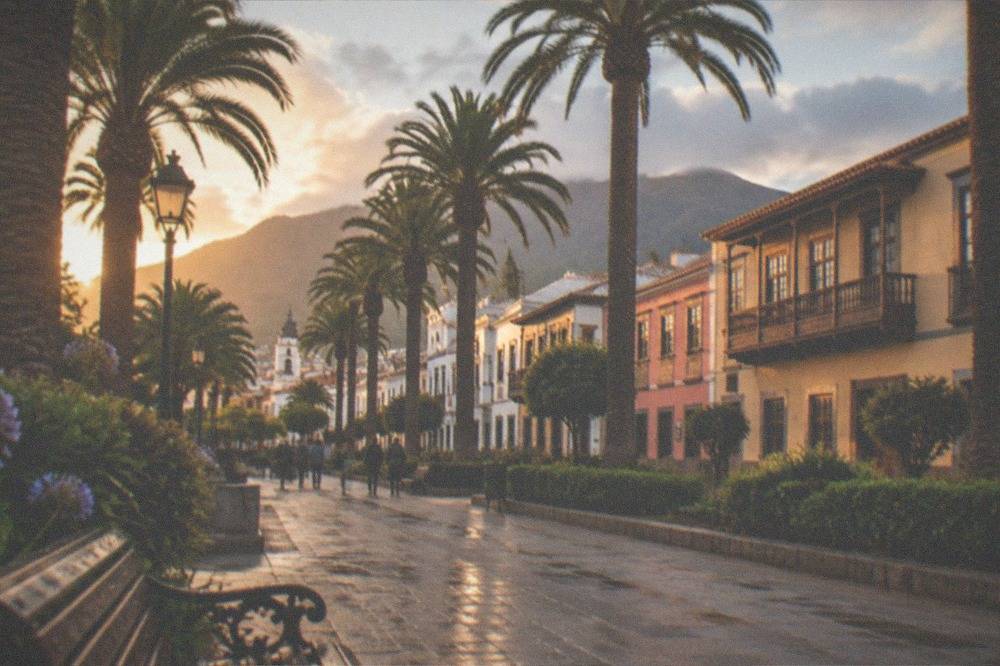
The north is different in kind. Puerto de la Cruz holds Loro Parque and the old colonial seafront, and the surrounding towns, La Orotava, Icod de los Vinos and Garachico, reward a traveller who does not mind slower buses. A solo visitor who wants restaurants and promenades rather than nightlife does not lose anything by choosing it.
For a fuller comparison of the two halves of the island, read the site's guide to Tenerife North vs South, and for accommodation by area, where to stay in Tenerife. Solo travellers watching a budget can also check the site's guide to hostels and budget stays.
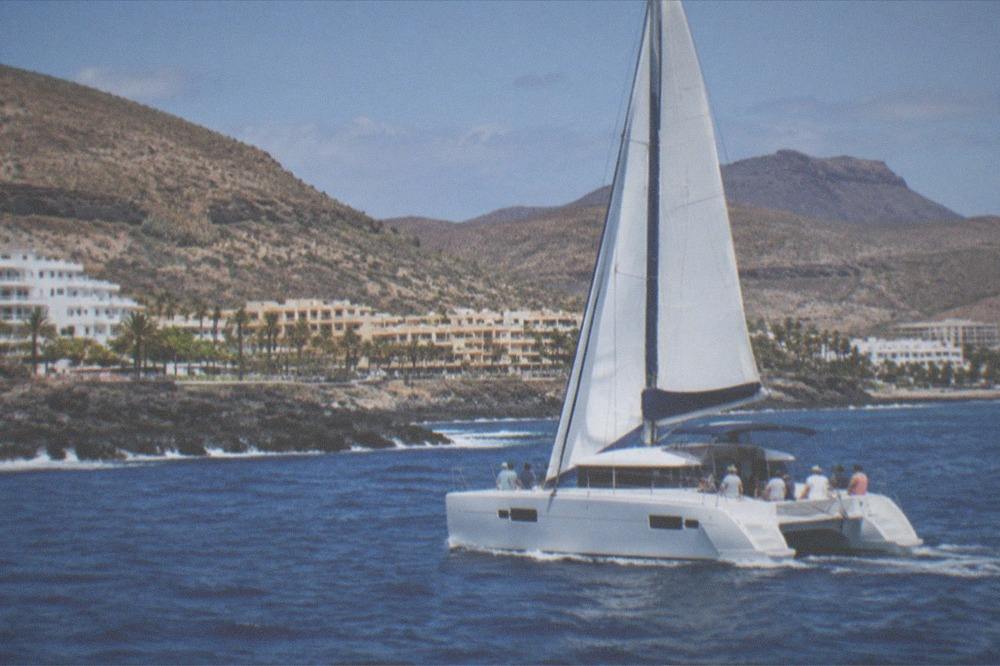
Whichever base you pick, the first full day is the one worth booking ahead, because it sets the tone for a week alone. A boat trip with hotel transfer included removes the two things a solo traveller plans hardest: the drive to the marina and the lunch reservation. The catamaran below is the version of that idea with everything folded in, and its live listing carries the current price and departure points.
What Can You Do Alone in Tenerife Without a Car?
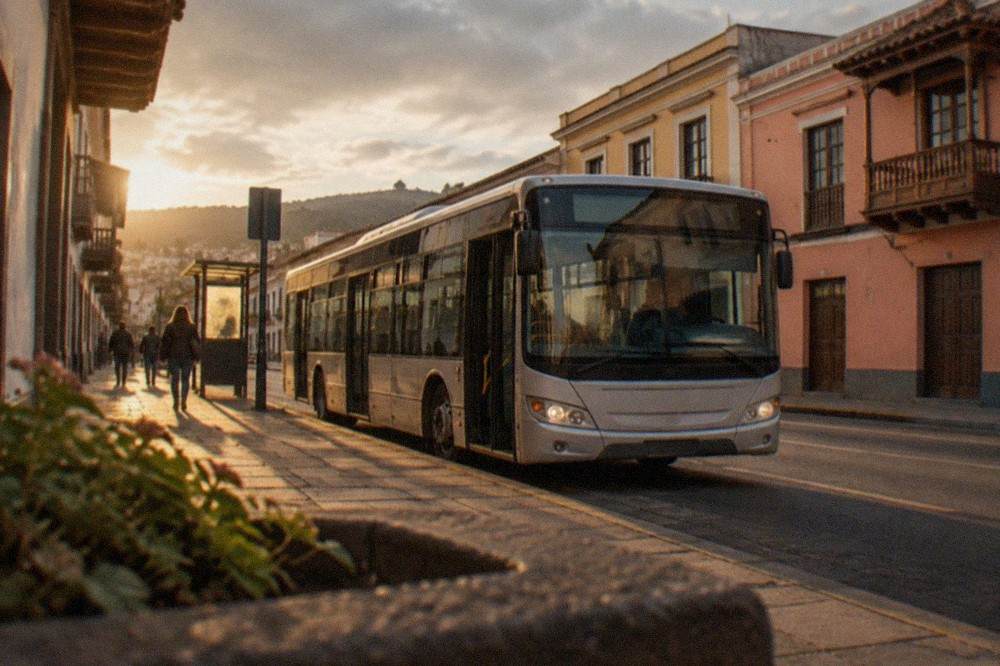
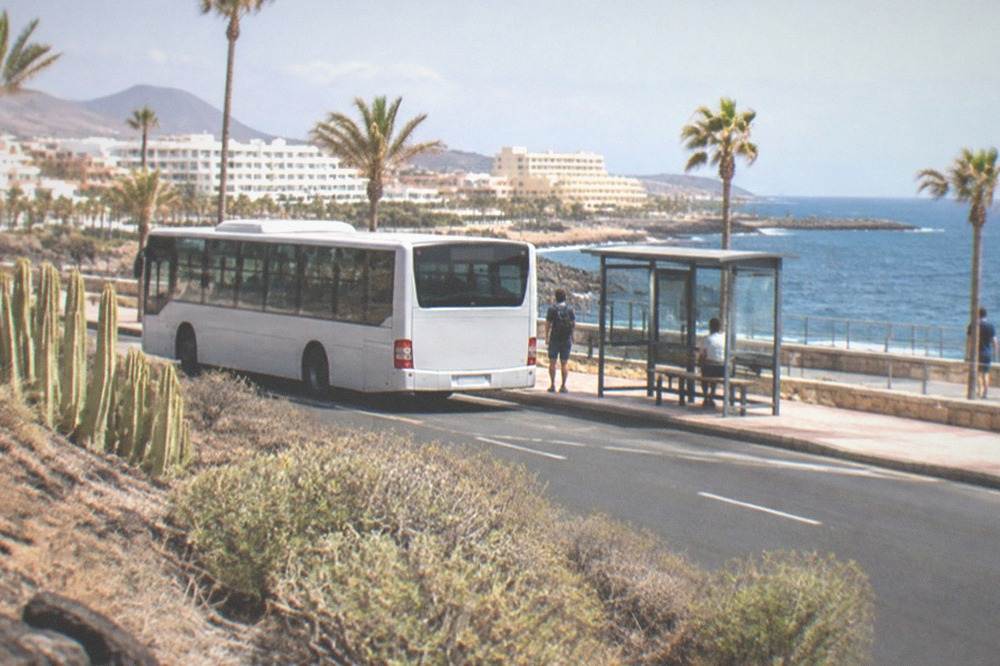
A solo traveller without a car can reach both airports, every major resort, Puerto de la Cruz, Santa Cruz de Tenerife, La Laguna and the Teide cable car base by public bus, using single tickets, the EUR 10 day travelcard or the EUR 50 seven-day travelcard. The free resident subsidy does not apply to visitors, so budget for fares, but the network itself covers the island.
TITSA's fares page is the source for what a visitor actually pays. Singles are priced by route, a same-day return gets 10% off on trips of 20 km or more, and the two travelcards are the sensible products for a stay built around buses. The cards are sold at the airport ticket machines, which is convenient on arrival day. The tram in Santa Cruz and La Laguna is a separate system, with a single fare of EUR 1.35 on a transit pass or EUR 1.10 by mobile, and it does not serve either airport.
| Ticket | Price | Who it is for |
|---|---|---|
| Single ticket | Priced by route | Occasional journeys |
| Same-day return | 10% off, trips of 20 km or more | Return day trips |
| Day Travelcard | EUR 10 | A day of hopping between towns |
| 7 Day Travelcard | EUR 50 | A bus-based week |
| Resident pass | Free in 2026 | Canary residents only, not visitors |
The airport lines are the backbone. TITSA's own airport pages list them, and they are worth saving before you fly.
| Airport | TITSA lines | Key destinations |
|---|---|---|
| Tenerife South | 10, 40, 711, 343, 415 | Santa Cruz, Costa Adeje via Los Cristianos, night bus, Puerto de la Cruz express, El Fraile |
| Tenerife North | 20, 30, 343 | Santa Cruz via La Laguna, Puerto de la Cruz, express to the south |
The one thing buses cannot solve is the start of certain walks. The Masca gorge is the clear example: the operator's rules require arrival on TITSA line 355 from Santiago del Teide, with the bus ticket shown at the control, and private vehicles are refused. That rule happens to suit car-free travellers, since the constraint is the same for everyone. For the wider picture, the site's guide to getting around Tenerife covers buses, tram and taxis in detail, and Tenerife buses and TITSA goes deeper on fares.
Small-group tours fill the remaining gaps in a car-free itinerary. The volcanic and forest wonders trip runs a half-day small-group loop from the south, which pairs well with a bus-based stay, and the site's guided hiking tours page lists the walks where a guide is either required or simply the easiest way to reach a trailhead.
Which Days Out Suit a Solo Traveller Best?
The days out that suit solo travellers are the ones with a built-in group: a small-group Teide tour, a whale-watching catamaran with transfer and buffet included, and the island's three free, pay-what-you-want walking tours in Santa Cruz, Puerto de la Cruz and La Orotava. Each puts a solo visitor among other people without any solo supplement or forced sociability.
Whale watching is the natural first pick, and not only because the boats leave constantly. The waters between Tenerife and La Gomera are a designated Whale Heritage Area, the World Cetacean Alliance's designation from January 2021, holding what the WCA calls a unique resident population of pilot whales alongside bottlenose dolphins. The activity is regulated by Decreto 178/2000: no boat may approach within 60 metres, at most three boats may sit within 500 metres, and authorised boats fly the Barco Azul flag. A solo traveller choosing a trip can look for that flag as a quick check. The full index of guides sits on Tenerife Travel Guide.
The catamaran with transfer and buffet is the version that removes the most friction for one person: hotel transfer means no drive to the marina, and the buffet removes the lone-table awkwardness of a restaurant lunch. Check availability on the operator's live listing if that combination fits your dates.
The free walking tours deserve a special mention because they are built for exactly this reader. GuruWalk runs a free, pay-what-you-want walk of the historic centre of Santa Cruz de Tenerife, one in Puerto de la Cruz and one in La Orotava, each led by a local guide who is tipped at the end. There is no price to print because there isn't one, and no solo traveller needs to explain anything to anybody at the meeting point. The site's free walking tours page lists all three.
| Free walk | Area | Duration |
|---|---|---|
| Santa Cruz historic centre | Santa Cruz de Tenerife | 2 hours |
| Puerto de la Cruz | Puerto de la Cruz | 1 hour 30 minutes |
| La Orotava | La Orotava | 1 hour 30 minutes |
Beyond those, the paid park tickets behave well for solo visitors. The Loro Parque and Siam Park twin ticket covers the two biggest parks in one purchase, which suits a traveller structuring a week alone around two anchor days. Loro Parque opens 09:30 to 17:30 every day of the year and Siam Park is open 365 days, 10:00 to 18:00 in the summer period and 10:00 to 17:00 in the winter one, so the two can be planned around buses and weather without much risk.
How Much Should a Solo Traveller Budget for Official Fees?
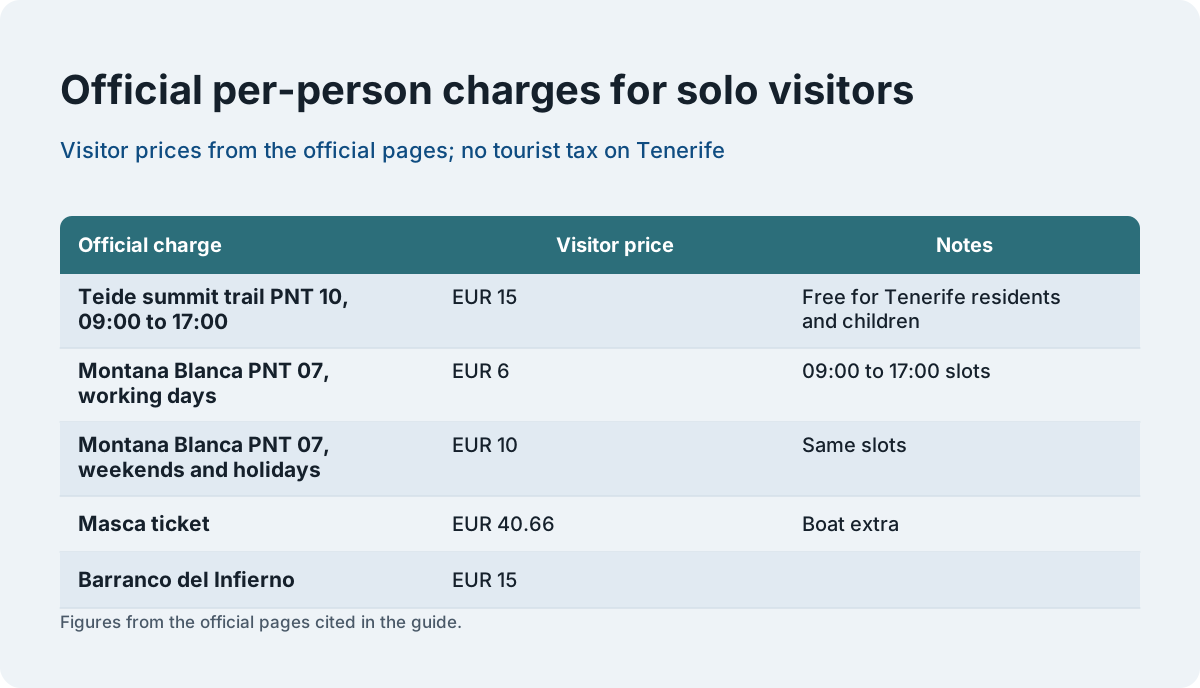
The official per-person charges a solo visitor can meet are the Teide summit trail at EUR 15 for visitors on the 09:00 to 17:00 slots, the Montana Blanca trail at EUR 6 on working days and EUR 10 at weekends, the Masca ticket at EUR 40.66 with the boat extra, and Barranco del Infierno at EUR 15. There is no tourist tax on Tenerife, and driving through Teide National Park costs nothing.
Those figures come from the official pages, and a solo traveller pays exactly what a couple pays per person, which is one quiet advantage of the island. The detail worth knowing is the release rule: Tenerife ON releases a new week of permits every Monday at 07:00 Canary time, keeping 56 days bookable. No official page states how fast slots sell, so do not plan around a claimed lead time, plan around the Monday release.
| Official charge | Visitor price | Notes |
|---|---|---|
| Teide summit trail PNT 10, 09:00 to 17:00 | EUR 15 | Free for Tenerife residents and children |
| Montana Blanca PNT 07, working days | EUR 6 | 09:00 to 17:00 slots |
| Montana Blanca PNT 07, weekends and holidays | EUR 10 | Same slots |
| Masca gorge ticket | EUR 40.66 | Boat exit booked separately, in advance |
| Barranco del Infierno | EUR 15 | Advance online booking compulsory |
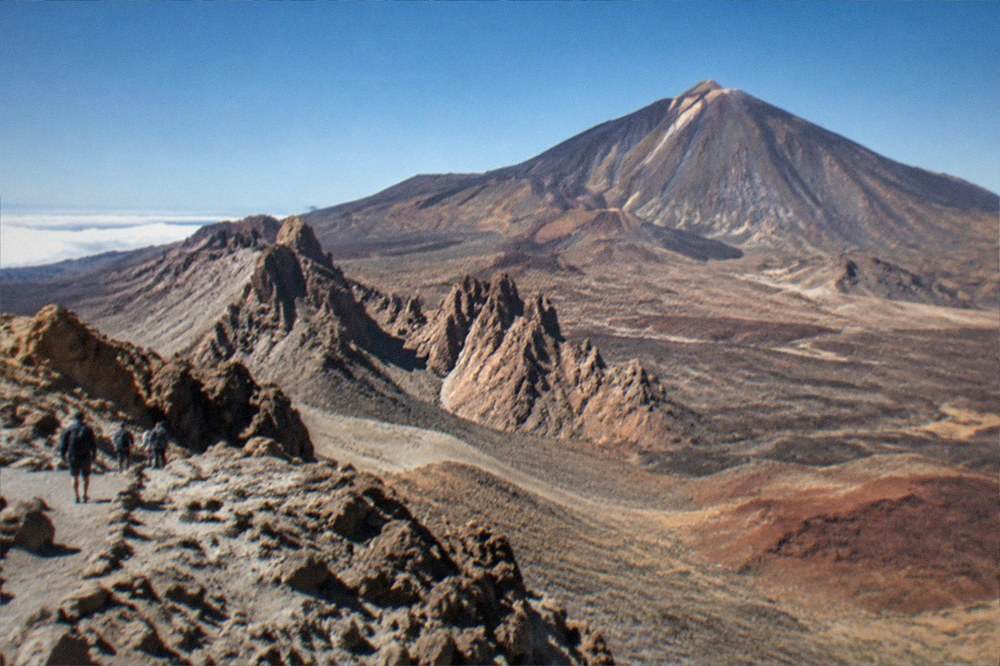
The cable car is a separate purchase from the trail permits. The operator's 2026 prices show a non-resident return at EUR 42.00 for an adult, EUR 21.00 for a child aged 3 to 13, and it stops at La Rambleta at 3,555 metres, not the summit. The crater is the permit trail, and the two must not be confused. For the full permit procedure, read the site's guide to the Teide summit permit.
When Is the Best Month for a Solo Trip to Tenerife?
The quietest solo-friendly months with dependable weather are May, June and September: Santa Cruz averages mean daily maxima of 24.1, 26.2 and 28.1 Celsius respectively, rainfall is minimal, and arrivals by air are lower than the December and February peaks. October and November also combine warm sea with thinner crowds.
The crowd data is published monthly. Tourists arriving by air, excluding Canary Islands residents, reached 671,202 in December 2025 and 648,255 in February 2025, against 539,410 in May and 563,261 in September. A solo traveller who values space on the promenade and a seat on the bus without standing can read those two columns against each other.
| Month | Mean daily max, Santa Cruz (C) | Rain, Santa Cruz (mm) | Tourists by air, 2025 |
|---|---|---|---|
| February | 21.2 | 35 | 648,255 |
| May | 24.1 | 4 | 539,410 |
| June | 26.2 | 1 | 542,881 |
| September | 28.1 | 7 | 563,261 |
| November | 24.1 | 34 | 659,656 |
| December | 22.1 | 43 | 671,202 |
The sea matters as much as the air for a solo trip built around swimming or boat days. The sea surface off the south coast averages 23.7 Celsius in September and October, the warmest of the year, against 19.2 Celsius in February. Those two facts alone shape the season for anyone whose holiday is centred on the water rather than on the mountain.
One caveat for the mountain-minded: the figures above are Santa Cruz, at 36 metres. AEMET's station at Izana, on the Teide observatory ridge at 2,369 metres, averages a mean daily maximum of 7.5 Celsius in January and 1.1 Celsius at night, with 47 mm of rain. A day trip up the volcano is a different climate from the beach, and the packing list has to respect that. The site's Tenerife weather by month guide carries the full tables.
What Should a Solo Traveller Sort Out Before Flying?
A solo traveller should sort four things in advance: the entry rules, which now include the EU's Entry/Exit System registering non-EU visitors with biometrics instead of passport stamps; a data connection, since permits and bus timetables are checked on the move; the Teide or Masca bookings, which are date-bound and non-refundable; and the airport transfer plan, using the published TITSA lines.
On entry: EES has been fully operational since 10 April 2026, and UK and US visitors are registered with a facial image and fingerprints on short stays. ETIAS is a different thing and is not running; the EU states it "is currently not in operation and no applications for travel authorisations are collected at this point", and the fee will be EUR 20 when it starts. No start date is published, so ignore any page that gives one.
On money: the Canaries apply IGIC, not VAT, and the tax agency's table shows 7% on everyday goods. There is no tourist tax on Tenerife; no official page read shows a per-night lodging tax in force or approved, and the charges that do exist are the trail, Masca and Barranco del Infierno fees listed above.
On connectivity, a data eSIM is the simplest single-traveller tool, because everything on this island, from permits to bus times to the alerts page, is checked online. An eSIM for Spain can be sorted before departure. For the full arrival picture, read the site's airport transfers guide.
How Do You Meet People on a Solo Holiday in Tenerife?
The reliable ways to meet people are structured ones: the free GuruWalk walking tours, small-group day trips with a fixed group for the day, boat trips where the crew organises the social side, and the island's food culture, from guachinches to the Friday and Sunday markets, which runs on shared tables and standing queues rather than private bookings.
The free walks are the lowest-effort option and the most social by design. A pay-what-you-want tour gathers a mixed group at a set point, runs for about ninety minutes to two hours, and ends with the group dispersing towards coffee more often than not. The site's guide to Tenerife markets and the one on guachinches cover the food side, where solo tables are normal and the format is built for them.
For anyone planning a longer trip, the itineraries are written to work standalone: 3 days in Tenerife and Tenerife without a car both assume a single traveller's constraints. And for the broader question of whether the island deserves the time at all, is Tenerife worth visiting makes the case from the numbers.
Common Questions About Solo Travel in Tenerife
Is Tenerife good for solo travel?
Yes. The island has year-round flights to two airports, a published bus network reaching every major town, official booking pages for the walks that need permits, and a wide choice of small-group and free tours. The 2025 air arrivals total of 7,412,046 tourists reflects a market with enough depth that a solo traveller is never an afterthought.
Is Tenerife safe to walk alone?
On the resort promenades and town centres, yes, in the ordinary way of any Spanish tourist region. On the trails, follow the official rules: the Masca operator warns the gorge has the most rescues in the Canaries in recent years and requires closed mountain footwear, the Teide trails carry altitude warnings for people with heart or respiratory problems, and Tenerife ON's alerts page should be checked before any walk.
Do I need a car in Tenerife as a solo traveller?
No. TITSA buses serve both airports and the main towns, the day travelcard costs EUR 10 and the seven-day version EUR 50, and small-group tours cover the trailheads that buses reach awkwardly. The site's answer page on whether you need a car weighs the trade-offs in full.
Are there free walking tours in Tenerife?
Yes, three: the historic centre of Santa Cruz de Tenerife, Puerto de la Cruz and La Orotava, all free and pay-what-you-want through GuruWalk. They run about ninety minutes to two hours and no booking fee exists because there is no fee.
Is there a solo supplement on Tenerife tours?
The official charges on this island are per person, so a solo traveller pays the same EUR 15 Teide trail fee or EUR 40.66 Masca ticket as each member of a couple. For commercial tours, the price shown on the operator's live listing is the price to check before booking; this site does not quote tour prices in prose.
What is the cheapest month for a solo holiday in Tenerife?
By crowds, May had the fewest air arrivals of any month in 2025 at 539,410, and June was similar at 542,881. Both sit in the dry season, with Santa Cruz averaging 4 mm and 1 mm of rain respectively, so the cheapest months are not the grey ones.