Is Tenerife Worth Visiting?
An evidence-based answer to whether Tenerife is worth visiting, built on official tourism figures, AEMET climate normals, UNESCO inscriptions and the rules that actually apply to visitors in 2026.
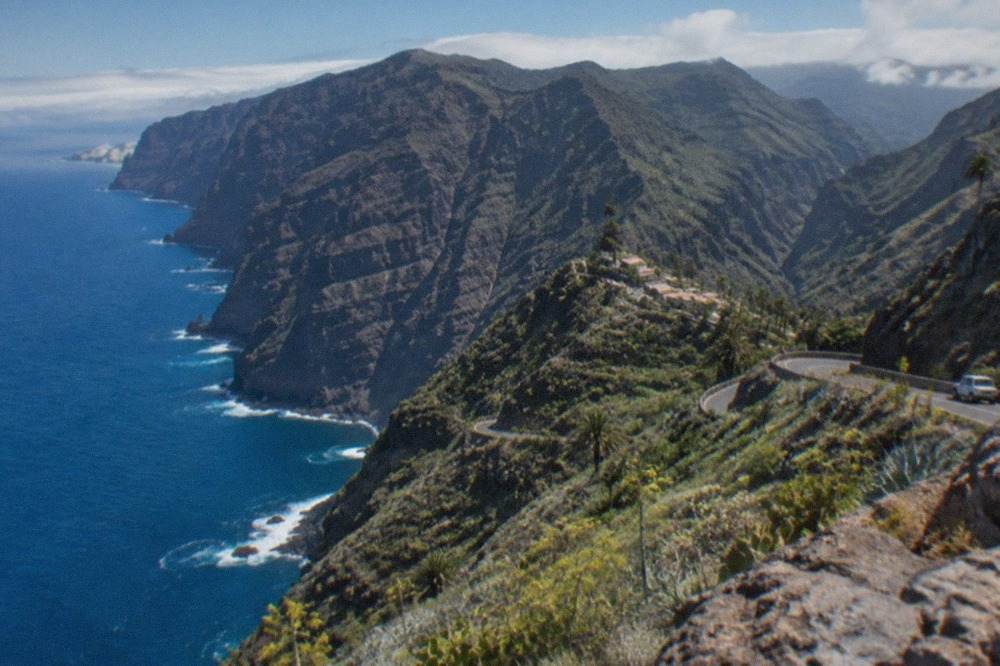
Tenerife received 7,561,659 tourists in 2025, a rise of 2.4 per cent on the year before, according to the tourist board's annual balance. That figure counts mainland Spanish and foreign visitors together, and it does not include the 424,160 Canary Island residents who also stayed in hotels and apartments on the island. A place does not pull more than seven and a half million annual visitors by accident, but a raw count says nothing about whether the island suits a particular traveller. This page assembles the official evidence: the climate record, the UNESCO inscriptions, the visitor rules in force, and the honest list of what goes wrong.
Why Visit Tenerife?
Tenerife combines Spain's highest peak with a warm Atlantic coast: Mount Teide stands 3,715 m on Spain's figures, UNESCO inscribed the surrounding national park in 2007, and the park recorded 5,242,653 visitors in 2024, the most visited in Spain's network. The World Cetacean Alliance designated the Tenerife-La Gomera Marine Area a Whale Heritage Area in January 2021, and AEMET's normals put July's mean at 25 C in Santa Cruz. Few islands this size hold a volcano, a laurel forest and a resident whale population at once.
The height figure matters more than it first appears. MITECO and Turismo de Tenerife both give 3,715 m for the summit, while UNESCO's listing says 3,718 m; this site follows Spain's own sources. UNESCO's inscription page adds the line that, rising 7,500 m above the ocean floor, Teide is regarded as the world's third-tallest volcanic structure. The same park is the largest and oldest national park in the Canaries, declared by decree on 22 January 1954 and covering 18,990 hectares.
The second pillar is the sea. The World Cetacean Alliance describes a unique resident population of pilot whales, bottlenose dolphins and a migration stop for 21 other cetacean species, inside a Special Area of Conservation. Whale watching is regulated by Decreto 178/2000: no boat may approach within 60 m, at most three boats may sit within 500 m, and authorised vessels must fly the Barco Azul flag. A trip on a licensed boat is therefore not a lottery but a regulated wildlife encounter, and the tours that follow those rules are the ones worth shortlisting.
The third is climate. AEMET's 1981-2010 normals for Santa Cruz show mean daily maxima never falling below 21 C and never exceeding 29 C, with 226 mm of rain across the whole year. The south coast is drier still: Tenerife South Airport records 132 mm annually. The sea surface off the south, on NOAA's 1991-2020 series, runs from 19.1 C in March to 23.7 C in September and October.
| What draws visitors | What the official source says |
|---|---|
| Mount Teide | 3,715 m, highest peak on Spanish soil; UNESCO World Heritage since 2 July 2007 |
| Teide National Park | 5,242,653 visitors in 2024, the busiest in Spain's national park network |
| Whale watching | Whale Heritage Area since January 2021, regulated by Decreto 178/2000 with a 60 m approach limit |
| Los Gigantes cliffs | Rise up to 600 m, inside Teno Rural Park, with a seabed about 30 m deep at the foot |
| South coast sea temperature | 19.1 C in March to 23.7 C in September and October (NOAA, 1991-2020) |
| Santa Cruz climate | 226 mm of rain a year on 29.7 days, per AEMET's published annual figure |
Is Tenerife Nice?
Nice is a fair word for what the official record describes: golden sand at Las Teresitas in San Andrés and at Las Vistas in Arona, the grey sand of El Duque in Costa Adeje, and the UNESCO-listed colonial centre of San Cristóbal de La Laguna. AEMET's normals put the January mean at 18.2 C in Santa Cruz and 4.3 C on the Izaña ridge at 2,369 m, so the island holds a beach climate and an alpine one in a single morning's drive.
The variety is the point. The tourist board's own beach pages describe black sand at El Bollullo beneath a cliff in La Orotava, fine grey sand under Montaña Roja at El Médano, and pale sand at Fañabé. Garachico, the island's trade hub in the 16th and 17th centuries, was almost destroyed by the Trevejo volcano in 1706 and is now a small town of natural pools. Icod de los Vinos holds the Drago Milenario, a National Monument since 1917, about 21 m tall, to which an age of roughly 800 to 1,000 years is attributed on the council's and tourist board's pages.
The island is also bigger than its reputation. It spans 31 municipalities with about 960,000 residents, from Santa Cruz de Tenerife at 211,957 people to Santiago del Teide at 12,582. The Anaga massif in the northeast holds laurel forest trails, some of which, such as El Pijaral, now require a reservation on Tenerife ON, with slots released each Monday at 07:00 Canary time and bookable at most 14 days ahead. Company-run tours are not permitted there, which keeps it quiet.
For a fuller run-down of the island's draws, the things to do in Tenerife page carries the complete list, and Tenerife Travel Guide covers each area in depth.
Is South Tenerife Worth Visiting?
The south is where most visitors base themselves, and the numbers say why: AENA recorded 13,969,678 passengers at Tenerife South airport in 2025, an all-time record, and the tourist board's 2025 balance counts 2,057,896 UK visitors among the 5,451,268 tourists lodged in hotels and apartments island-wide. Costa Adeje, Los Cristianos and Playa de las Américas sit closest to the regulated whale-watching waters and the island's warmest, driest coast.
The south's case is practical rather than picturesque. It holds the main beaches, the departure points for most boat trips, and the resorts closest to Teide's southern access road. AEMET's station at Tenerife South Airport records zero rain days in an average June and July. Against that, the coastline is heavily developed, and a traveller picturing fishing villages will not find them between Costa Adeje and Los Cristianos.
The wildlife is the south's strongest card. A no-chase catamaran from Los Cristianos operates under the Decreto 178/2000 rules, with underwater windows rather than pursuit, and the resident pilot whales are present year-round rather than seasonal. For a visitor deciding between the south and the north, the comparison of Tenerife's two halves settles most of the question, and whether you need a car settles the rest.
Is Tenerife Chavvy?
Chavvy is a reader's word, not an official category, and no source on file supports any claim that Tenerife as a whole is downmarket. What the record shows is concentration: the high-rise resort belt occupies a short stretch of the south coast, while the same island holds a UNESCO World Heritage town in San Cristóbal de La Laguna, a UNESCO national park, and rural parks in Anaga and Teno where company-run tours are banned on at least one trail.
The stereotype comes from the package-holiday era and from the fact that UK visitors dominate the lodged-tourist figures, 2,057,896 of them in 2025, 37.8 per cent of the total. Concentration is real: those visitors cluster in a handful of southern municipalities, Adeje and Arona among them. But the same official statistics show the island also drew 442,958 German visitors and 1,068,407 from mainland Spain, spread across a far wider map.
The honest answer is that Tenerife is two destinations. A visitor who never leaves Playa de las Américas will see one of them. A visitor who drives forty minutes inland reaches Vilaflor, the highest municipality on the island, or the laurel forest above La Laguna. The prettiest towns in Tenerife and the hidden gems pages list the places the resort brochures leave out.
What Are the Main Issues with Tenerife?
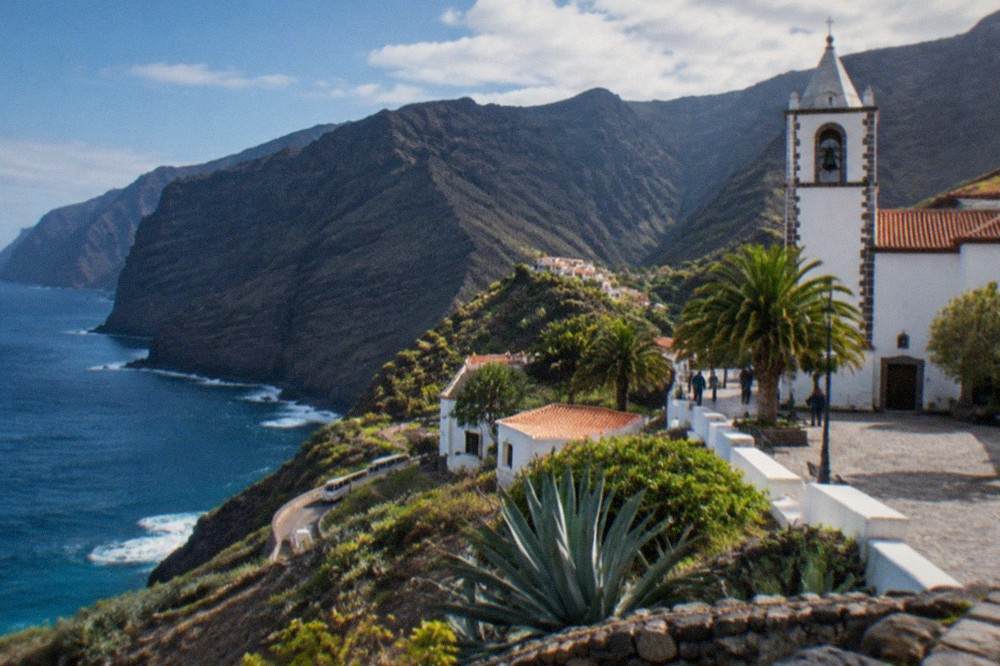
The main issues are crowding, paid access to the best trails, and transport costs that surprise visitors: Teide National Park took 5,242,653 visitors in 2024, since 19 January 2026 the summit trail's daytime slots cost EUR 15 for visitors, and public transport is free only for Canary residents, so visitors pay for every bus. None of these is a reason to stay away, but each one changes how a trip should be planned.
Crowding is measurable. The monthly air-arrival series from ISTAC shows March 2025 with 677,688 tourists arriving by air, and the winter months around it are nearly as busy. The busiest sites feel it first: the cable car's upper station, the park's viewpoints and the whale-watching departures. The Cabildo's response has been rules rather than closures: a smoking ban across every open-air space of the national park, car parks included, and reservation systems on the most fragile trails.
Money is the second issue, and it is widely misreported. There is no tourist tax on Tenerife: no official page shows a per-night lodging tax in force or approved. What does exist are per-booking public fees on specific trails. The table below sets out the charges a visitor can actually be asked to pay.
| Charge | Amount for a visitor | Where it applies |
|---|---|---|
| Teide summit trail PNT 10, 09:00 to 17:00 slots | EUR 15 | La Rambleta to the crater, reservation on Tenerife ON |
| Teide trail PNT 07, working days | EUR 6 | Montaña Blanca to La Rambleta, 09:00 to 17:00 slots |
| Teide trail PNT 07, weekends and public holidays | EUR 10 | Same trail, same slots |
| Masca gorge ticket | EUR 40.66, boat not included | Descent only, booked at caminobarrancodemasca.com |
| Barranco del Infierno | EUR 15 | Advance online booking compulsory |
| TITSA day travelcard | EUR 10 | Unlimited bus travel for a day |
| TITSA seven-day travelcard | EUR 50 | Visitors' weekly option |
The third issue is transport. The 2026 subsidy that made headlines covers resident passes only, held on a personalised Ten+ card. Visitors pay for single tickets, the EUR 10 day travelcard or the EUR 50 seven-day travelcard. Taxis are white, metered from the start of the trip, and a fixed price can be agreed in advance for excursions. The cost question is answered in detail on its own page.
Why Not Go to the Canary Islands?
A traveller might reasonably skip the Canaries for three reasons: the flight time from northern Europe, the summer heat inland, and the fact that other archipelagos offer emptier coastline. None of those is a fact about Tenerife itself, and the Canaries are not one destination: Gran Canaria, Lanzarote, Fuerteventura and the smaller islands each have a different climate, landscape and visitor profile, so a verdict on the whole archipelago cannot be a verdict on any one of them.
The case against is worth stating fairly. Package tourism has shaped the south coast for decades. The whale-watching fleet, though regulated, means motorised boats share the water with the animals. Winter is the peak season, so a summer visit and a January visit are different products: ISTAC's series shows January 2025 with 643,460 tourists arriving by air against 539,410 in May. A traveller seeking solitude in February is choosing the island's busiest month.
The case for the archipelago is that the alternatives rarely combine the same elements. Tenerife holds the only national park in the Canaries inscribed by UNESCO for natural criteria, a Starlight Reserve designation for its skies dating from October 2013, and the Whale Heritage Area. The best time to visit question and the no-go list story are both answered from official sources elsewhere on this site, and both bear on the decision.
Common Questions About Whether Tenerife Is Worth Visiting
is tenerife worth it?
On the official numbers, yes for most travellers: 7,561,659 tourists came in 2025 and hotel and apartment revenue reached EUR 2,121 million, while the island still holds a UNESCO national park, a UNESCO colonial town and a regulated whale-watching area. It is worth it less for a traveller seeking empty coastline or cool summer weather, since the peak months are winter and the south coast is built up.
is tenerife good?
Good depends on the holiday. The record supports hiking (trails from the laurel forest of Anaga to the Teide summit), wildlife (a resident pilot whale population under Decreto 178/2000 protection), family attractions (Siam Park, open 365 days) and winter sun (AEMET's Santa Cruz normals show a January mean of 18.2 C). It supports a quiet, crowd-free experience less well in the February peak.
is tenerife south worth visiting?
Yes, as a base rather than as scenery. The south holds the main beaches, the warmest and driest climate on AEMET's record, the whale-watching departures and the quickest road to Teide. It is heavily developed, so a visitor who wants old towns and black-sand coves should plan day trips north, which is straightforward with a car or the EUR 50 seven-day travelcard.
is tenerife worth visiting
For the majority of the 7,561,659 tourists who came in 2025, evidently. The honest qualification is planning: the summit trail needs a reservation released each Monday at 07:00 Canary time and costs EUR 15 in the daytime slots, the best Anaga trail needs one too, and buses are not free for visitors. Worth visiting, but worth planning.