Is Tenerife Cheap or Expensive?
An honest, sourced answer to whether Tenerife is cheap or expensive: the visitor charges that exist, the ones that do not, transport costs, sales tax and what costs nothing.
Tenerife is one of the few big European holiday islands with no per-night tourist tax, and that single fact shapes almost every cost comparison a traveller makes. No official page read for this article shows a lodging tax in force or approved on the island. What Tenerife does have is a short list of named per-booking charges, a Canary sales tax that is lower than mainland Spain's, and a resident bus subsidy that visitors do not qualify for. This page sets out each of those, with the figures the official sources actually state, so the question of cheap or expensive can be answered with numbers rather than impressions.
Is Tenerife Expensive to Visit?
For most visitors Tenerife is a mid-priced island rather than a cheap one: there is no tourist tax, no national park entry fee and no charge for the beaches, but four named activities carry per-booking fees, buses are paid for by visitors, and the big paid attractions and tours are priced like any major Spanish resort. The official charges that exist are small, specific and avoidable.
The baseline is genuinely low. Driving through Teide National Park, the viewpoints, the beaches and most walking trails carry no charge on any official page read. The Cabildo's own booking platform lists only a handful of spaces that need a paid reservation. Everything else on the island, from the old towns to the natural pools, is open ground.
Where money does go, it goes to four named things: the two Teide trails with public fees, the Masca gorge ticket, the Barranco del Infierno trail and the commercial attractions, meaning the cable car, the water parks and the tours. Those are the decisions that define a budget, and each is priced on an official page this article can quote exactly.
One structural point is worth knowing before any comparison with mainland Spain: the Canaries apply IGIC, not VAT. The tax agency's table shows 7% on everyday goods, with 0%, 3% and 15% bands, and non-resident travellers can claim IGIC back on qualifying purchases. That lower sales tax is one reason restaurant and shop prices on the island often sit below what the same goods cost in Madrid or Barcelona, though this site does not state a single rate as the general one or compare it with a mainland figure.
For context on how the island is priced from the outside, the tourist board's 2025 balance reports hotel and apartment revenue of EUR 2,121 million from 5,451,268 lodged tourists, and the UK is the largest source market at 37.8% of that lodged total. Whether that reads as expensive depends entirely on which of the paid items below a visitor chooses.
How Expensive Is a Trip to Tenerife?
The fixed, official costs a visitor cannot avoid are small: no tourist tax, no park entry fee, and paid reservations only on four trails, at EUR 15 for the Teide summit daytime slots, EUR 6 to 10 for the Montana Blanca trail, EUR 40.66 for Masca and EUR 15 for Barranco del Infierno. Everything else, including the cable car and the parks, is an optional ticket bought at its own price.
Here is every official visitor charge on file, in one table. Each figure is the one stated on the operator's or authority's own page.
| Charge | Visitor price | Who pays nothing | Source |
|---|---|---|---|
| Teide summit trail PNT 10, 09:00 to 17:00 slots | EUR 15 | Tenerife residents and children | Tenerife ON |
| Teide summit trail PNT 10, other Canary residents | EUR 6 | (as above) | Tenerife ON |
| Montana Blanca trail PNT 07, working days | EUR 6 | Tenerife residents | Tenerife ON |
| Montana Blanca trail PNT 07, weekends and holidays | EUR 10 | Tenerife residents | Tenerife ON |
| Masca gorge ticket, boat not included | EUR 40.66 | Tenerife residents, federation members | caminobarrancodemasca.com |
| Barranco del Infierno, adult | EUR 15 | (child ticket 5 to 12 is EUR 5) | barrancodelinfierno.es |
| Teide cable car return, adult | EUR 42 | (child 3 to 13 EUR 21) | volcanoteide.com |
| TITSA day travelcard | EUR 10 | (residents only on subsidised passes) | TITSA |
| TITSA seven-day travelcard | EUR 50 | (residents only on subsidised passes) | TITSA |
Read that table carefully and the shape of a Tenerife budget becomes clear. A visitor who drives, swims and walks the free trails can spend nothing beyond car hire, food and lodging. A visitor who books the summit permit, Masca and the cable car has bought the three priciest official items on the list before a single meal. Both are the same island.
The refunds rule matters too. Tenerife ON states the trail fees are non-refundable, with no changes of date, slot or names, refunded only if the trail is closed or the cable car is not operating. Failing to use a booking can bar the user from new applications for three months. Book the paid trails only for days the itinerary is certain about.
Is Tenerife Expensive for Tourists?
Tourists pay for transport, pay for the big attractions and pay for any booked tour, but pay no tourist tax and no entry fee for beaches, viewpoints or the old towns. The visitor travelcards are EUR 10 for a day and EUR 50 for seven days, and the 2026 free-transport subsidy applies to resident passes only, so a visitor should budget for every bus journey.
The transport point is where the most misinformation lives. The Canary government's 100% subsidy on passes and multi-trip tickets, in force since 1 January 2026 under Real Decreto-ley 17/2025, is real, but every subsidised pass requires residency in the Canary Islands on a personalised Ten+ card. Visitors buy single tickets, the EUR 10 day travelcard or the EUR 50 seven-day travelcard, sold at the airport ticket machines. The Teide and Teno lines are excluded from the resident passes anyway. More of these guides are collected on Tenerife Travel Guide.
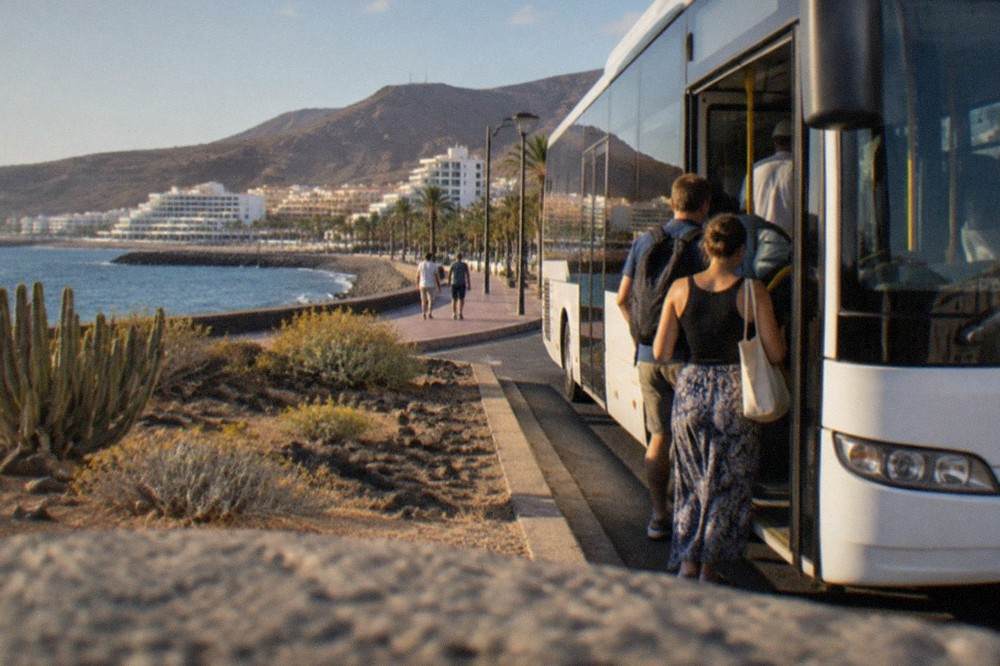
Whether a car changes the maths is a whole question in itself, and the do you need a car in Tenerife page works through it. The short version for costs: the travelcards make bus-based travel predictable, while car hire pricing moves daily and this site quotes no rate for it. Taxis are white and metered from the start of the trip, with fixed prices agreeable in advance for excursions, per the tourist board's own page.
On the attraction side, the paid headline items are the cable car, Siam Park and Loro Parque, each with its own ticket on its own page. The passes and combined tickets guide compares them. A twin ticket for Loro Parque and Siam Park exists as a single product, and the product cards on this site carry the live prices, so no figure is typed here.
The honest summary for a tourist: Tenerife is cheap at the edges and priced like a major resort in the middle. The edges are free. The middle is optional.
What's Cheap to Buy in Tenerife?
The genuinely free things are the beaches, the viewpoints, the old towns, the driving routes through the national park and the three pay-what-you-want walking tours listed on GuruWalk in the north. Groceries and everyday goods carry 7% IGIC rather than mainland VAT, and local wine and produce are the purchases most worth making.
The free list is long and verified. Las Teresitas, Las Vistas, El Bollullo, El Medano and the rest of the island's beaches cost nothing. The Teide National Park's roads, viewpoints and car parks are open and free of any entry charge, though smoking is banned in every open-air space of the park. Garachico's natural pools, the Auditorio's exterior, La Laguna's UNESCO-listed streets and the Basilica of Candelaria's surroundings are all open ground.
For structure, three free walking tours are carded on this site, all in the north, all listed on GuruWalk and all pay-what-you-want. The resort south, meaning Los Cristianos, Costa Adeje, Adeje, Arona and Playa de las Americas, has no free walking tour listed on GuruWalk at the time this site's roster was compiled. The northern towns are where the free guided walks sit:
Either walk covers a full historic centre on foot, and both are pay-what-you-want rather than a fixed fee, so the only real cost is whatever a visitor chooses to tip the guide at the end.
On shopping, the verified answer is about tax rather than individual prices. IGIC at 7% on everyday goods is what the tax agency's table shows, with reduced and zero bands on basics, and non-resident travellers can claim IGIC back through form 403. Local wine is the island's signature purchase, and the Tenerife food and guachinches guides cover where the island's own produce is sold and eaten at its cheapest. The currency, cash and tipping page handles the practical side of paying for it.
Is It Expensive to Live on Tenerife?
No verified rent, property or cost-of-living figure for Tenerife is on this site's file, so the honest answer is that living costs cannot be stated here with a source. What can be stated is structural: residents qualify for free public transport passes in 2026, pay resident rates on the Teide trails and the cable car, and pay the same 7% IGIC on everyday goods as visitors.
The rent questions people search for, how much monthly rent runs and what the average is, have no primary source in this site's research files, and an unsourced number is not published here. The same applies to property prices and wedding costs. What the verified facts do support is the resident discount structure, which is substantial and specific: Tenerife residents pay nothing on the PNT 10 and PNT 07 trail fees, EUR 10.50 for a cable car return ticket where a visitor pays EUR 42, nothing for Masca, and EUR 5 at Barranco del Infierno where a visitor pays EUR 15.
The resident bus subsidy is the largest single one. Every subsidised pass requires Canary residency on a personalised card, and the Canary government confirmed in June 2026 that the state had committed to the overdue payments and to continuing the measure. For a resident, buses are effectively free in 2026; for a visitor, they are not, and that asymmetry is the biggest cost difference between living on the island and holidaying on it.
Population context, from the INE municipal register: about 960,000 people live on Tenerife across 31 municipalities, with Santa Cruz de Tenerife at 211,957 and La Laguna at 161,108 the two largest. Where people settle, and therefore what housing demand looks like, is concentrated in those two cities plus the southern resort municipalities of Arona, at 87,793, and Adeje, at 50,021.
For a visitor weighing all of this, the paid trio above covers the three kinds of spending most Tenerife holidays actually include: a boat trip, an astronomy visit and a water park day. Beyond those, the single most-booked paid experience on the south coast is the whale and dolphin safari, which is why it stands alone below.
Common Questions About Tenerife Costs
is tenerife cheap or expensive?
Mid-priced, and cheaper at the edges than most comparable islands: no tourist tax, no park entry fee, free beaches and viewpoints, four named per-booking trail charges, and paid attractions and tours priced like any major Spanish resort. The Tenerife Travel Guide verdict is that a careful visitor can keep fixed official costs near zero, while a visitor who books everything spends like they would anywhere else.
are canary islands expensive?
Across the archipelago the same structural points hold as on Tenerife: the Canaries apply IGIC rather than VAT, with the tax agency's table showing 7% on everyday goods, and each island's official charges are specific and listed rather than general. This site's verified figures are for Tenerife, so no cost claim is made here for the other islands.
is tenerife very expensive?
No official cost index supports the word "very". The largest single official visitor charge on file is the Masca ticket at EUR 40.66 with the boat separate, and the Teide summit permit is EUR 15 for visitors on the daytime slots. Everything beyond those items is an optional commercial ticket whose price sits on the operator's own listing.
how much does a trip to the canary islands cost?
That depends on flights, lodging and what is booked, none of which this site prices. The fixed official costs on Tenerife are the ones in the table above, and the tourist board's 2025 figures record EUR 2,121 million in hotel and apartment revenue from 5,451,268 lodged tourists, an average that includes every market segment and says little about any one traveller's spend.
is it expensive to live in the canary islands?
No verified rent or cost-of-living figure is on this site's file for the Canaries, so no number is stated. What is verified is that Canary residents qualify in 2026 for the 100% public transport subsidy on resident passes, and Tenerife residents pay zero on the Teide trail fees and resident rates on the cable car, both of which lower a resident's fixed costs relative to a visitor's.
is tenerife expensive to buy property?
No verified property price figure is on this site's file, so the question cannot be answered with a source here. The context that is verified: the short-term rental law Ley 6/2025, published in the Canary official bulletin on 12 December 2025, regulates the tourist use of residential properties, which shapes both the rental and purchase markets on the island.