What Is the Prettiest Town in Tenerife?
No official body ranks Tenerife's towns, but the verified record points to San Cristóbal de La Laguna, Garachico, La Orotava and Icod de los Vinos. Here is what the sources actually say about each.
Beauty contests between towns are won by whoever is asked. The honest version of this question is therefore not "which town do travellers photograph most" but "which towns does the official record actually support", and on Tenerife that record is unusually specific. UNESCO has inscribed one of the island's towns. A government volcano buried another's port in 1706. A council attributes roughly a thousand years to a tree standing in a third. This page works through the candidates the sources name, separates the north's historic centres from the south's resort towns, and answers the neighbouring questions people actually search: the nicest town, the nicest village, the prettiest town in the south, and whether any of this extends to the Canaries as a whole.
What Is the Nicest Town in Tenerife?
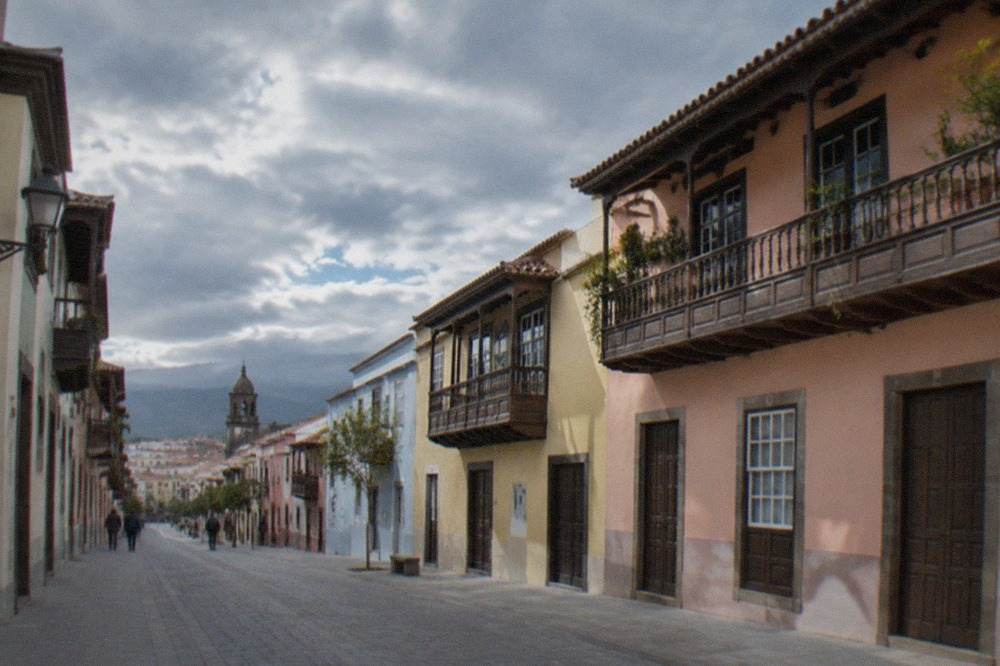
No official body ranks Tenerife's towns, but the strongest sourced distinction belongs to San Cristóbal de La Laguna. UNESCO lists it as a World Heritage property under criteria (ii) and (iv) and describes it as the first non-fortified Spanish colonial town, its layout providing the model for many colonial towns in the Americas. Garachico, La Orotava, Puerto de la Cruz and Icod de los Vinos are the other names the official record supports.
UNESCO's wording is worth pausing on, because it is the only aesthetic-adjacent claim about a Tenerife town that a world body has put its name to. The inscription rests on the town's plan rather than on any single facade: the grid of streets, the churches and the wooden balconies together form the prototype that colonial planners copied across the Atlantic. That is a strange and rather good boast for a town that sits well above the coast, in the hills behind Santa Cruz, at 161,108 residents the island's second-largest municipality in the 2025 INE register.
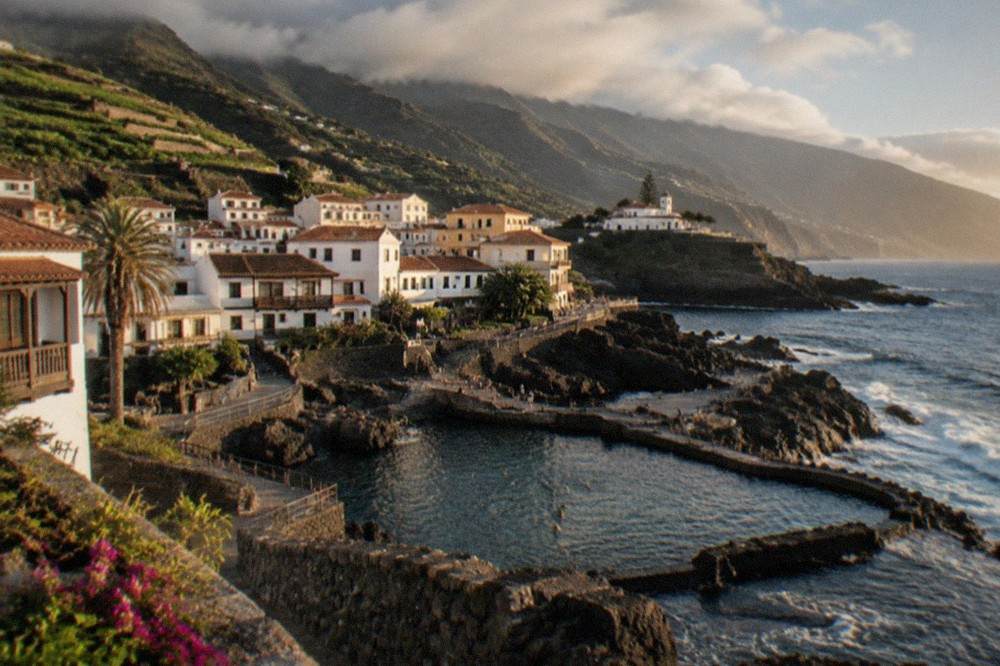
Garachico makes the list for a different reason, one the tourist board states plainly: the Trevejo volcano erupted in 1706, destroyed almost the entire town and buried the old port. Garachico had been the island's trade hub in the 16th and 17th centuries before that. What stands today is a small, low, stone-built coastal town with natural pools where the harbour used to be, and its history is written into why it looks the way it does.
La Orotava and Icod de los Vinos complete the northern set. La Orotava carries the island's best-known traditional architecture, and this site's own guide to hidden gems in Tenerife covers several of the smaller sights around it. Icod de los Vinos holds the Drago Milenario, a National Monument since 1917, about 21 m tall with a trunk roughly 17 m round, to which Icod council attributes an age of approximately 1,000 years while the tourist board says over 800: the honest figure is 800 to 1,000 years, and it is an estimate either way.
| Town | What the official record actually says | Source of the claim |
|---|---|---|
| San Cristóbal de La Laguna | UNESCO World Heritage property; "the first non-fortified Spanish colonial town", its layout a model for colonial towns in the Americas | UNESCO listing |
| Garachico | Trade hub of the 16th and 17th centuries; the Trevejo volcano erupted in 1706, destroyed almost the entire town and buried the old port | Turismo de Tenerife |
| Icod de los Vinos | The Drago Milenario is a National Monument, about 21 m tall, with an estimated age of 800 to 1,000 years | Icod council; Turismo de Tenerife |
| Puerto de la Cruz | The island's original resort town, 31,137 residents in 2025, on the north coast | INE register |
| La Orotava | Historic municipality in the Orotava Valley, inland of the north coast | INE register |
Santa Cruz de Tenerife itself deserves a word here, because visitors often stay in or near the capital. AENA's statistics for 2025 record 7,174,977 passengers through Tenerife North airport, much of it feeding the Santa Cruz and La Laguna area, and the city pairs a modern seafront with the Auditorio de Tenerife, a Santiago Calatrava building inaugurated in 2003 with a white trencadis skin. For travellers who want the capital covered quickly, a guided bike or e-bike tour of the Santa Cruz highlights runs about two and a half hours from the cruise terminal: Check availability.
What Is the Nicest Village in Tenerife?
No official page names a "nicest village", so any single answer is opinion. The strongest sourced candidate is Masca, whose gorge trail runs as a booked descent with a boat exit under a continuing pilot scheme: a general ticket of EUR 40.66 excluding the boat, compulsory arrival on TITSA line 355 from Santiago del Teide, and closed mountain footwear as a condition of entry. The Anaga Rural Park hamlets are the other commonly named group, and their best-known trail needs its own reservation.
Masca is the village the postcards are made of, a cluster of houses wedged into the far northwest of the island, and the rules around it are stricter than most guides admit. Hikers on the gorge must arrive on TITSA line 355 and show the bus ticket; arriving by private vehicle means refusal. The descent is one-way, the boat ticket is separate and must be booked for no later than four hours after the descent slot, and the operator warns that the pier can close suddenly when the sea turns, voiding that day's ticket. None of that dims the village's setting; it just means the visit is a planned booking rather than a whim.
The Anaga Rural Park, in the island's northeast corner, is the other village landscape people mean by "nicest". Its laurel forests hold hamlets that the reservation system treats carefully: the El Pijaral trail, the so-called Enchanted Forest, needs a prior reservation on Tenerife ON, released Mondays at 07:00 Canary time and bookable at most 14 days ahead, and organised tours by companies are not permitted there. The Cabildo names permit-free alternatives in the same park, the Bosque de los Enigmas trail and the Pista de Las Hiedras, for anyone who would rather not book.
For a village-adjacent walk with a guide instead, there are organised hikes through the laurel forest above Masca and in Anaga itself, and this site's guided hiking tours page lists them alongside the summit routes. If your question is really "how many days do I need to see both the towns and the villages", the honest planning answer is on the how many days in Tenerife page.
What Is the Prettiest Town in South Tenerife?
The south's best-known places are resort developments rather than historic towns, and no official source crowns one as prettiest. Costa Adeje, Los Cristianos and Playa de las Américas grew around tourism, and the tourist board describes them through their beaches and facilities rather than old-town charm. Adeje's old town is the nearest thing to a traditional centre in the south, and it has no official ranking either.
This is the answer that surprises people who book a southern hotel expecting a picturesque town outside the gate. The tourist board's own beach pages describe the south in terms of sand: Playa del Duque in Costa Adeje is a grey sandy beach, Fanabe is pale sand, Las Vistas in Arona is golden sand behind breakwaters. The municipalities are large, Adeje at 50,021 residents and Arona at 87,793 in the 2025 register, but the built fabric along the coast is hotels, promenades and apartment blocks, and the official record is refreshingly unembarrassed about saying so. The rest of the planning pages sit on Tenerife Travel Guide.
That does not make the south ugly; it makes it a different category. What the south offers is water, weather and viewpoints, from the Los Gigantes cliffs, which the tourist board says tower up to 600 m, to the whale-watching runs out of the marinas. The prettiest old fabric within reach of a southern base is inland at Adeje's old town, or a drive up the west coast to Garachico, which is where the north Tenerife day trip from the south routes most travellers.
What Is the Prettiest Town on the Canaries?
No official body ranks towns across the seven Canary Islands, and this desk's verified record covers Tenerife alone, so a cross-island winner cannot be stated as fact. The defensible answer from Tenerife's side is San Cristóbal de La Laguna, because UNESCO's World Heritage listing is the only town-level inscription on file here, and a claim resting on an inscription beats a claim resting on taste.
Every island has its candidate, and every candidate has its advocates, but a travel guide that printed a winner would be inventing it. What can be said with sources is narrower and more useful: La Laguna's UNESCO inscription is specific, it is described by UNESCO in terms of the town's colonial layout and its influence abroad, and it is the one Tenerife town whose distinction comes from a world body rather than from visitor polls. If a bet had to be placed on the archipelago's prettiest town using only verified documents, that is the card to back.
The practical read for a visitor is that the Canary Islands reward island-hopping precisely because no single town or island wins outright. Ferries from Los Cristianos reach San Sebastian de La Gomera in 50 minutes, and Santa Cruz de La Gomera, Valverde and San Sebastian are themselves candidates other islands' visitors would nominate. This site's island hopping and ferries guide lays out the routes, and the best time to visit Tenerife page covers the months when the weather helps a town-wandering itinerary most.
How Do You Fit Tenerife's Prettiest Towns Into One Trip?
La Laguna, Garachico, Icod de los Vinos, La Orotava and Puerto de la Cruz all sit in the island's north, so a single base in Puerto de la Cruz or Santa Cruz puts all five within a day's reach, while Masca and the Anaga hamlets each need a half-day of their own. The towns need no tickets or permits; only Masca's gorge and the Anaga reservation trails do.
The geography does most of the work. Four of the five historic towns form a loose arc across the north, connected by the TF-5 motorway corridor and the tram line between Santa Cruz and La Laguna, and the do you need a car in Tenerife page works through the transport options, including the TITSA bus network and the EUR 10 day travelcard for visitors. A car helps for Garachico and the west coast; the tram and buses cover La Laguna comfortably.
Timing matters less for towns than for beaches: AEMET's climate normals put Santa Cruz at a mean of 18.2 C in January and 25.5 C in August, so town-wandering is a year-round activity, and the rain, 43 mm in December in Santa Cruz on average, mostly falls in the wetter months. What the calendar really decides is daylight and crowds: the Tenerife weather by month guide carries the full station tables for every month of the year.
Common Questions About Tenerife's Prettiest Towns
Is La Laguna worth visiting?
Yes, on the strength of its UNESCO World Heritage listing. UNESCO describes it as the first non-fortified Spanish colonial town, whose layout provided the model for many colonial towns in the Americas, and it is a short tram or bus ride from Santa Cruz. It is the one Tenerife town whose distinction comes from a world body rather than from opinion.
Can you drive to Masca village?
Hikers on the Masca gorge trail may not: the pilot scheme requires arrival on TITSA line 355 from Santiago del Teide, and the transport ticket must be shown at the control, with private vehicles refused. The gorge itself is a booked descent with a boat exit, and the general ticket is EUR 40.66 excluding the boat. Check the official Masca booking page for the rules that apply on your date before planning any visit by car.
Is Puerto de la Cruz prettier than the southern resorts?
They are different things. Puerto de la Cruz, 31,137 residents in 2025, is the island's original resort town and retains a historic centre alongside its seafront, while Costa Adeje, Los Cristianos and Playa de las Américas are modern resort developments the tourist board describes through their beaches. No official source ranks one against the other.
Do you need a car to see the pretty towns?
Not for La Laguna, which the tram and TITSA buses reach from Santa Cruz, and not for Puerto de la Cruz on the northern bus lines. Garachico, Icod de los Vinos and La Orotava are easier with a car, though TITSA serves them too, and visitors pay normal fares: single tickets, the EUR 10 day travelcard or the EUR 50 seven-day travelcard. The free public transport subsidy in 2026 applies to resident passes only.
Are there any entry fees for the towns themselves?
No. The towns, their churches, their squares and their viewpoints charge nothing on any official page read. The charges that do exist on Tenerife are per-booking fees on specific trails: the Teide summit trail PNT 10 costs visitors EUR 15 on the 09:00 to 17:00 slots since 19 January 2026, the Masca gorge ticket is EUR 40.66, and Barranco del Infierno is EUR 15 for non-resident adults with compulsory advance booking.