Los Realejos
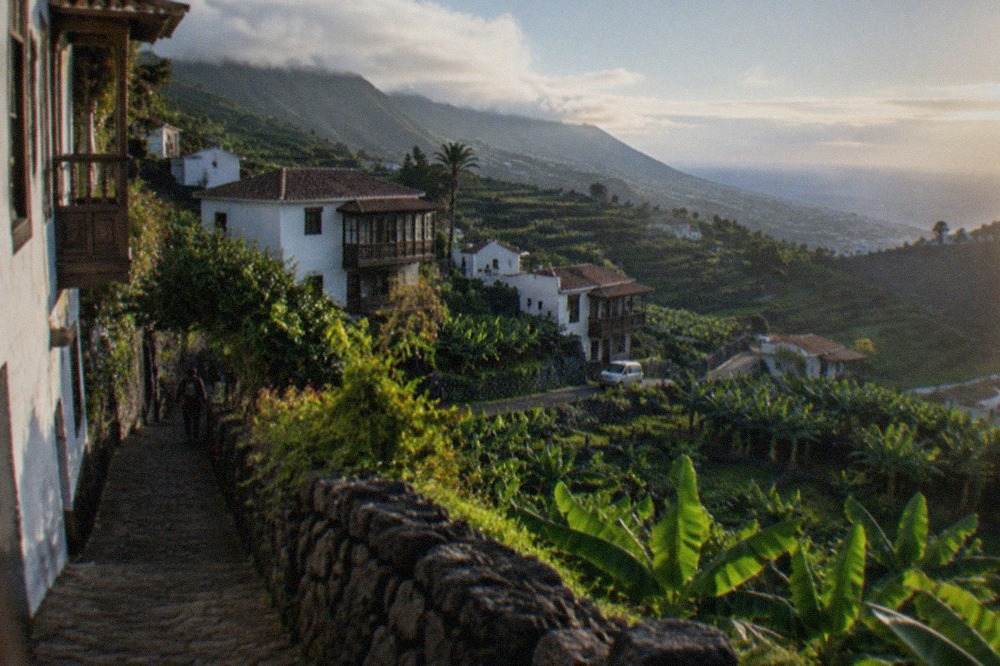
Los Realejos sits on Tenerife's green north coast, between Puerto de la Cruz and the Orotava Valley, and this guide sets out what the official records say about its weather, its transport links and the days out that sit within reach of it.
Short answer
Los Realejos is a northern Tenerife municipality within reach of Puerto de la Cruz, La Orotava and Teide National Park. AEMET's station at Tenerife North Airport records mild temperatures year round with most rain between October and March, and TITSA buses connect the north coast without a car.
Los Realejos is one of the 31 municipalities that make up Tenerife, and it occupies a stretch of the island's green northern coast. The registers that the Instituto Nacional de Estadistica keeps for all 31 municipalities place it among the island's mid-sized towns, smaller than neighbours such as Puerto de la Cruz and La Orotava but large enough to work as a base in its own right. This page gathers what the official sources actually say about the town's setting, its weather, its transport links and the days out around it, because the north of Tenerife is the part of the island where planning matters most.
The north is where the trade clouds pile up against the Orotava Valley and the Anaga massif, and that has consequences for everything from beach days to hiking conditions. AEMET, Spain's state meteorological agency, keeps long-run climate normals for a station close by, and the numbers below give a fair picture of what a visitor to this coast is booking into. What follows is a desk guide, assembled from those official records rather than from impressions, and it is written for the reader deciding whether Los Realejos fits their trip.
Where Is Los Realejos and What Kind of Place Is It?
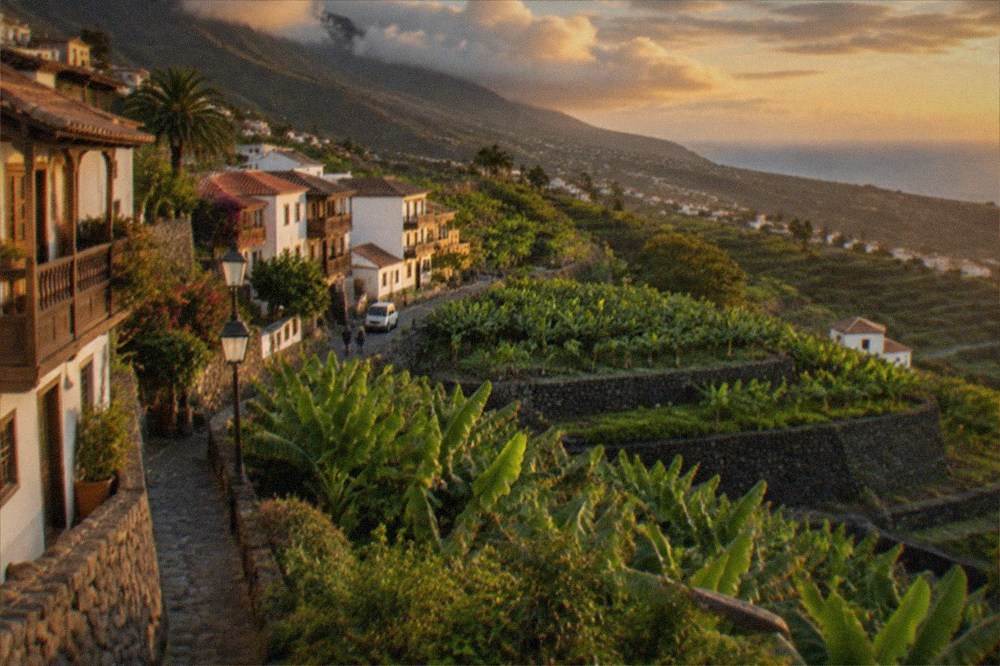
Los Realejos is a municipality on Tenerife's north coast, west of Puerto de la Cruz and downhill from La Orotava, and it belongs to the green, agricultural side of the island rather than the resort belt of the south, sitting closer to Tenerife North Airport than to any of the southern resorts. The town sits where the island's northern slopes meet the Atlantic, in the band of municipalities that runs from the Orotava Valley towards Icod de los Vinos. The resort economy that defines Costa Adeje and Playa de las Americas is largely absent here, and the tourist board's own descriptions of the north frame it around landscape, agriculture and historic towns rather than nightlife.
That positioning is the town's main practical advantage. A visitor staying here is within easy reach of Puerto de la Cruz, the north's principal resort, and of La Orotava, whose old town holds Casa de los Balcones. Further west, the historic town of Garachico and the dragon tree at Icod de los Vinos make a natural loop along the northern coast road. The whole set sits closer to this coast than any of them sit to the southern airports.
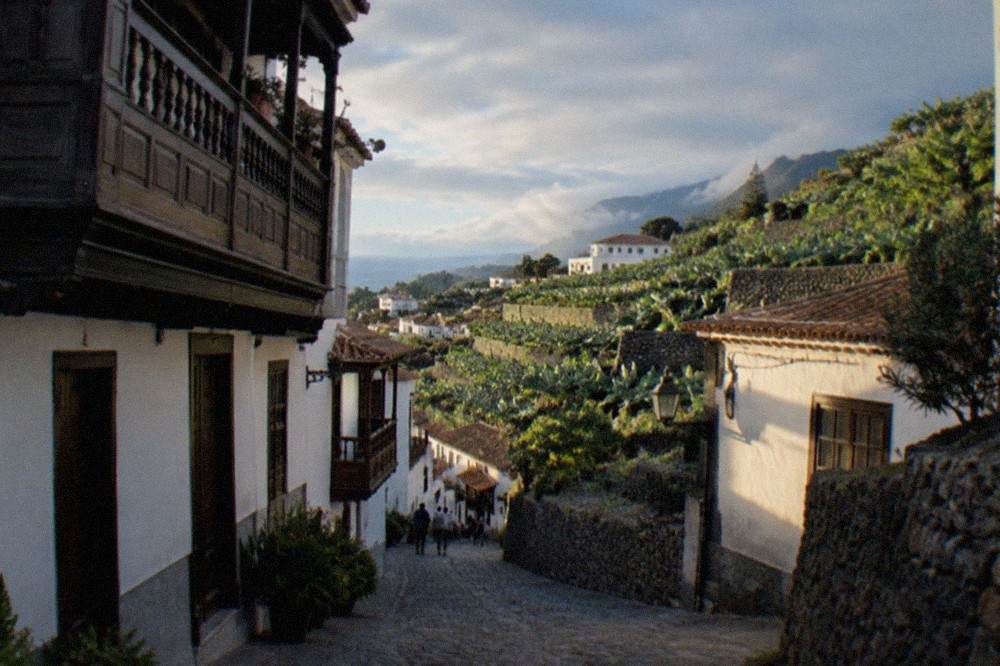
The trade-off is the weather. The north receives more cloud and more rain than the south, and AEMET's figures show the difference plainly. That does not make it a bad choice, it makes it a different one, and the sections below put numbers on it so the choice can be made with the facts in hand.
What Is the Weather Like in Los Realejos?
AEMET's station at Tenerife North Airport, at 632 m and the closest long-record station to this coast, shows mean daily maxima of 16 to 18.5 Celsius in winter and 24.7 to 25.7 Celsius in July and August, with 520 mm of rain a year concentrated between October and March. The same record shows the summer months are not dry in absolute terms, 5 to 11 mm in June, July and August, but the rain days fall away sharply, from 8.8 days with a millimetre or more in December to 1.1 in August. Sunshine runs from 137 hours in December to 269 in August.
The station's altitude matters. At 632 m it sits well above the coast, and coastal Los Realejos will usually run warmer than the airport figures by day in winter, because the trade cloud that wraps the middle slopes often leaves the shoreline clearer. The sea is the steadier influence: NOAA's 1991 to 2020 sea surface figures for the south of the island range from 19.1 Celsius in March to 23.7 in September and October, and the north coast tracks the same seasonal shape. A swimmer is swimming in twenty-degree water for most of the year.
| Month | Mean daily max (C) | Mean daily min (C) | Rain (mm) | Rain days of 1 mm or more | Sunshine (hours) |
|---|---|---|---|---|---|
| Jan | 16.0 | 10.2 | 80 | 7.7 | 150 |
| Feb | 16.7 | 10.0 | 70 | 7.4 | 168 |
| Mar | 18.2 | 10.7 | 61 | 6.8 | 188 |
| Apr | 18.5 | 10.9 | 39 | 6.2 | 202 |
| May | 20.1 | 12.0 | 19 | 3.8 | 234 |
| Jun | 22.2 | 14.0 | 11 | 2.4 | 237 |
| Jul | 24.7 | 15.7 | 6 | 1.7 | 262 |
| Aug | 25.7 | 16.6 | 5 | 1.1 | 269 |
| Sep | 24.9 | 16.5 | 16 | 2.8 | 213 |
| Oct | 22.5 | 15.2 | 47 | 6.5 | 194 |
| Nov | 19.6 | 13.3 | 81 | 8.3 | 155 |
| Dec | 17.1 | 11.5 | 82 | 8.8 | 137 |
These are AEMET's 1981 to 2010 normals, long-run averages rather than a forecast, and the sea figures are a different dataset on a different period, 1991 to 2020. The practical reading is straightforward: a winter visitor to this coast packs a light jacket and an umbrella, and a summer visitor gets the island's most comfortable air temperatures without the southern coast's peak heat.
How Do You Get to Los Realejos Without a Car?
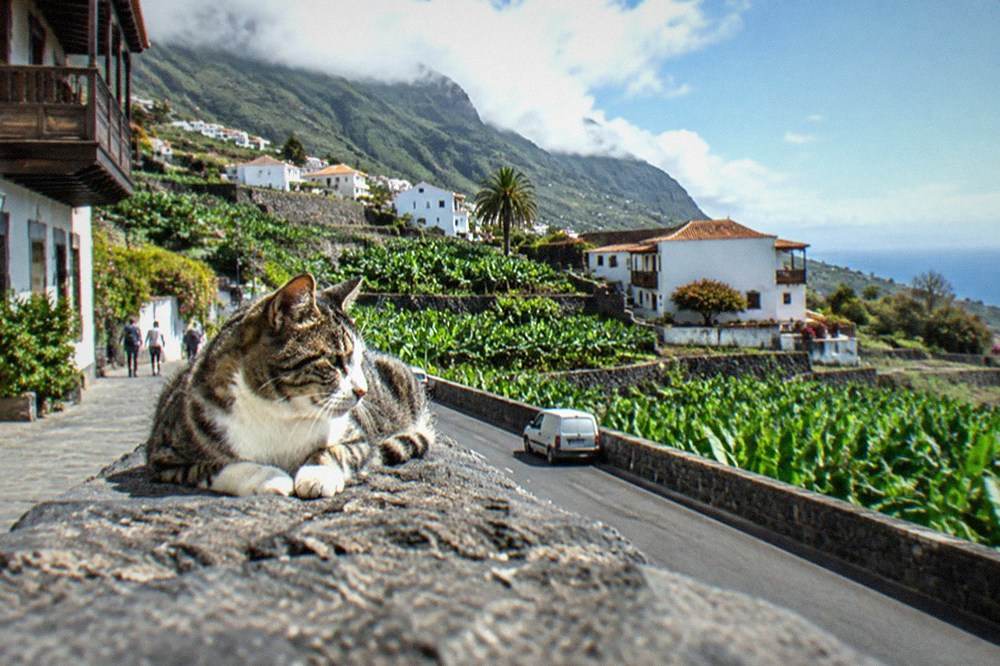
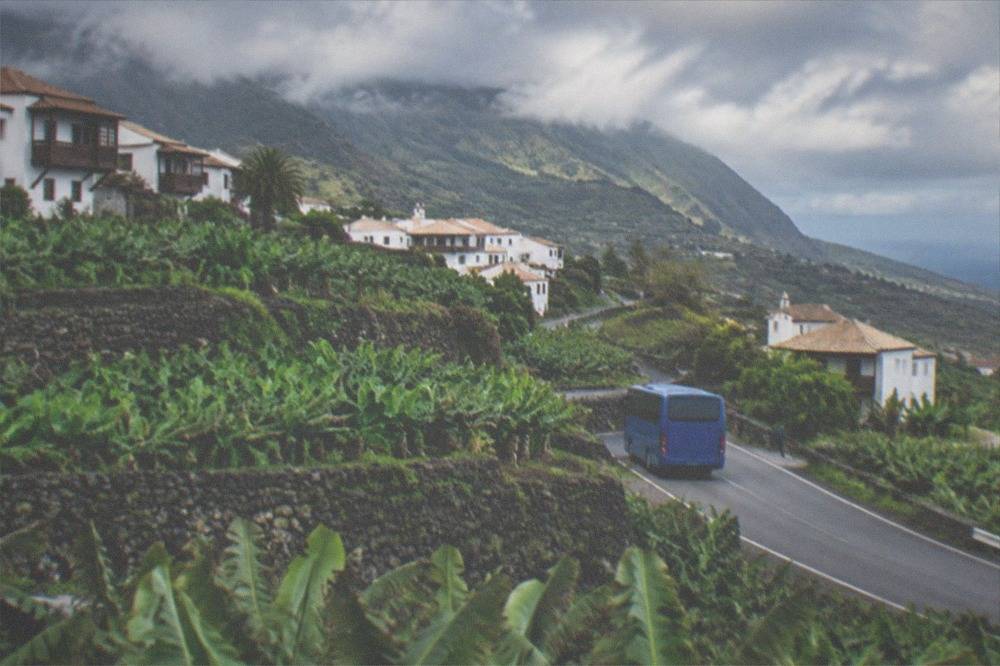
Most visitors arrive through Tenerife North Airport, which AENA calls Tenerife Norte-Ciudad de La Laguna, and TITSA's own airport page lists lines 20, 30 and 343 there: line 20 to Santa Cruz via La Laguna, line 30 to Puerto de la Cruz, and line 343 express to the south. From Puerto de la Cruz, local TITSA services run west along the coast road through the northern towns. Visitors pay normal fares: single tickets priced by route, a EUR 10 day travelcard or a EUR 50 seven-day travelcard, and the free 2026 subsidy the Canary government announced applies only to resident passes held by people resident in the Canary Islands.
The bus is genuinely usable here. TITSA sells the day and seven-day travelcards at airport ticket machines, and a same-day return gets 10% off on trips of 20 km or more. Anyone planning a day in Santa Cruz de Tenerife or La Laguna can do it on line 20 from the north airport, and line 30 links the airport directly to Puerto de la Cruz, the natural interchange for the northern coast.
| Ticket | Price | Notes |
|---|---|---|
| Single ticket | Priced by route | Card or cash |
| Same-day return | 10% off | Trips of 20 km or more |
| Day Travelcard | EUR 10 | Sold at airport ticket machines |
| 7 Day Travelcard | EUR 50 | Sold at airport ticket machines |
| Ten+ card | EUR 2 | Top-ups from EUR 2 to EUR 100 |
Two warnings from the official pages. First, the tram does not serve either airport: Metrotenerife's fares page says nothing of the kind, and the tram is a Santa Cruz to La Laguna line, so airport transfer copy that mentions a tram is wrong. Second, the resident free-travel scheme is not for visitors: every subsidised pass requires Canary Islands residency and a personalised card, so the only free public transport on this island is the one its residents hold.
For a visitor who prefers the water to the road, the kayak and turtle trips run from Los Cristianos on the south coast, which is a long way round the island from here but reachable on line 343 with a change. The listing for the turtle and dolphin kayak tour with snorkel and wetsuit describes a three-hour small-group paddle, and the card below carries its current price and times.
What Is There to Do Around Los Realejos?
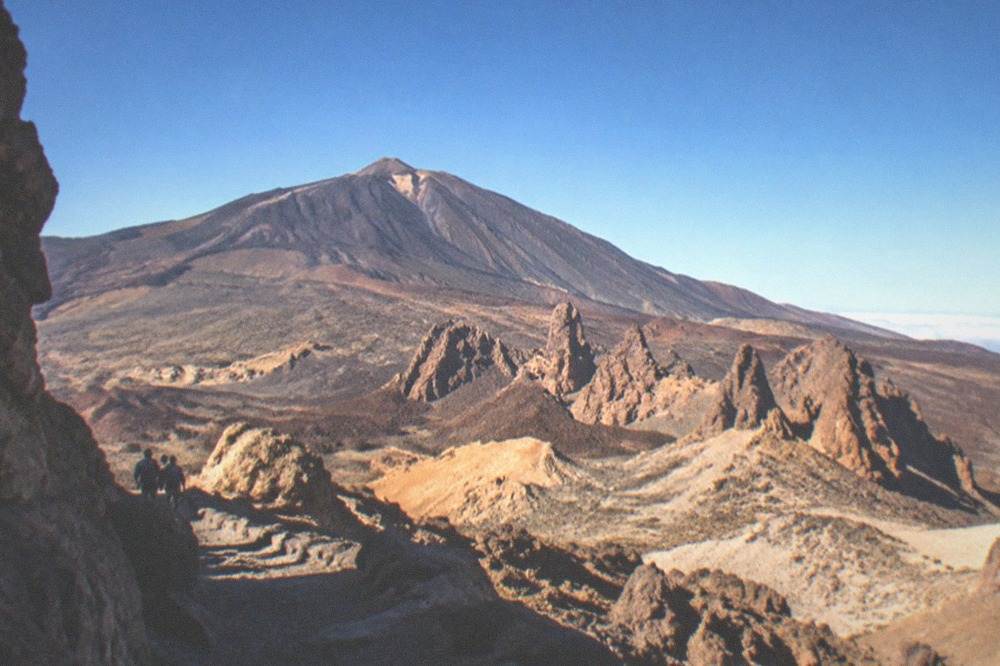
The town's biggest draws are the landscapes around it: Teide National Park lies up the Orotava Valley, the north coast road runs west to Garachico and Icod de los Vinos, and Puerto de la Cruz holds the north's main visitor attractions, all reachable by bus or a short drive. Teide National Park itself charges no entry fee on any official page read: the charges that exist are per-booking public fees on two trails only, PNT 10 Telesforo Bravo and PNT 07 Montana Blanca, and driving through the park and using the viewpoints costs nothing.
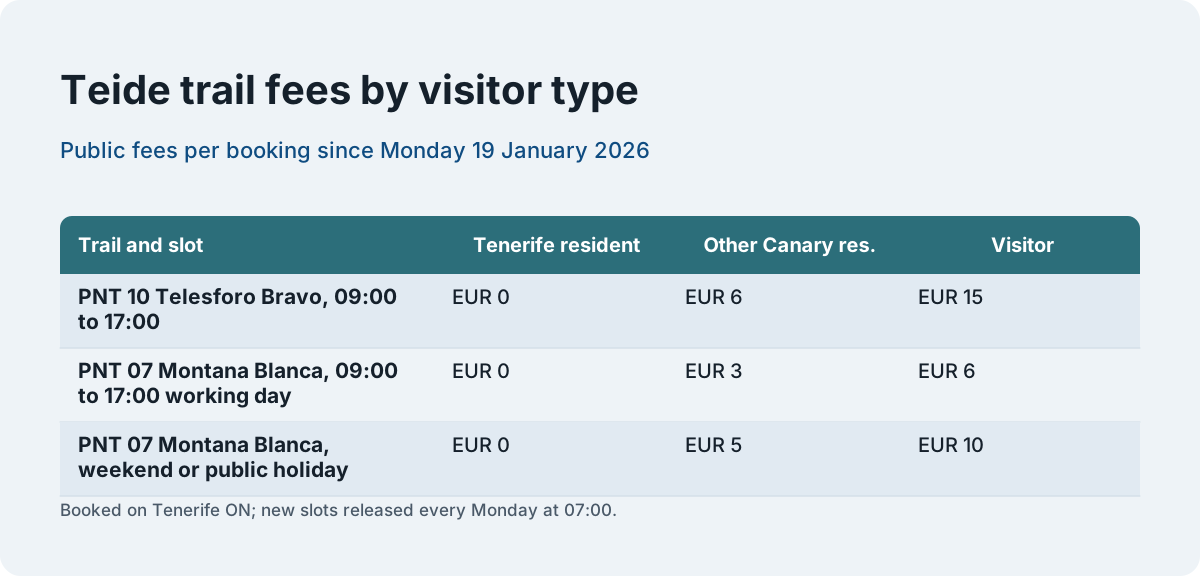
The Teide fees are worth setting out precisely, because loose pages get them wrong. Since Monday 19 January 2026, the 09:00 to 17:00 slots on PNT 10 cost EUR 15 for visitors, EUR 6 for residents of the other Canary Islands and nothing for Tenerife residents and children. The summit permit is booked on Tenerife ON, not on the old national parks booking site, and a new week of slots is released every Monday at 07:00 Canary time so that 56 days are always bookable. The cable car is a separate operator ticket that stops at La Rambleta at 3,555 m, and the crater trail is a separate permit entirely.
| Trail | Slot | Tenerife resident | Other Canary resident | Visitor |
|---|---|---|---|---|
| PNT 10 Telesforo Bravo | 09:00 to 17:00 | EUR 0 | EUR 6 | EUR 15 |
| PNT 07 Montana Blanca | 09:00 to 17:00, working day | EUR 0 | EUR 3 | EUR 6 |
| PNT 07 Montana Blanca | Weekend or public holiday | EUR 0 | EUR 5 | EUR 10 |
A day trip to Teide from this coast is the single most popular excursion in the north, and the Teide from the South page covers the same logistics for visitors based the other way round. From Los Realejos the park is reached up the valley through La Orotava, and the park's own figures show what a draw it is: MITECO counted 5,242,653 visitors in 2024, the most visited park in Spain's national park network. UNESCO inscribed it in 2007, and Spain's own sources give the peak's height as 3,715 m.
Closer to hand, the northern coast road links a chain of small towns. Garachico is the historic one: the tourist board records that the Trevejo volcano erupted in 1706, destroyed almost the entire town and buried its old port, and the town had been the island's trade hub through the 16th and 17th centuries. Its natural pools are the swim stop on this coast. Icod de los Vinos holds the Drago Milenario, which Icod council describes as a National Monument declared in 1917, about 21 m tall with a trunk base about 17 m round, and an age of roughly 800 to 1,000 years, since the council attributes about 1,000 years to it and the tourist board says over 800. It is an estimate, and no page states it as settled fact.
For a slower day, the free walking tours are worth knowing about. GuruWalk lists a free, pay-what-you-want walking tour of the historic centre of Santa Cruz de Tenerife, rated by its English-language reviews, and the same platform carries free tours of Puerto de la Cruz and La Orotava. A free tour is free to join and tip-based, and none of them needs booking far ahead.
Which Beaches Are Within Reach of Los Realejos?
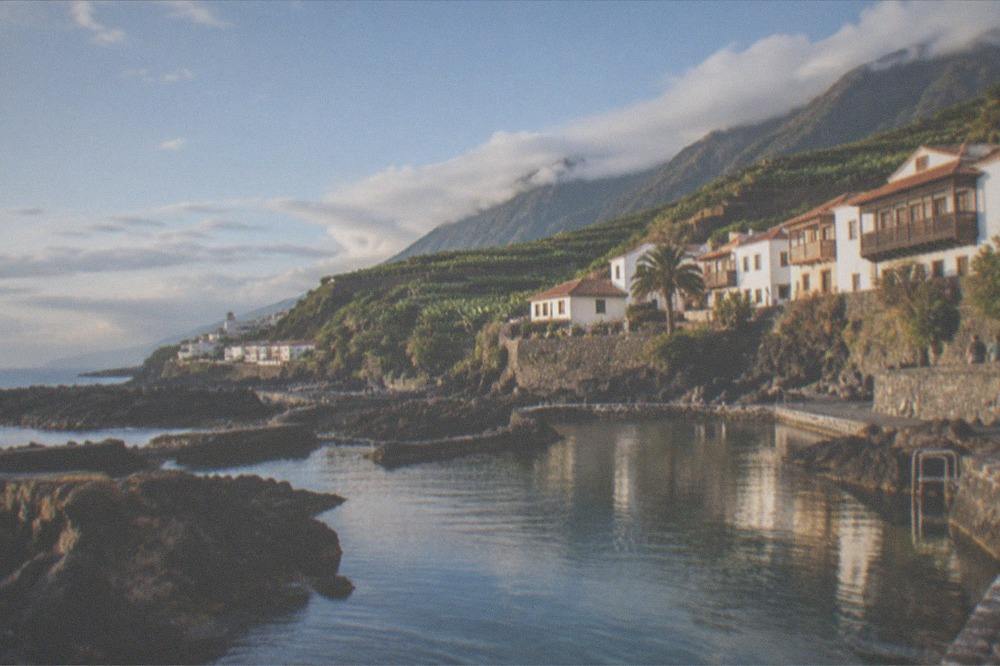
The north coast's beaches are dark sand and swimming coves rather than the golden resort beaches of the south: the tourist board describes El Bollullo in La Orotava as black sand at the foot of a cliff, and the golden-sand beaches it names, Las Teresitas and Las Vistas, are on the other side of the island. That is the honest version of the choice. A visitor based in Los Realejos swims in dramatic, less developed settings, and travels for the resort-style beach.
The contrast runs through the tourist board's own pages. El Medano in the south is fine grey sand under Montana Roja; Playa del Duque in Costa Adeje is grey sand too, despite its reputation; Fanabe is pale sand. Las Teresitas, in San Andres near Santa Cruz de Tenerife, is the golden one, with palms and breakwaters that calm the water, and Las Vistas in Arona is golden behind its own breakwaters. The board's pages say nothing about imported sand tonnage, and no figure of that kind appears anywhere in the official record.
| Beach | Where | Sand, per the tourist board |
|---|---|---|
| El Bollullo | La Orotava, north coast | Black sand at the foot of a cliff |
| Playa Jardin | Puerto de la Cruz | North coast town beach |
| Las Teresitas | San Andres, Santa Cruz | Golden sand, palms, breakwaters |
| Las Vistas | Arona, south | Golden sand, calm behind breakwaters |
| Playa del Duque | Costa Adeje, south | Grey sand |
| El Medano | Granadilla de Abona, south | Fine grey sand under Montana Roja |
The sea itself is warm enough for swimming most of the year, as the temperature table in the weather section shows, and the north coast's coves are at their calmest in summer. Winter swimmers get twenty-degree water against cooler air, which is a different pleasure and one the north does well.
Is Los Realejos a Good Base for Whale Watching?
The whale watching fleet sails from the south coast, from Los Cristianos, Costa Adeje and Los Gigantes, so a visitor based in Los Realejos either travels south for a boat trip or books a tour with hotel pickup included, and the trips themselves are tightly regulated by Decreto 178/2000. The decree, made by the Canary government, sets the rules every authorised boat must follow: no approach within 60 m of the animals, at most three boats within 500 m, a maximum of 4 knots within 500 m, no swimming or diving within 500 m, and no feeding, chasing or circling. Authorised boats must fly the Barco Azul flag, the blue boat flag issued with the permit and renewed each year.
The reason the boats cluster in the southwest is the resident population. The World Cetacean Alliance, which designated the Tenerife-La Gomera Marine Area a Whale Heritage Area in January 2021, records a unique resident population of pilot whales and bottlenose dolphins there, with the area also a migration stop for 21 other cetacean species. No official page gives a population count, and none is stated here. The designation is the World Cetacean Alliance's, not UNESCO's, which is a distinction several widely-read pages blur.
| Rule | Figure, Decreto 178/2000 |
|---|---|
| Minimum approach distance | 60 m |
| Boats allowed within 500 m | At most 3 |
| Speed within 500 m | 4 knots maximum |
| Swimming or diving within 500 m | Prohibited |
| Feeding, chasing, circling | Prohibited |
| Authorised boat flag | Barco Azul, mandatory |
For a visitor weighing the options, the no-chase catamaran trip from Los Cristianos is built around exactly these rules, with underwater windows in place of pursuit, and the card below shows its live price and availability. The listing describes an hour-and-a-half encounter run on the eco no-chase principle.
The kayak alternative covers the same waters at paddle pace, and the two make a fair comparison for anyone who wants the animals without the engine noise. Both sail from the south coast, so from this town they are a planned day out rather than a spontaneous one, and the line 343 express from the north airport is the fastest link for anyone combining the two halves of the island.
Where Should You Stay in Los Realejos?
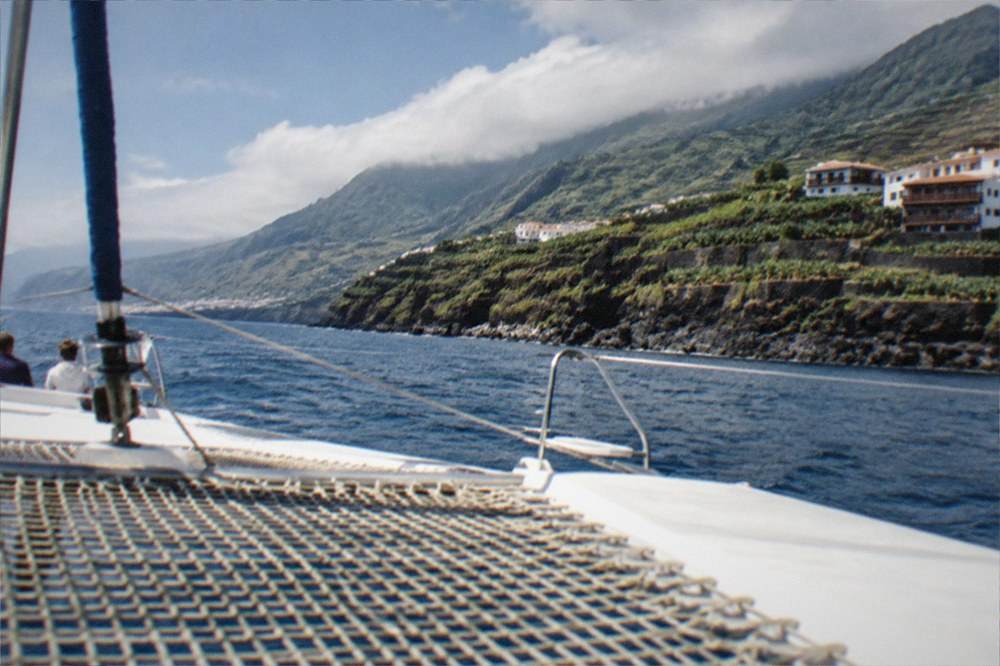
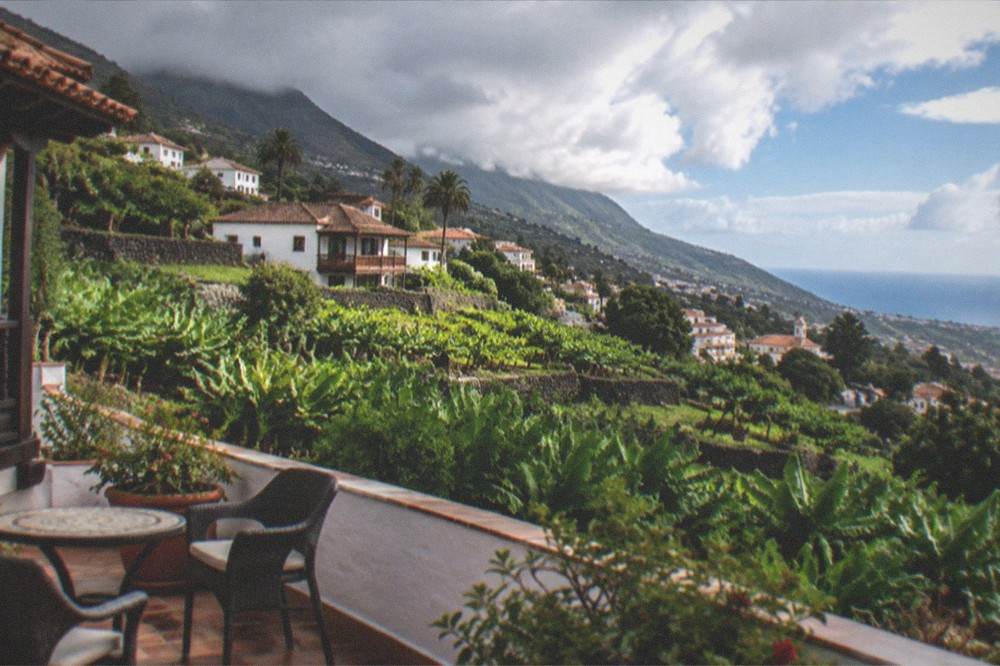
Los Realejos suits visitors who want a quieter, more local base than Puerto de la Cruz and are happy to travel for the big-ticket days out, and accommodation here runs to small hotels and self-catering rather than the resort complexes of the south. The town's position between Puerto de la Cruz and the Orotava Valley puts it within a short bus ride of the north's main resort services without sitting inside them, which is the trade most visitors are making when they choose it.
The comparison with the south is worth making honestly. Los Cristianos and Costa Adeje hold the bulk of the island's tourist beds, and the Los Cristianos vs Costa Adeje guide sets out that choice in detail. The quieter corners of the south, such as Callao Salvaje, Playa Paraiso and La Caleta, sit between the two. A visitor who wants evening quiet, green views and a working Canarian town will find it here; a visitor who wants beach clubs and a strip will not. If a stay in this area appeals, it is worth checking what is open for your dates on the island stays listing.
One rule of the island's accommodation market is settled in law: Ley 6/2025, of 10 December, on the sustainable ordering of tourist use of housing, published in the Canary official gazette on 12 December 2025, governs short-term rental across the islands. And one thing that does not exist: no official page read shows a per-night tourist tax in force or approved on Tenerife. The charges that do exist are the per-booking trail fees at Teide, the Masca ticket and the Barranco del Infierno ticket, none of which is a lodging tax.
What About Entry Rules for Visitors from the UK and US?
The Entry/Exit System started on 12 October 2025 and has been fully operational since 10 April 2026, so UK and US visitors are registered with a facial image and fingerprints instead of a passport stamp, while ETIAS is not yet in operation and no start date has been announced. The EU's own page says ETIAS is currently not in operation and no applications for travel authorisations are being collected, and that the date will be announced several months before launch. The fee will be EUR 20.
This matters for the north coast more than most places, because its visitors skew towards longer stays and repeat trips, and the registration happens at the border on arrival. Nothing needs to be applied for in advance while ETIAS remains unlaunched, and any page selling an ETIAS application today is selling something that does not yet exist.
Common Questions About Los Realejos
Is Los Realejos a good place to stay in Tenerife?
It suits visitors who want a quieter, more local base on the green north coast within reach of Puerto de la Cruz, La Orotava and Teide National Park. It does not suit visitors whose priority is the southern resort strip of beach clubs and nightlife.
How far is Los Realejos from the airport?
Tenerife North Airport is the closest, and TITSA's airport page lists lines 20, 30 and 343 there, with line 30 running to Puerto de la Cruz, the natural interchange for the northern coast. No journey time is stated here because none was measured on an official page.
Does it rain a lot in Los Realejos?
The north coast is the wetter half of the island. AEMET's Tenerife North station records 520 mm of rain a year against 132 mm at Tenerife South Airport, concentrated between October and March, with summer months much drier.
Can you get around Los Realejos without a car?
Yes, on TITSA buses. Visitors pay single fares, a EUR 10 day travelcard or a EUR 50 seven-day travelcard; the free 2026 public transport subsidy applies only to resident passes held by Canary Islands residents.
Are there whale watching trips from Los Realejos?
The authorised fleet sails from the south coast, from Los Cristianos, Costa Adeje and Los Gigantes, so a boat trip from here is a planned day out, and several tours include hotel pickup. Every authorised boat flies the Barco Azul flag and follows the approach distances in Decreto 178/2000.
Is there a tourist tax in Los Realejos?
No official page read shows a per-night tourist tax in force or approved anywhere on Tenerife. The charges that exist are per-booking fees on two Teide trails, the Masca ticket and the Barranco del Infierno ticket.
The northern coast rewards the visitor who reads the numbers before booking, and Los Realejos is a fair representative of it: green, quieter than the resort belt, damp in winter and within bus reach of nearly everything the island is known for. This Tenerife Travel Guide page will keep to the official record as it stands.