The Best Viewpoints (Miradores) in Tenerife
Tenerife is a volcano with viewpoints stacked on top of it, and the island's official pages list the figures that matter: a summit at 3,715 m, cliffs up to 600 m, and a national park that recorded 5,242,653 visits in 2024.
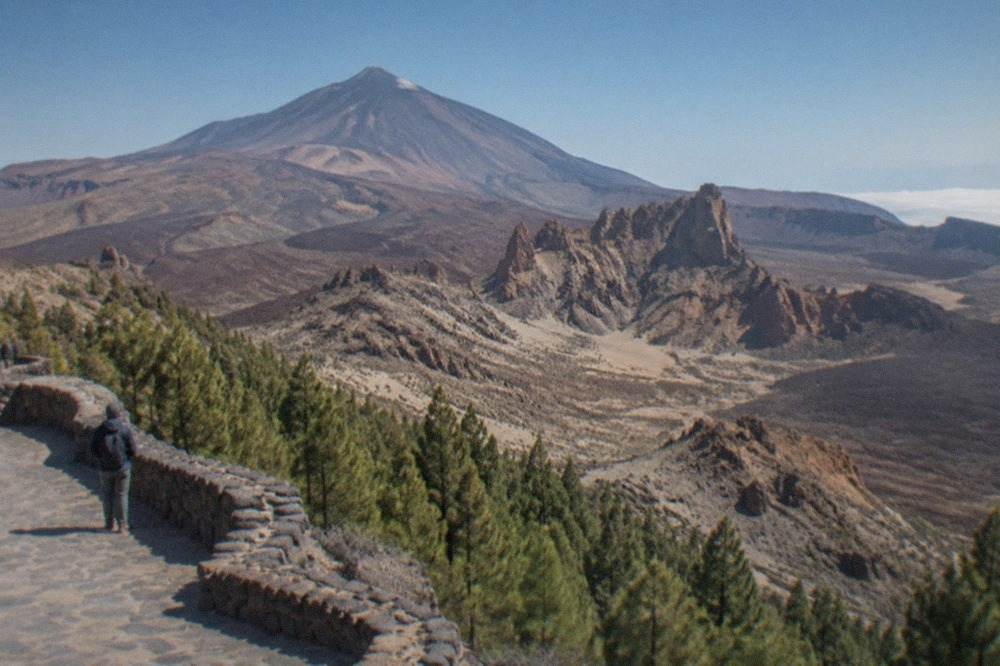
Short answer
The best viewpoints in Tenerife cluster in three zones: the Teide National Park miradores at altitude, the Teno coast lookouts above the Los Gigantes cliffs and Masca, and the Anaga ridge road in the north. All are free to stop at, and only the walking trails that need a booking carry a fee.
Tenerife is a volcano with viewpoints stacked on top of it. Spain's national park authority, MITECO, gives the summit of Mount Teide as 3,715 m, the highest peak on Spanish soil in UNESCO's words, and the island's roads climb most of the way there. The result is a rare thing: a place where a car park can sit above the clouds and a roadside railing can frame a 600 m cliff. Turismo de Tenerife records 5,242,653 visits to Teide National Park in 2024, the most visited park in Spain's national park network, and a large share of those visits are people stopping at miradores rather than walking anywhere. This guide sets out the viewpoints the official sources actually describe, what each one costs, and the rules that catch visitors out: the smoking ban across the national park, the two trails that now carry booking fees, and the shuttle-only access to Masca.
What Is the Best Viewpoint in Tenerife?
There is no single official answer, but the strongest documented case is the group of miradores inside Teide National Park, a UNESCO World Heritage site inscribed on 2 July 2007, where the cable car's upper station at La Rambleta sits at 3,555 m. For sheer drop, the tourist board describes the Los Gigantes cliffs as towering up to 600 m above a seabed about 30 m deep. Anaga answers with forested ridges dropping to small dark beaches.
The honest framing is that Tenerife's viewpoints divide by what you want to look at. The national park answers with rock, lava fields and, on clear days, the silhouettes of La Gomera, Gran Canaria and La Palma on the horizon. The Teno coast answers with vertical cliffs and the open Atlantic. Anaga answers with forested ridges dropping to small dark beaches. Each zone is described by an official source, and each is free to stop at: no official page lists an entry fee for Teide National Park, and the charges that do exist are per-booking fees on two walking trails, not on viewpoints or car parks.
One warning belongs at the top of any viewpoint guide. The Cabildo de Tenerife bans smoking in all open-air spaces of the national park: trails, viewpoints, car parks and recreation areas, as a wildfire measure. A viewpoint stop with a cigarette is a rule breach, not a local custom.
The Teide National Park Miradores: The Highest Viewpoints in Spain
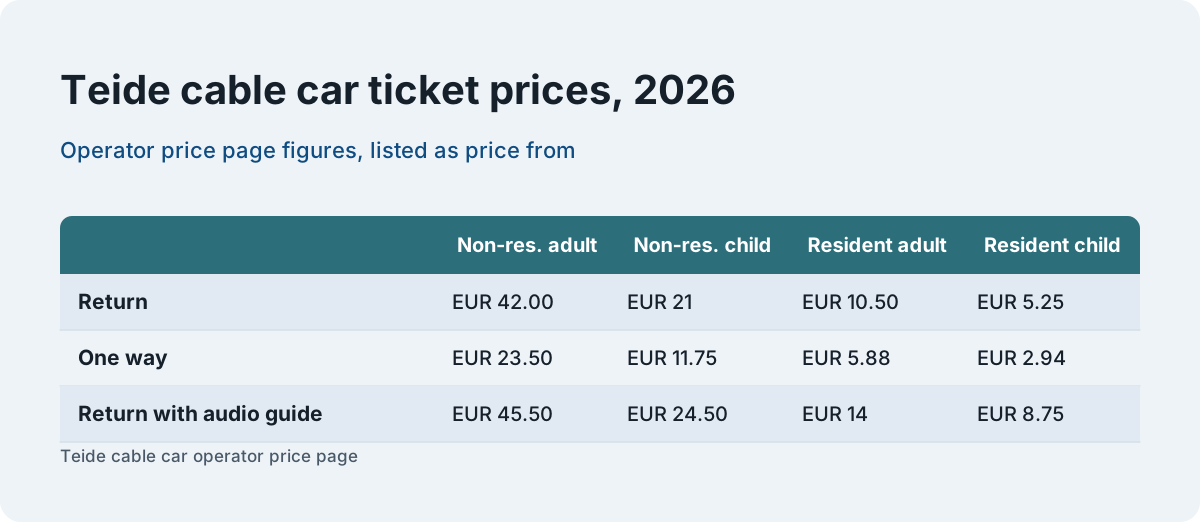
The national park's viewpoints sit between roughly 2,000 and 3,555 m, and the cable car's upper station, La Rambleta at 3,555 m, is the highest point reachable without a trail booking. The cable car costs EUR 42.00 for a non-resident adult return ticket, EUR 21 for a child aged 3 to 13. The summit crater is a separate trail, PNT 10, needing a reservation on Tenerife ON and, since 19 January 2026, EUR 15 for visitors on the 09:00 to 17:00 slots.
MITECO's technical file gives the park's extent: 18,990 hectares, with a peripheral protection zone of 7,374.32 hectares, declared by decree on 22 January 1954 and the largest and oldest national park in the Canaries in MITECO's wording. UNESCO inscribed it in 2007 under natural criteria (vii) and (viii), and its description of the mountain is the one this site uses: rising 7,500 m above the ocean floor, it is "regarded as the world's third-tallest volcanic structure".
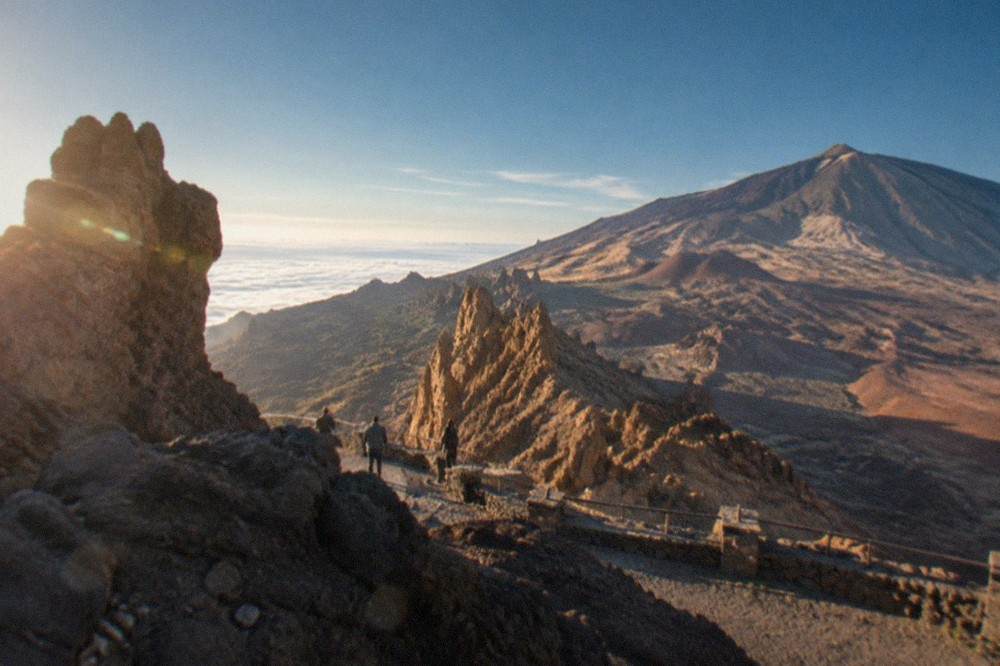
The Roques de Garcia, including the much-photographed Roque Cinchado, are the park's signature viewpoint subject, eroded rock towers standing over lava ground with Teide behind them. The Teide cable car is the way to buy altitude rather than walk it: the operator's own price page lists the base station at 2,356 m and the upper station at 3,555 m, so the ride climbs most of the way up the mountain in minutes.
The cable car does not reach the summit, and the distinction matters. The operator's access rules state that the cable car stops at La Rambleta, and the crater trail from there, PNT 10 Telesforo Bravo, is a separate reservation processed via Tenerife ON. The operator also refuses the ride to people with cardiovascular conditions, pregnant women and children under 3, because of the altitude, and the child fare band is age 3 to 13.
| Cable car ticket, 2026 | Non-resident adult | Non-resident child (3 to 13) | Resident adult | Resident child |
|---|---|---|---|---|
| Return | EUR 42.00 | EUR 21 | EUR 10.50 | EUR 5.25 |
| One way | EUR 23.50 | EUR 11.75 | EUR 5.88 | EUR 2.94 |
| Return with audio guide | EUR 45.50 | EUR 24.50 | EUR 14 | EUR 8.75 |
The operator lists these as "price from" figures, and the hours change with the season: 09:00 to 17:00 in the standard periods, extending to 18:40 in the summer and Easter windows, with the last ascent one hour before closing and the last descent ten minutes before. The base station car park runs 08:00 to 18:00 in the standard season.
For the summit trail itself, the booking regime is the one thing existing guides get wrong most often. Since slots for 1 September 2025 onward, the permit is booked on Tenerife ON, not on the old national parks booking site, which now only tells users to book on Tenerife ON. A new week of slots is released every Monday at 07:00 Canary time, keeping 56 days bookable, and no official page gives a sell-out speed, so none is stated here.
| Teide trail fee, 09:00 to 17:00 slots, since 19 January 2026 | Tenerife residents | Other Canary residents | All other users |
|---|---|---|---|
| PNT 10 Telesforo Bravo (summit) | EUR 0 | EUR 6 | EUR 15 |
| PNT 07 Montana Blanca, working days | EUR 0 | EUR 3 | EUR 6 |
| PNT 07 Montana Blanca, weekends and public holidays | EUR 0 | EUR 5 | EUR 10 |
Children are exempt from the fee, and the official page gives two different age cut-offs, so the booking page is the place to check the age band that applies. Bookings are non-refundable, with no change of date, slot or name, and a no-show can bar a user from new applications for three months. The sunrise and sunset slots, 06:00 to 09:00 and 18:00 to 22:00, carry no fee mark on the official page but are still reservations: walking the trail without one may be penalised.
A guided option suits readers who want the summit without managing the permit themselves. The roster's guided hike to the peak of Mount Teide includes hotel pickup and runs about seven hours, and the operator's live listing carries the current price and availability.
Mirador de Chirgue and the Teno Coast: Cliffs, Masca and the Los Gigantes Drop
Mirador de Chirgue, above Santiago del Teide, is the roadside platform for the Teno coast, where Turismo de Tenerife says the Los Gigantes cliffs tower up to 600 m above a seabed about 30 m deep. The Masca gorge below it is open as a descent-only walk under a pilot scheme, with a EUR 40.66 general ticket that excludes the boat, and hikers must arrive on TITSA line 355 from Santiago del Teide, because private vehicles are refused.
The Teno coast is where Tenerife stops looking like a beach holiday and starts looking like a fortification. The Los Gigantes cliffs sit inside Teno Rural Park, and the tourist board's figure is "up to 600 m", not the 800 m that circulates on older pages. The viewpoints along the ridge road above Santiago del Teide look down on the gorge village of Masca and out towards La Gomera, whose ferry crossing from Los Cristianos takes 50 minutes on Fred. Olsen Express's own timetable.
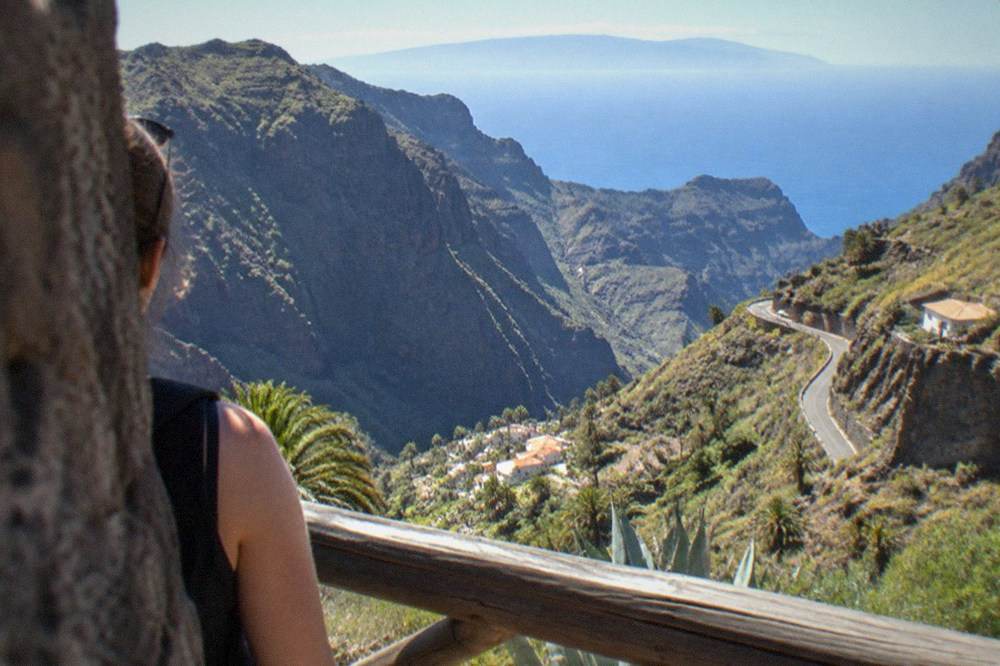
Masca deserves its own careful paragraph, because the rules around it changed and much published advice is now wrong. The gorge is open under a continuing pilot scheme: descent only, leaving by boat from Masca bay. The general ticket is EUR 40.66 and the boat is not included; the boat ticket is separate, must be booked beforehand, and for no later than four hours after the descent slot. Tenerife residents and mountaineering or caving federation members from the Canaries enter free, paid up front and refunded after the control checks the ticket.
| Masca gorge rule | What the operator's page states |
|---|---|
| Direction | Descent only, exit by boat from Masca bay |
| General ticket | EUR 40.66, boat not included |
| Access | Compulsory TITSA line 355 from Santiago del Teide; private vehicles refused |
| Entry sessions | 08:30 to 13:00; 25 places every 30 minutes, 50 at the 09:00 session |
| Footwear | Closed mountain footwear is a condition of entry |
| Return | Not included; TITSA lines 462 or 325 from Los Gigantes |
| Booking site | caminobarrancodemasca.com |
The operator calls the gorge the place with the most rescues in the Canaries in recent years, and warns that the pier can close suddenly when sea conditions turn, which voids the day's ticket. That is the honest risk picture, and it is why the viewpoint above the gorge is the safer way to see Masca for many visitors: the mirador asks nothing of your ankles and closes for nobody.
For readers who want the whole Teno and north-west loop without driving it, a full-day coach tour covers the national park, Masca, Icod and Garachico in about nine hours, and the product card shows the live price.
Anaga and the North Coast Viewpoints: Forest Ridges Over the Atlantic
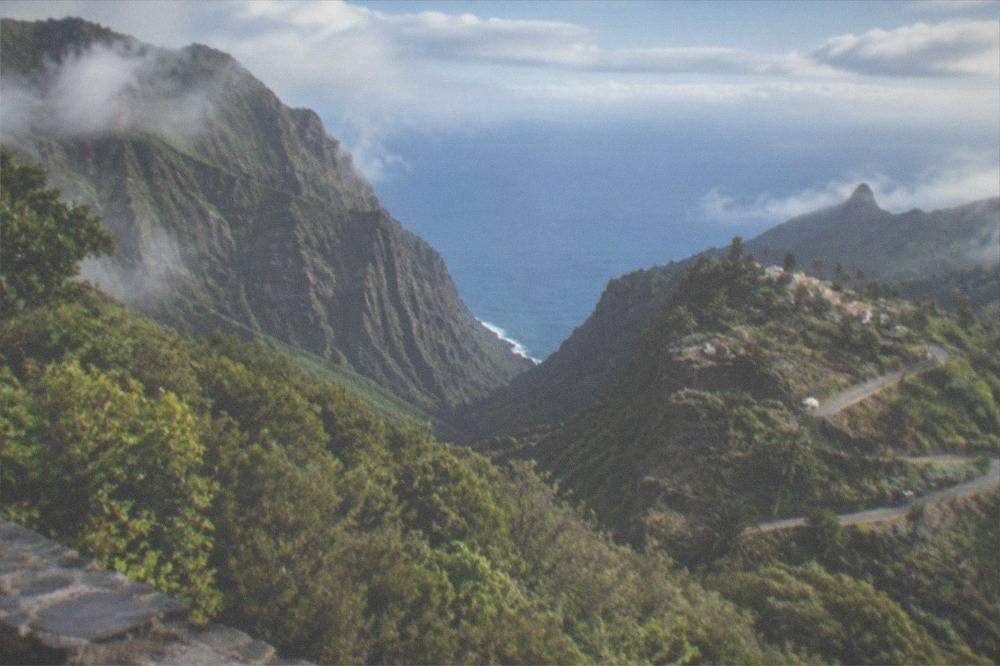
The Anaga Rural Park in the island's north-east is a UNESCO-recognised landscape of laurel forest ridges that drop to small dark-sand beaches, and its ridge road carries the viewpoints with the widest coastal panoramas on the island. The one trail most foreign guides send walkers to, El Pijaral, the "Enchanted Forest" on PRA 72, needs a prior reservation on Tenerife ON, released Mondays at 07:00 with at most 14 days bookable, and company-run tours are not permitted there.
Anaga Rural Park is the green counter-argument to the volcano. Its ridges end at beaches such as Playa de Benijo, a wild dark-sand cove under the mountains that the tourist board lists among the island's north-coast beaches, and the viewpoints along the road between Cruz del Carmen and the coast look down on a coastline that faces the full Atlantic.
The reservation rules in Anaga are specific and worth a table of their own, because two of the area's best-known walks are permit-only while nearby alternatives are not.
| Anaga trail or area | Reservation status |
|---|---|
| El Pijaral, PRA 72 La Ensillada (the "Enchanted Forest") | Mandatory, on Tenerife ON; released Mondays 07:00, at most 14 days ahead |
| Organised tours on El Pijaral | Not permitted for companies or legal entities |
| Bosque de los Enigmas trail | No reservation needed, named by the Cabildo as a permit-free alternative |
| Pista de Las Hiedras | No reservation needed, named by the Cabildo as a permit-free alternative |
| La Asomada to Cruz de Afur (Monte Aguirre exclusion zone) | Prior authorisation required |
The same Tenerife ON page that lists these also states a temporary measure: all other trails on the platform need no authorisation or booking until 31 December 2026. That is a dated rule, and it is the reason a spontaneous Anaga viewpoint drive is far easier to plan than a spontaneous summit hike. Other pages covering the same trip are gathered on Tenerife Travel Guide.
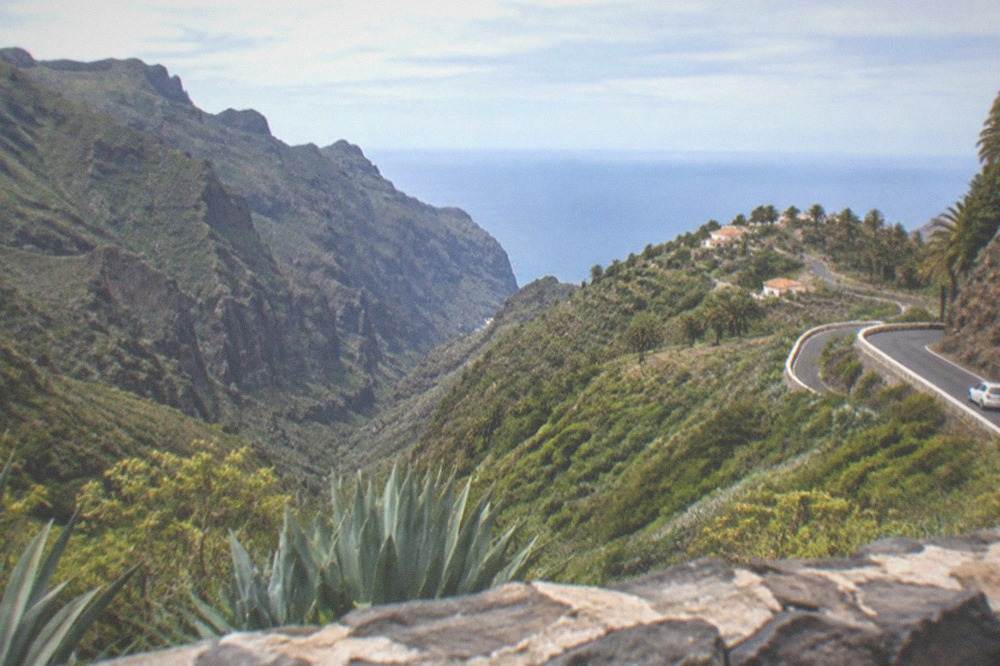
South and East Coast Viewpoints: From Montana Roja to the Auditorium
The south's viewpoints are lower but easier, led by the Montana Roja natural monument beside El Medano, whose fine grey-sand beach the tourist board describes under the mountain, and by the harbour and headland views around Los Cristianos and Costa Adeje. In Santa Cruz, the white trencadis skin of the Auditorio de Tenerife, inaugurated 2003 to Santiago Calatrava's design, gives the capital its most photographed waterfront platform.
The south rewards the visitor who wants a viewpoint with a swim attached. The La Tejita and Montana Roja area sits in Granadilla de Abona, and the tourist board's beach page for El Medano describes fine grey sand under the mountain itself. Further along the coast, the beaches of Playa de las Vistas and Playa del Duque are described by the same body, the first as golden sand calm behind breakwaters, the second, contrary to repeated claims, as a grey sandy beach.
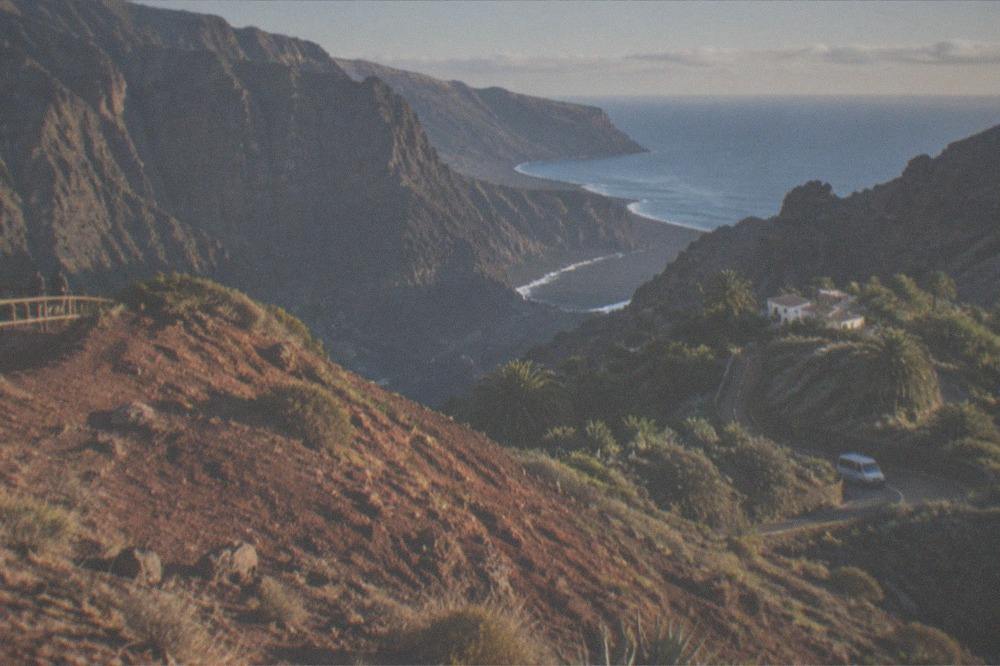
In the capital, the Auditorio de Tenerife's own institutional page gives the facts: 23,000 square metres, a white trencadis skin, inaugurated in 2003. The building sits on the waterfront, and the promenade around it doubles as the city's open-air viewpoint over the bay. A bike or e-bike tour of the Santa Cruz highlights starts near the cruise terminal and runs about two and a half hours, which pairs the auditorium, the old town and the waterfront in one loop.
When to Go: What the Climate Stations Record at the Viewpoints
The climate record splits sharply by altitude. AEMET's normals for Santa Cruz, at 36 m, give a July mean of 25 C with zero rain days, while the Izana station on the Teide observatory ridge, at 2,369 m, records a July mean of 18.5 C and a January mean of 4.3 C with 47 mm of rain. The sea off the south coast, on NOAA's 1991 to 2020 series, runs from 19.1 C in March to 23.7 C in September and October.
The practical point for viewpoint planning is that the national park is a different climate zone, not a colder version of the beach. The Izana figures below are AEMET's own normals for station C430E, and they explain two things at once: why the summit viewpoints are bitterly cold in winter, and why the stargazing tours run there in summer.
| Month | Izana (2,369 m) mean daily max C | Izana mean daily min C | Izana rain, mm | Santa Cruz mean daily max C | Santa Cruz rain, mm |
|---|---|---|---|---|---|
| Jan | 7.5 | 1.1 | 47 | 21 | 32 |
| Feb | 8 | 1.3 | 67 | 21.2 | 35 |
| Mar | 10.2 | 2.7 | 58 | 22.1 | 38 |
| Apr | 11.8 | 3.5 | 18 | 22.7 | 12 |
| May | 14.5 | 5.8 | 7 | 24.1 | 4 |
| Jun | 18.9 | 9.9 | 0 | 26.2 | 1 |
| Jul | 23 | 14 | 0 | 28.7 | 0 |
| Aug | 22.6 | 13.8 | 5 | 29 | 2 |
| Sep | 18.6 | 10.4 | 13 | 28.1 | 7 |
| Oct | 14.3 | 6.9 | 37 | 26.3 | 19 |
| Nov | 11.1 | 4.5 | 54 | 24.1 | 34 |
| Dec | 8.8 | 2.4 | 60 | 22.1 | 43 |
The air normals are AEMET's 1981 to 2010 series; the sea temperatures are a different dataset on a different period, NOAA's 1991 to 2020 series, and the two are never mixed in one sentence. On the mountain, winter brings a rule as well as a temperature: ice and snow put crampons and an ice axe on the mandatory equipment list for the stratovolcano trails, with a signed declaration.
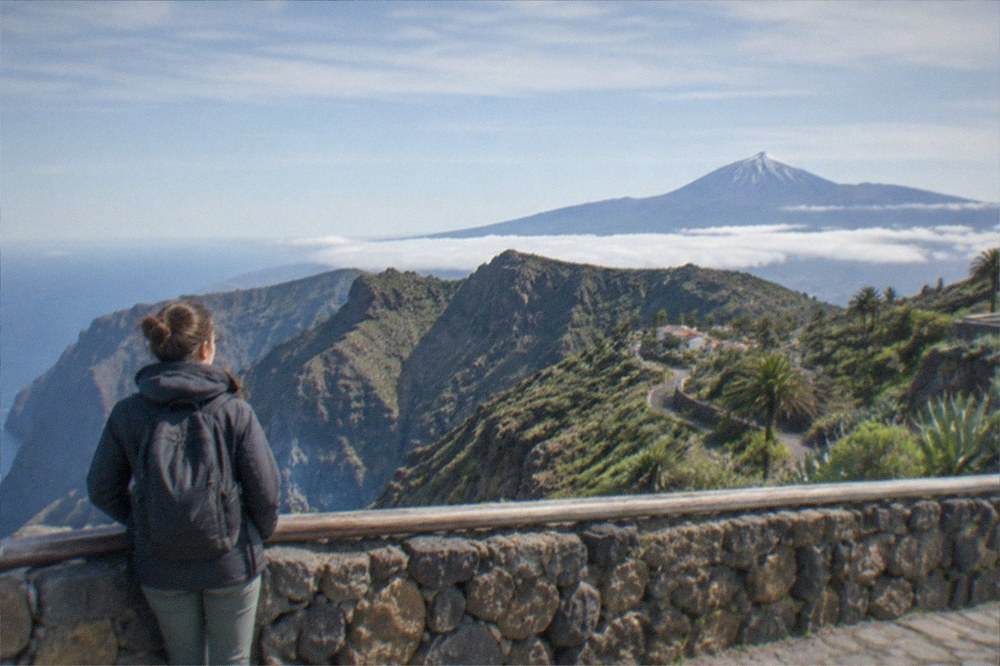
Sunset is the hour the national park is famous for, and the Fundacion Starlight lists El Teide as a Starlight Tourist Destination and the Cumbres de Tenerife as a Starlight Reserve, both dated October 2013. The Teide Observatory at Izana, about 2,400 m, where the first telescope began work in 1964, runs guided visits by prior reservation only, and its page has carried a fully booked notice, so booking ahead is not a suggestion there.
Getting to the Viewpoints: Buses, Trams and the Rules of the Road
TITSA buses serve both airports and the main viewpoint zones, with lines 10, 40, 711, 343 and 415 at Tenerife South and lines 20, 30 and 343 at Tenerife North, and visitors pay for every ticket: single fares, the EUR 10 day travelcard or the EUR 50 seven-day travelcard. The 2026 free-transport subsidy applies to resident passes only, and the Teide and Teno lines are excluded from the subsidised passes in any case.
The bus is the honest way to reach the viewpoints if you would rather not drive the mountain roads. TITSA's own airport pages list the lines above, and the same operator's fares page lists the visitor products: a day travelcard at EUR 10, a seven-day travelcard at EUR 50, and the Ten+ card at EUR 2 with wallet top-ups from EUR 2 to EUR 100, sold at airport ticket machines. The Canary government's 100% subsidy for 2026, in force since 1 January under Real Decreto-ley 17/2025, requires residency in the Canary Islands and a personalised card, so a visitor does not qualify.
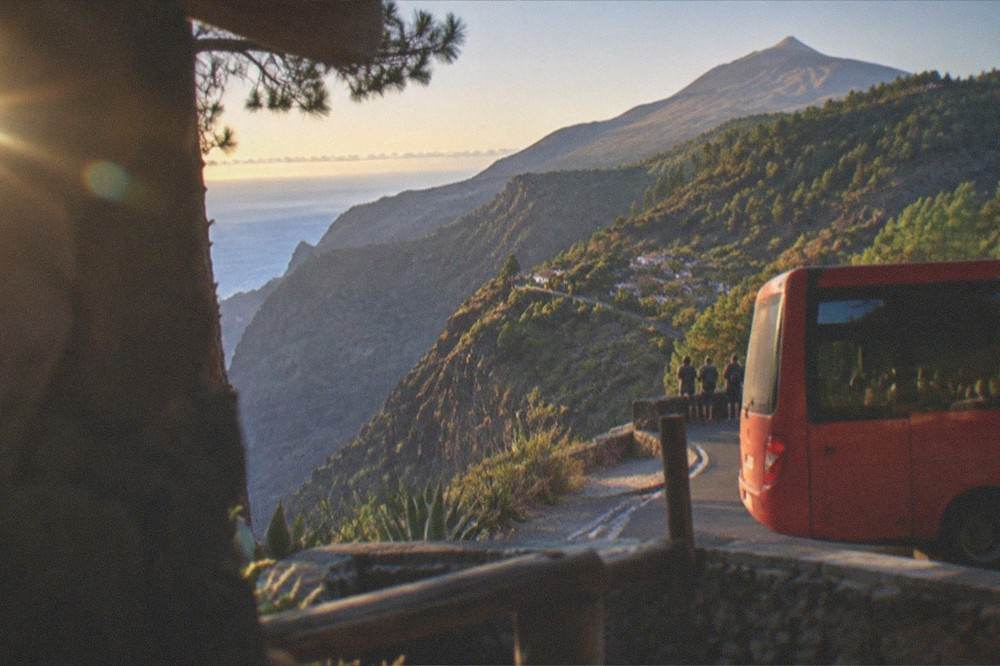
For drivers, the national park's roads carry no entry charge on any official page read, and the viewpoint car parks are covered by the same wildfire rules as the trails: the smoking ban extends to car parks and recreation areas. The drink-drive limit the DGT page refers to is 0.5 g/l in blood for general drivers, which matters on roads that climb 2,000 m with hairpins. Taxis on the island are white and metered from the start of the trip, with a fixed price agreeable in advance for excursions, per the tourist board's own transport page.
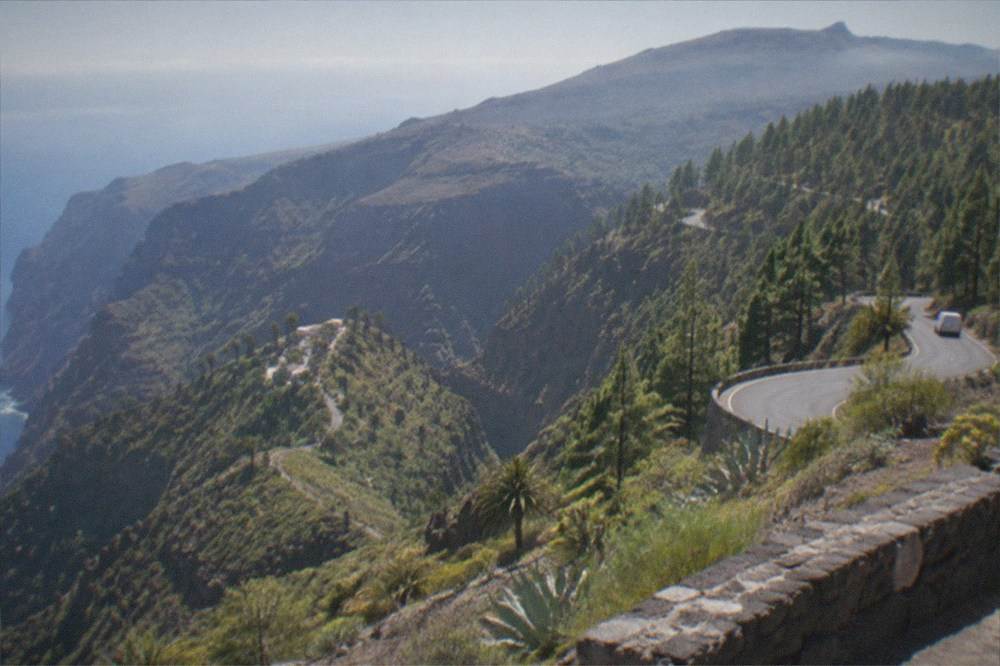
A final planning note on money: no official page read shows a per-night tourist tax in force or approved on Tenerife. The charges that do exist are the per-booking trail fees on PNT 10 and PNT 07, the Masca ticket and the Barranco del Infierno ticket, which costs EUR 15 for a non-resident adult with compulsory advance online booking. None of them is charged for standing at a viewpoint.
Common Questions About Tenerife Viewpoints
What is the best viewpoint in Tenerife?
No official body ranks them, but the documented standouts are the miradores inside Teide National Park, where the cable car reaches La Rambleta at 3,555 m inside a UNESCO World Heritage site, the Teno coast lookouts above the Los Gigantes cliffs, which the tourist board describes as towering up to 600 m, and the Anaga ridge road over the laurel-forest coastline. All are free to stop at; only the walking trails carry booking fees.
Do the viewpoints in Teide National Park cost anything?
No official page lists an entry fee for the park, and driving through, the viewpoints and the car parks carry no charge on any page read. The charges that exist are per-booking public fees on two trails only, PNT 10 and PNT 07, since 19 January 2026, plus the cable car ticket if you ride it.
Can I see the summit crater from a viewpoint without a permit?
Yes, the crater rim is visible from La Rambleta at 3,555 m and from viewpoints along the park road. Walking onto the crater trail itself, PNT 10 Telesforo Bravo, needs a personal reservation on Tenerife ON, and since 19 January 2026 the 09:00 to 17:00 slots cost EUR 15 for visitors.
Can I smoke at the viewpoints in the national park?
No. The Cabildo de Tenerife bans smoking in all open-air spaces of Teide National Park, including trails, viewpoints, car parks and recreation areas, as a wildfire measure.
Is the Masca viewpoint the same as the Masca gorge walk?
No. The viewpoint above the gorge is a roadside stop with no ticket. The gorge walk is a descent-only pilot scheme with a EUR 40.66 general ticket that excludes the boat, compulsory arrival on TITSA line 355 from Santiago del Teide, and a pre-booked boat exit from Masca bay.
Is public transport free for getting to the viewpoints?
Not for visitors. The 2026 100% subsidy applies to resident passes only, and the Teide and Teno lines are excluded from the subsidised passes anyway. Visitors pay single fares, the EUR 10 day travelcard or the EUR 50 seven-day travelcard.