Tenerife vs Mallorca
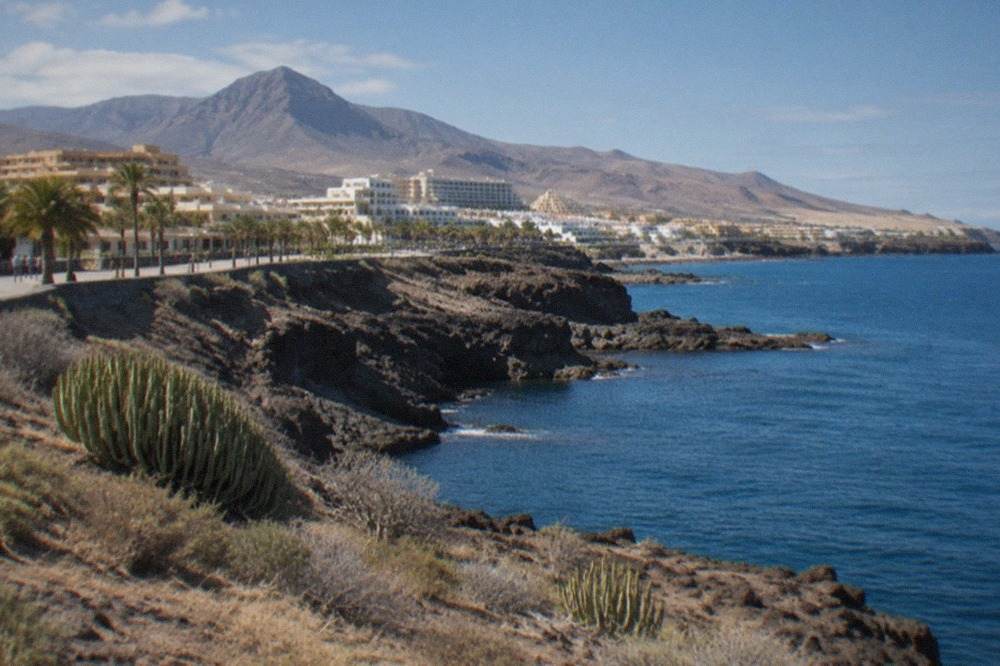
Tenerife and Mallorca compete for the same British holidaymaker, but they are not the same island in two colours. One is a volcanic island off West Africa with Spain's highest peak; the other is the largest of the Balearics, with a mountain range of its own and a shorter, hotter summer season.
Short answer
Tenerife suits winter sun, volcanic hiking and whale watching year round; Mallorca suits a classic Mediterranean summer with cycling and coves. Tenerife's south coast averages 24 degrees Celsius in July and 18 in January, so it stays warm when Mallorca is cool.
Two islands, two very different calendars. Tenerife is a volcanic island off the West African coast, and its weather station at Santa Cruz records a mean of 25 degrees Celsius in July and 18.2 in January. Mallorca sits in the Mediterranean, closer to the Spanish mainland, and its season is the mirror image: hot and packed in summer, quiet and cool from late autumn to early spring. That single difference, more than any beach or restaurant, decides which island fits a given holiday.
This page compares the two honestly. Where Tenerife is concerned, every figure below comes from an official source: the state meteorological agency AEMET, the Cabildo's trail platform Tenerife ON, the bus operator TITSA, the tourist board's own 2025 balance. Mallorca has no equivalent fact pack behind this article, so nothing about it is stated as a number, and where a Mallorca detail matters to a decision, the honest instruction is to confirm it with the venue or operator directly. That asymmetry is deliberate: a comparison built on remembered figures is a comparison built on nothing.
Which Island Has the Better Winter Weather?
Tenerife is the clear winter-sun island, and the margin is not close: AEMET's normals put Santa Cruz at a mean of 18.2 degrees Celsius in January and 19.4 in December, with the sea off the south coast at 19.9 and 21.1 degrees Celsius in those months, while Mallorca's Mediterranean winter runs distinctly cooler, and any traveller needs current Mallorca forecasts rather than a figure from this page.
The Canaries sit at roughly the same latitude as the Sahara, and the trade winds do the rest. AEMET's 1981 to 2010 normals for Santa Cruz show a mean daily maximum of 21 degrees Celsius in January, rising only to 29 in August, which is a remarkably flat curve. Rain falls on 4.2 days of at least 1 mm in January and 5.4 in December, against 29.7 such days across the whole year. In other words, a winter week in Santa Cruz has a better-than-even chance of staying dry, and the tourist south is drier still: Tenerife South Airport's station records just 17 mm across all of January.
Mallorca's winter is genuinely Mediterranean. The island is warm by northern European standards from May to October, but swimming in January is a different proposition there, because the Mediterranean cools far harder in winter than the Atlantic around Tenerife, whose September and October sea temperatures of 23.7 degrees Celsius are the warmest of the year. For a February half-term or a January escape, that gap is the whole argument. The full month-by-month picture is in the Tenerife weather by month guide, and the seasonal detail continues in the Tenerife in January and Tenerife in February guides.
| Month | Santa Cruz mean daily max (C) | Santa Cruz rain days of 1 mm or more | Sea surface off south Tenerife (C) |
|---|---|---|---|
| January | 21 | 4.2 | 19.9 |
| March | 22.1 | 3.8 | 19.1 |
| July | 28.7 | 0 | 22.2 |
| September | 28.1 | 0.9 | 23.7 |
| November | 24.1 | 4.7 | 22.5 |
The sea figures are NOAA's 1991 to 2020 series, a different dataset from AEMET's 1981 to 2010 air normals, so the two periods should not be conflated. What both say together is simple: Tenerife never really goes cold, and Mallorca does. A traveller whose holiday window is November to March is choosing Tenerife almost by default, and the Tenerife in November and Tenerife in December guides cover those months in detail.
Which Island Has the Better Beaches?
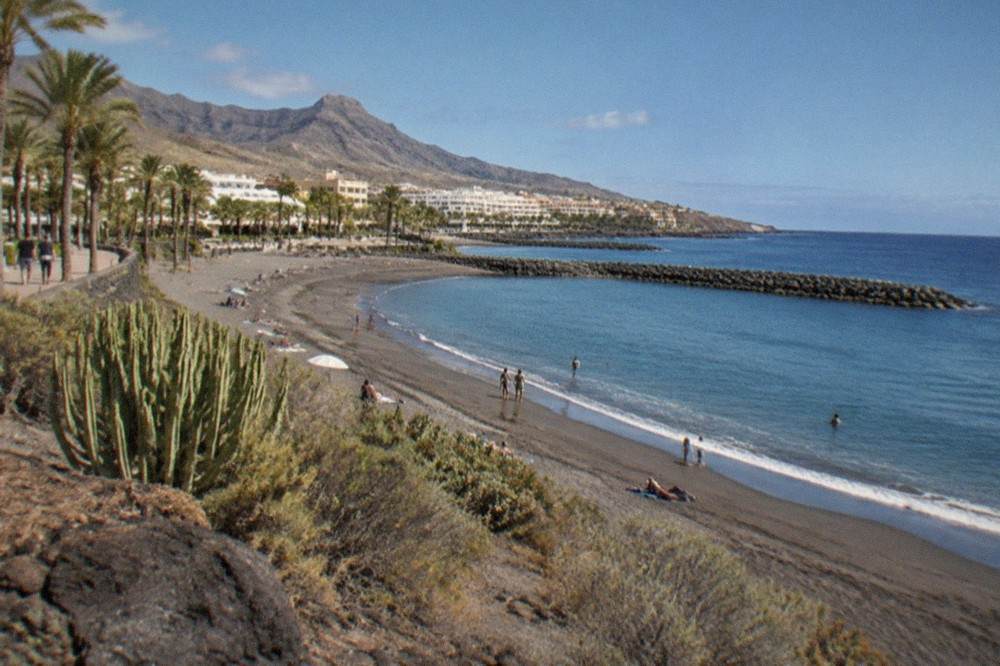
Mallorca wins on beach variety in the classic Mediterranean sense, with white sand and turquoise coves the standard image of the island, while Tenerife's beaches are mostly volcanic and darker: the tourist board itself describes El Duque as grey sand, El Medano as fine grey sand and El Bollullo as black sand, reserving golden sand for Las Teresitas and Las Vistas.
That is an honest reading of Tenerife's own official descriptions, not a slur on them. Las Teresitas, in San Andres near Santa Cruz, is the showcase: golden sand, palm trees and breakwaters that calm the water, which is exactly what a family with small children wants. Las Vistas in Arona offers the same golden-sand, calm-water formula. But much of the rest of the coast is volcanic, and that is part of the island's character rather than a defect. El Bollullo is black sand at the foot of a cliff in La Orotava, and it is one of the most photographed stretches on the island precisely because of it.
Mallorca's beaches need no advocacy and get no invented statistics here. The island is famous for coves, and any traveller comparing specific beaches should check the current access rules and facilities with the local authority, since popular coves carry seasonal restrictions that change. What can be said without a number is structural: Mallorca offers the classic white-cove Mediterranean look that Tenerife mostly does not, and Tenerife offers dark-sand beaches under a volcano that Mallorca cannot match. The choice is aesthetic, and it is one of taste.
There is a third category where Tenerife is unusually strong: natural pools and swimming in volcanic settings, which the natural pools guide covers. Garachico's rock pools, formed where the 1706 lava met the sea, are the best known. Mallorca has nothing quite like them, because Mallorca has no recent lava fields.
Which Island Is Better for Hiking and Volcanic Landscapes?
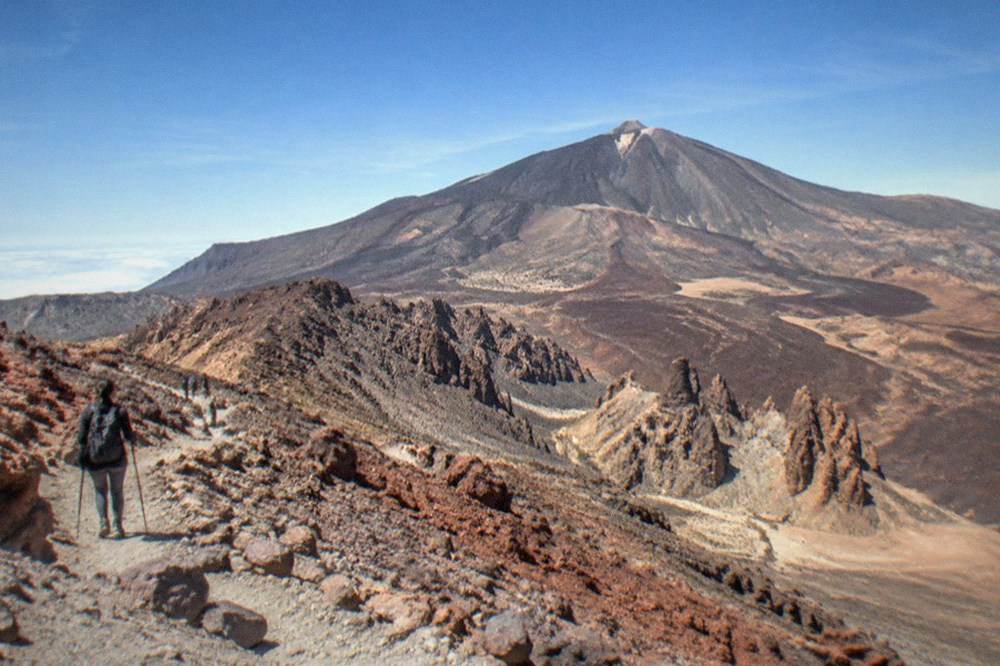
Tenerife is the stronger hiking island for most walkers, because it holds Spain's highest peak on Spanish soil, Teide at 3,715 m, inside a UNESCO World Heritage national park that recorded 5,242,653 visits in 2024, the most visited park in Spain's network, while Mallorca's walking is concentrated in its own mountain range, whose details should be confirmed with official sources.
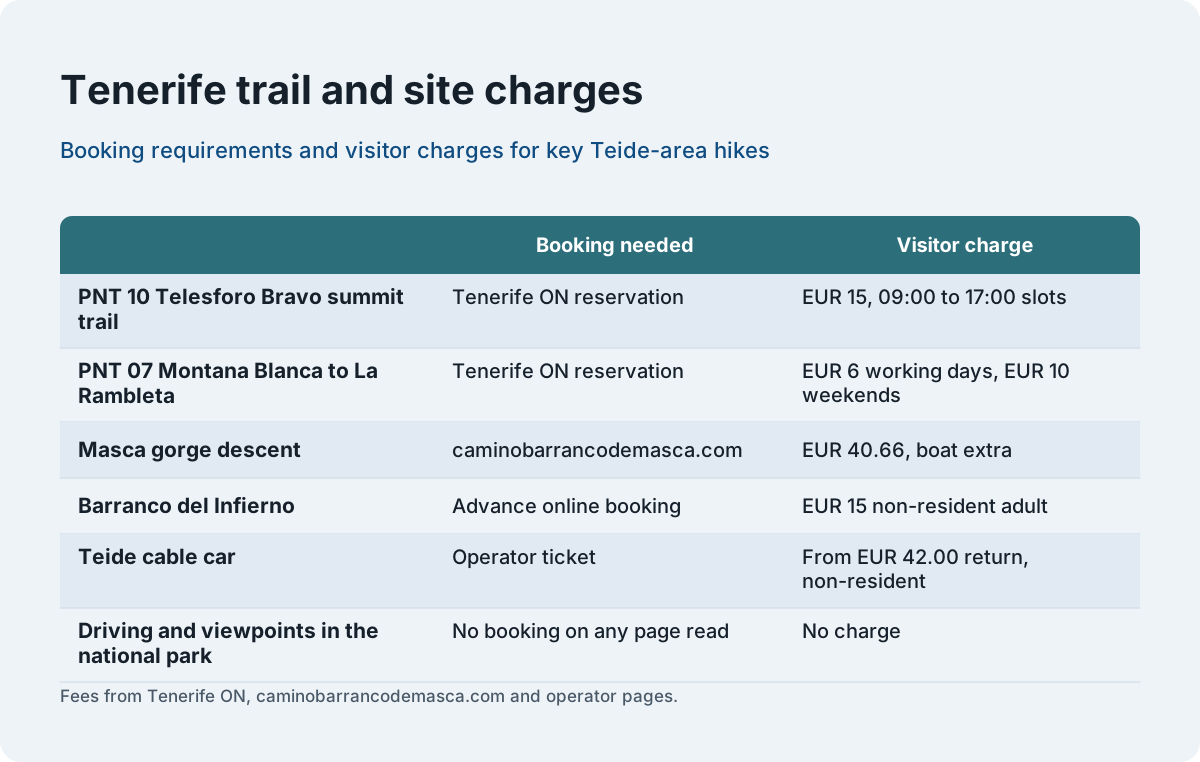
Teide National Park was declared by decree on 22 January 1954 and inscribed by UNESCO on 2 July 2007 under natural criteria (vii) and (viii). UNESCO describes Teide as rising 7,500 m above the ocean floor, "regarded as the world's third-tallest volcanic structure". The hiking offer is genuinely tiered. Driving through the park and using the viewpoints costs nothing and needs no booking on any official page read. The cable car is an operator ticket, running from the base station at 2,356 m to La Rambleta at 3,555 m, with a 2026 non-resident return price shown from EUR 42.00. The summit trail, PNT 10 Telesforo Bravo, is a separate personal reservation on Tenerife ON: since Monday 19 January 2026 the 09:00 to 17:00 slots cost EUR 15 for visitors, EUR 6 for residents of the other Canary Islands, and nothing for Tenerife residents and children. The full permit mechanics are in the Teide summit permit guide.
Mallorca's mountains are limestone, not volcanic, and the island's long-distance walking is well regarded, but this page states no Mallorca route, height or distance, because none is verified here. A walker comparing the two should look at the official tourism pages for each island's trails before booking anything. What Tenerife can promise on paper is variety within one island: the summit of Spain's highest peak, the laurel forests of Anaga, the Masca gorge with its boat exit, and the Barranco del Infierno, all reservation systems covered in the hiking in Tenerife guide.
| Tenerife trail or site | Booking needed | Visitor charge |
|---|---|---|
| PNT 10 Telesforo Bravo summit trail | Tenerife ON reservation | EUR 15, 09:00 to 17:00 slots |
| PNT 07 Montana Blanca to La Rambleta | Tenerife ON reservation | EUR 6 working days, EUR 10 weekends |
| Masca gorge descent | caminobarrancodemasca.com | EUR 40.66, boat extra |
| Barranco del Infierno | Advance online booking | EUR 15 non-resident adult |
| Teide cable car | Operator ticket | From EUR 42.00 return, non-resident |
| Driving and viewpoints in the national park | No booking on any page read | No charge |
Two warnings that matter more than any price. Smoking is banned in every open-air space of Teide National Park, car parks included, as a wildfire measure. And the cable car operator refuses the ride to people with cardiovascular conditions, pregnant women and children under 3, because of the altitude; anyone with a health problem is told to ask a doctor first.
How Do the Costs of Each Island Compare?
Neither island charges a tourist tax that this page can confirm, and Tenerife demonstrably has none: no official page read shows a per-night lodging tax in force or approved there, while Mallorca's visitor charges must be checked with Balearic official sources before booking, and Tenerife's real costs are specific official fees, the Teide trail charges, the EUR 40.66 Masca ticket and the EUR 15 Barranco del Infierno entry.
That Tenerife sentence is stronger than it looks. A great deal of confusing advice circulates about Canary visitor charges, and the verified position is plain: the charges that exist on Tenerife are per-booking fees on two Teide trails, the Masca ticket and the Barranco del Infierno ticket, and none of them is a per-night lodging tax. Mallorca's situation is a different jurisdiction's question, and the Balearic islands have their own visitor rules that a traveller must confirm with official Balearic sources; this page asserts nothing about them either way.
Day-to-day costs tilt on two things. First, sales tax: the Canaries apply IGIC rather than mainland VAT, and the Canary tax agency's table shows 7% on everyday goods, with reduced and zero bands; non-resident travellers can even claim IGIC back on qualifying purchases. Second, transport: Tenerife's visitor travelcards are the EUR 10 day travelcard and the EUR 50 seven-day travelcard, sold at airport ticket machines, and single TITSA tickets are priced by route. Public transport is not free for visitors: the 2026 100% subsidy applies to resident passes only, on personalised cards that require Canary Islands residency.
| Cost item | Tenerife, verified |
|---|---|
| Sales tax on everyday goods | IGIC 7%, not VAT |
| Day travelcard (visitor) | EUR 10 |
| Seven-day travelcard (visitor) | EUR 50 |
| Tram single | EUR 1.35 on a transit pass |
| Same-day return bus discount | 10% off on trips of 20 km or more |
| Per-night lodging tax | None shown on any official page read |
Accommodation and flight prices move daily on both islands, and no honest comparison page quotes them. What can be said is structural: Tenerife's air connectivity in 2025 covered 34 markets and 159 airports, and its hotel and apartment revenue reached EUR 2,121 million, both figures from the tourist board's 2025 balance, which tells a reader that the island's supply is large and competitive without saying what any individual booking will cost.
Which Island Is Easier to Get Around?
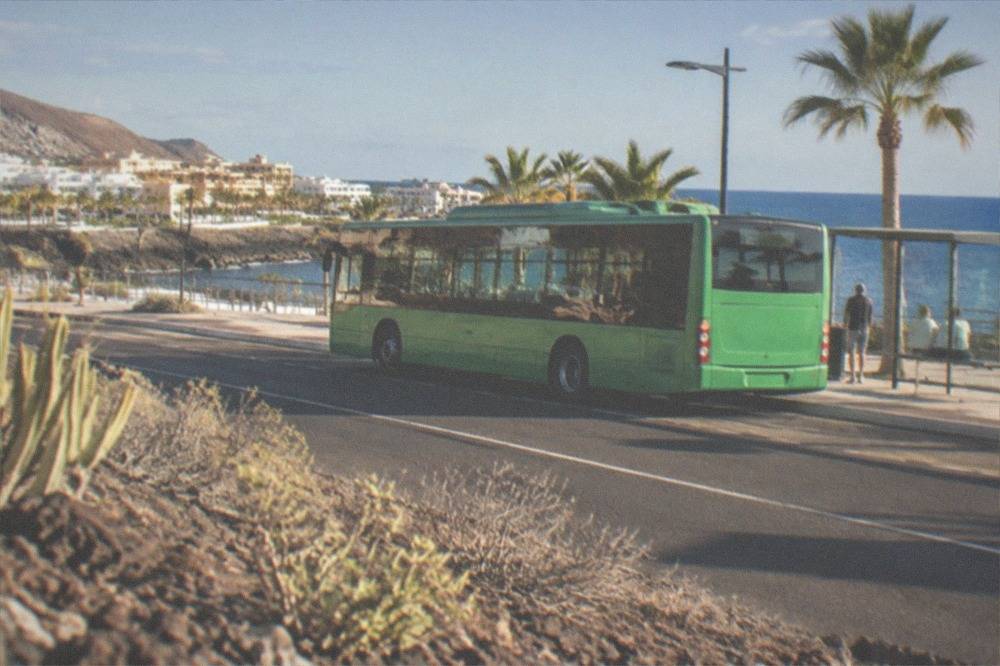
Tenerife is unusually easy for a car-free visitor for a holiday of its type, because TITSA buses serve both airports with named lines and a EUR 10 day travelcard covers the network, while the tram links Santa Cruz and La Laguna, but the island's headline excursions, Teide and Masca, each add a booking step; Mallorca's car-free case depends on where you stay and should be checked against its own transport authority.
The Tenerife side can be stated precisely because TITSA's own airport pages list the lines. At Tenerife South Airport: line 10 to Santa Cruz, line 40 to Costa Adeje via Los Cristianos, night line 711, express line 343 to Puerto de la Cruz via both airports, and line 415 to El Fraile and San Isidro. At Tenerife North Airport: line 20 to Santa Cruz via La Laguna, line 30 to Puerto de la Cruz, and the same express 343 south. There is no tram to either airport, and the tram's fares, EUR 1.35 single on a transit pass, apply only to the Santa Cruz to La Laguna corridor. The Tenerife buses guide carries the detail.
The booking steps are the honest caveat. The Masca gorge requires arrival on TITSA line 355 from Santiago del Teide, with the bus ticket shown at the control; private vehicles are refused. The Teide summit requires a personal reservation made on Tenerife ON, released every Monday at 07:00 Canary time so that 56 days are always bookable. Neither is hard, but both are rules, and a traveller who ignores them does not get the walk. Mallorca, meanwhile, has a rail line and its own bus network, and any car-free plan there should be built on the island's official transport information rather than on anything remembered here.
For drivers, both islands reward a car for a day or two, and Tenerife's driving is covered in the driving guide. The general drink-drive limit in Spain is 0.5 g/l in blood, and it applies on both islands alike.
Which Island Suits Families Better?
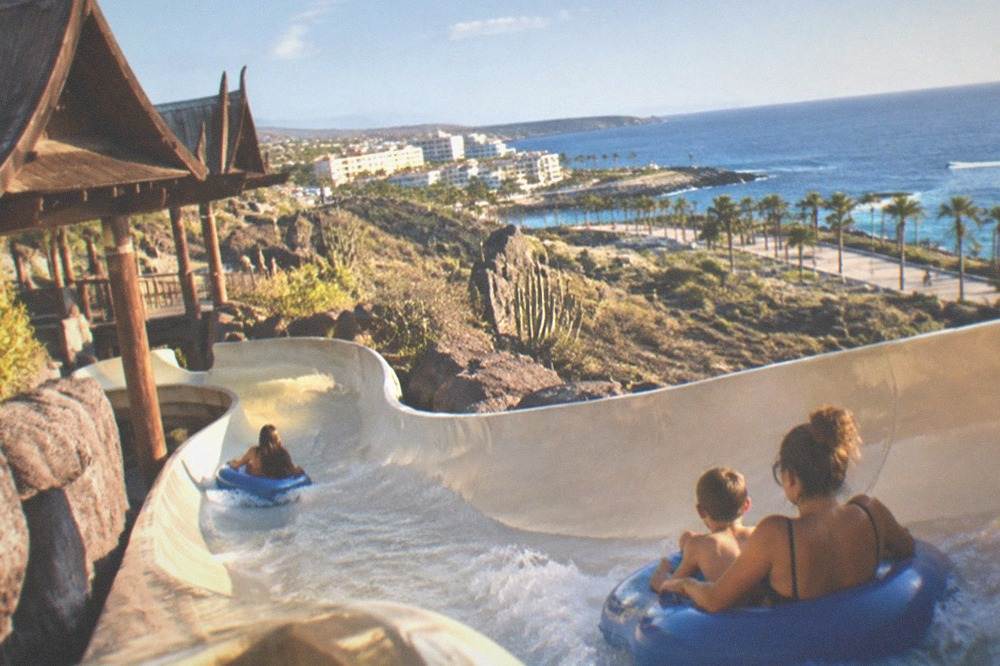
Tenerife has a strong, verifiable family case: Siam Park opens 365 days a year from 10:00 to 18:00 in the summer season and 10:00 to 17:00 in winter, Loro Parque runs 09:30 to 17:30 every day of the year, and the island's two golden-sand town beaches are built behind breakwaters, while Mallorca's family offer is real and popular but its seasonality means winter family trips there are a different proposition.
The winter point is decisive for half the year. A family travelling in February can use Tenerife's water park, its zoo and its beaches in the same week, because the island's attractions run all year and the sea off the south coast is around 19.2 degrees Celsius that month. The same family in Mallorca in February will find a colder sea and a quieter island, whatever the island's summer reputation. From June to September the comparison evens out considerably, and Mallorca's family tourism is among the most developed in Europe.
Tenerife's headline parks also carry an unusual distinction: Loro Parque's own release records that Tripadvisor awarded it the Travellers' Choice award for the best water park in the world, in the release's own wording, for a fifth consecutive year. Later years are not confirmed on the awarding body's page, so the claim stays attributed and undated here rather than inflated. The water parks guide and the theme parks guide compare the island's parks properly.
For a family split between the two islands, the practical advice is season-led. Travel between May and October and Mallorca competes on equal terms, with a Mediterranean beach culture Tenerife cannot copy. Travel between November and March and Tenerife is not so much the better family choice as the only one of the two still operating at full capacity.
Which Island Is Better for Whale Watching and Marine Life?
Tenerife is one of the few European islands with a resident whale population and a legal framework built around it: the World Cetacean Alliance designated the Tenerife-La Gomera marine area a Whale Heritage Area in January 2021, and Decreto 178/2000 sets binding approach rules, no boat within 60 m, at most three boats within 500 m and no swimming within 500 m, while Mallorca's marine excursions have no comparable verified case on this page.
The legal detail is what separates a real whale-watching destination from a boat trip with a hopeful crew. Canary law, Decreto 178/2000 of 6 September, bans any approach within 60 m of the animals, caps the number of boats within 500 m at three, limits speed to 4 knots inside that zone and forbids swimming, diving, feeding, chasing or circling. Authorised boats must fly the Barco Azul flag, issued with the permit and at each annual renewal. A traveller can check the flag before stepping aboard, which is a rare consumer protection in this industry.
The World Cetacean Alliance describes a unique resident population of pilot whales, bottlenose dolphins and a migration stop for 21 other cetacean species, inside a Special Area of Conservation. No population count is stated here, because no official count exists on file. Mallorca runs dolphin and boat excursions too, and the honest comparison is that Tenerife's resident population makes sightings a reasonable expectation rather than a lucky outlier, on a coast where trips run year round. The whale watching tours page covers the operators.
Which Is Better, Mallorca or Tenerife?
For winter sun, whale watching, volcanic hiking and a year-round season, Tenerife is the better island, and its verified numbers say so: 18.2 degrees Celsius mean in January in Santa Cruz, a UNESCO-listed volcano, 5,451,268 tourists lodged in hotels and apartments in 2025, and a resident pilot whale population; for a classic Mediterranean summer of white coves and longer, hotter days, Mallorca is the better island, and no Tenerife fact changes that.
The two islands are not really rivals; they are answers to different questions. Tenerife's 2025 visitor balance records 5,451,268 tourists lodged in hotels and apartments, with the UK the largest source market at 2,057,896 lodged tourists, 37.8% of that total. Those numbers describe an island that works all year, at British rhythms, with British flight times. Mallorca draws a similar British crowd into a sharper summer peak, and its winter is quiet by design.
| Decision | The island the verified facts favour |
|---|---|
| Holiday in November to March | Tenerife: 18 to 19 C means, sea around 20 C |
| White-sand Mediterranean coves | Mallorca, on its established reputation |
| Volcanic landscapes and high hiking | Tenerife: Teide, 3,715 m, UNESCO since 2007 |
| Resident whales with legal approach rules | Tenerife: Whale Heritage Area since January 2021 |
| Classic hot summer beach fortnight | Either; Mallorca's summer is the Mediterranean standard |
| Year-round family attractions | Tenerife: both major parks open every day of the year |
A traveller who wants both experiences does not have to choose for ever. The Tenerife vs Gran Canaria and Tenerife vs Lanzarote comparisons cover the intra-Canary question, and which Canary island is best settles the wider one. For the Tenerife side of any trip, the things to do in Tenerife page is the full inventory, and this Tenerife Travel Guide desk updates it as official figures are published.
Common Questions About Tenerife vs Mallorca
Which is better, Tenerife or Ibiza?
Tenerife and Ibiza serve different travellers. Tenerife offers a volcano, whale watching under a legal protection framework, year-round family parks and winter temperatures around 18 degrees Celsius; Ibiza is known for its nightlife and summer season, and nothing about it is verified on this page. A traveller choosing between them should decide first whether the holiday is a winter trip or a summer one, because Tenerife operates all year while Ibiza's season is concentrated in the summer months, and then confirm Ibiza details with official Balearic sources.
Do I need a car in Tenerife?
Not necessarily. TITSA buses serve both airports, with lines 10, 40, 711, 343 and 415 at Tenerife South and 20, 30 and 343 at Tenerife North, and the EUR 10 day travelcard covers the network. The tram links Santa Cruz and La Laguna. The exceptions are the excursions with their own rules: the Masca gorge requires arrival on TITSA line 355 from Santiago del Teide, and the Teide summit requires a Tenerife ON reservation. The full answer is on the do-you-need-a-car page.
Is Tenerife warmer than Mallorca in winter?
Yes, by a wide margin. AEMET's normals put Santa Cruz at a mean of 18.2 degrees Celsius in January and 19.4 in December, with the sea off the south coast at 19.9 and 21.1 degrees Celsius in those months. Mallorca's Mediterranean winter is cooler, and any traveller needs a current Mallorca forecast rather than a figure from this page, but the structural difference is real: the Atlantic around Tenerife barely cools in winter, while the Mediterranean does.
Are there tourist taxes on either island?
No official page read shows a per-night lodging tax in force or approved on Tenerife. The charges that do exist there are per-booking fees: the Teide trail charges since 19 January 2026, the EUR 40.66 Masca ticket and the EUR 15 Barranco del Infierno entry. Mallorca's visitor charges are a Balearic matter and must be confirmed with official Balearic sources before booking.
Which island is better for hiking?
Tenerife, for most walkers. It holds Teide at 3,715 m, Spain's highest peak on Spanish soil, inside a national park declared in 1954 and inscribed by UNESCO in 2007, plus the laurel forests of Anaga and the Masca gorge. Mallorca has well-regarded mountain walking of its own, but no route, height or distance is verified on this page, so a walker should compare official trail information for both islands before committing.
Can you swim in the sea in Tenerife in winter?
Yes. The sea surface off the south coast averages 19.9 degrees Celsius in January and 21.1 in December, per NOAA's 1991 to 2020 series, and the warmest months are September and October at 23.7. The breakwaters at Las Teresitas and Las Vistas calm the water further, which is why the tourist board describes both as golden-sand beaches behind protective walls.