Callao Salvaje
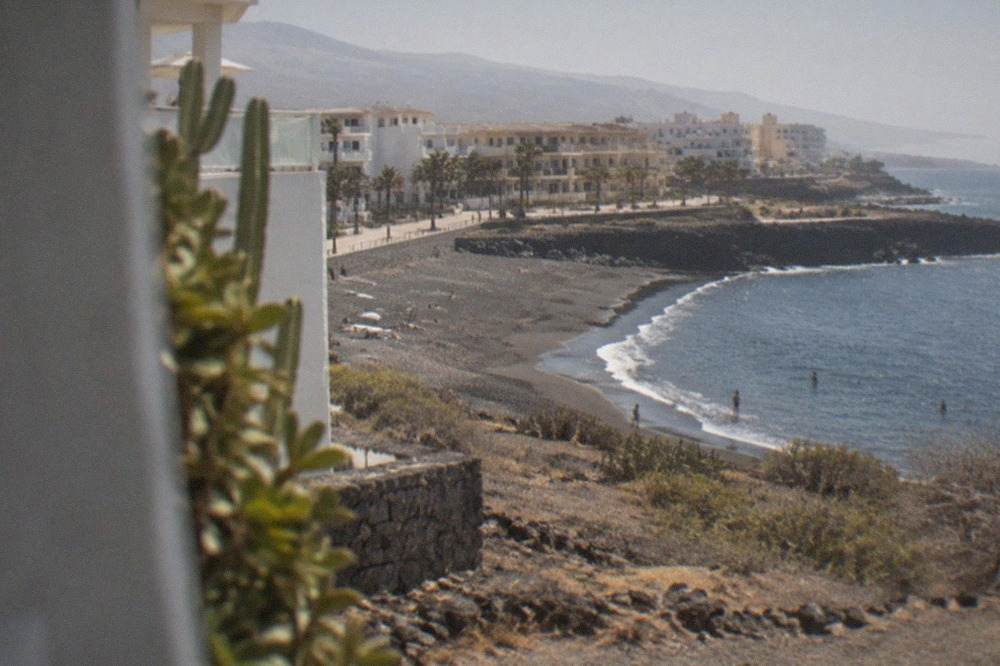
Callao Salvaje is a small, quiet resort community on Tenerife's south-west coast, built low and residential rather than high-rise, and it suits travellers who want a calm base within reach of the busier southern resorts.
Short answer
Callao Salvaje is a low-key residential resort on Tenerife's south-west coast, a short bus ride from Costa Adeje and Los Cristianos, with AEMET's south-airport climate data showing warm, dry summers and mild winters, and TITSA buses plus a EUR 10 day travelcard covering onward travel.
Callao Salvaje sits on Tenerife's south-west coast, a small and deliberately low-rise community that trades the tower blocks of the big southern resorts for a quieter, more residential rhythm. The name is Spanish, and the place behaves like a village that happens to have hotels in it. Adeje's old town lies inland and uphill, the livelier stretches of coast run off towards the south-east, and the ocean is the constant on every side that matters. This page gathers what official sources actually say about the climate, the buses, the boats and the day trips that a visitor based here will be deciding between, and it says plainly where a detail is not on any verified record.
Where Is Callao Salvaje on the Tenerife Map?
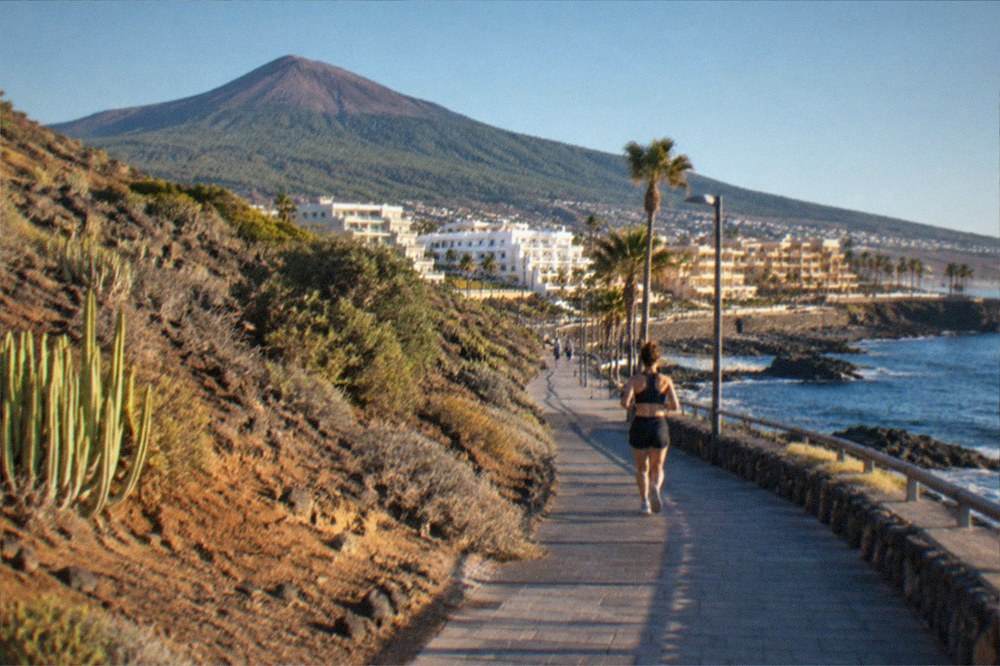
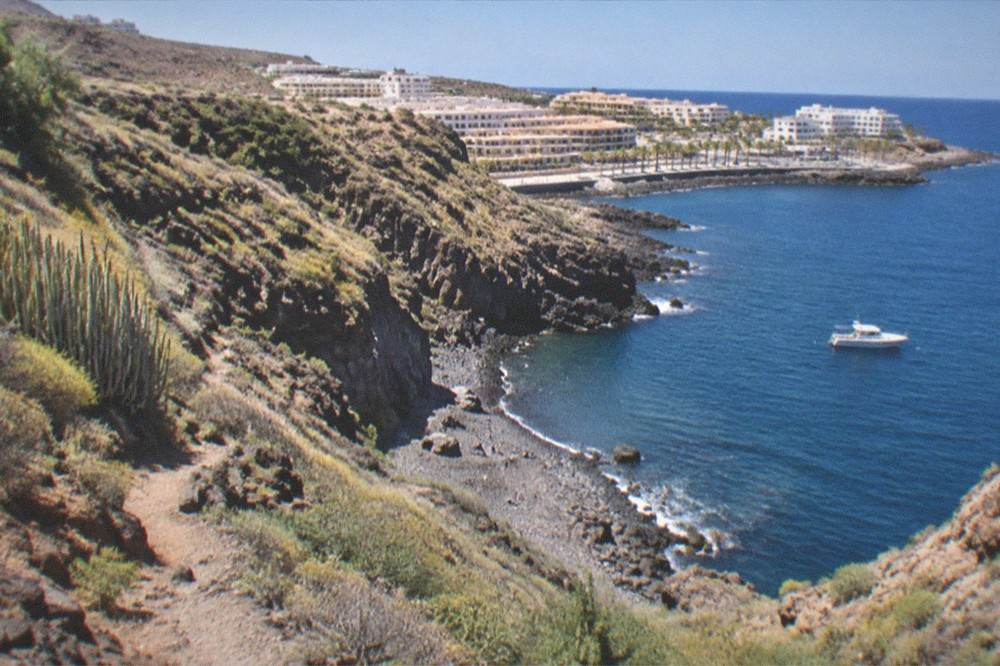
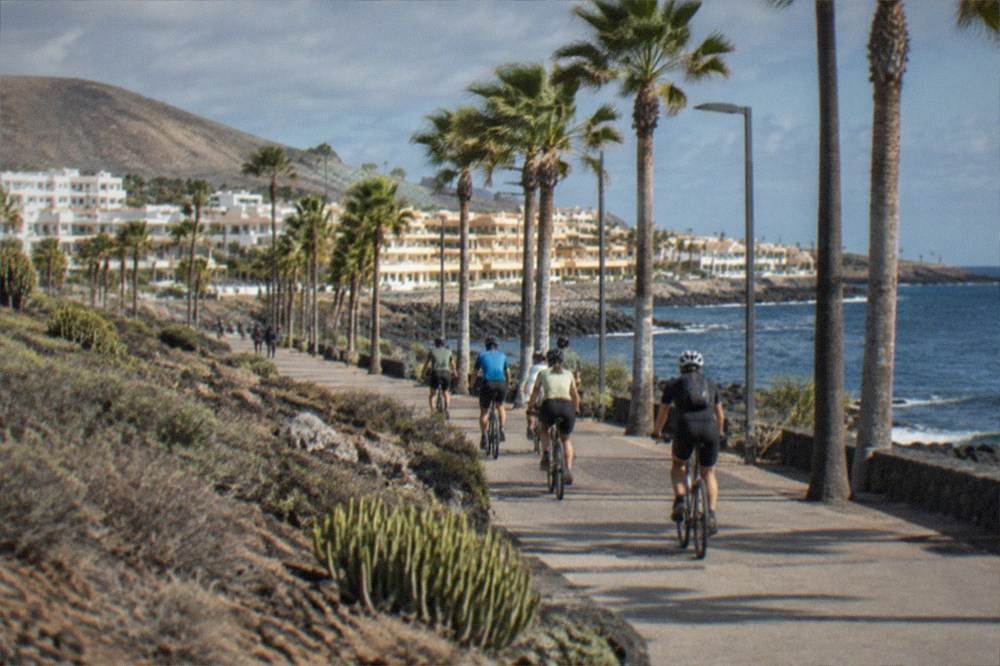
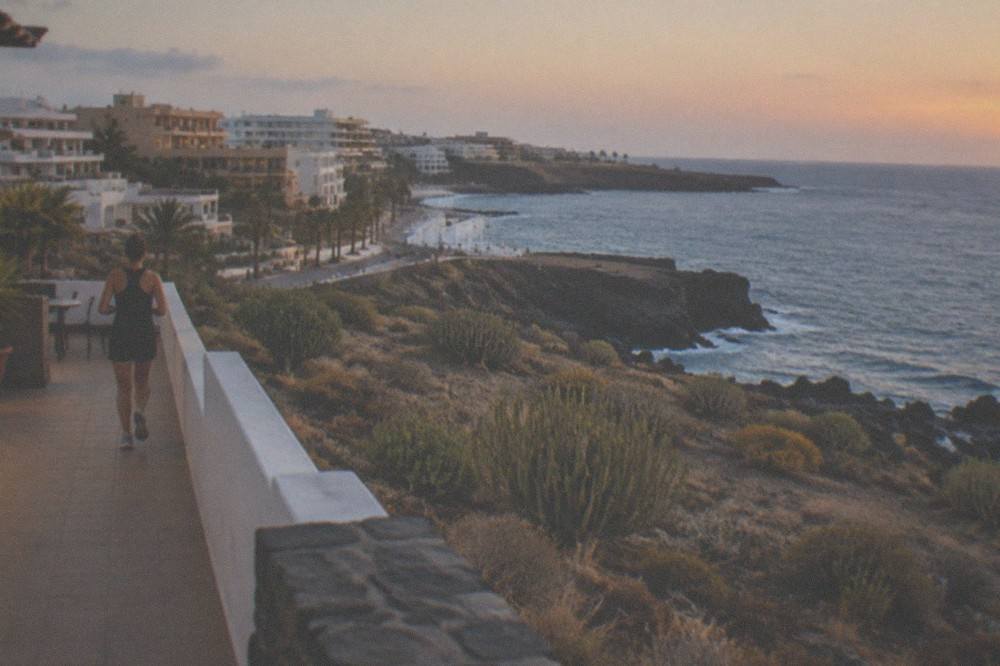
Callao Salvaje is a small resort community on Tenerife's south-west coast, sitting along the shore road between the island's main southern resort belt and the quieter village stretches further north-west, close enough to Costa Adeje and Los Cristianos to use their beaches, bus routes and boat harbours on a day-to-day basis. The practical geography matters more than the map pin. A visitor staying here is, in effect, based at the calm end of the south coast, with the busy sand of the big resorts a bus ride away in one direction and the wilder cliff scenery towards Los Gigantes in the other.
The south coast of Tenerife is where most of the island's tourism infrastructure sits, and this site's guides to the neighbouring stretches explain each of them in turn. The closest well-documented neighbours are Playa Paraíso to the south-east and the small cove community of La Caleta in the same direction, both of them similar in scale and mood. The full resort experience, from beaches to nightlife, begins at Costa Adeje, and the long promenade and ferry port of Los Cristianos sit just beyond it.
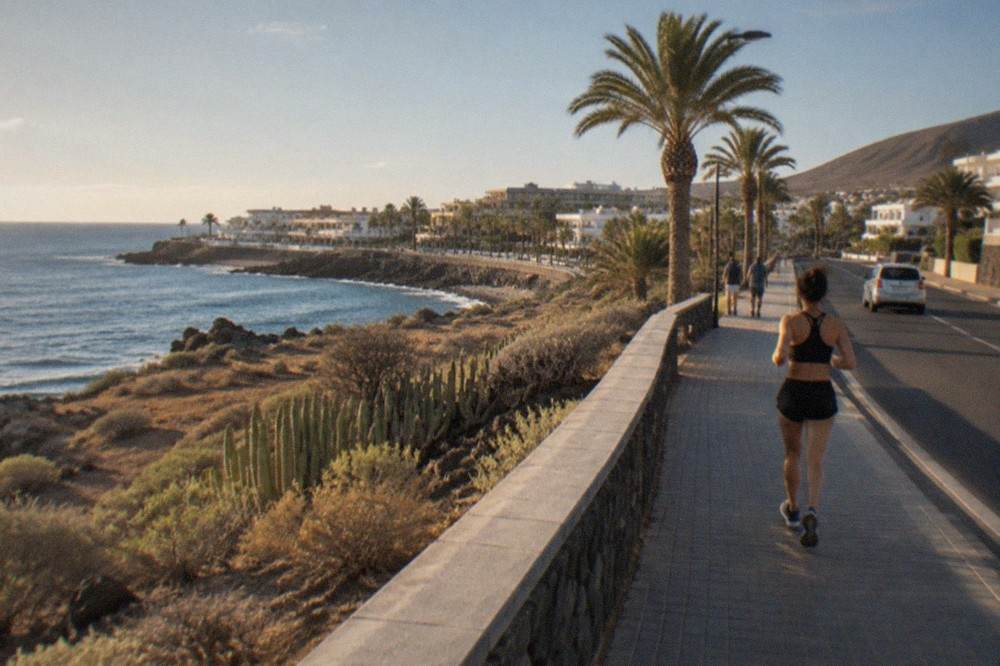
What no verified source on file describes in figures is Callao Salvaje itself: its beach dimensions, its walkways, its shops and its restaurants are not on any official page this desk has read. Where a detail like that matters to a plan, the honest instruction is to confirm it with the accommodation or the venue before setting expectations. Everything below that carries a number comes from an official source, and the number is stated exactly as that source gives it.
What Is the Weather Like in Callao Salvaje?
The south-west coast of Tenerife is one of the driest and sunniest corners of the island, and AEMET's climate station at Tenerife South Airport, a fair inland reference for the whole southern coastal strip, records July and August means of about 24 degrees Celsius with zero rain days, and even January means of 18.4 degrees, with sea surface temperatures off the south coast peaking at 23.7 degrees in September and October. Those two datasets cover different periods, and both are official: the air normals are AEMET's 1981 to 2010 series, while the sea surface figures are NOAA's 1991 to 2020 series. Never let a page blur them into one.
The pattern a planner actually needs is simple. Winter on this coast is what much of northern Europe calls a good summer: AEMET's Santa Cruz station, the warmer of the two island references, averages 21 degrees daily maxima in January, and the southern coastal strip runs warmer still. Rain, when it comes, is a winter phenomenon, and even then it is measured in a handful of days per month. The summer is dry to the point of AEMET recording literally zero rain days in June and July at the south airport station.
| Month | Mean daily max (C) | Mean daily min (C) | Rain (mm) | Rain days of 1 mm+ | Sunshine (hours) |
|---|---|---|---|---|---|
| Jan | 21.7 | 15.2 | 17 | 1.8 | 193 |
| Feb | 22.0 | 15.0 | 20 | 2.2 | 195 |
| Mar | 23.1 | 15.6 | 15 | 1.9 | 226 |
| Apr | 23.1 | 16.0 | 7 | 1.1 | 219 |
| May | 23.9 | 17.0 | 1 | 0.3 | 246 |
| Jun | 25.4 | 18.8 | 0 | 0 | 259 |
| Jul | 27.7 | 20.2 | 0 | 0 | 295 |
| Aug | 28.4 | 21.1 | 1 | 0.2 | 277 |
| Sep | 27.9 | 21.1 | 4 | 0.6 | 213 |
| Oct | 26.8 | 20.0 | 12 | 1.6 | 214 |
| Nov | 24.8 | 18.2 | 26 | 1.9 | 193 |
| Dec | 22.8 | 16.5 | 30 | 3.5 | 195 |
AEMET's station at Tenerife South Airport sits at 64 metres, low and close to the coastal strip, which is why it is the honest reference for a southern coastal stay. The island's mountains change everything: the same AEMET series shows the Izaña station at 2,369 metres averaging 4.3 degrees in January, and a visitor who drives up to Teide National Park from a warm beach should expect a different climate entirely, with ice and snow rules on the stratovolcano trails in winter. Pack for two islands, because in climatic terms that is what Tenerife is.
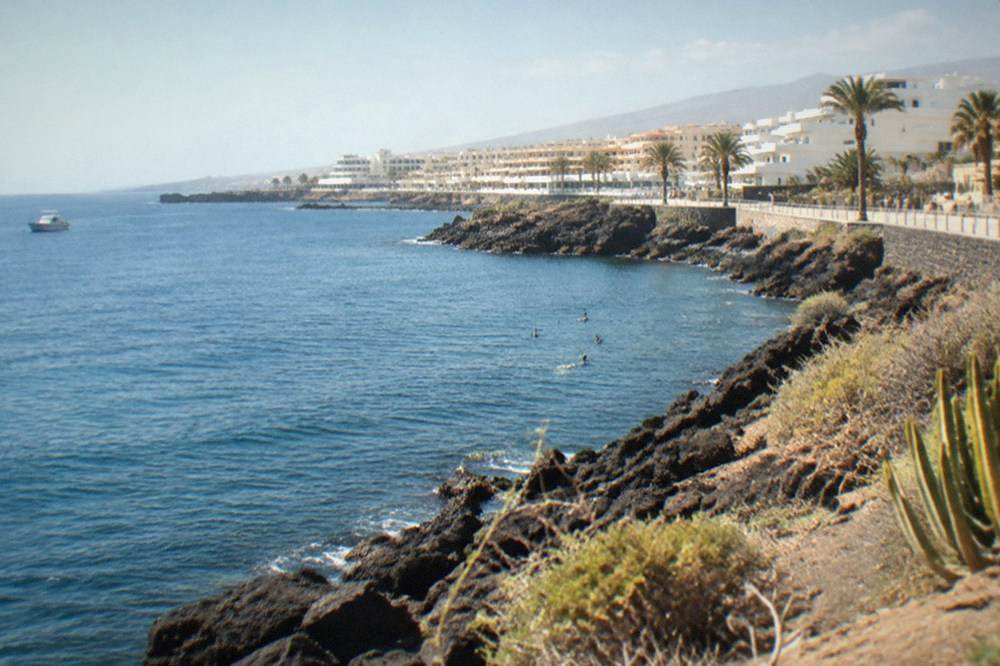
The sea deserves its own line in any plan. NOAA's 1991 to 2020 series for the water off the south coast reads 19.1 degrees in March, the coldest month, and 23.7 degrees in September and October, the warmest. For most British visitors that range means swimmable water all year, with a wetsuit a matter of taste in winter and unnecessary from late spring onwards.
How Do You Get Around from Callao Salvaje?
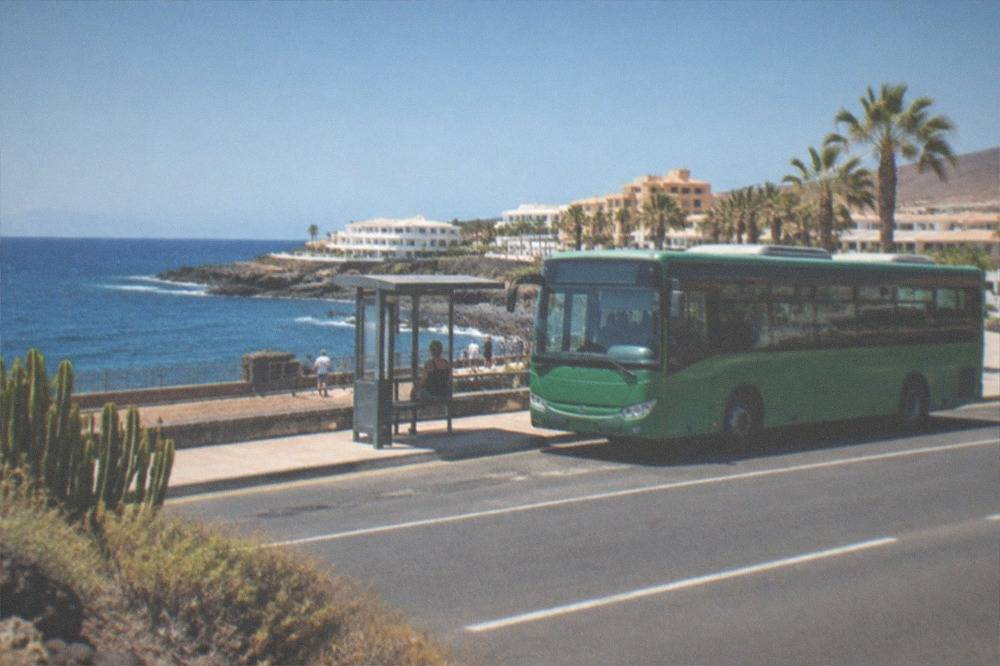
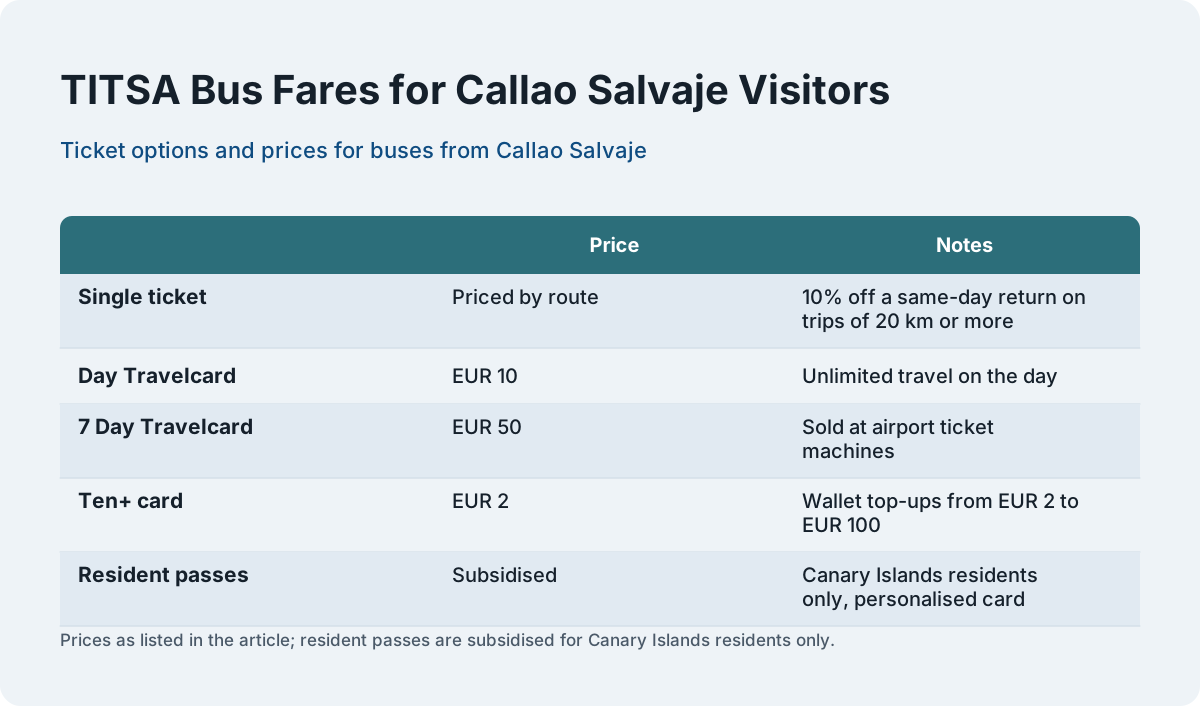
TITSA buses are the practical link between Callao Salvaje and the rest of the island, and visitors pay for them: single tickets priced by route, a EUR 10 day travelcard or a EUR 50 seven-day travelcard, with the Ten+ card itself costing EUR 2 and airport ticket machines selling the travelcards, while the 2026 free-transport subsidy applies only to resident passes held by people resident in the Canary Islands. That last point is worth spelling out, because a good deal of confused copy claims tourists ride free. They do not. The Canary government's 100% subsidy, in force since 1 January 2026, sits on resident passes and personalised cards, and a visitor without Canary residency does not qualify for any of it.
The bus operator's own fare pages set out the visitor products plainly, and they are the honest basis for budgeting a car-free week:
| TITSA product | Price | Notes |
|---|---|---|
| Single ticket | Priced by route | Card or cash, 10% off a same-day return on trips of 20 km or more |
| Day Travelcard | EUR 10 | Unlimited travel on the day |
| 7 Day Travelcard | EUR 50 | Sold at airport ticket machines |
| Ten+ card | EUR 2 | Wallet top-ups from EUR 2 to EUR 100 |
| Resident passes | Subsidised | Resident in the Canary Islands only, personalised card required |
Two lines are excluded from the resident passes, TITSA notes: the Teide and Teno routes. For a visitor this matters little, since visitors pay on every line anyway, but it explains why some fare tables look inconsistent at first glance. Taxis, for the record, are white and metered from the start of the trip, with a fixed price agreed in advance possible for excursions, according to the tourist board's transport page.
The tram does not serve any airport and does not reach the south coast, so it plays no part in a Callao Salvaje plan except as a Santa Cruz excursion. This site's guide to getting around Tenerife covers the whole network in more depth, including the airport bus lines TITSA lists at each terminal: lines 10, 40, 711, 343 and 415 at Tenerife South, and 20, 30 and 343 at Tenerife North.
For anyone weighing a hire car against the buses, the honest framing is that the south coast is easy by bus and the rest of the island is easier by car. The site's pages on car hire in Tenerife and driving in Tenerife carry the detail, including the general 0.5 g/l blood-alcohol limit the DGT refers to.
Which Boat Trips and Water Sports Run Near Callao Salvaje?
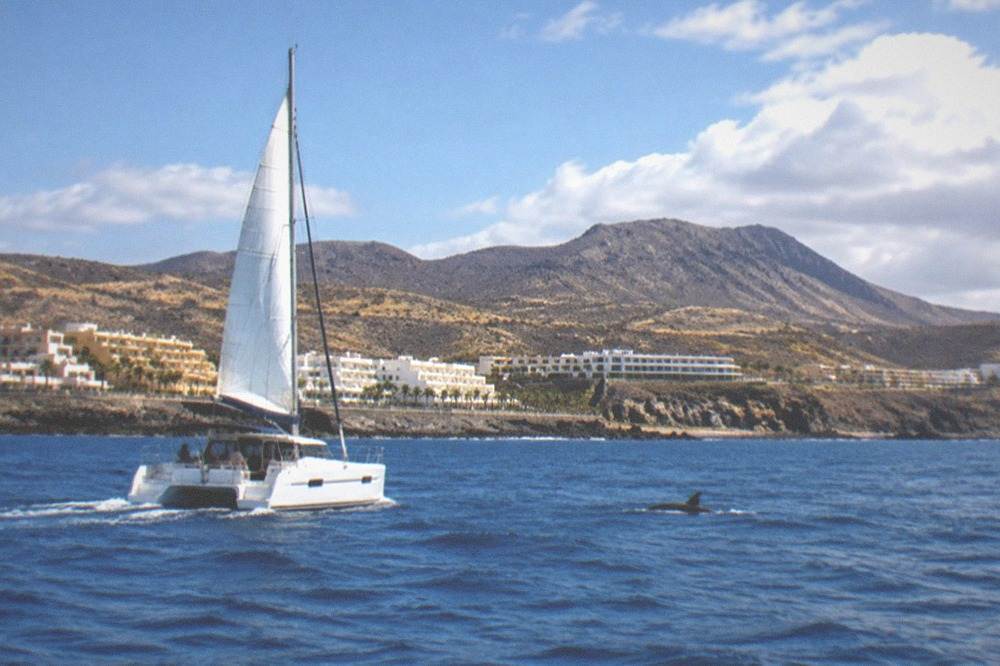
The whale and dolphin watching fleet operates from the harbours of the south coast, principally Los Cristianos, Costa Adeje and Los Gigantes, and every authorised boat flies the Barco Azul flag under Decreto 178/2000, which forbids any approach within 60 metres of the animals, allows no more than three boats within 500 metres, caps speed at 4 knots within that zone and bans swimming or diving within 500 metres. Those distances are the law, not a marketing promise, and they are the reason a responsible operator's trip can look unhurried. Boats that chase, circle or feed the animals are breaking the decree.
The waters between Tenerife and La Gomera hold a unique resident population of pilot whales and bottlenose dolphins, in the words of the World Cetacean Alliance, which designated the Tenerife-La Gomera Marine Area a Whale Heritage Area in January 2021. The designation is the Alliance's, not UNESCO's, and no official page gives a population count, so any number a reader sees elsewhere should be treated with suspicion. More of these guides are collected on Tenerife Travel Guide.
| Rule under Decreto 178/2000 | Figure |
|---|---|
| Minimum approach distance | 60 m |
| Maximum boats within 500 m | 3 |
| Maximum speed within 500 m | 4 knots |
| Swimming or diving within 500 m | Prohibited |
| Feeding, chasing, circling | Prohibited |
| Authorised boats | Must fly the Barco Azul flag |
The closest listed cruise to Callao Salvaje departs from Costa Adeje: a whale and dolphin eco-cruise with snacks and drinks on board, three hours on the water.
For travellers who want the animals without the engine noise, a small-group kayak and snorkel trip runs from Los Cristianos, and the operator's listing includes free videos of the paddle. Jet skis are the other southern staple: guided safaris along the south coast run from Arona, in two durations.
Where Can You Swim Around Callao Salvaje?
The south coast offers a mix of sand types that the tourist board documents precisely: golden sand at Las Teresitas and Las Vistas, pale sand at Fanabe, grey sand at El Duque and fine grey sand at El Medano, while the north-west's El Bollullo is black volcanic sand at the foot of a cliff, so a swimmer's choice of beach depends on which of those characters they prefer rather than on any single "best" stretch. The tourist board's own beach pages are the source for every one of those descriptions, and they are worth reading before assuming the south is uniformly golden. El Duque, the most polished of the Costa Adeje beaches, is grey sand on the official page, whatever a brochure implies.
Las Vistas sits between Los Cristianos and Costa Adeje, and the board credits its calm water to a row of breakwaters. Las Teresitas, the great golden stretch at San Andrés near Santa Cruz, has palms and breakwaters doing the same job. For a swimmer based at Callao Salvaje, the nearest well-documented sandy options are the Costa Adeje and Los Cristianos beaches, a short bus hop down the coast road.
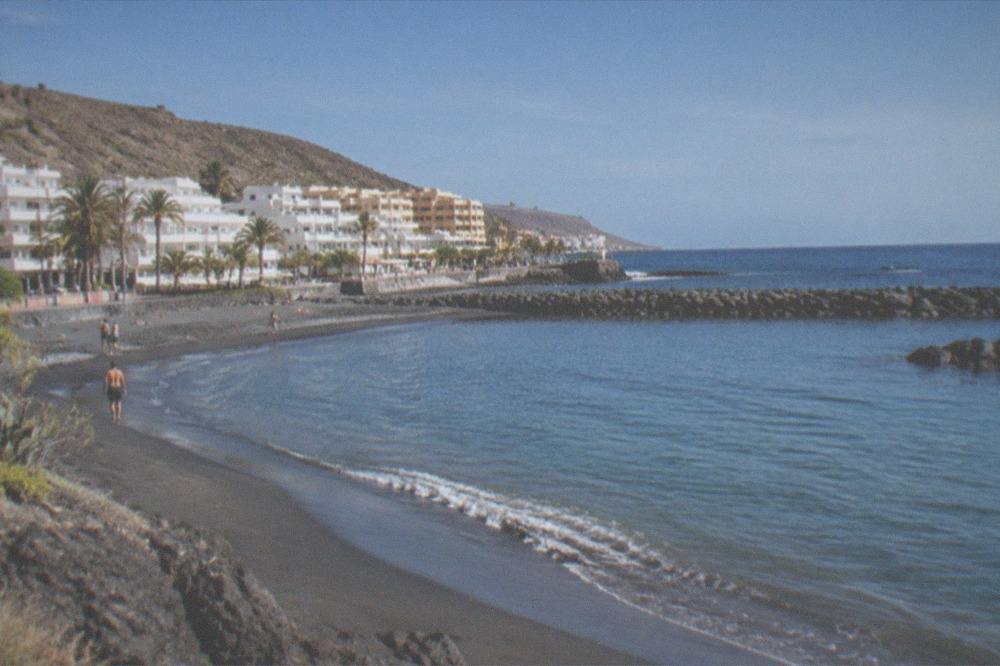
Swimming in the sea in Tenerife is a question this site answers in full on its dedicated page, including the seasonal lifeguard and flag picture. The sea surface data above is the honest seasonal guide: warmest in September and October, coolest in February and March, and swimmable throughout for anyone used to British water.
What Day Trips Work from Callao Salvaje?
The big day trips from the south-west coast are Teide National Park, the Masca gorge, the north-coast towns of Garachico and Icod de los Vinos, the island of La Gomera by ferry from Los Cristianos, and the cities of Santa Cruz de Tenerife and La Laguna, each reachable by bus, coach tour or ferry from the southern resorts. The ferry table is the one worth pinning down, because the crossings are short and the timetables are published.
Fred. Olsen Express publishes these crossing times from Los Cristianos:
| Route | Crossing time |
|---|---|
| Los Cristianos to San Sebastian de La Gomera | 50 min |
| Los Cristianos to Santa Cruz de La Palma | 150 min |
| Los Cristianos to Valverde, El Hierro | 140 min |
| Santa Cruz de Tenerife to Agaete, Gran Canaria | 80 min |
La Gomera is the natural first island trip from this coast, and this site's La Gomera day trip guide covers coach-and-ferry options from the south, including a full-day trip with lunch and a jeep safari. Armas Trasmediterránea also sells the Los Cristianos to La Gomera route, so two operators compete on the crossing.
Teide is the trip every visitor weighs. The honest structure, which this site's Teide summit permit guide sets out in full, is that driving through the national park needs no booking, the cable car stops at La Rambleta at 3,555 metres and is an operator ticket, and the summit trail PNT 10 Telesforo Bravo needs a personal reservation on Tenerife ON. Since Monday 19 January 2026 the 09:00 to 17:00 slots on that trail cost EUR 15 for visitors, EUR 6 for residents of the other Canary Islands and nothing for Tenerife residents and children. Permits are released every Monday at 07:00 Canary time, keeping 56 days bookable, and no official page says how fast they go. Smoking is banned in every open-air space of the national park, car parks included.
The west-coach loop, taking in Teide, Masca, Icod and Garachico in one long day, is the most popular way to cover the island's headline sights from a southern base, and this site's Masca, Garachico and Icod route page explains it. One correction worth carrying: the Masca gorge is open under a pilot scheme, descent only, with a pre-booked boat exit, a EUR 40.66 general ticket with the boat extra, booked at caminobarrancodemasca.com, and hikers must arrive on TITSA line 355 from Santiago del Teide and show the bus ticket. Private vehicles are refused.
Santa Cruz works as a city half-day, and a bike or e-bike tour of its highlights starts at the cruise terminal. The city's free walking tour option is listed on GuruWalk: a pay-what-you-want walk of the historic centre, free to join and tip-based. The resort south itself, Los Cristianos to Playa de las Américas and Adeje, has no free walking tour listed on GuruWalk, so a visitor wanting one should plan it around a northern day. For the full sweep of options, the site's island-wide page on things to do in Tenerife from coast to crater is the place to browse.
The north deserves at least one day of any week. Puerto de la Cruz has its own free walking tour listed on GuruWalk, pay what you want, as does La Orotava, whose historic centre sits above it. The Drago Milenario at Icod de los Vinos, a dragon tree the council says stands about 21 metres tall with an age of approximately 1,000 years attributed to it, while the tourist board says over 800 years, is on the same north-coast loop as Garachico, whose old port was buried by the Trevejo volcano's eruption in 1706.
Where Should You Stay in Callao Salvaje?
Callao Salvaje suits travellers who want a quiet, residential base on the south-west coast rather than a resort strip, and the choice within it is between self-catering apartments and small hotels, with the bigger resort inventory concentrated down the coast at Costa Adeje and Los Cristianos, and with no verified record on file of individual property prices, ratings or opening seasons for the community itself. That last clause is deliberate. No official page this desk has read lists Callao Salvaje's accommodation stock, so any specific claim about a particular complex would be invented, and this site does not invent.
What can be said is structural. The south-west coast is the island's densest hotel zone, and the site's where to stay in Tenerife guide maps the alternatives honestly, from the family areas to the couples' corners. For a quieter base with the big resorts in reach, this stretch and its neighbours compete well on calm and lose on walkable nightlife, which for many readers is exactly the trade they want. For stays of a week or more, the site's winter sun and long stays guide covers the practicalities, and accommodation in the area can be compared through the island's stay listings.
Common Questions About Callao Salvaje
Is Callao Salvaje suitable for families?
Its quiet, low-rise character suits families who want a calm base, and the family infrastructure, from Las Vistas beach with its breakwaters to Siam Park's 10:00 to 18:00 summer hours, sits a bus ride down the coast. This site's guide to the best area for families weighs the whole south coast, including the trade-offs between quiet and convenience.
How far is Callao Salvaje from the airport?
Tenerife South Airport is the closer of the island's two airports, and AENA's 2025 figures record 13,969,678 passengers there, an all-time record, against 7,174,977 at Tenerife North. No verified journey time from the airport to Callao Salvaje is on file, so confirm transfer times with the operator rather than trusting a number quoted online.
Do you need a car in Callao Salvaje?
Not for the south coast: TITSA buses link the southern resorts, and a EUR 10 day travelcard covers a day of hopping. A car earns its keep for the north, the mountains and the west, and the site's page on whether you need a car in Tenerife sets out the full argument, including the airport bus lines.
Is there a tourist tax on Tenerife?
No official page read shows a per-night lodging tax in force or approved on Tenerife. The charges that do exist are per-booking fees on specific trails: the Teide summit and Montana Blanca trails, the Masca ticket and the Barranco del Infierno ticket. Nothing in that list touches a stay in Callao Salvaje.
Can you see whales from the shore at Callao Salvaje?
The resident pilot whales and bottlenose dolphins live in the waters between Tenerife and La Gomera, but no verified source describes shore-based watching from this stretch, and the law keeps boats at least 60 metres from the animals. The reliable way to see them is a Barco Azul flagged trip from one of the southern harbours.