Horse Riding and Camel Park
Tenerife's trail network, rural parks and year-round riding weather make it a serious horse-riding destination, and its camel park is one of the island's longest-running family outings. This page sets out what is verified, what is not, and what to confirm before you book.
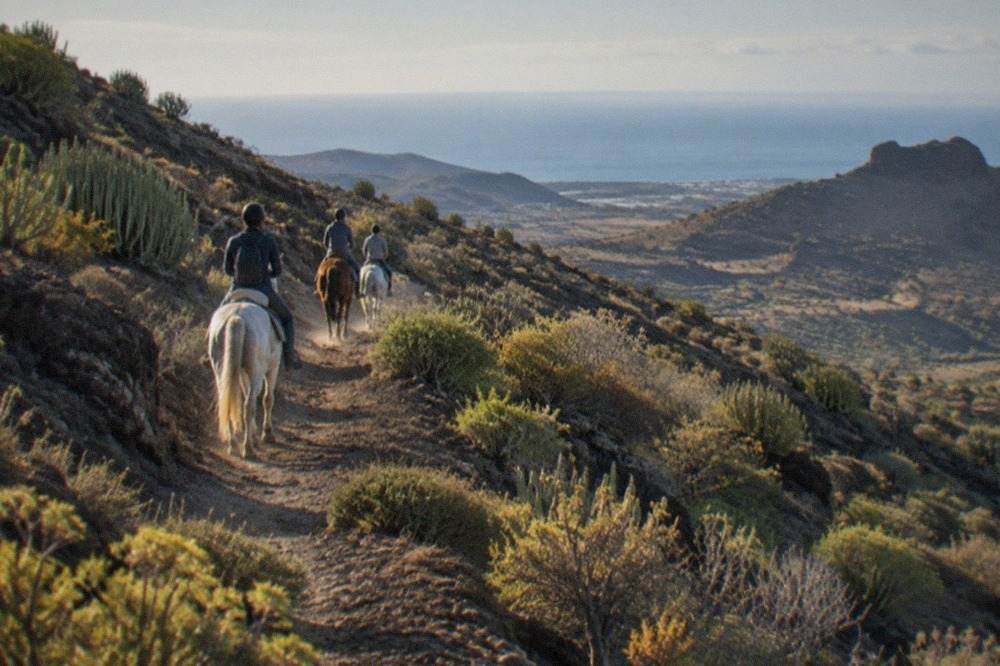
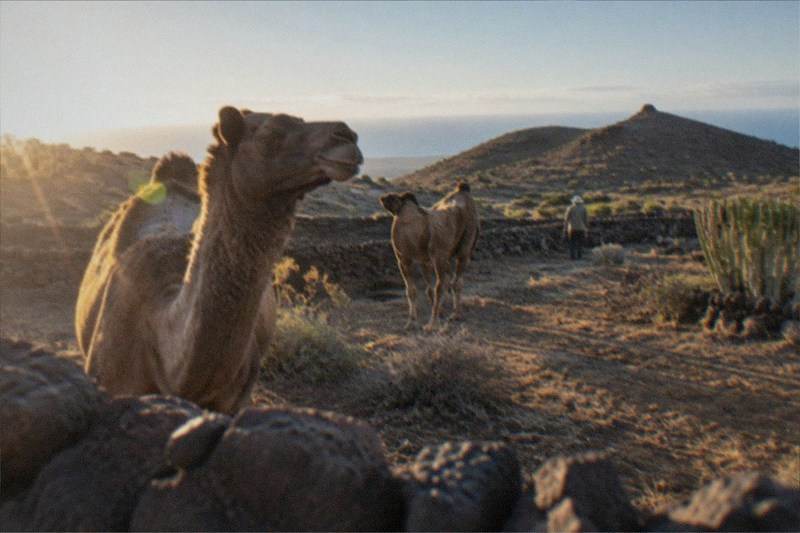
Camel Park, Ride on Some Tickets
Tenerife: Camel Experience
A small park built around its camels, where some tickets add a seated ride around the grounds. Handlers lead each animal on foot, so the pace stays calm, and there is time to walk among the other residents between rides.
from $10.33 Per person, in USD. The total depends on the date and option you pick.
Check Price & Availability →Opens the live booking page with up-to-date dates and prices. All booking and payment happen there; this guide takes none of it.
- Area
- Arona
- Length
- 45 minutes to 1 hour 30 minutes
- Kind
- Park Tickets
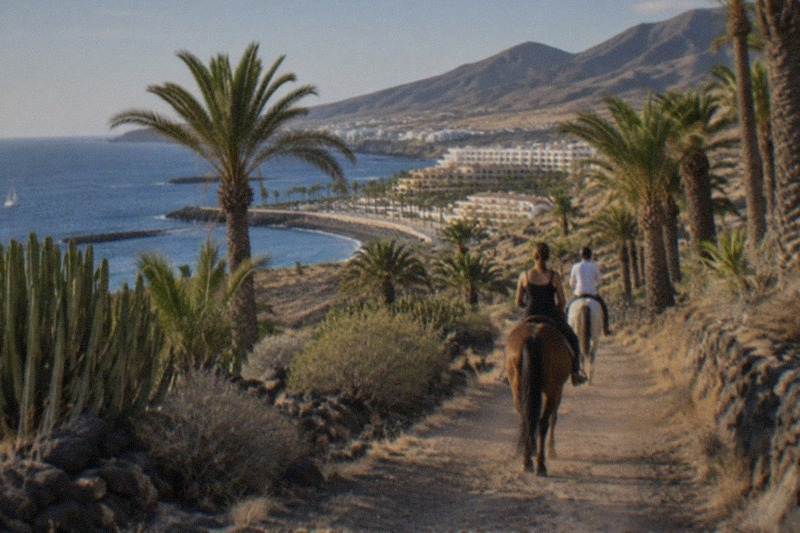
One-Hour Estate Horse Ride
1-hour horse riding in the south of Tenerife
from $56.25 Per person, in USD. The total depends on the date and option you pick.
Check Price & Availability →- Area
- Adeje
- Length
- 1 hour
- Kind
- Quads, Buggies and Paragliding
Short answer
Horse riding in Tenerife runs year-round through private riding centres, mostly in the south and in the hills around Teide National Park, and the camel park near Los Cristianos is a separate, family-focused attraction. No official fact sheet exists for either, so confirm prices, hours, ages and weight limits directly with each venue, and book ahead in peak months.
Horse riding in Tenerife sits in an unusual position among the island's activities: the landscape is genuinely made for it, with volcanic trails, laurel forest paths and old shepherd tracks threading through rural parks, yet no official tourism body publishes a fact sheet for the riding centres themselves. That means the honest way to write this page is to separate what is verified from what only an operator can confirm. The weather, the transport, the permit rules and the neighbouring land adventures are all on official record. The riding stables and the camel park are private businesses, and every price, hour, age limit and weight rule for them belongs to the venue's own current information, not to a summary written months in advance.
The island's riding scene is concentrated where the visitors are: the south, around Costa Adeje and the Arona hills, with a handful of centres further north. What draws riders is the same thing that draws hikers and quad convoys: Tenerife's terrain changes within an hour from coastal scrub to pine forest to the black rock of Teide National Park, and a trail ride can move through several of those bands in a single outing. This editorial desk has not ridden any of these routes, and no page here should pretend otherwise. What follows is what the official record supports, plus the questions worth asking before you hand over money.
Where Can You Go Horse Riding in Tenerife?
Horse riding in Tenerife is run by private centres, mostly in the south of the island and in the hills inland of the main resorts, offering everything from beginner paddock sessions to half-day trail rides through volcanic and forest country. No official register of stables or routes exists, so the choice of yard, and every detail of what it offers, rests on the operator's own current information, which should be checked before booking.
The geography does most of the work. The south is dry, sunny and gently angled, which suits beginners and winter riding alike, and AEMET's climate normals for Tenerife South Airport record mean daily maxima above 21 Celsius in every month of the year, with July and August the warmest at 27.7 and 28.4 Celsius. That is riding weather all twelve months, and it is why the southern yards can run daily sessions year-round without a winter shutdown.
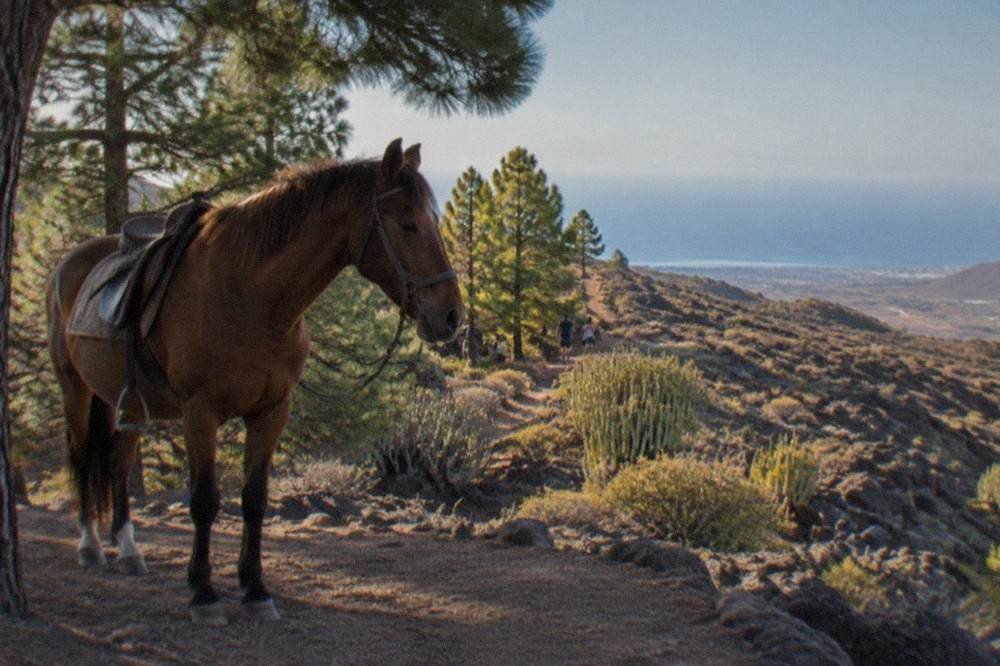
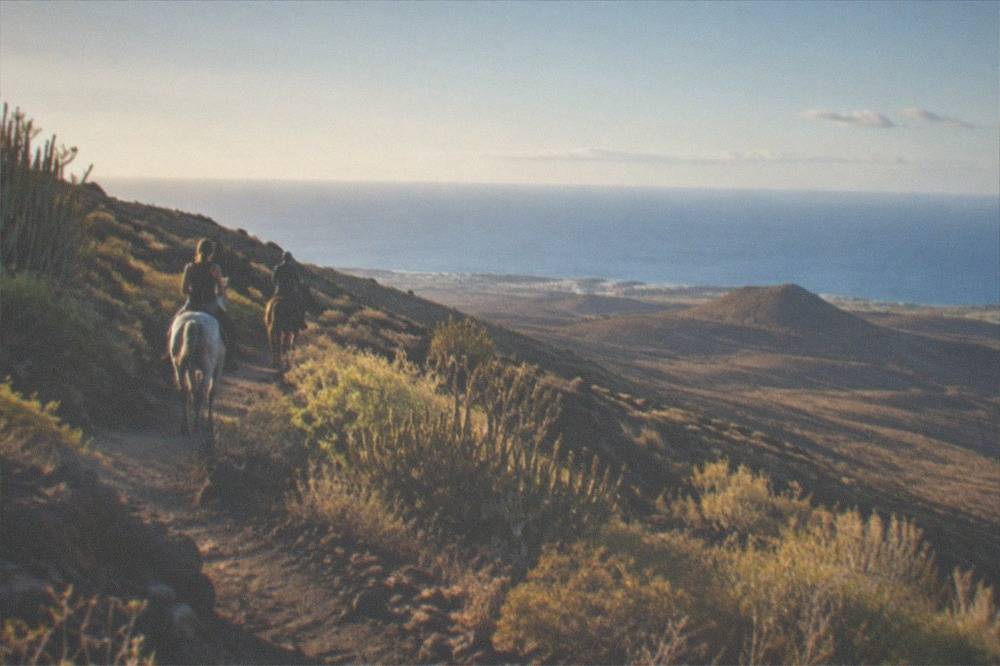
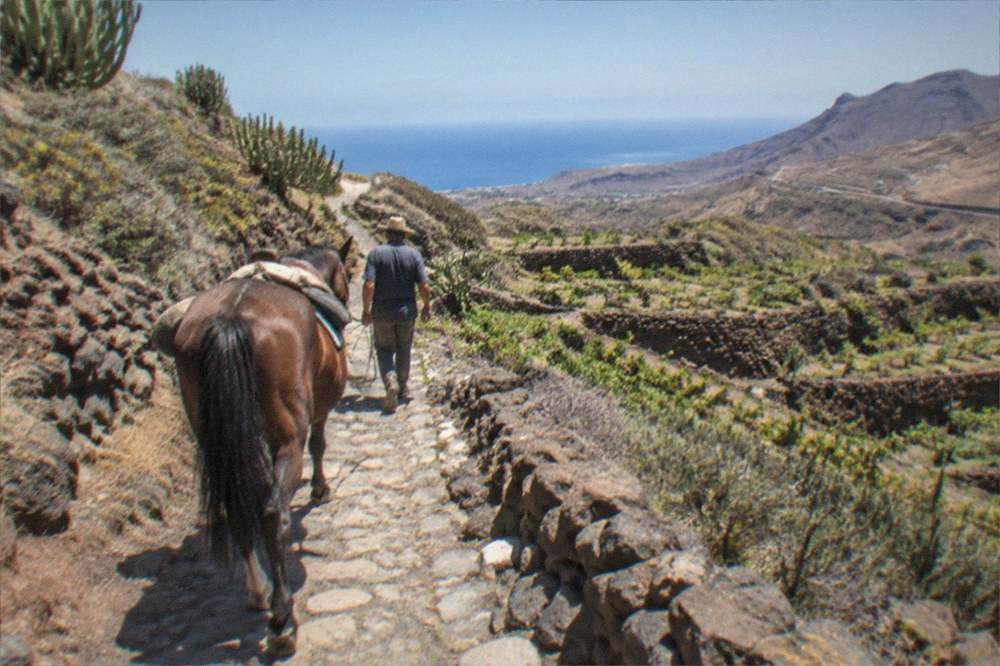
Further inland the character changes. The slopes below Teide, the Anaga Rural Park in the far north-east and the Teno hills in the west all carry old paths through completely different vegetation, from cactus-studded barrancos to laurel forest. A rider who wants scenery rather than instruction should be looking at exactly those areas, and asking a yard directly which of them its permits and insurance actually cover. Not every trail in those parks is open to commercial activity: the Cabildo's Tenerife ON platform lists trails where prior authorisation is mandatory, and some, such as the El Pijaral reserve in Anaga, explicitly bar company-run tours altogether. A riding centre operating inside a protected park will say so if asked, and if it cannot say where its rides go, that is worth knowing too.
What Is the Camel Park Experience in Tenerife?
The camel park is a separate, family-oriented attraction built around short camel rides and animal encounters rather than serious trekking, located in the south of the island within reach of the main resorts. It is a private venue with no published official fact sheet, so hours, prices, age minimums and the exact animals present should be confirmed with the venue before you plan a day around it.
The camel has a long history in the Canaries, where it was used as a working animal on the islands' farms for centuries, and the park-style attractions that exist today trade on that heritage with short, led rides rather than expeditions. Families with small children are the core audience: the rides are short, the pace is slow, and the outing is closer to a petting zoo with a photo opportunity than to a safari. Visitors expecting a desert trek should recalibrate before arriving.
What can be stated with confidence is the context. The park sits within the southern resort belt, where Los Cristianos, Costa Adeje and Playa de las Américas cluster, and TITSA buses serve the whole corridor on lines the operator's own airport pages list, including line 40 between the airport, Los Cristianos and the Costa Adeje bus station. A family staying in any of those resorts can reach the area without a car. The venue's own current page is the place to confirm opening days, since animal attractions across the island vary their hours by season, and nothing in the verified record fixes them here.
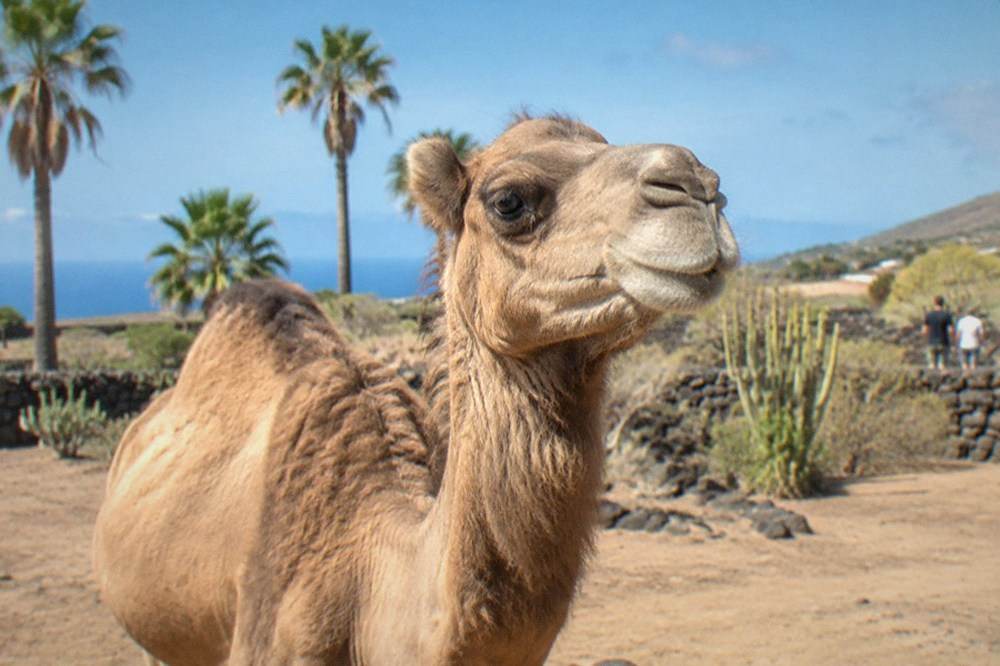
One comparison is worth making plainly. Tenerife's big animal parks, Loro Parque in the north and Siam Park in the south, are large, ticketed destinations with published hours and combined-ticket options covered on this site's passes and combined tickets page. The camel park is a smaller, shorter outing. Families building a full day should pair it with something else nearby rather than treating it as the day's main event, and the Tenerife with kids guide lists the alternatives.
Which Other Land Adventures Pair Well with a Riding Day?
The land activities that sit naturally beside horse riding in Tenerife are guided hikes, quad and buggy tours and jeep safaris, all of which use the same volcanic trails and forest tracks, and all of which are bookable with live prices on this site. A rider who wants the mountain scenery without the saddle can take a quad convoy through Teide National Park, and a rider who wants it slower can join a guided hike.
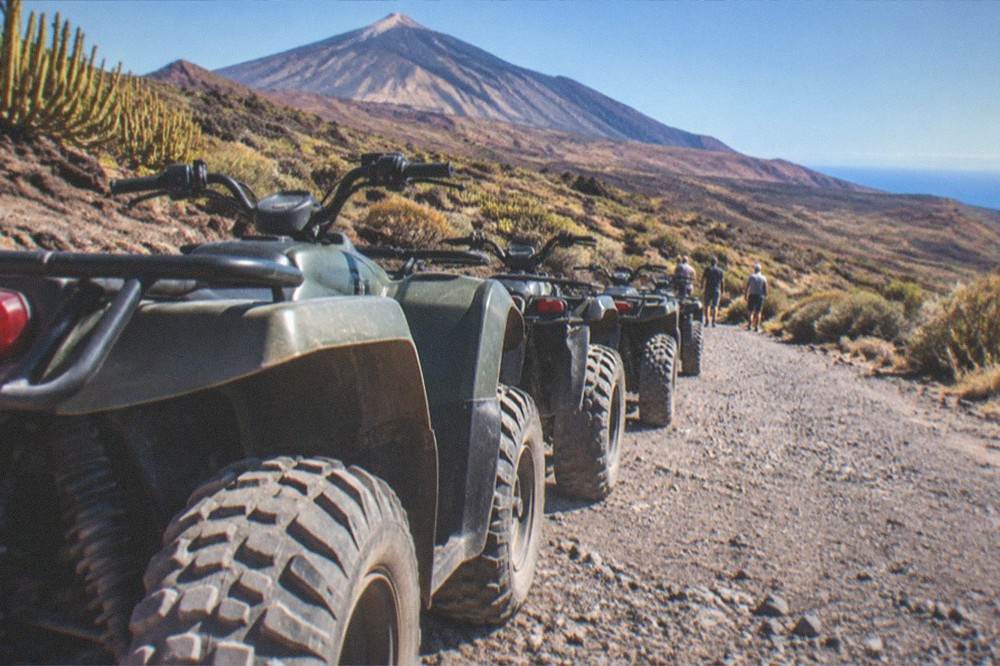
The quad option deserves the first mention because it covers the most dramatic ground in the least time. A four-hour quad adventure tour through Teide National Park runs from the south up into the park, which means a rider can spend a morning on horseback in the hills and an afternoon on four wheels at altitude, or split the two across a week. The park itself charges no entry fee on any official page read: the charges that exist are per-booking fees on two named trails only, covered below.
Guided hikes are the natural second pairing, and Tenerife's hiking inventory is deep enough that this site keeps a whole hiking in Tenerife guide. Anaga Rural Park carries laurel forest older than the ice ages in a landscape that feels nothing like the south, and a guided hike there is the slowest, closest way into it. The guided hiking tours page lists the current options with live prices.
The third pairing is on the water, and it is the one families most often combine with a camel-park morning, since whale watching boats leave from the same southern ports. The southwest coast between Los Cristianos and Los Gigantes is a designated Whale Heritage Area under the World Cetacean Alliance, and every authorised boat flies the Barco Azul flag under Decreto 178/2000, which sets the protection rules: no approach within 60 metres, at most three boats within 500 metres, and no swimming within 500 metres of the animals.
Do You Need a Permit or Booking for Any Tenerife Trails?
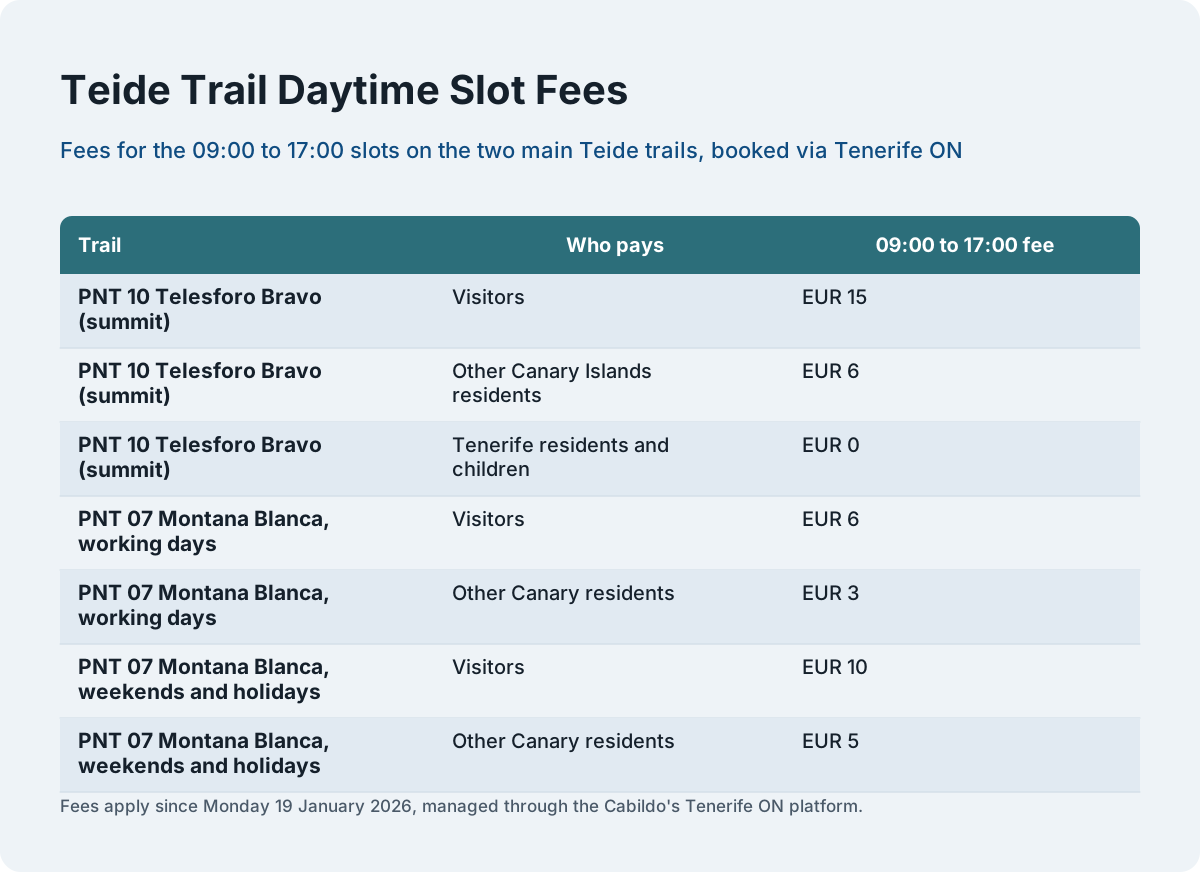
You need no permit to ride a horse on a private centre's own land or to visit the camel park, but several of Tenerife's walking trails do require reservations, and since Monday 19 January 2026 the daytime slots on the two main Teide trails carry public fees: EUR 15 for visitors on the summit trail and EUR 6 or EUR 10 on Montana Blanca depending on the day of the week. A riding tour does not replace or include those reservations.
The fees apply to two trails only, both managed through the Cabildo's Tenerife ON platform, and only to the 09:00 to 17:00 slots. Tenerife residents pay nothing, children are exempt from the fee, and the booking page shows the age band that applies. The release rule is fixed: every Monday at 07:00 Canary time a new week opens, keeping 56 days bookable, and no official page states how quickly slots go, so no guide should claim a lead time.
| Trail | Who pays | 09:00 to 17:00 fee | Booking |
|---|---|---|---|
| PNT 10 Telesforo Bravo (summit) | Visitors | EUR 15 | Tenerife ON |
| PNT 10 Telesforo Bravo (summit) | Other Canary Islands residents | EUR 6 | Tenerife ON |
| PNT 10 Telesforo Bravo (summit) | Tenerife residents and children | EUR 0 | Tenerife ON |
| PNT 07 Montana Blanca, working days | Visitors | EUR 6 | Tenerife ON |
| PNT 07 Montana Blanca, working days | Other Canary residents | EUR 3 | Tenerife ON |
| PNT 07 Montana Blanca, weekends and holidays | Visitors | EUR 10 | Tenerife ON |
| PNT 07 Montana Blanca, weekends and holidays | Other Canary residents | EUR 5 | Tenerife ON |
Two more reservations matter to anyone building an active week. The Masca gorge is open as a descent-only pilot scheme with a pre-booked boat exit, a EUR 40.66 general ticket and a compulsory TITSA line 355 arrival from Santiago del Teide, with private vehicles refused. Barranco del Infierno in the south costs EUR 15 for a non-resident adult with advance online booking compulsory. A rider whose week includes any of these should treat the reservation as the thing to secure first, not the riding session.
It is also worth saying what does not exist. No official page read shows a per-night tourist tax in force or approved on Tenerife, and no entry fee is charged for the national park itself. The charges above, plus the Masca and Barranco del Infierno tickets, are the visitor charges that actually exist on the island.
Can You Reach the Riding Areas Without a Car?
Yes, visitors can reach the southern riding belt and the camel park area by TITSA bus, using the lines TITSA's own airport pages list, and paying either single fares or the EUR 10 day travelcard or EUR 50 seven-day travelcard. Public transport is not free for visitors: the 2026 subsidy applies to resident passes only, so a rider without a car budgets for fares.
The airport lines are the spine of any car-free plan. From Tenerife South Airport, TITSA lists line 10 to Santa Cruz, line 40 to the Costa Adeje bus station via Los Cristianos, line 711 as the night service, line 343 as the express to Puerto de la Cruz via both airports, and line 415 to El Fraile and San Isidro. From Tenerife North Airport the listed lines are 20 to Santa Cruz via La Laguna, 30 to Puerto de la Cruz and the 343 express south. Other pages covering the same trip are gathered on Tenerife Travel Guide.
| Ticket | Price | Notes |
|---|---|---|
| Single ticket | Priced by route | Card or cash on board |
| Same-day return | 10% off | Trips of 20 km or more |
| Day Travelcard | EUR 10 | Visitor product |
| 7 Day Travelcard | EUR 50 | Visitor product |
| Ten+ card | EUR 2 | Wallet top-ups EUR 2 to EUR 100 |
The practical caveat is the last mile. Rural riding centres sit up hill roads that buses do not serve, and a yard that expects non-driving guests will usually say so, sometimes with a pickup arrangement. Ask before booking, because a centre that cannot be reached without a car is a centre that cannot be booked by car-free travellers, and the Tenerife without a car itinerary exists for exactly this planning problem. The tram, meanwhile, serves neither airport and runs only between Santa Cruz and La Laguna, so it is no help for a southern riding day.
When Is the Best Time of Year for Riding in Tenerife?
The best months for horse riding in Tenerife are October to December and March to May, when the south is warm but not at its summer peak and the hills carry some green, though riding runs all year because even January averages a 21 Celsius daily maximum in Santa Cruz and 21.7 at the south airport. The one season to plan around carefully is high summer, when southern trail rides run hot by midday.
The climate record is where this answer comes from, and it is worth seeing side by side. AEMET's normals show the coast and the mountain ridge as two different worlds: Izana, at 2,369 metres on the Teide observatory ridge, averages a January mean of 4.3 Celsius with 47 mm of rain, while Santa Cruz the same month averages 18.2 Celsius. A rider booked into the hills needs a different kit list from one booked beside the beach.
| Month | Santa Cruz mean daily max | South airport mean daily max | Izana mean | Izana rain days (1 mm+) |
|---|---|---|---|---|
| January | 21.0 C | 21.7 C | 4.3 C | 4.5 |
| April | 22.7 C | 23.1 C | 7.6 C | 2.7 |
| July | 28.7 C | 27.7 C | 18.5 C | 0.1 |
| October | 26.3 C | 26.8 C | 10.6 C | 3.7 |
Rain, on the coast at least, is a modest obstacle: the south airport station records just 15.2 rain days a year with a millimetre or more, against 29.7 in Santa Cruz and 64 at Tenerife North. The sea tells the same warm story, with surface temperatures off the south coast ranging from 19.1 Celsius in March to 23.7 in September and October, which matters for the swim-stop boats that pair with a riding morning.
Crowds are the other calendar. ISTAC's series counts 643,460 tourists arriving by air in January 2025, rising to 618,578 in August and peaking at 671,202 in December, so the winter half-year is the busy half-year, and the quietest riding months on that record are May and June. Book ahead in the British school holidays in particular, and expect the yards' beginner slots to fill first.
What Should You Wear and Pack for a Tenerife Ride?
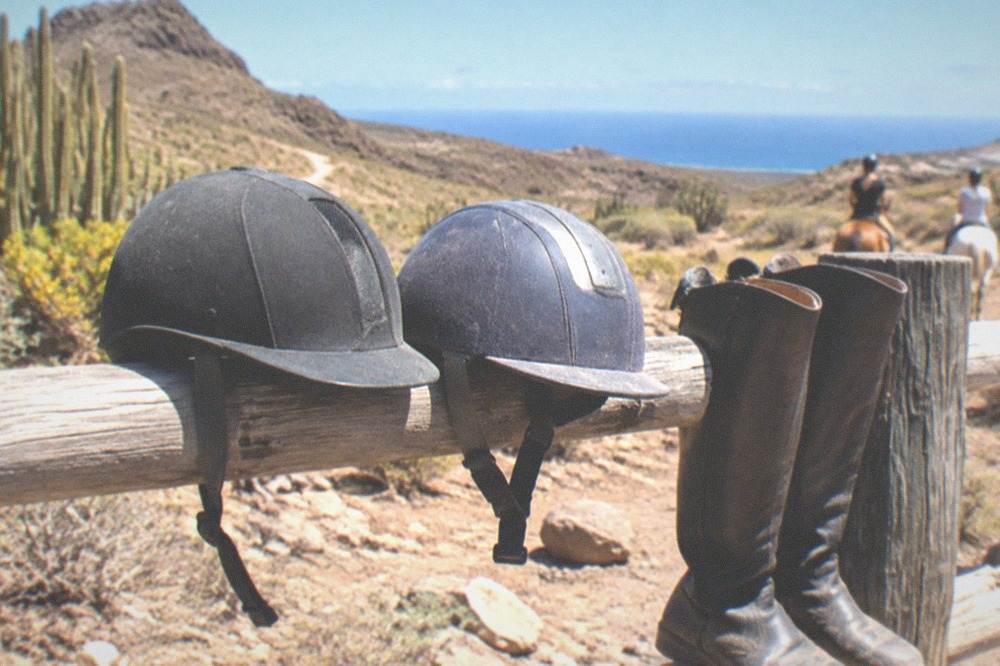
Long trousers, closed shoes with a small heel and a layer for altitude are the essentials for riding in Tenerife, because the southern yards are warm while the mountain trails can be ten or more Celsius cooler, and the national park bans smoking in every open-air space including car parks, so no ride breaks for a cigarette anywhere inside it.
The kit list is short because the weather is kind, but the altitude rule is the one people miss. A ride that climbs from the coast toward Vilaflor or the park boundary moves through several climate bands, and AEMET's figures above show how steeply the temperature falls with height. Sunscreen matters in every month: Santa Cruz records 168 to 337 sunshine hours a month depending on season, and there is no cloudy winter here in the northern European sense.
Footwear is the item venues check. The Masca gorge rule, closed mountain footwear as a condition of entry even with a booking, is the strictest example on the island, and riding yards apply their own version of the same logic: trainers are usually tolerated for beginners, but anything with a heavy tread or open toe is not. Confirm the yard's rule when booking, and confirm its weight and age limits in the same message, since those vary between centres and are not published in any official record this site can verify.
How Do You Choose a Responsible Riding Centre or Animal Attraction?
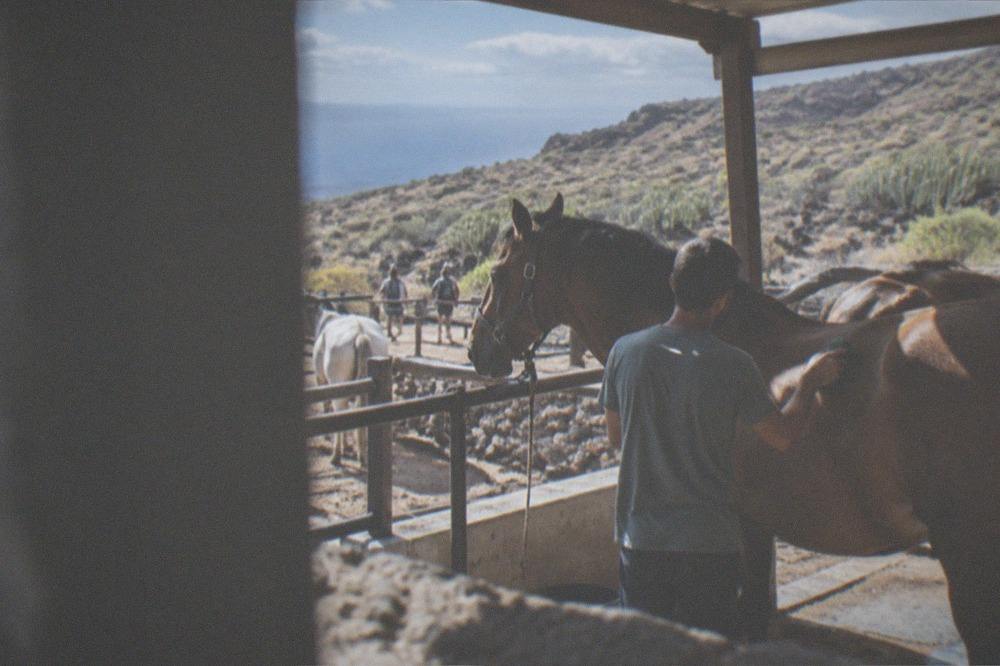
Choose a Tenerife riding centre or animal attraction the way you would choose one anywhere: ask for the horses' working hours and rest days, ask what accreditation the yard holds, check whether the venue's own page states its animal-welfare standards, and treat a yard that will not answer basic questions about its animals as one to walk away from, because no official rating system for stables exists on the island.
The honest position is that this site can verify the island's rules, not its stables. What can be said is that Tenerife's animal-attraction landscape is mixed: the big parks publish their conservation and welfare programmes, while smaller attractions vary. The whale-watching fleet offers the clearest local model of a verifiable standard, the Barco Azul flag issued under Decreto 178/2000, and a family can check for the flag before boarding. No equivalent flag exists for riding centres or camel attractions, so the questions do the work instead.
Ask where the rides go, since trails inside protected areas need authorisation, and a yard that names its routes and its permissions is being specific. Ask about group sizes and rider-to-guide ratios. Ask what happens to horses in the summer heat. A centre that answers in detail is not thereby certified, but a centre that answers in slogans has told you something too, and the free walking tours page shows the same principle in another market: GuruWalk's free, pay-what-you-want walks in La Orotava, Puerto de la Cruz and Santa Cruz are described honestly as tip-based, and the operators that describe themselves plainly are the easiest ones to plan around.
What Does a Riding Week in Tenerife Look Like?
A balanced active week in Tenerife pairs two or three riding sessions with one volcano day, one coastal or whale-watching day and one north-coast day, using the south as a base and the TITSA network or a hire car to move between them. The order matters less than the bookings: the trail permits and the popular boat trips are the scarce items, and the riding sessions are usually the flexible ones.
A sample shape, built only from places and rules this site verifies: days one and two in the southern hills on horseback, with the camel park slotted in as a half-day outing with children. Day three up to the national park, either on a guided tour or with a cable car ticket, which the operator sells as a return journey from the base station at 2,356 metres to La Rambleta at 3,555 metres, with adults at EUR 42 non-resident and children aged 3 to 13 at EUR 21. The cable car does not reach the summit, and the crater trail is the separate PNT 10 reservation described above.
| Cable car ticket | Non-resident adult | Non-resident child (3 to 13) | Resident adult |
|---|---|---|---|
| Return | EUR 42.00 | EUR 21.00 | EUR 10.50 |
| One way | EUR 23.50 | EUR 11.75 | EUR 5.88 |
| Return plus audio guide | EUR 45.50 | EUR 24.50 | EUR 14.00 |
Day four on the water from Los Cristianos or Costa Adeje, day five north through Puerto de la Cruz and the Orotava valley, and a final day either back in the saddle or resting on one of the south's beaches. Families planning this shape with children should read the Tenerife with kids guide, and anyone stretching to ten days can pull La Gomera in by ferry, a crossing Fred. Olsen Express lists at 50 minutes from Los Cristianos.
What Are the Alternatives If the Yards Are Full?
If Tenerife's riding centres are full, the closest alternatives on land are the quad and buggy tours, the jeep safaris and the guided hikes, all of which cover the same volcanic scenery with different pace and no booking competition from the horse world, and the camel park itself, which is a shorter outing that usually has same-day availability.
The quad and buggy category is the truest substitute, because a convoy covers trail country at a pace a beginner can manage, and the quad and buggy tours page carries the current options. Jeep safaris add the Masca and Teide loop in one vehicle, and the jeep safari page lists those. For a slower substitute the guided hikes are the answer, and for something entirely different the whale and dolphin watching fleet sails twice daily from the ports nearest the yards.
The one pairing to avoid is assuming a tour replaces a permit. No quad tour, jeep safari or riding excursion includes the PNT 10 summit reservation, and a reader who wants to stand on the crater rim needs the Tenerife ON booking in their own name, with ID or passport shown at the checkpoint. The tours take you to the park; the permit takes you to the peak.
Common Questions About Horse Riding in Tenerife
Is horse riding in Tenerife suitable for beginners?
Most southern riding centres run beginner sessions, and the island's gentle winter climate makes it a forgiving place to start. No official record of any yard's beginner programme exists, so confirm the session length, the instructor ratio and the minimum age directly with the centre before booking.
How much does horse riding in Tenerife cost?
No verified price list for the island's riding centres exists, and prices move with season and session type, so this site does not print one. Ask each yard for its current rates when you enquire, and expect trail rides to cost more than paddock sessions.
Is the camel park worth visiting for adults?
The camel park is built around short, led rides and animal encounters aimed at families, so adults travelling without children tend to find it a brief outing. Pair it with a beach, a boat trip or a meal in the southern resorts rather than treating it as a full day.
Do I need a permit to ride a horse in Teide National Park?
Commercial activity inside the national park is restricted, and the two walking trails that carry public fees, PNT 10 and PNT 07, are hikers' reservations booked on Tenerife ON, not riding permits. A riding centre operating near or inside the park will hold its own authorisations, and you should ask it directly where its rides are licensed to go.
Can children ride horses in Tenerife?
Children's riding is widely offered, but age minimums, lead-rein rules and weight limits vary between centres and appear in no official record. Confirm the age bands and whether a parent must lead or ride alongside when you book.
What should I ask a Tenerife riding centre before booking?
Ask where the rides go, what the group size and guide ratio are, what the weight and age limits are, what footwear is required, and what the horses' rest arrangements are in summer. A yard that answers those questions plainly is easier to plan around than one that answers in slogans.