Is Tenerife Safe
Is Tenerife safe for tourists, at night and right now? An editorial desk answers from official sources: entry rules, mountain safety, sea rules and the charges that actually exist.
Tenerife received 7,561,659 tourists in 2025, counting every visitor from mainland Spain and abroad, and the island's official pages spend far more ink on wildfire rules, altitude exclusions and boat distances than on anything else. That imbalance is itself the answer to the question most searchers type. The risks a visitor here actually faces are the mountain, the sun and the sea, and each of those has a written rule with a named authority behind it.
Is Tenerife Safe for Tourists?
Yes, in the sense every official source supports: Tenerife is a mass tourism destination that took 7,561,659 tourists in 2025, and the warnings its own authorities publish concern altitude, wildfire, sea conditions and trail bookings rather than crime. No official page read for this site names a dangerous neighbourhood, and the charges that exist are trail and gorge tickets, not a per-night lodging tax.
The tourist board's 2025 balance sheet records 5,451,268 of those tourists lodged in hotels and apartments, with the United Kingdom the largest source market at 2,057,896 guests. An island that hosts over two million British visitors a year is one where the ordinary machinery of holidays, airports, buses and hotel desks is heavily used and heavily regulated.
That does not mean nothing needs care. The Cabildo de Tenerife bans smoking in every open-air space of Teide National Park, car parks included, as a wildfire measure. The cable car operator refuses the ride to people with cardiovascular conditions, pregnant women and children under 3. The Masca gorge operator calls its own trail the place with the most rescues in the Canaries in recent years. These are the warnings with a source behind them, so they are the ones this page reports.
Is It Safe to Travel to Tenerife at the Moment?
Yes, and the entry rules are settled rather than in flux: the EU's Entry/Exit System has been fully operational since 10 April 2026, ETIAS is not in operation and collects no applications, and no official page shows a per-night tourist tax in force or approved on Tenerife. The charges a visitor does face are per-booking fees on certain trails and gorges.
The Entry/Exit System began on 12 October 2025 with a progressive roll-out across 29 European countries and replaced passport stamping for non-EU nationals on short stays. UK and US visitors are now registered with a facial image and fingerprints at the border. That is a change of process, not a barrier.
ETIAS is the part people worry about unnecessarily. The EU's own page states that the system "is currently not in operation and no applications for travel authorisations are collected at this point", and that the start date will be announced several months before launch. When it does launch, the fee is set at EUR 20. Any page giving a start date is guessing.
Money rules are equally clear. The Canaries apply IGIC rather than VAT, at 7% on everyday goods in the tax agency's table. There is no per-night lodging tax on any official page read; what exists instead are the Teide trail fees, the Masca ticket at EUR 40.66 and the Barranco del Infierno ticket at EUR 15 for a non-resident adult. Visitors also pay full fare on transport: single tickets, the EUR 10 day travelcard or the EUR 50 seven-day travelcard, because the 2026 subsidy applies to resident passes only.
What Should I Be Careful About in Tenerife?
The four things official sources actually warn about are altitude, wildfire rules, the sea and the trails that need bookings: the cable car excludes people with cardiovascular conditions, pregnant women and under-3s; smoking is banned across Teide National Park; whale boats may not approach within 60 m; and several trails, including the Teide summit, Masca and El Pijaral, require a reservation.
Altitude first. The cable car lifts visitors from 2,356 m to La Rambleta at 3,555 m, and the operator's access rules refuse the ride to anyone with a cardiovascular condition, to pregnant women and to children under 3, while telling anyone with a health problem to ask a doctor first. The summit trail PNT 10 repeats the warning: it is not suitable for people with heart, respiratory or mobility problems, under-16s walk only with an adult, and children under 3 have no access. This page adds no medical advice beyond that list, because none is sourced.
| Official rule | What it says | Who publishes it |
|---|---|---|
| Cable car exclusions | No riders with cardiovascular conditions, no pregnant women, no children under 3 | The cable car operator |
| Summit trail health warning | Not suitable for heart, respiratory or mobility problems | Tenerife ON |
| Smoking ban | No smoking in any open-air space of the national park, car parks included | Cabildo de Tenerife |
| Winter equipment | Ice and snow make crampons and ice axe mandatory on the stratovolcano trails | Tenerife ON |
| Masca footwear | Closed mountain footwear is a condition of entry, booking or not | The Masca operator |
Wildfire prevention is the second. The open-air smoking ban covers trails, viewpoints, car parks and recreation areas, and Tenerife ON says bookings can be suspended for fire risk or weather alerts, so walkers are told to check the alerts page before setting out. In winter, ice and snow on the stratovolcano trails trigger a mandatory equipment list of crampons and ice axe plus a signed declaration.
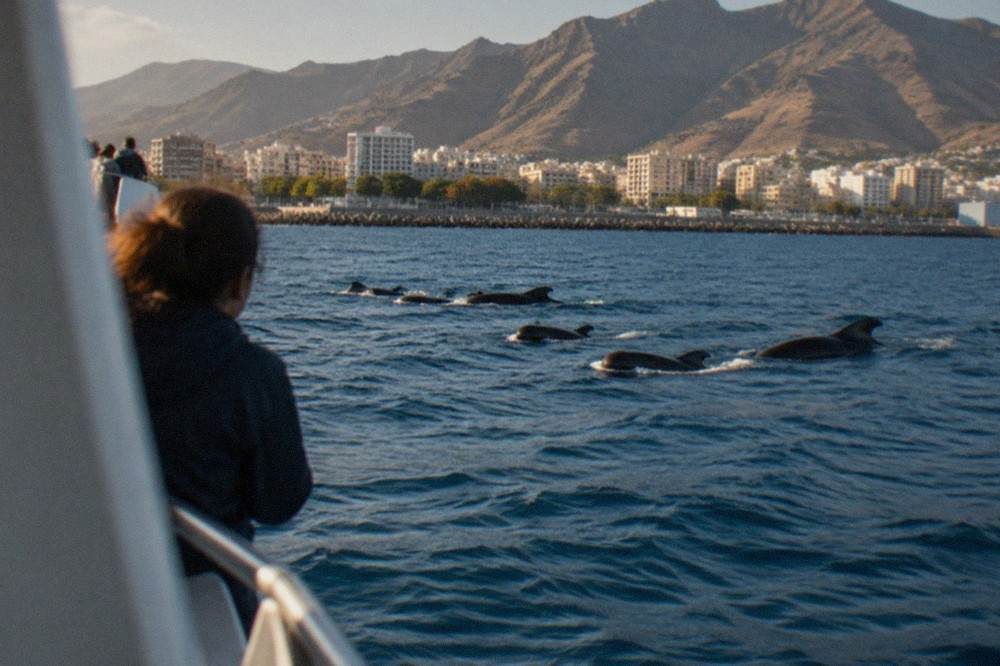
The sea is the third. Whale watching is regulated by Decreto 178/2000: no boat may approach within 60 m of a cetacean, at most three boats may sit within 500 m, speed is capped at 4 knots inside that zone, and swimming or diving within 500 m is banned, as is feeding, chasing or circling. Authorised boats fly the Barco Azul flag, issued with the permit and at each annual renewal. A reader who wants the sea's own numbers can check whether the water is warm enough in can you swim in the sea in Tenerife.
Bookings are the fourth. The summit trail, the Montana Blanca trail, El Pijaral in Anaga, Barranco del Infierno and the Masca gorge all require a reservation, and walking the summit trail without one may be penalised. Masca has the sharpest edges of the set: the descent is sold with a mandatory boat exit booked in advance, hikers must arrive on TITSA line 355 from Santiago del Teide and show the ticket, private vehicles are refused, closed mountain footwear is a condition of entry, and a sudden pier closure from sea conditions voids the day's ticket.
On the road, the general legal blood-alcohol limit the DGT page refers to is 0.5 g/l, and Tenerife's taxis are white, metered from the start of the trip, with a fixed price agreeable in advance for excursions. For the wildlife questions people type alongside this one, mosquitoes, sharks and wildlife in Tenerife carries the sourced answers.
Is Tenerife Safe at Night?
Nothing in the official record describes night-time Tenerife as unsafe, and the practical night-time facts are mundane: TITSA runs line 711 as a night bus linking Tenerife South airport with Santa Cruz, Los Cristianos and Costa Adeje, taxis are white and metered from the start of every trip, and the Carnival programme runs large street events on published dates with no safety notice attached.
No crime statistic, no named street and no neighbourhood warning appears on any official page read for this site, so none is invented here. Readers who have seen alarming headlines should note that the question of why Tenerife is on the no-go list has a specific, checkable answer about what that list actually is and who publishes it, and the page on where to avoid in Tenerife covers the same ground from the official rows only.
The night bus is the practical fact worth having. TITSA's own airport page lists line 711 as the night service connecting Santa Cruz, Tenerife South airport, Los Cristianos and Costa Adeje, which covers the late-arrival case that worries many visitors. Taxis fill the rest: the tourist board describes them as white, all metered from the start of the trip, with adapted eurotaxis available.
For evening entertainment, the official Carnival programme for 2027 places the Pinata weekend on 26 and 27 February, with the first Daytime Carnival on 21 February, and the published schedule carries no safety caveats. The evening shows sold through this site, from flamenco in Costa Adeje to the medieval banquet at Castillo San Miguel, are ticketed venues with fixed seating and published running times.
A regulated boat trip is a good example of how safety works on this island: the operator's listing states the route, the food and drink included and the meeting point at Puerto Colon, and the boat operates under the decree's distance rules with the Barco Azul flag. Check availability
Common Questions About Safety in Tenerife
is it safe to travel to tenerife
Yes. The entry system is settled: the EU's Entry/Exit System has been fully operational since 10 April 2026 and registers UK and US visitors with a facial image and fingerprints instead of a passport stamp. ETIAS is not in operation and collects no applications. No official page shows a tourist tax in force or approved.
is it safe to go to tenerife
Yes. The island received 7,561,659 tourists in 2025 and the official warnings that exist concern altitude, wildfire rules, sea conditions and trail bookings. The cable car excludes people with cardiovascular conditions, pregnant women and children under 3, and smoking is banned across Teide National Park.
is tenerife safe to travel
Yes, with the standard mountain and sea precautions. Book the trails that need reservations, including the Teide summit trail on Tenerife ON and the Masca descent at caminobarrancodemasca.com, and check the Tenerife ON alerts page before walking, since bookings can be suspended for fire risk or weather.
What to be careful of in Tenerife?
Altitude, wildfire rules, the sea and bookings. The cable car operator excludes riders with cardiovascular conditions, pregnant women and under-3s; the Cabildo bans smoking in all open-air spaces of the national park; whale boats keep 60 m away by decree; and several trails require reservations, with closed mountain footwear compulsory at Masca.
what to be wary of in tenerife?
Be wary of out-of-date advice rather than of the island. The summit permit is booked on Tenerife ON and, since 19 January 2026, the daytime slots cost EUR 15 for visitors. Public transport is not free for visitors: the resident subsidy covers resident passes only, and visitors pay single fares, the EUR 10 day travelcard or the EUR 50 seven-day travelcard.
do and don'ts in tenerife?
Do book the trails that need it, carry ID for the Teide checkpoint, wear closed mountain footwear at Masca and check the alerts page before walking. Do not smoke anywhere in the open air of Teide National Park, do not drive above the 0.5 g/l blood-alcohol limit, and do not expect a refund on a trail booking: they are non-refundable, with no change of date, slot or names.
For the wider planning questions, entry requirements for Tenerife sets out the border rules in full, and this editorial desk's Tenerife Travel Guide homepage indexes the rest, from is Tenerife expensive to is Tenerife worth visiting.