Museum of Nature and Archaeology (MUNA)
Tenerife's principal museum of natural history and Canary archaeology sits in Santa Cruz de Tenerife, and this page sets out what it is, how to reach it, and what else to see in the city around it.
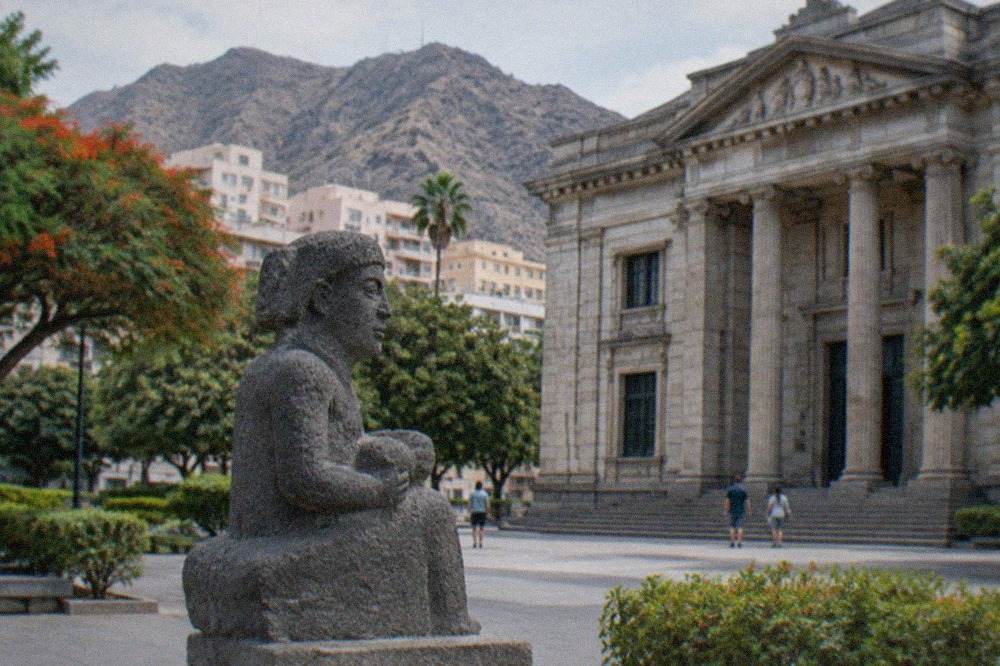
Short answer
The Museum of Nature and Archaeology, known as MUNA, is Tenerife's main natural history and archaeology museum, in Santa Cruz de Tenerife. It covers the Canary Islands' geology, flora and fauna and the archaeology of the Guanche world. Confirm current opening hours and ticket prices with the venue before visiting.
The Museum of Nature and Archaeology, usually shortened to MUNA, is the island's flagship museum building, in Santa Cruz de Tenerife, the capital of the Canary Islands' western province. It holds the natural history and archaeology collections of the regional network, and its galleries work through the archipelago's volcanic origins, its plant and animal life, and the material culture of the Guanches, the aboriginal people of Tenerife. This page is an editorial guide to what the museum is, how to reach it, and how to fit it into a wider day in the city. Where a detail such as an opening hour or a ticket price is not held in this desk's verified research, the page says so and tells you to confirm it with the venue rather than guessing a figure.
What Is the Museum of Nature and Archaeology?
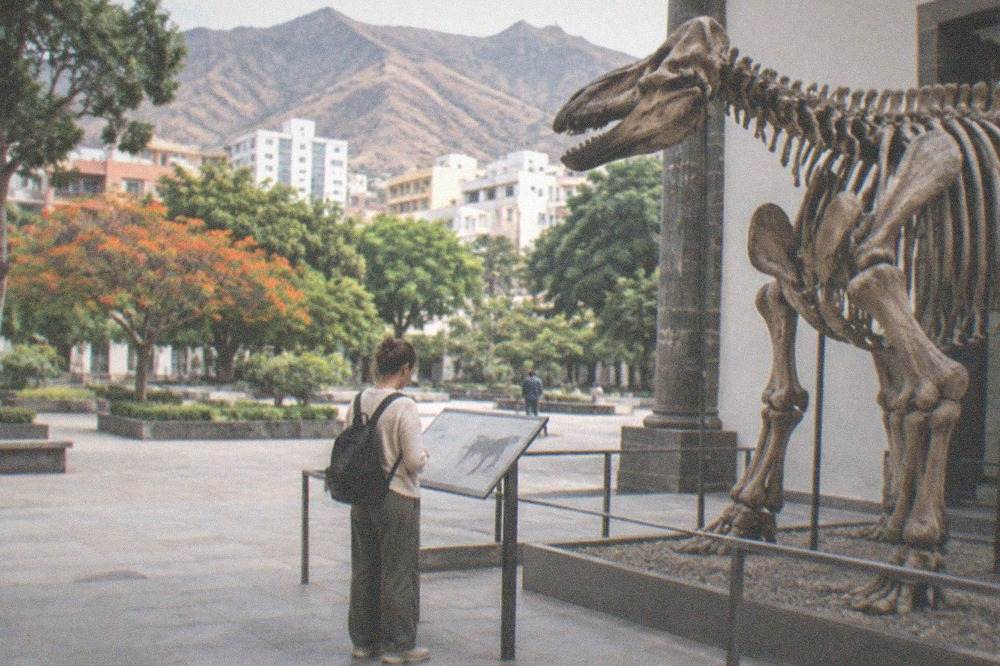
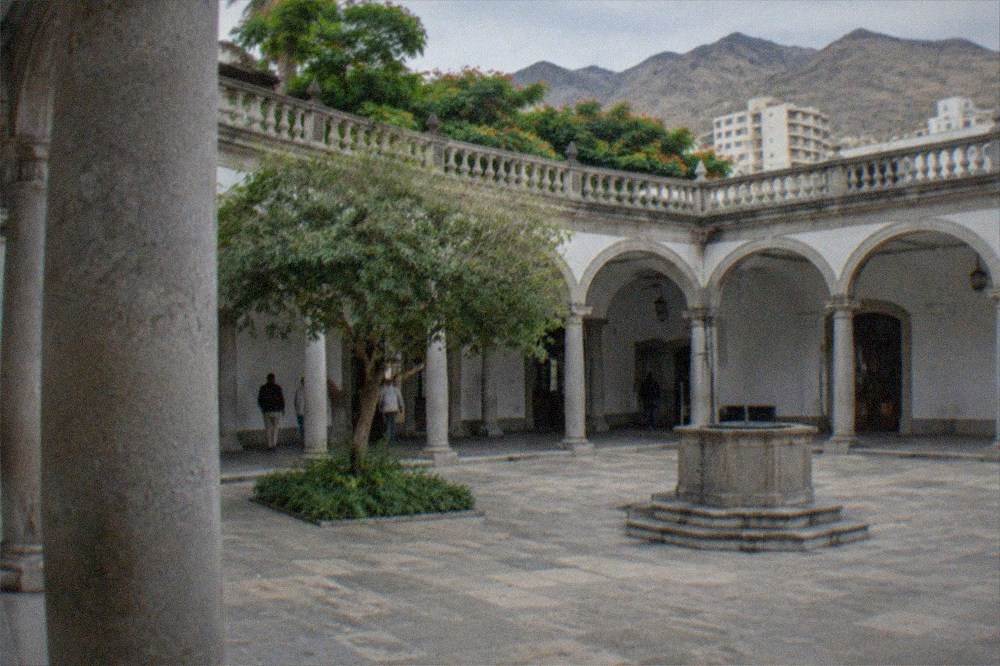
The Museum of Nature and Archaeology, or MUNA, is Tenerife's principal museum of natural history and Canary Islands archaeology, housed in a large historic building in central Santa Cruz de Tenerife. Its exhibitions cover the geology, plants and animals of the archipelago and the archaeology of the Guanches, and it forms part of the regional museum network of the Canary Islands.
The museum's strength is that it explains the island before you go and see it. Tenerife is a volcanic island whose rocks, ravines and endemic species are the visible half of a story that starts under the ocean. UNESCO's inscription for Teide National Park records that the mountain rises 7,500 m above the ocean floor and is regarded as the world's third-tallest volcanic structure, and the geology galleries of a museum like this are where those numbers stop being trivia and start making sense of the landscape. The archaeology side covers the Guanche period, the centuries in which the island's aboriginal population lived here before the Castilian conquest, and the collections range from everyday tools and ceramics to human remains studied under modern conservation rules.
This desk has not verified the museum's current temporary exhibition programme, its guided visit options or its research facilities, so treat those as things to confirm on the venue's own page rather than details to plan around. What can be said with confidence is the museum's position in the island's cultural hierarchy: it is the one museum on Tenerife that attempts the whole story, geology to archaeology, in a single building, and it sits in the island's capital beside the other civic institutions of Santa Cruz.
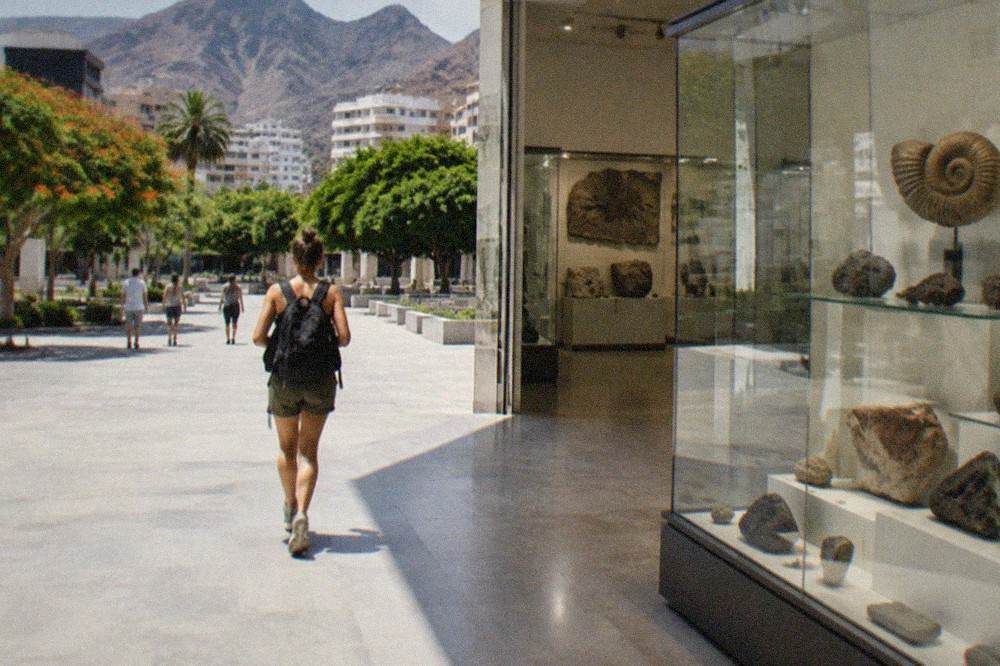
Where Is MUNA and How Do You Get There?
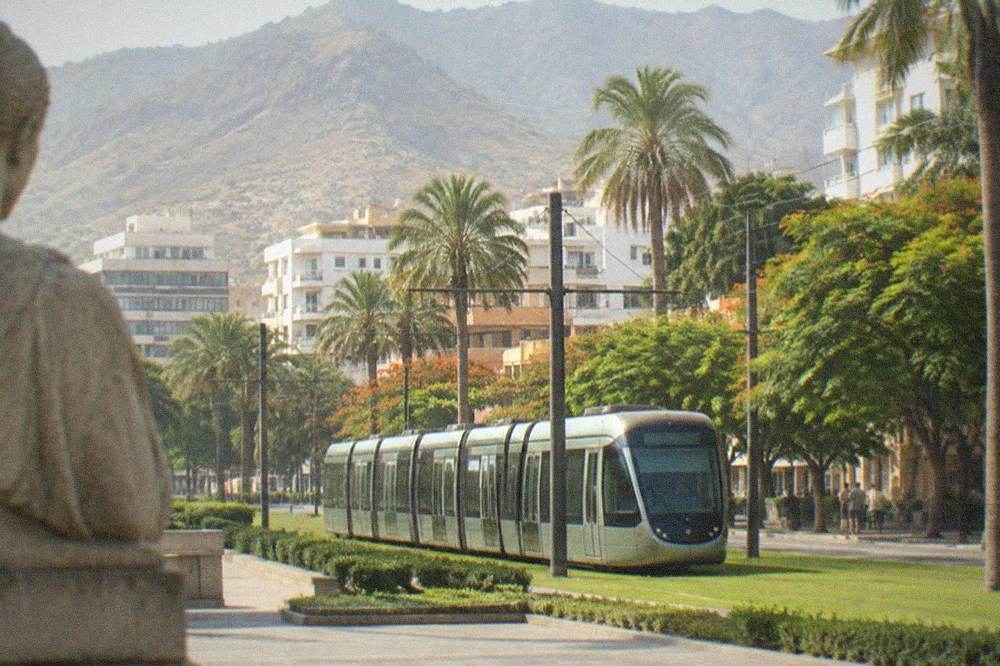
The museum stands in central Santa Cruz de Tenerife, the island's capital and largest municipality, with a 2025 registered population of 211,957. TITSA buses serve the city from both airports, the Metrotenerife tram runs through the metropolitan area, and a single tram fare is EUR 1.35 on a transit pass or EUR 1.10 by mobile, so the museum is reachable without a car.
TITSA's own airport pages list the bus lines that connect each terminal to the capital. From Tenerife South Airport the lines are 10 to Santa Cruz, 40 to Costa Adeje bus station via Los Cristianos, 711 as a night service, the 343 express from Puerto de la Cruz to Los Cristianos via both airports, and 415 to El Fraile and San Isidro. From Tenerife North Airport, officially Tenerife Norte-Ciudad de La Laguna under AENA's naming, the lines are 20 to Santa Cruz via La Laguna, 30 to Puerto de la Cruz and the same 343 express heading south. Any of the Santa Cruz-bound lines drop a visitor within reach of the city centre, where the museum sits.
| Airport | TITSA lines listed by the operator | Principal destinations |
|---|---|---|
| Tenerife South (TFS) | 10, 40, 711, 343, 415 | Santa Cruz, Costa Adeje, Los Cristianos, Puerto de la Cruz, El Fraile, San Isidro |
| Tenerife North (TFN) | 20, 30, 343 | Santa Cruz via La Laguna, Puerto de la Cruz, the south of the island |
Two facts about paying matter to a visitor. First, public transport on Tenerife is not free for tourists: the 2026 subsidy of 100% on passes applies to residents of the Canary Islands with personalised cards, so visitors buy single tickets, the EUR 10 day travelcard or the EUR 50 seven-day travelcard. Second, the tram is a separate system from the buses, with its own fare, and Metrotenerife's fares page makes no claim of any tram service to either airport, so a visitor flying in should plan on the TITSA lines above. If you are weighing a hire car against the buses for a wider island stay, the Tenerife Travel Guide transport pages set out the trade-offs, and this museum is one of the sights that genuinely does not need one.
What Can You See Inside the Museum?
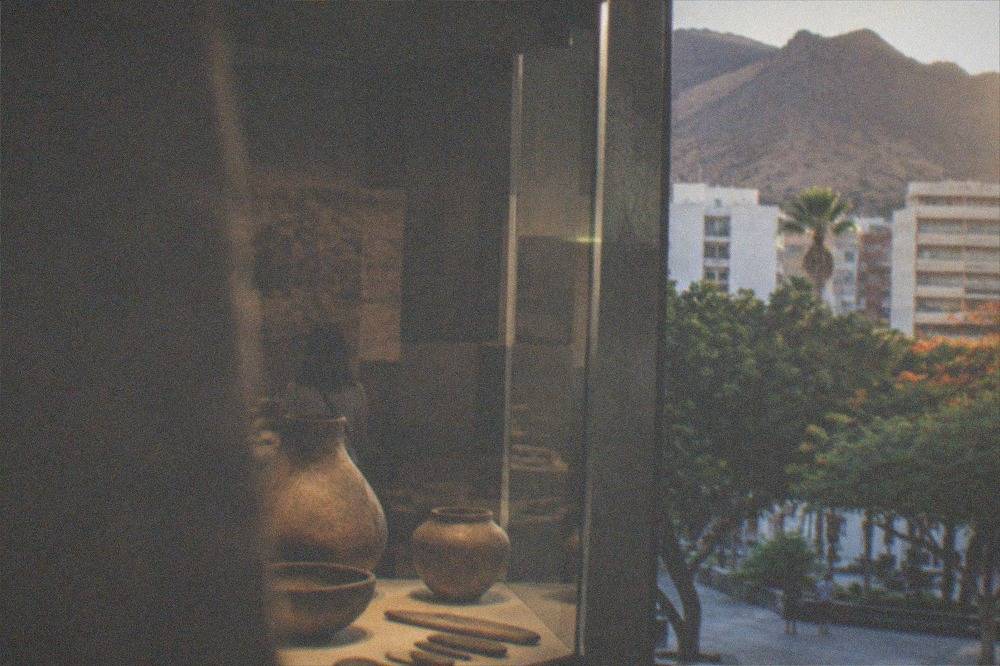
Inside, the museum's permanent displays combine Canary Islands natural history with Guanche archaeology: volcanic rock and fossil specimens, exhibits on the islands' endemic plants and animals, and aboriginal material including tools, ceramics and funerary archaeology. The building itself is a substantial historic structure in the centre of Santa Cruz, and the collection belongs to the Canary Islands' regional museum network.
The natural history half answers the questions the island's landscape raises. Why is the sand black at El Bollullo, which the tourist board describes as black sand at the foot of a cliff? Why do the laurel forests of Anaga Rural Park exist at all? The answers sit in the archipelago's volcanic origin and its isolation, which produced species found nowhere else, and a museum that lays this out gives real substance to later walks in the Anaga Rural Park or drives through Teide National Park. The archaeology half is the other deep story: the Guanches left no written record, so what is known of them comes from excavation and from the objects now held in collections like this one.
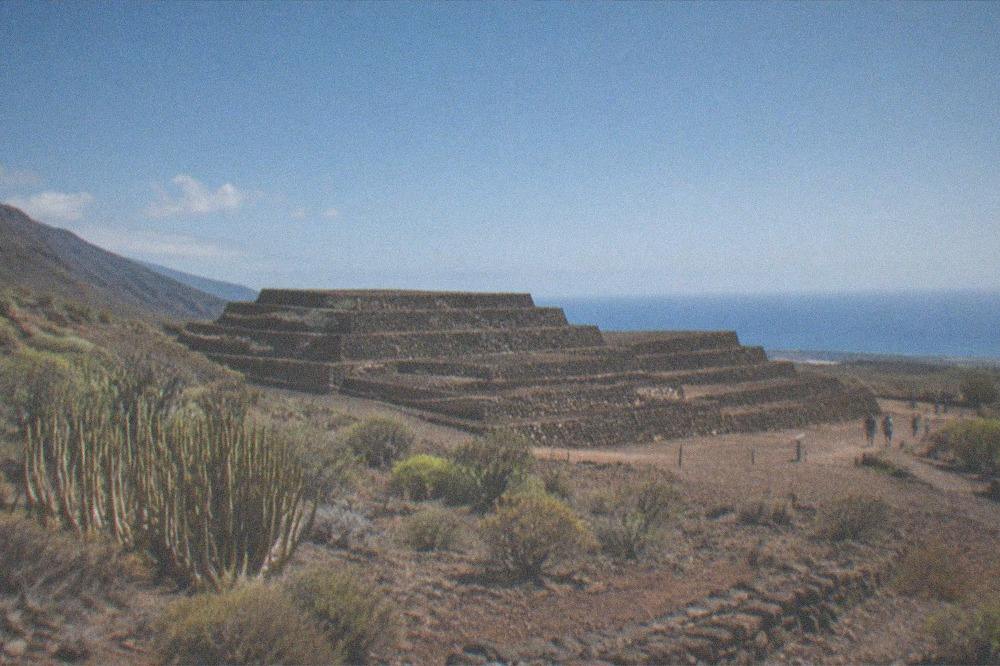
This desk has not verified the museum's floor plan, the current arrangement of its galleries, whether a given hall is open on the day you read this, or any accessibility detail beyond what a general museum of this type ordinarily provides, so check the venue's own page for the current layout and any closures. What is safe to say is that the museum is the natural place on the island to see Guanche material culture in context, and that a visit pairs well with the island's outdoor archaeology, such as the Pyramids of Guimar, which the operator's own page records as open daily 10:00 to 18:00 except 1 January and 25 December, with a full ticket including audioguide at EUR 26.00.
A museum morning and a city afternoon divide the day neatly, and the question most visitors face is how to cover the capital's ground without walking it twice. A guided loop solves that in one go, and the bike and e-bike option below starts from the cruise terminal area and sweeps the waterfront, the old quarter and the parkland in a single circuit, which pairs naturally with a few unhurried hours inside the museum itself.
How Much Time Should You Allow and When Should You Visit?
A museum of this scope is comfortably a half-day visit, two to three hours for the permanent collection, and Santa Cruz is a year-round city destination: AEMET's normals for the capital show mean daily maxima from 21C in January to 29C in August, with July recording zero days of rain of 1 mm or more, so the weather rarely dictates the plan. Confirm the museum's opening days and hours with the venue before setting out, as this desk holds no verified schedule for it.
The climate table below is AEMET's own set of 1981 to 2010 normals for the Santa Cruz station at 36 m, and it shows why the capital suits a museum visit in any month. The wettest months by frequency are November and December, at 4.7 and 5.4 days of measurable rain, which is precisely when an indoor morning earns its place in an itinerary. The summer is close to rain-free.
| Month | Mean daily max C | Mean daily min C | Rain mm | Days with 1 mm or more | Sunshine hours |
|---|---|---|---|---|---|
| Jan | 21 | 15.4 | 32 | 4.2 | 178 |
| Feb | 21.2 | 15.3 | 35 | 3.8 | 186 |
| Mar | 22.1 | 15.9 | 38 | 3.8 | 221 |
| Apr | 22.7 | 16.5 | 12 | 2.4 | 237 |
| May | 24.1 | 17.8 | 4 | 0.9 | 282 |
| Jun | 26.2 | 19.5 | 1 | 0.2 | 306 |
| Jul | 28.7 | 21.2 | 0 | 0 | 337 |
| Aug | 29 | 21.9 | 2 | 0.3 | 319 |
| Sep | 28.1 | 21.7 | 7 | 0.9 | 253 |
| Oct | 26.3 | 20.3 | 19 | 3.1 | 222 |
| Nov | 24.1 | 18.4 | 34 | 4.7 | 178 |
| Dec | 22.1 | 16.6 | 43 | 5.4 | 168 |
Timing within the week matters more than timing within the year for a city museum. Santa Cruz is at its busiest on cruise turnaround days and, above all, during Carnival: the official 2027 programme puts the Queen's Election Gala on 17 February and the two Daytime Carnival street parties on 21 and 27 February 2027, and the whole city reorients itself around the festival for those weeks. A museum visit during Carnival week is possible, but the streets around it will be full of costumed crowds, which is either a reason to go or a reason to pick another week, depending on your taste.
Which Other Museums and Cultural Sights Pair Well with MUNA?
The strongest pairings with the museum are the Pyramids of Guimar on the east coast, the Teide Observatory in the national park, and the Icod Dragon Tree in the north, while inside Santa Cruz itself the Auditorio de Tenerife, the work of Santiago Calatrava inaugurated in 2003, sits on the waterfront. Each has verified opening data of its own, set out in the table below, so a two-museum day is easy to build.
The Pyramids of Guimar are the closest thing the island has to a second archaeological museum, a park built around stepped stone structures whose full ticket, including audioguide, is EUR 26.00 on the operator's own page. The Teide Observatory offers guided visits by prior reservation only, and the Instituto de Astrofisica de Canarias, which runs it, was carrying a fully booked notice when this desk's research was compiled, so book well ahead. The Icod Dragon Tree is living natural history: Icod council attributes an age of approximately 1,000 years to it, while the tourist board says over 800, so the honest figure is 800 to 1,000 years, stated as an estimate.
| Sight | Verified detail | Source basis |
|---|---|---|
| Pyramids of Guimar | Open daily 10:00 to 18:00 except 1 January and 25 December; full ticket with audioguide EUR 26.00 | Operator's own page |
| Teide Observatory | Guided visits by prior reservation only; under-16s free; resident discount | Instituto de Astrofisica de Canarias |
| Icod Dragon Tree | National Monument since 1917; about 21 m tall; age estimated at 800 to 1,000 years | Icod council and Turismo de Tenerife |
| Loro Parque | 09:30 to 17:30 every day of the year; own car park EUR 7 per day | Loro Parque's own page |
| Siam Park | Open 365 days; 10:00 to 18:00 from 1 May to 29 Oct; 10:00 to 17:00 from 30 Oct to 30 Apr | Siam Park's own page |
| Auditorio de Tenerife | Santiago Calatrava; inaugurated 2003; 23,000 m2 | Auditorio's own page |
For a fuller museum-and-park day, Loro Parque in Puerto de la Cruz runs 09:30 to 17:30 every day of the year and charges EUR 7 per day for its own car park, while Siam Park in Costa Adeje is the island's water-park counterpart. Neither is a museum, but both carry the same educational thread, conservation, that runs through MUNA's natural history galleries. If your interest is specifically the sky rather than the sea, the Teide Observatory is the island's working research counterpart to the museum's astronomy sections, and the Starlight Foundation lists El Teide as a Starlight Tourist Destination and the Cumbres de Tenerife as a Starlight Reserve, both since October 2013.
Is the Museum a Good Option for Families and Rainy Days?
Yes on both counts: a natural history and archaeology museum is the standard wet-weather anchor for a Tenerife itinerary, and Santa Cruz records just 29.7 days of rain of 1 mm or more across a whole year, so the rainy day you plan for rarely arrives, but the museum earns its slot anyway. Families should confirm any age-specific workshops or child ticketing with the venue, as this desk holds no verified programme for it.
The arithmetic of Tenerife weather explains why rainy-day plans matter so little and so much at once. AEMET's annual figure for Santa Cruz is 226 mm of rain on 29.7 days, and the north of the island is wetter: the Tenerife North Airport station at 632 m records 520 mm on 64 days, mostly between October and March. So a stay based in Puerto de la Cruz or the Orotava Valley will meet rain a family in Costa Adeje never sees, and a museum morning is the natural answer. The island's climate split, south dry and sunny, north green and occasionally wet, is exactly the kind of thing the museum's own galleries explain, which makes a rainy-day visit feel less like a consolation and more like the lesson.
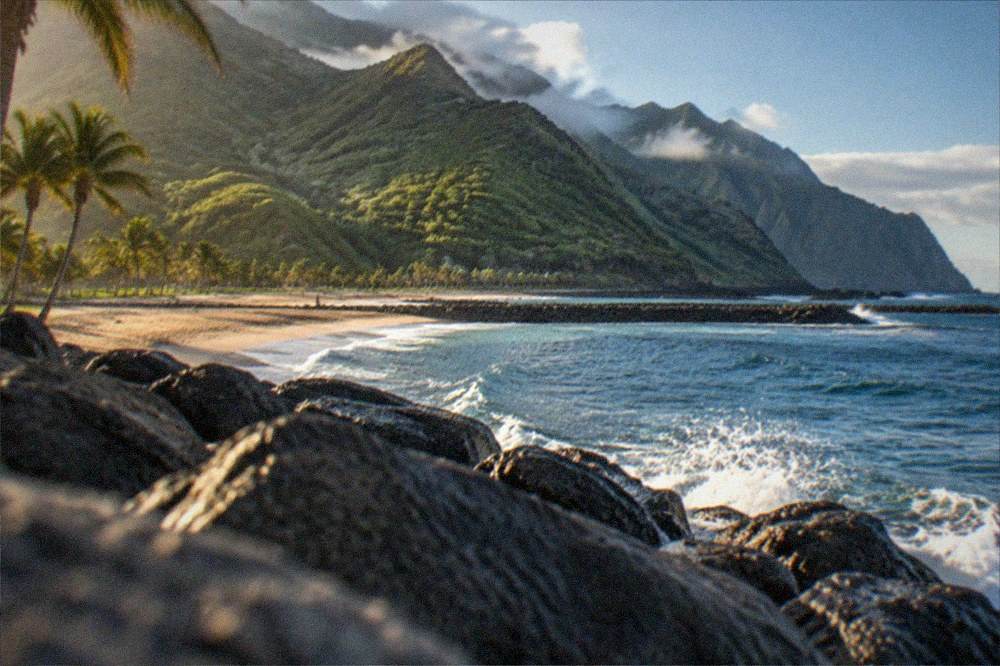
For a family combining the museum with the rest of the capital, the practical pairing is a morning inside followed by the waterfront. The Playa de las Teresitas at San Andres, which the tourist board describes as golden sand with palm trees and breakwaters that calm the water, is the city's swimming beach, and the sea itself is warm by Atlantic standards: NOAA's 1991 to 2020 normals for the south coast put the surface at 19.1C in March and 23.7C in September and October.
| Month | Sea surface C off the south coast |
|---|---|
| Jan | 19.9 |
| Feb | 19.2 |
| Mar | 19.1 |
| Apr | 19.5 |
| May | 20.2 |
| Jun | 21.4 |
| Jul | 22.2 |
| Aug | 23.1 |
| Sep | 23.7 |
| Oct | 23.7 |
| Nov | 22.5 |
| Dec | 21.1 |
What Else Should You See Around Santa Cruz on the Same Day?
A one-day Santa Cruz itinerary can pair the museum with the Auditorio de Tenerife on the waterfront, the UNESCO-listed old town of nearby La Laguna, and the city's Carnival heritage, with the ferry terminals offering onward trips to La Gomera in 50 minutes and Gran Canaria in 80 minutes. The city is compact, served by the tram and the TITSA network, and every one of these sits within the metropolitan area.
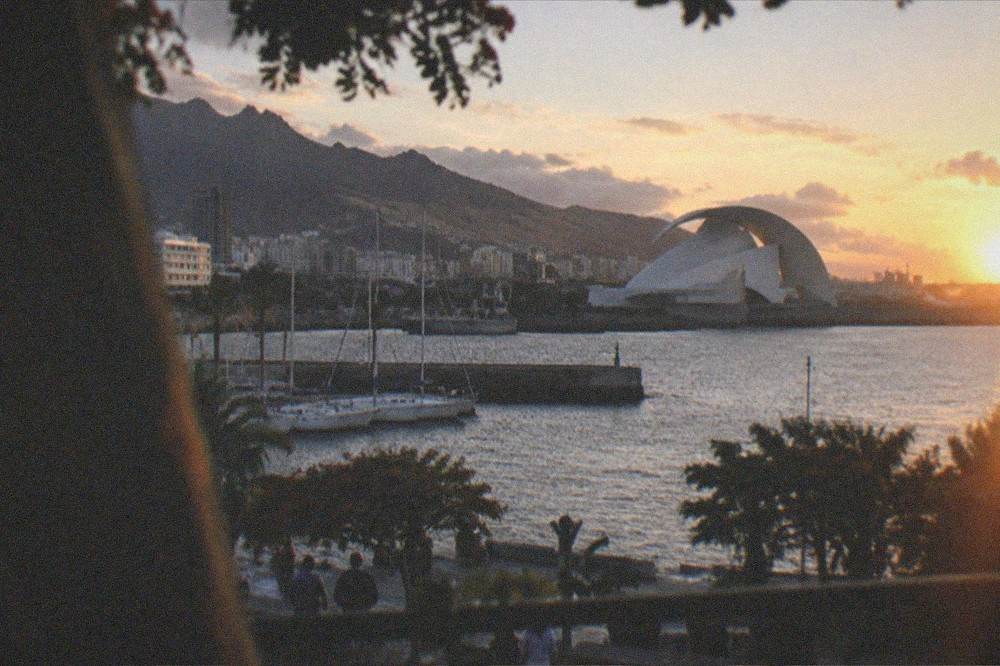
The Auditorio de Tenerife is the capital's landmark building, Santiago Calatrava's white trencadis-skinned concert hall inaugurated in 2003 and covering 23,000 m2, and its silhouette is the image on a thousand postcards. La Laguna, the second municipality of the island with 161,108 registered residents in 2025, holds a UNESCO World Heritage inscription for its old town, which UNESCO describes as the first non-fortified Spanish colonial town and the model for many colonial towns in the Americas. Between the two, the city's own story runs from its colonial port past to its modern capital present, and the museum sits in the middle of it.
The sea is the third dimension of a Santa Cruz day. Fred. Olsen Express lists the Los Cristianos to San Sebastian de La Gomera crossing at 50 minutes, Santa Cruz de Tenerife to Agaete on Gran Canaria at 80 minutes, Los Cristianos to Santa Cruz de La Palma at 150 minutes and Los Cristianos to Valverde on El Hierro at 140 minutes. None of these is a museum trip, but a visitor with a spare day can turn a cultural morning into an island-hopping afternoon, and the Teide Cable Car and the mountain it serves remain the island's headline sight for any day you spare it.
| Ferry route | Crossing time per Fred. Olsen Express |
|---|---|
| Los Cristianos to San Sebastian de La Gomera | 50 min |
| Santa Cruz de Tenerife to Agaete, Gran Canaria | 80 min |
| Los Cristianos to Valverde, El Hierro | 140 min |
| Los Cristianos to Santa Cruz de La Palma | 150 min |
For visitors who prefer the sea's residents to its crossings, the waters off the south and west coasts are among Europe's most reliable places to see cetaceans: the World Cetacean Alliance designated the Tenerife-La Gomera Marine Area a Whale Heritage Area in January 2021, recording a unique resident population of pilot whales and bottlenose dolphins, and Decreto 178/2000 regulates every boat, forbidding approaches within 60 m, capping speed at 4 knots within 500 m and requiring authorised boats to fly the Barco Azul flag. A no-chase eco trip is the pairing that respects those rules.
How Does a Museum Visit Fit a Food and Wine Day?
The museum's city-centre position makes it the morning half of a full Santa Cruz day, with the island's food and wine country within reach for the afternoon: the Tacoronte winery region sits on the road north, and a full-day gastronomy tour from the south covers lunch and tastings, while the island's own tax regime means IGIC at 7% on everyday goods rather than mainland VAT.
Tenerife's food culture is a museum subject in its own right, and the island's vineyards grow on volcanic soil at altitudes mainland Europe rarely attempts. The tax agency's table shows the Canaries apply IGIC rather than VAT, with 7% on everyday goods and further bands at 0%, 3% and 15%, and non-resident travellers can claim IGIC back on purchases under form 403, so a wine bought to take home is worth receipts. A guided gastronomy day is the low-effort route to the same country the museum's botany galleries describe.
The honest planning note is that this desk holds no verified restaurant list for the streets around the museum, so treat lunch as something to choose on the day or to research on the venue's own neighbourhood guide rather than from a page like this. What the verified record does support is the island's wider food calendar: the wineries of Tacoronte and El Sauzal sit inland of the north coast road, the banana plantations of the south, documented on farm tours in this island's roster, explain the landscape the museum's agriculture sections cover, and the Icod Dragon Tree marks the northern town where a museum day and a vineyard day can meet.
What Should You Confirm Before You Go?
Confirm three things with the venue before you travel: the current opening days and hours, the current ticket prices and any concessions, and whether any gallery or temporary exhibition is closed on your date. None of these figures is held in this desk's verified research for this museum, so no number for them appears on this page, and the venue's own page is the only source worth trusting for them.
That caution is not a hedge for its own sake. Opening hours and admission prices at public museums change with budgets, renovation works and holiday calendars, and a guide that prints a number it has not read from the venue's own page is guessing with your day trip. The same discipline applies to the island's permit-run sights, where the rules genuinely are current and specific: the Teide summit trail's 09:00 to 17:00 slots have carried a public fee since 19 January 2026, EUR 15 for visitors, and the Masca gorge descent requires a pre-booked ticket, EUR 40.66 general with the boat extra, booked at the operator's own site rather than on Tenerife ON. A museum needs none of that paperwork, which is part of its appeal as a low-friction day.
For the wider plan, the things this desk can state from verified sources are these: the buses and the tram will get you to the city cheaply, the capital's climate will almost certainly cooperate, and the museum's subject matter, geology, Guanches and the natural history of an isolated volcanic archipelago, is the best possible preparation for everything you will see outside it. Book the observatory early, book the summit permit on Tenerife ON if the crater is on your list, and give the museum the unhurried half-day its collection deserves.

Common Questions About the Museum of Nature and Archaeology
Is the Museum of Nature and Archaeology worth visiting?
For most visitors, yes. It is the island's only museum that covers the whole arc from volcanic geology to Guanche archaeology in one building, and it gives real context to the landscapes you will see at Teide National Park and Anaga. Confirm current hours and prices with the venue before you go.
How do I get to the museum without a car?
TITSA buses reach Santa Cruz from both airports: lines 10, 40, 711, 343 and 415 serve Tenerife South, and lines 20, 30 and 343 serve Tenerife North. The Metrotenerife tram runs through the metropolitan area at EUR 1.35 a single on a transit pass, EUR 1.10 by mobile. Visitors pay normal fares: the free-pass subsidy is for Canary Islands residents only.
How long does a visit take?
Plan two to three hours for the permanent collection, which makes the museum a half-day anchor with the waterfront, the Auditorio de Tenerife or La Laguna's UNESCO-listed old town filling the rest of the day.
Is the museum good for children?
Natural history and archaeology collections of this kind generally work well for families, and the museum is the standard rainy-day option in the capital. This desk holds no verified programme of family workshops or child ticketing, so confirm those details with the venue.
What else is there to do near the museum in Santa Cruz?
The Auditorio de Tenerife, inaugurated in 2003, stands on the waterfront, Playa de las Teresitas at San Andres is the city's golden-sand swimming beach, and ferries run from the island to La Gomera in 50 minutes and Gran Canaria in 80 minutes. During Carnival season the whole city becomes the attraction, with the 2027 programme putting the Daytime Carnival parties on 21 and 27 February.
Do I need to book the museum in advance?
This desk has no verified booking requirement for the museum on file, so check the venue's own page. By contrast, the island's permit-run sights do need advance booking: the Teide summit trail on Tenerife ON and the Masca gorge descent at the operator's own site, both of which sell controlled daily quotas.