The Abandoned Village of Abades
Abades is a abandoned village on Tenerife's southeast coast, built as a sanatorium and never occupied as one. This guide explains what the site is, how to visit it responsibly and what to combine it with.
Short answer
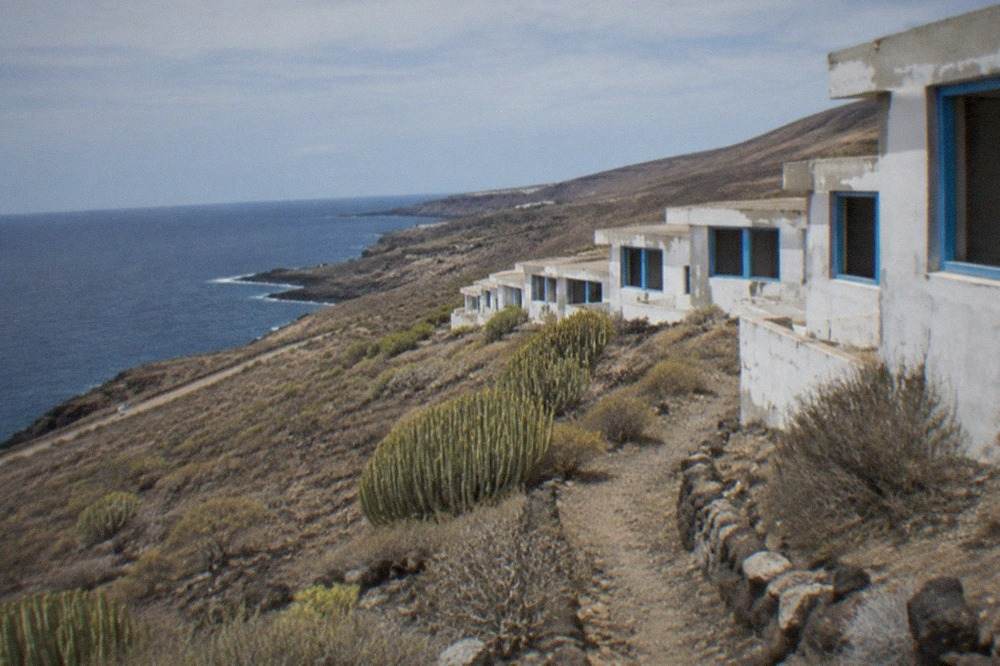
Abades is an abandoned village on Tenerife's southeast coast, built as a sanatorium for people with Hansen's disease and never used at full scale. The buildings, including a striking church, stand empty on the hillside above a small coastal settlement. There is no visitor centre, no ticket and no official access to the interiors, so the site is best treated as something to view from the outside while exploring the surrounding coast.
Abades is one of the strangest sights on Tenerife's southeast coast: a whole village of empty whitewashed buildings, crowned by a church, standing on a hillside above the sea. It was built as a sanatorium, a purpose it never fulfilled, and the complex has stood empty for decades while the small coastal settlement of the same name carries on life at the foot of the hill. This page explains what the site is, how to approach a visit responsibly, and what to combine it with on the same day.
What Is the Abandoned Village of Abades?
Abades is an abandoned village on Tenerife's southeast coast, built as a sanatorium for people with Hansen's disease, the illness historically called leprosy, and never occupied at the scale its planners intended. The complex includes rows of small white buildings with blue trim and a prominent church, and it has stood empty for decades. There is no museum, no ticket office and no official interior access, so the site functions today as a striking piece of architectural history best appreciated from the paths and roads around it.
The story of the place is told in general terms by the Canary authorities and local councils, and the details vary between tellings, so this page keeps to what can be checked on the ground. What a visitor finds is unambiguous: a planned settlement laid out in orderly rows, designed around the medical thinking of its era, with a chapel that dominates the site. Sanatorium villages of this kind were built in several parts of Spain when isolation was the standard response to Hansen's disease, and effective drug therapies later made them unnecessary. That is the arc of Abades in a sentence: planned, built, and then left behind by medicine.
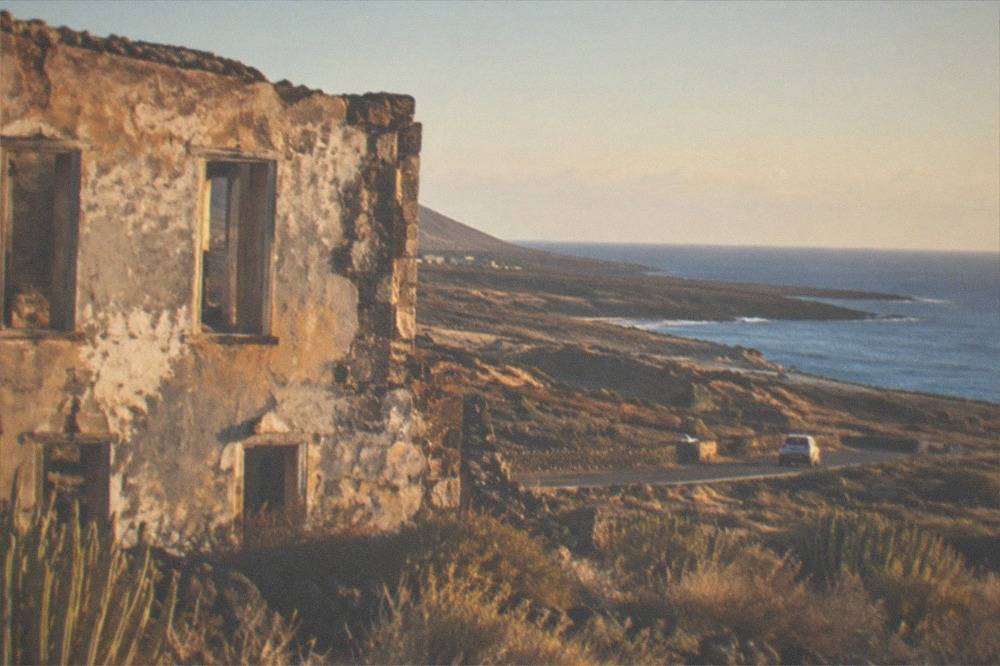
The buildings have been empty long enough that nature has taken the upper hand inside them. Photographs and drone footage circulated widely online in recent years have made the site one of the most photographed ruins in the Canaries. Nothing about that popularity has produced an official visitor operation. There is no interpretation, no guided tour run by any public body, and no published opening arrangement, because the site has none.
Where Is Abades and How Do You Reach It?
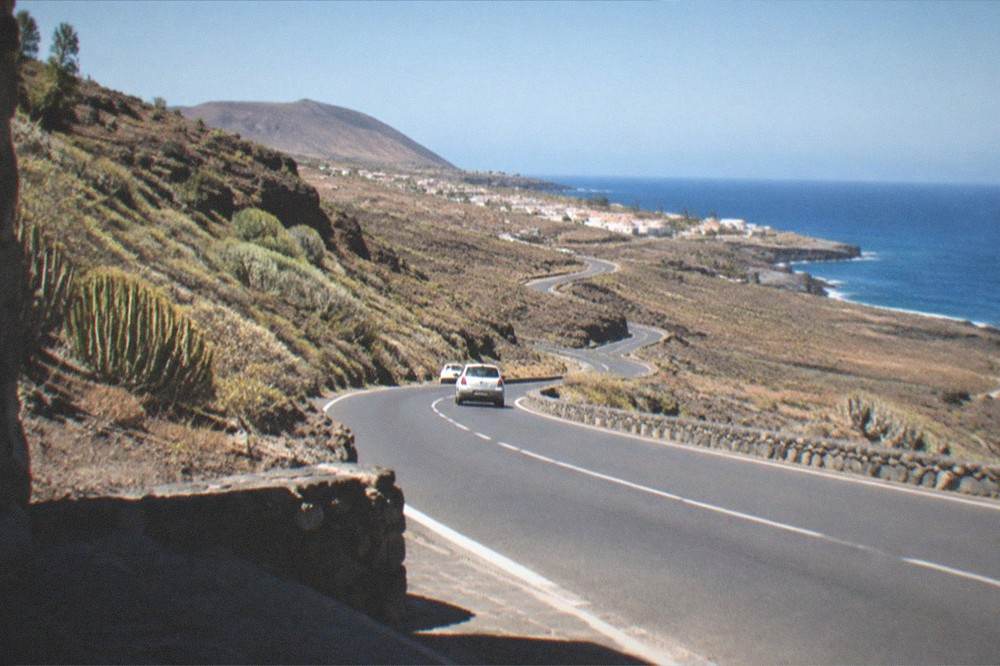
Abades sits on Tenerife's southeast coast, in the municipality of Arico, between the El Médano area and the island's southern airport region. There is no dedicated visitor transport, so most people arrive by hire car or by TITSA bus services along the southern coastal road and confirm current timetables with TITSA before travelling. The abandoned village stands on the hillside above the present-day coastal settlement of the same name, and the site is visible from the surrounding roads and paths.
The southeast of the island is the dry, sunny side, and the drive along the coast road is one of the easiest in Tenerife. Arico is one of the island's 31 municipalities, and the settled part of Abades, at the foot of the hill, is a small coastal community with holiday homes and a modest beach. The abandoned complex occupies the slope above it.
Public transport on the island is run by TITSA, and visitors pay for it. The resident subsidy that made headlines in 2026 applies to resident passes only: a visitor's options are single tickets priced by route, the EUR 10 day travelcard or the EUR 50 seven-day travelcard, and the airport ticket machines sell the travelcards. Which bus routes serve the Abades area directly is a detail to confirm with TITSA's own timetable pages before setting out, because coastal services change with the seasons and this site holds no verified route list for the village.
| Ticket | What It Is | Who Buys It |
|---|---|---|
| Single ticket | Priced by route, card or cash | Any visitor |
| Day Travelcard | EUR 10, one day of travel | Visitors without a resident pass |
| 7 Day Travelcard | EUR 50, seven days of travel | Visitors on a longer stay |
| Ten+ card | EUR 2 for the card, top-ups EUR 2 to EUR 100 | Anyone; the free resident passes require Canary residency |
For most visitors a hire car is the practical choice for the southeast, and this site's guide to driving in Tenerife covers the rules worth knowing before you collect the keys. If the abandoned village is one stop on a wider tour of the island, an organised island tour saves the planning: the full-day guided island tour covers the major sights in one loop.
What Can You See at the Site Today?
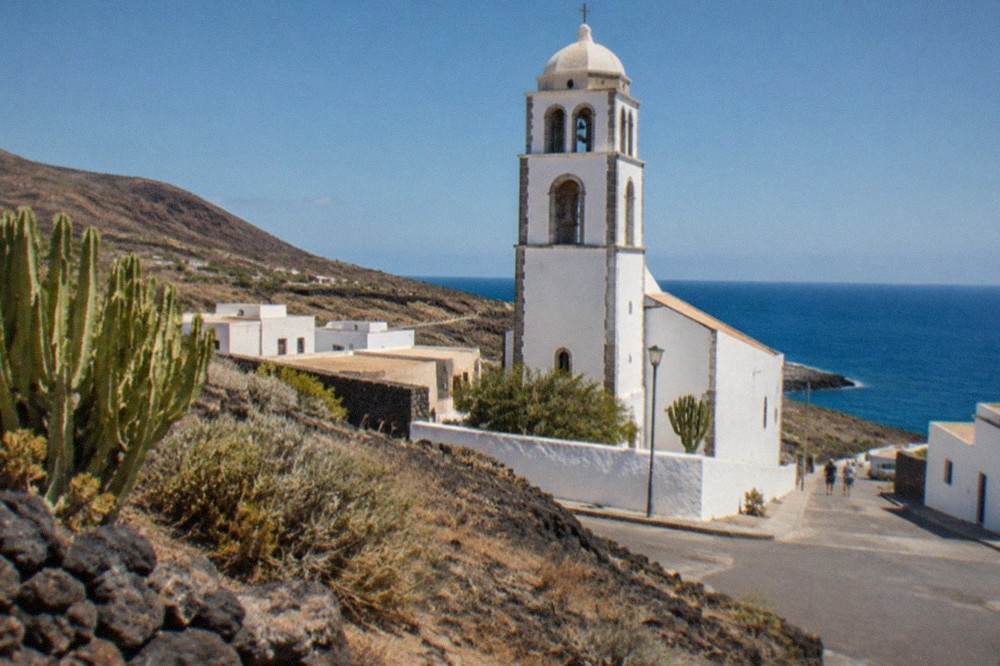
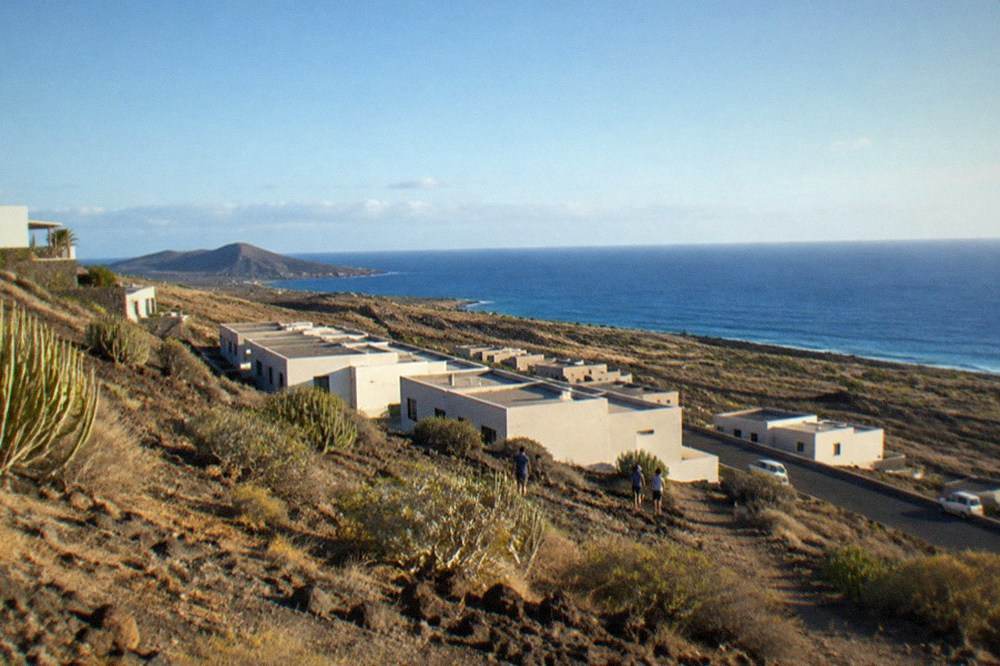
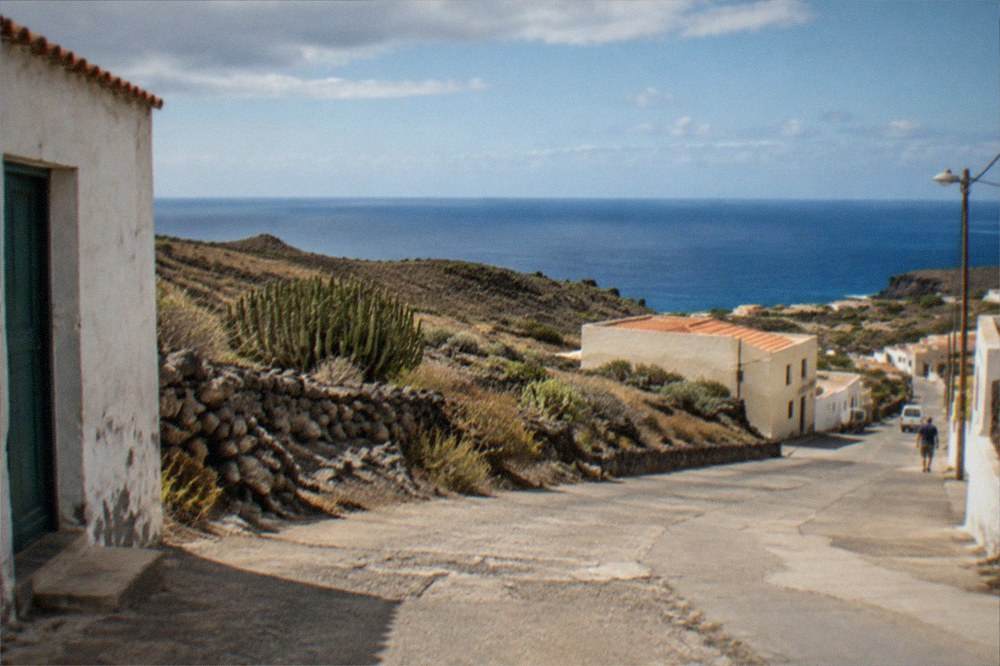
The visible site is a grid of empty single-storey buildings, a church with a distinctive tower, and the open hillside around them, all viewable from public roads and paths. The interiors are not part of any visitor attraction: there is no official access, the structures are derelict, and entering them is both unsafe and trespass. The best experience of Abades is the exterior architecture, the church silhouette and the contrast between the abandoned complex and the living village below it.
The church is the building most visitors come away remembering. It was designed to serve the sanatorium community that never fully formed, and its tower is visible from a long way off. Around it, the residential blocks stand in rows, their paint faded, their window frames in the blue and white that characterises the site. From the paths around the village the layout of the original plan can still be read: a settlement organised for a population that never arrived.
Photographers are drawn to the graphic quality of the place, and drone footage of the site has circulated widely. Anyone flying a drone should check the current Canary and Spanish aviation rules first, because the site sits near flight paths associated with the island's southern airport. The southeast coast is also a walking area, and the coastal paths around Abades connect towards the beaches of the region, which makes the abandoned village a natural waypoint on a longer coastal walk rather than a destination in itself.
Is It Safe or Legal to Enter the Buildings?
No. The buildings at Abades are privately held derelict structures with no official public access, and entering them is trespass in Spain as anywhere else. Decades of abandonment mean floors, roofs and staircases cannot be trusted, and no authority maintains or inspects them. The site is safe to view from outside, from public roads and paths, and that is how it should be seen.
This is worth stating plainly because the internet has made the interiors of the buildings famous. Videos and photo essays shot inside the complex circulate widely, and they create the impression that entry is a normal part of a visit. It is not. The people who produce that content take risks and often take liberties with the law that a holiday visitor should not copy.
There is also a respect argument. Abades was built for people with an illness that carried enormous stigma, and the site is a piece of medical and social history rather than a theme park. Viewing it from outside, reading about its background, and moving on to the beaches and walking paths of the southeast treats the place with the seriousness it deserves.
What Is the Weather Like on the Southeast Coast?
The southeast coast is the driest and sunniest part of Tenerife. AEMET's climate normals for Tenerife South Airport, the nearest long-record station, show mean daily maxima from 21.7 Celsius in January to 28.4 in August, with July and August recording no rain days at all in the 1981 to 2010 normals, and the sea off the south coast reaches 23.7 Celsius in September and October. It is beach weather for most of the year, and the coastal paths around Abades are walkable in any month.
The contrast between the coast and the high island interior is one of Tenerife's defining features, and it matters for planning a day that pairs Abades with anything up at altitude. The same day can be hot and dry at sea level and cold enough for crampons on Teide's stratovolcano trails, where ice and snow put crampons and an ice axe on the mandatory equipment list in winter. A morning on the southeast coast and an afternoon in Teide National Park is a common plan, and it needs layers.
| Month | Mean Daily Max (C) | Mean Daily Min (C) | Rain (mm) | Rain Days 1 mm+ | Sunshine (Hours) |
|---|---|---|---|---|---|
| Jan | 21.7 | 15.2 | 17 | 1.8 | 193 |
| Feb | 22.0 | 15.0 | 20 | 2.2 | 195 |
| Mar | 23.1 | 15.6 | 15 | 1.9 | 226 |
| Apr | 23.1 | 16.0 | 7 | 1.1 | 219 |
| May | 23.9 | 17.0 | 1 | 0.3 | 246 |
| Jun | 25.4 | 18.8 | 0 | 0.0 | 259 |
| Jul | 27.7 | 20.2 | 0 | 0.0 | 295 |
| Aug | 28.4 | 21.1 | 1 | 0.2 | 277 |
| Sep | 27.9 | 21.1 | 4 | 0.6 | 213 |
| Oct | 26.8 | 20.0 | 12 | 1.6 | 214 |
| Nov | 24.8 | 18.2 | 26 | 1.9 | 193 |
| Dec | 22.8 | 16.5 | 30 | 3.5 | 195 |
The sea tells the same story. NOAA's 1991 to 2020 series for the water off the south coast shows the warmest sea in September and October and the coolest in March, which is why the southeast beaches are swimmable all year and why the whale and dolphin watching fleet out of Los Cristianos and Costa Adeje runs in every month.
| Month | Sea Surface (C) | Month | Sea Surface (C) |
|---|---|---|---|
| Jan | 19.9 | Jul | 22.2 |
| Feb | 19.2 | Aug | 23.1 |
| Mar | 19.1 | Sep | 23.7 |
| Apr | 19.5 | Oct | 23.7 |
| May | 20.2 | Nov | 22.5 |
| Jun | 21.4 | Dec | 21.1 |
What Else Is There to Do Near Abades?
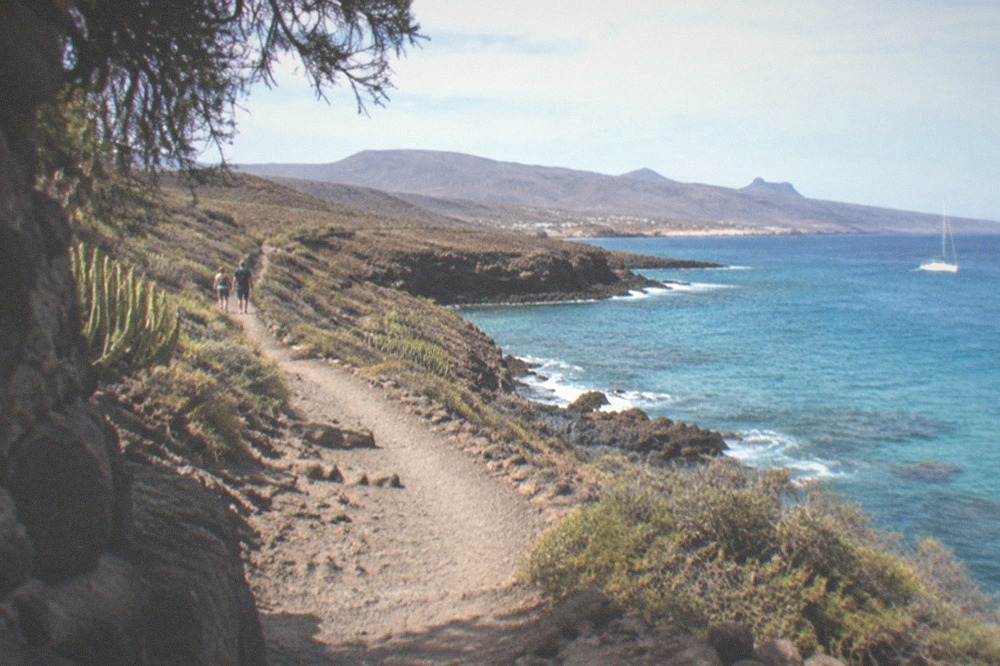
The southeast corner around Abades offers some of the island's best free beaches and coastal walking, including the La Tejita beach and Montaña Roja nature area to the southwest and the grey-sand beach of El Médano, a kitesurfing centre, nearby. Further afield the same day can take in the Candelaria basilica, the Pyramids of Güímar or the trails of Anaga, and the region sits within easy reach of Teide National Park by car.
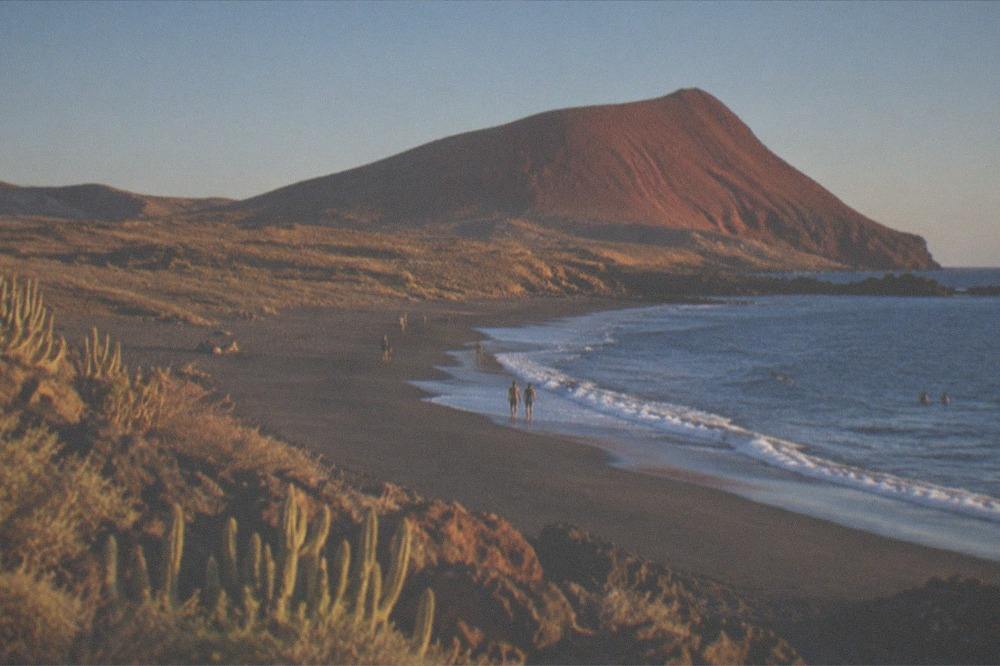
La Tejita and Montaña Roja is the standout nearby stop. The tourist board describes El Médano as fine grey sand under Montaña Roja, and the area is one of the windiest on the island, which is why it hosts kitesurfing and windsurfing in most months. The beach at Abades itself, in the living village below the abandoned complex, is a small local bay rather than a resort beach, and it suits a quiet swim more than a full beach day.
North along the coast, the Pyramids of Güímar are an easy pairing: the site is open daily from 10:00 to 18:00 except 1 January and 25 December, and a full ticket with audioguide costs EUR 26.00, with the venue suggesting allowing two and a half hours. The pyramids of Güímar page on this site covers what the complex holds. Inland, the Anaga Rural Park is a longer trip but a complete contrast: laurel forest, quiet trails and the permit-only El Pijaral reserve.
For a day built around the island's heights rather than its coast, the Teide Observatory runs guided visits by prior reservation only, and the observatory's own page has carried fully booked notices, so booking ahead is essential. The Teide Observatory page explains what the visit involves. A stargazing evening in the national park pairs naturally with it, and the observatory tour with its solar telescope is the daytime half of that idea.
How Does Abades Compare with Tenerife's Other Abandoned Places?
Abades is the largest abandoned settlement on the island, but it is not the only one, and Tenerife has a second famous ruin in the abandoned hotel complex at Abama, which closed after a legal dispute and has stood empty for years. The two places attract the same kind of attention, photographs and urban-exploration videos, and the same rule applies to both: view from outside, do not enter. The difference is scale: Abades is a whole planned village, while the Abama hotel is a single unfinished resort.
Tenerife's abandoned places are a genuine draw for a certain kind of traveller, and this site keeps a separate answer page on the abandoned hotel in Tenerife for readers who want that story in full. What links the two sites is the same caution. Derelict buildings are not maintained, they are not insured for visitors, and the content that makes them look accessible is produced by people taking risks.
The legal position is simple and worth repeating. Entering private property without permission is trespass under Spanish law, and abandoned does not mean ownerless. The photographs that circulate online are not a licence. The exteriors of Abades, seen from public paths, deliver everything the place has to offer, and they do it safely and legally.
What Should You Combine with Abades on a Day Out?
A sensible southeast day pairs Abades with La Tejita beach or El Médano in the morning, the Pyramids of Güímar or the Candelaria basilica around midday, and either a coastal walk or a drive up towards the national park in the afternoon. Visitors with a full day to spend often take an organised island tour instead, which covers Teide, the north coast and the main towns in one loop, and frees the evening for a stargazing trip.
The geography favours a loop. Abades sits close to the southern airport region, so a visitor staying in Costa Adeje or Los Cristianos can reach the southeast quickly, work along the coast, and return the same way. Anyone staying in Puerto de la Cruz or Santa Cruz de Tenerife faces a longer drive south, and for them the southeast fits better as part of a full-day loop than as a half-day excursion.
The organised options are strong on this side of the island. The Masca, Los Gigantes and natural pools tour with picnic covers the dramatic west, and the Teide, Masca, Icod and Garachico full-day coach tour strings together the volcano, the dragon tree and the colonial port town of Garachico, whose old harbour was buried by the Trevejo volcano eruption of 1706 according to the tourist board's own account of the town. For walkers, a guided day hike with southern pickup covers trails that would otherwise need planning and permits.
Do You Need a Permit or Ticket to Visit Abades?
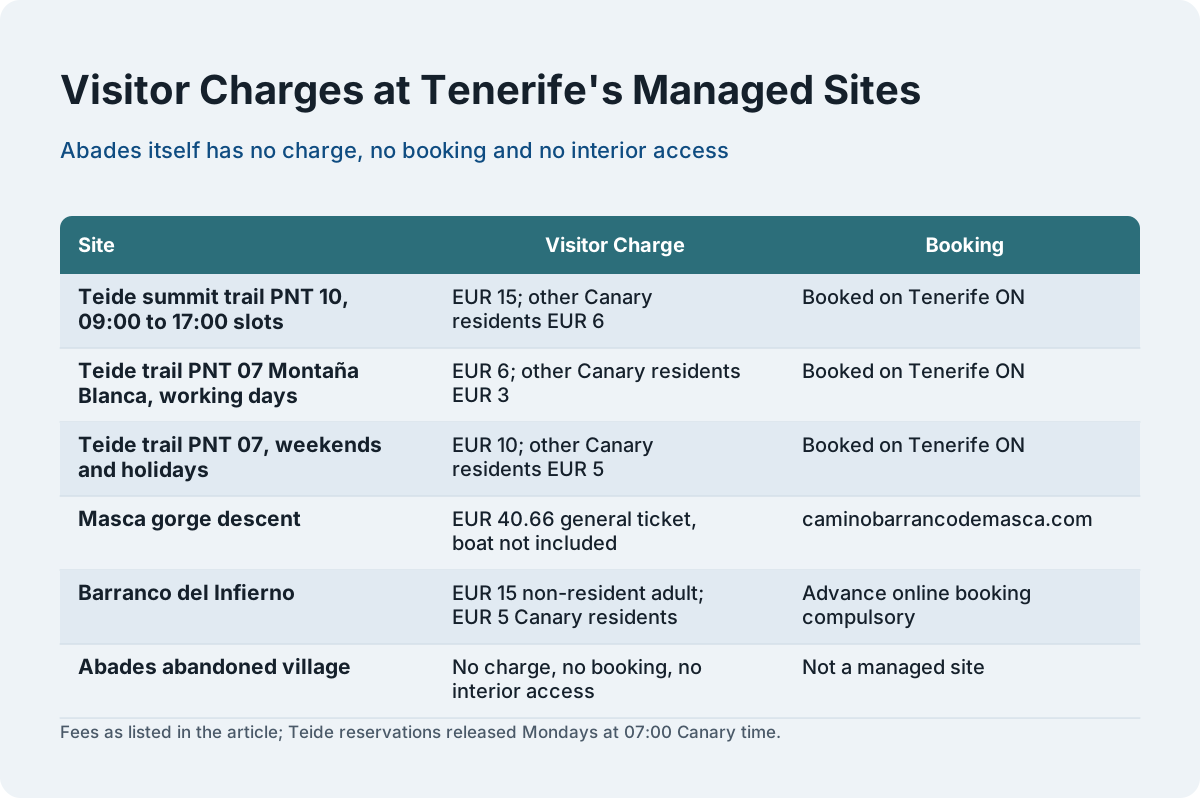
No permit, ticket or booking is needed to see the abandoned village of Abades from the outside, because it is not a managed attraction and no public body sells access to it. The charges that do exist on Tenerife are per-booking public fees on specific trails and sites elsewhere: the Teide summit and Montaña Blanca trails, the Masca gorge and the Barranco del Infierno. None of them applies to a coastal visit to Abades.
This matters because a lot of confusion surrounds Tenerife's permits, and visitors sometimes arrive expecting to pay for everything. The rule on this island is that beaches, viewpoints, old towns and most walking cost nothing, while a small list of protected places require a paid or free reservation. The table below sets out the charges that genuinely exist, all confirmed on official pages, so a visitor can see at a glance that the southeast coast is not on the list.
| Site | Who Pays | Visitor Charge |
|---|---|---|
| Teide summit trail PNT 10, 09:00 to 17:00 slots | Visitors EUR 15; other Canary residents EUR 6; Tenerife residents and children free | Booked on Tenerife ON |
| Teide trail PNT 07 Montaña Blanca, working days | Visitors EUR 6; other Canary residents EUR 3 | Booked on Tenerife ON |
| Teide trail PNT 07, weekends and public holidays | Visitors EUR 10; other Canary residents EUR 5 | Booked on Tenerife ON |
| Masca gorge descent | EUR 40.66 general ticket, boat not included | Booked at caminobarrancodemasca.com |
| Barranco del Infierno | EUR 15 non-resident adult; EUR 5 Canary residents | Advance online booking compulsory |
| Abades abandoned village | No charge, no booking, no interior access | Not a managed site |
The Teide trail reservations are released every Monday at 07:00 Canary time, with 56 days always bookable, and Tenerife ON is the booking platform for them, not the old national parks site. The Masca descent has its own booking site and its own rules, including the compulsory TITSA bus arrival from Santiago del Teide. None of this touches a visit to the southeast coast, but a visitor building a wider week around Abades will meet these systems elsewhere, and the Teide summit permit guide on this site covers them in detail.
Common Questions About Abades
Can you go inside the abandoned village of Abades?
No. The buildings are derelict private structures with no official public access, and entering them is trespass under Spanish law as well as unsafe. The site is best seen from the public roads and paths around it, and the exteriors, including the church, are fully visible from outside.
Is there an entrance fee for Abades?
There is no fee, ticket or booking of any kind, because the site is not a managed attraction. No public body operates a visitor centre there. The paid permits that exist on Tenerife apply to other places, such as the Teide trails, the Masca gorge and the Barranco del Infierno.
How do you get to Abades without a car?
TITSA buses run along the southern coastal road, and visitors pay standard fares: single tickets priced by route, the EUR 10 day travelcard or the EUR 50 seven-day travelcard. Which routes serve the Abades area directly should be confirmed with TITSA's own timetable pages before travelling, since coastal services change with the seasons and no verified route list for the village is held on this site.
Why was the village at Abades built?
It was built as a sanatorium village for people with Hansen's disease, the illness historically called leprosy, at a time when isolation settlements were the standard response to the disease in Spain. Effective drug therapies made the sanatorium model unnecessary, and the complex was never occupied at the scale its planners intended. It has stood empty for decades.
Is Abades worth visiting?
For anyone interested in unusual architecture, abandoned buildings or photography, yes, as a short stop of an hour or so combined with the beaches and walking of the southeast coast. Visitors looking for a managed attraction with facilities should go elsewhere, because Abades offers no visitor infrastructure at all.
Can you fly a drone over Abades?
Drone rules in Spain require registration and compliance with aviation regulations, and the site's position near the island's southern airport region means flight restrictions may apply. Anyone planning to fly should check the current Spanish aviation authority rules and any local restrictions before taking off.
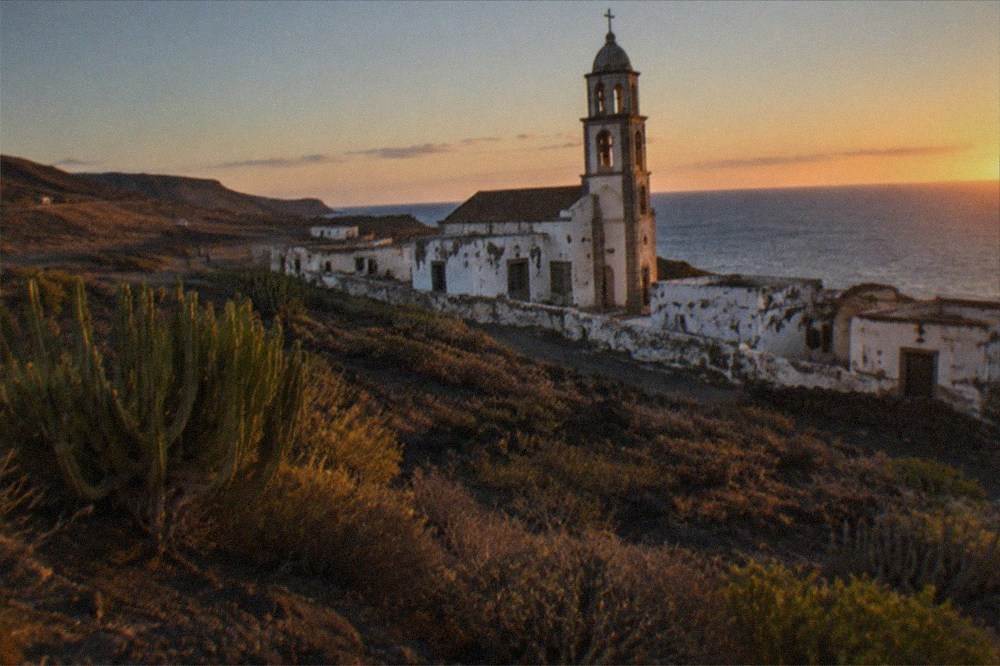
Abades rewards exactly the kind of visit it permits: a slow look from the outside, a walk on the coast path, and a swim at one of the fine beaches a short drive away. The Tenerife Travel Guide covers the rest of the island, from the Teide cable car to the whale watching fleet of the south, and the southeast corner that holds Abades is the quietest, driest starting point for all of it. Bring water, keep out of the buildings, and let the church tower on the hill be the photograph you take home.