What Is the Abandoned Hotel in Tenerife?
The complex at Abades that gets photographed as Tenerife's abandoned hotel was never a hotel at all. What it actually is, why you cannot go inside, and what to do nearby instead.
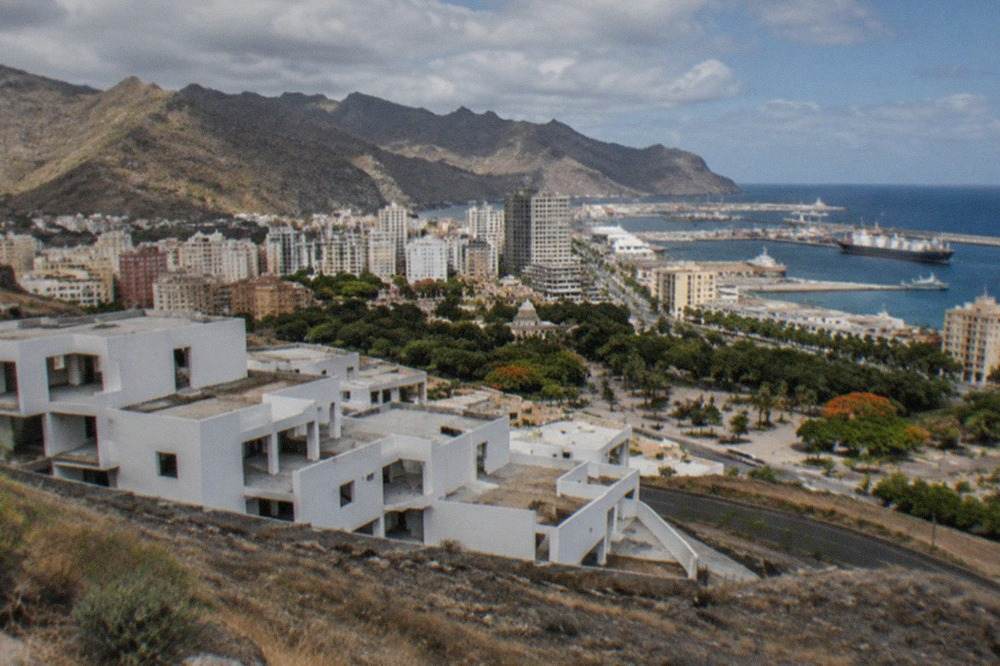
The photograph does the rounds every few months: rows of empty white buildings baking on bare ground near the sea, captioned "the abandoned hotel in Tenerife". The caption is the only thing wrong with it. The complex is real and it is genuinely abandoned, but it was never a hotel, and no source on this desk's verified list records it ever receiving a guest, a booking or a star rating. It sits on the south-east coast near the village of Abades, and this site's own page on the abandoned leper colony at Abades covers its story in full.
This page answers the question as asked, then deals with the two things people actually want to know next: whether the site can be visited, and what a holidaymaker within an hour of it should do instead. The honest short version is that the "hotel" is a mid-century sanatorium project that was never completed, it is not a tourist attraction, and the coast around it has far better things to offer, several of them bookable through this site's tour listings.
Where Is the Abandoned Hotel Complex in Tenerife?
The complex stands near the village of Abades on Tenerife's south-east coast, roughly between El Medano and the island's southern tip, on the stretch of coast that looks across to the Montana Roja area. It is visible from the surrounding roads and paths, and it is the collection of empty white buildings that appears in drone footage captioned as Tenerife's abandoned hotel.
Abades is a small coastal settlement, and the complex sits apart from it on open ground. The tourist board's own pages place El Medano, with its fine grey sand under Montana Roja, in the neighbouring municipality of Granadilla de Abona, which gives a sense of the area: dry, windy, and far quieter than the resort belt of Costa Adeje and Playa de las Americas to the west. Readers planning a drive along this coast may find the do you need a car in Tenerife question worth settling first, because the public bus network is thinner here than around the main resorts.
The reason the site photographs so well is simple geometry. The buildings are low, white and evenly spaced, arranged across open ground with nothing behind them but sea and sky. Drone and telephoto images flatten that into something that looks like a resort frozen mid-build, which is exactly how the "abandoned hotel" label sticks. Nothing about the structure itself ever said hotel.
Can You Visit the Abandoned Hotel Site at Abades?
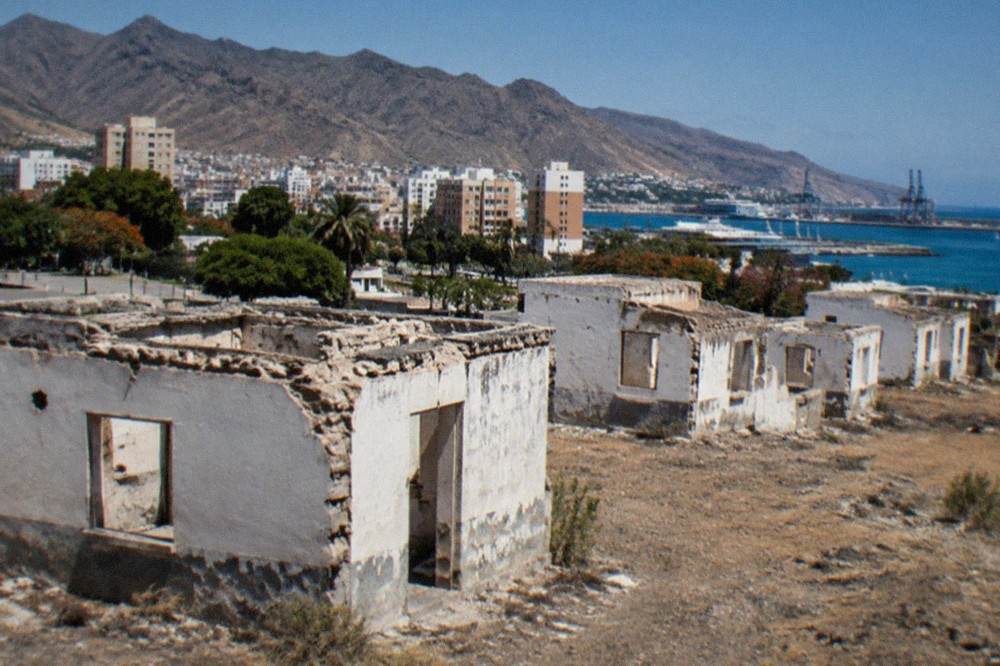
No official page lists opening hours, tickets or visitor access for the complex, and this desk has found no tour operator, council page or park authority that sells entry to it. The safe and honest answer is that it is not a visitor attraction: it can be seen from outside, but there is no bookable, managed way in, and entering derelict buildings is never advisable on any coast.
That is a deliberately plain answer, because the internet's answers to this question are not plain. Plenty of posts describe wandering through the buildings, and none of them can be checked against an official source. What can be stated is negative and solid: no verified page read for this site records access arrangements, a ticket price, a caretaker or an owner offering visits. A place with no published access is not a place a responsible guide should send anyone into.
Two practical points follow. The first is that derelict concrete on a windy coast is a genuinely bad place to walk around: loose material, open shafts and unfenced edges are the ordinary condition of buildings left to the weather. The second is that the general safety picture on the island is good, as the is Tenerife safe page sets out, and the way to keep it that way is to treat unmanaged ruins as scenery, not as a stop on a route. Photograph it from the path, then move on to the coast itself.
Was the Abandoned Hotel in Tenerife Ever a Real Hotel?
No. The complex at Abades was built as a sanatorium, a planned leprosy hospital for the Canary Islands, and it was never finished or opened as a hotel. The "abandoned hotel" name is an internet-era label attached to the ruins long after the buildings were left empty, and no verified source records any part of the site operating commercially for guests.
The distinction matters more than it sounds. A half-built resort would be a story about a bankrupt developer; a sanatorium project is a story about public health, and it belongs to the history of how the archipelago treated infectious illness. This desk does not print construction dates, architects or project names here because none of those details appears in the verified fact pack for this site, and a confident wrong date is worse than no date. What the record does support is the category of building and the fact that it never served the purpose the viral caption gives it. The rest of the planning pages sit on Tenerife Travel Guide.
That is also why the site keeps its pull. Abandoned places attract photographers, and Tenerife has few ruins on this scale anywhere near a main road. The hidden gems in Tenerife question pulls in a different direction, toward the coves and villages that are actually open, but the Abades complex works as a curiosity precisely because it is closed. A place nobody can enter never disappoints the camera.
For anyone whose interest in ruins is really an interest in Tenerife's odder corners, the honest framing is this: the island's strange sights that you can properly visit, from the pyramids at Güímar to the lava-buried old port at Garachico, are better value than a fence and a warning, and every one of them comes with an official page, hours and a ticket.
What Is There to Do Near Abades Instead?
The same stretch of south-east coast offers El Medano's grey-sand beach under Montana Roja, whale and dolphin watching trips out of the southern resorts, and the family parks of Costa Adeje, all of them bookable and all of them with verified opening details. The coast here is windy, which is exactly why it hosts world-level windsurfing and why the water stays lively even in high summer.
El Medano is the obvious substitute stop. The tourist board describes it as fine grey sand under Montana Roja, and the wind that makes the ruins look so dramatic is the same wind that makes the town a water-sports hub. From there the resort belt begins, and with it the island's most-bookable inventory: catamaran trips with swim stops, cable car runs up Teide with coach transfer, and the water park that families fly in for. A morning on the water off Costa Adeje is the standard recommendation for anyone staying near this coast, and the catamaran with buffet and hotel transfer is the version most visitors settle on.
For the evening or the following day, the table below collects the verified opening details for three of the biggest paid attractions within reach of this coast, all drawn from the operators' own pages.
| Attraction | Verified hours | Ticket detail on the official page |
|---|---|---|
| Siam Park, Costa Adeje | Open 365 days; 10:00 to 18:00 from 1 May to 29 Oct; 10:00 to 17:00 from 30 Oct to 30 Apr | Day tickets sold through this site's listings |
| Loro Parque, Puerto de la Cruz | 09:30 to 17:30, Monday to Sunday, every day of the year | Own car park EUR 7 per day |
| Piramides de Guimar | Daily 10:00 to 18:00, except 1 January and 25 December | Full ticket with audioguide EUR 26.00, allow 2.5 hours |
Anyone basing themselves near this coast for the ruins and staying for the beaches can also compare places to stay along the south-east coast before committing to a base. The wind that scours Abades is a real feature of daily life here, and it suits some travellers far better than others.
Does It Cost Anything to See the Abandoned Site in Tenerife?
Nothing, because there is no ticket, no tour and no official access to buy. Tenerife also has no per-night tourist tax on any official page this desk has read, so there is no island-wide charge that would touch a visit to the outside of the ruins. The charges that do exist on Tenerife are per-booking fees on specific trails and sites, and none of them applies to Abades.
That last point deserves its own table, because the internet is full of invented Tenerife charges, and the real ones are few and specific. The fees below are the verified public charges on the island, stated exactly as the official pages state them.
| Charge | Who pays what | Since when |
|---|---|---|
| Teide summit trail PNT 10, 09:00 to 17:00 slots | EUR 15 for visitors; EUR 6 for residents of the other Canary Islands; nothing for Tenerife residents and children | 19 January 2026 |
| Teide trail PNT 07 Montana Blanca, 09:00 to 17:00 slots | EUR 6 for visitors on working days, EUR 10 at weekends and public holidays | 19 January 2026 |
| Masca gorge descent | EUR 40.66 general ticket, boat exit booked separately and extra | Current pilot scheme |
| Barranco del Infierno | EUR 15 non-resident adult, advance online booking compulsory | Current regime |
The contrast with the Abades complex is the useful part. Every fee above buys a managed, patrolled, quota-limited experience with an official page behind it. The ruins near Abades buy nothing, because nobody manages them, and a guide that pretends otherwise would be selling a fence.
Common Questions About the Abandoned Hotel in Tenerife
what is the abandoned hotel in tenerife?
The buildings usually meant by the phrase are the unfinished sanatorium complex near Abades on the south-east coast. It was built as a leprosy sanatorium, never completed in that role, and never a hotel at all; the hotel label is an internet-era caption attached to the ruins. There is no ticket, tour or official access to the site.
Is the Abades complex open to visitors?
No official page lists opening hours, tickets or access arrangements for it, and no verified tour operator sells entry. It can be seen and photographed from outside, but there is no managed way in, and entering derelict buildings on a windy coast is not advisable.
Why do people call it a hotel if it was never one?
Because the ruins look like one. Evenly spaced white buildings on open ground photograph like a resort frozen mid-build, and the caption travels faster than the correction. The complex was a public-health project, not a commercial development, and no verified source records it ever hosting paying guests.
Is it safe to go inside the ruins?
This desk's answer is no, not because of any crime concern but because unmanaged derelict structures are unsafe by default: loose material, open shafts and unfenced edges are normal in buildings left to the weather. The island's general safety picture, set out on the is Tenerife safe page, is good, and treating the ruins as scenery rather than a stop keeps it that way.
What is the best thing to do near the site?
El Medano's grey-sand beach under Montana Roja is the nearest proper stop, and the southern resorts beyond it carry the island's most-bookable trips: catamaran whale watching out of Costa Adeje, the Teide cable car with coach transfer, and Siam Park. All three have verified opening details and can be booked through this site's listings.
Is there a tourist tax to see abandoned places in Tenerife?
No per-night tourist tax exists on Tenerife on any official page this desk has read, and no charge of any kind applies to viewing the Abades complex from outside. The island's real visitor charges are per-booking fees on specific trails and sites, such as the Teide summit trail fee of EUR 15 for visitors on the daytime slots and the EUR 40.66 Masca ticket.
The ruins at Abades are best understood as a piece of the island's past that the internet renamed, and the coast around them as one of Tenerife's better days out. See them from the path, then spend the time on the water or under the volcano, where everything has an official page, a timetable and a ticket that actually exists.