Mobile Data, eSIM, Wi-Fi and Plug Sockets in Tenerife
Tenerife runs on the same two-pin plugs as the rest of continental Spain, mobile coverage reaches almost everywhere a visitor goes, and the decisions that actually matter are made before the flight. This guide sets out the plug question, the eSIM and SIM options, where Wi-Fi is realistic and where it is not, and the connectivity details worth planning around.
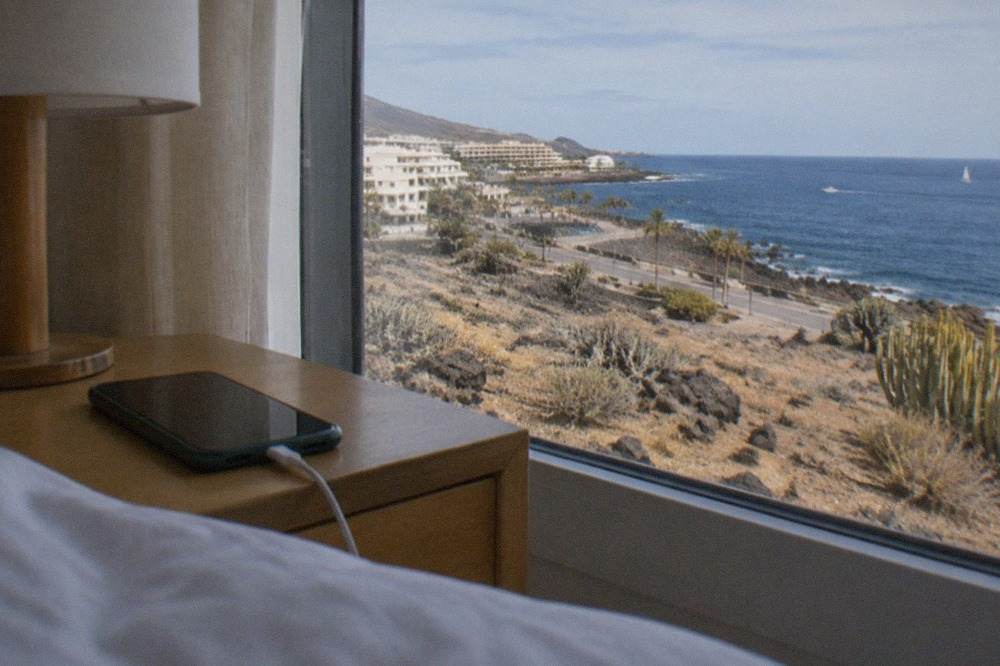
Short answer
Tenerife uses the standard European two-pin plug, Type C and Type F, the same as mainland Spain, so UK and Irish travellers need an adapter and most European and many other visitors do not. Mobile coverage is good across the island, and an eSIM or a local SIM sorted before arrival is the simplest route to data.
The plug question is the one that gets asked before almost every trip to Tenerife, and it has a short answer: the island uses the same sockets as mainland Spain and the rest of continental Europe. Everything else about staying connected, from eSIMs to hotel Wi-Fi, is a planning question rather than an island question, and the choices are mostly made at home. This editorial desk has assembled what the official sources and the island's own infrastructure allow a visitor to state with confidence, and flagged the details that should be confirmed with a provider or a venue rather than guessed at.
What Plugs Do They Use in Tenerife?
Tenerife uses the standard European two-pin plug system, Type C and Type F, the same sockets found across mainland Spain and most of continental Europe. UK and Irish three-pin plugs do not fit without an adapter, and visitors from the rest of Europe generally need nothing at all. The island shares mainland Spain's voltage standard, so the thing to check is the small print on your own charger, not the socket itself.
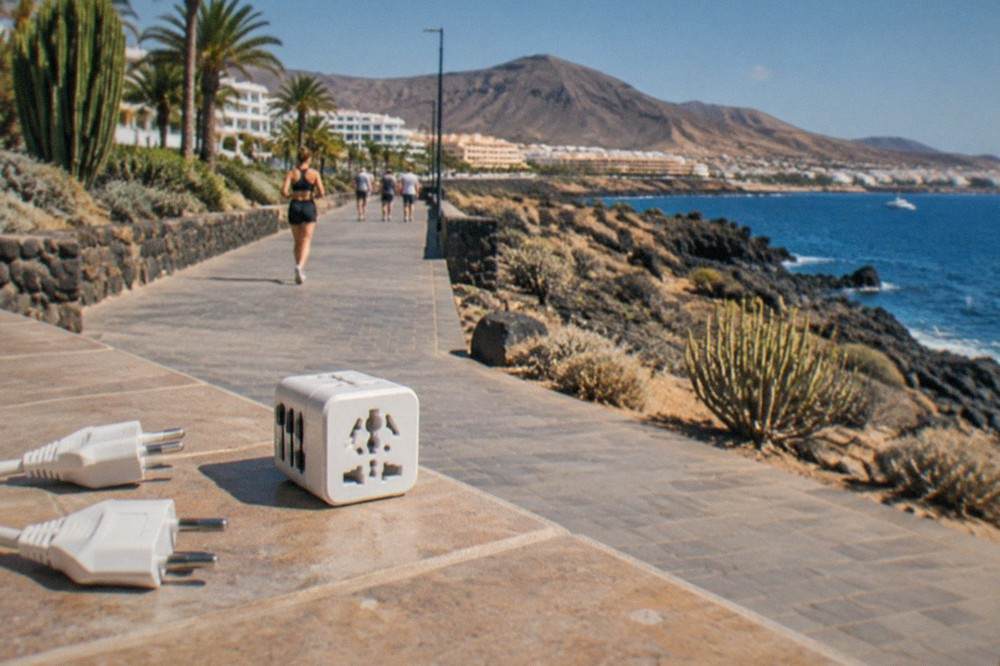
Type C is the plain two-round-pin plug, and Type F is the same shape with two earth clips on the side that grip the socket. Both fit the same Spanish wall sockets, and a Type C plug goes into a Type F socket without any conversion. If your devices come from the UK or Ireland, a standard travel adapter is the single item that solves every socket in your accommodation. Visitors from Germany, France, the Netherlands and most of the continent can plug in straight away.
One point worth making plainly: a plug adapter changes the shape of the connection, nothing else. Modern phone and laptop chargers generally handle the Spanish supply without issue, but the label on each charger states its accepted input range, and that label is the authority, not a travel guide. If a device is older, or something like a hair dryer bought for a different market, reading that label before packing saves an unpleasant surprise. Anything with a motor or a heating element is the category to check carefully.
Do You Need a Travel Adapter for Tenerife?
UK and Irish travellers need one adapter per device or a single multi-port adapter for the trip, and everyone else usually needs nothing. A Type C or Type F plug fits Spanish sockets directly, so visitors from most of mainland Europe arrive prepared without realising it. The practical advice is to carry one adapter and a short extension or power strip if several devices charge overnight.
The honest reason this question gets asked so often is that UK visitors make up the island's largest source market. The tourist board's 2025 figures record 2,057,896 UK tourists lodged in hotels and apartments, 37.8% of the lodged total, ahead of Spain itself on 1,068,407. For that audience the adapter is a genuine packing item, and for the second and third largest markets, Spain and Germany, it is not. A guide that pretends everyone needs one is written for nobody in particular.
A multi-port USB charger with a changeable or universal plug face is the tidy solution for a family, since phones, cameras and e-readers all charge from USB and only one wall socket needs adapting. Do check the charger's own stated input range, printed on its body, before assuming it works abroad. Hotels and apartments provide a limited number of sockets, often fewer than a travelling group wants, so a short extension lead earns its space in the suitcase.
Should You Buy an eSIM or a Local SIM in Tenerife?
An eSIM bought before departure is the simplest route to mobile data in Tenerife, because it activates on landing without a shop visit, and the Canary Islands are part of Spain's networks and the EU's regulatory area for all Spanish operators. A physical local SIM bought on the island is the alternative, sold in phone shops in the resorts and in Santa Cruz. Which is better depends on how much data you need and how long you stay.
The eSIM route suits most short-stay visitors: the profile is installed at home, and data starts working when the phone registers on a Spanish network after landing. Confirm with your own provider that your handset supports eSIM installation before buying anything, and confirm with the eSIM seller that the Canary Islands are covered by the plan, because some Europe-wide data products treat outlying regions differently. Those are two checkable questions with answers that vary by product, and no honest guide can state them for every seller.
A physical SIM still has a place, particularly for longer stays. Shops selling them are common in the south, and buying in person means the shop activates the card and tests it before you leave. Bring photo identification, as Spanish law requires registration of prepaid SIMs, the same as in most of Europe. The desk's advice for a one-week holidaymaker is an eSIM plus offline maps, and for a winter-long stay, a local SIM.
If an eSIM for Spain is the route you prefer, check the current Spain eSIM plans here and read the Canary Islands coverage note in each plan's details before buying.
Can You Use Your Home Mobile Plan in Tenerife?
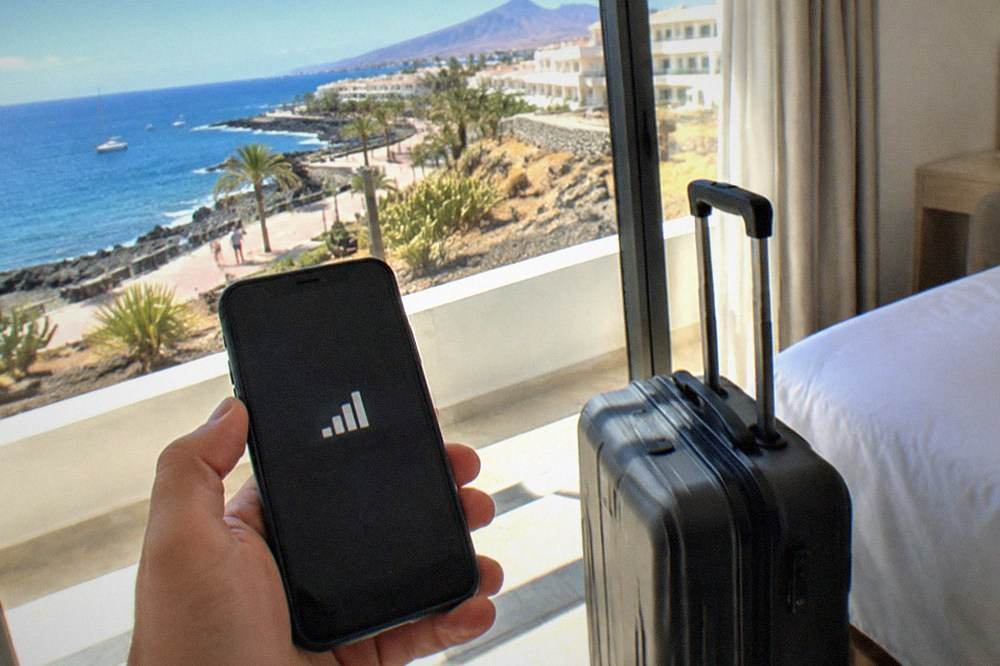
EU visitors whose plans include Spain can generally use their normal allowance in the Canary Islands, but the exact terms are set by each provider, so the roaming policy is the thing to check before flying. UK visitors cannot assume anything: since the UK left the EU, roaming is a commercial decision for each British operator, and some charge and some do not. Confirm with your provider directly, in writing if it matters.
That is a deliberately unglamorous answer, but it is the only honest one. Roaming terms change, they differ between operators in the same country, and no figure printed here would stay true for every reader. The check takes five minutes on a provider's app or website, and it is the difference between a normal phone bill and an unpleasant one. Ask specifically about the Canary Islands, since some providers list them separately from mainland Spain in their roaming tables.
For visitors from outside Europe, including the United States, home plans vary even more widely, and the safe assumption is that roaming in Spain costs money unless the provider says otherwise. An eSIM or local SIM sidesteps the question entirely. Whichever route you take, the island's two airports are where the phone first registers on a Spanish network, so any activation problem shows up at arrival, with a full day of sightseeing at stake rather than a quiet evening.
How Good Is Free Wi-Fi in Tenerife?
Free Wi-Fi is common in Tenerife's hotels, holiday apartments, cafés and shopping centres, but quality varies enormously and no venue's network can be promised from a distance. Both airports offer Wi-Fi to arriving passengers, and the resorts are well served by café and bar networks. For anything that matters, booking confirmations, permits, boarding passes, treat public Wi-Fi as a convenience and mobile data as the reliable option.
The pattern a visitor actually meets is this: accommodation Wi-Fi is usually fine for messaging and browsing, sometimes strained in the evening when every guest streams at once, and café Wi-Fi is a bonus rather than a plan. Large hotels publish their Wi-Fi terms on their own pages, and apartment listings usually state whether Wi-Fi is included, so the booking page is the source to read before assuming. Where a listing says nothing about Wi-Fi, ask the host the question directly.
There is also a security habit worth keeping anywhere, not only in Tenerife: avoid entering card details or passwords over a network you do not control, and let the phone use mobile data for anything sensitive. A day's eSIM data costs less than the consequences of one careless login. For most visitors the realistic setup is accommodation Wi-Fi for the evening and mobile data for everything during the day.
Where Does Mobile Coverage Reach on Tenerife?
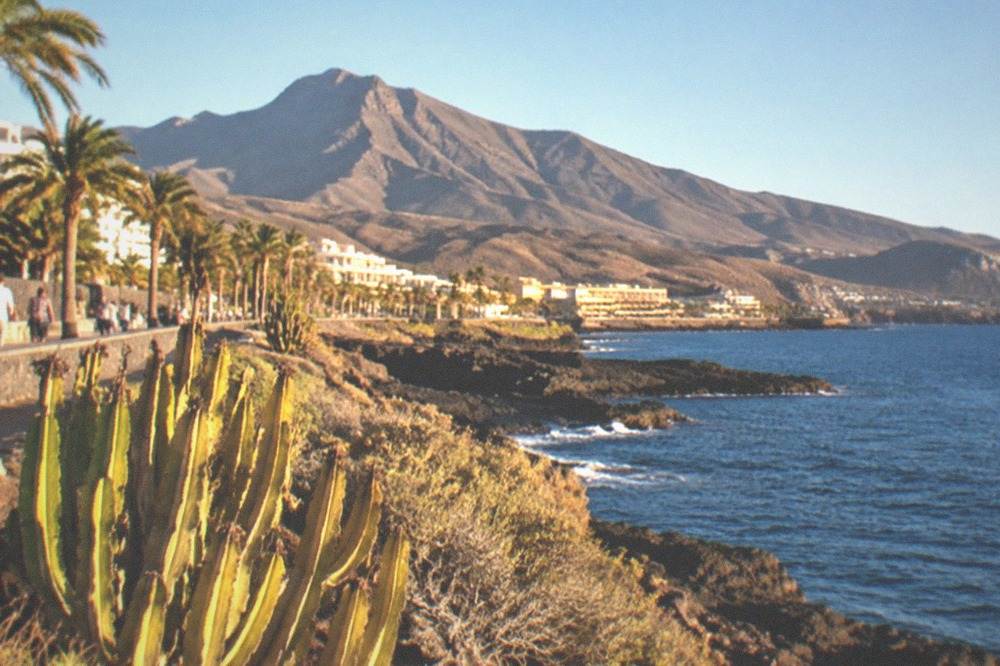
Mobile coverage across Tenerife is good in the populated south and north coasts, in both airports and in the main towns, and it thins in the island's mountainous interior, including parts of Teide National Park and the remoter corners of Anaga and Teno. A visitor heading up Teide or walking rural trails should not plan on a signal everywhere, and should download offline maps before leaving the resort.
The geography explains the pattern better than any coverage map summary. Tenerife is a volcanic island with a 3,715 m peak at its centre, and the same ridges that make the landscape dramatic block radio signals in the valleys and barrancos. The tourist board's description of the Los Gigantes cliffs rising up to 600 m gives a sense of the terrain in the west, and Anaga's laurel forest valleys in the northeast are the same story in green. Towns and roads are served; ravines and summits are patchy. The rest of the planning pages sit on Tenerife Travel Guide.
The practical consequences are worth spelling out. If a Teide stargazing evening runs late, the meeting point may be somewhere with a weak signal, so agree plans before the coach leaves. If a hike in Anaga is on the itinerary, the trailhead may be the last place with full bars. Offline maps, downloaded tickets and a screenshot of the hotel address in Spanish are the three preparations that cost nothing and solve most of it.
What About Charging on Day Trips and Long Days Out?
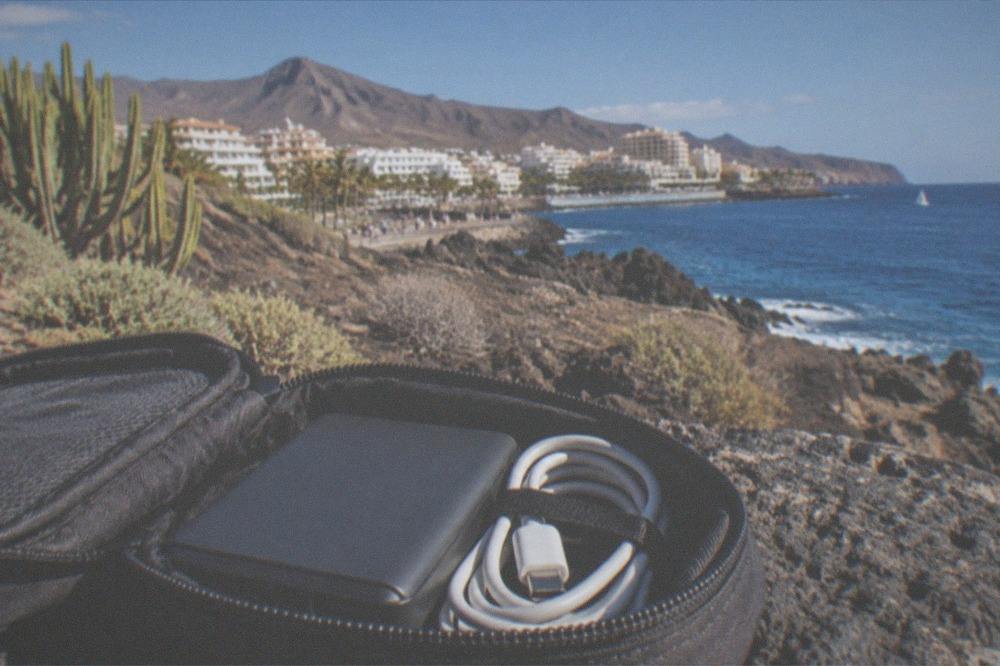
Charging opportunities away from your accommodation are limited to cafés, restaurants and some coaches, so a power bank is the honest answer for long days out in Tenerife. A Teide sunset and stargazing tour, a whale watching cruise or a full-day island loop each run for hours, and the phone is busy the whole time with photos, navigation and tickets. Carry the battery, carry the cable, and charge overnight.
The maths is not exotic. A camera-heavy day at Teide National Park, which recorded 5,242,653 visits in 2024 as the most visited park in Spain's national park network, uses a phone hard, and cold evening temperatures at altitude drain batteries faster than a beach day. The cable that fits the power bank is the item people forget, so check both before packing. A wall plug with two USB ports also halves the overnight queue for sockets in a family room.
For anyone pairing the practicalities with the island's headline days out, the whale watching cruise from Los Gigantes is the classic case of a trip where the phone works hard: three hours on the water, cliffs to photograph, and a boat to rejoin on time. The listing for the Los Gigantes whale watching cruise by sailboat, rated 4.9 from 2,264 reviews, is worth Check availability on before the day, and the internal guide to whale and dolphin watching in Tenerife explains what the boats actually see.
The observatory evening is the same story with colder air. The Teide Observatory sits at Izana, about 2,400 m, and the Instituto de Astrofísica de Canarias runs its guided visits by prior reservation only, with the page carrying a fully booked notice when the desk last read it, so a working phone matters for the booking itself. The observatory guided tour product, rated 4.6 from 901 reviews, is the bookable version of the visit, and the operator's live listing carries the current slots.
Which Tickets and Permits Should Be on the Phone Before Arrival?
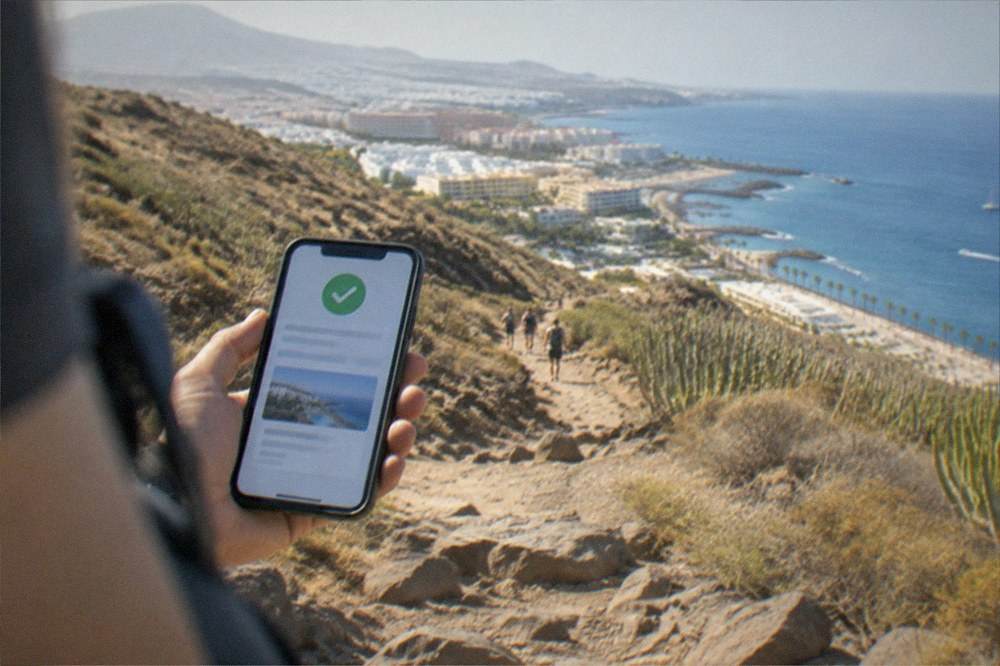
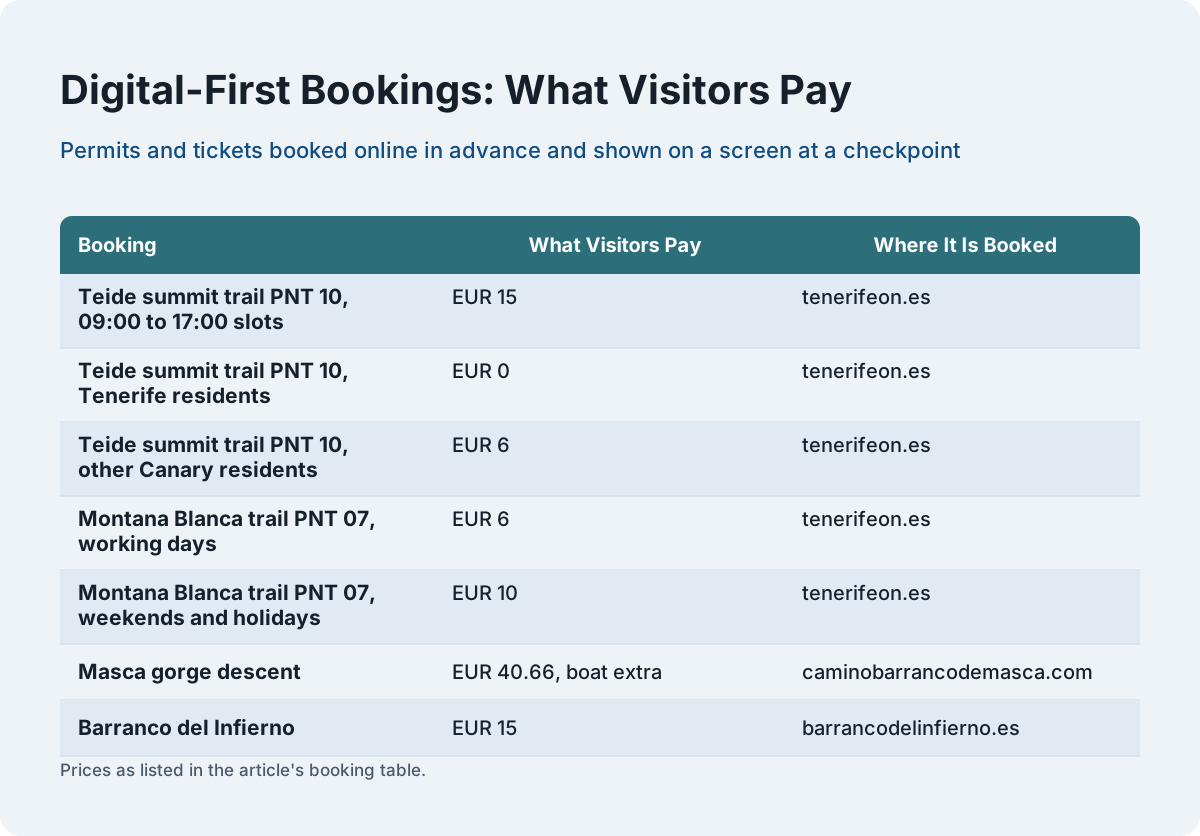
The Teide summit permit, the Masca gorge ticket and the Barranco del Infierno booking are all digital-first, booked online in advance and shown on a screen at a checkpoint, so a charged phone with the confirmation accessible offline is part of the permit, not a luxury. The Teide summit slots are released on Tenerife ON every Monday at 07:00 Canary time, keeping 56 days bookable, and since 19 January 2026 the daytime slots cost EUR 15 for visitors.
This is where connectivity planning stops being a comfort and starts being logistics. The trail rules are explicit that identification and the booking are checked on the mountain, and a phone that cannot show the reservation is a problem. Screenshots stored offline beat a signal-dependent email every time. The desk's standing advice: the evening before any booked activity, open the confirmation, screenshot it, and charge the phone.
| Booking | Who Runs It | What Visitors Pay | Where It Is Booked |
|---|---|---|---|
| Teide summit trail PNT 10, 09:00 to 17:00 slots | Tenerife ON | EUR 15 | tenerifeon.es |
| Teide summit trail PNT 10, Tenerife residents | Tenerife ON | EUR 0 | tenerifeon.es |
| Teide summit trail PNT 10, other Canary residents | Tenerife ON | EUR 6 | tenerifeon.es |
| Montana Blanca trail PNT 07, working days | Tenerife ON | EUR 6 | tenerifeon.es |
| Montana Blanca trail PNT 07, weekends and holidays | Tenerife ON | EUR 10 | tenerifeon.es |
| Masca gorge descent | caminobarrancodemasca.com | EUR 40.66, boat extra | caminobarrancodemasca.com |
| Barranco del Infierno | barrancodelinfierno.es | EUR 15 | barrancodelinfierno.es |
The full detail behind the summit reservation is in the site's dedicated guide to the Teide summit permit, including the out-of-hours sunrise and sunset slots, which are also reservations even though they carry no fee mark on the official page. Walking the trail without a booking can be penalised, and failing to use a booking can bar a user from new applications for three months, so the phone in your pocket is carrying something with real consequences.
How Do You Stay Connected While Getting Around Tenerife?
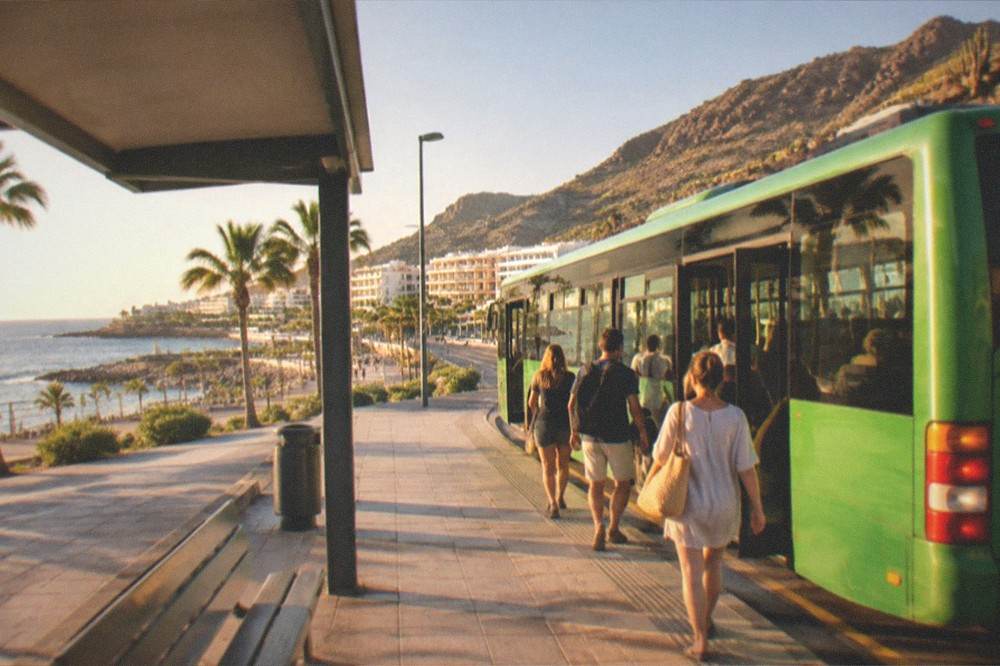
TITSA's buses cover both airports, the resorts and the island's towns, and its visitor products, the EUR 10 day travelcard and the EUR 50 seven-day travelcard, are sold at airport ticket machines, so transport on arrival does not depend on mobile data. The tram runs in the northeast between Santa Cruz and La Laguna with a single fare of EUR 1.35 on a transit pass. Taxis are white, and all are metered from the start of the trip.
The airport detail is worth dwelling on because it closes the loop of this whole guide. A visitor who lands with no working data can still buy a travelcard from a machine, board the correct bus, and reach the accommodation, provided the route was saved offline beforehand. The bus lines serving each airport are published by TITSA on its own airport pages, and the desk reproduces them here exactly as the operator lists them.
| Airport | TITSA Lines | Destinations per TITSA |
|---|---|---|
| Tenerife South (TFS) | 10 | Santa Cruz |
| Tenerife South (TFS) | 40 | Costa Adeje bus station via Los Cristianos |
| Tenerife South (TFS) | 711 | Night bus: Santa Cruz, airport, Los Cristianos, Costa Adeje |
| Tenerife South (TFS) | 343 | Express Puerto de la Cruz to Los Cristianos via both airports |
| Tenerife South (TFS) | 415 | El Fraile, San Isidro |
| Tenerife North (TFN) | 20 | Santa Cruz via La Laguna |
| Tenerife North (TFN) | 30 | Puerto de la Cruz |
| Tenerife North (TFN) | 343 | Express to the south |
The wider transport picture, including the resident subsidy that visitors do not qualify for, is covered in the guides to Tenerife buses and TITSA, airport transfers and getting around Tenerife. The short version for this page: the free public transport that made headlines in the Canary Islands in 2026 applies to resident passes only, and visitors pay the published fares.
| TITSA Visitor Product | Price | Notes |
|---|---|---|
| Single ticket | Priced by route | Card or cash |
| Same-day return | 10% off | On trips of 20 km or more |
| Day Travelcard | EUR 10 | Sold at airport ticket machines |
| 7 Day Travelcard | EUR 50 | Sold at airport ticket machines |
| Ten+ card | EUR 2 | Wallet top-ups EUR 2 to EUR 100 |
What Should Families and Cruise Visitors Plan Differently?
Families should plan on one shared data connection doing the work of several, with offline entertainment downloaded before the flight and a power bank per adult, while cruise visitors need working data for a single day ashore, which makes an eSIM or a day pass the efficient choice. Neither group needs a different plug, only a different quantity of preparation, since the sockets are the same everywhere on the island.
A family of five with five data plans is usually paying for four redundant connections. One phone with data, acting as a hotspot when needed, plus offline maps and downloaded films for the children, covers a theme park day at Siam Park or a Loro Parque afternoon comfortably. Both parks take digital tickets, so the confirmation screenshot habit applies to the fun days as much as the hiking ones. The park tickets category on this site covers both, and the Loro Parque entry ticket is the north-coast staple.
Cruise visitors have a compressed version of the same problem: a ship docks at the cruise port in Santa Cruz, the day runs to a deadline, and there is no hotel Wi-Fi to fall back on at midday. A one-day eSIM, or a provider day pass, plus the shore plans saved offline, is the complete answer. The desk's one-day itinerary for a day in Tenerife from the cruise port is built around exactly that constraint.
What Are the Common Mistakes with Phones and Plugs in Tenerife?
The recurring mistakes are assuming UK plugs fit Spanish sockets, assuming a home roaming plan works in the Canaries without checking, relying on resort Wi-Fi for bookings and permits, and arriving at Teide or a boat trip with a half-charged phone. Each one is avoided in minutes: buy the adapter, read the roaming policy, screenshot the confirmations, charge overnight. None of them is expensive to fix in advance and all of them are annoying to fix on the island.
The desk would add one gentler point. The temptation on a first visit is to treat connectivity as a solved problem because the phone works at home, and Tenerife rewards the opposite instinct: a little preparation, and then the phone goes in the pocket and the island gets the attention. The official figures say 7,412,046 tourists arrived by air in 2025, and the overwhelming majority of them had a phone that worked fine. The difference between those who found it smooth and those who did not was almost always a decision made the week before the flight.
Common Questions About Phones, Wi-Fi and Plugs in Tenerife
What plugs do they use in tenerife
The standard European two-pin plug, Type C and Type F, the same as mainland Spain. UK and Irish visitors need an adapter; most other European visitors do not. Check the input range printed on each device's charger before travelling with anything beyond a phone or laptop.
Do I need a power adapter from the UK for Tenerife?
Yes. UK three-pin plugs do not fit Spanish sockets, so take one adapter per device or a single multi-port adapter plus a short extension if several devices charge overnight. A USB charger with interchangeable faces is the tidiest option for families.
Is Wi-Fi free in Tenerife hotels?
Most hotels and holiday apartments include Wi-Fi, but the listing or the hotel's own page is the authority on whether it is included and whether it covers every room. Treat accommodation Wi-Fi as fine for messaging and variable for streaming, and use mobile data for anything that matters.
Will my mobile data work in Tenerife?
Coverage is good across the coasts, towns and both airports, and thinner in the mountainous interior including parts of Teide National Park, Anaga and Teno. Whether your own plan works, and at what cost, is set by your provider, so confirm the Canary Islands roaming terms before flying rather than on arrival.
Can I buy a SIM card at Tenerife airport?
Phone shops and vending options exist on the island, but the desk does not hold verified details of which outlets operate at which terminal at any given time, so confirm current availability with your airline's arrival information or the airport operator AENA before relying on it. An eSIM installed before departure removes the question entirely.
Do I need data for the Teide permit or bus tickets?
You need the confirmations, not a live connection. Screenshot the Teide reservation, the Masca ticket and any bus or tour booking the night before, and the checkpoint or driver accepts the screen. TITSA travelcards are sold at airport ticket machines, so arrival transport works without data too.