Golf in Tenerife
Tenerife sells itself to golfers on weather, and the weather is genuinely on file: AEMET's normals for the south of the island record mean daily maxima above 20 Celsius in every month of the year. This guide sets out what is verified about playing golf here, what is not, and how to plan a trip around both.
Short answer
Yes, Tenerife works for golf, and the climate data explains why: the south of the island is warm and dry year round, with sea temperatures that never fall below 19 Celsius. What this guide will not do is invent green fees or course rankings, because no official price list or ranking is on file here. It covers the climate, the areas, the island's taxes and transport, and the questions to ask each club.
Tenerife's pitch to golfers rests on a claim that the climate record actually supports. AEMET, the Spanish state meteorological agency, publishes 1981 to 2010 normals for a station at Tenerife South Airport, 64 m above sea level, and its table shows a mean daily maximum of 21.7 Celsius in January, the coldest month, rising to 28.4 Celsius in August. Rain at that station averages 132 mm across the whole year, on 15.2 days with 1 mm or more. That is the statistical backbone of winter golf on this island, and it is the reason the golf courses of Tenerife sit mostly on the dry southern and western coasts, where the numbers are kindest. For everything else the island offers around a golf trip, the things to do in Tenerife round-up is the full list.
This page is written by an editorial desk, not by a golfer, and it holds to a simple standard: every figure printed below comes from an official source on file, and where a figure does not exist on file, the page says so instead of guessing. Green fees, course counts and rankings are exactly the kind of number that travel sites invent freely. The verified facts here cover climate, transport, tax and the island's public charges, so those are what this guide can state with confidence, and the sections on price and course choice are framed as what a reader should confirm with each club.
Why Tenerife Draws Golfers
Tenerife's golf season never closes because the island's climate has no closed season: AEMET's normals for the south coast show mean daily maxima between 21.7 and 28.4 Celsius in every month, rainfall concentrated into a short winter window, and sea surface temperatures between 19.1 and 23.7 Celsius all year. The island also sits inside the Canary Islands' special tax regime, which changes what a visitor pays at the till compared with mainland Spain.
The climate argument deserves the detail, because it is the one part of the golf pitch that a public dataset backs up. Two AEMET stations matter to a golfer. The lowland south, where most of the resort development sits, is represented by the Tenerife South Airport station. Santa Cruz, on the northeast shoulder, runs a little rainier. The difference between the two is the difference between the north and south of Tenerife, and it is large enough that a golfer choosing where to stay should understand it before booking.
The tax point is quieter but real. The Canary Islands apply IGIC rather than mainland VAT, and the regional tax agency's table shows a 7% rate on everyday goods, with reduced and elevated bands for other categories. A visitor's hotel bill, restaurant bill and pro-shop purchase are all priced inside that regime. The island also has no per-night tourist tax in force or approved on any official page this desk has read, which distinguishes it from several Mediterranean golf destinations; the charges that do exist are per-booking public fees on specific walking trails and sites, none of which has anything to do with a golf trip.
Is Tenerife Good for Golf?
Yes, and the case rests on three verifiable pillars: a climate with no month whose mean daily maximum falls below 21 Celsius on the south coast, sea temperatures that keep coastal resorts active through winter, and an island small enough that no course is far from a major airport. The honest caveat is that this desk holds no verified survey of course quality, so the verdict on any individual course belongs to the clubs and to the reader, not to this page.
Start with the climate table, because it answers the question a British golfer is really asking: can I play in January? AEMET's normals say yes, and say it in numbers.
| Month | Mean daily max (C) | Mean daily min (C) | Rain (mm) | Rain days of 1 mm or more | Sunshine hours |
|---|---|---|---|---|---|
| Jan | 21.7 | 15.2 | 17 | 1.8 | 193 |
| Feb | 22 | 15 | 20 | 2.2 | 195 |
| Mar | 23.1 | 15.6 | 15 | 1.9 | 226 |
| Apr | 23.1 | 16 | 7 | 1.1 | 219 |
| May | 23.9 | 17 | 1 | 0.3 | 246 |
| Jun | 25.4 | 18.8 | 0 | 0 | 259 |
| Jul | 27.7 | 20.2 | 0 | 0 | 295 |
| Aug | 28.4 | 21.1 | 1 | 0.2 | 277 |
| Sep | 27.9 | 21.1 | 4 | 0.6 | 213 |
| Oct | 26.8 | 20 | 12 | 1.6 | 214 |
| Nov | 24.8 | 18.2 | 26 | 1.9 | 193 |
| Dec | 22.8 | 16.5 | 30 | 3.5 | 195 |
These are the 1981 to 2010 normals for AEMET's station at Tenerife South Airport, 64 m above sea level. Two readings matter to a golfer. First, the rain: December is the wettest month at 30 mm, and June and July record none at all. Second, the sunshine: even the darkest months carry more than 193 hours. The full island picture, including the wetter north, is in the Tenerife weather by month guide.
The sea matters too, partly for the swimming after the round and partly because coastal resorts live or die on winter water temperatures. NOAA's 1991 to 2020 series for the south coast of Tenerife gives the monthly picture below.
| Month | Sea surface temperature (C) |
|---|---|
| Jan | 19.9 |
| Feb | 19.2 |
| Mar | 19.1 |
| Apr | 19.5 |
| May | 20.2 |
| Jun | 21.4 |
| Jul | 22.2 |
| Aug | 23.1 |
| Sep | 23.7 |
| Oct | 23.7 |
| Nov | 22.5 |
| Dec | 21.1 |
Note the two datasets and their two periods: the air normals are 1981 to 2010, the sea figures 1991 to 2020. They are separate series and are never blended into one claim here.
The third pillar is geography. Tenerife is roughly 80 km from end to end along its longest axis, and the island's two airports, Tenerife South and Tenerife North, sit one in each half. A golfer flying into Tenerife South is already inside the golf belt of the Adeje, Arona and San Miguel de Abona municipalities. The trade-off between the two halves of the island, including the rainier climate a northern course plays in, is covered in the north versus south comparison.
A golf trip is rarely only golf, and the same waters that keep the southern coast swimmable in January carry one of Europe's most dependable whale and dolphin populations. If a playing party wants a half-day activity that needs no swing, the boat options off Costa Adeje and Los Cristianos are the obvious pairing with a morning round.
Where Are the Golf Areas on Tenerife?
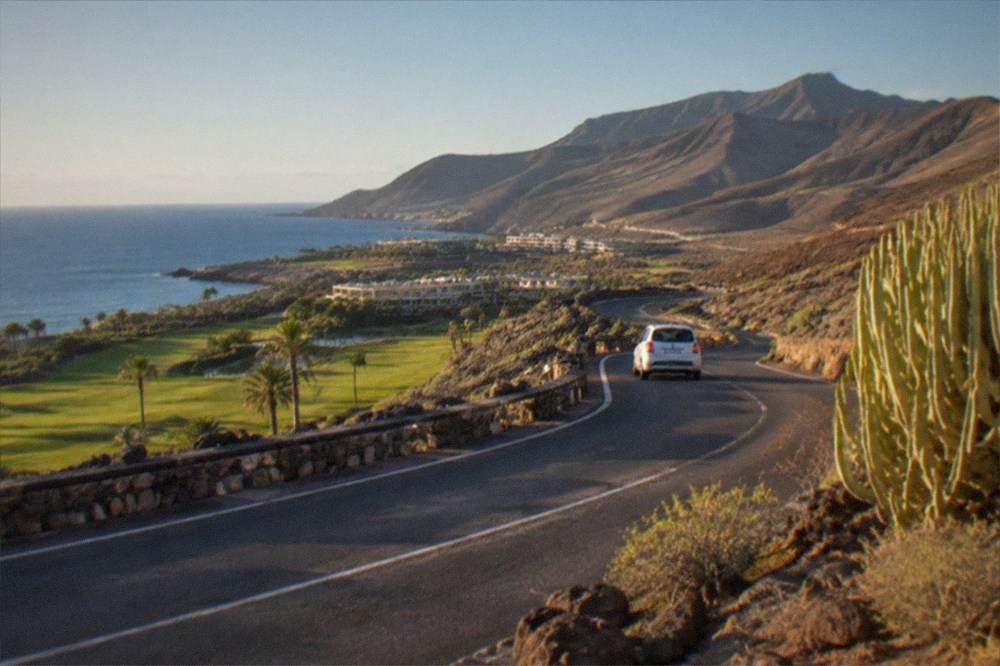
The golf development sits on the dry south and west coasts, above all in the Adeje, Arona and San Miguel de Abona municipalities, with the Golf del Sur area of San Miguel de Abona named for the sport itself. The north has its own courses in a greener, rainier climate: AEMET's Tenerife North Airport station records 520 mm of rain a year against the south's 132 mm, which is the single biggest difference a golfer will notice between the two halves.
The place names on the southern golf belt are the resort names most visitors already know. Golf del Sur in San Miguel de Abona carries the sport in its title. Costa Adeje sits in the municipality of Adeje, the same municipality that contains the grey-sand El Duque beach, and Arona holds Las Vistas and the Los Cristianos hub. All three municipalities appear in the island's population and tourism statistics as major visitor bases, and the where to stay in Tenerife guide breaks down the resort areas in detail.
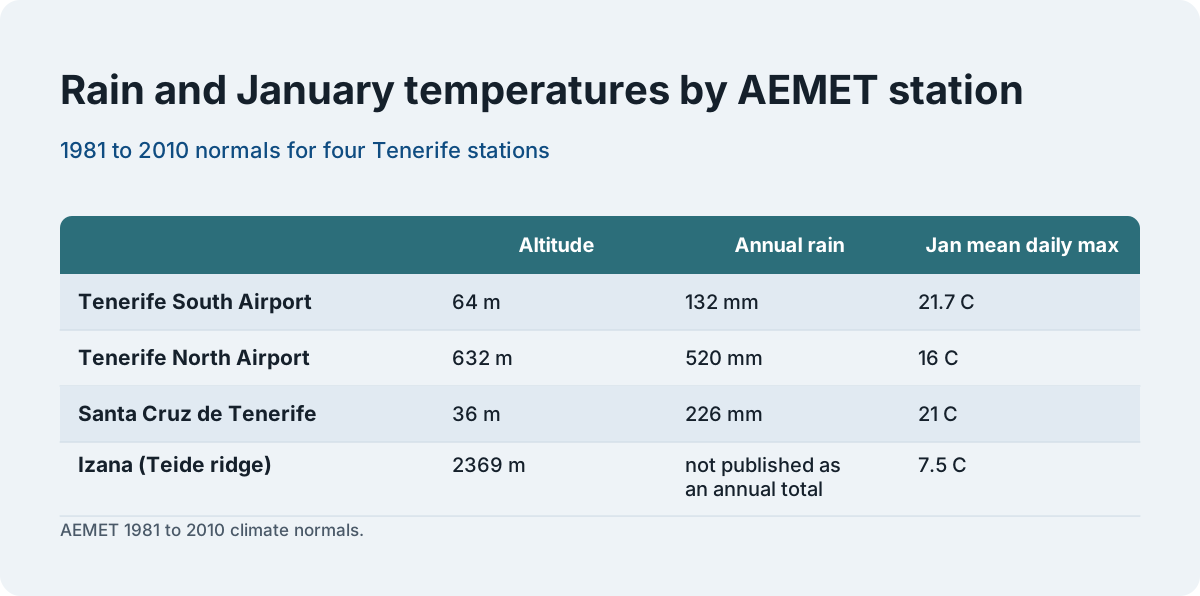
The north is a different proposition, and the numbers say so. AEMET's station at Tenerife North Airport, 632 m above sea level, records an annual 520 mm of rain on 64 days with 1 mm or more, against 132 mm on 15.2 days at the southern airport. Greener fairways, more rain days, and a course calendar that has to work around a real winter, if a milder one than anywhere in Britain.
| Station (AEMET normals) | Altitude | Annual rain | Annual rain days of 1 mm or more | January mean daily max |
|---|---|---|---|---|
| Tenerife South Airport | 64 m | 132 mm | 15.2 | 21.7 C |
| Tenerife North Airport | 632 m | 520 mm | 64 | 16 C |
| Santa Cruz de Tenerife | 36 m | 226 mm | 29.7 | 21 C |
| Izana (Teide ridge) | 2369 m | not published as an annual total | 33.4 | 7.5 C |
The Izana row is included for perspective rather than for planning: nobody plays golf at 2,369 m, but the row shows how sharply the island's climate stacks with altitude, which is why a round on the coast and a trip up to Teide National Park on the same day are two very different weather experiences. The Teide cable car runs from 2,356 m to La Rambleta at 3,555 m, and the operator refuses the ride to people with cardiovascular conditions, pregnant women and children under 3, so a golfing party mixing ages and health profiles should read the operator's access rules before adding a summit visit to the itinerary.
A pairing worth naming: the whale and dolphin watching fleet sails from Los Cristianos and Costa Adeje, both inside the golf belt, and the no-chase operators advertise a wildlife encounter rather than a pursuit. For a golfer whose afternoon is free, that is the most natural half-day filler on the south coast.
Why Is Golf in Tenerife So Expensive?
Any island golf product carries costs a mainland course does not: everything from mowers to golf balls arrives by sea or air, the Canary IGIC sales tax applies at 7% on everyday goods rather than mainland VAT, and a resort island's high-season demand comes from a whole continent escaping winter. This desk holds no verified green-fee data, so it will not print a price, but the structural reasons for island pricing are real and checkable.
The logistics are the first half of the answer. Tenerife is a volcanic island whose economy imports most of what it consumes, and maintenance equipment, turf products and retail stock for a golf club all share that supply chain. The second half is demand: 7,412,046 tourists arrived by air in 2025, and the winter months, when northern Europe's courses close, are close to the island's busiest, with 659,656 air arrivals recorded in November 2025 and 671,202 in December. A course with year-round playability and a winter customer base has no low season in which to discount.
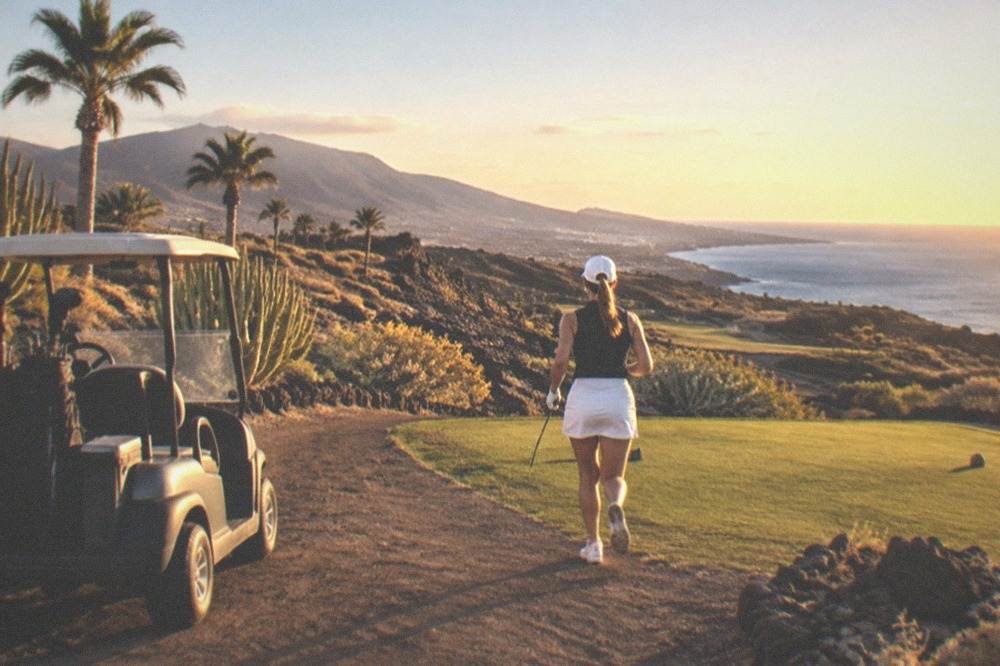
What a visitor does not pay is a tourist tax, because no official page this desk has read shows a per-night lodging tax in force or approved on Tenerife. The charges that do exist are per-booking public fees on specific trails, such as the Teide summit trail, and none touches a golfer. It is also worth knowing that the 100% public transport subsidy that Canary residents receive in 2026 does not extend to visitors: tourists pay for single tickets, the EUR 10 day travelcard or the EUR 50 seven-day travelcard, so a golfing party relying on buses should budget for fares rather than assume free rides.
How Much Does It Cost to Play Golf in Tenerife?
This desk cannot print a green fee for any Tenerife course, because no verified fee schedule is on file, and inventing one would be worse than silence. What can be stated is the shape of the costs: green fees and buggy hire set by each club, IGIC at 7% on everyday goods inside any pro-shop purchase, no tourist tax on the accommodation, and visitor fares on public transport if the party is not hiring a car. Confirm every fee with the club before booking.
The honest instruction is to go to the source. Each course publishes its own rates, and rates on resort islands move with season and demand in a way no third-party page can keep current. Questions worth asking each club directly: the green fee for the date, whether a buggy is included or separate, whether tee times are released on a rolling window, whether a handicap certificate is needed, and what the cancellation terms are. Other pages covering the same trip are gathered on Tenerife Travel Guide.
What this page can price exactly are the island's public transport products, because TITSA, the bus operator, publishes them. For a party based in the south without a car, they set the cost of everything except the round itself.
| TITSA product | Price | Notes |
|---|---|---|
| Single ticket | Priced by route | Card or cash on board |
| Same-day return | 10% off | On trips of 20 km or more |
| Day Travelcard | EUR 10 | Visitor product |
| 7 Day Travelcard | EUR 50 | Visitor product |
| Ten+ card | EUR 2 | Wallet top-ups EUR 2 to EUR 100 |
The resident subsidy is not on this table for a reason: every subsidised pass requires Canary residency, so a visitor never qualifies. The Teide and Teno bus lines are excluded from the resident passes anyway, but that affects residents, not visitors. Full transport planning, including the case for hiring a car, is in the car hire in Tenerife guide.
What Is the Best Golf Course in Tenerife?
No verified ranking of Tenerife's courses exists in this desk's fact base, so no course is named the best here. What the verified record does establish is the set of conditions that make a course good on this island: the dry southern climate, the coastal setting and the volcanic terrain, and a reader weighing individual courses should compare them on the clubs' own published layouts, rates and reviews rather than on any listicle's adjective.
Travel content is thick with "best course" lists, and nearly all of them rest on nobody's verified measurement. This page takes the opposite position: it names the areas, names the climate, and leaves the ranking to the reader with a checklist. Ask each club what grass the greens run on, how the volcanic terrain enters the design, what the wind does on exposed coastal holes, and what the peak-season tee time pressure looks like.
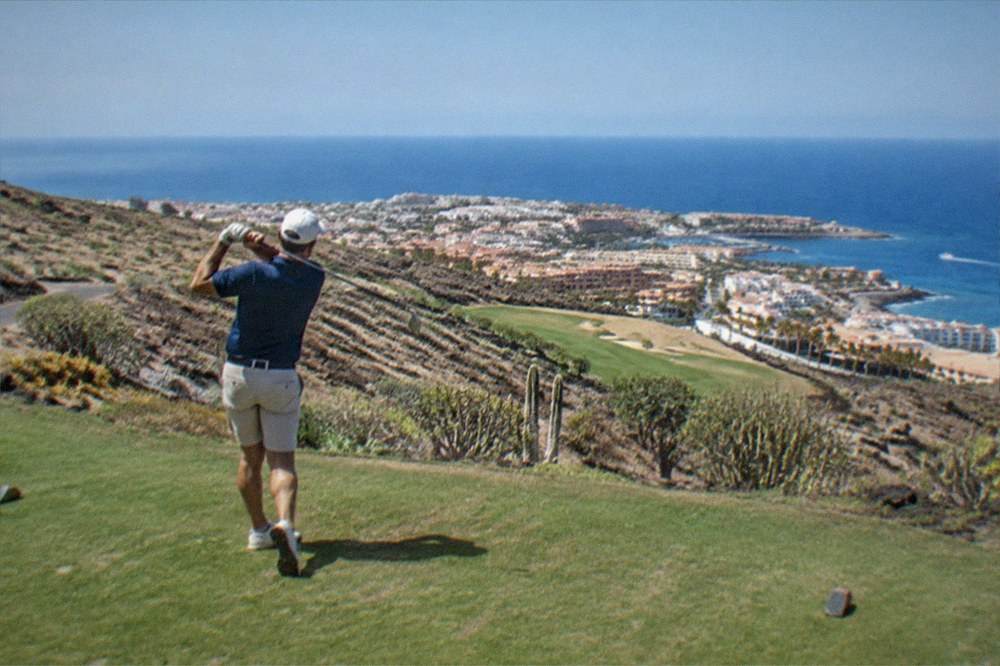
One structural fact helps a reader judge any candidate course: the island's golf geography is a coastal story. The courses sit in the warm, dry belt between Costa Adeje and Golf del Sur, with the greener northern alternatives around Puerto de la Cruz and La Orotava playing a different climate entirely. A course's position on that axis tells a golfer more about the likely winter experience than any brochure photograph.
How Many Golf Courses Are on Tenerife?
No official count of the island's golf courses appears in this desk's verified facts, so no number is printed here. Counts of golf courses are exactly the kind of figure that travels badly: courses open, close and merge, and third-party counts copy each other. A reader planning a trip should ask the island's tourist board or the clubs themselves for the current list, and treat any number on a travel site, including a specific figure that could have appeared here, with suspicion.
That answer is deliberately unhelpful in one sense and deliberately honest in another. A number would be easy to type and impossible to source from the materials on file. What the verified facts do establish is the wider frame: Tenerife is Spain's most visited national park's home island, 7,561,659 tourists in total arrived in 2025, and the resort belt that hosts them is the same belt that hosts the golf. Where the visitors are, the courses are, and the areas named above are where a reader's search should start.
How to Plan the Trip: Airports, Transport and Timing
Fly into Tenerife South for the golf belt: TITSA's airport page lists lines 10, 40, 711, 343 and 415 serving that airport, against lines 20, 30 and 343 at Tenerife North, and the southern station's climate is the drier of the two. Visitors pay for buses: the EUR 10 day travelcard and the EUR 50 seven-day travelcard are the visitor products, because the 2026 free-travel subsidy is for Canary residents only.
The airport choice is the first decision. AENA's official names are Tenerife Sur and Tenerife Norte-Ciudad de La Laguna; the familiar names Reina Sofia and Los Rodeos are the old titles and not AENA's current ones. Tenerife South handled 13,969,678 passengers in 2025, an all-time record, and it is the airport that serves the golf belt directly.
| Airport | TITSA lines on the operator's own airport page | Serves |
|---|---|---|
| Tenerife South (TFS) | 10, 40, 711, 343, 415 | Santa Cruz, Los Cristianos, Costa Adeje, Puerto de la Cruz, El Fraile and San Isidro |
| Tenerife North (TFN) | 20, 30, 343 | Santa Cruz via La Laguna, Puerto de la Cruz, express to the south |
Line 343 is the one that links the two halves, running express from Puerto de la Cruz to Los Cristianos via both airports, which makes it the natural route for a party staying north but playing south, or the reverse. The tram never serves either airport, so a visitor should plan on bus, taxi or hire car; the tram's own fares page lists no airport connection at all. The full airport decision, including which airlines fly where, is in the airport transfers guide.
On timing, the climate tables above do the work. The wettest months on the south coast are November, December and February, and even those carry 20 mm, 30 mm and 20 mm of rain respectively, on between 1.9 and 3.5 rain days. The monthly guides, including Tenerife in January, Tenerife in October and Tenerife in December, carry the fuller seasonal picture for anyone pairing golf with anything else.
For the non-golfing half of any party, the south coast's offer is broad, and the island's headline attractions are within reach of the golf belt on the same day. The things to do in Tenerife round-up is the full list, and the two most common pairings with a golf trip are a boat trip off Costa Adeje and a day up at Teide.
Common Questions About Golf in Tenerife
Is Tenerife good for golfing?
Yes. AEMET's normals for the south coast put every month's mean daily maximum between 21.7 and 28.4 Celsius, with the wettest month recording 30 mm of rain, and the sea off the south coast never falls below 19.1 Celsius. The island's courses sit mostly in the dry southern resort belt, close to Tenerife South Airport. What this desk does not hold is any verified ranking of the courses themselves, so the choice between them belongs to the reader and the clubs' own published details.
Do I need a handicap certificate to play golf in Tenerife?
No verified rule on handicap certificates appears in this desk's fact base, and practice varies between clubs. Ask each course directly when booking a tee time, at the same time as asking about dress codes, buggy policy and cancellation terms. The club's own booking page is the only reliable source for its entry rules.
When is the best time of year for a golf trip to Tenerife?
The climate tables in this guide give the honest answer: there is no month a golfer cannot play on the south coast. Winter, from November to February, is the peak for visitors escaping closed northern seasons, and it brings the year's highest rainfall, at 26 mm, 30 mm, 35 mm and 20 mm for the south coast station, still modest by British standards. Summer is hotter, at 27.7 to 28.4 Celsius mean daily maxima, and essentially rain-free in June and July.
Can I get to the golf courses by public transport?
Partly. TITSA buses serve the resort belt, with lines 10, 40, 711, 343 and 415 at Tenerife South Airport connecting Santa Cruz, Los Cristianos and Costa Adeje, and visitors pay for every product: single tickets, the EUR 10 day travelcard or the EUR 50 seven-day travelcard. The 2026 free-travel scheme is for Canary residents only. Many golfers find a hire car simpler for clubs and early tee times, and the island's taxi fleet is white, metered from the start of every trip.
Are golf lessons and club hire available on Tenerife?
Almost certainly, but no verified list of which clubs offer lessons or hire sets appears in this desk's facts, so no specifics are printed here. Confirm with each club when booking: ask whether hire sets are included in the green fee, what a lesson costs, and whether equipment needs reserving ahead in the winter peak. The club's own page is the source for all three answers.
Is there a tourist tax that will add to the cost of a golf holiday in Tenerife?
No official page this desk has read shows a per-night lodging tax in force or approved on Tenerife. The charges that do exist are per-booking public fees on specific walking trails and sites, such as the Teide summit trail and the Masca gorge, none of which a golfer encounters on a course. Everyday purchases carry the Canary IGIC sales tax, which the regional tax agency's table shows at 7% on everyday goods.