Paisaje Lunar (Lunar Landscape Hike)
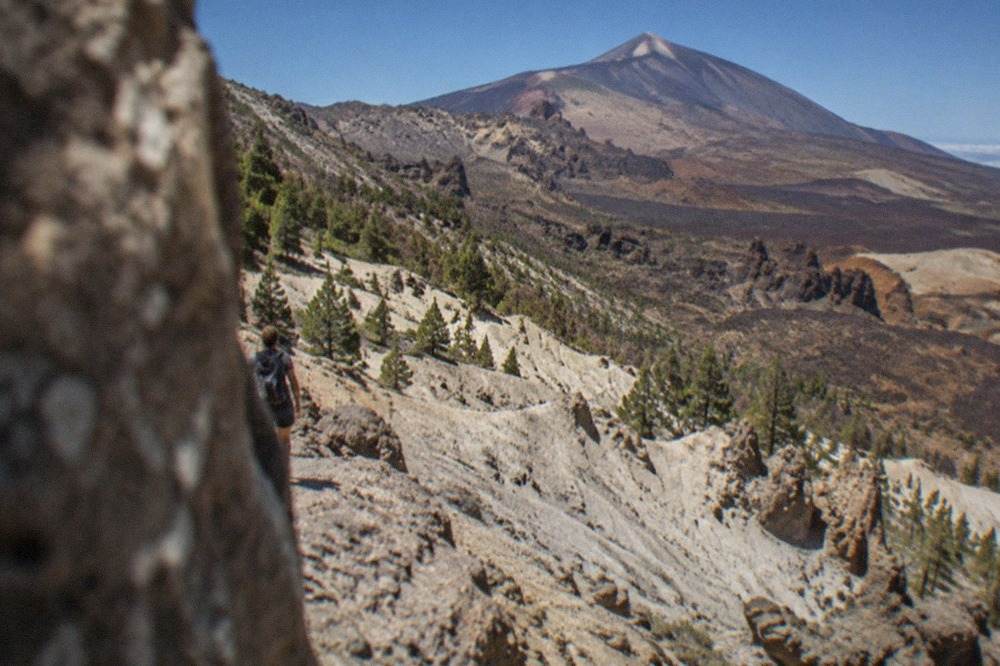
The Paisaje Lunar, the Lunar Landscape, is a volcanic badland of pale ash and carved gullies on Teide's southern flank above Vilaflor, and unlike the summit trails it currently needs no reservation.
Short answer
The Paisaje Lunar is a volcanic landscape trail above Vilaflor on the southern slopes of Mount Teide, known for pale ash terrain that gives it its name. It is not on Tenerife ON's list of spaces requiring prior authorisation, and under the temporary measure in force until 31 December 2026 the trails that are not on that list need no booking.
The Paisaje Lunar, the Lunar Landscape, is one of the strangest corners of Tenerife: a terrain of pale, eroded volcanic ash on the southern slopes of Mount Teide, above the town of Vilaflor, where water and wind have carved the soft pyroclastic ground into ridges, ravines and towers that look more like a photograph of the Moon than of a Canary Island. The trail that runs through it sits in the transitional band between the island's Canary pine forest and the high volcanic ground of Teide National Park, which makes it a natural pairing with the park itself: same volcano, same altitude discipline, none of the summit paperwork.
That last point matters more than most guides admit. Tenerife's walking rules changed substantially in 2025 and 2026, and a lot of what is printed about Teide's trails is now out of date. This page sets out what the official sources say: what the Paisaje Lunar is, whether it needs a booking under the rules now in force, how you reach it, what the climate up there does month by month, and how it compares with the trails that do carry a fee. Where a figure is not on an official page, it is not printed here.
What Is the Paisaje Lunar?
The Paisaje Lunar, or Lunar Landscape, is an area of eroded pale volcanic ash terrain on the southern slopes of Mount Teide above Vilaflor, threaded by a walking trail through a landscape of carved ridges and gullies between the pine forest and the high volcanic ground. The name is literal: the soft pyroclastic material has been sculpted into formations that resemble a lunar surface, and the trail is the way to see them.
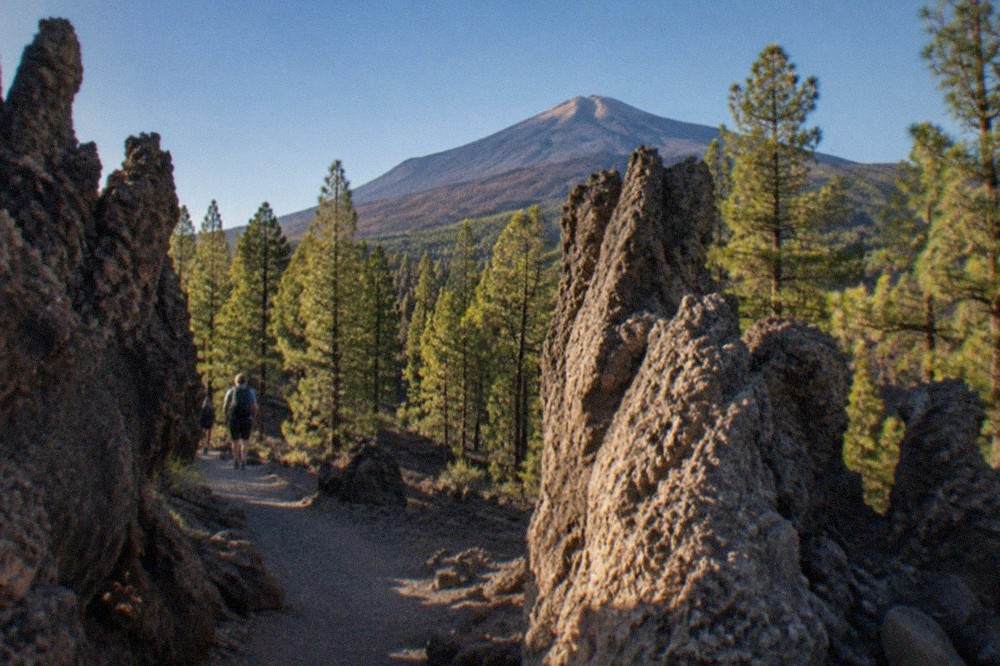
The landscape is the product of the same volcanic system that built everything else on this side of the island. Mount Teide rises 3,715 m in the figure given by Spain's own sources, MITECO and Turismo de Tenerife, and UNESCO records that rising 7,500 m above the ocean floor it is regarded as the world's third-tallest volcanic structure. The ash fields below the stratovolcano are the softer residue of that building process, and they erode far faster than the lava flows. That is exactly what gives the Paisaje Lunar its character: instead of black basalt, the ground is pale, chalky and deeply incised, and instead of a crater rim the trail wanders through a maze of dry ravines.
The setting is the band where the Canary pine forest thins out on its way up the mountain. Vilaflor, the town below, sits high on Teide's southern flank and is the conventional base for the walk, and the trailhead country between Vilaflor and the national park boundary is where the pines give way to open volcanic ground. The contrast is the point of the route: forest, then a sudden break onto a pale badland that looks like nothing else on the island.
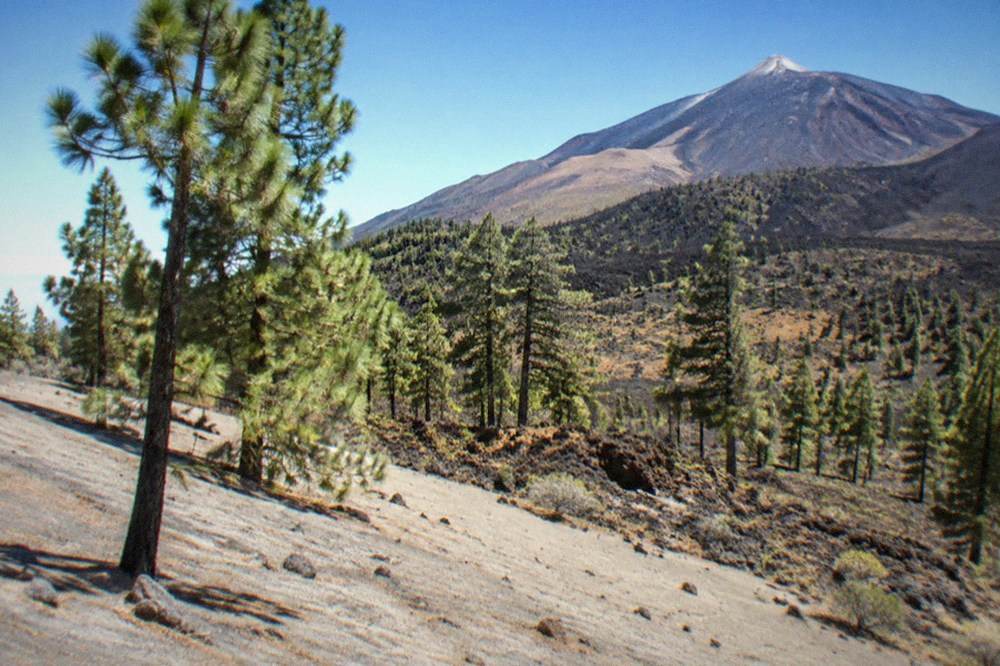
Because the terrain is soft and eroding, the trail is also a good illustration of why Tenerife's authorities regulate walking on the island so carefully. The Cabildo de Tenerife, through its Tenerife ON platform, keeps a list of spaces that require prior authorisation, and the condition of the ground is part of the reason some trails are controlled. The Paisaje Lunar itself, as the next section sets out, is not on that list under the rules now in force, but the surrounding high country includes several trails that very much are.
Do You Need a Permit for the Paisaje Lunar Hike?
No reservation is needed for the Paisaje Lunar under the rules now in force. The trail does not appear on Tenerife ON's list of spaces requiring prior authorisation, and Tenerife ON states as a temporary measure that trails not on that list need no authorisation or booking until 31 December 2026. That position can change, so the list itself is the thing to check before you set out.
Tenerife ON, the Cabildo's booking and information platform, divides the island's walking into two categories. The first is the list of spaces requiring prior authorisation, which on and around Teide includes trail PNT 07 Montana Blanca to La Rambleta, PNT 09 (Teide, Pico Viejo, Mirador de las Narices), PNT 23 Los Regatones Negros, PNT 28 Chafari, and the summit trail PNT 10 Telesforo Bravo. Elsewhere on the island the same list covers El Pijaral in Anaga, La Asomada to Cruz de Afur, Rambla de Castro, Barranco del Infierno and Masca. The Paisaje Lunar is not among them.
| Status | Trails and spaces | What you must do |
|---|---|---|
| Reservation required | PNT 07, PNT 09, PNT 10, PNT 23, PNT 28, El Pijaral (PRA 72), La Asomada to Cruz de Afur, Rambla de Castro, Barranco del Infierno, Masca | Book on Tenerife ON (Masca and Barranco del Infierno on their own sites) before walking |
| No booking needed, temporary measure | All other trails on Tenerife ON's system, including the Paisaje Lunar | No authorisation required until 31 December 2026 |
| Camping anywhere in the regulated network | Prior authorisation via Tenerife ON | Free of charge, maximum 7 consecutive days |
The second category is everything else, and Tenerife ON's own wording is that no authorisation or booking is needed until 31 December 2026. That temporary measure is the legal basis for walking the Paisaje Lunar without a reservation, and it carries a date, which is why this page tells you to check the platform rather than promise the position will hold. If you are combining the Paisaje Lunar with any of the booked trails, the bookings are personal and checked: on PNT 10 and PNT 07 the fee regime that applies from Monday 19 January 2026 requires ID or passport to be shown with the booking at the checkpoint, and the fee is set by the place of residence on that document.
One more rule deserves a plain statement because it is new and widely missed: the Cabildo bans smoking in all open-air spaces of Teide National Park, trails, viewpoints, car parks and recreation areas included, as a wildfire measure. The Paisaje Lunar sits outside the national park boundary on the forested flank below it, but wildfire prevention applies to the whole of this dry, pine-covered ground, and Tenerife ON's alerts page is where closures and suspensions for fire risk or weather are published. Check it before any walk on the mountain.
If you would rather have the high ground around the park handled for you, a guided small-group day is the alternative most readers choose.
How Do You Get to the Paisaje Lunar Trailhead?
The Paisaje Lunar is reached from Vilaflor, the town on Teide's southern flank, with the trailhead country lying uphill from the town through the pine forest toward the national park. Most walkers arrive by car or by an organised tour; there is no cable car, tram or dedicated shuttle serving this side of the mountain, and the trail is a walk, not a drive-to viewpoint.
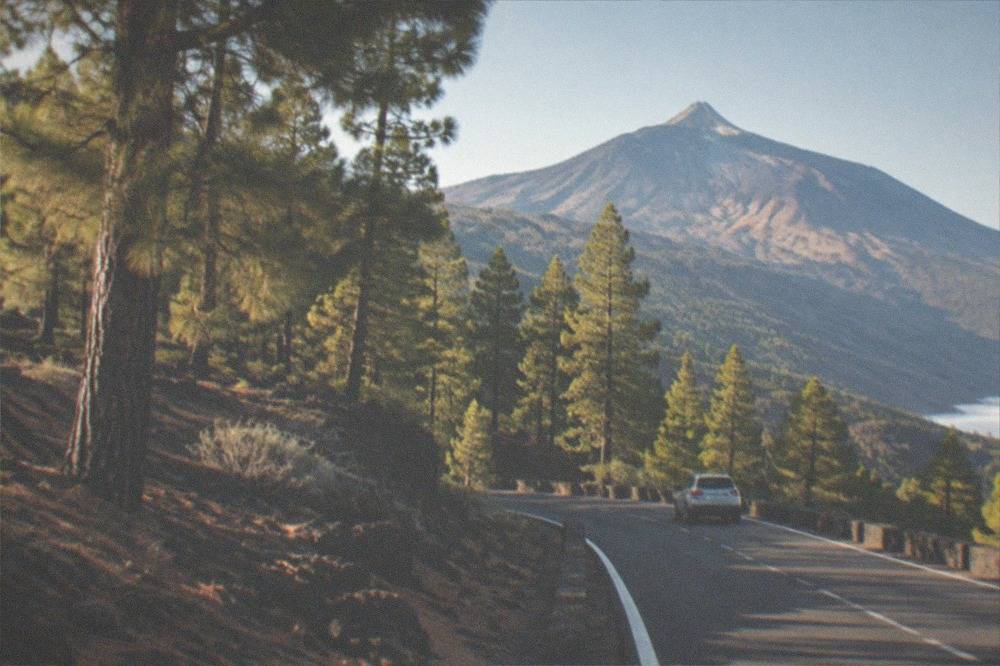
Vilaflor is the practical base, and the drive up from the south coast resorts follows the island's mountain road network through the pine belt. If you are staying in the south, Costa Adeje and the surrounding resort belt are the common starting point, and the drive inland is a genuine climb: the trailhead country sits well above the coast, and AEMET's high-altitude station at Izana, at 2,369 m, records mean daily maxima that are more than ten degrees lower than the coast in every month of the year. Pack for the altitude you are driving to, not the one you woke up in.
Public transport on this side of the mountain is limited, and this page will not name bus lines for Vilaflor because TITSA's airport pages are the only route lists in the verified record. What the record does state is the fare system: visitors pay for public transport on Tenerife, full stop. The 100% subsidy announced by the Canary government for 2026 applies to resident passes only, and visitors buy single tickets, the EUR 10 day travelcard or the EUR 50 seven-day travelcard. Anyone telling you the buses are free for tourists is describing the resident scheme.
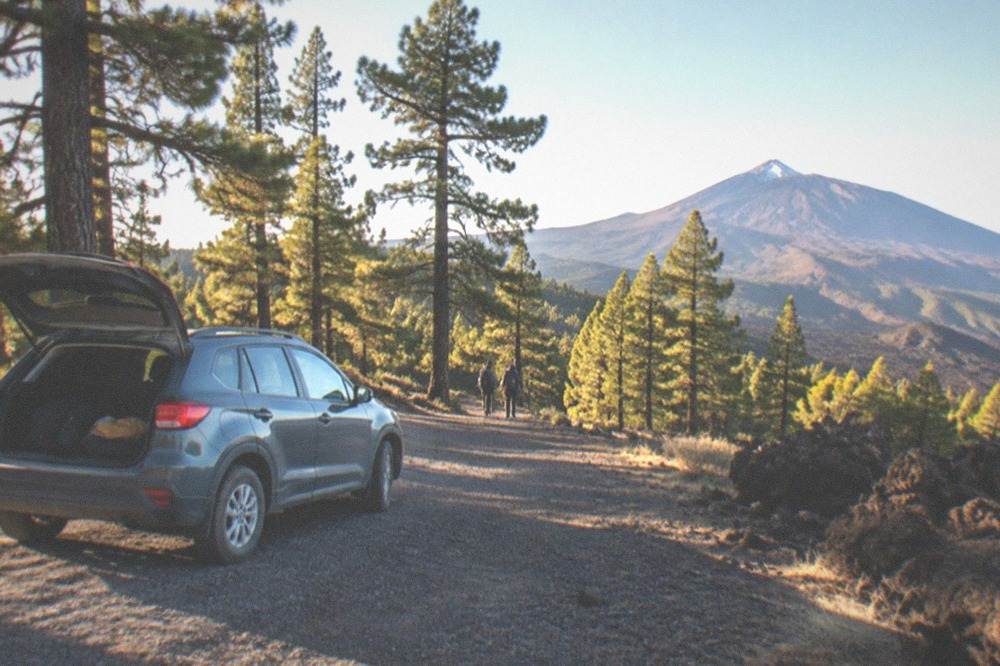
For readers who would rather not drive mountain roads at all, the guided options cover this ground. The small-group volcanic and forest tour of the national park's southern approaches is the closest fit for the Paisaje Lunar's terrain, and it removes the parking and access questions entirely.
If that option appeals, the box below is the quickest way to see whether a date on your holiday works.
What Is the Hike Itself Like?
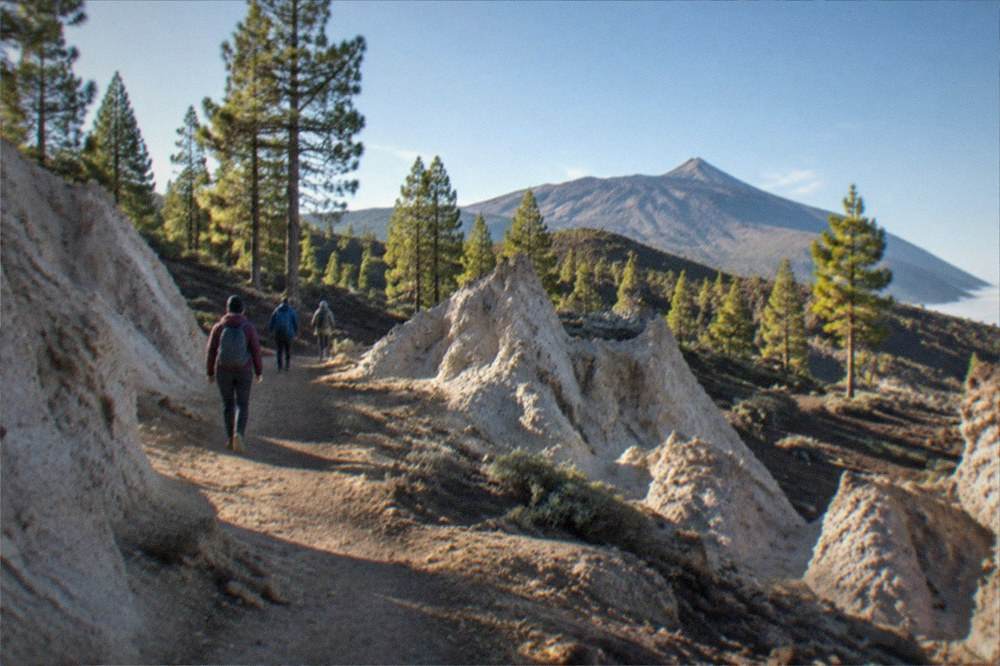
The Paisaje Lunar is a walking trail through eroded volcanic ash terrain, alternating between stretches of Canary pine forest and open, treeless badland of pale ridges and carved gullies. The ground is soft volcanic material rather than solid rock, the formations are the attraction rather than any summit or viewpoint, and the walk is best treated as high-mountain terrain: dry, exposed in the open sections, and subject to the same weather discipline as the rest of Teide's flank.
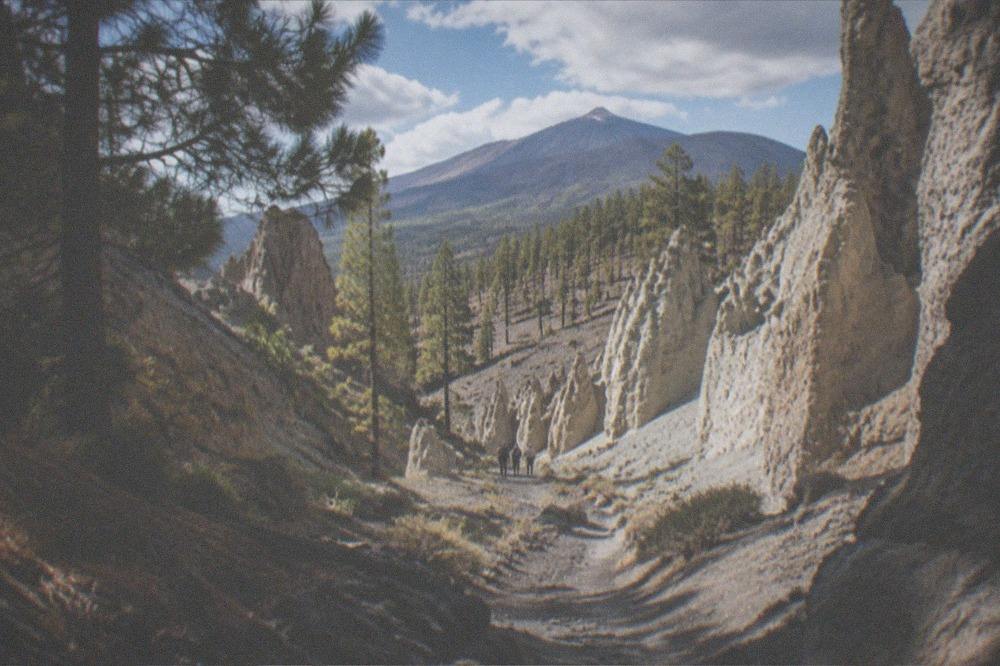
Two things define the experience on the ground. The first is the colour: the ash here is light, almost white in strong sun, and against the black lava and green pine that dominate everywhere else on the island it reads as genuinely otherworldly, which is how the name stuck. The second is the fragility. Eroding pyroclastic ground is exactly the material that gullies fastest under rain and footfall, which is why the trail exists as a defined route rather than a free-roaming scramble, and why staying on it matters more here than on the rockier trails.
The pine sections are their own attraction. The Canary pine is the tree that clothes the whole middle band of this mountain, and the forest between Vilaflor and the open ash ground is part of the same wooded flank that the guided forest walks on the island use. For walkers who want that terrain with a guide, there are options that pair volcanic ground with the forest belt.
Practical reading of the ground matters most in winter. On Teide's stratovolcano trails, Tenerife ON's rules state that ice and snow trigger mandatory crampons and ice axe, plus a signed declaration, and while the Paisaje Lunar is lower and forested, the same weather systems hit the whole southern flank. AEMET's Izana station, the closest high-altitude record to this terrain, shows the pattern plainly in the table below. Snow is not a summer problem, but between November and March the high ground carries real cold, and the pale ash holds ice in shaded gullies long after the coast has warmed up.
When Is the Best Time to Hike the Paisaje Lunar?
The most reliable months for the Paisaje Lunar are May to June and September to October, when AEMET's Izana station on Teide's high ridge records the driest weather alongside long sunshine hours, while July and August add heat in the open ash sections, and November to March brings cold nights, the bulk of the year's rain and the possibility of ice and snow on the high ground. The coast and the mountain are different climates, and this trail belongs to the mountain.
| Month | Mean daily max (C) | Mean daily min (C) | Rain (mm) | Rain days of 1 mm or more | Sunshine (hours) |
|---|---|---|---|---|---|
| Jan | 7.5 | 1.1 | 47 | 4.5 | 226 |
| Feb | 8 | 1.3 | 67 | 4 | 223 |
| Mar | 10.2 | 2.7 | 58 | 4.1 | 260 |
| Apr | 11.8 | 3.5 | 18 | 2.7 | 294 |
| May | 14.5 | 5.8 | 7 | 1.1 | 356 |
| Jun | 18.9 | 9.9 | 0 | 0.2 | 382 |
| Jul | 23 | 14 | 0 | 0.1 | 382 |
| Aug | 22.6 | 13.8 | 5 | 0.5 | 358 |
| Sep | 18.6 | 10.4 | 13 | 1.6 | 295 |
| Oct | 14.3 | 6.9 | 37 | 3.7 | 259 |
| Nov | 11.1 | 4.5 | 54 | 4.4 | 220 |
| Dec | 8.8 | 2.4 | 60 | 5.6 | 218 |
Every figure in that table is AEMET's, from the station at Izana at 2,369 m, using the 1981 to 2010 normals. The station sits on the high ridge rather than on the trail itself, so treat it as the climate of the mountain band, not a forecast for the path. What it tells a walker is the shape of the year: February is the wettest month at the top of the mountain, June and July are effectively bone dry, and the sunshine hours peak at 382 a month in early summer, which is a great deal of light on pale, unshaded ash.
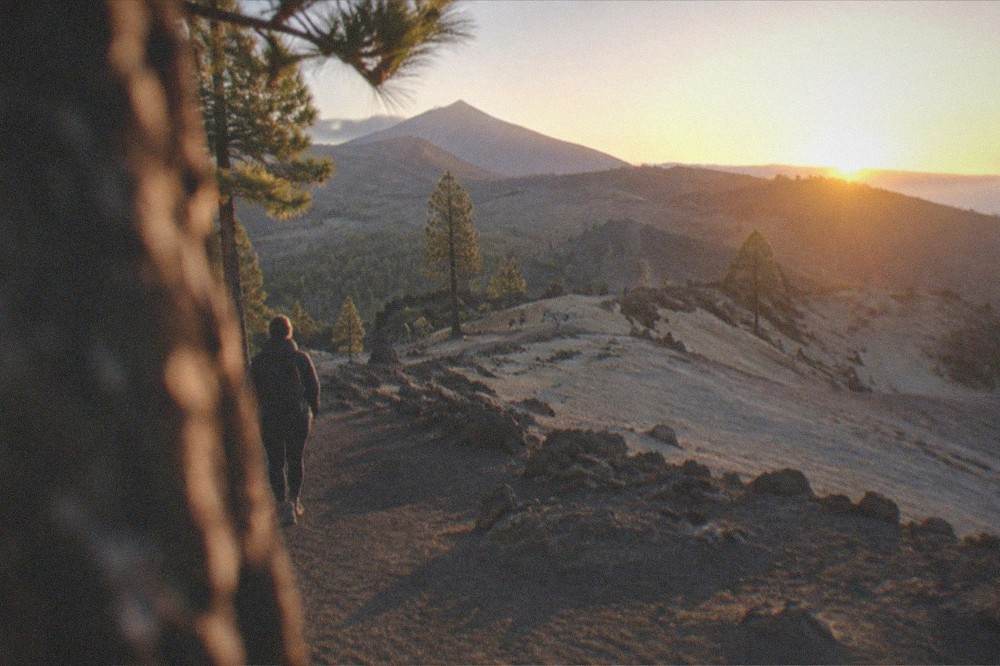
The shoulder months deserve the recommendation for a second reason: the trail's open sections are exposed, and AEMET's numbers show the high ridge going from a mean of 4.3 C in January to 18.5 C in July. A May or October day gives walking temperatures without the summer sun sitting on unshaded white ground for hours. In the coldest months, check Tenerife ON's alerts before driving up, because bookings and access on the mountain can be suspended for fire risk or weather, and ice on the stratovolcano trails triggers the mandatory crampon and ice axe rules described earlier.
How Does Paisaje Lunar Compare with Teide's Booked Trails?
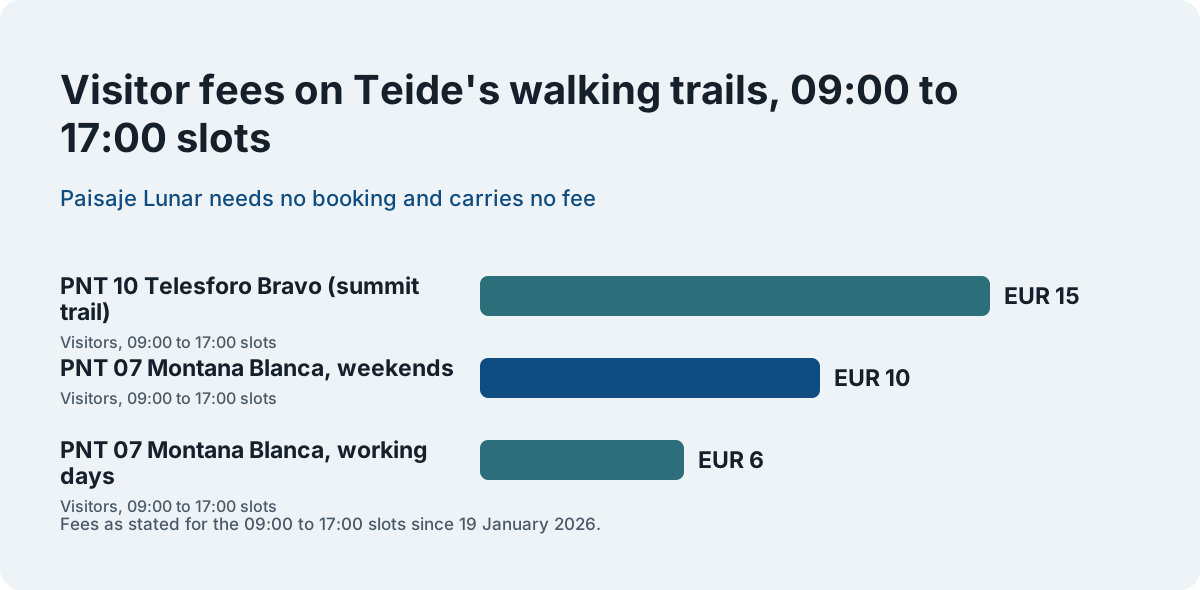
The Paisaje Lunar is the only one of Teide's famous walking landscapes that currently needs no reservation, while the summit trail PNT 10 costs EUR 15 for visitors on the 09:00 to 17:00 slots since 19 January 2026, and PNT 07 Montana Blanca costs EUR 6 on working days and EUR 10 at weekends for the same slots. The Paisaje Lunar carries no booking and no fee, but it also delivers ash formations rather than a crater rim.
| Trail | Booking needed | Visitor fee, 09:00 to 17:00 slots | What it gives you |
|---|---|---|---|
| Paisaje Lunar | No, under the temporary measure to 31 Dec 2026 | None | Pale ash badland and pine forest on the southern flank |
| PNT 10 Telesforo Bravo (summit) | Yes, on Tenerife ON, personal | EUR 15 (EUR 6 other Canary residents, free for Tenerife residents and children) | La Rambleta to the crater rim of the highest peak in Spain |
| PNT 07 Montana Blanca | Yes, on Tenerife ON | EUR 6 working days, EUR 10 weekends and public holidays (reduced for Canary residents) | The walking ascent route to La Rambleta |
| Cable car to La Rambleta | Operator ticket | Adult EUR 42, child EUR 21 return, price from | Lift from 2,356 m to 3,555 m, no summit access |
The comparison is worth making honestly because the three Teide experiences are separate things that pages too often blur. Driving through the national park, including the viewpoints, carries no charge on any official page read. The cable car is an operator ticket that stops at La Rambleta at 3,555 m, and it does not reach the summit: the crater is the permit-only trail PNT 10, processed via Tenerife ON. And the Paisaje Lunar is neither of those, a fee-free walk on the flank below the park that shares the volcano's geology without its paperwork.
The permit rules have their own rhythm, and it is not the one older guides print. Tenerife ON releases a new week of slots every Monday at 07:00 Canary time, keeping 56 days bookable, and no official page gives a figure for how fast they sell out, so no such figure appears here. Bookings are non-refundable, with no changes of date, slot or names, refunded only if the trail is closed or the cable car is not operating, and failing to use a booking can bar the user from new applications for 3 months. If the Paisaje Lunar is your walk because the summit permits are gone, that is a perfectly good outcome, and it is the one piece of high-ground Teide you can decide to do on the day itself.
Can You Combine the Paisaje Lunar with Other Teide Sights?
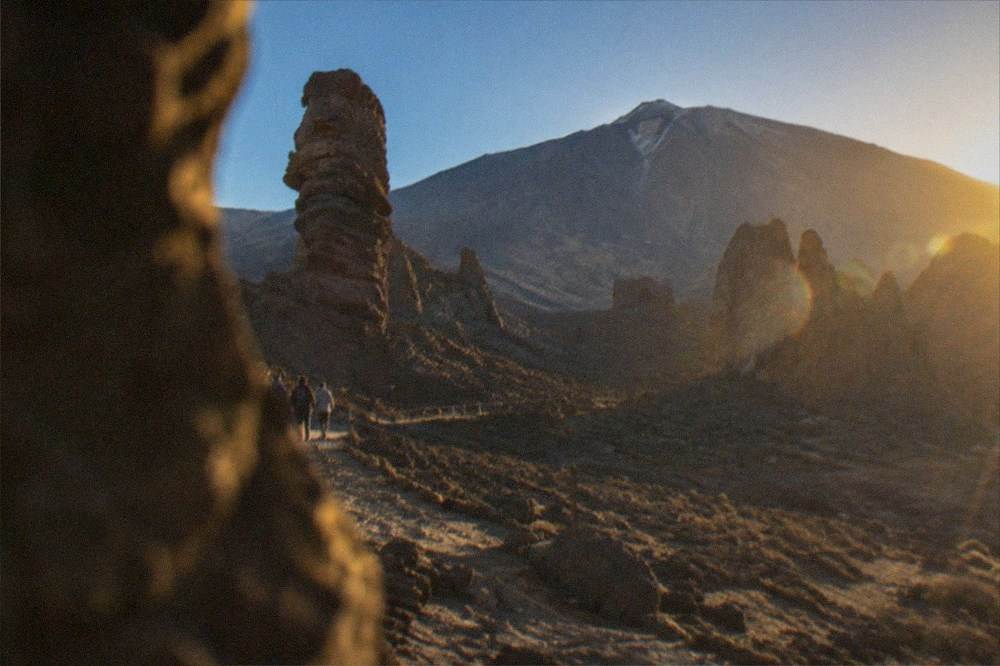
Yes, and the southern flank makes it easy: the Paisaje Lunar pairs naturally with a drive through Teide National Park and its viewpoints, with the cable car from its base station at 2,356 m, with the Roques de Garcia rock formations inside the park, and with the stargazing trips that run on the mountain after dark, since the park is a certified Starlight Tourist Destination. A single day can carry the walk and one of the others; two days carries all of them comfortably.
| Sight | What it is | Booking position |
|---|---|---|
| Teide National Park drive and viewpoints | 18,990 ha park, declared by decree of 22 January 1954, UNESCO World Heritage since 2007 | No entry fee on any official page read |
| Cable car | Lift from 2,356 m to La Rambleta at 3,555 m | Operator ticket, from EUR 42 adult return |
| Roques de Garcia | The rock formations inside the park | No booking |
| Teide Observatory | At Izana, about 2,400 m, first telescope began work in 1964 | Guided visits by prior reservation only |
The national park's own numbers explain why the pairing works so well. MITECO records the park at 18,990 ha with a peripheral protection zone of 7,374.32 ha, and UNESCO inscribed it on 2 July 2007 under natural criteria (vii) and (viii). The park recorded 5,242,653 visitors in 2024, the most visited in Spain's network, so the famous viewpoints are never empty, and the Paisaje Lunar's relative obscurity is part of its value as a half of the day.
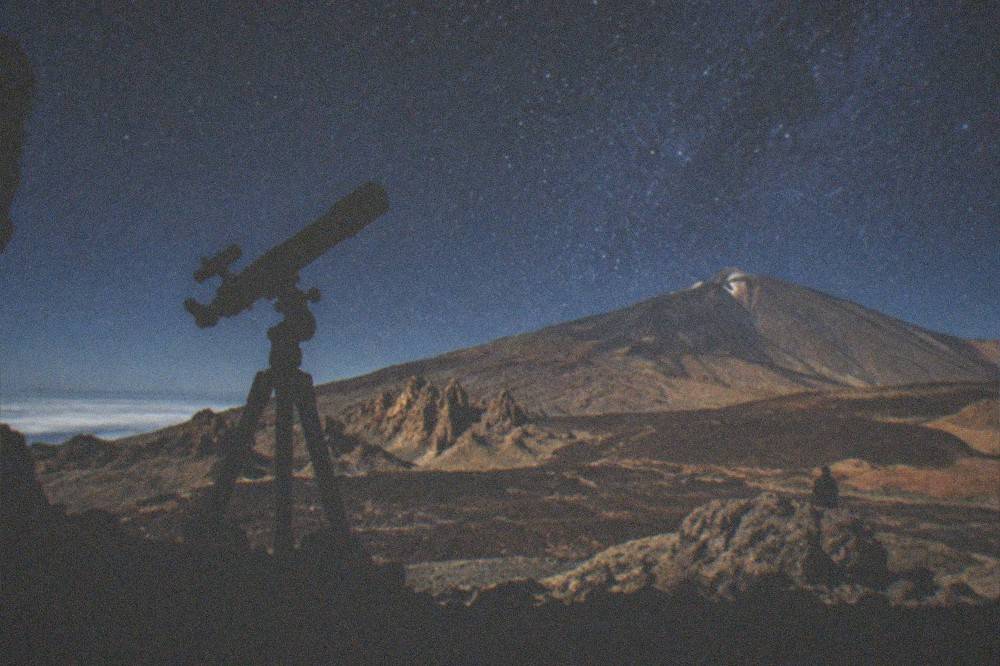
If you are building the afternoon half, the stargazing options are the natural fit. The Foundation Starlight lists El Teide as a Starlight Tourist Destination and the Cumbres de Tenerife as a Starlight Reserve, both since October 2013, and the sunset-and-telescopes trips that run from both sides of the island are the way most visitors use that darkness. The observatory itself, at Izana about 2,400 m, takes guided visits by prior reservation only, and its own page has carried full-booked notices, so book well ahead if that is on your list.
For walkers who want the forest half of the flank rather than the volcanic half, the Anaga Rural Park in the island's northeast is the other great wooded landscape on Tenerife, though its famous Enchanted Forest trail, El Pijaral, is reservation-only and closed to company-run tours, unlike the Paisaje Lunar. The full range of options for the mountain and the island is on the things to do in Tenerife with a car round-up, and this Tenerife Travel Guide page is part of the wider Teide tours coverage.
Common Questions About the Paisaje Lunar Trail
Is the Paisaje Lunar free to walk?
Yes. The trail is not on Tenerife ON's list of spaces requiring prior authorisation, and no official page lists a fee for it. The charges that exist on this mountain are the per-booking public fees on trails PNT 10 and PNT 07 since 19 January 2026, the cable car ticket and the national park's other booked trails, none of which applies here.
Do you need a booking for the Paisaje Lunar?
No booking is needed under the temporary measure Tenerife ON states for trails not on its authorisation list, which runs until 31 December 2026. Because that measure carries an end date, check the Tenerife ON list before your trip in case the position changes.
Is there an entry fee for Teide National Park?
No official page lists an entry fee for the national park, and driving through it, including the viewpoints, carries no charge. The 2026 charges are per-booking public fees on two trails only, PNT 10 and PNT 07, and the cable car is a separate operator ticket.
Can you smoke on the trails around Teide?
No, not inside the national park. The Cabildo de Tenerife bans smoking in all open-air spaces of Teide National Park, trails, viewpoints, car parks and recreation areas included, as a wildfire measure. The pine forest on the flank below, including the ground around the Paisaje Lunar, is dry fire terrain, so treat the ban as the sensible rule everywhere on the mountain.
What should you wear for the Paisaje Lunar?
Treat it as high-mountain terrain. AEMET's Izana station records mean daily minima of 1.1 C in January against 14 C in July, so layers depend heavily on season, and the open ash sections offer no shade in summer. In winter, ice and snow on Teide's stratovolcano trails trigger mandatory crampons and ice axe on those routes, and shaded gullies on the flank hold ice too, so check the Tenerife ON alerts page before you go.