Vilaflor
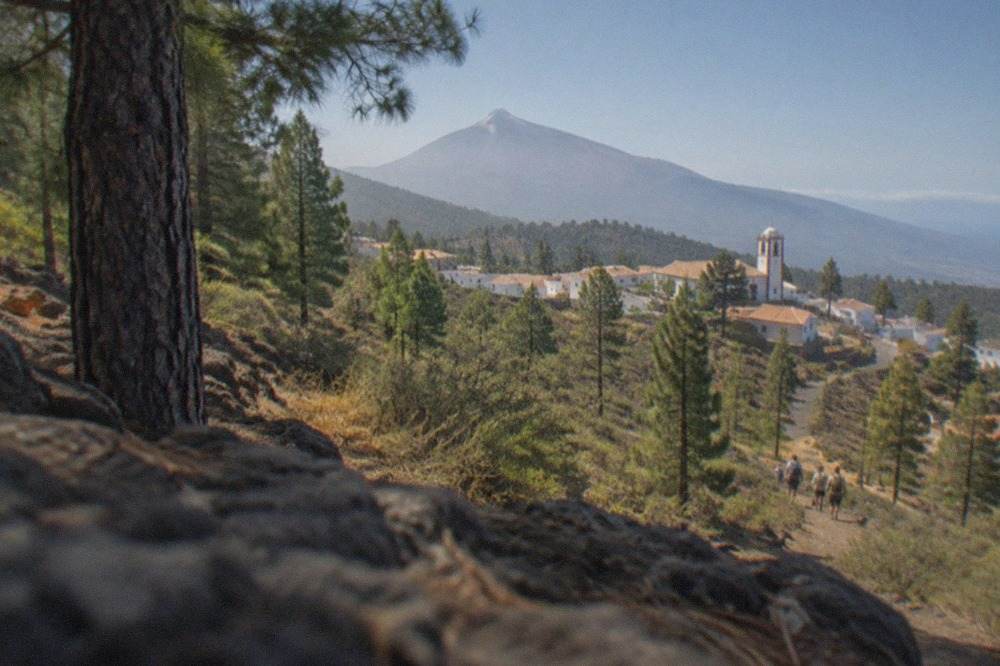
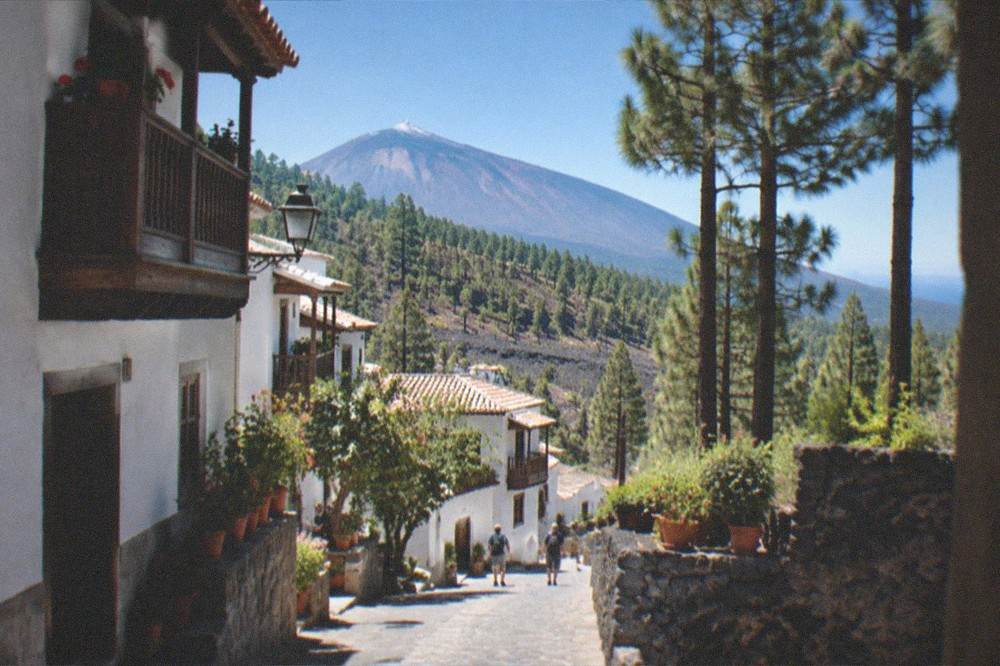
Vilaflor sits on the southern flank of Mount Teide, higher than any other village base on the island's tourist map, and it is the shortest route from the south coast resorts into Teide National Park.
Short answer
Vilaflor is a small inland village on the southern slopes of Mount Teide, about half an hour's drive up from the Costa Adeje resorts, and it works best as a base or stopping point for the national park, the cable car and stargazing rather than as a beach destination.
Vilaflor is the village that sits directly under Mount Teide on the island's southern side, the last inhabited stop on the road that climbs from the coast at Costa Adeje towards the national park boundary. The tourist board's own material frames the south of the island around the resort corridor, and Vilaflor is the one place in that story where the scenery changes completely: pine forest replaces promenade, and the air cools fast with every hundred metres of climb. For a visitor staying in the south, it is the nearest piece of the high island, reachable on a single road, without crossing to the north coast.
This page gathers what the official sources actually say about the village and the mountain above it: the walks, the permits two of those walks now require, the cable car prices and rules, the bus and travelcard options, and the climate data for the high southern slopes. Where a number is not on file, this guide says so rather than guessing, and where a widely repeated claim is false, the correction is stated plainly. The editorial desk behind this Tenerife Travel Guide reports from the official pages, not from a visit.
Where Is Vilaflor and Why Do Travellers Go?
Vilaflor is a small mountain village on the southern slopes of Mount Teide, in the municipality of the same name, sitting on the road that runs from the south coast resorts up towards the Teide National Park boundary. It is the closest village base to the park on the southern side, which is why walkers, stargazers and anyone escaping the summer heat of the coast end up here rather than in the resorts.
The geography is the whole story. The national park covers 18,990 hectares, declared by decree on 22 January 1954, with a peripheral protection zone of a further 7,374.32 hectares, and MITECO, the Spanish national parks body, describes it as the largest and oldest national park in the Canaries. UNESCO inscribed the park on the World Heritage list on 2 July 2007 under natural criteria (vii) and (viii). Vilaflor sits on the approach to all of that from the south, and the village's own economy reflects it: the official tourism material for the area centres on walking, pine forest and the volcano rather than on beaches.
The height of Teide itself is 3,715 m according to Spain's own sources, MITECO and Turismo de Tenerife. UNESCO's listing carries a slightly different figure, and this site uses the Spanish one. UNESCO's exact wording on the mountain's scale is worth keeping intact: rising 7,500 m above the ocean floor, it is "regarded as the world's third-tallest volcanic structure". That phrasing, volcanic structure rather than volcano, and from the ocean floor rather than from sea level, is the only supportable form of the claim.
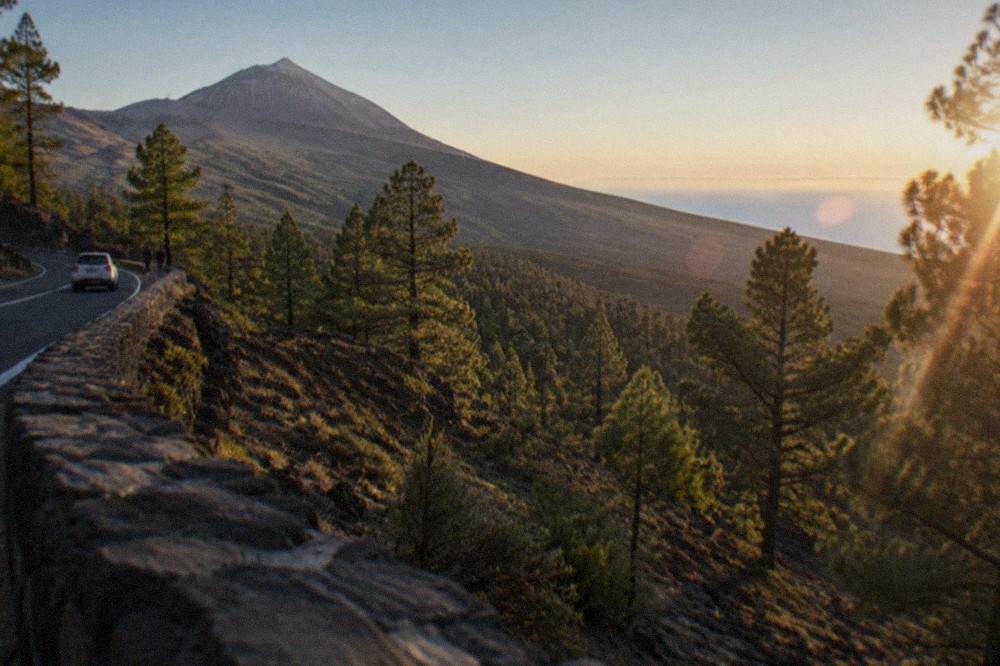
What draws people specifically to Vilaflor, rather than to the coast, is a combination the resort towns cannot offer. The Fundacion Starlight lists "Cumbres de Tenerife" as a Starlight Reserve and "El Teide" as a Starlight Tourist Destination, both dated October 2013, which is formal recognition of the quality of the night sky over the island's high ground. A village under that sky, on the dry southern side of the mountain where cloud often sits below rather than above, is a practical place to be for an evening of stargazing. The daytime draw is just as simple: the walking trails of the southern slopes begin within a short drive of the village centre.
What Can You Do in and Around Vilaflor?
The activities around Vilaflor are walking in the pine forest and volcanic badlands, driving up into Teide National Park for the viewpoints, riding the cable car to La Rambleta at 3,555 m, and stargazing under one of the certified darkest skies in Europe. There is no beach and no nightlife to speak of, and the village's visitors come for the mountain.
The walks split into two families. The first family is the forest and lava trails on the slopes below the park boundary, which Tenerife ON, the Cabildo's booking and information platform, currently treats under a temporary measure: no authorisation or booking is needed on those trails until 31 December 2026. The second family is the trails inside the stratovolcano zone, several of which now require a reservation, and those are covered in detail further down this page.
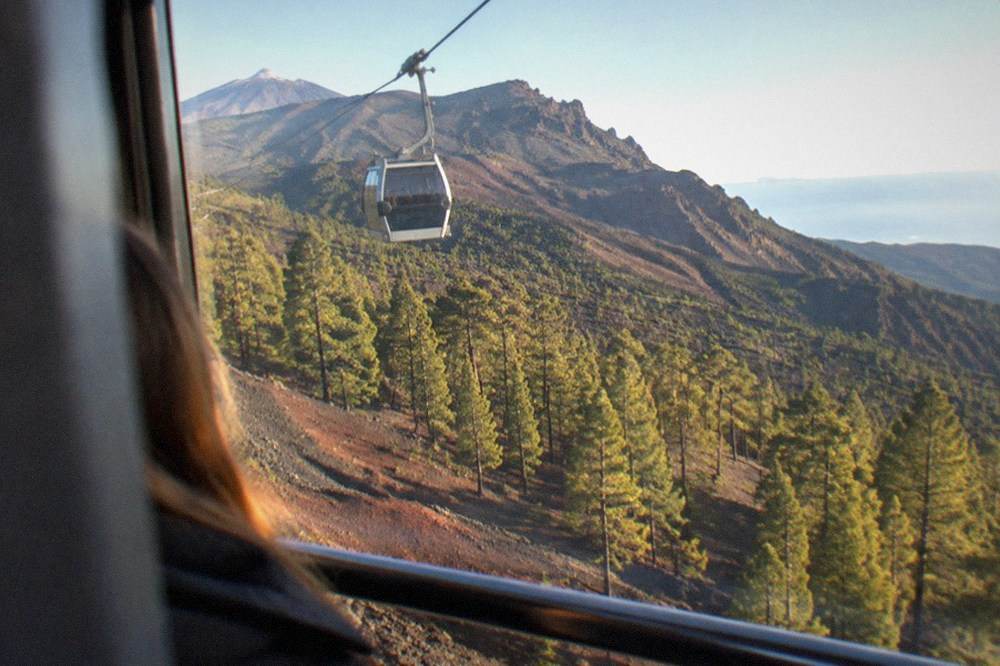
The star attraction above the village remains the cable car. The operator's own pages give the base station at 2,356 m and the upper station, La Rambleta, at 3,555 m. What the cable car does not do is reach the summit: the crater trail is a separate, permit-only route, and the operator's own guide says the crater needs the PNT 10 permit processed via Tenerife ON. Visitors who confuse the two arrive expecting a summit and get a high plateau with a permit checkpoint they cannot pass.
For travellers who would rather not read four official pages before setting out, a guided small-group day tour handles the route, the timing and the interpretation. One option that fits the area well:
That tour is built around exactly the terrain this page describes, the volcanic landscapes and the forest on the southern side of the park, in a small group over four to five hours.
Evenings are the other half of the Vilaflor draw. The stargazing tours that run into the national park from the south pass this way, and the roster includes several that suit a night based in or near the village:
The first covers the volcanic and forest wonders by day, the second is a sunset and telescope experience running eight to nine hours with hotel pickup, and the third is a guided day hike with pickup in the south. Between them they cover the two reasons most visitors come up the mountain road at all.
How Do You Get to Vilaflor from the South Coast?
By car, Vilaflor is reached on the TF-21, the road that climbs from the resorts around Costa Adeje and Los Cristianos through Vilaflor and on into the national park; by public transport, TITSA buses serve the village, and visitors pay normal fares, with a EUR 10 day travelcard or a EUR 50 seven-day travelcard available at airport ticket machines. Visitors do not qualify for the free resident pass.
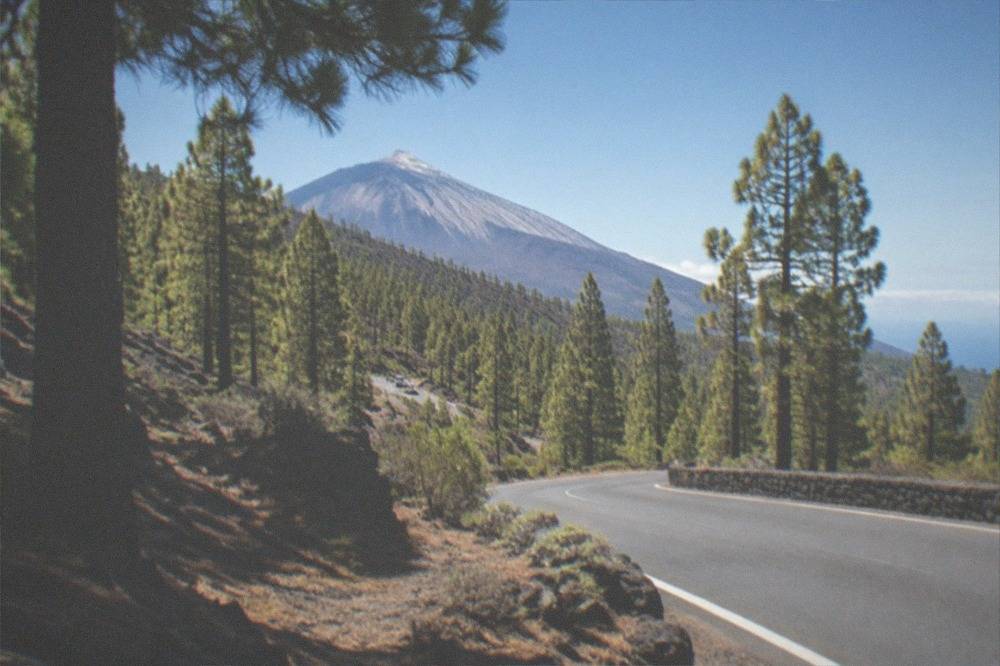
The road is the practical answer for most travellers, and car hire from the south is the flexible option; the driving guide on this site covers the island's rules. What matters on this stretch is the altitude gain: the village sits well above the coast, and the climate tables further down show how much the temperature drops on the way up, which is worth planning for in both directions.
Public transport exists and is honest about what it is. TITSA's fares page lists the visitor products plainly: single tickets priced by route, a day travelcard at EUR 10, a seven-day travelcard at EUR 50, and the Ten+ card itself at EUR 2 with wallet top-ups from EUR 2 to EUR 100. A same-day return gets 10% off on trips of 20 km or more. The 2026 free-transport subsidy that the Canary government announced applies to resident passes only, under a personalised Ten+ card requiring Canary Islands residency, so no visitor should plan around free buses.
| TITSA product | Price | Who it is for |
|---|---|---|
| Single ticket | Priced by route, card or cash | Any visitor |
| Same-day return | 10% off on trips of 20 km or more | Day trips by bus |
| Day Travelcard | EUR 10 | Visitors, unlimited day use |
| 7 Day Travelcard | EUR 50 | Visitors staying longer |
| Ten+ card | EUR 2, top-ups EUR 2 to EUR 100 | The card the travelcards sit on |
| Resident subsidised pass | Free in 2026 | Canary Islands residents only, personalised card |
Taxis on the island are white and metered from the start of the trip, with a fixed price agreeable in advance for excursions, per the tourist board's public transport page. For a one-off evening stargazing trip from a resort to the high ground, an agreed excursion price is the arrangement the official guidance anticipates.
If a day up here appeals but the logistics do not, a guided option removes the parking and timing questions entirely:
What Does the Teide Cable Car Cost and What Are the Rules?
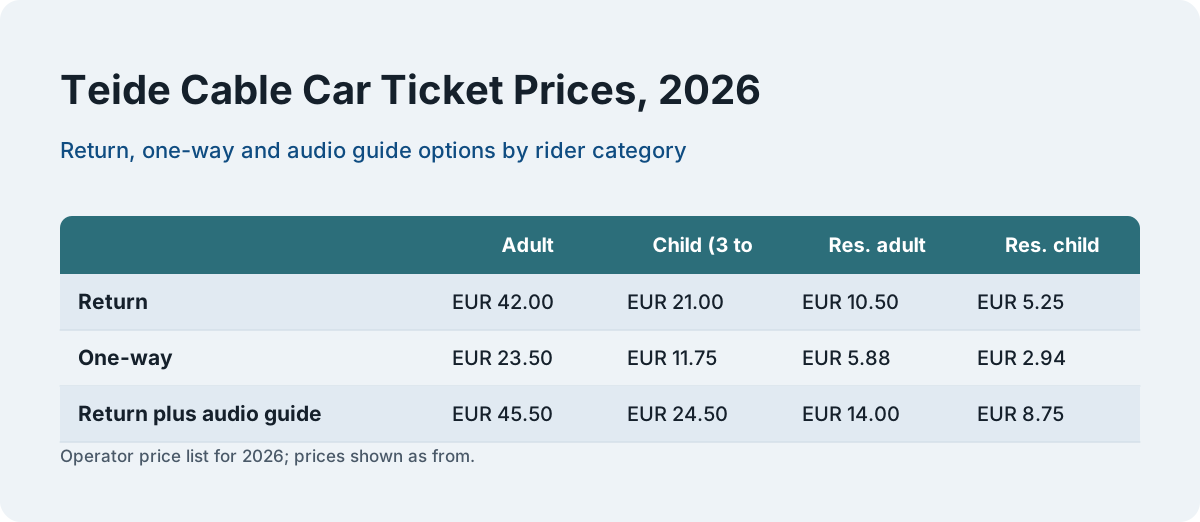
The 2026 cable car return ticket costs EUR 42.00 for a non-resident adult and EUR 21.00 for a child aged 3 to 13, shown by the operator as a price from; Canary residents pay EUR 10.50 and EUR 5.25. The cable car runs between 2,356 m and La Rambleta at 3,555 m, it does not reach the summit, and the operator does not allow children under 3, pregnant women or people with cardiovascular conditions.
The operator's price page sets out the full card, and it is worth reading before booking, because the add-ons change the total.
| Cable car ticket, 2026 | Non-resident adult | Non-resident child (3 to 13) | Resident adult | Resident child |
|---|---|---|---|---|
| Return | EUR 42.00 | EUR 21.00 | EUR 10.50 | EUR 5.25 |
| One-way | EUR 23.50 | EUR 11.75 | EUR 5.88 | EUR 2.94 |
| Return plus Teide Legend audio guide | EUR 45.50 | EUR 24.50 | EUR 14.00 | EUR 8.75 |
The hours follow the seasons. The operator's timetable gives 09:00 to 17:00 for 1 January to 27 March and 13 April to 30 June, 09:00 to 18:40 for 28 March to 12 April and 1 July to 30 September, 09:00 to 18:00 for 1 to 13 October, and 09:00 to 17:30 for 14 to 24 October. The last ascent is one hour before closing and the last descent ten minutes before, so on a 17:00 day that means 16:00 up and 16:50 down. Hours for the last weeks of the year are not on file, so check the operator's timetable for those dates. The base station car park runs 08:00 to 18:00 in the standard season and to 19:40 in the extended periods.
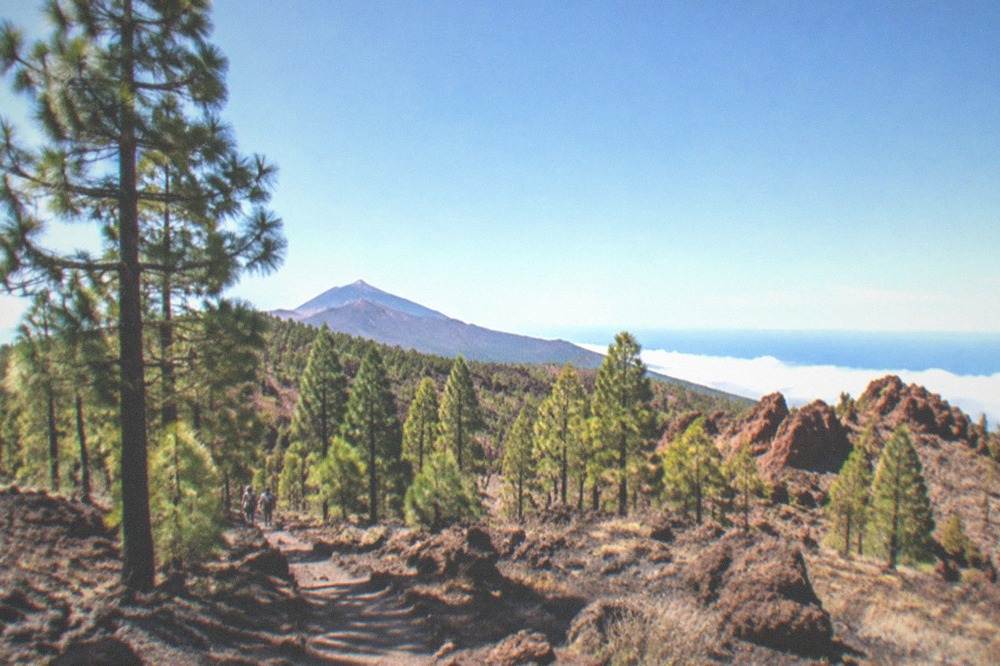
The access rules are the part worth taking seriously. The operator's rules page is explicit: people with cardiovascular conditions, pregnant women and children under 3 are not allowed because of the altitude, and anyone with a health problem is told to consult a doctor first. This site adds no medical advice beyond that list, because none is on file. One more rule catches out smokers in particular: the Cabildo bans smoking in all open-air spaces of the national park, trails, viewpoints, car parks and recreation areas included, as a wildfire measure.
Do You Need a Permit to Hike the Teide Trails Near Vilaflor?
Two trails inside the stratovolcano zone now require a paid reservation booked on Tenerife ON: PNT 10 Telesforo Bravo, the summit trail from La Rambleta, costing EUR 15 for visitors on the 09:00 to 17:00 slots since 19 January 2026, and PNT 07 Montana Blanca, costing EUR 6 on working days and EUR 10 at weekends. Other booked trails need a free-of-charge reservation, and the remaining trails need no booking until 31 December 2026.
The booking platform is the thing most existing guides get wrong. Since slots for 1 September 2025 onward, the summit permit is booked on Tenerife ON, at tenerifeon.es, and the old national parks booking page now only tells users to go there; it is never the booking site and this site does not link it. Slots are released every Monday at 07:00 Canary time, with a new week opened so that 56 days are always bookable. There is no official figure for how fast they sell out, so no lead time is stated here beyond the release rule itself.
| Trail | Booking | Visitor fee, 09:00 to 17:00 slots | Notes |
|---|---|---|---|
| PNT 10 Telesforo Bravo (summit) | Tenerife ON, personal reservation | EUR 15 (EUR 6 other Canary residents, free for Tenerife residents) | Children exempt from the fee; no access under 3, under-16s with an adult only |
| PNT 07 Montana Blanca to La Rambleta | Tenerife ON | EUR 6 working days, EUR 10 weekends and public holidays | Ice and snow trigger mandatory crampons and ice axe |
| PNT 09, PNT 23, PNT 28 | Tenerife ON reservation | No fee listed on the pages read | Inside the stratovolcano zone |
| All other trails on Tenerife ON | None needed until 31 December 2026 | None | Temporary measure on the platform |
The sunrise and sunset slots on PNT 10, 06:00 to 09:00 and 18:00 to 22:00, also need a booking; they carry no fee mark on the official page, but walking without a reservation may be penalised. The fees are set by the place of residence on the ID card or passport, which must be shown with the booking at the checkpoint. Bookings are non-refundable with no changes of date, slot or names, refunded only if the trail is closed or the cable car is not operating, and failing to use a booking can bar the user from new applications for three months. The health warning on PNT 10 is the operator's own: the trail is not suitable for people with heart, respiratory or mobility problems.
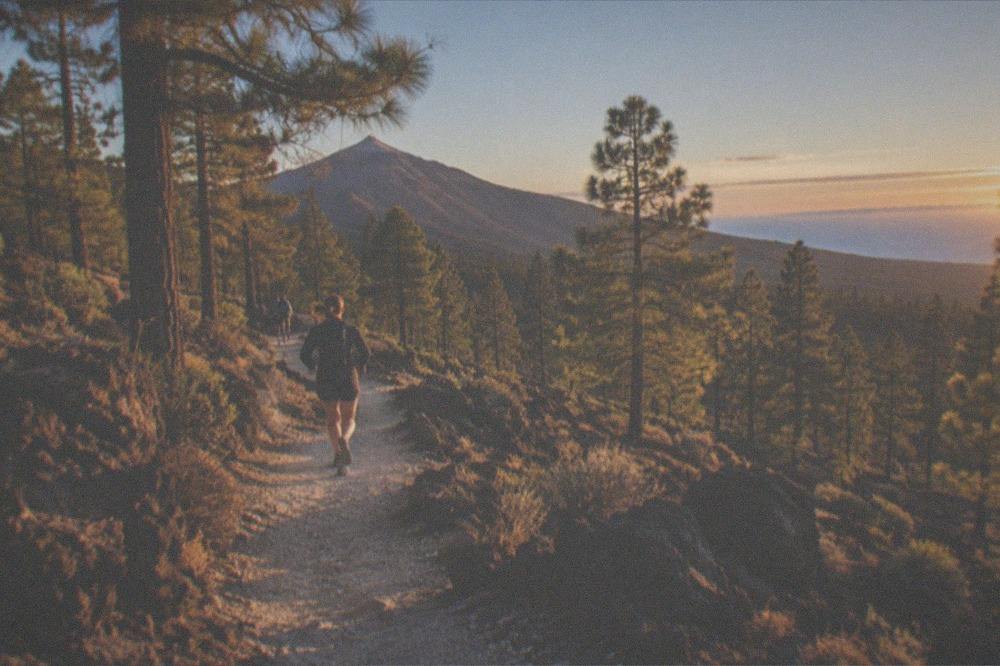
For walkers who want the mountain without the permit paperwork, the forest trails around Vilaflor's own slopes are the honest alternative, and a guided hike with south pickup covers them well:
The Altavista refuge, high on the mountain, has reopened after a 2026 refurbishment and takes prior reservations at refugioaltavista.com, sleeping 49, with a first-aid room, dining area and toilets but no showers. What this site does not claim is that a night at the refuge replaces the summit permit: that was not confirmed on an official page, so it is not stated here.
What Is the Weather Like at Vilaflor's Altitude?
The southern slopes of Teide are several degrees cooler than the coast at every time of year, and AEMET's normals for the Izana station at 2,369 m, the ridge above the observatory, show mean daily maxima from 7.5 C in January to 23 C in July, with almost no rain between June and August and snow and ice possible on the high trails in winter. The coast at Santa Cruz, by contrast, averages 21 C maxima in January and 29 C in August.
The climate data is where a Vilaflor page can be genuinely useful, because the temperature gap between the beach and the village catches out visitors every year. AEMET, the Spanish met service, publishes station normals for 1981 to 2010, and the Izana station sits at 2,369 m, which is representative of the high ground above the village rather than of the village itself; the actual settlement is lower and milder than these figures, and no official normal for the village itself is on file.
| Month | Izana, 2,369 m: mean daily max C | Izana rain, mm | Santa Cruz, 36 m: mean daily max C | South coast sea temperature C |
|---|---|---|---|---|
| January | 7.5 | 47 | 21 | 19.9 |
| March | 10.2 | 58 | 22.1 | 19.1 |
| May | 14.5 | 7 | 24.1 | 20.2 |
| July | 23 | 0 | 28.7 | 22.2 |
| September | 18.6 | 13 | 28.1 | 23.7 |
| November | 11.1 | 54 | 24.1 | 22.5 |
Two periods matter most. Winter, December to February, is when the stratovolcano trails can hold ice and snow, and Tenerife ON's equipment rule responds directly: crampons and ice axe join the mandatory equipment list, plus a signed declaration. Summer, June to August, is when the coast is at its hottest and the high slopes are at their driest, with AEMET recording zero rain days at Izana in July and 382 sunshine hours in both June and July. The sea temperature data is a separate dataset, NOAA's 1991-2020 series, and should not be mixed with the air normals' period.
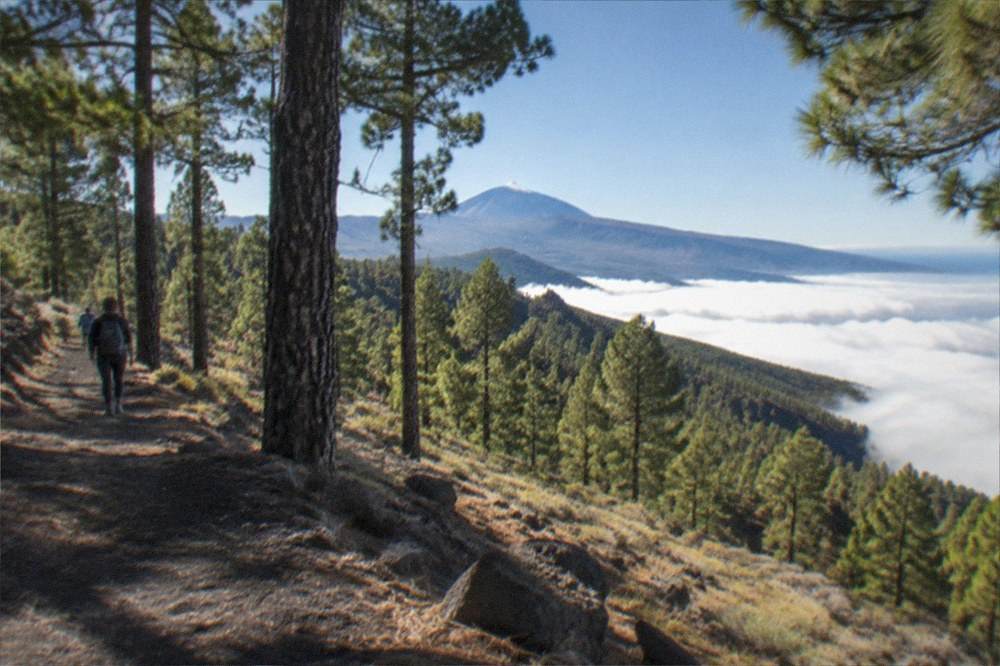
The other weather fact worth carrying is the cloud inversion. The south of the island is the dry side, and on many days the summit area stands above a cloud layer that sits over the coast, which is precisely why the observatory was built at Izana, where the first telescope began work in 1964 according to the tourist board's astronomy page. Guided visits to the Teide Observatory run by prior reservation only, and the official page has carried fully booked notices, so booking well ahead is the practical advice.
Where Should You Stay and Eat in Vilaflor?
Vilaflor's accommodation is small-scale and village-based rather than resort-based, a handful of rural houses and small hotels rather than the high-rise stock of the coast, and eating out centres on simple Canarian cooking; the village is a base for the mountain, not a destination for nightlife. No official rating or price list for the village's accommodation is on file, so this page does not quote one.
The honest framing is that most visitors to the island never overnight here: they stay in the resorts and come up for the day. But a night or two in the village changes what is possible, because the stargazing tours and the sunrise slots on the summit trail both start in the dark, and starting from Vilaflor rather than Los Cristianos shortens the first hour of any of them. For stays anywhere on the island, including the village and the coast, comparing island accommodation options is the practical first step, since rates move daily and no figure on this page would stay true.
Food in the village follows the island's traditions rather than a tourist menu. The Canarian table is described across this site's own food pages, and the staples a visitor should expect are the same ones served everywhere on the island: papas arrugadas with mojo, local wine from the Tacoronte and Orotava vineyards to the north, and simple grilled fish and meat. No specific restaurant in Vilaflor carries a verified listing in this site's fact file, so none is named here; the tourist board's material for the municipality centres on the walking and the volcano, which is a fair reflection of where the village's visitors spend their hours.
For the evening side of a stay, the telescope-based stargazing experience is the product that fits a Vilaflor night best:
It runs eight to nine hours with hotel pickup and return, covering sunset in the park and a telescope session under the certified dark sky.
Is Vilaflor Worth the Detour?
Vilaflor is worth the drive for three kinds of visitor: walkers who want the forest and lava trails without the permit paperwork, stargazers who want the certified dark sky within reach of the south coast, and anyone spending a week in the resorts who wants a day of genuinely different scenery. It is not worth the detour for beach days or nightlife, which the coastal areas do better.
The comparison with the alternatives is straightforward. A visitor based in El Medano or the Costa Adeje strip can reach the village on a single road, be on a forest trail within the hour, and still be back for an evening swim; the same trip from Puerto de la Cruz crosses the island and takes half the day. That is the whole case for Vilaflor: proximity to the park from the south.
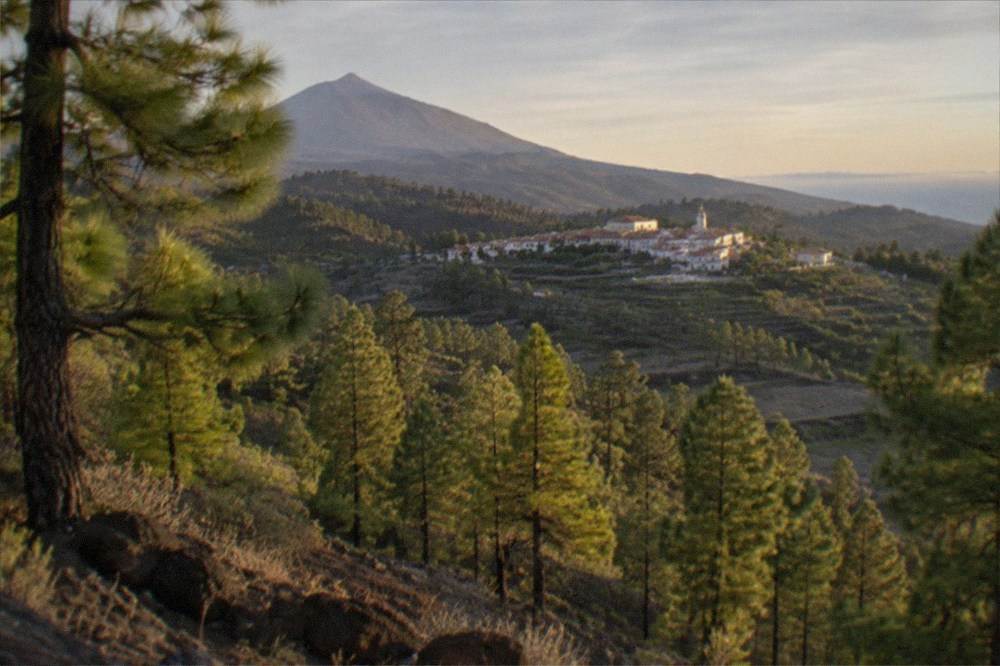
The village also earns its place on a wider island loop. The classic southern sightseeing route, Teide, Masca, Icod and Garachico, passes this way on its first leg, and the tour roster reflects it with a nine-hour coach loop covering all four. For independent travellers, the practical plan is the same in miniature: up the TF-21 in the morning, the viewpoints at the top, the cable car if the legs prefer it, and back down through the village for a late lunch.
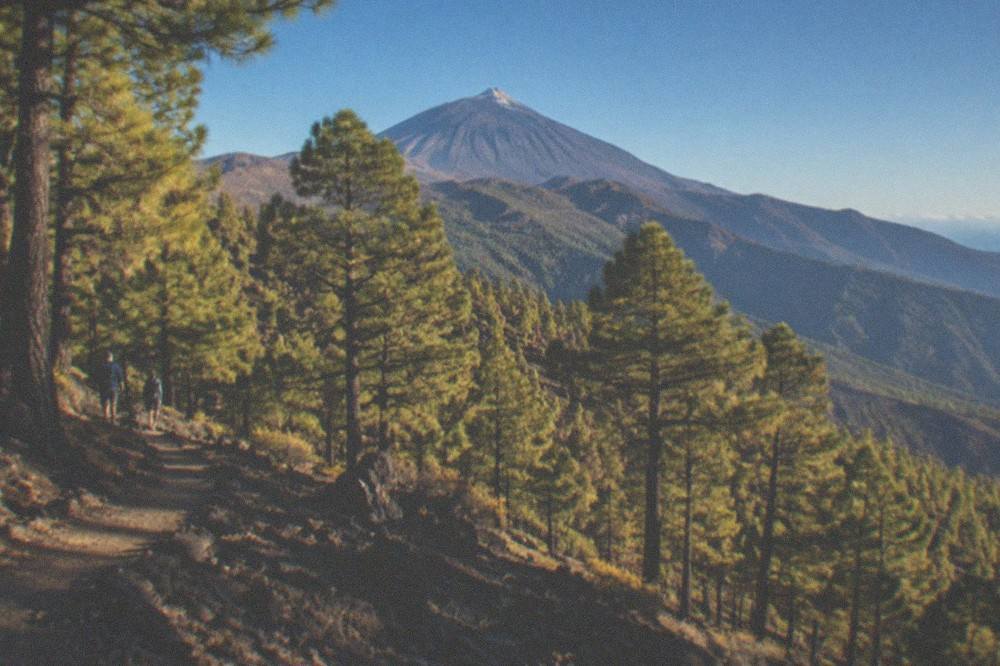
For a final view of what the area offers with everything arranged, the three tours below cover the day walk, the stargazing night and the guided hike, the three products that between them account for most of what a Vilaflor-based or Vilaflor-visiting traveller books:
Common Questions About Vilaflor
Is Vilaflor the highest village in Tenerife?
The village sits high on Teide's southern slopes, but no official altitude figure for Vilaflor is in this site's verified fact file, so the claim is not printed here. What is on file is the mountain above it: Teide stands at 3,715 m by Spain's own measurement, and the cable car's upper station is at 3,555 m.
Can you see Mount Teide from Vilaflor?
Yes, the village sits directly on the mountain's southern flank, and the volcano dominates the upper part of the road above the settlement. The official material for the area frames the village as a base for the national park, which begins a short drive further up the TF-21.
Do you need a car in Vilaflor?
A car is the practical choice, but not the only one. TITSA buses serve the area, and visitors pay normal fares: single tickets priced by route, a EUR 10 day travelcard or a EUR 50 seven-day travelcard. The 2026 free-transport subsidy applies to resident passes only, so visitors should not plan around it.
Is it cold in Vilaflor at night?
It is considerably cooler than the coast at every time of year. AEMET's Izana station at 2,369 m records mean daily minima of 1.1 C in January and 14 C in July, against 15.4 C and 21.2 C at Santa Cruz. The village itself is lower and milder than Izana, but a jacket for the evening is the sensible plan.
Can you smoke in Teide National Park above Vilaflor?
No. The Cabildo bans smoking in all open-air spaces of the national park, and that includes trails, viewpoints, car parks and recreation areas, as a wildfire prevention measure.