What Is Tenerife Known For
Tenerife is known for Mount Teide, resident pilot whales, the Carnival of Santa Cruz, golden and black sand beaches and the resorts of the south. Here is what the official sources say.
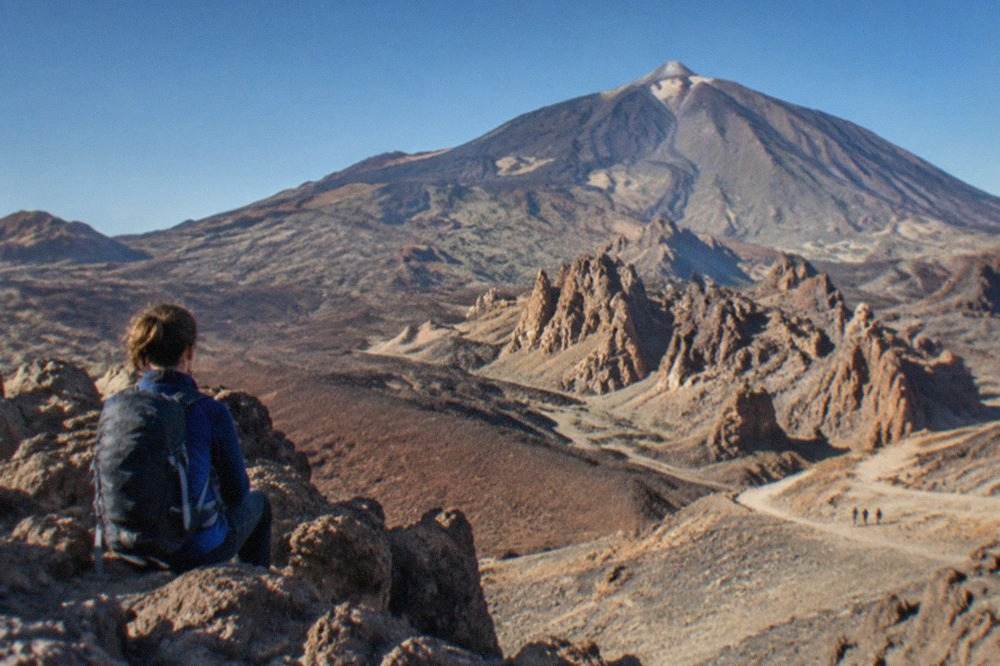
Tenerife is the largest of the Canary Islands and the busiest, with 7,561,659 tourists recorded in 2025 by the tourist board's FRONTUR count, a figure that covers mainland Spanish and foreign visitors together. Its fame, though, rests on a handful of specific things rather than on the visitor numbers alone. Spain's highest peak stands at its centre. A resident population of pilot whales lives off its south-west coast. Its Carnival is one of the largest anywhere, and its beaches run from golden sand behind breakwaters to black volcanic coves. This page sets out what the island is known for, using only what the official sources say, and answers the questions people actually type before they book.
What Is Tenerife Known For?
Tenerife is known for five things above all: Mount Teide, the highest peak on Spanish soil at 3,715 m; a resident population of pilot whales and bottlenose dolphins off its south-west coast; the Carnival of Santa Cruz de Tenerife; beaches that range from golden sand at Las Teresitas to black volcanic sand at El Bollullo; and a warm climate that keeps the south coast near 25 degrees Celsius for most of the year.
Each of those deserves a sentence of explanation, because each is bigger than the phrase suggests. Teide is not just a peak but a national park of 18,990 hectares that received 5,242,653 visitors in 2024, the most visited park in Spain's entire national park network. The whales are not a lucky sighting but a resident population inside a Special Area of Conservation, protected by a Canary decree that sets exact approach distances. The Carnival follows an official programme that runs to the end of February 2027. And the climate is not a slogan: the meteorological normals for Santa Cruz record a mean of 25 degrees Celsius in July and 18.2 in January.
The island is also known for its resorts, and that fame is more recent than the rest. Costa Adeje sits in the municipality of Adeje, home to 50,021 people, and Los Cristianos and Playa de las Américas sit beside it in Arona, with 87,793. The south of the island is where most of the 2,057,896 British tourists lodged in hotels and apartments in 2025 ended up, the largest single source market at 37.8% of lodged tourists. For a fuller run through the options, our things to do in Tenerife page covers the whole island, and the guide to the best time to visit Tenerife covers when to come.
Why Is Tenerife So Famous?
Tenerife is famous because it combines Spain's highest mountain, a UNESCO World Heritage national park, one of the world's largest Carnival celebrations and a legally protected resident whale population, all on one island with direct flights from 159 airports across 34 markets. That combination, more than any single attraction, is why the island's name travels further than the Canaries' own.
The numbers behind that answer come from official bodies. UNESCO inscribed Teide National Park on 2 July 2007 under natural criteria, and its listing describes the volcano as rising 7,500 m above the ocean floor, "regarded as the world's third-tallest volcanic structure". Spain's MITECO gives the peak's height as 3,715 m and calls the park the largest and oldest in the Canaries. The Carnival's official programme already runs into 2027 with the theme "Roma: El imperio del Carnaval", the Queen's Election Gala on 17 February and the second Daytime Carnival on 27 February 2027.
The whale population is famous in a quieter way. The World Cetacean Alliance designated the Tenerife-La Gomera Marine Area a Whale Heritage Area in January 2021, noting a "unique resident population of pilot whales", bottlenose dolphins and a migration stop for 21 other cetacean species. Canary Decreto 178/2000 regulates every boat: no approach within 60 m, at most three boats within 500 m, a maximum of 4 knots within 500 m, and no swimming, diving, feeding, chasing or circling. Authorised boats must fly the Barco Azul flag.
That protected whale population is the reason a boat trip is the single most booked excursion on the island, and the reason so many visitors choose a catamaran over a small motorboat: the larger vessels run under the same Barco Azul rules but carry a buffet, a swim stop and a hotel transfer alongside the watching. If a boat day is on your list, the trio below compares the most booked options.
What Is Tenerife Famous For?
Tenerife is famous for Mount Teide and the national park around it, for whale and dolphin watching under the Barco Azul flag, for Siam Park and Loro Parque, for the Carnival of Santa Cruz de Tenerife, and for the contrast between the black sand of its natural beaches and the golden, breakwater-protected sand of its resort beaches.
The two parks are the family-fame half of the list. Siam Park opens 365 days a year, from 10:00 to 18:00 in the summer season and 10:00 to 17:00 in the winter one, and Loro Parque in Puerto de la Cruz runs 09:30 to 17:30 every day of the year. A Loro Parque release states that Tripadvisor awarded Siam Park the Travellers' Choice Award for the best waterpark in the world for a fifth consecutive year, though that release is undated in its body and later years are not confirmed on the awarding body's page.
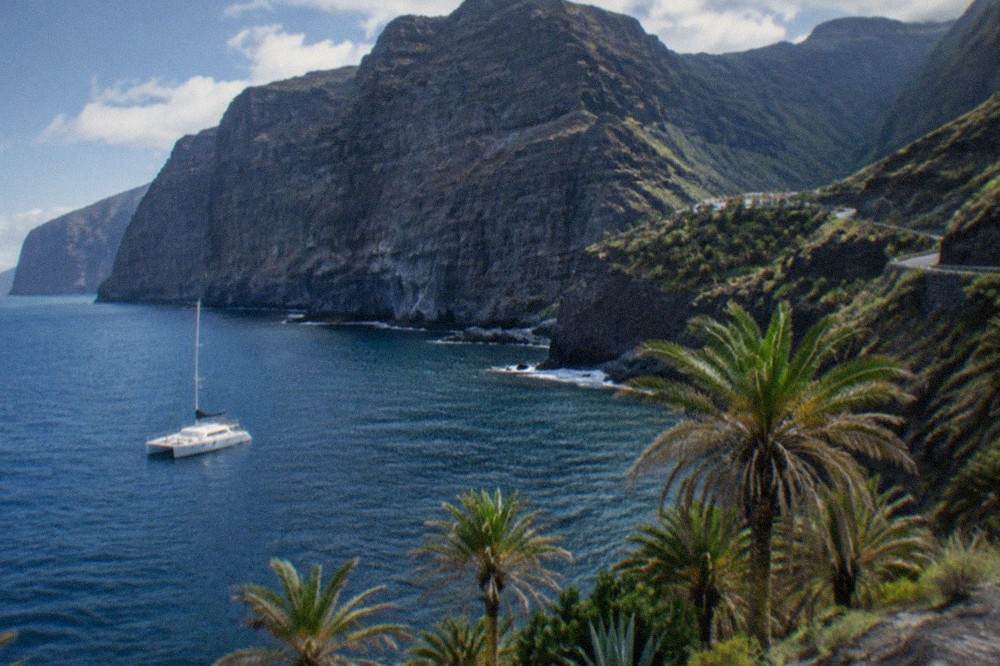
The beaches are famous for being two different things at once. The tourist board describes Las Teresitas in San Andrés and Las Vistas in Arona as golden sand, calm behind breakwaters, while Playa del Duque in Costa Adeje is grey sand, El Médano is fine grey sand under Montaña Roja and El Bollullo in La Orotava is black sand at the foot of a cliff. Los Gigantes, the cliff face that towers up to 600 m above a seabed about 30 m deep, sits inside Teno Rural Park and closes the list of sights the island is photographed for.
Why Is Tenerife So Special?
Tenerife is special because it holds together things that normally live on different islands: a 3,715 m volcano you can ascend by cable car to 3,555 m, resident pilot whales a short sail from a resort beach, a UNESCO-listed colonial town at San Cristóbal de La Laguna, and a climate where the coast and a 2,369 m observatory ridge sit in entirely different weather in the same hour.
The altitude contrast is measurable. AEMET's climate normals put Santa Cruz at a mean of 18.2 degrees Celsius in January, while the Izana station on the Teide observatory ridge, at 2,369 m, records a January mean of 4.3 with 47 mm of rain. That same ridge carries the Teide Observatory, where guided visits run by prior reservation only, and where the first telescope began work in 1964. The Fundación Starlight lists El Teide as a Starlight Tourist Destination and the Cumbres de Tenerife as a Starlight Reserve, both since October 2013. The rest of the planning pages sit on Tenerife Travel Guide.
The island's rules are part of what makes it special too, and they surprise visitors. Smoking is banned in every open-air space of Teide National Park, car parks included, as a wildfire measure. The summit trail PNT 10 needs a personal reservation booked on Tenerife ON, and since 19 January 2026 the daytime slots cost EUR 15 for visitors, EUR 6 for residents of the other Canary Islands and nothing for Tenerife residents and children. The cable car and the summit are separate things: the cable car stops at La Rambleta at 3,555 m, and the crater trail is its own permit.
If the volcano rather than the sea is what draws you, a small-group tour of the national park's volcanic and forest landscapes is the gentlest way in, and the box below points at the one most visitors compare first.
What Is Tenerife Most Known For?
If one thing had to be named, it is Mount Teide: at 3,715 m it is the highest peak on Spanish soil, the centre of a national park that received 5,242,653 visitors in 2024, and the reason UNESCO inscribed the park as a World Heritage Site in 2007. Teide is the image on the postcards, the view from the planes and the name most people attach to the island.
The park around it was declared by decree on 22 January 1954 and covers 18,990 hectares, with a peripheral protection zone of a further 7,374.32 hectares. MITECO calls it the most visited park in Spain's network, whose total across all parks was 16,006,242 in 2024, meaning roughly one visitor in three to the whole network went to Teide. The cable car runs from a base station at 2,356 m, with a non-resident adult return ticket at EUR 42.00 in 2026 and a child ticket at EUR 21, though the operator refuses the ride to children under 3, pregnant women and people with cardiovascular conditions.
Here is how the island's headline claims stack up, each with the official wording behind it:
| What Tenerife Is Known For | The Official Figure | Who Says It |
|---|---|---|
| Spain's highest peak | 3,715 m | MITECO and Turismo de Tenerife |
| World Heritage status | Inscribed 2 July 2007, natural criteria | UNESCO |
| Third-tallest claim | Rising 7,500 m above the ocean floor, "regarded as the world's third-tallest volcanic structure" | UNESCO |
| Park visitors 2024 | 5,242,653, the most in Spain's network | MITECO |
| Whale protection | No approach within 60 m, three boats and 4 knots max within 500 m | Decreto 178/2000 |
| Whale designation | Whale Heritage Area, January 2021 | World Cetacean Alliance |
| Cliffs at Los Gigantes | Tower up to 600 m | Turismo de Tenerife |
The whale rules deserve their own table, because they are the part of the island's fame that most visitors meet without knowing the law exists:
| Rule Under Decreto 178/2000 | The Figure |
|---|---|
| Minimum approach distance to any cetacean | 60 m |
| Boats allowed within 500 m of the same animals | No more than three |
| Speed limit within 500 m | 4 knots |
| Swimming or diving near the animals | Not permitted within 500 m |
| Feeding, chasing or circling | Prohibited |
| Authorised boats | Must fly the Barco Azul flag |
Why Is Tenerife So Popular with British Travellers?
Tenerife drew 2,057,896 British tourists in 2025, 37.8% of all tourists lodged in hotels and apartments, more than any other source market and more than double the second market, Spain, which supplied 1,068,407. Direct flights, winter warmth and a mature resort base in the south explain most of it.
The tourist board's 2025 balance records the rest of the top markets among lodged tourists as Germany at 442,958, France at 223,159, Ireland at 220,066, up 11.1% on the year, Italy at 180,350, the Netherlands at 161,550 and Belgium at 148,157. Air connectivity ran to 34 markets and 159 airports in 2025. AENA recorded 13,969,678 passengers at Tenerife South, an all-time record, and 7,174,977 at Tenerife North. Whether that scale suits you is a fair question, and our pages on whether Tenerife is worth visiting and on hidden gems in Tenerife take the other side of it.
Before those questions, the trio below is the shortlist most first-time visitors actually compare: the whale watching catamaran, the small-group Teide tour and the Loro Parque ticket.
What Is So Special About Tenerife Compared with the Other Canaries?
Tenerife is the only Canary Island with Spain's highest peak, the only one with a national park that UNESCO inscribed for its natural values, and the one with the largest resident population of whales under formal protection, which together make it the archipelago's headline island even before its two airports and its Carnival are counted.
That is not a claim that the others are lesser. La Gomera, a 50-minute ferry crossing from Los Cristianos with Fred. Olsen Express, holds its own UNESCO listing for the Garajonay laurel forest. Gran Canaria sits 80 minutes away by ferry from Santa Cruz to Agaete. But Tenerife holds the superlatives that travel: the peak, the park visitor record, the Carnival programme that runs to a second Daytime Carnival on 27 February 2027, and the Whale Heritage Area designation the World Cetacean Alliance granted in January 2021. Our comparison of which Canary island is best weighs them properly.
Common Questions About What Tenerife Is Known For
what is tenerife famous for
Tenerife is famous for Mount Teide, the highest peak on Spanish soil at 3,715 m; for resident pilot whales and bottlenose dolphins off its south-west coast; for the Carnival of Santa Cruz de Tenerife; for Siam Park and Loro Parque; and for beaches ranging from the golden sand of Las Teresitas to the black sand of El Bollullo.
what is tenerife best known for?
Mount Teide. The volcano stands at 3,715 m, sits inside a national park that received 5,242,653 visitors in 2024, and carries UNESCO World Heritage status inscribed on 2 July 2007. No other single feature of the island is as widely recognised.
what is the ritz-carlton tenerife known for?
This site's verified sources cover public attractions, transport and official fees, not individual hotels, so no description of a specific hotel is given here. For the areas the famous resorts sit in, see the guide to where celebrities stay in Tenerife.
what is granada park tenerife known for?
No official source in our verified files describes a place called Granada Park on Tenerife, so nothing is stated about it here. The island's best-documented parks are Teide National Park, Siam Park, Loro Parque and the Anaga Rural Park.
why is tenerife famous?
Because it combines Spain's highest mountain, a UNESCO World Heritage national park, a legally protected resident whale population, one of the world's largest Carnival celebrations and a warm winter climate, all reachable through two airports served from 159 destinations.
what is so special about tenerife?
The contrast. AEMET's normals put Santa Cruz at a January mean of 18.2 degrees Celsius while the Izana station at 2,369 m records 4.3, so the coast and the volcano sit in different seasons in the same hour. Add resident pilot whales, golden and black sand beaches within one island, and a colonial town at San Cristóbal de La Laguna, and the island holds more variety per square kilometre than most of its size.