How Big Is Tenerife Spain
How big is Tenerife? The verified numbers: a population of about 960,000 across 31 municipalities, a national park of 18,990 hectares at its centre, and the ferry and bus facts that show how long the island takes to cross.
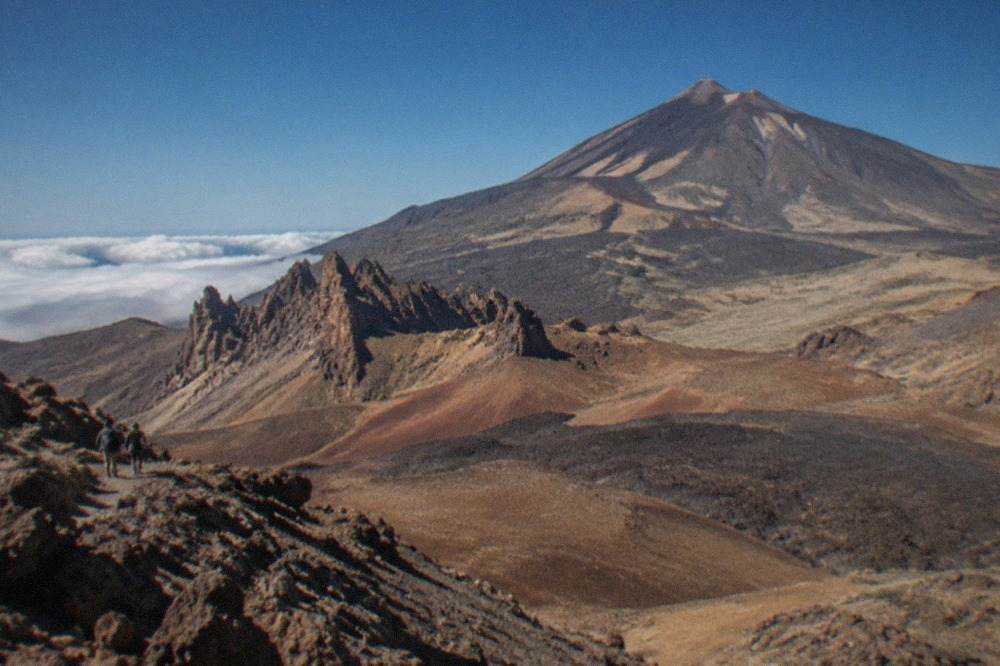
Tenerife is the most populous island in the Canary Islands and the most visited, and almost every question a reader asks about its size has a verified answer on an official page. The population figure, the municipality count, the height of Mount Teide and the area of its national park are all published by Spanish authorities. What this editorial desk does not do is print a number nobody has checked: no official page in this site's research files states the island's surface area or its coastline length, so neither figure appears here. Everything below is sourced, and where two official bodies disagree, both readings are shown.
For a reader placing the island on the map, the neighbouring islands are the fastest reference points: the ferry from Los Cristianos to San Sebastian de La Gomera takes 50 minutes on Fred. Olsen Express's own timetable, and the same operator lists 150 minutes to Santa Cruz de La Palma and 140 minutes to Valverde on El Hierro. If you are still locating the island itself, start with where Tenerife is before reading on.
How Big Is Tenerife?
Tenerife's size is best reported through the figures its own authorities publish: about 960,000 residents registered on 1 January 2025 across 31 municipalities, a central volcano of 3,715 m that is the highest peak on Spanish soil, and a national park of 18,990 hectares at the island's heart. No official page on file states the island's surface area, so this desk does not print one.
The honest answer to a size question is therefore a bundle of numbers rather than a single figure. The population count comes from the INE municipal register: the 31 municipalities of Tenerife together held 961,745 registered residents, which this site rounds to about 960,000. The last time INE published a figure at island level in its own series, the 2021 count was 927,993, and that series stops there, so the municipal sum is the current figure.
The vertical dimension is easier to state precisely. Spain's Ministry for the Environment, MITECO, and the island's own tourist board both give Mount Teide's height as 3,715 m, and UNESCO's listing for the World Heritage Site gives 3,718 m. This site uses 3,715 m and names UNESCO when the taller figure matters. UNESCO's own wording is worth keeping intact: rising 7,500 m above the ocean floor, Teide is regarded as the world's third-tallest volcanic structure, and it is the highest peak on Spanish soil.
The national park that wraps around the volcano is the single biggest managed space on the island. MITECO's technical sheet gives the park an area of 18,990 hectares, with a peripheral protection zone of a further 7,374.32 hectares, and records that it was declared by decree on 22 January 1954. It is, in MITECO's words, the largest and oldest national park in the Canary Islands.
| Size measure | Figure | Source |
|---|---|---|
| Registered residents, 1 January 2025 | 961,745 (about 960,000) | INE municipal register |
| Municipalities | 31 | INE |
| Height of Mount Teide | 3,715 m | MITECO and Turismo de Tenerife |
| Teide height, alternative official reading | 3,718 m | UNESCO |
| Teide National Park area | 18,990 ha | MITECO |
| Peripheral protection zone | 7,374.32 ha | MITECO |
| National park visitors, 2024 | 5,242,653 | MITECO visitor report |
Those park visitor numbers put the island's scale in perspective. MITECO counted 5,242,653 visitors to Teide National Park in 2024, the most visited park in Spain's entire national park network, which as a whole recorded 16,006,242. One mountain on one island absorbs nearly a third of the footfall of a system that covers the whole country.
How Big Is Tenerife Island?
As an island, Tenerife is large enough that its two airports sit an hour's drive apart and its climate splits into three distinct zones: a dry south around Tenerife South Airport, a green north around Tenerife North Airport at 632 m elevation, and an alpine centre at the Izana station, 2,369 m up, where AEMET records January mean maxima of just 7.5 C.
The two-airport fact is the clearest practical measure of the island's span. AENA, the Spanish airport operator, runs Tenerife Sur and Tenerife Norte-Ciudad de La Laguna as separate airports, and TITSA, the bus company, lists different route sets at each: lines 10, 40, 711, 343 and 415 serve Tenerife South, while lines 20, 30 and 343 serve Tenerife North. A single island supporting two airports of that size, 13,969,678 passengers at the south in 2025 and 7,174,977 at the north, tells a reader more about its reach than any single statistic.
The climate tables show the same story in numbers. AEMET's 1981 to 2010 normals put the Tenerife South Airport station at 64 m elevation with a July mean daily maximum of 27.7 C, while the Tenerife North Airport station at Los Rodeos, 632 m up, records 24.7 C for the same month and 520 mm of rain across the year. The Izana station on the Teide observatory ridge, 2,369 m high, records January mean maxima of 7.5 C and February rainfall of 67 mm. One island, three weather worlds.
| AEMET station | Elevation | July mean daily max | January mean daily max | Annual rain days of 1 mm or more |
|---|---|---|---|---|
| Tenerife South Airport | 64 m | 27.7 C | 21.7 C | 15.2 |
| Santa Cruz de Tenerife | 36 m | 28.7 C | 21 C | 29.7 |
| Tenerife North Airport | 632 m | 24.7 C | 16 C | 64 |
| Izana, Teide ridge | 2,369 m | 23 C | 7.5 C | 33.4 |
The sea tells the rest of the story. NOAA's 1991 to 2020 sea surface figures for the south coast run from 19.1 C in March to 23.7 C in September and October, and the resident pilot whale and bottlenose dolphin populations that the World Cetacean Alliance records for the Tenerife-La Gomera marine area live in that water year round. Seeing the island from a boat is the quickest way to grasp how much shoreline it has, and an eco yacht safari out of Los Cristianos is one way to do it.
How Many People Live in Tenerife?
About 960,000 people live in Tenerife: the INE municipal register counted 961,745 residents on 1 January 2025, spread across 31 municipalities. The two biggest, Santa Cruz de Tenerife with 211,957 and La Laguna with 161,108, together hold more than a third of the island's population, while the smallest municipality in this site's figures, Santiago del Teide, registers 12,582.
The population is heavily concentrated in two urban areas and along the south coast. Arona, which contains the Las Vistas beach area, registers 87,793 residents, and Adeje, home to Costa Adeje and El Duque, registers 50,021. Granadilla de Abona, where El Medano sits, counts 58,752, and Puerto de la Cruz on the north coast has 31,137. These are INE register figures, not estimates, and they matter to a visitor because they explain where the services, the bus routes and the hotel zones actually are. More of these guides are collected on Tenerife Travel Guide.
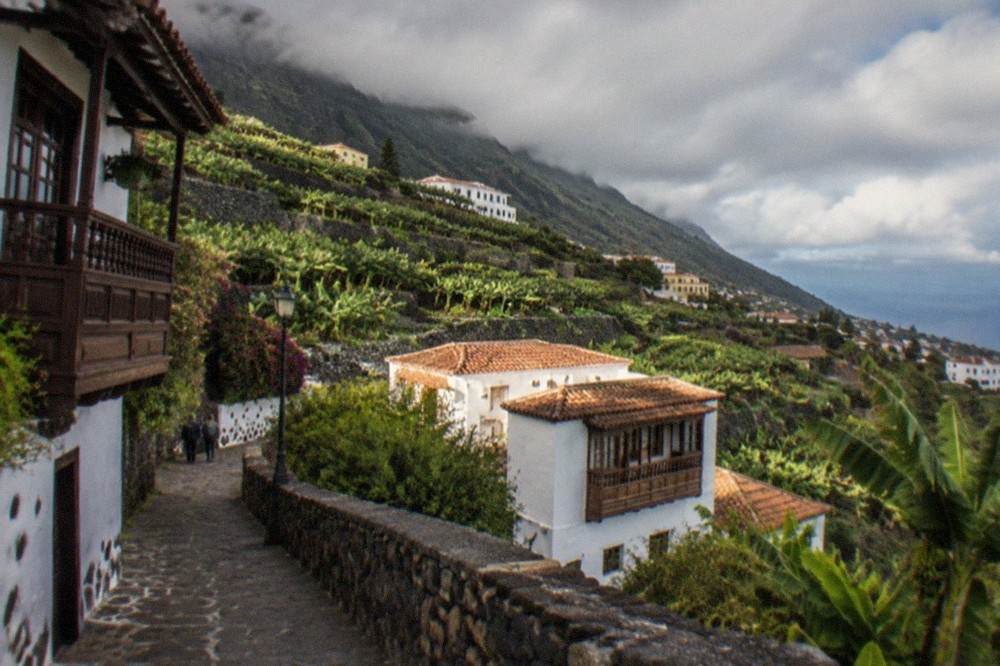
The visitor population sits on top of the resident one. FRONTUR-Canarias, the official arrival series, records 7,412,046 tourists arriving by air in 2025, excluding Canary Islands residents, and the tourist board's own balance counts 5,451,268 tourists lodged in hotels and apartments in the same year. Those are three different measures and they are never interchangeable: the arrival series counts people passing through the airports, the lodging series counts beds occupied, and neither is a population figure. The UK is the largest source market for lodged tourists, at 2,057,896 in 2025.
Do You Need a Car to Cover That Much Island?
No official source on file answers this as a size question, but the transport facts point one way: TITSA's airport route lists cover both ends of the island, the tram links Santa Cruz with La Laguna, and the visitor travelcards, EUR 10 for a day and EUR 50 for seven days, exist precisely because the bus network reaches the whole island. Whether a car suits you depends on where you stay, not on the island's size.
The bus network is the measurable fact. TITSA's own airport pages list the lines above, and its fares page prices the visitor products: single tickets by route, a EUR 10 day travelcard and a EUR 50 seven-day travelcard, both sold at airport ticket machines. The 2026 free transport subsidy that the Canary government announced applies to resident passes only, so visitors pay the published travelcard prices. The tram's single fare is EUR 1.35 on a transit pass, and Metrotenerife's fares page is clear that no tram line serves either airport.
For working out how many days a first trip needs, the practical companion piece is how many days to spend in Tenerife, and for the driving question in full, see whether you need a car in Tenerife. Budget planning starts with whether Tenerife is expensive.
The whale and dolphin watching trips out of Los Cristianos and Costa Adeje give a different measure of the island again: the boats run under Decreto 178/2000, which forbids any approach within 60 m of the animals and caps speed at 4 knots within 500 m, so an hour and a half on the water covers a strip of coast that feels far larger than the map suggests.
Common Questions About Tenerife's Size
how big is tenerife spain
Tenerife is the most populous Canary Island, with 961,745 registered residents on 1 January 2025 across 31 municipalities, and a central volcano, Mount Teide, of 3,715 m inside a national park of 18,990 hectares. No official page on file states the island's surface area, so this site reports the population, municipal and park figures instead.
How long does the ferry from Tenerife to the neighbouring islands take?
Fred. Olsen Express lists 50 minutes from Los Cristianos to San Sebastian de La Gomera, 150 minutes to Santa Cruz de La Palma and 140 minutes to Valverde on El Hierro. Armas Trasmediterranea also sells the La Gomera route.
Is Tenerife crowded?
The official arrival series records 7,412,046 tourists arriving by air in 2025, excluding Canary Islands residents, and the tourist board counts 5,451,268 tourists lodged in hotels and apartments in the same year. Crowding depends far more on the municipality you choose than on the island total: Adeje and Arona carry the largest hotel loads, while Santiago del Teide registers just 12,582 residents.
What is the capital of Tenerife?
Santa Cruz de Tenerife, which registers 211,957 residents in the INE municipal register, is the capital and the largest municipality. La Laguna, with 161,108 residents, is the second largest, and the two cities are linked by the island's tram line.
Does Tenerife have two airports because it is that big?
Tenerife South Airport handled 13,969,678 passengers in 2025 and Tenerife North Airport handled 7,174,977, AENA's statistics show. AENA operates them as separate airports, Tenerife Sur and Tenerife Norte-Ciudad de La Laguna, and TITSA lists different bus lines at each, which is the clearest sign of how far apart the island's two air gateways sit.
Is Mount Teide the biggest thing on the island?
By every measure that officials publish, yes. At 3,715 m it is the highest peak on Spanish soil, UNESCO describes it as rising 7,500 m above the ocean floor and regarded as the world's third-tallest volcanic structure, and the national park around it covers 18,990 hectares and drew 5,242,653 visitors in 2024, the most visited park in Spain's national network.