What Is the Capital of Tenerife
The capital of Tenerife is Santa Cruz de Tenerife, the island's largest city. Here is what that means for a visitor, from transport links to the weather.
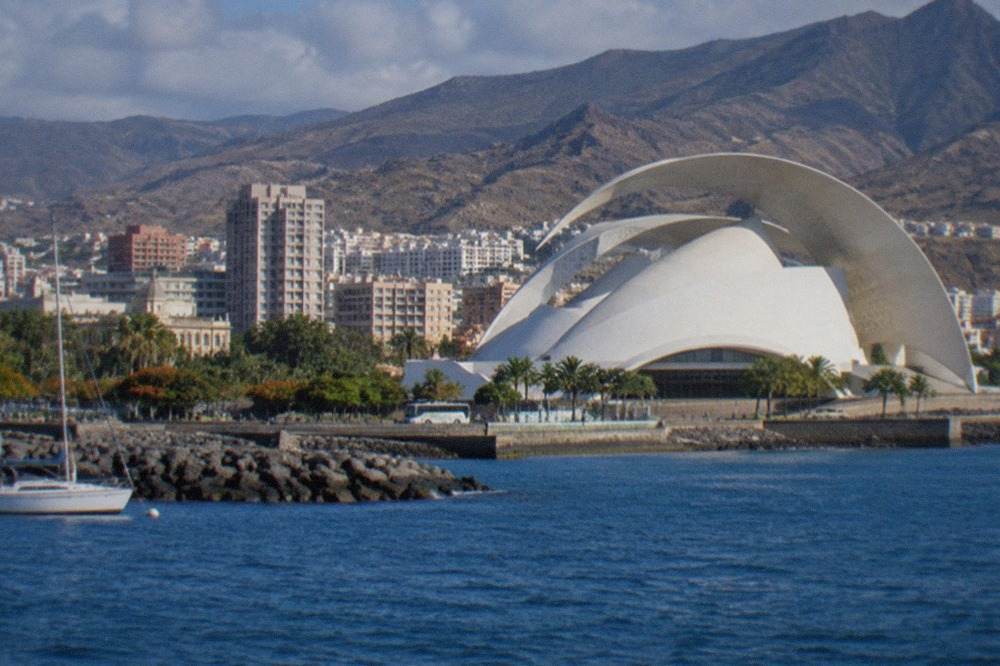
Santa Cruz de Tenerife is the capital of Tenerife, and the figure that surprises most first-time visitors is its size: 211,957 people on the INE municipal register, the largest of the island's 31 municipalities and comfortably ahead of La Laguna's 161,108. The city sits on the north-east coast, holds the island's cruise port, and shares the island's east-west spine of transport links with its neighbour La Laguna. This page answers the question directly, then covers the practical parts: how to get there, what there is to do, and what the weather does.
What Is the Capital City of Tenerife?
The capital city of Tenerife is Santa Cruz de Tenerife, on the island's north-east coast. It is the island's most populous municipality, with 211,957 residents on the municipal register, and it holds the cruise port through which most arriving ship passengers enter the island. The city is the seat of the island's administration and the home of its best-known modern building, the Auditorio de Tenerife.
The question arrives in two wordings, and the answer is the same in both. What the register figures also show is how the capital relates to the rest of the island: Tenerife's population, about 960,000 across all 31 municipalities, is not concentrated in one city the way a mainland region's often is. Santa Cruz and La Laguna together form one continuous built-up area in the north-east, while the south, the tourist belt of Arona and Adeje, holds a second cluster entirely. Arona counts 87,793 residents and Adeje 50,021, both far behind the capital but both larger than many visitors expect.
Here is how the island's biggest municipalities compare, from the same register:
| Municipality | Residents (2025 register) |
|---|---|
| Santa Cruz de Tenerife | 211,957 |
| La Laguna | 161,108 |
| Arona | 87,793 |
| Granadilla de Abona | 58,752 |
| Adeje | 50,021 |
| Puerto de la Cruz | 31,137 |
| Santiago del Teide | 12,582 |
The pattern matters for planning. If you are staying in the south, the capital is not on your doorstep, and a visit is a deliberate half-day or full-day trip rather than an evening stroll. If you are deciding where to base yourself, the answer to do you need a car in Tenerife changes depending on whether the north or the south is your base, because Santa Cruz is the public transport hub of the northern half of the island.
Where Is Santa Cruz de Tenerife and How Do You Reach It?
Santa Cruz de Tenerife sits on the north-east coast, and TITSA's own airport pages list the buses that serve it: from Tenerife North Airport, lines 20 and 30, and from Tenerife South Airport, line 10 direct and line 343 express. The tram links the city with La Laguna, with a single fare of EUR 1.35 on a transit pass. Visitors pay normal fares, since free travel is a resident subsidy.
Tenerife has two airports, and the capital is closer to one of them. AENA's formal names are Tenerife Sur and Tenerife Norte-Ciudad de La Laguna, the latter also known by its familiar name Los Rodeos. TITSA, the island bus operator, lists line 20 to Santa Cruz via La Laguna and line 30 to Puerto de la Cruz at the north airport, and lines 10, 40, 711, 343 and 415 at the south airport, of which line 10 runs to Santa Cruz and line 343 is the express that connects both airports with Puerto de la Cruz and Los Cristianos.
The tram, run by Metrotenerife, connects Santa Cruz with La Laguna and does not serve either airport; Metrotenerife's fares page lists no airport connection at all, so anyone who has read that a tram runs to a terminal has read a page that was never true. The single fare is EUR 1.35 on a transit pass or EUR 1.10 by mobile.
On the resident subsidy, the rule is worth stating plainly because so many pages get it wrong: the 2026 subsidy covers resident passes only, held on a personalised Ten+ card by people resident in the Canary Islands. Visitors pay for every journey, either a single ticket, the EUR 10 day travelcard or the EUR 50 seven-day travelcard, all sold at airport ticket machines. The full picture, including the tram and the excluded Teide and Teno bus lines, is on the TITSA fares page.
What Is There to Do in Santa Cruz de Tenerife?
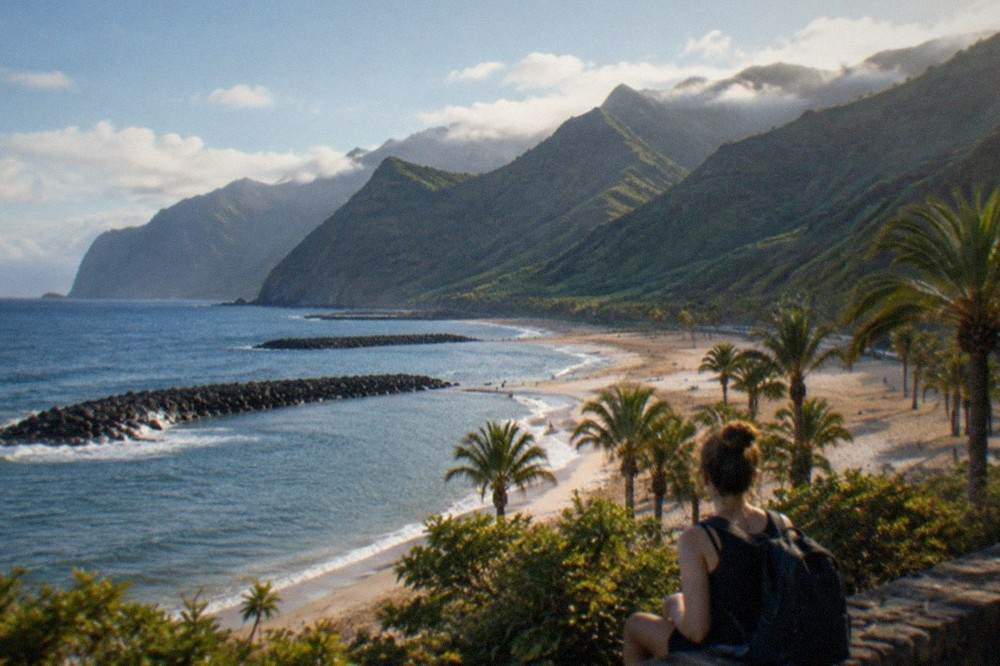
The capital's headline sights are the Auditorio de Tenerife, a Santiago Calatrava building inaugurated in 2003, the annual Carnival, whose 2027 programme runs from late January to the end of February, and Las Teresitas, the golden-sand beach at San Andres with palm trees and breakwaters. The city also holds the Mercado Nuestra Senora de Africa and the Palmetum, and a free GuruWalk tour covers the historic centre.
The Auditorio is the building on every postcard: 23,000 square metres wrapped in a white trencadis skin, designed by Santiago Calatrava and inaugurated in 2003. The Carnival is the island's biggest annual event, and the official programme for 2027, under the theme "Roma: El imperio del Carnaval", puts the opening on 22 January, the Queen's Election Gala on 17 February, the first Daytime Carnival on 21 February and the Pinata weekend on 26 and 27 February. Those dates sit after Ash Wednesday, and the programme, not the church calendar, is the source to follow. Everything else covered here is indexed on Tenerife Travel Guide.
For a first orientation on foot, the free walking tour of the historic centre of Santa Cruz de Tenerife runs on GuruWalk's pay-what-you-want basis, lasts about two hours and is free to join with a tip at the end; it is listed on GuruWalk's own site. If you would rather cover more ground, the bike and e-bike highlights tour starts near the cruise terminal, and its live listing carries the current availability.
Beyond the city itself, the capital is a sensible base for the north-east. The question of what Tenerife is known for is usually answered with Teide and the southern beaches, but the Anaga Rural Park, the old town of La Laguna and the beach at Benijo all sit within the capital's orbit, and the prettiest-town debate on our prettiest town in Tenerife page usually shortlists places a bus ride from Santa Cruz rather than the city itself.
What Is the Weather Like in the Capital of Tenerife?
Santa Cruz is warm year-round on AEMET's climate normals: mean daily maxima range from 21 Celsius in January to 29 Celsius in August, and the city records 226 mm of rain a year on 29.7 days with one millimetre or more. July records no rain days at all on the 1981 to 2010 normals, and sunshine peaks at 337 hours that month.
Those figures come from AEMET's station at Santa Cruz de Tenerife, 36 metres above sea level, and they describe one of the warmest city climates in the network. The contrast with the mountains is the part worth knowing: the same normals put Izaña, on the Teide observatory ridge at 2,369 metres, at a January mean of 4.3 Celsius. A day that starts in shirtsleeves in the capital can end in conditions that need a proper jacket, and the seasonal detail is on our page on the best time to visit Tenerife.
| Month | Mean daily max (C) | Mean daily min (C) | Rain (mm) | Sunshine (hours) |
|---|---|---|---|---|
| Jan | 21 | 15.4 | 32 | 178 |
| Feb | 21.2 | 15.3 | 35 | 186 |
| Mar | 22.1 | 15.9 | 38 | 221 |
| Apr | 22.7 | 16.5 | 12 | 237 |
| May | 24.1 | 17.8 | 4 | 282 |
| Jun | 26.2 | 19.5 | 1 | 306 |
| Jul | 28.7 | 21.2 | 0 | 337 |
| Aug | 29 | 21.9 | 2 | 319 |
| Sep | 28.1 | 21.7 | 7 | 253 |
| Oct | 26.3 | 20.3 | 19 | 222 |
| Nov | 24.1 | 18.4 | 34 | 178 |
| Dec | 22.1 | 16.6 | 43 | 168 |
The sea follows a gentler curve: NOAA's 1991 to 2020 normals for the water off the south coast put the surface at 19.1 Celsius in March, the coolest month, and 23.7 Celsius in September and October, the warmest. The two datasets cover different periods, so the air and sea figures are never quoted as one series.
Is Santa Cruz de Tenerife Worth Visiting?
Santa Cruz rewards a deliberate visit rather than a passing one: it holds the island's Carnival, its signature modern building, a golden-sand beach at San Andres and the transport hub of the north, and its AEMET normals make it the warmest major town on the island in winter. It is not, though, where most tourists stay, and the southern resorts hold most of the island's hotel capacity.
The honest framing is that the capital is a working Spanish city with a visitor layer, not a resort. The tourist board's own numbers explain the geography: 5,451,268 tourists lodged in hotels and apartments across the island in 2025, and the overwhelming share of that capacity sits in the south, in Arona and Adeje. The UK alone supplied 2,057,896 of those lodged tourists, 37.8 percent, and most of them never overnighted in the capital.
That is an argument for visiting, not against it. A city that caters to residents first means the Mercado Nuestra Senora de Africa, the guachinche tradition of the northern hills and the Anaga trails are all functioning parts of local life rather than a ticketed experience. If the balance of your trip is beaches and boat trips, a day in the capital, perhaps paired with La Laguna, gives you the island the brochures leave out. How many days to give the island as a whole is answered on our how many days in Tenerife page.
For the day itself, these are the three experiences that fit the capital best:
The bike tour covers the city's sights in about two and a half hours from the cruise terminal; the banana plantation experience, in Arona, pairs naturally with a southern itinerary; and the no-chase whale and dolphin trips run from Los Cristianos on the south coast, where the resident pilot whale population the World Cetacean Alliance describes lives in a Special Area of Conservation regulated by Decreto 178/2000, which bars boats from approaching within 60 metres and requires authorised vessels to fly the Barco Azul flag.
Common Questions About the Capital of Tenerife
Is Santa Cruz de Tenerife also the capital of the Canary Islands?
This page answers for Tenerife, where the capital is Santa Cruz de Tenerife. The archipelago's own arrangements are a separate question, and no row in our verified fact pack covers them, so confirm with an official Canary Islands source before relying on any wording you read elsewhere.
How far is the capital from Tenerife South Airport?
TITSA's airport page lists line 10 as the direct service from Tenerife South Airport to Santa Cruz, alongside the 343 express. The pack holds no journey time in minutes for the route, and none is estimated here; the TITSA timetable gives the current figure for your travel date.
Does the tram go from Santa Cruz to the airport?
No. Metrotenerife's fares page lists no airport connection for the tram, which links Santa Cruz with La Laguna. Both airports are served by TITSA buses: lines 20 and 30 at Tenerife North, and lines 10, 40, 711, 343 and 415 at Tenerife South.
What is the population of the capital of Tenerife?
Santa Cruz de Tenerife recorded 211,957 residents on the INE municipal register for 1 January 2025, the largest of the island's 31 municipalities. The island as a whole holds about 960,000 people on the same register.
Is the capital of Tenerife good for a beach day?
Yes, at Las Teresitas. The tourist board describes a golden-sand beach with palm trees and breakwaters that calm the water, at San Andres within the Santa Cruz municipality. AEMET's sea-surface normals put the water off the south coast at its warmest, 23.7 Celsius, in September and October.